

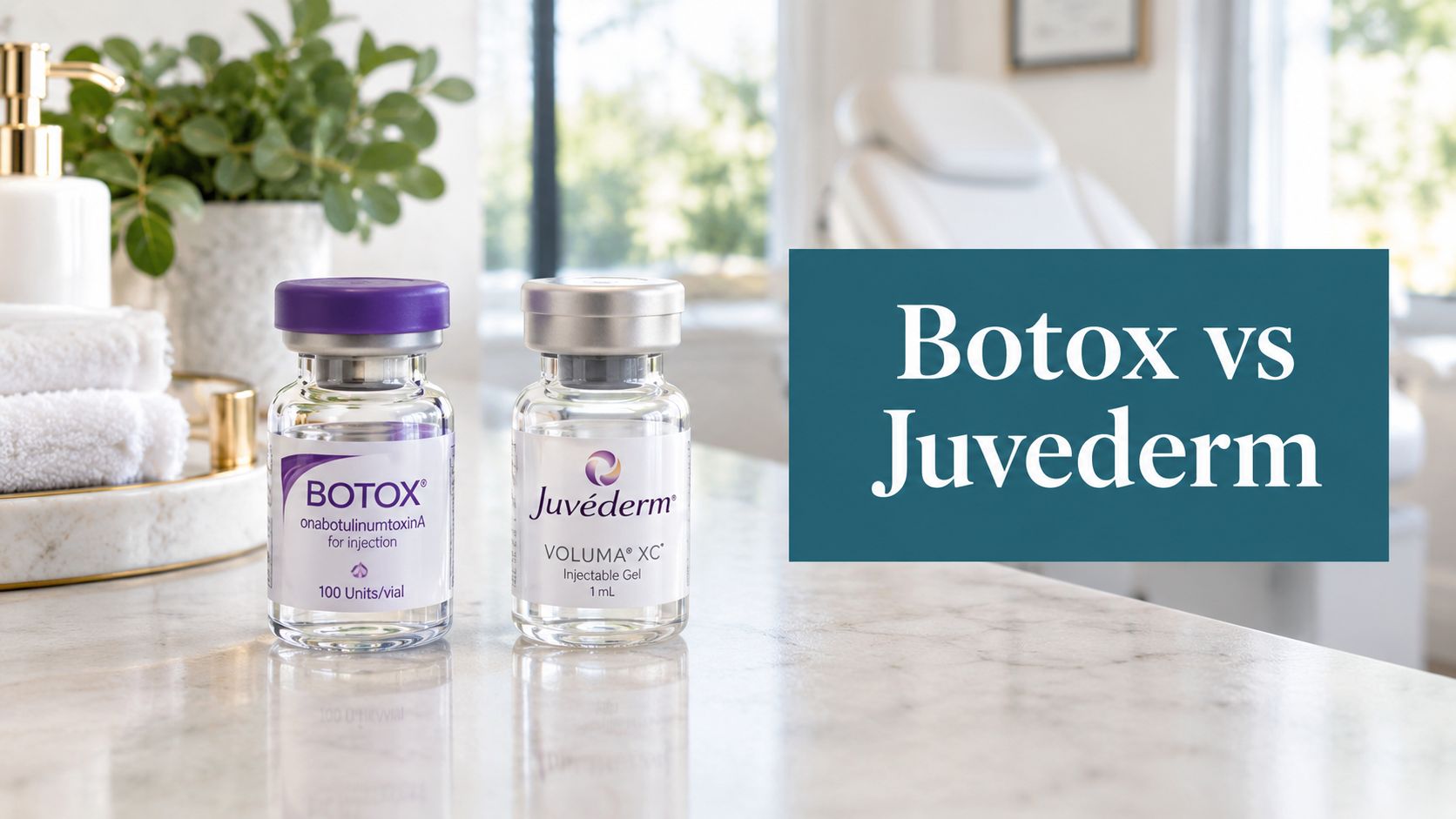
A patient may arrive for a routine cleaning in Amanda, OH, and mention that smile lines seem deeper, the lips look thinner, or crow's feet remain visible even after a good night's sleep. The natural question is whether Botox or Juvéderm would create a smoother, more balanced smile frame. For patients comparing a dentist near me, a cosmetic dentist near me, or facial aesthetic care close to Lancaster, Circleville, and Carroll, Ohio, understanding the difference between Botox and Juvéderm makes the consultation more productive.
Amanda Family Dental provides dental and cosmetic services in a local setting, including preventive dental care, restorative dentistry, and facial aesthetic options. Botox and Juvéderm aren't competing versions of the same treatment. One reduces selected muscle activity, while the other restores volume, so the right choice depends on what creates the concern.
Patients should also consider treatment areas, expected onset, longevity, side effects, candidacy, maintenance, and pricing. Educational resources such as the WaveGen.ai social content system can help aesthetic practices communicate these distinctions clearly, but a personal assessment remains essential because facial movement and volume loss vary from patient to patient.
Table of Contents
- Why Patients in Amanda and Nearby Communities Are Asking About Botox and Juvéderm
- What Botox and Juvéderm Are
- How Botox and Juvéderm Work Side by Side
- Treatment Areas and Aesthetic Results
- Side Effects, Risks, and Recovery
- Can Botox and Juvéderm Be Used Together
- Which Option Is Right for You and What to Ask
- Common Questions From Patients
Why Patients in Amanda and Nearby Communities Are Asking About Botox and Juvéderm
A familiar conversation may begin during a dental visit. A patient in their 40s comes in for cleaning and exams, talks about a sensitive tooth or an upcoming cosmetic dentistry plan, then asks why lines around the eyes or mouth look more noticeable. The concern might involve forehead movement, a gummy smile, thinning lips, or folds that remain even when the face is relaxed.
These concerns sit close to the smile. The lips, cheeks, lower face, and muscles around the mouth influence how a person sees their smile in photographs and in the mirror. That makes it understandable that some dental practices are adding facial aesthetics to broader smile-focused care. A dental team already evaluates facial proportions, lip position, tooth display, and the way the mouth moves during speaking and smiling.
A local consultation should start with the cause
The first question isn't "Which brand is better?" It's "What is producing the line or change in shape?"
A forehead crease that appears during expression may relate to muscle contraction. A fold beside the nose or a hollow under the eye may relate more to lost volume and skin support. A patient with both concerns may need a coordinated plan rather than a single product.
The comparison below offers a quick orientation:
| Feature | Botox | Juvéderm |
|---|---|---|
| Product category | Botulinum toxin neuromodulator | Hyaluronic-acid dermal filler |
| Main action | Temporarily relaxes selected facial muscles | Adds volume and structural support |
| Best suited to | Dynamic expression lines | Static folds, hollows, and volume loss |
| Typical onset | Often begins in 24 to 48 hours | Results are generally visible immediately |
| Common duration | About 3 to 4 months, with broader descriptions of 3 to 6 months | Often 12 to 24 months, depending on product and site |
| Common examples | Forehead lines, frown lines, crow's feet | Lips, folds, cheeks, chin, and contour |
The choice can also involve timing around cleanings, dental x-rays, fillings, crowns, tooth extraction, or emergency dental services. Patients in Amanda, Lancaster, Circleville, and Carroll can ask for one plan that keeps oral health and facial aesthetics coordinated without treating every concern as an injectable concern.
What Botox and Juvéderm Are
A patient may notice a forehead line when raising the eyebrows, then see a hollow or fold around the mouth when the face is relaxed. Those concerns can look similar in a mirror, but they often come from different causes. Botox and Juvéderm are complementary tools a hometown dental team may consider for the upper face and smile frame, depending on whether muscle movement or volume loss is driving the change.
Botox Cosmetic is a botulinum toxin neuromodulator. The U.S. Food and Drug Administration approved it in 2002 for moderate to severe glabellar lines, the vertical lines between the eyebrows, as documented in this FDA approval history summary. It temporarily reduces the nerve signal that tells a selected muscle to contract.
That mechanism explains its role. Botox does not fill a crease. It reduces repeated movement, so the skin above the muscle may appear smoother as the muscle moves less.
Juvéderm belongs to another category. It is a family of hyaluronic-acid dermal fillers, with initial family products receiving FDA approval in 2006 for facial wrinkles and folds. Hyaluronic acid is a gel-like substance placed beneath the skin to add volume and support.
A simple way to understand the science
A muscle-driven line is like a crease in fabric that forms whenever the fabric folds. Botox reduces the movement making that fold. A volume-related fold is closer to a dip in a cushion. Juvéderm adds material beneath the surface to support and reshape the area.
The Juvéderm portfolio includes products developed for different concerns. FDA milestones include Voluma XC for cheek volume loss in 2013, Volbella XC for lips and perioral rhytids in 2016, Vollure XC for wrinkles and folds in 2017, and Volux XC for jawline definition and Volbella XC for under-eye hollows in 2022.
Practical rule: Botox changes muscle activity. Juvéderm changes volume and contour. A consultation should identify which mechanism matches the patient's concern.
Both are injectable, nonsurgical options, but they are not interchangeable. The Amanda Family Dental Botox for smile lines guide provides added context for concerns around the mouth.
Patients may also see hyaluronic acid in topical skincare. Information about the best anti aging serums from Mesoderm RX helps distinguish a serum applied to the skin from filler placed beneath it by a qualified provider.
How Botox and Juvéderm Work Side by Side
A patient may have crow's feet that deepen with a smile and cheeks that look flatter at rest. Those concerns can belong to the same face but require different tools. Botox addresses muscle activity, while Juvéderm adds hyaluronic-acid gel where volume or support has decreased. A hometown dental team may use either option for the upper face and smile frame, depending on what changes during expression and what remains visible when the face is relaxed.
Botox commonly fits forehead lines, frown lines between the brows, and crow's feet at the outer eyes. It may also be considered around the nose or upper lip when facial anatomy and the provider's assessment support that approach. Juvéderm may fit thinning lips, nasolabial folds, marionette lines, or areas that appear hollow rather than overactive. The choice is based on the source of the concern, not just its location.
Timing and durability
Botox may begin showing an effect within 24 to 48 hours. Its temporary results are commonly maintained with repeat treatment, and facial wrinkle treatment may be repeated around every 3 to 4 months, according to this clinical comparison of Botox and Juvéderm and the Cochrane review. Individual response, treatment area, dose, and muscle activity affect the schedule.
Juvéderm creates visible fullness soon after placement, although early swelling can change the initial appearance. The product formulation, injection site, facial movement, and individual metabolism all influence how long the result remains noticeable. A consultation should therefore discuss maintenance as part of the plan rather than promise one fixed timeline.
A practical example makes the distinction clearer. A 45-year-old whose crow's feet deepen while smiling may discuss carefully placed Botox around the eyes. If the cheeks look flatter while the face is relaxed, the same patient may also discuss a Voluma-based midface treatment. The first concern is driven mainly by movement; the second relates more closely to support and volume. Treatment would still depend on an in-person assessment.
Research evaluates filler results with measurable changes in wrinkle severity. An FDA-reviewed Juvéderm Ultra study reported mean nasolabial-fold severity improvement of 1.2 versus 0.5 for control at 24 weeks. The FDA clinical review shows how these studies compare treated areas with controls over time. For patients, the broader lesson is that product selection and placement matter as much as the treatment category.
Treatment Areas and Aesthetic Results
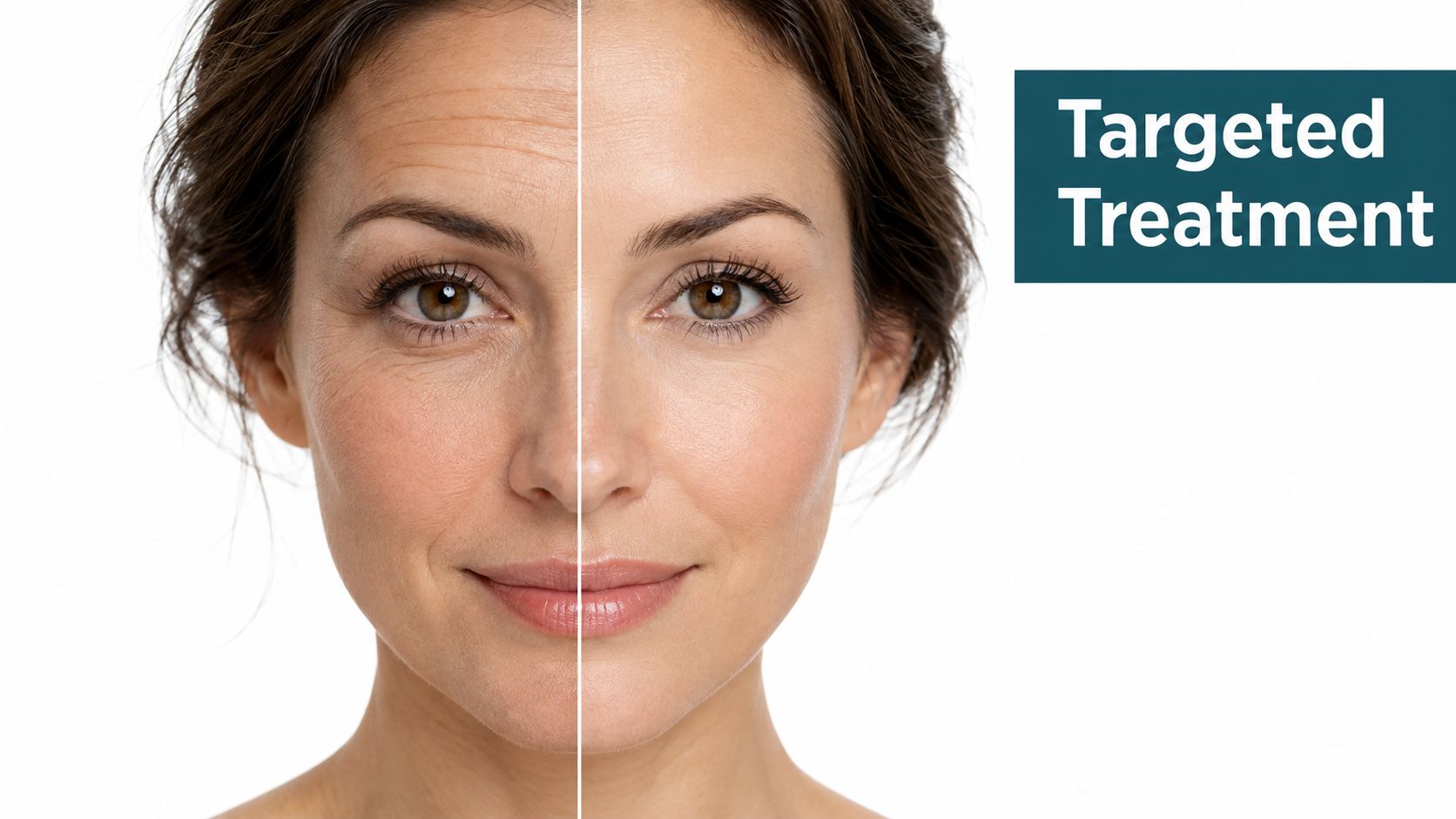
The most useful way to match a product is to observe the face at rest and during expression. A line that appears mainly when the brows lift or the eyes narrow may be movement-related. A fold that remains when the face is relaxed may involve volume loss, skin folding, or both.
Botox for movement-related lines
Botox may be considered for:
- Forehead creases: Relaxing selected forehead muscles can soften lines created by repeated brow lifting.
- Frown lines: Treatment between the brows may reduce the contracted appearance that produces a tense expression.
- Crow's feet: Small lines at the outer eyes often relate to smiling and squinting.
- Bunny lines: Movement along the upper nose may contribute to small horizontal creases.
- Lip flip: Carefully selected upper-lip muscle treatment can create a subtle change in how the lip turns outward.
- Gummy smile softening: Reducing selected upper-lip muscle activity may decrease how much gum shows during a smile in appropriate candidates.
The goal isn't to erase personality or stop every facial expression. A carefully planned treatment aims to soften excessive movement while preserving a natural appearance.
Juvéderm for volume and contour
Juvéderm may be considered for:
- Nasolabial folds: Filler can support the area between the nose and corners of the mouth.
- Marionette lines: Volume restoration may soften shadows that descend from the mouth.
- Lips: Filler can address thinning, asymmetry, border definition, or lost fullness.
- Cheeks: Voluma XC was approved for cheek volume loss, according to the FDA approval record.
- Chin and jawline: Selected formulations may support projection or definition.
- Under-eye hollows: Product choice and injector experience matter because this area requires careful assessment.
A patient with crow's feet during smiling may see a better match with Botox. A patient whose cheeks look flatter or whose folds remain visible at rest may need a volume-focused discussion. Patients considering under-eye treatment can review Juvéderm under eyes cost information before requesting a personalized assessment, while understanding that an online cost discussion cannot replace an examination.
Side Effects, Risks, and Recovery
Every injectable treatment carries potential side effects, and the risk profile depends on the product, injection site, technique, medical history, and aftercare. A qualified provider should review allergies, medications, neuromuscular conditions, immune concerns, pregnancy, active skin infections, and previous reactions before treatment.
Botox commonly causes temporary injection-site redness, mild bruising, or tenderness. Some patients report a headache. Rare placement-related concerns can include eyelid droop or asymmetry, which is why facial anatomy and conservative dosing matter.
Juvéderm can cause swelling, tenderness, bruising, or temporary lumpiness at the injection site. Rare vascular complications require immediate attention, especially if a patient notices unusual pain, skin color changes, or vision symptoms. The FDA's dermal filler safety guidance emphasizes that dermal fillers and botulinum toxin products are different categories, and it notes that the safe use of dermal fillers in combination with Botox hasn't been evaluated in clinical studies.
Recovery expectations
Botox may leave minor redness for hours, with visible effects developing over several days. Juvéderm can produce more noticeable swelling, often requiring patients to plan around social events and dental appointments. Final settling depends on the treated area and individual response.
Patients should ask for specific aftercare instructions rather than relying on general internet advice. Active infection near the planned injection area, pregnancy, certain neuromuscular conditions, significant allergy history, or immune concerns may change whether treatment is appropriate or whether it should be postponed.
Can Botox and Juvéderm Be Used Together
Botox and Juvéderm can address separate layers of facial change. Botox may reduce movement around the eyes or upper lip, while Juvéderm may restore volume in the lips, cheeks, folds, or selected hollows. This combination can make sense when a patient has both dynamic lines and structural volume loss.
For example, Botox may soften crow's feet while Juvéderm supports a nasolabial fold. Another plan might relax a gummy smile and add carefully measured lip volume. The treatment should follow facial proportions rather than a fixed menu, because adding volume where movement is the primary issue won't solve the same problem as reducing muscle activity.
A 2025 peer-reviewed study reported higher patient satisfaction with combined onabotulinumtoxinA and hyaluronic-acid filler than with toxin alone at 3 and 6 months, along with better canthal wrinkle reduction and longer-lasting effects. The findings appear in this 2025 study on combined treatment. The result supports a layered treatment discussion, but it doesn't mean every patient needs both products.
Sequencing requires coordination
Some patients may receive both treatments in one visit. Others may prefer to stagger them by one to two weeks so swelling, muscle response, and facial balance can be evaluated separately. Dental work, including cleanings, restorative treatment, or oral surgery, may also affect scheduling.
The FDA notes that combination safety hasn't been evaluated in clinical studies, so patients should ask the provider to explain the evidence, limitations, and individualized risk assessment. A dental team familiar with the smile frame can coordinate the timing of facial aesthetics with dental care, but treatment decisions still require a focused medical consultation.
Which Option Is Right for You and What to Ask
Patients can begin with a simple observation. Does the concern appear mainly during smiling, frowning, squinting, or brow lifting? That pattern points toward a muscle-activity discussion. Does the fold, hollow, or thinning remain when the face is relaxed? That pattern points toward a volume and structure discussion.
Lip shape, cheek fullness, chin projection, fold depth, and the relationship between the upper face and smile frame all matter. The choice shouldn't be based on the product name alone.
Questions for a consultation
- Provider qualifications: What training and experience does the injector have with the exact treatment area?
- Product identity: Which Botox or Juvéderm formulation is being considered, and how will the provider verify its authenticity?
- Treatment objective: Is the plan reducing muscle activity, restoring volume, improving contour, or addressing more than one concern?
- Maintenance: How long might the result last for the selected area, and when could a touch-up be considered?
- Dental timing: Should the injectable visit occur before or after a cleaning, filling, crown, tooth extraction, or other dental procedure?
- Combination planning: If both products are recommended, will they be used together or sequenced separately?
Patients should request a facial assessment, examples of comparable results, and a written plan describing the product, treatment area, expected timing, and aftercare. A consultation for cosmetic dentistry and a smile makeover may also help patients consider how teeth, lips, and surrounding facial features work together.
For someone searching for a dentist in Amanda, OH, dentist in Lancaster, OH, dentist in Circleville, OH, or dentist in Carroll, OH, a local consultation can make the decision more practical. The provider can map the concern to Botox, Juvéderm, another dental cosmetic service, or no injectable treatment at all.
Common Questions From Patients
Do Botox and Juvéderm injections hurt?
Patients often notice a brief pinch, pressure, or stinging sensation. The experience can vary with the injection site, needle choice, topical numbing, and comfort measures. Your provider should explain what you may feel before treatment begins.
When do results appear?
Juvéderm adds volume right away, although swelling can temporarily change the first impression. Botox takes time to affect muscle activity, so the treated area gradually looks smoother over the following days. The two treatments therefore have different timelines, even when they are used to refine the same smile frame.
How long do results last?
Longevity depends on the product, facial movement, and treatment area. Filler placed around the lips may settle sooner because the mouth moves constantly, while filler in a less active area may remain noticeable longer. A provider should give area-specific expectations instead of promising one fixed duration.
What does treatment cost in the Amanda area?
Pricing depends on the product, amount used, treatment area, and whether the plan includes Botox, Juvéderm, or both. A consultation allows the provider to assess your goals and prepare a written estimate. Online ranges cannot serve as a personal quote.
Can treatment happen during a dental visit?
Sometimes, although scheduling depends on the dental procedure, injection area, swelling risk, medical history, and aftercare instructions. A routine cleaning may be easier to coordinate than restorative work or oral surgery. Discuss both plans in advance so the dental team can set an appropriate sequence.
What happens if treatment stops?
The effects gradually fade. Muscle movement or reduced volume returns toward the untreated appearance, rather than suddenly making the face look worse. Maintenance is optional and should follow your goals, budget, and provider's assessment.
Does pregnancy or a medical condition affect candidacy?
Pregnancy, breastfeeding, active skin infection, neuromuscular conditions, allergies, or immune concerns may call for postponement or medical review. Share your complete health history, medications, and allergies so the provider can decide whether treatment is appropriate.
Amanda Family Dental provides routine dental care, cosmetic dentistry, and Botox and Juvéderm consultations for patients considering changes to the upper face and smile frame. Visit Amanda Family Dental to request an appointment in Amanda, discuss timing, and coordinate cosmetic goals with ongoing dental care.