

Some people first notice smile lines in a very ordinary moment. A photo gets taken at a family gathering in Amanda, a quick video call pops up on screen, or the bathroom mirror catches the face at just the wrong angle. The smile still feels warm and familiar, but the lines around the mouth seem deeper than expected.
That concern is common, and it often leads to one simple question. Can botox for smile lines help, or is something else the better choice? The honest answer is that Botox can help certain kinds of smile lines very well, but it isn't the right tool for every line around the mouth. That difference matters if the goal is a softer, natural-looking result.
For patients searching for a dentist in Amanda, OH, a cosmetic dentist near me, or even a trusted dentist near me who serves nearby communities like Lancaster, Circleville, and Carroll, clear guidance matters just as much as the treatment itself. People deserve to understand what Botox does, what it doesn't do, and when a combination approach may make more sense.
Table of Contents
- Your Guide to a More Confident Smile with Botox
- How Botox Works to Smooth Smile Lines
- Are You a Good Candidate for Botox Treatment
- Botox vs Dermal Fillers for Smile Lines
- Your Botox Appointment What to Expect
- Results Aftercare and Maintaining Your Look
- Why Choose a Dentist for Cosmetic Injections
- Frequently Asked Questions About Botox
Your Guide to a More Confident Smile with Botox
A lot of adults don't feel bothered by every wrinkle. What often stands out is one specific change. The smile still feels joyful, but the mouth can start to look tired or pulled down after years of everyday expression.
That is one reason Botox has become such a familiar cosmetic treatment. In 2024, over 7.4 million individuals received Botox treatments, reflecting a 459% increase in yearly injections since 2000, according to reported Botox treatment growth and popularity data. For many people, that popularity offers reassurance that Botox is not some fringe option. It's a mainstream, well-known non-surgical treatment.
Why smile lines feel different
Lines around the mouth can affect more than appearance. They can change how rested a person looks in photos, how polished a smile appears after teeth whitening, or how balanced veneers and Invisalign results feel once dental work is complete.
For that reason, people who already care about cosmetic dentistry, teeth whitening, or a full smile refresh often start asking about facial balance too. Smoother skin around the mouth can complement the teeth instead of competing with them.
Practical rule: The best cosmetic result doesn't erase personality. It keeps the smile recognizable while softening what feels distracting.
Why people look for trusted local guidance
Botox can sound simple online, but the area around the mouth isn't a place for guesswork. Small muscles control smiling, speaking, sipping, and expression. Patients usually want the same thing. Less creasing, no frozen look, and a result that still looks like them.
That is especially true for people comparing local options such as a dentist in Lancaster, OH, a dentist in Circleville, OH, or a dentist in Carroll, OH. They aren't only looking for treatment. They're looking for a provider who explains it clearly and doesn't promise more than Botox can deliver.
A good conversation about botox for smile lines starts with honesty. Some lines respond beautifully to Botox. Others need a different solution, or a combination plan, to look natural.
How Botox Works to Smooth Smile Lines
Botox works best when the problem is movement. That sounds simple, but many people misunderstand this point. Not every smile line forms for the same reason.
Dynamic lines versus static lines
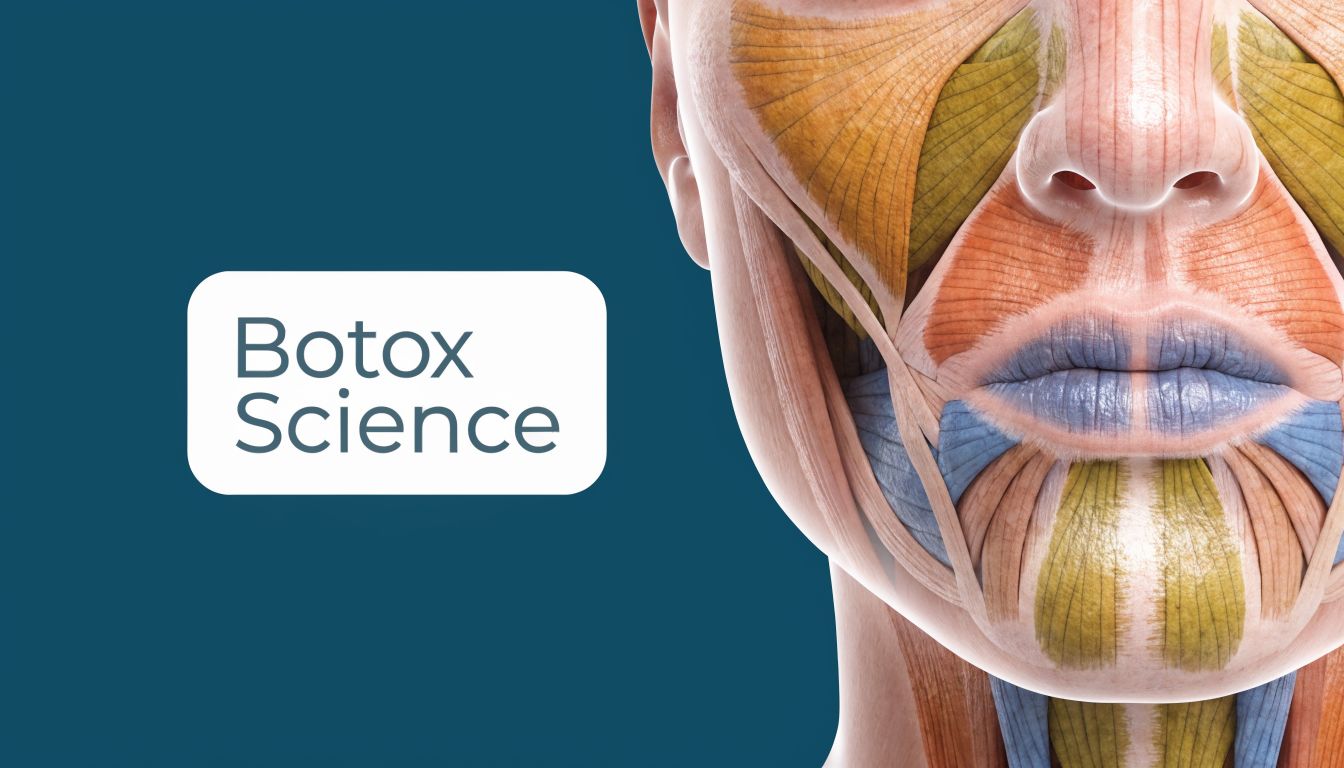
A dynamic line shows up more when the face moves. Smiling, laughing, talking, and pursing the lips can make it more visible. These are the lines Botox is designed to soften.
A static line is visible even when the face is at rest. That kind of crease usually has more to do with skin changes, volume loss, or deeper folding over time. Botox may play a supporting role there, but it usually isn't the whole answer.
A simple way to think about it is this:
| Type of line | What causes it | Best fit |
|---|---|---|
| Dynamic smile lines | Repeated muscle movement | Botox |
| Static folds | Volume loss and etched-in creasing | Often fillers or a combined plan |
What Botox actually does
Botox doesn't fill the skin. It relaxes selected muscles so they don't contract as strongly. That means the skin above those muscles doesn't crease as sharply with every smile or expression.
According to clinical guidance on Botox for smile lines, an injection of 3 to 6 units per side can reduce muscle contraction strength by 70% to 90% within days, with results lasting 3 to 6 months. That same guidance notes that this low-dose approach is meant to soften lines while reducing the risk of smile distortion.
Think of Botox as a pause button
The easiest analogy is a pause button, not an off switch. The goal isn't to stop the mouth from moving. The goal is to reduce the overpull from specific muscles that deepen lines or tug the corners of the mouth downward.
That distinction matters. With careful placement, the smile can still look expressive and relaxed.
Botox for smile lines works best when the injector respects how much the mouth needs to move in everyday life.
Why precision matters around the mouth
The lower face is busy. Tiny muscles work together constantly, and too much product in the wrong place can make the smile look off balance. A conservative plan is usually the smartest plan.
Patients often like this part once it's explained clearly:
- Small amounts matter: Lower-face Botox is typically subtle, not heavy.
- Placement matters more than volume: A few units in the right spot can do more than extra product placed poorly.
- Natural expression stays the goal: Good treatment softens overactivity without making the face look stiff.
That is why botox for smile lines is less about chasing a dramatic change and more about creating a rested, smoother look that still feels normal.
Are You a Good Candidate for Botox Treatment
The strongest candidate for botox for smile lines is usually someone who notices lines mainly during expression. If the creasing gets deeper when smiling, laughing, or talking, Botox may be worth considering. If the lines stay deep even when the face is completely relaxed, another treatment may be more effective.
Who tends to benefit most
Many good candidates fall into one of these groups:
- Adults with movement-based lines: They want to soften wrinkles around the mouth without surgery.
- Patients who want subtle change: They aren't trying to look different. They want to look less tired or less tense.
- People building a broader cosmetic plan: They may already be exploring whitening, veneers, or Invisalign and want the skin around the smile to match the teeth.
There's also a preventive side to treatment. According to published data on Botox use in younger adults, 2.2 million treatments were performed on patients aged 18 to 34, showing that many younger adults use Botox to help keep fine lines from becoming more established.
When Botox may not be the best fit
Botox isn't automatically right for everyone. A person may not be a strong candidate if the main concern is deep resting folds, if expectations are unrealistic, or if there are medical reasons to avoid treatment. Safety always comes first.
A careful consultation should also consider the full smile, not just one wrinkle. Lip movement, tooth display, bite pattern, facial balance, and skin support all affect whether Botox alone makes sense.
A good candidate isn't simply someone who wants treatment. It's someone whose anatomy and goals match what the treatment can realistically do.
A quick self-check
These questions can help someone decide whether a consultation makes sense:
- Do the lines get worse when smiling?
- Is the goal a softer look rather than a dramatic change?
- Would a non-surgical option be preferable to anything more involved?
If the answer is yes to most of those, Botox may be a reasonable option to discuss. Patients from Amanda, Lancaster, Circleville, and Carroll often start there. They want a local provider who gives honest cosmetic advice, the same way they would want clear guidance for cleaning and exams, new patient exams, or other routine dental care.
Botox vs Dermal Fillers for Smile Lines
This is the part many people wish someone had explained sooner. Botox and dermal fillers are not competing versions of the same treatment. They solve different problems.
What Botox does and what filler does
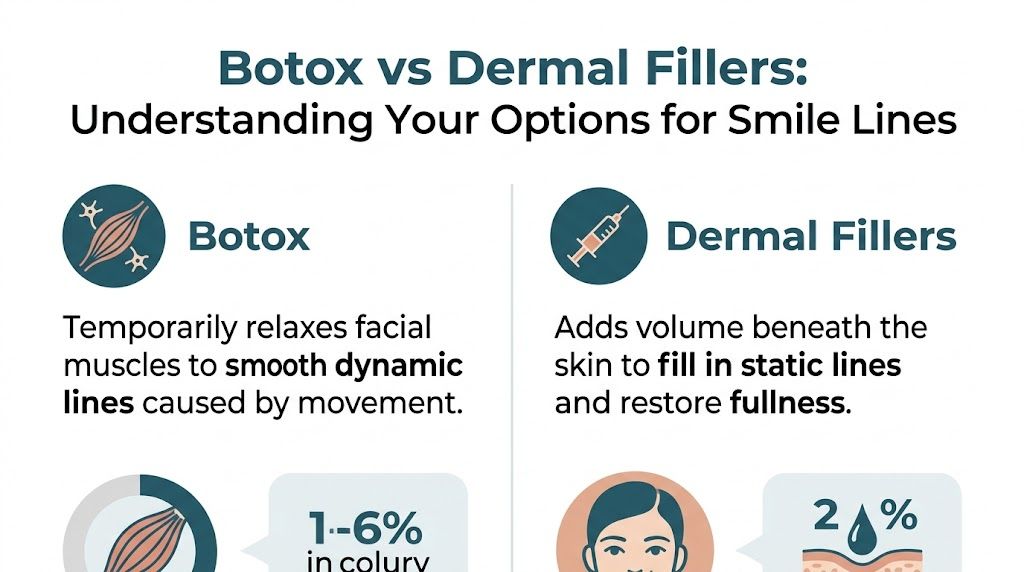
Botox reduces the pull of active muscles. Fillers such as Juvéderm add support and volume beneath the skin. If a line is created mainly by movement, Botox may help. If a fold is caused more by lost volume or deeper facial descent, filler is usually the better match.
That is why the phrase "smile lines" can be misleading. One person may mean tiny wrinkles around the mouth. Another may mean the longer folds from the nose to the corners of the mouth.
The honest answer about nasolabial folds
According to guidance on why Botox may not work well for deep smile lines, Botox is often not the primary solution for static nasolabial folds, and for deep static folds one expert source states Botox alone "is not appropriate for this area." That matters because many people searching for botox for smile lines are talking about those deeper folds.
Trust is built through honest treatment planning. If volume loss is the main issue, filler may be the more appropriate treatment. If movement is part of the issue too, a combination plan may create the most natural result.
After understanding that difference, many patients start thinking beyond a single product and toward a broader smile makeover approach.
Side-by-side comparison
| Question | Botox | Dermal fillers |
|---|---|---|
| Main job | Relaxes muscle movement | Restores volume |
| Best for | Dynamic wrinkles | Static folds |
| Common goal | Soften expression lines | Fill deeper creases |
| Can they work together | Yes | Yes |
A short video can also help clarify the difference in a more visual way.
Why combination treatment is so common
A lot of adult patients don't have a single-cause problem. They have some muscle overactivity and some volume loss. In that situation, using Botox alone can leave the result incomplete. Using filler alone can also miss the movement that keeps re-etching the line.
That is why combination treatment often produces the most balanced result. Botox can calm the overactive pull. Filler can support the crease that remains at rest. The face still looks natural because each product handles the job it does best.
Your Botox Appointment What to Expect
For many patients, the hardest part is not the treatment itself. It's the uncertainty before the first visit. Once the process is explained, Botox usually feels much more approachable.

The visit starts with conversation
The first step is a consultation, not an injection. The provider studies how the mouth moves at rest and during expression, asks what bothers the patient most, and looks for whether the issue is really dynamic creasing, static folding, or both.
That part matters because the right treatment plan may be Botox, Juvéderm, or a combination. A rushed visit can miss that distinction. A careful visit doesn't.
What happens during treatment
The actual appointment is typically brief. Small amounts are placed in carefully selected points around the mouth or lower face using a very fine needle. The goal is precision, not a large treatment area.
Most patients describe the sensation as quick and manageable. After treatment, normal daily activities can usually continue with only minor temporary redness or small pinpoint marks at the injection sites.
Why injector skill matters so much
According to reported outcomes for expert injection and combination treatment, hybrid protocols using Botox with fillers like Juvéderm achieved over 90% patient satisfaction in mid-face rejuvenation trials, and the risk of side effects like asymmetry was less than 2%, dropping by half when performed by dental injectors with superior anatomical precision.
That is especially relevant in the lower face. A smile depends on balance. One side should not pull differently than the other, and the lips should still move comfortably when speaking and eating.
Good Botox around the mouth should look quietly improved, not obvious.
What patients can expect after the visit
Individuals typically don't walk out looking instantly different. Botox develops over several days, so the change is gradual. That can be one of the things patients like most. Friends may notice they look refreshed without guessing exactly why.
A typical visit also gives patients a chance to talk about related concerns, including:
- Cosmetic goals: whitening, veneers, and facial balance
- General dental needs: dental x-rays, restorative work, or a new patient exam
- Urgent issues: whether they also need an emergency dentist or tooth extraction
- Long-term planning: replacing missing teeth with dental implants near me searches often starts with a conversation about overall smile appearance
That broader view is one reason many people feel comfortable discussing facial esthetics in a dental setting.
Results Aftercare and Maintaining Your Look
Botox doesn't work the same day, and knowing that ahead of time helps prevent unnecessary worry. Most patients start to notice changes within a few days, and the treated area continues to settle after that. The final look is gradual rather than sudden.
When results show up
For smile-line treatment, early softening usually appears first. The mouth may look less tense during expression, and lines may crease less sharply with smiling. The most complete result typically takes a little more time to show.
The effect is temporary, which is part of why Botox can feel approachable. It allows refinement without committing to a permanent change. Patients who like the result can maintain it with periodic follow-up visits.
Simple aftercare habits
Aftercare is usually straightforward. Patients are often advised to follow the instructions given at their appointment and avoid anything that puts unnecessary pressure or irritation on the treated area right away.
Helpful habits usually include:
- Follow the office instructions closely: They are specific to the exact areas treated.
- Keep expectations realistic for the first few days: Botox needs time to settle.
- Pay attention to symmetry and comfort: If something feels unusual, the office should hear about it.
- Plan ahead for maintenance: Waiting until everything fully fades can make the line seem to return all at once.
Maintaining a natural result
The best maintenance schedule depends on how the muscles respond, how subtle the patient wants the result to be, and whether other treatments are part of the plan. Some people prefer very light touch-ups. Others combine Botox with skin care, whitening, Invisalign, or filler for a more complete cosmetic result.
Patients interested in facial esthetics often also explore cosmeceutical treatment options as part of a broader appearance plan. That can be helpful when the goal is not only smoother lines, but a smile that looks refreshed as a whole.
Maintenance works best when the goal is consistency, not chasing perfection.
Cost is another practical question, and it varies based on the treatment plan and whether Botox is being used alone or alongside another service. A consultation is the best way to get a personalized estimate without guessing.
Why Choose a Dentist for Cosmetic Injections
A dentist brings a different kind of training to cosmetic injections. The lower face is not a side topic in dentistry. It is part of daily clinical work.
Dentists study the anatomy that controls the smile
Dentists work with facial muscles, lip posture, bite relationships, oral function, and symmetry every day. That background matters when treating the mouth area because the goal is not merely to smooth a line. The goal is to preserve a natural smile while reducing unwanted pull or creasing.
This is also why patients often feel more comfortable discussing cosmetic changes in a dental office. The conversation can connect facial balance with tooth shape, gum display, restorations, or aligner treatment instead of treating each concern in isolation.
The lower face requires precise judgment
Botox in the forehead is one thing. Botox near the mouth is another. The muscles are smaller, more interrelated, and more involved in everyday function.
A dental provider is already trained to think in millimeters, symmetry, and muscle behavior. That mindset supports conservative dosing and careful placement, which is exactly what patients want when they worry about looking unnatural.
One trusted location can simplify care
For many families, convenience matters too. Patients may already be visiting the same office for preventive care, cosmetic dentistry, restorative dentistry, or urgent treatment. Having access to broader services in one place can make care feel more coordinated.
That can include needs such as:
- Routine care: cleanings, exams, digital imaging, and preventive visits
- Cosmetic improvements: whitening, veneers, Invisalign, and facial esthetics
- Restorative treatment: crowns, implants, and replacing missing teeth
- Urgent support: help from an emergency dentist when something unexpected happens
For anyone comparing local options in Amanda, Lancaster, Circleville, or Carroll, that continuity can make a real difference. Patients who want to learn more about the provider behind that approach can review the practice's doctor profile and background.
Frequently Asked Questions About Botox
Will Botox make the smile look frozen
Not when it's planned well and placed carefully. The goal with botox for smile lines is to soften overactive movement, not erase expression. Lower-face treatment should look subtle.
Does Botox hurt
Most patients say it feels quick and very tolerable. The needle is fine, the injections are small, and the appointment is usually short.
How long does Botox for smile lines last
Results are temporary, and maintenance visits are usually needed to keep the area looking consistent. The exact timing depends on the treatment plan and how the patient's muscles respond.
Is Botox enough for deep smile lines
Sometimes no. Deeper folds that remain visible at rest often need filler support rather than Botox alone. That is why an honest consultation matters.
Can Botox be combined with cosmetic dentistry
Yes. Many patients want smoother skin around the mouth to complement whitening, veneers, Invisalign, or other esthetic dental work. When those treatments are planned together, the smile can look more balanced.
How much does it cost
The price depends on the number of areas treated, the amount of product needed, and whether filler is also recommended. The most reliable way to get an accurate cost is through a personalized consultation rather than an online guess.
Patients in Amanda, Lancaster, Circleville, and Carroll who want straightforward guidance on Botox, Juvéderm, cosmetic dentistry, or everyday dental care can schedule a consultation with Amanda Family Dental. The team provides personalized care in a comfortable hometown setting, whether the need is a smile refresh, a new patient exam, restorative treatment, or help from a trusted local dentist near home.