At Amanda Family Dental, we look at how the lips, tongue, and airway work together to support healthy function, sleep, and development. If a tongue tie or lip tie is causing concerns, an early evaluation can help your family understand the next step.
Lip and tongue ties happen when the tissue that connects the lip or tongue is tighter, shorter, or more restrictive than it should be. When that tissue limits normal movement, it can affect how the mouth functions during feeding, swallowing, speech, and everyday oral development. Tongue-tie is commonly referred to as ankyloglossia, and treatment decisions are usually based on how much function is being affected, not just how the tissue looks.
At Amanda Family Dental, we take a broader view of these concerns. Rather than focusing on teeth alone, we consider how tongue and lip function may connect to oral development, airway health, comfort, and long-term wellness. That allows us to guide families with a more complete and thoughtful approach to care.
Common Signs Families May Notice
We explain each step before we begin
Children may get to hold or explore some equipment first
Small touches like sunglasses and fun toothpaste flavors help make visits easier
We create a positive, encouraging experience filled with smiles and reassurance
Effects of Tongue & Lip Ties
Tongue and lip ties can affect children in different ways depending on age, growth, and how much function is restricted.
Feeding & Oral Function: Restricted movement may make nursing, bottle feeding, chewing, or swallowing more difficult for some children.
Speech Development: Limited tongue mobility may make certain sounds more difficult to form clearly.
Dental & Hygiene Concerns: In some cases, restricted oral tissues can make oral hygiene, tongue posture, or normal oral function more difficult.
Growth & Airway Awareness: Because the mouth, tongue, and airway work together, functional restrictions may be part of a bigger picture involving breathing, sleep, and development.
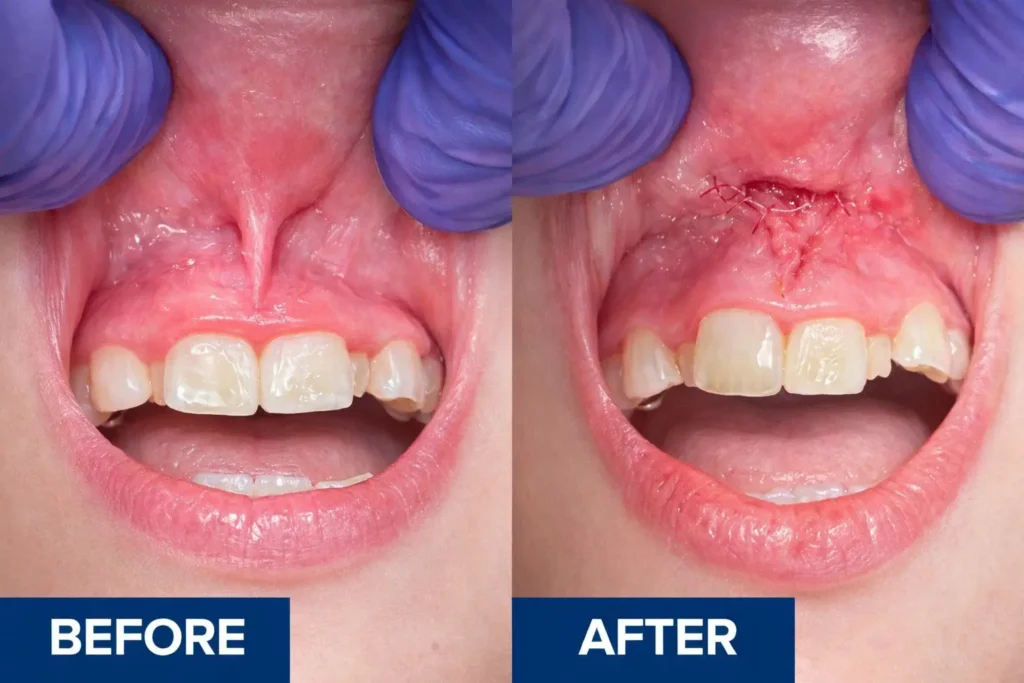
When a tongue tie or lip tie is significantly affecting function, a frenectomy may be recommended. This type of treatment is designed to release restrictive tissue and improve mobility, with the goal of supporting healthier movement and function. Terms like frenotomy, frenectomy, and frenuloplasty may be used depending on the type of release and the level of repair needed.
At Amanda Family Dental, recommendations should be based on the full picture, including symptoms, function, development, and your family’s goals. Because professional guidance notes that diagnosis and treatment decisions can vary and should not be based on appearance alone, a careful evaluation is an important first step.
At Amanda Family Dental, we believe oral function is connected to more than the smile alone. The way a child breathes, swallows, rests the tongue, and uses oral muscles can influence comfort, development, and long-term wellness. That is why our approach looks beyond a single symptom and focuses on the bigger picture.
By identifying concerns early, families can better understand what may be affecting feeding, speech, sleep, or oral development and take the next step with greater clarity and confidence.