


A lot of people start searching for a cosmetic dentist near me after a very ordinary moment. A photo goes up from a family event, and their eyes go straight to one front tooth. Or they catch themselves smiling with their lips closed during a work meeting in Lancaster or Circleville because they don’t like the color, shape, spacing, or wear in their teeth.
That hesitation is usually not about vanity. It’s about wanting a smile that feels like it fits their face, their personality, and the way they want to show up in daily life. For some people, that means brighter teeth. For others, it means fixing chips, replacing a missing tooth, straightening crowding, or reshaping a gum line that makes teeth look too short.
A cosmetic dentistry smile makeover is often the right next step because it doesn’t force one solution onto every patient. It builds a plan around the person. That’s especially helpful for families and adults looking for a dentist in Amanda, OH, or nearby communities like Lancaster, Circleville, and Carroll, Ohio, who want clear answers before committing to treatment.
Readers who want to see how smile goals can translate into real results can browse a smile gallery from a local cosmetic dentistry team.
Table of Contents
- Your Guide to a Smile You Love in Amanda, OH
- What is a Cosmetic Dentistry Smile Makeover?
- Common Procedures in Your Smile Makeover Plan
- Your Personalized Smile Design Process
- Understanding Your Treatment Timeline and Investment
- The Life-Changing Benefits of Your New Smile
- Common Questions About Smile Makeovers
Your Guide to a Smile You Love in Amanda, OH
A smile makeover usually begins long before any treatment starts. It often begins when someone in Amanda, OH realizes they’ve spent years hiding one part of their smile. Maybe the teeth look uneven in photos. Maybe old stains don’t respond to store-bought products. Maybe one chipped edge keeps drawing attention every time they talk.

For many adults in Lancaster, Circleville, and Carroll, that frustration builds slowly. They may put off care because they assume cosmetic treatment is only for dramatic celebrity-level changes. In reality, the most successful smile makeovers often look subtle. Teeth appear healthier, better balanced, and more natural, not artificial or overdone.
A makeover is personal, not one-size-fits-all
Some patients want one focused correction. Others need a broader plan that blends cosmetic dentistry with restorative work. A worn front tooth might need bonding or a veneer. A missing tooth may call for an implant before the rest of the smile is refined. Crowding may need clear aligners before any final cosmetic shaping happens.
A good smile makeover doesn’t start with a product. It starts with a conversation about what feels off, what matters most, and what kind of change will still feel like you.
That patient-first approach matters because every smile sits differently within the face. Lip movement, tooth display, gum shape, and bite all affect what looks attractive and what lasts. A makeover that ignores comfort or function may look fine on day one and create problems later.
Local care makes the process easier
Working with a nearby dentist in Amanda, OH also makes the process easier to manage. Follow-up visits are simpler. Questions get answered faster. Patients from Amanda, Lancaster, Circleville, and Carroll don’t have to sort through vague online advice alone. They can get a plan built around real goals, real schedules, and real comfort concerns.
What is a Cosmetic Dentistry Smile Makeover?
A cosmetic dentistry smile makeover is not one treatment. It’s a custom combination of procedures chosen to improve the appearance of teeth and gums while respecting bite, comfort, and long-term oral health.
That distinction matters. If someone only whitens teeth that are also crowded, chipped, or uneven, the final result may still feel incomplete. If someone places veneers without addressing bite issues or gum balance, the smile may look better in a close-up photo but less natural in everyday conversation.
The makeover solves a collection of concerns
A smile makeover can address issues such as:
- Color problems like deep staining or uneven shade
- Shape concerns including worn, short, or irregular teeth
- Spacing and alignment such as gaps, crowding, or minor rotation
- Missing teeth that interrupt the smile and affect chewing
- Gum asymmetry that makes teeth appear too long or too short
The reason so many people care about these details is easy to understand. Research summarized in scientific findings on smile makeovers reports that 99.7% of Americans view a smile as a vital social asset, 74% believe an unattractive smile can hinder career success, and 82% of patients report overall satisfaction after treatment.
It’s a design process, not a sales pitch
The right plan should answer a few practical questions before any work begins.
| Question | Why it matters |
|---|---|
| What bothers the patient most | The treatment should target real priorities, not guess at them |
| What condition are the teeth and gums in | Healthy foundations come first |
| What fits the patient’s timeline | Some goals can be reached quickly, others need sequencing |
| What result will look natural on that face | Smile design should match the person, not a trend |
A useful way to think about it is this. A smile makeover is less like ordering one service and more like designing a room. Paint alone won’t solve poor lighting, awkward layout, and damaged flooring. In dentistry, whitening alone won’t fix every concern either.
Practical rule: The most attractive cosmetic work is often the work that doesn’t call attention to itself. People notice the whole smile looks better, not that dental treatment was done.
For patients searching for a cosmetic dentist near me, the most important takeaway is that a makeover should be collaborative. The patient brings the goals. The dental team translates those goals into a plan that looks good, functions properly, and feels worth the investment.
Common Procedures in Your Smile Makeover Plan
A smile makeover uses a toolkit, not a single procedure. The best treatment mix depends on what needs to change and what should stay untouched. In many cases, a conservative plan produces the most natural result.
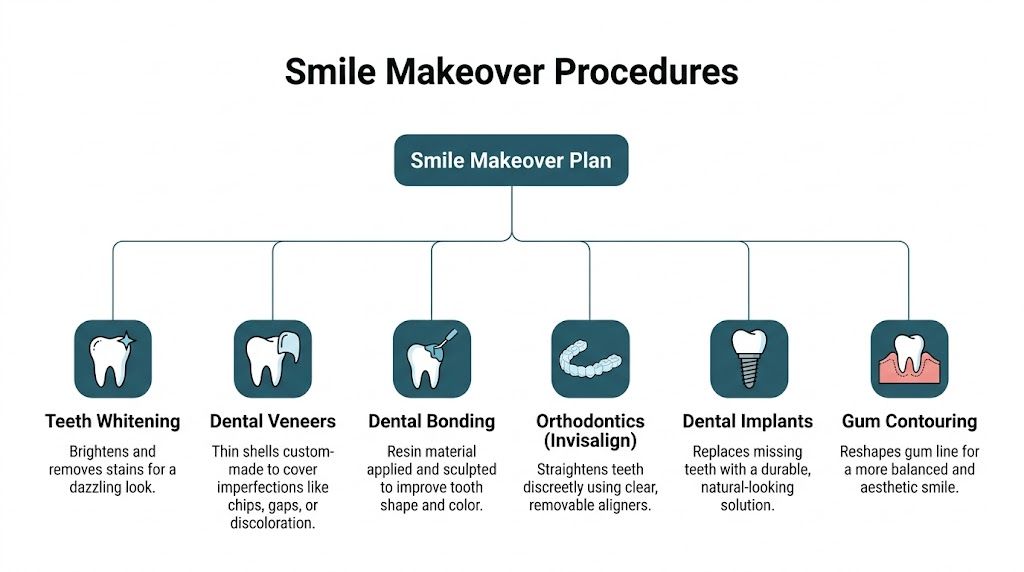
Patients exploring options for custom veneers for front teeth and smile redesign often discover that veneers are only one part of a broader plan. Some smiles need whitening first. Others need alignment or replacement of a missing tooth before veneers would make sense.
Treatments that change color and shape
Teeth whitening is often the simplest entry point. It brightens stained enamel and helps create a cleaner base shade before other cosmetic work is matched. Whitening works well when the main complaint is discoloration, but it won’t change tooth shape, close gaps, or repair damage.
Porcelain veneers are thin coverings placed over the front surface of selected teeth. They’re useful for chips, stubborn discoloration, uneven shape, small gaps, and worn edges. Veneers can create a dramatic change, but they work best when the bite is stable and the patient wants a planned, complete result rather than a quick patch.
Cosmetic bonding uses tooth-colored resin to repair small flaws. It’s a smart option for minor chips, irregular edges, and slight spacing. Bonding is usually more conservative than veneers, though it may not be the right match when a patient wants multiple major changes at once.
Treatments that improve alignment and structure
Orthodontics, including clear aligners, helps when teeth are crowded, spaced, or shifted. Straightening first often reduces the amount of cosmetic covering needed later. That matters because moving teeth into a better position can improve both appearance and cleanability.
Dental implants replace missing teeth with a stable, natural-looking solution. A missing tooth affects more than looks. It can change how someone chews, how neighboring teeth drift, and how balanced the smile appears. For patients searching for dental implants near me, implants are often the key restorative piece that allows a smile makeover to feel complete.
Treatments that refine the frame of the smile
Sometimes the issue isn’t the teeth. It’s the gum line around them.
Gum contouring reshapes uneven or excessive gum tissue so teeth look more proportional. This can make a smile look cleaner and more symmetrical, especially when certain teeth appear short even though their actual size is normal.
A successful plan often mixes categories rather than relying on one treatment alone:
- If color is the main problem, whitening may be enough.
- If shape and wear dominate, veneers or bonding may be more useful.
- If spacing or crowding is driving the look, aligners should often come first.
- If a tooth is missing, implants or another restorative option need attention before cosmetic finishing touches.
Choosing the wrong sequence is one of the most common reasons cosmetic treatment feels disappointing. Good planning matters as much as good materials.
That’s why treatment order matters. The smile has to be built in the right sequence so each step supports the next one.
Your Personalized Smile Design Process
A smile makeover should feel planned, not rushed. The strongest results usually come from a process that blends careful listening, complete records, and technology that lets patients see where treatment is headed before anything permanent begins.

One local option for this kind of planning is Amanda Family Dental, where cosmetic care may be paired with digital X-rays, personalized treatment planning, choices for broader health considerations such as mercury-free fillings and fluoride-free options, plus comfort support including sleep dentistry for anxious patients. For many people, especially those who’ve delayed treatment because of nerves, comfort planning is just as important as smile planning.
What happens at the first visit
The first appointment should gather more than a list of procedures. It should uncover the reason the patient is seeking change now.
That conversation usually includes:
- Smile goals such as brighter teeth, less crowding, or replacing a missing tooth
- Functional concerns like chipping, uneven wear, or trouble biting comfortably
- Health factors including gum condition, old dental work, and bite stability
- Comfort preferences for patients who need a gentler approach or sleep dentistry support
A thorough new patient exam may also include digital imaging and photographs. These records help the dentist evaluate tooth position, gum levels, and facial balance instead of making decisions from a quick visual impression alone.
Why digital planning changes the experience
Digital planning has changed cosmetic treatment in a practical way. It removes much of the guesswork that used to make patients nervous.
According to a Digital Smile Design overview describing high-resolution imaging and 3D modeling, this technology creates a precise treatment blueprint and allows predictive visualization with up to 95% alignment to the final results. That means patients can review a more realistic preview before moving ahead, and the process can reduce the need for revisions.
When patients can see the direction of treatment before it starts, decision-making gets easier. They’re not agreeing to a vague idea. They’re responding to a visible plan.
For people considering veneers, whitening, Invisalign, or a more complete cosmetic dentistry smile makeover, that preview helps answer two important questions. Does the design look natural on the face? And does the patient like it?
A closer look at that planning approach is helpful here:
Comfort and predictability both matter
Technology alone isn’t enough. A beautiful plan still has to be delivered in a way the patient can tolerate comfortably. For someone with dental anxiety, even simple cosmetic care may feel overwhelming without the right support.
That’s why a patient-first process considers timing, numbing, breaks, pacing, and sedation or sleep dentistry options when needed. Patients searching for a dentist near me often focus on the cosmetic result first, but the experience of getting there matters just as much. If treatment feels manageable, patients are more likely to complete the plan and feel good about each step.
Understanding Your Treatment Timeline and Investment
A smile makeover can be done in a few visits, or it can be planned in phases over several months. The right timeline depends on what your teeth need first, how much change you want, and how comfortable you are doing treatment in one stretch versus spacing it out.
Patients usually want straight answers on two points. How long will this take, and what will it cost? Those answers should be specific to the person sitting in the chair. As explained in a discussion of smile makeover cost transparency and personalized estimates, vague pricing creates stress because it leaves out sequencing, phased care, and payment options. A written plan with each step in order is far more helpful.
Why timelines vary
Some cases are simple. Whitening, bonding, or a small veneer case may move fairly quickly once the teeth and gums are healthy. A more involved makeover takes longer if bite problems, worn teeth, old dental work, or missing teeth need attention before the cosmetic phase begins.
Several factors shape the schedule:
- The condition of the teeth and gums. Healthy foundations allow cosmetic treatment to start sooner.
- The type of procedures in the plan. Whitening and bonding move on a different timeline than Invisalign, crowns, implants, or gum reshaping.
- The treatment sequence. Teeth often need to be moved before final veneers or crowns are designed.
- Healing and refinement time. Some steps need short pauses so fit, bite, and appearance can be checked carefully.
- Your comfort preferences. If a patient chooses sleep dentistry for longer visits, we may combine more work into fewer appointments.
That last point matters more than many people expect. A plan should fit your life, not just the clinical checklist. Some patients want to finish as efficiently as possible. Others prefer shorter visits, extra breaks, or treatment spread out over time. Both approaches can work well if the sequence is planned properly from the start with digital records, preview images, and clear decision points.
How investment is explained clearly
Cost also varies from one smile makeover to the next because the treatment is built around the individual. The total changes based on how many teeth are involved, which materials are chosen, whether older dentistry needs to be replaced, and how much functional repair is part of the case.
For example, porcelain veneers can be a major part of the budget in some plans, so patients often want a more detailed breakdown before deciding. Our guide to porcelain veneers cost and what affects the price helps answer that question in plain language.
A useful financial conversation should cover more than a total fee. Patients need to know what has to be done first, what can wait, which items are optional cosmetic upgrades, and what financing or phased scheduling may look like in real terms.
| Financial question | What patients should ask |
|---|---|
| What is included in the estimate | Are exams, imaging, temporaries, or follow-ups part of the plan |
| What can be phased | Which steps are foundational and which can wait |
| What payment options exist | Are there financing plans or membership options |
| What is elective vs necessary | Which parts are cosmetic and which support health or function |
Clear numbers lower pressure. For patients in Circleville, Lancaster, Carroll, and Amanda, a transparent plan makes it easier to choose treatment with confidence. The best smile makeover plan is not always the biggest one. It is the plan that matches your goals, respects your comfort level, and gives you a realistic path to the result you want.
The Life-Changing Benefits of Your New Smile
A smile makeover changes more than the mirror view. It can change how a person speaks up in photos, social settings, work conversations, and everyday routines. That emotional side of treatment matters because confidence tends to show long before anyone notices the dental details.
The broader demand for treatment reflects that value. The cosmetic dentistry market overview discussing smile transformation demand notes that the U.S. cosmetic dentistry market has reached over $5.6 billion, and over 70% of inquiries come from adults in their prime career years. That growing demand points to something practical. People increasingly see smile improvement as an investment in both confidence and professional presence.

Benefits patients often notice first
Some improvements are immediate and personal:
- More ease in photos because the patient no longer hides their teeth
- Better daily comfort when worn, chipped, or poorly positioned teeth are corrected
- Improved function for chewing and speaking when the smile is rebuilt thoughtfully
- Stronger motivation for oral care because people tend to protect work they value
The best cosmetic result is often the one that changes daily behavior. Patients smile more freely, speak without hesitation, and stop thinking about how to hide their teeth.
There’s also a health angle. Straighter, properly contoured teeth can be easier to clean. Replacing missing teeth can support balance in the bite. Restoring worn areas can help prevent further breakdown.
That’s why the payoff from a cosmetic dentistry smile makeover often reaches beyond appearance alone. A well-designed smile can help a person look more polished, feel more comfortable, and care for their oral health more consistently over time.
Common Questions About Smile Makeovers
People rarely hesitate because they don’t want a better smile. They hesitate because they’re unsure about pain, longevity, cost coverage, or whether they need a full makeover at all. Clear answers make the next step easier.
Are smile makeover procedures painful
Most cosmetic procedures are more comfortable than patients expect. The level of discomfort depends on the treatment being done, but modern dentistry offers local numbing, careful pacing, and comfort-focused options that make treatment manageable.
For anxious patients, the right office should discuss comfort openly. That may include shorter visits, breaks during treatment, or sleep dentistry support when appropriate. No one should feel like they have to “push through” fear to improve their smile.
How long do results last
Longevity depends on the procedure, the patient’s bite, and how well the smile is maintained. Veneers, crowns, bonding, whitening, and implants all age differently.
The practical question isn’t just “How long does it last?” It’s “What habits help it last well?” Nighttime grinding, skipped cleanings, tobacco use, and poor home care can shorten the life of cosmetic work. Regular exams, protective appliances when needed, and routine hygiene help preserve the result.
Will dental insurance help pay for treatment
Purely cosmetic procedures may not be covered the same way medically necessary treatment is covered. But many smile makeovers include a mix of cosmetic and restorative needs, so coverage may vary by procedure.
That’s why patients should ask for a written treatment plan that separates elective improvements from necessary care. Financing can also help bridge the gap when insurance doesn’t apply to part of the treatment.
Is a full makeover always necessary
No. Some patients need one focused improvement, not a complete redesign.
A person with healthy teeth and one chipped front edge may do very well with bonding alone. Someone unhappy with overall color may only need whitening. A full makeover makes more sense when multiple concerns overlap, such as shade, shape, wear, spacing, and missing teeth.
What should a consultation accomplish
A useful consultation should do more than recommend procedures. It should answer these points clearly:
- What’s causing the cosmetic concern
- Which treatments are worth considering first
- What sequence makes clinical sense
- What the result is expected to look like
- How the timeline and financial plan will work
Patients searching for an emergency dentist, tooth extraction, or restorative care sometimes discover that solving pain or damage is the first step before cosmetic refinement begins. That’s normal. Strong cosmetic outcomes often rest on solid restorative foundations.
Patients in Amanda, Lancaster, Circleville, and Carroll who want a clearer plan for whitening, veneers, Invisalign, implants, or a full cosmetic dentistry smile makeover can contact Amanda Family Dental to request a consultation, ask questions about comfort options, and get a personalized treatment plan built around their goals.