

A lot of people start looking into veneers at the same moment. They catch their smile in a photo, notice a chipped edge, uneven color, or small gaps, and think, “Maybe it’s finally time.” The excitement is real, but so is the uncertainty. Most patients don’t worry only about the final result. They also want to know what happens in the middle, especially during the days or weeks between tooth preparation and the final placement.
That middle stage matters more than often anticipated. Temporary tooth veneers can affect comfort, confidence, eating habits, speech, and peace of mind while the permanent veneers are being made. For patients in Amanda, Lancaster, Circleville, and Carroll, Ohio, understanding that part of the process often makes cosmetic dentistry feel much more approachable.
Table of Contents
- Your Guide to a Confident Smile with a Cosmetic Dentist Near You
- What Are Temporary Veneers and Why Are They Used
- The Veneer Treatment Timeline at Amanda Family Dental
- Temporary Veneers vs Permanent Veneers
- How to Care for Your Temporary Veneers
- Benefits and Considerations of the Veneer Process
- Begin Your Smile Transformation in Amanda OH
- Frequently Asked Questions About Temporary Veneers
Your Guide to a Confident Smile with a Cosmetic Dentist Near You
Someone in Amanda or nearby Lancaster might spend months thinking about veneers before ever calling a dental office. The concern is often simple and personal. A front tooth looks worn. A few teeth don’t match in color. Smiling in family photos has started to feel forced.
That hesitation is normal. Cosmetic treatment can feel exciting and a little intimidating at the same time, especially when the smile is front and center in daily life. Many patients want a better smile, but they also want to know whether it will look natural, how long the process takes, and whether they’ll be comfortable in the meantime.
Temporary tooth veneers often make that decision easier. They give patients a chance to live with the general look and feel of their new smile before the permanent version is bonded in place. That’s a practical benefit, but it’s also an emotional one. It helps turn a big cosmetic decision into a step-by-step process that feels manageable.
Practical rule: The best veneer process doesn’t rush the patient. It gives enough structure, feedback, and adjustment time to make the final result feel predictable.
For families and adults in Circleville, Carroll, and Amanda who are comparing options for a cosmetic dentist near me search, clarity matters. A good veneer experience should feel organized, not mysterious. It should answer the day-to-day questions, not just show the polished after photo.
That’s why temporary veneers deserve attention. They aren’t just placeholders. They’re part of how patients test comfort, preview appearance, and move into permanent veneers with more confidence.
What Are Temporary Veneers and Why Are They Used
A short term step with an important job
Temporary tooth veneers are short-term coverings placed while a dental lab makes the final veneers. They typically last 2 to 3 weeks and are generally made from resin materials, which lets patients preview the smile design before permanent placement, as described in this overview of temporary and permanent veneers.
The easiest way to think about them is as a test drive for a new smile. They give the prepared teeth a layer of protection, and they let patients see shape, length, and general appearance in everyday life. That means smiling, talking, eating, and looking in the mirror at home instead of making every decision from a chairside mockup alone.
Temporary veneers are not the finished product. They’re more limited in polish, strength, and fine detail than permanent porcelain veneers. Still, they serve a valuable purpose because they help bridge the gap between preparation day and final bonding day.
Why patients often appreciate the preview
Patients often focus on the cosmetic side first, but the comfort side matters just as much. Prepared teeth can feel more exposed than usual. Temporaries help cover that stage so daily life feels more normal while the final veneers are being crafted.
They also create a chance for feedback that can improve the final result. If the smile feels slightly too long, too square, or not quite balanced with the face, that can be discussed before the permanent veneers are placed. That kind of feedback is one of the biggest practical benefits of temporaries.
A few common reasons dentists use temporary veneers include:
- Protection during the wait: They cover prepared teeth while the final restorations are being made.
- Smile preview: They show patients the direction of the final design in a real-world setting.
- Functional support: They help maintain normal speaking and chewing patterns during the transition.
- Decision confidence: They give patients time to notice what feels right and what may need refinement.
Temporary veneers work best when patients treat them like a short-term part of treatment, not like the final version of the smile.
For patients looking for a dentist in Amanda, OH or a cosmetic dentist near me, this stage often lowers anxiety because it makes the process feel less abrupt. There’s time to adjust, time to evaluate, and time to move into the final appointment with fewer surprises.
The Veneer Treatment Timeline at Amanda Family Dental
A lot of Amanda patients feel better about veneers once they know what the next few weeks will look like. The process is easier to handle when each visit has a clear purpose, and when you know what daily life with temporaries may feel like between appointments.
The first visit and smile planning
The first appointment is a conversation as much as an exam. Patients usually come in with a concern they can already name, such as discoloration, worn edges, small chips, uneven teeth, or spaces that draw attention in photos. We review those concerns in plain language, then use photos, an exam, and digital X-rays to decide whether veneers are a good fit or whether another cosmetic or restorative option may make more sense.
This visit also sets the tone for the final result. Some patients want a brighter, more noticeable change. Others want family and friends to notice they look refreshed without being able to pinpoint why. Those details matter, because shape, length, color, and overall style should match the face and personality, not just the teeth.
Preparation and placement of the temporaries
At the preparation visit, the teeth are readied for the final veneers and temporary veneers are placed for the waiting period. This is often the appointment patients feel most unsure about beforehand, mainly because they do not know how the temporaries will look, feel, or function once they leave the office.
Temporary veneers are meant to help you get through normal daily life while the lab makes the final restorations. They also give you a real-world preview of your new smile. That preview is useful. You may notice that one edge feels a little long, certain words sound slightly different at first, or the overall look is close to what you want but still needs a small adjustment.
A patient can expect a few early changes after placement:
- The bite may feel different at first. New contours can make teeth meet in a way that feels unfamiliar for a short time.
- Speech can take a little practice. Sounds like "s" or "f" may feel different until the tongue adjusts.
- The appearance is a preview, not the finished product. Temporary material can look very good, but it does not have the same detail and polish as final porcelain.
For patients who want a broader overview before treatment begins, our page on how veneers work step by step explains the full process.
After that appointment, the goal is simple. Eat carefully, keep them clean, and pay attention to what feels right and what does not.
The waiting period and final delivery
The waiting period is usually where patient questions come up. That is normal. This is the stage where you learn what it is like to smile, talk, and go through your regular routine with the temporary veneers in place. For many people in Amanda, that hands-on preview lowers anxiety because the final appointment feels more familiar and less like a leap into the unknown.
This part of treatment also gives patients a chance to give useful feedback. If the temporaries feel bulky, if the shape seems too square, or if you want a softer or brighter look, those notes can guide the final result. Small changes are much easier to discuss after you have worn the smile in real life.
At the delivery visit, the temporary veneers are removed, the final veneers are checked for fit and appearance, and the permanent restorations are bonded into place. That is when the smile gets the refined texture, color depth, and durability patients are usually waiting for.
For patients in Amanda, Lancaster, Circleville, and Carroll, a clear timeline makes the process feel more manageable. You know what happens first, what the temporary stage is like day to day, and when the final smile comes together.
Temporary Veneers vs Permanent Veneers
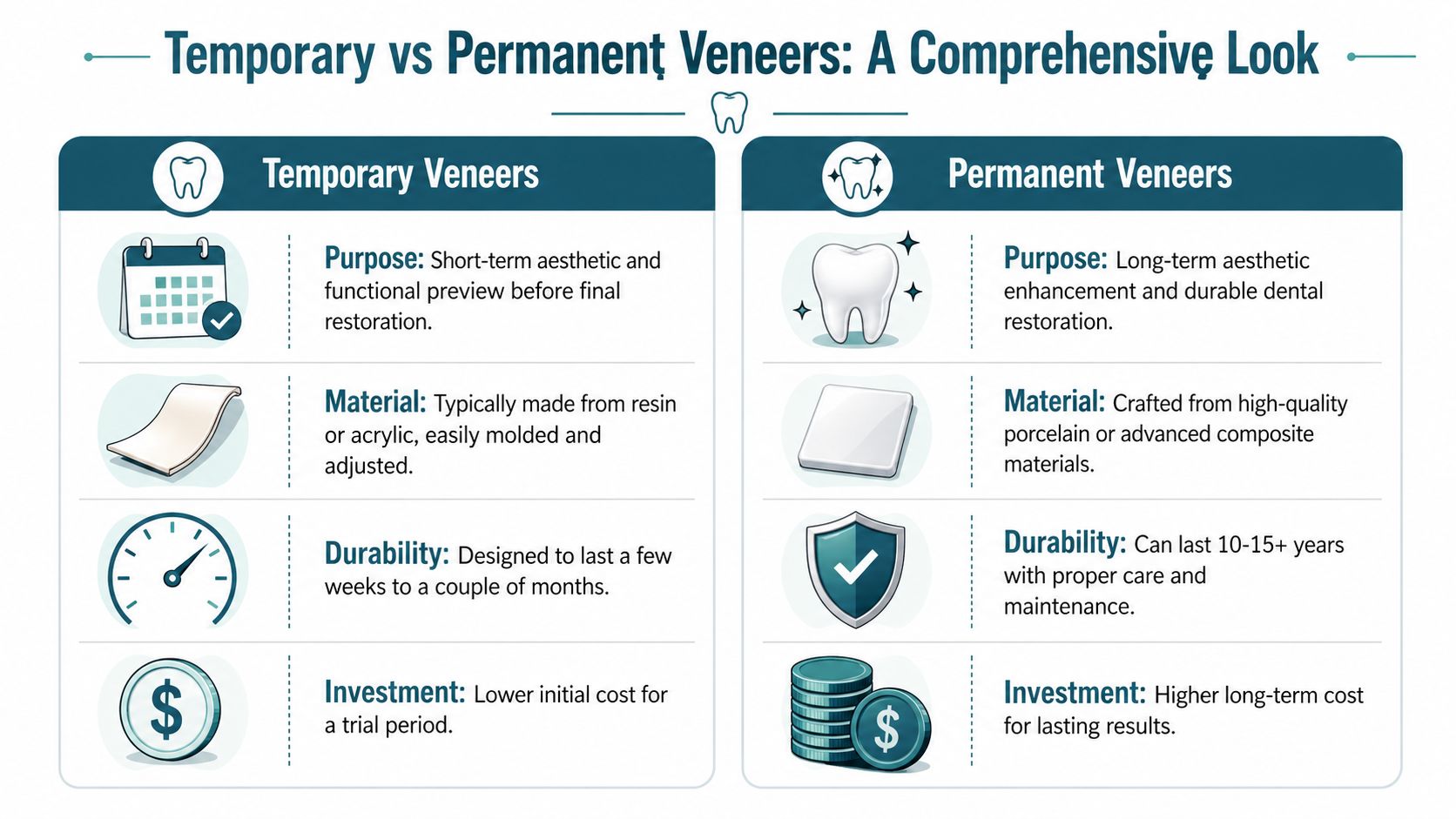
Comparison of Temporary and Permanent Veneers
| Feature | Temporary Veneers | Permanent Veneers |
|---|---|---|
| Purpose | Short-term protection and preview during treatment | Long-term cosmetic enhancement |
| Material | Usually resin-based material | Commonly porcelain |
| Wear period | Meant for the transition period only | Designed for long-term use |
| Appearance | Helpful preview, but less refined | More natural detail, polish, and customization |
| Strength | Suitable for short-term daily function | Built for greater durability |
| Removal | Intended to be removed by the dentist | Intended to stay in place as the final restoration |
| Investment role | Transitional part of treatment | Main long-term cosmetic investment |
What the comparison means in real life
Patients usually notice the difference right away. Temporary veneers let you function, smile, and see the general direction of your new look, but they often feel a little bulkier and look a little flatter than the final version. That does not mean something is wrong. It means they are doing a different job.
In practice, temporary veneers are the trial period. Permanent veneers are the finished result. The temporary stage helps patients in Amanda learn how the new tooth length feels in conversation, whether the shape suits their face, and whether anything needs to be adjusted before the final porcelain is bonded.
That patient experience matters. A temporary veneer that feels slightly too long on day one may tell us to refine the final edge. A smile that looks brighter in the operatory may feel too bright in outdoor light or at work. Those are useful details, and they often lead to a better final outcome.
Permanent veneers are made for long-term appearance and strength. They have better translucency, stronger polish, and a more natural light reflection than temporary materials. If you want a broader overview of the full process, this guide to how veneers work from start to finish explains how the temporary and final phases fit together.
A simple way to judge each stage helps set expectations:
- Temporary veneers should feel reasonably comfortable, protect the prepared teeth, and give you a realistic preview of your new smile.
- Permanent veneers should feel more polished, look more lifelike, and hold up better during normal daily use.
For many patients near Amanda, Lancaster, Circleville, and Carroll, that distinction lowers a lot of stress. You are not being asked to commit blindly. You get to live with the proposed smile first, notice what feels natural, and share feedback before the final veneers are placed.
How to Care for Your Temporary Veneers
The day-to-day habits during the waiting period make a real difference. Temporary veneers are meant to get patients comfortably from one stage of treatment to the next, but they still need more caution than final porcelain veneers.
Some clinician anecdotes suggest that 20 to 30% of patients may report temporary veneers shifting or loosening if they aren’t careful with diet and oral hygiene during the waiting period, as noted in this discussion of what to expect with temporary veneers. That doesn’t mean problems are inevitable. It means small choices matter.
Daily habits that help
A simple routine usually works best.
- Choose softer foods: Eggs, pasta, yogurt, cooked vegetables, fish, and softer sandwiches are easier on temporary veneers than hard or sticky foods.
- Be cautious with the front teeth: Biting directly into crusty bread, hard apples, tough pizza crust, or chewy candy can put extra stress on the temporary edge.
- Brush gently: A soft toothbrush and gentle pressure are better than aggressive scrubbing.
- Clean carefully around the gumline: Keeping the area clean matters, but rough technique can loosen a temporary.
- Watch staining foods and drinks: Temporary materials can pick up discoloration more easily than final porcelain.
A related concern for many patients is bonding and dental cement. This page on cement for tooth crown helps explain why temporary and final materials are handled differently.
Home care reminder: Temporary veneers should be treated more like a healing phase than a finished smile.
What to do if one feels loose
First, don’t panic. A loose temporary veneer is frustrating, but it usually isn’t a disaster. The right next step is to call the dental office so the team can advise whether it needs to be re-cemented promptly.
Patients should avoid trying to “test” the veneer with their tongue or fingers. That often makes a small problem worse. It’s also wise to avoid chewing on that side until the office gives guidance.
A few sensible habits during the waiting period include:
- Skip sticky foods: Caramel, taffy, and gum can pull on a temporary veneer.
- Don’t use teeth as tools: Opening packages or biting fingernails puts unnecessary force on the veneer.
- Be cautious at night if clenching is a concern: If a dentist has provided instructions about nighttime protection, follow them closely.
- Call promptly if something changes: A temporary that feels high, rough, loose, or uncomfortable should be checked.
Patients who know these basics usually move through the temporary phase much more comfortably. The goal isn’t perfection. The goal is to protect the work already done and keep the smile stable until the final appointment.
Benefits and Considerations of the Veneer Process
For many patients, the biggest benefit of veneers is not only how the teeth look. It is how much easier daily life feels when they are no longer worried about hiding worn edges, discoloration, or uneven spacing in photos, at work, or out in the Amanda community.
The temporary phase matters for that reason. Patients get a short window to live with the proposed changes before the final veneers are bonded. That experience often answers the questions people are most nervous about. Do these teeth look like me? Is the length right? Does my smile feel natural when I talk and laugh?
Where veneers can make a real difference
A well-planned veneer case can improve several concerns at once, especially when the goal is a cleaner, more balanced smile rather than a dramatic, artificial look.
Benefits may include:
- A more even appearance: Veneers can improve chips, worn edges, small gaps, and inconsistent tooth shapes.
- More confidence in everyday settings: Many patients feel more relaxed smiling in conversations, family photos, and social events.
- A useful preview before the final result: Temporary veneers let patients test the look and give feedback before the permanent restorations are placed.
- Better communication with the dentist: The temporary stage helps fine-tune details like shape, length, and overall smile design.
That preview is one of the most underrated parts of the process. In cosmetic dentistry, seeing a proposed result in your own mouth is far more helpful than trying to picture it from a verbal description alone.
The considerations patients should understand upfront
Veneers still require thoughtful planning. Temporary veneers are not as strong as the final porcelain, so patients need to be careful during the waiting period. Final veneers also represent a meaningful financial investment, which is why I encourage patients to review veneer cost expectations and treatment factors before they commit.
There is also the question of fit. Veneers are a strong option for patients who want a lasting cosmetic improvement and are comfortable following home-care instructions, attending follow-up visits, and maintaining the result over time. They are not the right answer for every smile, and a good consultation should say that clearly.
Good cosmetic dentistry matches the treatment to the patient’s goals, bite, habits, and comfort level.
For many adults in Amanda, OH and nearby communities, the trade-off is reasonable. The process asks for patience and care, but it also gives patients a chance to preview their new smile, make thoughtful adjustments, and move into the final appointment with far more confidence.
Begin Your Smile Transformation in Amanda OH
Starting cosmetic treatment usually feels easier once the first consultation is on the calendar. Patients who are considering veneers often want the same things at that first visit. They want a clear explanation, an honest opinion, and a plan that doesn’t feel rushed.
A thoughtful consultation should include an exam, digital X-rays when needed, and a conversation about goals, concerns, and alternatives. Some smiles are good veneer candidates right away. Others may benefit from additional restorative or preventive care first. That kind of personalized planning matters because cosmetic treatment should fit the patient, not the other way around.
For anyone comparing options after searching for a dentist near me, dentist in Amanda, OH, dentist in Circleville, OH, or dentist in Carroll, OH, local convenience and trust both matter. Patients often feel more comfortable moving forward when the office can explain each step clearly, answer practical questions, and make the process feel manageable from day one.
Cost is often part of that first conversation as well. This overview of how much veneers cost can help patients prepare for that discussion before scheduling.
A strong veneer process should leave patients feeling informed, not pressured. When the planning is careful and the temporary phase is handled well, the final result tends to feel far more natural and rewarding.
Frequently Asked Questions About Temporary Veneers
Do temporary veneers feel bulky
They can feel different at first. The tongue notices small changes quickly, so patients may be more aware of shape and edge position during the first few days. That usually settles as speaking and smiling start to feel more routine.
Are snap on veneers the same thing
No. Professional temporary veneers used during veneer treatment are not the same as direct-to-consumer snap-on products. As explained in this discussion of snap-on veneer limitations, professional temporaries protect prepared teeth, while DIY kits aren’t custom-fit for that purpose and lack dentist oversight, which can lead to gum irritation or other issues.
What if one comes off before the next visit
Call the dental office. A temporary veneer that comes off often needs professional guidance, but it usually isn’t something that should cause panic. Until the office responds, it’s wise to avoid chewing on that area and keep the piece if it’s available.
Patients in Amanda, Lancaster, Circleville, and Carroll who are looking for an emergency dentist, cosmetic dentist near me, or general dental care often feel better once they know this stage is manageable. Temporary tooth veneers aren’t meant to be perfect forever. They’re meant to protect the process and help the final smile come together smoothly.
If a smile change has been on the mind, Amanda Family Dental offers a comfortable place to talk through the options. Patients from Amanda, Lancaster, Circleville, and Carroll can schedule a consultation to discuss temporary veneers, permanent veneers, cosmetic dentistry, and the steps that make treatment feel clear from the start.