


A lot of people start looking into veneers the same way. They catch their smile in a photo, notice a chip that wasn’t there years ago, or feel like one dark tooth draws attention every time they laugh. The teeth may be healthy enough to function, but the smile still doesn’t feel like the one they want to share.
That’s usually when the question comes up: how do veneers work, and are they worth it?
Veneers are popular because they can change several cosmetic concerns at once. Porcelain veneers have earned 93 to 96 percent patient approval in aesthetics and function, and 68 percent of patients seek them to improve smile appearance, according to clinical success data summarized here. For people in Amanda, Lancaster, Circleville, and Carroll who want a more even, brighter smile, veneers often become part of a broader smile makeover approach.
Table of Contents
- Your Guide to a Confident Smile with Veneers in Amanda OH
- Understanding Dental Veneers and Their Purpose
- The Science Behind How Veneers Are Made and Bonded
- Your Step-by-Step Veneer Journey in Our Amanda Office
- Who Is a Good Candidate for Dental Veneers
- Benefits and Long-Term Care for Your New Smile
- Your Comfort-Focused Veneer Experience at Amanda Family Dental
Your Guide to a Confident Smile with Veneers in Amanda OH
A veneer is often best understood as a fresh front surface for a tooth. It doesn’t replace the whole tooth. It covers the visible front portion, where chips, uneven edges, discoloration, and small gaps tend to stand out the most.
For many adults, the appeal isn’t vanity. It’s relief. They want to stop thinking about the tooth that looks shorter than the one next to it, or the stain that whitening never fully changed, or the little space that draws their eye in every mirror.
Why people ask about veneers
Some smiles have one issue. Others have a few small cosmetic concerns layered together. Veneers can be useful when someone wants a more uniform look without changing every tooth in the mouth or committing to a more extensive restorative treatment.
Common reasons people explore veneers include:
- A chipped front tooth that still feels strong but looks uneven
- Discoloration that doesn’t respond well to whitening
- Small gaps between teeth that affect symmetry
- Minor shape differences that make teeth look short, narrow, or worn
- Slightly irregular alignment when the concern is mostly cosmetic
Veneers work best when the goal is to improve what people see on the front of the teeth, not to rebuild teeth that are badly damaged or unhealthy.
Why the process feels less intimidating than expected
The idea of placing something permanently on a tooth can sound like a major procedure. In reality, veneers are designed to be conservative. The front of the tooth is reshaped just enough to make room for a thin custom shell, so the final result looks natural instead of bulky.
That’s one reason people often feel more comfortable after a consultation. Veneers aren’t a one-size-fits-all cosmetic shortcut. They’re custom-designed pieces that are planned around the person’s bite, facial features, and smile goals.
A patient from the Amanda area might come in thinking only about one stained tooth and leave realizing that veneers could also smooth out a small chip and make the smile line look more balanced. Another patient may learn that veneers aren’t the best next step yet, and that whitening or Invisalign would be a better first move. Good cosmetic dentistry should feel clear, not rushed.
Understanding Dental Veneers and Their Purpose
Veneers are thin custom coverings bonded to the front of teeth. They’re used in cosmetic dentistry to improve the way teeth look while keeping the basic tooth structure underneath in place.
They don’t function like removable snap-on covers. Once bonded, they become part of the tooth’s visible outer surface and are designed to stay there.
A simple way to think about veneers
A helpful comparison is this: a veneer is a bit like a custom cover for the front of a tooth, shaped to match the smile around it. Some people compare veneers to contact lenses for teeth because they’re thin and made to fit precisely, though they’re much stronger and permanently attached.
That comparison helps answer a common point of confusion. Veneers don’t go over the whole tooth like a crown. A crown wraps around much more of the tooth and is usually used when the tooth needs more structural support. A veneer is mostly about the front-facing appearance.
What veneers can help improve
Veneers are often used for cosmetic concerns such as:
- Chips and worn edges that make a tooth look rough or uneven
- Deep stains that may not lift enough with whitening
- Small spaces between front teeth
- Teeth that look too short or misshapen
- Mild irregularity in how front teeth line up
They’re often chosen because they can combine several improvements into one treatment plan. Instead of treating shape, shade, and small spacing issues separately, veneers can address them together.
Porcelain vs. Composite Veneers A Quick Comparison
| Feature | Porcelain Veneers | Composite Veneers |
|---|---|---|
| Material | Porcelain or ceramic made outside the mouth | Tooth-colored composite resin shaped directly on the tooth or made in stages |
| Appearance | Known for a lifelike surface and natural translucency | Can look very attractive, though usually with less enamel-like depth than porcelain |
| Durability | Often chosen for long-term wear | Usually considered a shorter-term option |
| Stain resistance | Resists staining well | More likely to pick up stain over time |
| Best for | Patients who want a highly polished, durable cosmetic result | Patients seeking a more conservative or budget-minded cosmetic approach |
| Treatment style | Usually involves planning, preparation, lab fabrication, and bonding | Often completed with more direct sculpting and shaping |
Practical rule: Porcelain is often selected when a patient wants the most natural-looking finish and stronger long-term performance. Composite can be a good option when the goals are simpler or more conservative.
The Science Behind How Veneers Are Made and Bonded
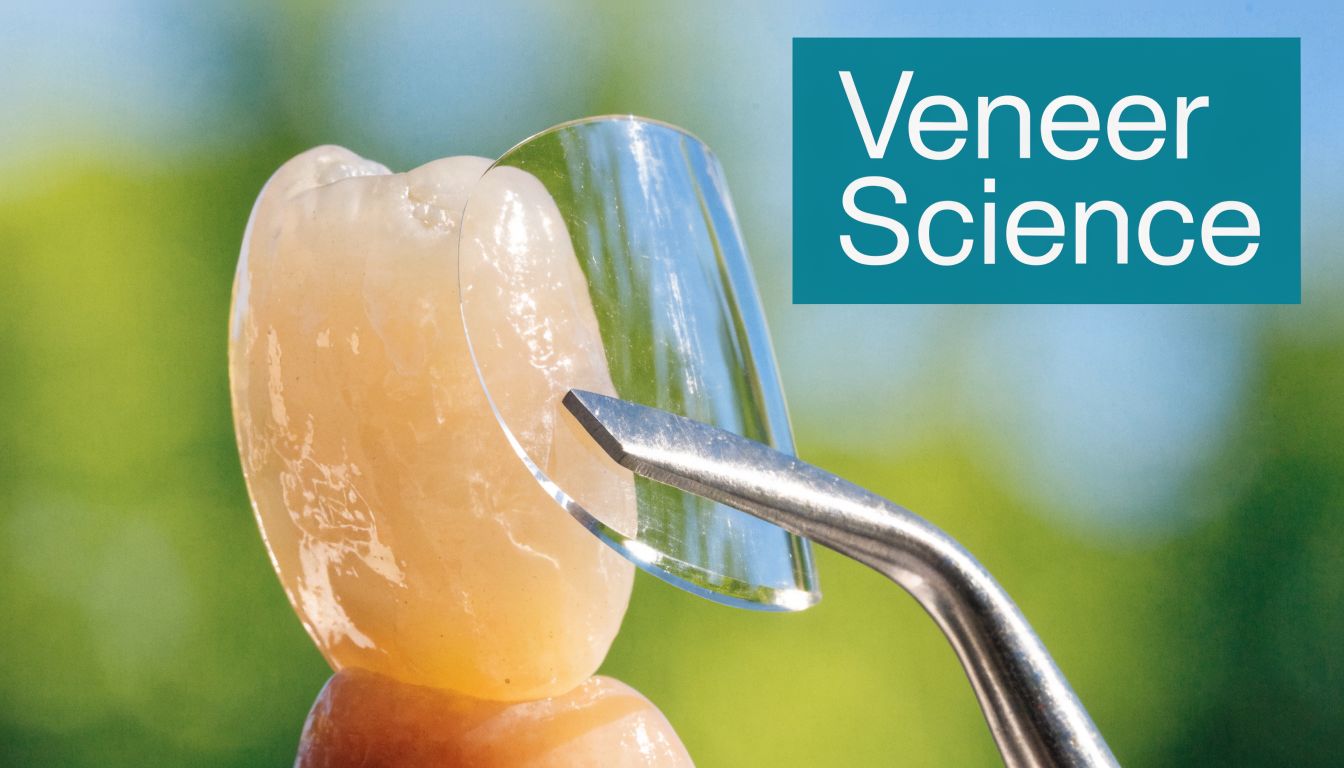
A veneer may look like a simple cover on the front of a tooth, but it works more like a custom-fitted facing on a cabinet door. The beauty comes from what you see. The strength comes from how carefully it is designed, fitted, and attached.
How the veneer is created
Before a veneer is made, the tooth and gums need to be healthy. If there is decay, gum inflammation, or a bite issue that would put too much force on the veneer, that should be addressed first. At Amanda Family Dental, that planning stage matters because a veneer should look natural in your smile and hold up in daily life.
The tooth is then shaped slightly so the final veneer can sit in place without looking thick. A digital scan or impression records the exact contours of the tooth. That record is used to create a porcelain or ceramic veneer that matches the planned size, shape, and shade.
Porcelain is popular for a reason. It reflects light in a way that is closer to natural enamel than many other materials, which helps the tooth look alive instead of flat. If you have ever looked at a natural front tooth in sunlight, you have seen that it is not one solid block of white. It has depth, softness, and a little translucency near the edge. A well-made veneer is designed to copy that effect.
For patients who want to picture the goal before treatment, reviewing real veneer smile transformations from our Amanda office can make the process feel more concrete.
Why the bond is so dependable
Patients often ask if a veneer is basically glued on. The short answer is no. Dental bonding is more precise than household glue and works on a microscopic level.
The tooth surface is cleaned and prepared so the bonding material can grip the enamel. The inside of the veneer is also treated. Then a dental resin cement is placed, the veneer is positioned carefully, and a curing light hardens the material. The American Dental Association explains that veneers are bonded to the front surface of teeth with dental cement after the tooth has been prepared and the restoration has been fabricated to fit properly.
A simple comparison helps here. Tile on a wall lasts because the surface is prepared, the adhesive is chosen for that job, and the fit is exact. Veneers follow the same basic idea, just with far more precision and materials made for the mouth.
That bond is one reason enamel matters. Veneers tend to hold best when bonded to healthy enamel, which is why conservative planning is so important. It also explains why the process should not be rushed. Small details in fit, moisture control, and bite adjustment affect how the veneer feels and how long it lasts.
Composite veneers rely on the same basic principle of adhesion, even though the material is placed and shaped differently. Porcelain veneers are usually crafted outside the mouth, then bonded in place. Composite is usually sculpted directly on the tooth. In both cases, long-term success depends on careful preparation, careful bonding, and a design that fits your bite.
At our office, the science matters, but so does the experience around it. Some patients want a traditional cosmetic plan. Others ask about metal-free or more holistic-minded options, comfort supports during visits, or financing that makes treatment easier to fit into the family budget. Those practical details are part of the veneer journey too, especially in a small community where care should feel personal, not factory-made.
Your Step-by-Step Veneer Journey in Our Amanda Office
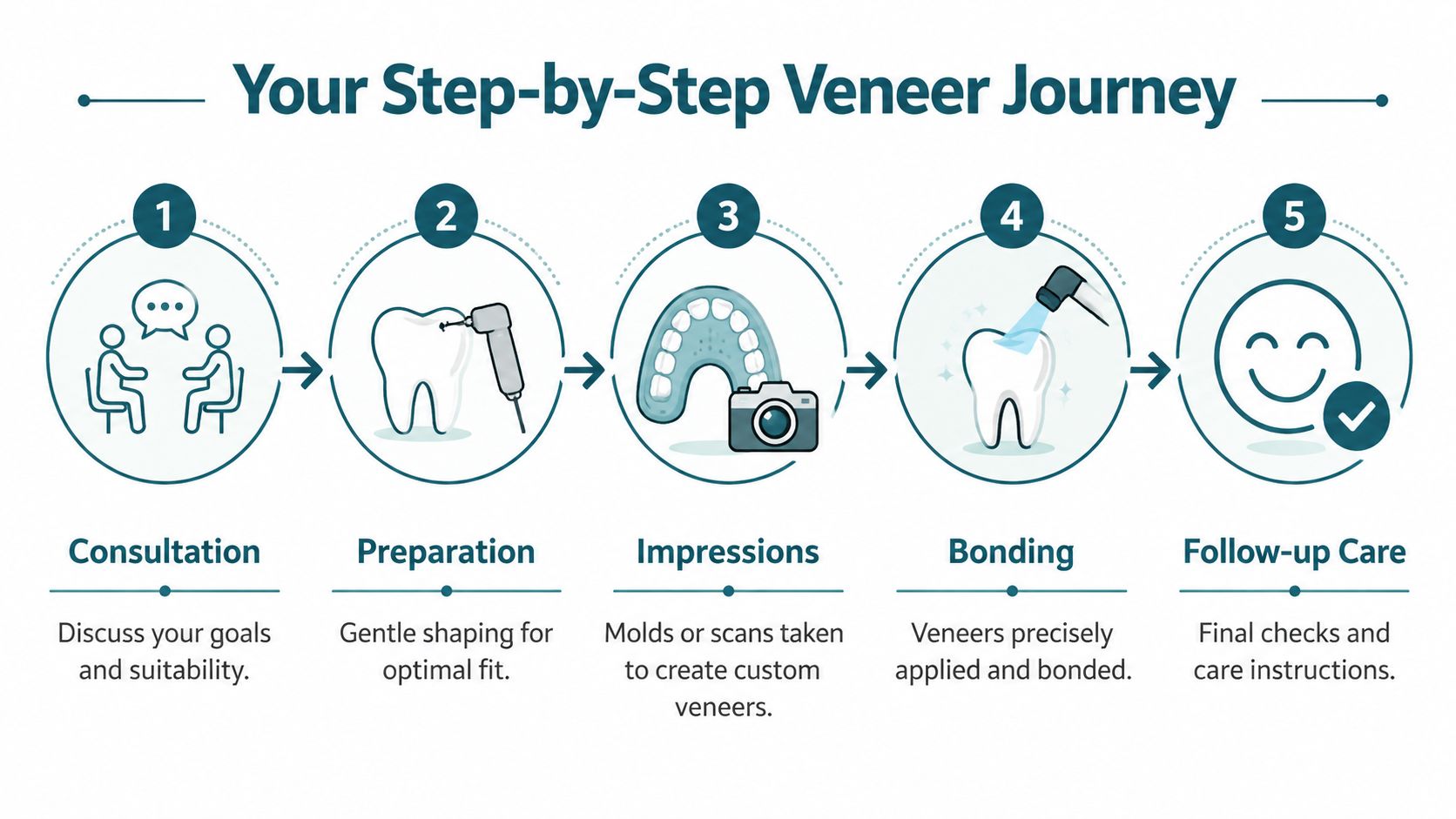
It is common to feel calmer about veneers once the sequence is known. The process is planned, not rushed, and each visit has a clear purpose.
A quick visual can make that easier to picture.
The first visit and smile planning
The first appointment usually starts with a conversation about what bothers the patient most. Sometimes it’s one chipped tooth. Sometimes it’s the overall color, spacing, or shape of the front teeth. The dentist examines the teeth, checks the gums, reviews bite patterns, and makes sure there isn’t decay or another issue that should be treated first.
Planning matters because veneers should fit the person, not just the teeth. Photos, impressions, or digital scans may be used to help preview changes in shape and proportion. Some patients also like reviewing real smile transformations before deciding what kind of result looks natural to them.
Later in the process, many patients find it helpful to see a short overview like this before committing to treatment.
Preparing the teeth and trying the new look
Once the plan is approved, the preparation visit begins. The dentist gently reshapes the front of the selected teeth so the veneers can sit flush and look natural. Then impressions or digital scans are taken and sent for fabrication.
Some patients wear temporary or provisional veneers while the final ones are being made. That period is useful because it gives the patient a sense of the new shape and lets the dentist evaluate speech, bite, and general appearance in daily life.
A patient from Lancaster or Circleville might be surprised by how subtle this stage feels. The teeth don’t suddenly look artificial. The goal is usually the opposite. The smile should look cleaner, brighter, and more balanced without looking like a completely different person.
Final placement and follow-up
At the bonding appointment, each veneer is tried in and checked carefully. The dentist reviews shape, edge length, color, and how the teeth come together when the patient bites. Small adjustments can be made before anything is permanently bonded.
Once the fit is confirmed, the veneers are bonded into place and polished. The final result often feels both new and familiar. That’s usually the sign of good cosmetic work. Friends may notice the smile looks refreshed, but they may not immediately guess why.
After placement, follow-up care is straightforward. The office checks comfort, bite, and home care habits, and the patient gets guidance on brushing, flossing, and avoiding habits that could damage the new surfaces.
Who Is a Good Candidate for Dental Veneers
Not every cosmetic concern calls for veneers. The best candidates usually have healthy teeth overall and want to improve the look of the front teeth rather than repair major structural damage.
That distinction matters. Veneers are cosmetic restorations, so they work best when the foundation underneath is strong.

Signs veneers may be a strong fit
A person may be a good veneer candidate when several of these are true:
- The teeth and gums are healthy. Active decay and gum disease should be treated first.
- There’s enough enamel. Veneers bond best to enamel, so the amount and quality of that outer layer matters.
- The goals are cosmetic. Veneers are often ideal for chips, stains, shape issues, and small gaps.
- The bite is reasonably stable. Heavy grinding or clenching can put extra stress on veneers.
- The patient wants a custom, polished result. Veneers are designed around smile balance, not just tooth color.
One common misunderstanding is that veneers can fix every kind of crookedness. They can improve the appearance of minor misalignment, but they don’t move teeth. If teeth are crowded, twisted, or significantly out of position, orthodontic treatment may be the better choice first.
Veneers change surfaces and shapes. Invisalign changes positions. Crowns rebuild teeth that need more coverage. Whitening brightens natural enamel. The right option depends on the actual problem.
When another treatment may make more sense
Whitening may be the better choice if the teeth are healthy and the main concern is general yellowing. Invisalign may be more appropriate when spacing or alignment is the main issue. Crowns may be necessary if a tooth is cracked, heavily filled, or structurally weakened.
Some patients also aren’t good veneer candidates yet. Ongoing grinding, untreated cavities, or unhealthy gums can lead to avoidable problems. A careful exam helps sort that out before any cosmetic work begins.
That kind of honesty is valuable. A good cosmetic consultation doesn’t try to fit everyone into veneers. It identifies the treatment that supports oral health, appearance, and long-term comfort.
Benefits and Long-Term Care for Your New Smile
Veneers are popular because they don’t just brighten teeth. They can reshape a smile in a way that feels balanced and natural. For the right patient, that can improve confidence in conversations, photos, and day-to-day life.
They also offer staying power when they’re planned well and maintained carefully.
Why many patients choose porcelain veneers
Porcelain veneers are often selected for a few practical reasons:
- Natural appearance. Porcelain reflects light in a way that resembles enamel, which helps the smile look lifelike instead of flat.
- Resistance to staining. They tend to hold their appearance well compared with more stain-prone materials.
- Multiple cosmetic fixes in one treatment. A veneer can improve color, shape, minor spacing, and small chips at the same time.
- Long-term reliability. Clinical findings summarized by this veneer longevity review report 96% survival at 5 years, 93% at 10 to 11 years, and 83% still functioning at 20 years.
For many people, that makes veneers feel less like a quick cosmetic touch-up and more like a long-term smile investment. Patients who are comparing options often want to understand value as much as appearance, which is why a clear guide to veneer cost considerations can be helpful during planning.
How to protect veneers every day
Daily care is simple, but it matters.
- Brush and floss consistently. Veneers cover the front of teeth, but the natural tooth and gumline still need normal hygiene.
- Skip the hard habits. Chewing ice, biting fingernails, or opening packages with teeth can damage both veneers and natural teeth.
- Use a nightguard if grinding is a concern. Bruxism puts extra pressure on front teeth and should be managed.
- Keep routine dental visits. Regular exams help catch bite changes, wear, or edge problems early.
- Treat them like teeth, not tools. Veneers are durable, but they aren’t meant for tearing plastic or cracking hard objects.
The best veneer result is the one that still looks good years later because the patient cared for it like part of a healthy smile, not like a fragile accessory.
It’s also important to remember that enamel removal is irreversible, even though it’s minimal. That’s why thoughtful case selection matters so much before treatment begins.
Your Comfort-Focused Veneer Experience at Amanda Family Dental
You finally decide to ask about veneers after years of covering your smile in photos. Then a new worry pops up. Will the visit feel rushed, confusing, or uncomfortable?
At Amanda Family Dental, the goal is to make the process feel calm and personal from the first conversation. Patients from Amanda, Lancaster, Circleville, and Carroll often want more than a cosmetic result. They want a local office that explains things clearly, answers questions without pressure, and helps them feel settled in the chair.
That patient journey usually starts with the basics. A new patient exam, digital X-rays, a cleaning if needed, and a conversation about what you want to change. It works a bit like drawing up plans before remodeling a front porch. Before anyone changes the visible surface, the foundation has to be checked. If veneers are a good fit, your treatment plan is built around your goals, your oral health, and your budget. If another option makes more sense, the same office can talk through teeth whitening, Invisalign, restorative care, extractions, emergency treatment, or dental implants.
Comfort also matters during the visit itself.
Amanda Family Dental offers digital X-rays, mercury-free fillings, fluoride-free choices, total health screening, myofunctional therapy, and sleep dentistry support for patients who want care that considers overall health and comfort. For adults who have put off dental visits because of anxiety, those options can make the idea of cosmetic treatment feel much more manageable.
Cost is part of the decision too. Flexible payment options and the Power Plan Membership give patients practical ways to plan for care without feeling cornered by one payment path. That matters in a small community practice, where trust is built through clear answers and steady care, not sales pressure.
Patients in Amanda, Lancaster, Circleville, and Carroll who are ready to explore veneers, cosmetic dentistry, or complete dental care can schedule a consultation with Amanda Family Dental. The team provides clear guidance, personalized treatment planning, and a welcoming approach that helps patients move toward a healthier, more confident smile.