

Your Straighter, More Confident Smile in Just Six Months
If crooked or gapped front teeth make smiling in photos feel uncomfortable, that hesitation is familiar to many adults across Amanda, Lancaster, Circleville, and Carroll, Ohio. A lot of people want cosmetic improvement, but they don't want years of traditional braces or a treatment plan that feels bigger than the problem itself.
Six Month Smiles can be a practical middle ground. It was designed for older teens and adults who want to improve the appearance of the front teeth with clear brackets and tooth-colored wires, while avoiding a full, extensive orthodontic approach when the concern is mainly cosmetic, according to clinical overview of the Six Month Smiles system.
At Amanda Family Dental, that conversation usually starts with a simple question. Is the goal a healthier bite, a more complete restorative plan, or a faster cosmetic improvement in the smile zone? These six month smiles before and after examples help make that answer clearer by showing what tends to work well, where the limits are, and how a local, personalized plan can turn a long-standing concern into a visible change.
Table of Contents
- 1. Moderate Crowding Correction in 6 Months
- 2. Diastema Gap Closure and Smile Widening
- 3. Rotated Teeth Alignment and Bite Correction
- 4. Overbite Reduction and Profile Enhancement
- 5. Post-Invisalign Refinement and Touch-Up Treatment
- 6. Anterior Open Bite Correction and Functional Improvement
- 7. Smile Makeover Integration with Whitening and Veneers
- Six Month Smiles: 7-Case Before & After Comparison
- Is Six Month Smiles Right for Your Smile Goals?
1. Moderate Crowding Correction in 6 Months
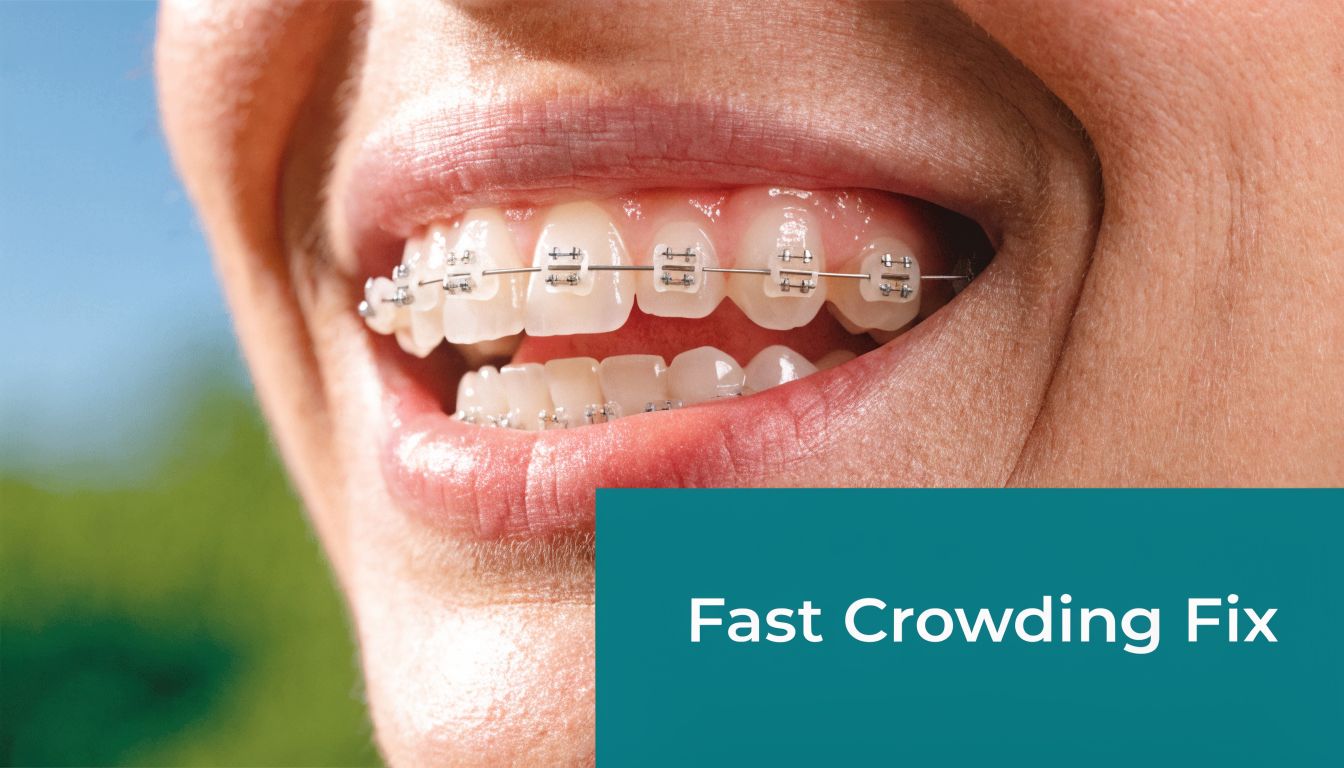
A patient sits down for a consult in Amanda and says the same thing many adults say. The bite feels fine, but the front teeth cross over each other enough to stand out in every photo and every conversation.
That is often the kind of case Six Month Smiles handles well. The goal is cosmetic alignment of the teeth that show when you smile, not a full rebuild of the bite. In the right patient, that narrower goal keeps treatment focused and efficient.
Why this case works well
Moderate crowding in the front teeth usually creates a visible problem without always creating a major functional one. That distinction matters. If the back teeth fit reasonably well and the main complaint is overlapping or uneven front teeth, short-term cosmetic braces can produce a meaningful before and after change without committing the patient to a longer orthodontic plan.
We see this in real Amanda Family Dental cases. A teacher wanting to feel more comfortable in the classroom, a parent tired of hiding their smile in family pictures, or a patient getting ready for a wedding often wants the same outcome. Straighter visible teeth, clear expectations, and a timeline that feels manageable.
The trade-off should be stated plainly. Six Month Smiles is not designed to correct every bite issue. If crowding is tied to jaw position, heavy bite discrepancies, or significant tooth movement in the back of the mouth, a broader orthodontic approach may be the better recommendation.
Practical rule: If the front teeth are the main concern and the patient wants cosmetic improvement more than full bite correction, short-term braces are often a sensible option to discuss.
What patients should know
Strong before and after results usually depend less on the brackets themselves and more on case selection, follow-up, and daily care.
- Keep review visits on schedule: Regular adjustments help tooth movement stay controlled and predictable.
- Brush carefully around brackets: Straightening teeth looks good, but healthy enamel and gums are what make the final result look clean.
- Plan cosmetic finishing in the right order: Whitening is often better after alignment, once the teeth are in their final positions.
- Discuss fees early: Patients comparing options can review Six Month Smile cost considerations before starting treatment.
Some readers also like to compare other transformation formats and patient experiences. You can explore success stories from Ryzio's program.
A moderate crowding case may look simple at first glance, but the best results come from matching the treatment to the actual problem. That is where local experience matters. Each smile we treat in Amanda has its own starting point, priorities, and finish line.
2. Diastema Gap Closure and Smile Widening
A small gap between the front teeth can feel much bigger than it looks clinically. Some patients have no pain and no chewing problem at all, yet the space becomes the first thing they notice in every mirror and every photo.
Gap closure is one of the most satisfying six month smiles before and after changes because it tends to be easy to see. Documented Six Month Smiles cases show visible changes in spacing and overall smile aesthetics within roughly five to six months when the case selection is appropriate, based on documented case examples from Six Month Smiles.
A common cosmetic concern
Patients seeking gap closure often want a natural-looking result without bonding or veneers as the first step. They may also want the smile to look broader and more balanced, not just have the central space closed.
That matters because smile design isn't only about moving two teeth together. It also involves how the neighboring teeth sit within the smile line so the after result doesn't look tight or unfinished.

How the after result holds up
The visible result at the end of treatment isn't the whole story. Gaps can reopen if retention isn't taken seriously, especially when the original spacing has been present for years.
Closing the space is only half the treatment. Keeping it closed is what makes the before and after result last.
Patients at Amanda Family Dental should expect a conversation about retainers as part of the plan, not as an afterthought. That's especially important for adults from Amanda, Lancaster, and Circleville who want cosmetic treatment because they delayed braces the first time and don't want to repeat the process later.
3. Rotated Teeth Alignment and Bite Correction
A patient comes in from Amanda with one front tooth turned just enough to draw the eye in every photo. The bite may feel mostly fine, but the smile looks uneven, the edges do not line up, and the rotated tooth can make the whole front segment appear more crowded than it really is.
That kind of concern often has a very specific story behind it. We see adults who had braces years ago and stopped wearing retainers. We also see patients who never wanted full orthodontic treatment, but now want to correct the one tooth that keeps bothering them in conversation, family pictures, or work settings. In the right case, Six Month Smiles can address that visible problem efficiently at Amanda Family Dental.
When rotation is the main problem
Rotated front teeth tend to respond well when the issue is limited to the teeth that show in the smile and the overall bite is reasonably stable. The goal is cosmetic alignment in the visible zone, not a full rebuild of how the jaws fit together.
That distinction matters.
A slightly twisted lateral incisor or canine may be a good short-term braces case. A rotated tooth tied to deeper crowding or a broader bite issue calls for a different plan. Patients comparing approaches can review our guide to teeth straightening options for adults before deciding which method fits their goals.
What a good result depends on
Honest case selection is critical here. A rotated tooth can look simple from the front, but the key question is whether straightening it will improve the smile without creating compromises elsewhere in the bite.
In successful local cases, the after result usually comes from a few things working together. The visible tooth movement fits the cosmetic goal. The bite can tolerate that movement. The patient understands the scope of treatment from the start.
- Works best when: The bite is generally stable and the main concern is one or several rotated front teeth.
- Needs a closer exam when: The tooth position connects to heavier crowding, root position concerns, or a larger jaw relationship issue.
- Sometimes benefits from staged treatment: Alignment may come first, followed by reshaping, whitening, or other cosmetic finishing if the case calls for it.
Clinical insight: Strong before and after results usually come from choosing the right case, not forcing a cosmetic system to solve a structural bite problem.
4. Overbite Reduction and Profile Enhancement
A common Amanda-area consultation starts with a simple concern. The front teeth show too much, the upper teeth seem to sit too far forward, and photos from the side never look quite right.
In a case like that, the goal is usually not a dramatic jaw change. The goal is to reduce the prominent look of the front teeth, soften the smile from the profile view, and create better balance in a way that fits the limits of cosmetic orthodontics.
What Six Month Smiles can improve here
Six Month Smiles can help selected adults whose main concern is the appearance of the front teeth. In the right case, aligning and repositioning the visible teeth can make the smile look less protrusive and more even from both the front and the side.
That said, this is one of the clearest areas where case selection matters.
A mild to moderate cosmetic overbite concern may respond well. A deep bite tied to jaw position, significant tooth wear, or a more complex bite relationship usually calls for a broader treatment plan. At Amanda Family Dental, that distinction shapes the conversation early, because a good before and after result depends on choosing a treatment that matches the actual problem.
What I look for before recommending it
Profile improvement with Six Month Smiles tends to work best when the visible change the patient wants can come from front-tooth movement alone. If the patient expects full correction of a structural bite issue, this approach can fall short even if the front teeth look straighter.
Good candidates often include patients who:
- want a more balanced smile in photos and conversation
- have upper front teeth that appear flared or prominent without a severe underlying bite problem
- value shorter cosmetic treatment and understand its limits
Cases that need closer evaluation often include:
- a deep overbite with significant lower-tooth coverage
- bite problems linked to jaw position rather than front-tooth alignment
- expectations centered on full orthodontic correction instead of visible cosmetic improvement
For some local patients, the final result looks even better after whitening, because straighter teeth and a brighter shade tend to make the profile and smile line look cleaner as a whole.
5. Post-Invisalign Refinement and Touch-Up Treatment
Sometimes the before and after story doesn't start with untreated teeth. It starts with a patient who already invested in Invisalign, liked the result, then noticed a little relapse over time in the front teeth.
That scenario is more common than many people expect. A slight return of spacing or crowding can make a smile feel "off" even when the change is subtle to everyone else.
Why minor relapse happens
Teeth don't become fixed in place forever just because active treatment ended. If retainer wear slips, the front teeth can begin shifting again, especially in adults who had cosmetic alignment rather than major bite correction.
Six Month Smiles can sometimes function as a focused refinement option. It stays centered on the visible smile zone and can be useful when the patient doesn't want to restart a broader orthodontic process.
What makes a touch-up worth it
The strongest candidates are patients with small front-tooth irregularities, clear cosmetic goals, and a willingness to follow a stricter retention plan afterward. In many of these cases, the issue isn't whether teeth can move again. It's whether the after result will be protected this time.
A touch-up only makes sense when retention becomes part of the commitment, not an optional extra after braces come off.
At Amanda Family Dental, this kind of refinement can also pair well with professional whitening or other cosmetic services, especially for patients who want the smile to look finished rather than merely straighter.
6. Anterior Open Bite Correction and Functional Improvement
An anterior open bite tends to bother patients in two ways at once. It changes the look of the smile, and it can make biting into foods with the front teeth feel awkward.

For some adults, the concern has been present since childhood. Others notice it after relapse from previous orthodontic treatment. Either way, it often creates a strong interest in six month smiles before and after photos because the change can be visually dramatic when the front teeth begin relating to each other more naturally.
A visible problem with daily effects
This is a case type where careful evaluation matters even more. Open bite patterns can involve habits, tongue posture, functional issues, and bite relationships that go beyond simple cosmetic alignment.
Amanda Family Dental's broader service mix is helpful here because treatment planning doesn't have to stop with the braces discussion. If tongue posture or oral muscle habits are contributing factors, that should be part of the conversation before promising a cosmetic fix.
A short video can help patients visualize the kind of front-tooth relationship being discussed.
Retention matters even more here
Long-term stability is where many promotional galleries stay quiet, and patients deserve better than that. One review of this topic notes that existing before-and-after content often underexplains relapse risk and the importance of retainers after short-term orthodontic treatment, as discussed in this comparison article on Invisalign and Six Month Smiles.
That doesn't mean open bite correction with Six Month Smiles can't be worthwhile. It means the patient needs a full plan that addresses function, follow-up, and retention instead of focusing only on the day the braces come off.
7. Smile Makeover Integration with Whitening and Veneers
A patient finishes alignment, looks in the mirror, and realizes straight teeth were only part of the goal. The smile may still need a brighter shade, more balanced edges, or minor reshaping to look finished.
That is where careful sequencing makes a real difference. Six Month Smiles can put the front teeth in a better position first, so whitening and veneer planning are based on the actual smile you want to keep.
Why sequencing matters
Starting with color or shape before alignment can create avoidable compromises. If crowded or rotated teeth are whitened first, the result may look uneven once those teeth are moved. If veneers are placed too early, more tooth structure may need to be adjusted just to mask a position problem that orthodontics could have corrected first.
In practice, the better order is often alignment, then whitening, then selective bonding or veneers if small shape issues remain. That approach gives the dentist more control and often lets the final restorative work stay lighter and more conservative.
Patients in Amanda often ask whether they need veneers on several teeth to get the look they want. Sometimes they do not. After alignment and whitening, one or two small refinements may be enough. For patients considering that bigger-picture plan, Amanda Family Dental offers smile makeover options in Amanda that place each step in a practical order.
Who usually chooses this route
This option tends to fit adults with healthy teeth who still feel their smile looks mismatched. The teeth may be slightly crooked, darker than they used to be, or uneven at the edges from wear.
A common Amanda case looks like this. Small spaces are closed with Six Month Smiles. Whitening follows after the teeth are in position. Then we reassess whether veneers are still needed or whether simple contouring or bonding will do the job.
Patients who already know their teeth run sensitive during whitening should plan for that early, not as an afterthought. Reviewing options for oral care for sensitive teeth can help set realistic expectations before the cosmetic phase begins.
The main point is not to stack procedures for the sake of doing more. It is to choose the right sequence so the final result looks natural, fits the bite, and avoids unnecessary dentistry.
Six Month Smiles: 7-Case Before & After Comparison
| Case | Implementation complexity | Resource requirements | Expected outcomes | Ideal use cases | Key advantages |
|---|---|---|---|---|---|
| Moderate Crowding Correction in 6 Months | Low–Moderate (limited to anterior teeth, no extractions) | Tooth-colored brackets/wires, monthly adjustments, good oral hygiene | Corrects mild–moderate anterior crowding in ~6 months; cosmetic improvement | Adults wanting fast, discreet front-tooth alignment | Faster and more aesthetic than traditional braces; cost-effective |
| Diastema (Gap) Closure and Smile Widening | Moderate (targeted closure plus arch widening) | Aesthetic appliances, regular monitoring, retention | Closure of central gaps and a wider smile arc within ~6 months | Patients self-conscious about gaps seeking natural, quick results | Addresses root cause vs. masking; faster than veneers/bonding |
| Rotated Teeth Alignment and Bite Correction | Moderate–High (precision bracket placement; possible refinements) | Precise bracket positioning, photographic monitoring, monthly adjustments | Correction of rotations and improved bite symmetry within ~6 months | Adults with one or more rotated anterior teeth needing function + aesthetics | Simultaneous functional and cosmetic improvement; discreet |
| Overbite Reduction and Profile Enhancement | Moderate (controlled horizontal tooth movement) | Light-force mechanics, follow-up visits, retention (may be fixed) | Reduced overjet, improved facial profile and bite function in most mild–moderate cases | Adults with mild–moderate overbite seeking profile and speech improvement | Improves profile and function faster than traditional orthodontics |
| Post-Invisalign Refinement and Touch-Up Treatment | Low (targeted, short-course refinement) | Bracket application, review of prior aligner records, short monitoring | Quick correction of minor relapse or remaining irregularities in ~6 months | Invisalign patients needing minor retreatment or touch-ups | Cost- and time-efficient refinement vs full retreatment |
| Anterior Open Bite Correction and Functional Improvement | High (intrusion mechanics; often requires adjunct therapy) | Intrusion mechanics, possible myofunctional therapy, close monitoring | Closure of anterior open bite with improved chewing and speech (may exceed 6 months if complex) | Patients with anterior open bite seeking functional restoration and aesthetic gain | Restores function and prevents periodontal/wear issues |
| Smile Makeover Integration: SMS with Whitening and Veneers | High (multimodal sequencing and coordination) | Orthodontics + professional whitening + veneers, detailed planning, higher cost | Comprehensive smile transformation in ~6–8 months with aligned, shaded, and shaped teeth | Patients wanting full cosmetic redesign (weddings, careers, public figures) | Synergistic, dramatic results; maximizes overall aesthetic outcome |
Is Six Month Smiles Right for Your Smile Goals?
Seeing six month smiles before and after results can make treatment feel more real. The more important question is whether the smile goals are cosmetic, functional, or part of a broader dental plan.
Six Month Smiles is generally best suited to adults and older teens who want visible improvement in the front teeth without committing to the longer timeline of traditional braces. It typically focuses on the anterior six to eight upper and lower teeth using low-force, tooth-colored wires and brackets, and average treatment time is commonly four to six months in the right cosmetic cases, according to this clinical summary of Six Month Smiles treatment. That focused approach is also why it isn't the right choice for every bite problem.
At Amanda Family Dental, the first step is a consultation that looks at the whole picture. A new patient exam, digital X-rays, and a conversation about what bothers the patient most help determine whether the concern is mild crowding, spacing, rotation, relapse after previous treatment, or something that calls for another option. That kind of planning matters because the best cosmetic result starts with accurate case selection, not with rushing into treatment.
Patients also deserve a clear discussion about maintenance. Retainers protect the investment, and they matter just as much as the active treatment phase if the goal is a result that still looks good well after the brackets come off. For some patients, a complete plan may also include whitening, veneers, restorative dentistry, or other cosmetic refinements once alignment is finished.
For readers searching for a dentist in Amanda, OH, or a cosmetic dentist near Lancaster, Circleville, or Carroll, Ohio, local care can make this process simpler. Amanda Family Dental offers complete family and cosmetic dentistry close to home, which means the same office can help evaluate alignment concerns, review other treatment options, and build a personalized plan around comfort, appearance, and long-term goals.
If front teeth are crowded, spaced, or slightly out of position, a consultation can answer the biggest question quickly. Is this a short-term cosmetic case, or does the smile need something more complete?
Amanda Family Dental welcomes patients from Amanda, Lancaster, Circleville, and Carroll, Ohio who want a clearer answer about cosmetic tooth alignment, smile makeovers, routine dental care, or other treatment options. To schedule a consultation with Amanda Family Dental, contact the office and ask about a personalized exam and treatment plan.