

Dental implants often last 20 to 30 years or even a lifetime with proper care, with clinical studies showing 95 to 98% still functioning after 10 years and 90%+ success rates after 20 years. That kind of longevity isn’t automatic, though. It depends on daily care, health habits, bite forces, and the quality of planning and follow-up from the dental team.
A missing tooth changes more than appearance. It can make chewing uneven, affect speech, and slowly shift confidence in everyday moments like smiling in photos or speaking at work. Many patients searching for how long do dental implants last, or looking for a dentist near me in Amanda, Lancaster, Circleville, or Carroll, Ohio, want a clear answer before committing to treatment.
The practical answer is that implants have excellent long-term potential, but they do best when someone treats them like a long-term health investment rather than a one-time fix. That’s why the conversation shouldn’t stop at the implant itself. It should include the crown, bone support, oral hygiene, smoking history, clenching habits, and what kind of maintenance keeps everything stable over the years.
Table of Contents
- The Lifelong Potential of Dental Implants in Amanda OH
- Understanding the Science Behind Implant Longevity
- Key Factors That Influence Your Implant’s Lifespan
- Protecting Your Investment Against Grinding and Wear
- Why Implants Outlast Bridges and Dentures
- Your Partner for Long-Term Success at Amanda Family Dental
- Ready for a Permanent Smile Solution in the Amanda Area
The Lifelong Potential of Dental Implants in Amanda OH
A missing tooth often starts as an inconvenience. Then meals become less comfortable, smiling in photos feels less natural, and the small workarounds become part of daily life. Many patients from Amanda, Lancaster, Circleville, and Carroll reach a point where they want a solution that feels stable and worth keeping for many years.
Dental implants are designed with that goal in mind. A long-term review published in the National Library of Medicine on implant survival over time reported high survival rates for implant treatment over extended follow-up periods. That matters, but the more useful question in a real dental office is what helps those good outcomes last in everyday life.
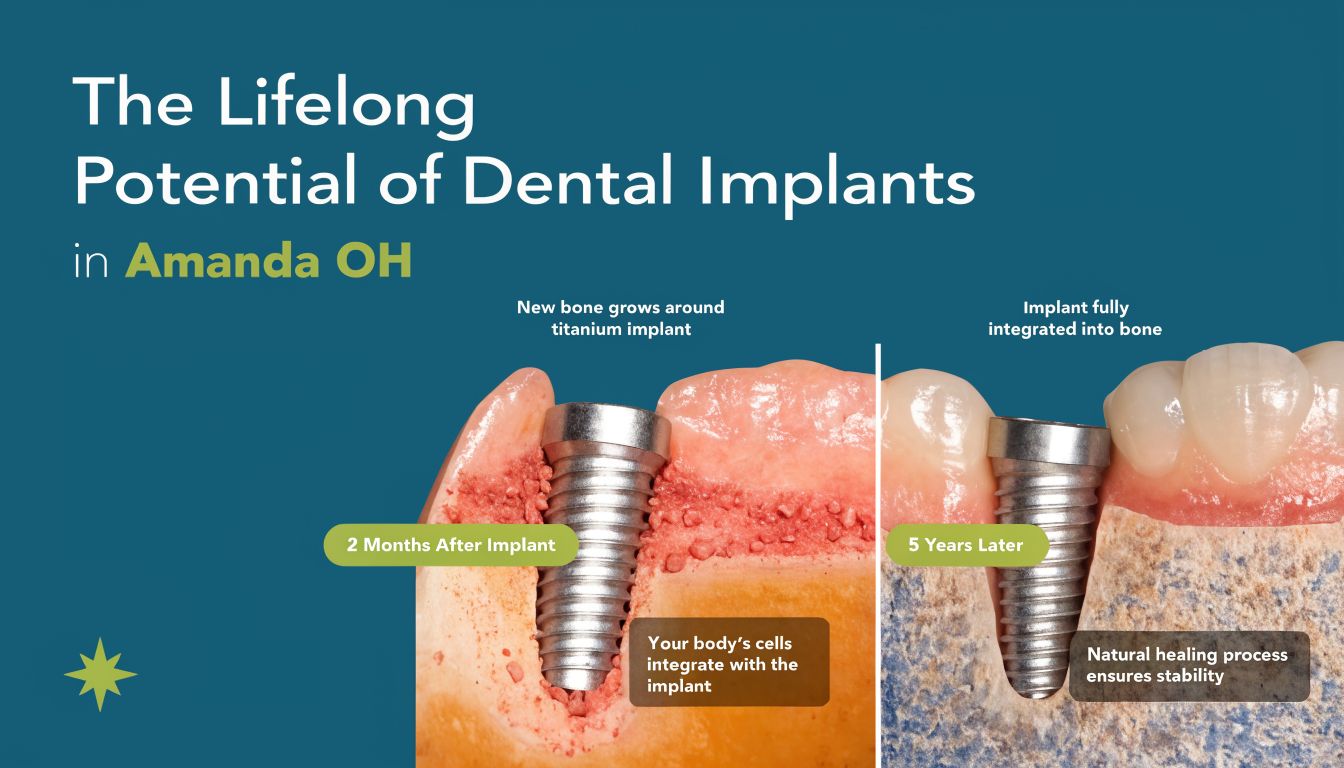
Long-lasting implants usually come from planning and follow-through. The implant needs healthy bone, a stable bite, and gums that stay healthy over time. The restoration on top also has to be monitored because the post in the bone and the visible crown do not always wear at the same pace.
That is where a local dental partnership matters in practical terms. At Amanda Family Dental, we see implant longevity as an ongoing responsibility, not a one-time procedure. Treatment starts with a plan that accounts for long-term needs, including bite forces, grinding habits, home care, and how the implant will be checked over the years.
Practical rule: Patients who keep their review visits and address small bite or gum issues early usually give their implants the best chance to last.
If you want a clearer picture of the process from consultation through healing and restoration, this guide to dental implants and what to expect explains the treatment path in plain language. A dental implant can serve as a long-term tooth replacement. Keeping it that way takes good habits at home and a dental team that continues to protect the result with you.
Understanding the Science Behind Implant Longevity
Implants last because they don’t just sit in the mouth like a removable appliance. They become anchored in the jaw through osseointegration, the process where the titanium post fuses with surrounding bone. That bond is what makes an implant feel stable when someone chews, talks, and uses the tooth normally.
A helpful way to picture it is a post set firmly into the ground. A removable option rests on top. An implant becomes part of the support structure. That difference is why implants feel more secure than many patients expect.
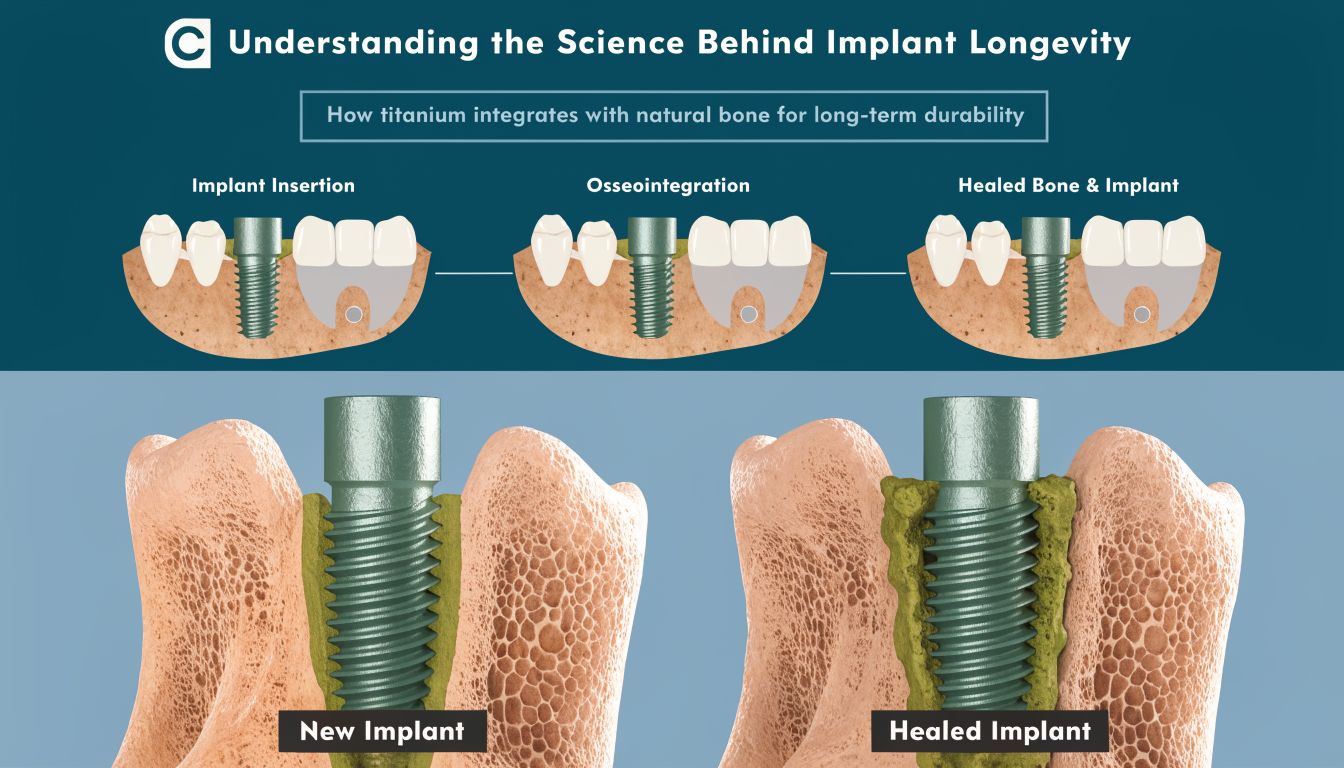
Long-term data in this explanation of osseointegration and implant survival reports implant-level survival rates of 98.9% at 3 years and over 90% at 20 years. The same source explains that the titanium post fuses with the jawbone, creating the biological bond that gives implants their durability.
Why that bond matters in daily life
Once integration is solid, the implant can support normal function far better than many temporary-feeling alternatives. Patients usually care less about the technical term and more about what it means in real life:
- Chewing feels steadier because the implant is anchored rather than resting loosely on the gums.
- Speech often feels more natural because there’s no removable piece shifting during conversation.
- The replacement tooth feels more like part of the mouth instead of something separate.
Why healing time shouldn’t be rushed
Osseointegration takes time. The body has to build that attachment between bone and implant. If an implant is overloaded too early, or if infection interferes with healing, the foundation may never become as stable as it should.
A long-lasting implant starts with a calm, well-protected healing phase, not with speed for its own sake.
That’s one reason careful planning matters so much in restorative dentistry. Patients searching for a dentist in Amanda, OH or nearby communities often focus on the final smile. The stronger question is whether the foundation is being built in a way that supports that smile years from now.
Key Factors That Influence Your Implant’s Lifespan
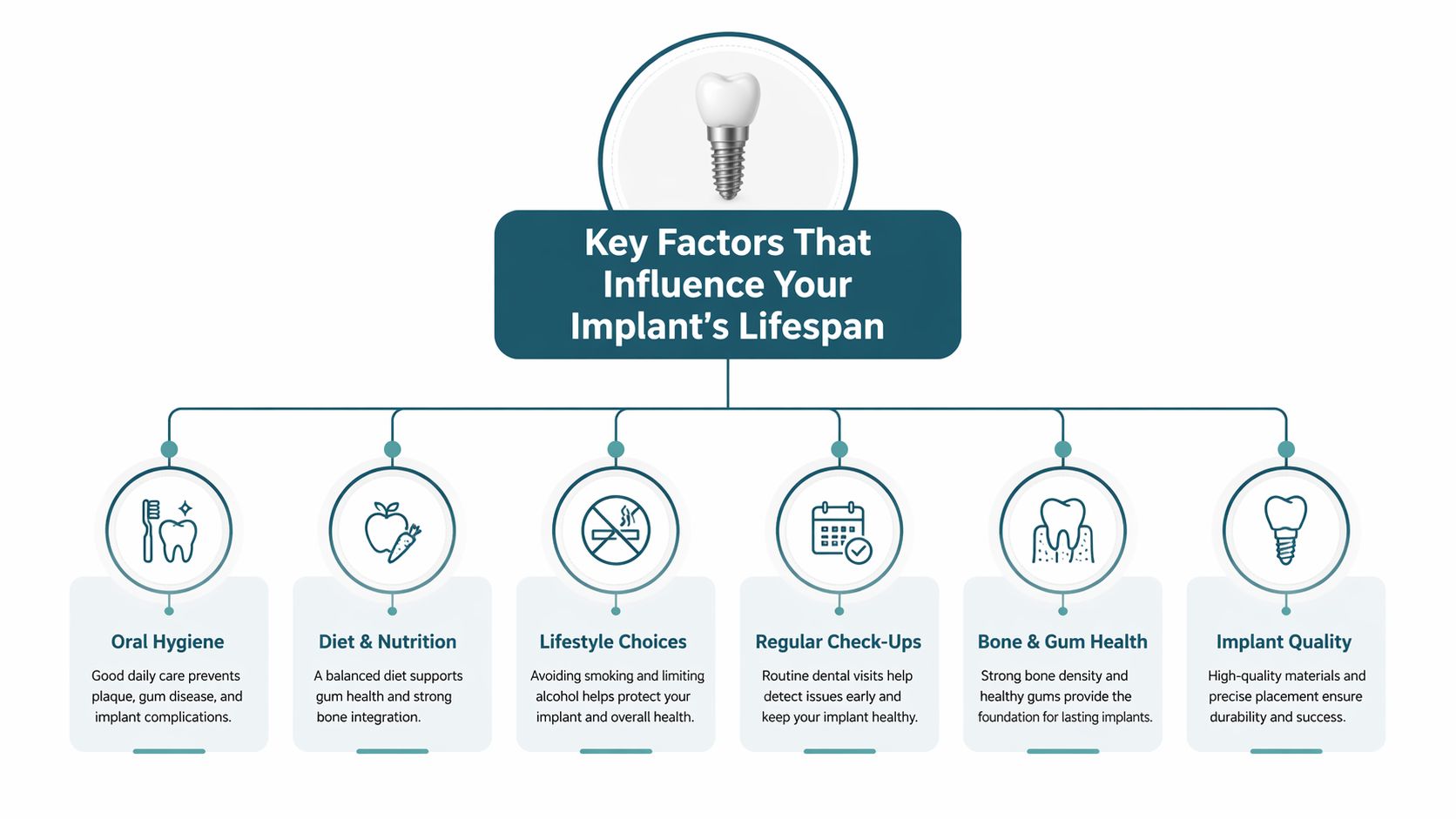
An implant doesn’t succeed on material alone. The visible result depends on a chain of decisions and habits, starting before placement and continuing for years after the crown is delivered. When patients ask how long do dental implants last, the most honest answer is that the timeline depends on what happens around the implant just as much as the implant itself.
The post and the crown don’t age the same way
Patients sometimes hear “implants can last a lifetime” and assume every part lasts equally long. That’s not how implant dentistry works. According to this overview of implant component lifespan and risk factors, the titanium post can last 25+ years, while the crown typically needs replacement every 10 to 15 years.
That distinction matters because replacement of a worn crown is very different from losing the implant itself. In many cases, the post remains stable while the top restoration shows normal wear from years of chewing.
Habits and health can shorten the timeline
Two patients can receive similar treatment and have very different long-term results because the mouth doesn’t function in a vacuum. Smoking and uncontrolled diabetes are two of the clearest examples.
- Smoking affects the bone around the implant. The same source notes that smoking doubles the rate of peri-implant bone loss.
- Poorly controlled diabetes changes healing and long-term survival. In patients with HbA1c greater than 8%, the 10-year implant survival rate can be cut roughly in half.
- Oral hygiene still matters every day. Plaque around an implant can inflame the tissues that support it, even when the implant itself was placed correctly.
A patient doesn’t need perfect circumstances to qualify for implants. But realistic planning matters. If smoking, dry mouth, clenching, or gum inflammation are part of the picture, those issues should be addressed directly instead of ignored.
Planning and maintenance matter
Strong implant results come from good case selection, careful imaging, and a maintenance plan that fits the patient’s risk level. A person with a calm bite and healthy gums doesn’t need the same follow-up approach as someone with heavy wear, grinding, or a history of periodontal problems.
A useful resource on caring for dental implants long term can help patients understand what daily maintenance should look like after treatment.
Here’s the practical breakdown:
| Factor | What helps | What hurts |
|---|---|---|
| Bone and gum support | Healthy tissue and good planning | Untreated inflammation and unstable support |
| Home care | Consistent brushing and cleaning around the implant | Plaque buildup left to sit |
| Medical habits | Managing health conditions and reducing risk factors | Smoking and uncontrolled diabetes |
| Restorative wear | Monitoring the crown over time | Ignoring chips, looseness, or bite changes |
The strongest implant cases usually aren’t the ones with the least maintenance. They’re the ones where maintenance happens early, before small problems become major ones.
Protecting Your Investment Against Grinding and Wear
One of the most overlooked threats to implant longevity is bruxism, or teeth grinding and clenching. Many people do it at night without knowing it. Others clench during stress, while driving, or while working at a computer. The problem isn’t only tooth wear. It’s repeated heavy force on something designed to be stable, not overloaded.
Why grinding is such a problem
An implant doesn’t have the same cushioning feedback as a natural tooth. That means heavy bite pressure can create wear patterns or strain that a patient may not notice right away. Over time, that can contribute to screw loosening, crown damage, or stress around the supporting bone.
This discussion of bruxism and implant risk reports that undetected grinding can raise implant failure rates by 2 to 4 times, and that long-term success can drop below 90% in patients who clench or grind if they don’t use protection such as a custom nightguard.
That’s why implant treatment shouldn’t end with placing the final crown and hoping for the best. A heavy bite needs attention.
What actually helps
The useful approach is usually simple and practical:
- Screen for wear patterns. Flattened teeth, chipped edges, jaw soreness, and fractured fillings can point to clenching.
- Use a custom nightguard when needed. A properly made guard helps distribute force and protect both implants and natural teeth.
- Check the bite regularly. Even a small high spot can matter when repeated night after night.
- Don’t ignore new symptoms. Tight jaw muscles, broken porcelain, or a crown that suddenly feels “off” deserves evaluation.

Patients often think grinding only damages natural teeth. It can also shorten the life of implant restorations if no one is watching for it.
Ongoing dental care makes a real difference. The right team doesn’t just replace a missing tooth. It also watches the forces acting on that replacement year after year.
Why Implants Outlast Bridges and Dentures
A patient may sit in the chair deciding between three good options, all with different strengths. The right choice depends on health, budget, the condition of nearby teeth, and how much long-term maintenance that patient is willing to take on.
Implants often last longer because they stand on their own. A bridge depends on the teeth next to the space. A denture depends on the gums and underlying ridge for support. Those differences affect how each option wears over time.
A practical side-by-side comparison
Earlier in this article, we covered the long service life many implants can reach with proper care. Bridges and dentures can also serve patients well, but they usually need replacement or adjustment sooner.
| Option | Typical long-term pattern | Main trade-off |
|---|---|---|
| Dental implant | Often the longest-lasting option with good home care and regular follow-up | Requires surgery, healing time, and careful planning |
| Bridge | Can perform well for many years but may need replacement sooner than an implant | Uses neighboring teeth as anchors |
| Denture | Often needs relines, adjustments, or replacement as the mouth changes | Less fixed feel and less chewing stability |
In day-to-day practice, the difference is not only lifespan on paper. It is what the restoration asks the rest of your mouth to do.
A traditional bridge can be an excellent treatment. It is still a tooth-supported restoration. That means the adjacent teeth carry extra responsibility, and if one of those supporting teeth develops decay, a crack, or gum problems, the bridge may be affected too. A denture can replace several teeth at once and avoid surgery, which matters for some patients, but it tends to shift more and change fit as the gums and bone change.
Bone support changes the long-term picture
One of the biggest advantages of an implant is that it replaces the root as well as the visible tooth. The American Academy of Periodontology explains that implants help preserve bone, while conventional bridges do not replace the root structure and removable dentures can contribute to faster bone loss over time through pressure on the ridge (American Academy of Periodontology implant information).
That difference shows up gradually. Patients may notice that a denture that fit well at first starts to feel loose, or that the shape of the ridge changes enough to require adjustments. With an implant, the support comes from the bone at the implant site, which usually gives the restoration a more stable feel during chewing and speaking.
For many patients around Amanda, the crucial question is not merely, "What costs less today?" It is, "Which option is likely to protect my mouth better over the next decade?" That is a better way to judge value.
At Amanda Family Dental, those conversations are part of treatment planning. Some patients are better served by a bridge or denture, and I am comfortable saying that when it is the better fit. But if the goal is a fixed replacement with the best chance of long-term stability, implants usually have the advantage.
Your Partner for Long-Term Success at Amanda Family Dental
A dental implant isn’t a one-visit commodity. It’s a process that starts with diagnosis and continues through maintenance. The patients who do well over time usually know exactly what’s happening, why it’s being recommended, and what they need to do to protect the result.
What patients can expect from the start
A thoughtful implant process begins with a full evaluation, including a review of the missing tooth site, gum condition, bite pattern, and available bone support. Digital X-rays help the team assess whether the area is ready for an implant or whether another step should come first.
That planning matters for more than surgery. It also shapes the restoration that will go on top and whether the final bite will place healthy forces on the implant. For patients looking for a dentist near me who provides restorative dentistry, the quality of this early phase often predicts how smooth the later phases feel.
Amanda Family Dental provides implant consultations, digital X-rays, personalized treatment planning, and ongoing dental care for patients in Amanda, Lancaster, Circleville, and Carroll, Ohio. Those services fit into a larger picture that may also include routine cleanings and exams, restorative treatment, emergency dental services, and support for related issues such as grinding or anxious dental visits.
Long-term success is ongoing care
The final crown isn’t the finish line. Implants need periodic monitoring just like natural teeth do. A patient may need routine cleanings, bite checks, updated X-rays when indicated, or adjustments if the crown shows wear or the bite changes.
That long-term relationship is where a community-focused practice can make life easier. Patients don’t want to explain their history from scratch every time something feels different. They want a dental office that knows their case, remembers their concerns, and can respond before a small issue turns into pain or repair.
A solid maintenance mindset usually includes:
- Regular exams and cleanings so the team can monitor the tissues around the implant.
- Digital imaging when needed to check support and stability below the surface.
- Personalized follow-up if the patient has a history of clenching, inflammation, or restorative wear.
- Fast evaluation of changes like looseness, soreness, chipping, or a bite that suddenly feels uneven.
Good implant dentistry doesn’t stop at placement. It includes the follow-up decisions that keep the implant working comfortably years later.
That’s especially important for families balancing convenience, trust, and long-term oral health. Whether someone first comes in for a missing tooth, a new patient exam, cosmetic dentistry, or even an emergency dentist visit, the right home for care should support the whole picture, not just the procedure.
Ready for a Permanent Smile Solution in the Amanda Area
If a missing tooth is affecting comfort, confidence, or the ability to chew normally, it makes sense to ask whether an implant is worth it. For many patients, the answer is yes, especially when the goal is a fixed replacement designed to last for decades rather than a short-term patch.
The key is going in with realistic expectations. The implant post may last far longer than the crown. Habits like smoking and grinding can shorten the lifespan. Regular exams, cleanings, and bite checks protect the investment. Patients who understand those trade-offs usually make better decisions and get more from treatment.
Anyone comparing options should also weigh long-term value against short-term cost. A useful starting point is this page on what dental implants cost and what affects treatment planning. The right solution depends on the condition of the mouth, the goals for appearance and function, and the kind of maintenance a patient is ready to commit to.
For adults and families in Amanda, Lancaster, Circleville, and Carroll, Ohio, implant treatment can be a practical step toward a healthier, more confident smile that feels stable every day.
If you're ready to talk through missing tooth replacement, schedule a consultation with Amanda Family Dental. The office helps patients in Amanda, Lancaster, Circleville, and Carroll, Ohio with personalized treatment planning, new patient exams, digital X-rays, restorative dentistry, and long-term dental care designed to keep smiles healthy and functional.