

If an Invisalign tray has ever come out cloudy after lunch, started to smell a little off by dinner, or felt tighter than it should when it went back in, the problem usually isn't the aligner itself. It's the routine around it. The good news is that how to care for Invisalign aligners is mostly about a calm, repeatable rhythm, the kind that fits real life in Amanda, OH, Lancaster, OH, Circleville, OH, and Carroll, OH without turning every meal into a dental project.
Amanda Family Dental sees this all the time with patients who are trying to stay on track and still get through coffee runs, work lunches, school pickups, and evening errands. Invisalign works best when the trays are treated like precision appliances, not disposable plastic. A few small habits protect the fit, keep plaque from getting trapped under the aligners, and make the whole experience feel easier.
Table of Contents
- A Day in the Life of an Invisalign Patient
- Your Daily Care Rhythm
- Cleaning Methods Ranked by Risk
- Storage, Travel, and Eating Out
- Pairing Aligner Care with Your Oral Hygiene Routine
- Troubleshooting Stains, Odor, and Cloudiness
- When to Call Your Dental Team
A Day in the Life of an Invisalign Patient
The first challenge is rarely the cleaning itself. It's remembering that the trays are supposed to come out only for meals, drinks other than cool or tepid water, and brushing and flossing, while staying in place for 20–22 hours per day according to Invisalign's patient instructions (Invisalign patient instructions). That rhythm matters because the aligners sit directly against the teeth for most of the day, which means anything left on enamel can get trapped under plastic and exposed again and again.
A normal day usually starts with a quick removal, a rinse, and then breakfast. Later, the patient grabs lunch at a desk or in the car, then makes a choice that decides how the rest of the afternoon feels, either clean teeth and clean trays, or a shortcut that leaves residue behind. By evening, the same tray that seemed invisible in the morning can start to show where the day touched it.
What usually goes right
The patients who do best don't try to be perfect. They build a routine that feels automatic.
Practical rule: if the aligners are out of the mouth, they should be cleaned or stored immediately, not set down “for a minute.”
That mindset helps with workdays, school days, and weekends alike. It also keeps people from treating aligner care as a separate task. In real life, it's folded into the same moments as brushing, eating, and packing up to leave.
A good Invisalign routine also leaves less room for improvisation. People who know exactly where the case is, where the brush is, and what gets rinsed before reinsertion tend to have fewer surprises. For patients who want a clearer sense of the treatment path itself, Amanda Family Dental also shares a helpful overview of how Invisalign works, which can make the care routine feel less mysterious from the start.
Your Daily Care Rhythm
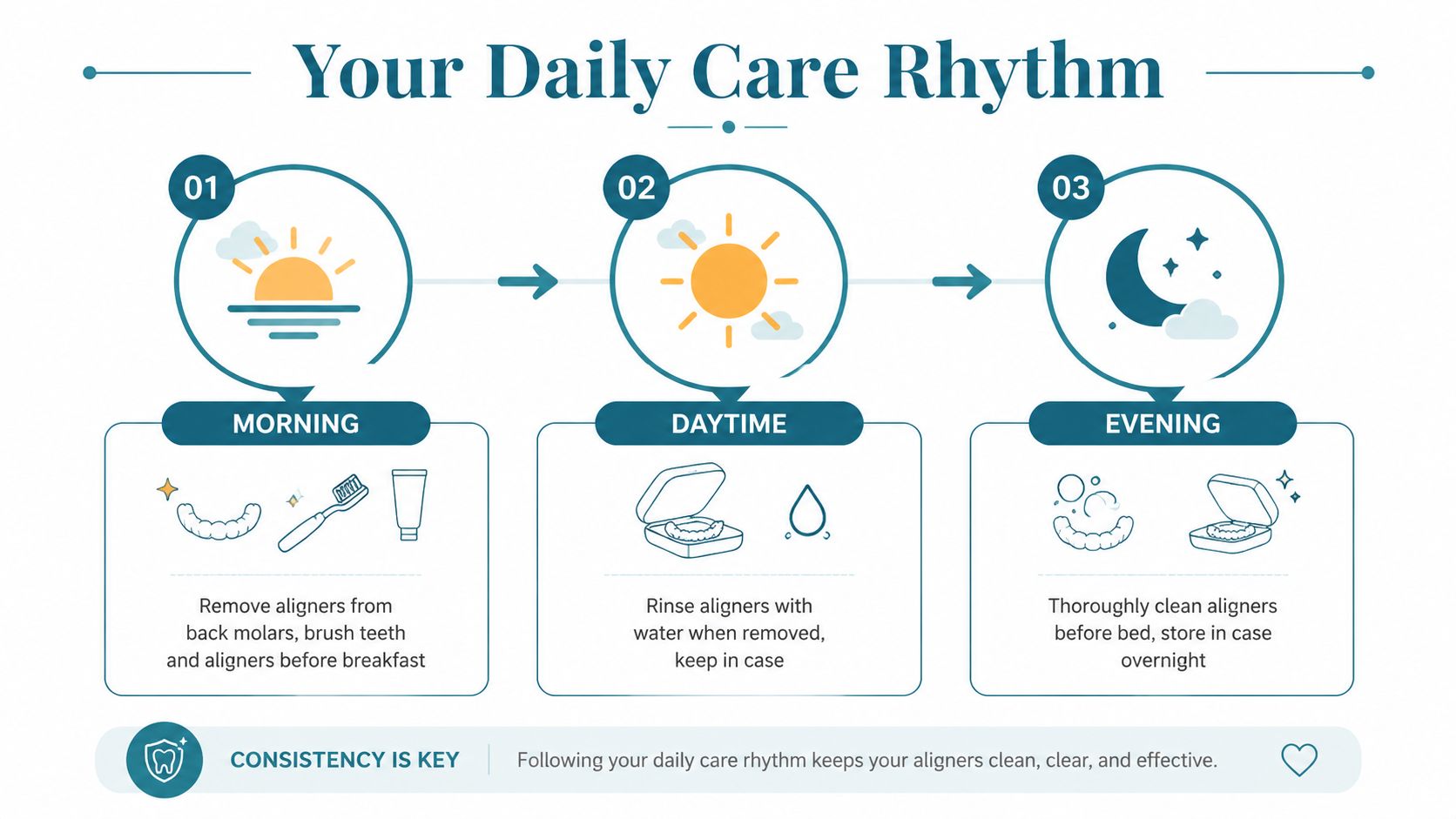
The cleanest aligner routines are simple enough to repeat on busy days. The core pattern is the same every morning, every meal, and every night, remove, rinse, clean, and reinsert only after the teeth and trays are ready. That's not just a preference, it lines up with Invisalign's instruction to clean the aligners before each insertion and to brush and floss after each meal or snack before putting them back in (Invisalign patient instructions).
Morning
The best removal starts from the back molars with fingertips, which reduces strain on the plastic and helps the tray release evenly (home care instructions). Right after that, a quick rinse with lukewarm or cold water keeps dried saliva from setting up on the surface.
Daytime
Meals are the main removal point, and they're the only time the trays should really be out unless the patient is brushing or flossing. Coffee, soda, juice, and hot drinks are all poor companions for aligners, because they increase stain risk or can stress the plastic. Water is the exception, and even then, cool or tepid water is the safest choice according to Invisalign's patient guidance (Invisalign patient instructions).
Evening
The end-of-day reset matters most because the day's plaque and film have had time to collect. A soft-bristled brush with a small amount of toothpaste or soap is the practical route, but the brushing has to cover all surfaces and edges carefully to reduce biofilm formation (Invisalign patient instructions). Hot water should stay out of the routine because it can warp the thermoplastic and change the fit (home care instructions).
For patients who want another practical timeline reference, Amanda Family Dental's Invisalign treatment timeline helps connect daily care with the bigger treatment plan.
Cleaning Methods Ranked by Risk
A tray that looks clear after a quick rinse can still carry plaque film, stain residue, and small rough areas that hold more buildup the next day. The goal is not only to make aligners look clean tonight, it is to keep the plastic smooth, reduce places where biofilm can cling, and avoid heat damage or discoloration over time. A 2022 systematic review found that aligner trays can accumulate biofilms, especially in the posterior palatal region and the incisal edge, and that a combined mechanical and chemical method is generally the most effective way to control that buildup.
The safest routine
A soft-bristle toothbrush, a small amount of mild clear soap, and lukewarm water is the most reliable day-to-day option. It is simple, gentle, and easy to repeat without overthinking it. The brushing still has to be thorough, because hard scrubbing can roughen the tray surface and give plaque more places to return.
Consistency is the win. A quick, careful clean after meals or before reinsertion does more for long-term clarity than occasional aggressive scrubbing.
Acceptable shortcuts
Some patients use Invisalign cleaning crystals or dentist-recommended retainer tablets for a periodic soak. As a supplement, they can help when trays need more than a rinse and brush, especially after a long day or after the aligners have dried out. For readers comparing machine-based cleaning ideas, ultrasonic retainer cleaning tips 2026 is a useful background resource, and as noted in the patient instructions above, the safest routine still centers on gentle mechanical cleaning with an appropriate cleaning solution when needed.
Methods to avoid
Abrasive toothpaste, hot water, bleach, and undiluted mouthwash soaks are poor choices. Colored or scented soaps can leave staining or residue, and harsh products can damage the plastic or leave a film that is hard to rinse away. As noted in the patient instructions above, Invisalign says not to use denture cleaners or soak aligners in mouthwash, and it recommends a soft-bristled brush with a small amount of toothpaste or soap instead.
| Method | When to Use | Risk Level | Why |
|---|---|---|---|
| Soft-bristle brush with mild clear soap | Daily routine | Low | Gentle on plastic, helps remove film without scratching |
| Invisalign cleaning crystals or retainer tablets | Periodic supplement | Low to moderate | Useful for deeper cleaning when used as directed |
| Clear antibacterial soap | Fallback when needed | Low | Practical, but still needs thorough rinsing |
| Toothpaste | Short-term only, if very mild and nonabrasive | Moderate | Some pastes scratch plastic or leave residue |
| Hot water | Never | High | Can warp thermoplastic and change fit |
| Bleach or harsh cleaners | Never | High | Damaging and unsafe for aligners |
| Mouthwash soak | Never, unless a clinician specifically says otherwise | High | Can discolor or degrade the tray surface |
For patients at Amanda Family Dental who ask about maintenance products, Amanda Family Dental can talk through what is appropriate for a specific tray set, then compare that with the instructions that came with the aligners. That matters because a product that seems harmless on social media can be too rough for plastic in real use.
Storage, Travel, and Eating Out
Storage is where a lot of good intentions disappear. Napkins, jacket pockets, and cupholders are common graveyards for aligners, because the tray looks “safe for a minute” until it isn't. The case should be the default every time the aligners come out, and the case itself should stay clean enough that it doesn't become a second biofilm problem.
The travel kit that saves the day
A simple on-the-go kit makes a busy schedule easier to manage. It doesn't need to be fancy, just dependable.
- Case first: Keep the aligner case in a bag, not loose in a pocket or wrapped in a napkin.
- Brush backup: Pack a travel toothbrush for meal breaks and longer days away from home.
- Rinse plan: If brushing isn't possible, rinse the mouth and the trays with water before reinsertion.
- Cold storage mindset: Keep aligners away from heat sources, including a hot car, because temperature changes can distort the plastic.
Eating out without making a scene
Restaurants are where patients tend to improvise. A discreet removal in the restroom or before entering the restaurant is usually the easiest path. If a brush isn't available, a thorough rinse is the next best step until proper brushing can happen later.
Clean teeth first, clean trays second, then back into the case if reinsertion has to wait.
Long flights, road trips, and late dinners all create the same basic issue, the trays may dry out if they sit exposed too long. That's another reason the case matters, and it's why aligners should never be tossed on a napkin beside a plate. The tray is easier to protect than to replace.
Pairing Aligner Care with Your Oral Hygiene Routine
Aligner care works best when it's attached to brushing and flossing instead of treated like a separate system. Because the trays sit close to the teeth for most of the day, any plaque or food residue left on enamel stays trapped under the plastic and gets repeated exposure. That's why Invisalign's patient guidance says to brush and floss after each meal or snack before reinserting the aligners (Invisalign patient instructions).
What the teeth need before the trays go back in
A soft-bristled brush protects both the trays and the gums, especially along the edges where food tends to linger. Gentle technique matters more than pressure. The point is to remove debris, not polish the enamel like a hard kitchen scrubber.
For patients who want a cleaner brushing routine during treatment, Amanda Family Dental's proper brushing technique is a helpful match for Invisalign wear, because the same careful approach protects gums and enamel while reducing the chance of trapped residue.
Where mouth care products fit
Some patients want a mouth rinse that supports cleanliness between brushing and reinsertion. A resource like anti-plaque mouthwash for natural oral care can be reviewed as a general oral care product, but it should never replace brushing, flossing, or tray cleaning. The most reliable habit is still the simple one, clean teeth first, clean aligners second, then reinsert.
Professional cleanings and checkups matter too, because aligner treatment still depends on healthy gums and plaque control. A dental team checks whether the trays are fitting properly, whether plaque is collecting in hard-to-reach spots, and whether the mouth is staying healthy enough for the aligners to keep doing their job. That's one reason active Invisalign patients are usually seen at regular intervals for monitoring and adjustments, along with cleaning and exam visits.
Troubleshooting Stains, Odor, and Cloudiness
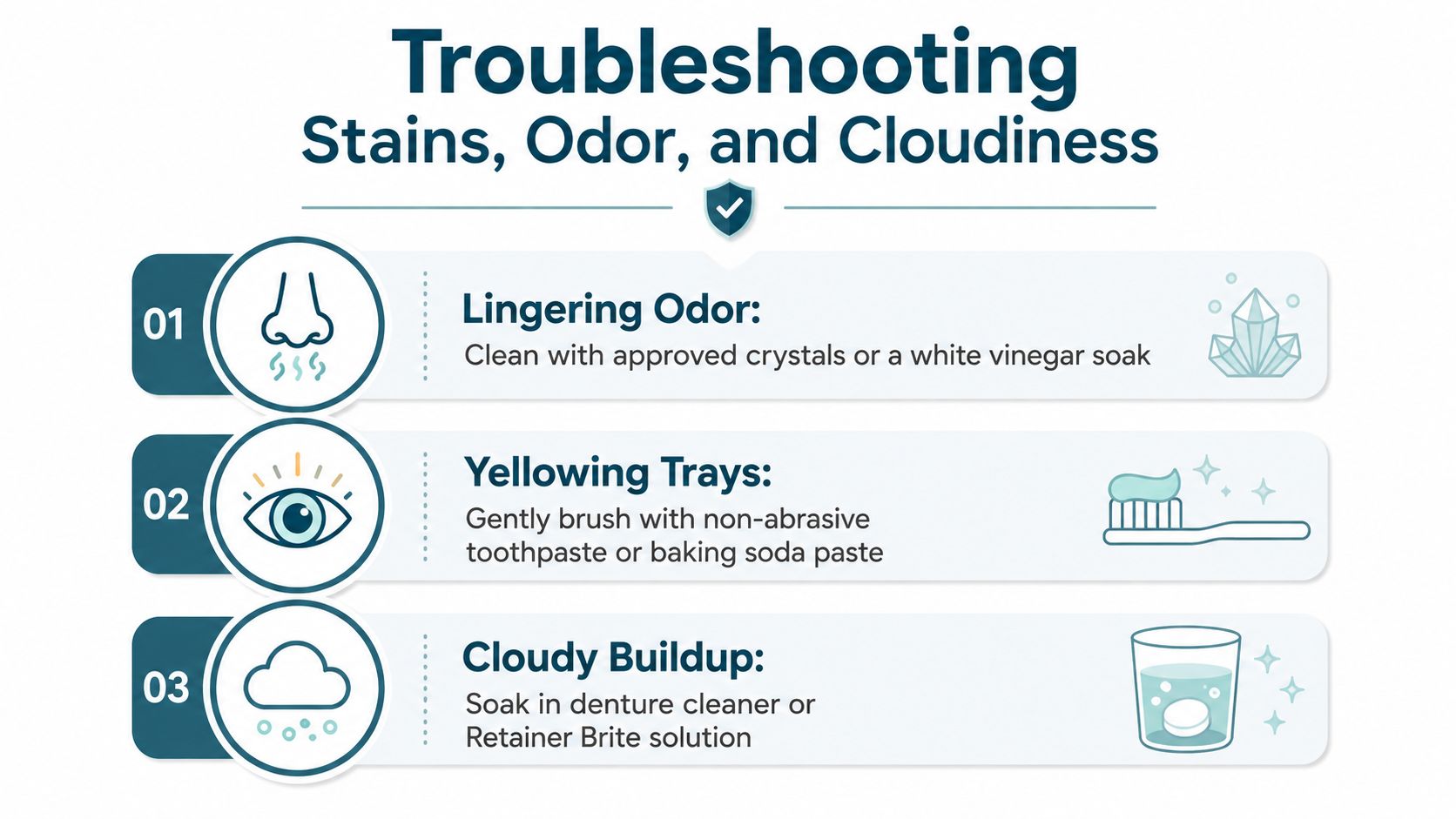
The complaints patients mention most often are usually easy to trace. Odor usually points to biofilm. Yellowing often comes from coffee, tea, or colored soaps. Cloudiness can happen when saliva dries on the plastic, or when mineral buildup starts to collect on the surface.
What to try at home first
A lingering smell usually needs a more thorough brush-and-soak routine, especially in the hard-to-reach areas where biofilm collects. Yellowing can often be improved by switching away from colored soaps and keeping dark drinks away from the trays. Cloudiness often responds to better rinse timing, because the plastic looks worse once residue gets left to dry.
A few practical examples help sort the problem quickly.
- Odor that returns daily: Clean more carefully, including edges and inner surfaces, then use an approved crystal or tablet soak if the clinician has recommended one.
- Yellow film after coffee or tea: Remove the tray before drinking, then brush the teeth before reinsertion.
- Cloudy buildup near the edges: Rinse right after removal, then make sure the aligners never dry with saliva residue on them.
- Rough spots or tiny cracks: Stop using abrasive products and stop trying to “fix” the tray at home.
What should not be ignored
A cracked or warped aligner should not be worn casually just to get through the day. Fit matters too much for that gamble, and a damaged tray can throw off comfort and progress. If the tray no longer seats correctly, or if the edges are cutting the gums, the right move is to stop and call the dental office.
Patients also shouldn't keep testing more and more products once the problem is clearly mechanical. At that point, the tray may need professional review rather than another soak.
When to Call Your Dental Team
Lost trays, damaged aligners, persistent odor, rough edges, and gum irritation all deserve a call. So does any question about switching to the next set, because moving too early or forcing a poor fit can create more trouble than it solves. A typical Invisalign checkup is a chance to confirm fit, review hygiene, and make sure the treatment is staying on course.
Amanda Family Dental helps patients in Amanda, Lancaster, Circleville, and Carroll, Ohio stay on top of that process with practical guidance and in-person support. If aligner care has started to feel confusing, or if a tray isn't fitting the way it should, that's the right time to ask for help instead of guessing.
If Invisalign care needs to feel simpler, Amanda Family Dental can help with practical guidance, treatment checks, and the kind of local support that makes day-to-day habits easier to stick with. To get help with aligner wear, cleaning questions, or a tray that doesn't feel quite right, visit Amanda Family Dental and schedule a visit with the team.