

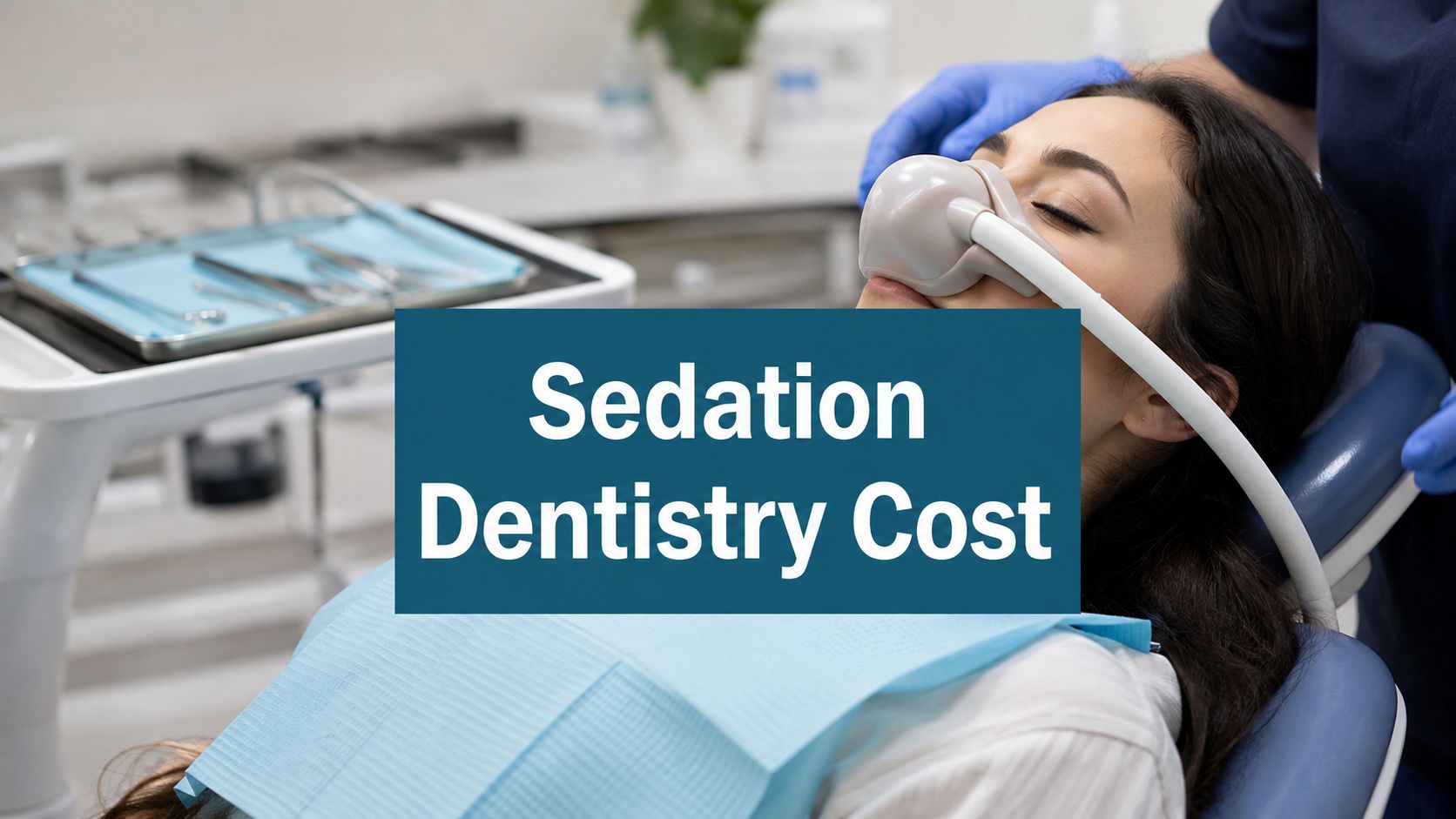
$25–$150 per visit for nitrous oxide, $150–$500 for oral sedation, $250–$1,500+ for IV sedation, and $800–$3,500+ for general anesthesia. Those are usually separate add-on fees layered on top of the dental work itself, so the total for a filling, extraction, or root canal can look very different depending on the level of sedation chosen.
For someone in Amanda, Ohio, Lancaster, Ohio, Circleville, Ohio, or Carroll, Ohio who's been putting off care because of fear, that price question is usually the first one that matters. The good news is that the internet often makes sedation pricing look more mysterious than it really is.
Table of Contents
- What Sedation Dentistry Costs and Why Patients Search for It
- Comparing the Four Types of Dental Sedation
- The Hidden Line Items Behind the Sedation Fee
- Insurance Medical Necessity and How Coverage Actually Works
- How Amanda Family Dental Structures Sedation Visits Locally
- Practical Ways to Lower Your Out of Pocket Cost
- Your Next Steps for a Stress Free Sedation Visit
- Common Questions About Sedation Dentistry Costs
What Sedation Dentistry Costs and Why Patients Search for It
A lot of people reach the same point before they call a dentist. A filling has been waiting, a tooth extraction keeps getting postponed, or a dental implant consultation feels too stressful to book, so the phone stays silent while the tooth gets worse. That's usually when the question changes from “Do I need treatment?” to “What's this going to cost me if I choose sedation?”
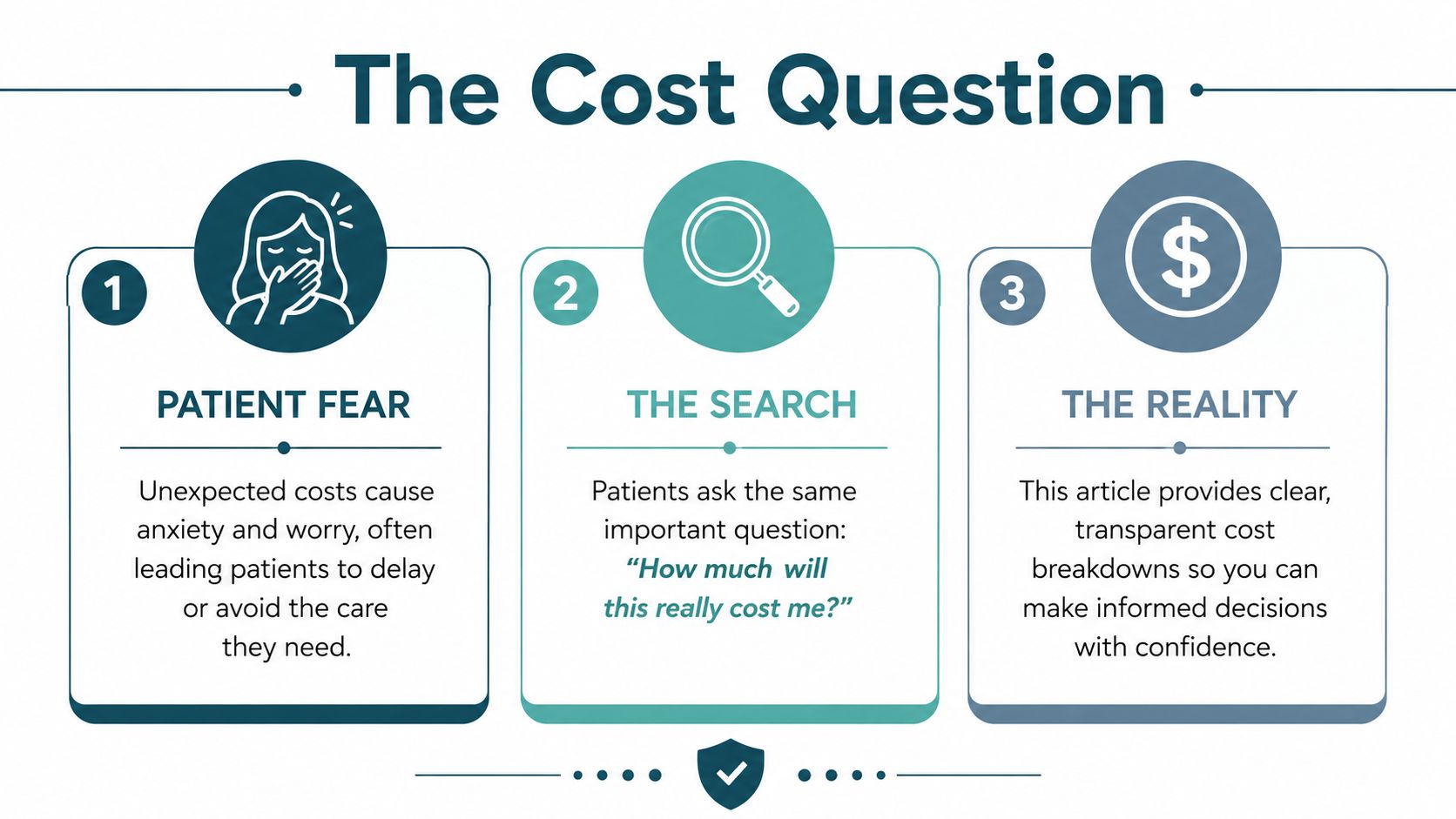
The four price bands patients usually see
Sedation dentistry is typically priced by sedation type, not by the dental procedure itself. A 2024 U.S. cost guide notes that the sedation fee is often separate from the underlying treatment, which is why two patients getting the same filling can still leave with very different totals, depending on anxiety, appointment length, and how deep the sedation needs to be. CostHelper's dental sedation cost guide lays out the common ranges as nitrous oxide at about $25–$150 per visit, oral sedation at $150–$500 per appointment, IV sedation at roughly $250–$1,500+, and general anesthesia at about $800–$3,500+.
Practical rule: the deeper the sedation, the more the bill reflects staffing, monitoring, and recovery time, not just the medication.
That difference matters because the same tooth can be managed at very different price points. A patient who only needs light relaxation may pay for nitrous oxide and the dental work. Another patient with severe anxiety may need a deeper tier, which changes the visit total fast.
The internet often hides that structure. Patients search for one number, but the honest answer is a range, because the final cost depends on the sedation tier, the length of the visit, and whether the office bills the sedation separately or by time. Once that is clear, the rest of the estimate usually makes more sense.
Comparing the Four Types of Dental Sedation
The easiest way to compare sedation is to match the sedation level to the problem in front of the patient. Mild nervousness, moderate fear, longer treatment, and surgical care don't all need the same approach. That's why the price bands are so wide.
Sedation Types Compared
| Sedation type | Typical fee | Best for | What drives the price |
|---|---|---|---|
| Nitrous oxide | $25–$150 per visit | Mild anxiety, short visits, routine care | Medication time, simple monitoring, quick recovery |
| Oral sedation | $150–$500 per appointment | Moderate anxiety, patients who want to feel very relaxed | Prescription medication, appointment length, escort needed |
| IV sedation | $250–$1,500+ | Longer procedures, higher anxiety, more complex cases | Continuous monitoring, recovery supervision, often billed by time |
| General anesthesia | $800–$3,500+ | Surgical cases and special situations | Dedicated anesthesia provider, airway management, facility overhead |
Nitrous oxide, often called laughing gas, is the lightest option. It's used when a patient needs help settling down but still wants a quick recovery and a normal day afterward. Oral sedation goes a step further, usually for people who know they get tense in the chair even before the first instrument starts.
IV sedation changes the appointment more dramatically. It's commonly used for longer treatment, higher anxiety, or care that would be difficult to finish comfortably with lighter options. General anesthesia sits at the top of the cost ladder because it's reserved for more complex care and requires the most intensive supervision.
The main reason the prices climb is not the drug itself. It's the room, the monitoring, the recovery setup, and the provider's time. Patients in Amanda, Lancaster, Circleville, and Carroll don't always need a hospital setting for moderate sedation, but deeper cases can still require more resources, which is what the bill reflects.
Amanda Family Dental describes its approach to sleep dentistry on its sleep dentistry overview, and that local access matters when someone wants comfort without a long drive.
The Hidden Line Items Behind the Sedation Fee
The sedation number is only one piece of the bill. Most patients are really paying for a whole visit, and that visit can include the exam, imaging, treatment planning, the restorative work itself, monitoring time, and sometimes recovery supervision. If the estimate only shows the sedative, the final statement can feel confusing.
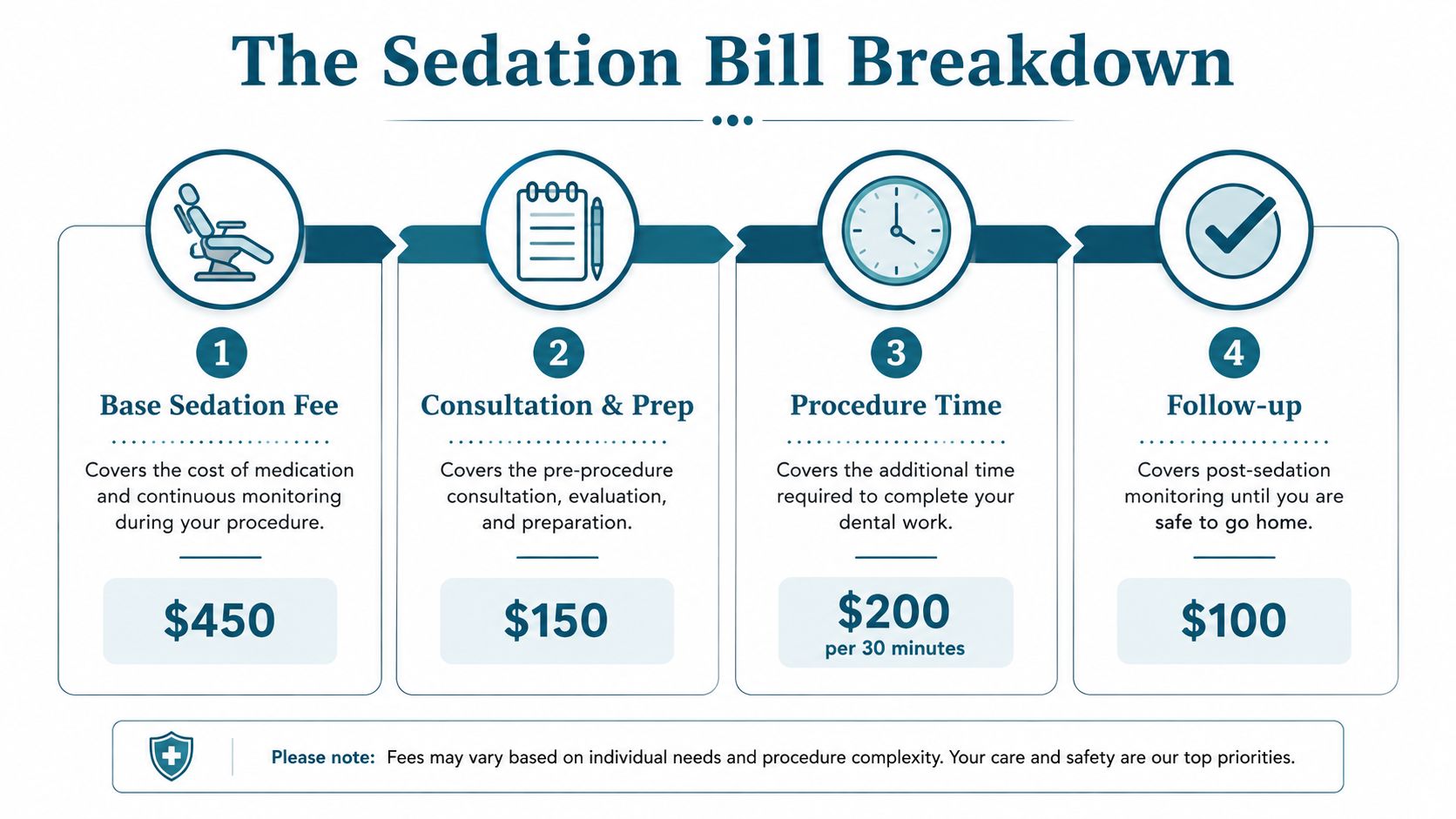
What usually sits underneath the quote
A sedated visit often starts like any other appointment, with a new patient exam and dental X-rays if needed. From there, the dentist confirms the problem, explains the options, and decides whether the patient needs a filling, extraction, root canal, crown work, or something else entirely. The sedation fee then sits beside the treatment fee, not inside it.
For deeper sedation, the time piece becomes even more important. The appointment can require extra monitoring and, in some cases, a recovery period before the patient goes home. That extra clinical time is part of why a quoted sedation price can be very different from the total visit total.
A simple example shows how much the structure matters. A single tooth extraction with nitrous oxide may stay relatively straightforward because the sedation is light and the visit is short. The same extraction for a patient with severe anxiety who needs IV sedation can require longer chair time, more monitoring, and a larger overall bill, even though the tooth being treated is the same.
The quote should always separate the sedation fee from the dental procedure fee. If it doesn't, the patient is not seeing the full picture.
That's the part many cost guides skip. Patients don't just need to know what sedation costs in isolation, they need to know what the entire visit will cost once the dental work, monitoring, and recovery are added together.
A clear office should be willing to itemize that before treatment begins, because anxiety drops when the numbers are explained plainly.
Insurance Medical Necessity and How Coverage Actually Works
Insurance is where a lot of sedation questions get messy. The key rule is simple, though. Many plans are more likely to help when sedation is considered medically necessary rather than used only for comfort. That's the distinction that decides whether the claim gets paid, denied, or routed differently.

When coverage is more likely
Coverage is often stronger when the record shows a real clinical reason for sedation. That can include documented dental phobia, special needs, complex restorative or surgical care, or pediatric care where cooperation is limited. In those situations, sedation is more than comfort, it becomes part of completing necessary treatment safely.
The most helpful paperwork is usually the simplest. A patient can bring prior dental records, physician notes if a medical condition affects care, and any information that shows why ordinary treatment won't work well. The more clearly the office can explain the need, the easier it is to submit the claim the right way.
That's also where medical billing can come in. Some practices will try medical insurance if dental benefits don't cover the sedation portion. For patients trying to compare practical pricing in another area of care, the hidden Jira app fees breakdown is a useful reminder that the first number rarely tells the whole cost story, and dental sedation works the same way.
A patient who is worried about coverage should ask two questions before scheduling. First, whether the plan recognizes sedation for the specific procedure. Second, whether the office can help pre-authorize or submit the claim with the right documentation. That is usually what keeps the estimate from turning into a surprise later.
How Amanda Family Dental Structures Sedation Visits Locally
At Amanda Family Dental, a sedation visit usually starts with a new patient exam, digital X-rays, and a treatment discussion that fits the patient's comfort level as well as the procedure itself. That matters for patients in Amanda, Lancaster, Circleville, and Carroll, because the right sedation choice is usually made after the dentist sees the tooth, the timing, and the anxiety level together.
How the visit is put together
A patient doesn't just get handed a sedation number and sent on the way. The team reviews the treatment plan first, then matches the sedation tier to the dental work. A simple cleaning or small restoration may need only light support, while a longer restorative case or tooth extraction may call for something deeper.
The practice also keeps the conversation practical for people who are trying to budget responsibly. That means talking through sleep dentistry, same-day care when available, and the way larger treatment plans can be staged rather than forced into one overwhelming appointment. For uninsured patients, the Power Plan Membership is another way to make preventive and restorative care feel more predictable.
Flexible payment plans also help when a procedure is larger than the patient's monthly cash flow. That does not change the clinical need, but it can make it possible to move forward without waiting until pain gets worse. Patients looking for care from a dentist near me in Amanda, OH, Lancaster, OH, Circleville, OH, or Carroll, OH usually want exactly that kind of straightforward planning.
Transparency helps more than pressure. When the estimate separates the sedation fee, the treatment fee, and any financing option, the decision gets easier.
Amanda Family Dental also offers financing information on its dental procedure financing page, which fits especially well for bigger restorative visits where sedation is only one part of the total.
Practical Ways to Lower Your Out of Pocket Cost
The smartest way to lower the bill is to plan the visit around the treatment, not just the sedation. If preventive care, restorative care, and sedation are coordinated well, the patient usually avoids repeat trips and extra fees tied to another appointment.
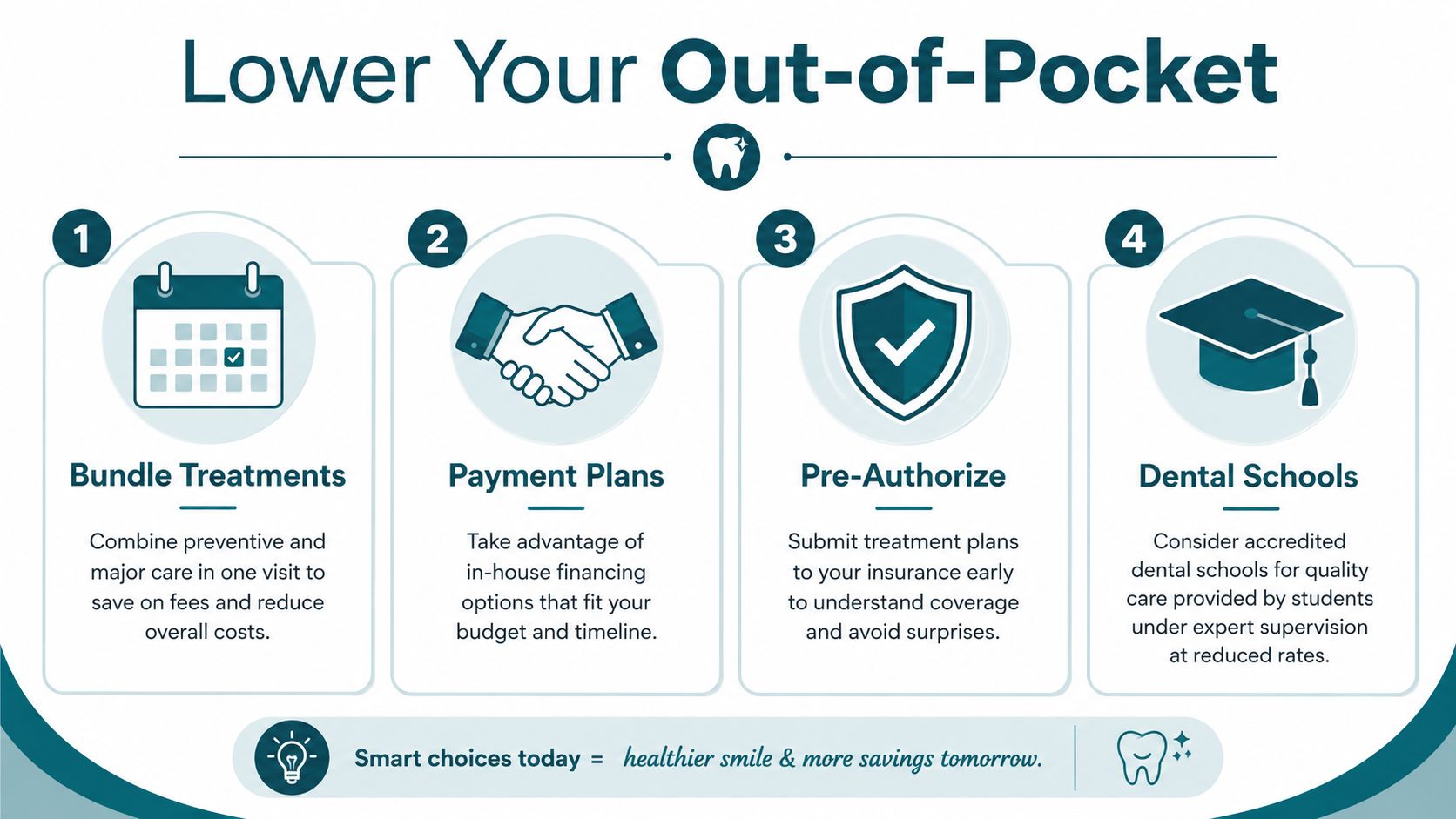
Four moves that can help
- Bundle treatment when possible: A patient who needs cleaning and exams plus a filling or extraction may save time and reduce repeat sedation needs by handling related care together.
- Ask about payment plans early: Offices that offer financing can spread the cost out instead of requiring a large single payment.
- Pre-authorize before treatment: Submitting insurance questions in advance reduces the chance of a surprise denial.
- Compare the sedation tier with the procedure length: A short visit may not need deeper sedation, while a longer one may justify it clinically.
A common assumption is that sedation is just a comfort add-on. That misses the bigger picture. For some patients, sedation keeps care from being delayed until a tooth becomes a bigger and more expensive problem, which is why the up-front cost can support better long-term budgeting.
For readers comparing payment options outside dentistry, the payment plans for healthcare leaders resource shows how structured payments are used in other parts of healthcare too. The same logic helps dental patients feel less trapped by one large bill.
Patients who want a local option can also review Amanda Family Dental's payment guidance for dental care before deciding how to move forward. The goal is not to make care feel cheap, but to make it manageable.
Your Next Steps for a Stress Free Sedation Visit
The easiest next step is to ask for a sedation consultation instead of trying to guess the price alone. A good call or message should include the kind of procedure needed, the level of fear involved, and whether the patient wants an itemized estimate before scheduling.
Before the visit, bring a list of current medications, any prior dental records, and any notes about past problems with treatment, anesthesia, or anxiety. That gives the office a cleaner picture of what kind of sedation is appropriate and whether coverage questions need to be handled differently.
A short checklist before booking
- Ask for itemized pricing: Separate the sedation fee from the dental procedure fee.
- Confirm insurance handling: Find out whether dental or medical benefits may apply.
- Ask about membership or payment options: That matters if insurance is limited or unavailable.
- Share your comfort concerns: The right sedation tier depends on more than the tooth itself.
Amanda Family Dental's approach is built around a warm hometown style that fits patients from Amanda, Lancaster, Circleville, and Carroll. Dr. Alyssa Jenkins and the team keep comfort, transparency, and trust at the center of the visit, not as extras, but as part of the care itself.
For readers who want one more safety check before booking, the office's sleep dentistry safety page can help frame the conversation. A quick consultation can turn a vague worry into a real plan, and that usually makes the appointment feel far less intimidating.
Common Questions About Sedation Dentistry Costs
One of the first questions patients ask is whether sedation is safe for routine cleanings. The answer depends on the person and the level chosen, but mild sedation is often discussed even for simpler visits when anxiety or a strong gag reflex gets in the way of care. The important part is matching the option to the patient, not forcing one approach for every appointment.
Another common question is how long the effects last and whether a driver is needed. Nitrous oxide usually wears off quickly, while oral, IV, and general anesthesia usually require the patient to plan for someone else to drive home. That's because the goal is comfort and safety, not rushing someone back into traffic too soon.
Patients also ask whether the fee is charged by the hour or by the visit. The answer can vary by sedation type and by office policy. Nitrous oxide is often handled more like a visit-based add-on, while IV sedation and general anesthesia are more likely to reflect time, monitoring, and the recovery setup.
The last question is what happens if insurance denies coverage. In that case, the patient should ask the office to review the denial, confirm whether medical billing is still possible, and look at payment options before deciding to delay treatment. A denial doesn't always mean the sedation isn't needed, it just means the paperwork or benefit category needs another look.
There are no silly questions when the bill is involved. A patient who asks early usually gets a clearer answer, a cleaner estimate, and a calmer visit.
If you're trying to understand how much sedation dentistry costs for your own situation, Amanda Family Dental can walk through the sedation tier, the treatment fee, and the payment options in plain language. Visit Amanda Family Dental to request a consultation and get a personalized estimate before you book.