

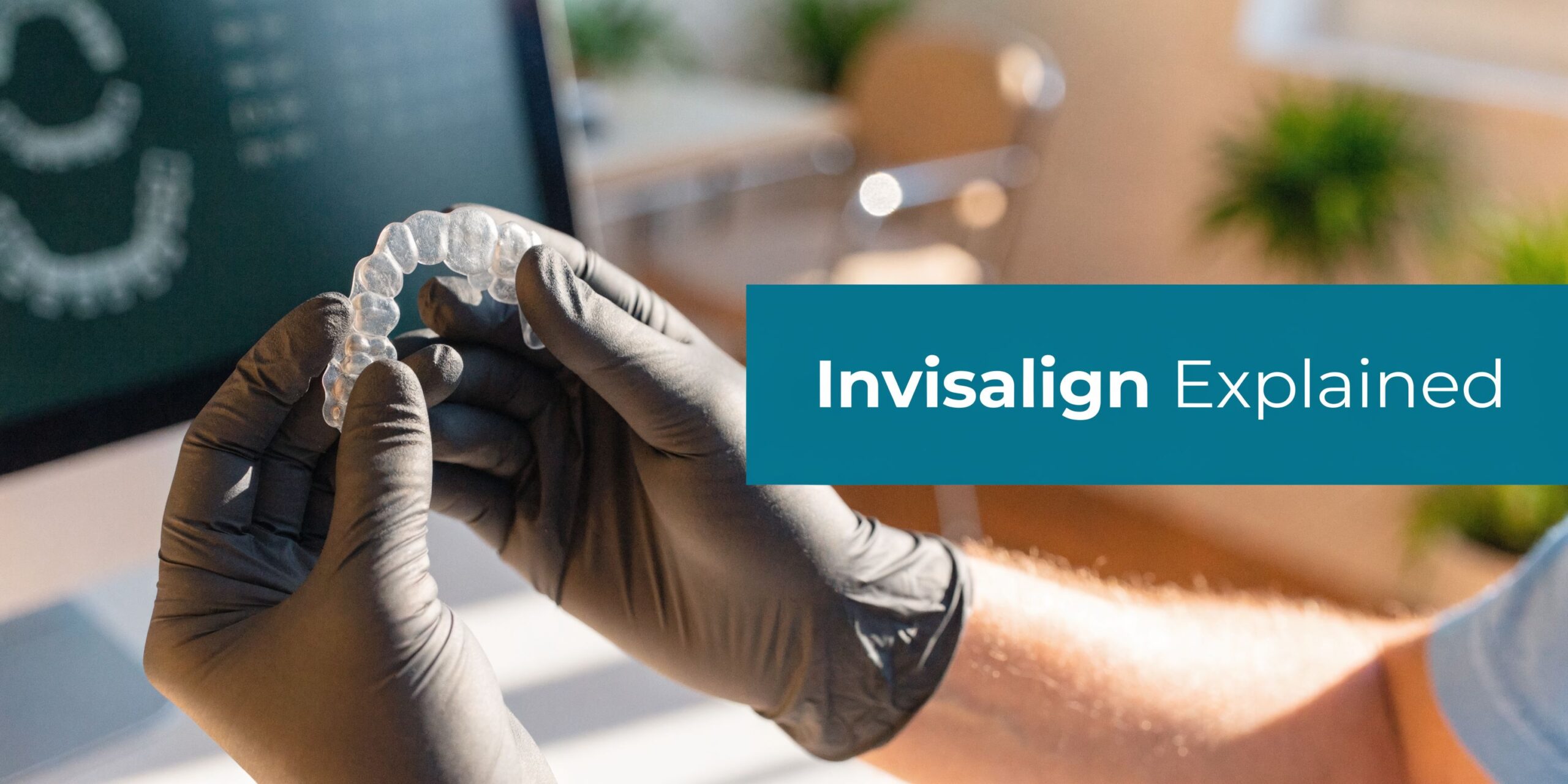
Many adults do the same thing in photos. They smile with lips closed, turn slightly to the side, or wait until the camera is down before laughing naturally. Crooked teeth, small gaps, or a bite that feels off can affect more than appearance. They can change how a person speaks, chews, and feels in everyday moments.
That is why Invisalign gets so much attention from patients who want a straighter smile without the look of metal braces. For many people in Amanda, Lancaster, Circleville, and Carroll, Ohio, the biggest question is simple. How does Invisalign work? The short answer is that it uses a series of clear aligners to guide teeth into better positions over time. The better answer is a little more interesting, and much more helpful when someone is deciding whether treatment fits their goals.
This guide walks through the process in plain language. It covers the technology, the step-by-step treatment journey, who tends to be a good candidate, and what daily life with aligners is really like.
Table of Contents
- Your Guide to a More Confident Smile in Amanda OH
- How Invisalign Technology Gently Moves Your Teeth
- The Invisalign Treatment Process Step by Step
- Is Invisalign the Right Choice for Your Smile
- The Clear Benefits of Invisalign Treatment
- Daily Life with Aligners Care and Maintenance
- Begin Your Invisalign Journey at Amanda Family Dental
Your Guide to a More Confident Smile in Amanda OH
A straighter smile is not only about appearance. It is often tied to comfort, confidence, and the feeling of being fully at ease in conversations. Many people first look into Invisalign because they are tired of noticing one crooked front tooth in the mirror or feeling distracted by crowding when they floss.

For a working parent in Amanda, that concern may show up during school events, work meetings, or family pictures. For a college student commuting from Lancaster, it may be the wish to straighten teeth in a way that feels less obvious. For someone in Circleville or Carroll, it may be time to finally address a smile that has bothered them for years.
Why Invisalign feels approachable
Traditional braces are still a strong treatment option in many cases, but they are not the only path. Invisalign offers a more discreet approach. The aligners are clear, removable, and designed around a personalized treatment plan.
That combination matters to adults who want orthodontic treatment to fit daily life instead of taking it over. It also matters to teens and parents who want a modern option with a clear plan.
Confidence often grows before treatment ends
One of the encouraging parts of clear aligner treatment is how early patients often feel a shift in mindset. The first change may be practical. Brushing and flossing feel easier when crowded teeth begin to open up. The next change is often emotional. Smiling starts to feel less guarded.
A straighter smile usually happens in stages. Confidence often does too.
People searching for a dentist near me, a cosmetic dentist near me, or a dentist in Amanda, OH are often looking for more than a product. They want clear answers, a realistic plan, and a nearby team they can trust. That local connection matters because orthodontic treatment is not a one-day service. It is a journey with check-ins, adjustments, and questions along the way.
For patients in Amanda and nearby communities, understanding the process removes a lot of uncertainty. Once the treatment is broken down into simple steps, Invisalign starts to feel less mysterious and much more doable.
How Invisalign Technology Gently Moves Your Teeth
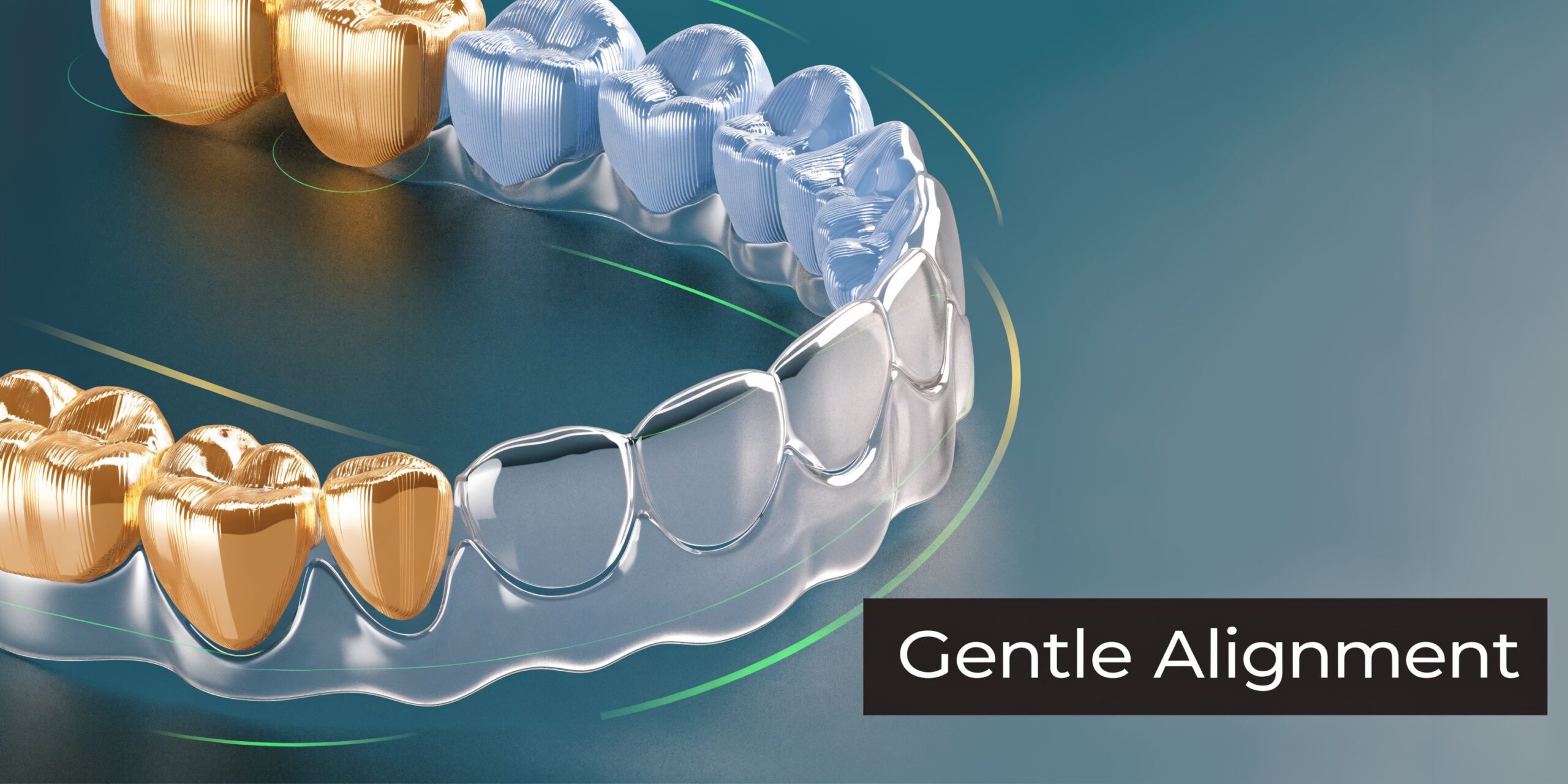
Invisalign works by applying gentle, controlled pressure to teeth over time. A simple way to picture it is a series of small nudges instead of one big push. Each aligner is shaped a little differently from the one before it, so teeth keep moving in a planned direction.
Tiny movements add up
Invisalign uses proprietary SmartTrack material to deliver precise force. Each aligner set is designed to create micro-movements of about 0.25 to 0.3 mm before the patient moves to the next set, according to this explanation of how Invisalign works with SmartTrack, iTero, and ClinCheck.
That amount sounds tiny because it is. Tiny is the point.
Teeth do not move safely when they are forced too far too fast. They respond better to steady pressure. Over time, those small planned movements can correct crowding, spacing, and certain bite issues.
Digital planning replaces guesswork
The process starts with an iTero intraoral scanner, which creates a detailed 3D model of the teeth. That means no messy traditional impressions. The scan is then used in ClinCheck software to map the full sequence of tooth movement before treatment begins.
Patients can also preview the expected smile changes before wearing the first aligner. That tends to make the process feel more concrete. It is no longer an abstract promise. It becomes a visible plan.
A short visual can help make that easier to picture:
Why some teeth need a little extra help
Some movements are simple, like closing a small gap. Others are trickier, like rotating a rounded tooth or guiding a tooth that does not give the aligner much grip. In those cases, a dentist may place small tooth-colored attachments on certain teeth.
These attachments help the aligners hold and guide teeth more effectively. Patients often worry they will be obvious, but they are usually subtle and blend in far better than metal brackets.
Clear aligners are not one generic tray. They are a sequence of custom-made trays built around a detailed movement plan.
The technology is advanced, but the idea is straightforward. A digital map is created first. Then each aligner follows that map, one small step at a time.
The Invisalign Treatment Process Step by Step
For most patients, the process feels much easier once they know what to expect. Invisalign treatment is not complicated day to day, but it does involve several stages, and each one has a purpose.
From consultation to first aligners
The first visit usually begins with a conversation about goals. Some patients want to fix visible crowding. Others are more concerned about a bite problem or spaces between teeth. A full exam helps determine whether Invisalign is a good fit and whether anything else needs attention first.
Digital imaging is often part of that evaluation. Patients who want to learn more about this technology can review how digital x-rays support diagnosis and treatment planning.
After the exam comes the scan. The iTero scanner captures a 3D model of the mouth, which becomes the foundation of the treatment plan. The dentist then reviews the projected tooth movements and explains what to expect.
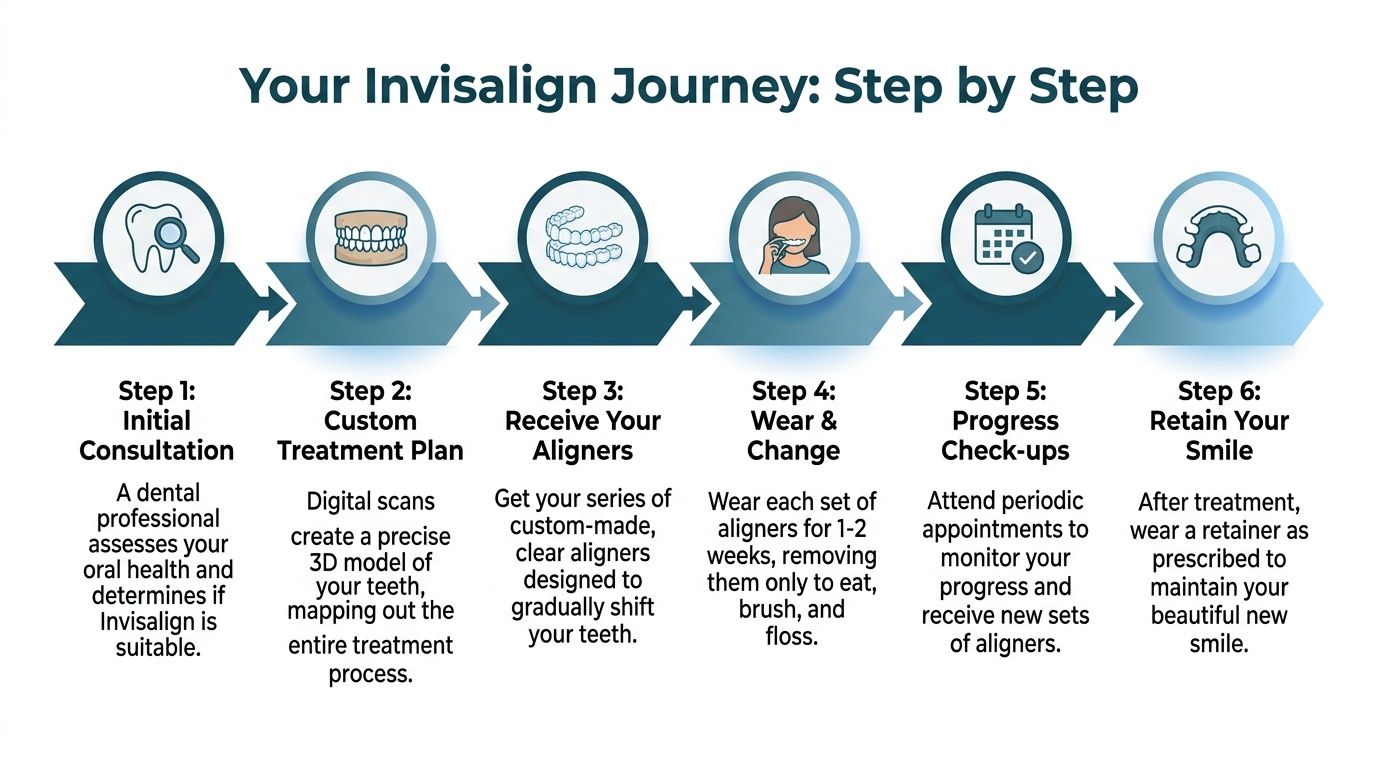
A typical sequence looks like this:
Consultation and exam
Oral health, alignment concerns, and smile goals are reviewed.Digital scan
A 3D model replaces old-style impressions.Treatment design
The planned tooth movements are mapped in sequence.First aligners are delivered
The patient receives trays and instructions for wear, cleaning, and switching to the next set.
Some patients also receive attachments during this phase. Others may begin without them.
Check-ins and the final stage
Once treatment starts, the main job belongs to the patient. Aligners need to be worn consistently, removed for meals and oral hygiene, and changed as directed.
Regular follow-up visits matter too. Expert guidance in the verified data notes that check-ups typically happen every 6 to 8 weeks to confirm the aligners are tracking properly and to make adjustments if needed. Those visits are usually much simpler than traditional wire-tightening appointments.
A patient journey often feels like this in real life:
- Week one: The aligners feel snug. Speech may sound slightly different for a short time.
- Early months: The routine becomes automatic. Removal, cleaning, and reinsertion take less thought.
- Mid-treatment: Changes become easier to notice in the mirror and in photos.
- Final stage: Small finishing details are refined, then a retainer helps preserve the result.
Patients generally appreciate having a clear roadmap. The aligners arrive as part of a sequence, so progress feels tangible. There is always a next tray, a next milestone, and a visible direction.
The end of Invisalign treatment is not the end of care. Retainers help protect the new tooth positions that the aligners worked to create.
That final phase matters more than many patients expect. Teeth can shift after treatment if they are not maintained. Retainers keep the result stable and protect the time and effort already invested.
Is Invisalign the Right Choice for Your Smile
Invisalign can be an excellent option, but it is not automatically the best option for every mouth. The right answer depends on the type of movement needed, overall oral health, and whether the patient can commit to wearing the aligners as directed.

Problems Invisalign often treats well
According to this discussion of Invisalign biomechanics and treatment efficiency, the system requires precise, continuous force. It takes at least six hours of force to begin tooth movement, and aligners need to be worn 22 hours per day for best results. That same source notes that Invisalign can work up to 50% faster than braces for many cases, while also pointing out that case selection matters.
In practice, Invisalign is often a strong match for:
- Crowded teeth that overlap and make cleaning harder
- Small to moderate gaps between teeth
- Mild overbites, underbites, and crossbites
- Relapse after past orthodontic treatment, when teeth have shifted over time
Patients often ask whether one slightly crooked tooth can be treated. In many cases, yes. The same is true for several common cosmetic concerns that affect the front teeth.
When another option may be better
Transparency matters here. Invisalign is not ideal for every case.
The same source explains that it can be slightly less accurate than fixed appliances for complex tooth movements. Severe rotations, major bite corrections, or more advanced orthodontic needs may call for a different approach.
That does not mean treatment stops with one answer. It means the patient deserves the option that best fits the problem. Depending on the situation, a dentist may recommend another orthodontic path or a broader cosmetic or restorative plan.
A simple decision guide can help:
| Smile concern | Invisalign may help | Another treatment may be better |
|---|---|---|
| Mild crowding | Often yes | Sometimes |
| Small gaps | Often yes | Less often |
| Minor bite issues | Often yes | Sometimes |
| Complex bite correction | Sometimes | Often yes |
| Severe tooth rotation | Sometimes | Often yes |
Patients in Lancaster, Circleville, and nearby communities often appreciate that kind of honesty. A trustworthy recommendation is not about pushing one service. It is about finding the treatment that gives the most predictable result.
The Clear Benefits of Invisalign Treatment
For many adults, the biggest appeal of Invisalign is not only that it straightens teeth. It is that the process fits more smoothly into everyday life.
Invisalign has been used by over 18 million patients worldwide and has a 96% customer satisfaction rate, according to these Invisalign statistics for 2025. The same source states that treatment is especially effective for mild to moderate issues, that most patients finish in 12 to 18 months, and that many notice visible changes within three to six months.
Why adults often prefer clear aligners
The first benefit is obvious. The aligners are clear.
That matters for professionals who speak with clients, parents who are in family photos every week, and teens who want a lower-profile treatment. The second benefit is comfort. There are no wires to tighten and no metal brackets rubbing against cheeks.
The third benefit is flexibility. Aligners come out for meals, brushing, and flossing. That can make oral hygiene much easier during treatment.
A quick comparison
| Daily concern | Invisalign | Traditional braces |
|---|---|---|
| Appearance | Clear and discreet | More visible |
| Meals | Removed before eating | Food restrictions are common |
| Brushing and flossing | More straightforward | More difficult around brackets and wires |
| Comfort | Smooth plastic | Metal parts may irritate soft tissue |
Patients also like the sense of momentum. Seeing changes in a matter of months can make treatment feel rewarding early on, not just at the finish line.
A treatment plan works better when it fits real life. Convenience is not a small benefit. It often determines whether patients stay consistent.
That is one reason clear aligners continue to attract patients searching for a cosmetic dentist near me or a dentist in Lancaster, OH who offers modern smile solutions.
Daily Life with Aligners Care and Maintenance
The science behind Invisalign matters, but daily habits are what keep treatment moving. Patients usually do best when aligner care becomes part of the same routine as brushing teeth and packing daily essentials.
The habits that keep treatment on track
The most important rule is wear time. Verified data states that wearing aligners less than 20 hours a day can extend treatment time by 50% or more, and that the My Invisalign app includes AI-powered reminders that have helped users complete treatment up to 25% faster, according to this overview of compliance and aligner wear.
That matters because Invisalign depends on consistency. When aligners stay out too long, the teeth do not keep receiving the steady force the plan depends on.
Helpful habits include:
- Keep a routine: Remove aligners for meals, then place them back in right after brushing or rinsing.
- Use reminders: The app can be useful for busy adults, students, and parents juggling full schedules.
- Store them properly: A protective case is much safer than a napkin or pocket.
Simple care tips
Aligners should be cleaned gently and handled with care. Most patients succeed with a few basic habits:
- Rinse often: Rinse aligners when they come out to reduce buildup.
- Brush and floss before reinserting: Clean teeth support cleaner trays and healthier gums. Patients looking for extra home-care advice can review these tips for maintaining healthy gums and preventing gum disease.
- Drink water only while wearing them: Other drinks can stain the trays or leave sugars against the teeth.
- Call the office if one is lost or cracked: Quick guidance can prevent delays.
A lot of confusion comes from one simple question. Can a patient be “pretty good” with wear time and still stay on track?
Usually, inconsistent wear catches up with the schedule. The aligners are designed for steady use, not occasional use. Patients do not need perfection, but they do need commitment.
Begin Your Invisalign Journey at Amanda Family Dental
Choosing Invisalign is not just about choosing aligners. It is about choosing a nearby dental team that can evaluate the smile carefully, explain the options clearly, and support the process from first scan to final retainer.
For patients in Amanda, OH, Lancaster, OH, Circleville, OH, and Carroll, OH, local care makes the experience simpler. Appointments are easier to manage. Questions get answered faster. Follow-up visits feel less disruptive to work, school, and family life.
Amanda Family Dental provides that kind of close-to-home support with a patient-centered approach. New patients can expect a welcoming environment, thorough exams, digital imaging, and personalized treatment planning. Patients who want to learn more about the doctor behind that care can visit the practice’s meet the doctor page.
For adults comparing options under searches like dentist near me, dentist in Amanda, OH, or cosmetic dentist near me, Invisalign can be a smart solution when the case is a good fit and the treatment is guided well. For some patients, it becomes the step that finally closes the gap between wanting a better smile and beginning treatment.
Amanda Family Dental also helps patients think through affordability with flexible payment options and the in-house Power Plan Membership, which can make care feel more manageable.
The next step does not need to feel complicated. It starts with a consultation, a conversation, and a clear look at what is possible.
Amanda Family Dental offers Invisalign consultations for patients who want straighter teeth with a modern, discreet approach. To schedule a visit, request an appointment through Amanda Family Dental and take the first step toward a healthier, more confident smile.