

A patient gets home after an extraction, the numbness starts to wear off, and the same questions usually show up fast. Is this amount of bleeding normal? When should the gauze come out? Can teeth be brushed tonight? Can work happen tomorrow?
Clear tooth extraction aftercare instructions make recovery much easier. Most healing problems after an extraction don't start because the procedure went badly. They start because the blood clot gets disturbed early, or because the patient isn't sure which rules matter most in the first day. Good aftercare is simple, but timing matters.
For families looking for a dentist in Amanda, OH, or nearby patients searching for a dentist near me, this guide is written the way a local office would explain it in person. It's meant to help patients in Amanda, Lancaster, Circleville, and Carroll, Ohio feel calm, prepared, and supported after a tooth extraction, whether it was planned treatment or an urgent visit with an emergency dentist.
Table of Contents
- Your Tooth Extraction Recovery with Amanda Family Dental
- The First 24 Hours Your Immediate Aftercare Plan
- Managing Discomfort and Swelling Effectively
- Your Guide to Diet Activity and Oral Hygiene
- When to Call Us Recognizing Signs of Complications
- Your Partners in Health at Amanda Family Dental
Your Tooth Extraction Recovery with Amanda Family Dental
Most patients don't need complicated advice after an extraction. They need a short list of priorities, a little reassurance, and a clear sense of what matters now versus what can wait until tomorrow. That's especially true when they're sitting at home with gauze in place, trying not to overthink every sensation.
The main goal in early recovery is protecting the blood clot in the socket. That clot is the foundation for healing. If it stays in place, the area usually settles down steadily. If it gets disturbed, recovery can become more uncomfortable and more stressful than it needs to be.
Practical rule: The first day is about protecting the clot, controlling bleeding, and keeping activity low. Most mistakes happen when patients feel okay for a few hours and do too much too soon.
For patients in Amanda, Lancaster, Circleville, and Carroll, Ohio, this kind of guidance matters because recovery doesn't happen in a dental chair. It happens at home, at dinner, at bedtime, and sometimes while trying to decide whether going back to work the next morning is realistic.
Published patient-outcome research has shown that being away from work for 1–3 days is common after extraction, and many aftercare routines are built around a short recovery period with structured hygiene, food, and activity instructions reported in this study on recovery after dental extraction. That lines up with what many patients notice in real life. The disruption is usually temporary, but the first few days deserve attention.
A local dental office should make this part easier, not more confusing. Patients looking for a dentist in Lancaster, OH, dentist in Circleville, OH, or dentist in Carroll, OH often want more than treatment alone. They want straightforward care, help with emergencies, and answers they can use once they get home.
The First 24 Hours Your Immediate Aftercare Plan
You get home, the numbness starts wearing off, and it is tempting to check the area, rinse your mouth, or get back to your usual routine. That first evening is where many recoveries either stay calm or get more uncomfortable than they need to be. At Amanda Family Dental, I tell patients in Amanda and the surrounding area to keep the plan simple and stick with it.
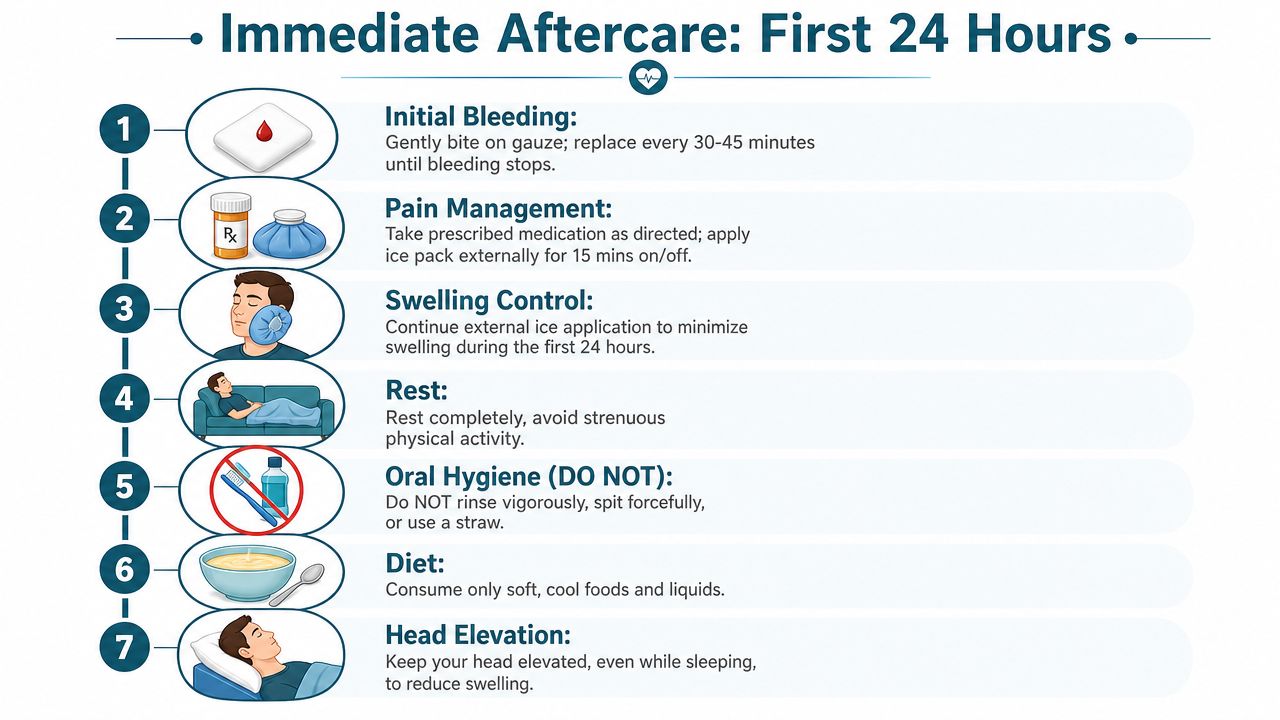
Start with pressure and rest
Your first job after an extraction is to keep steady pressure on the site with the gauze we placed. If the area still oozes a little, replace the gauze as directed and bite down firmly. Light spotting is common. Constant checking is what often keeps it going.
Patients usually do better when they settle in for a quiet afternoon or evening instead of trying to squeeze in errands, housework, or a workout. More activity tends to mean more throbbing and more bleeding.
A good first-day routine includes:
- Keep pressure where it belongs: Bite on the gauze for the amount of time we recommended.
- Rest upright: Recline, but keep your head raised with pillows.
- Leave the site alone: Do not touch it with your fingers or tongue.
- Keep talking to a minimum: A quieter jaw is often a more comfortable jaw.
A quick visual can make that easier to follow at home.
Use cold the right way
Cold packs help most early, before swelling fully builds. Hold an ice pack or a wrapped cold compress on the outside of the cheek in short sessions with breaks in between. That approach usually works better than keeping cold on the area continuously.
Patients sometimes switch to heat too soon because warmth feels comforting. In the first day, that trade-off usually backfires and increases swelling. Stay with cold unless our office gives you different instructions.
Small routines matter here. Set a timer. Sit still. Keep the plan boring. If you like structured wellness habits that boost mental focus and resilience, use that same mindset for recovery. Consistency helps more than experimenting.
Protect the clot
The blood clot in the socket is what covers the bone and starts the healing process. If it stays in place, the first day is usually much easier. If it gets pulled out, patients can end up with sharp pain and a delayed recovery.
For the first 24 hours, avoid anything that creates suction or force in the mouth. That means no rinsing, no spitting, no straws, no smoking, and no vigorous exercise. As noted earlier in the article, standard aftercare guidance also supports avoiding those habits during this early window.
Patients frequently encounter difficulties. They feel pretty good for a few hours, eat something crunchy, rinse because the taste bothers them, or decide to "just do one thing" around the house. One poor choice is sometimes enough to restart bleeding.
If you had an extraction at Amanda Family Dental and something does not seem right that first night, call us. We would rather answer a simple question early than have you sit at home wondering if you should wait it out.
Managing Discomfort and Swelling Effectively
Pain and swelling after an extraction can feel unsettling even when healing is on track. Most patients do better when they expect some soreness, treat it early, and keep the routine steady instead of waiting until discomfort builds.
What discomfort usually feels like
Discomfort often feels worse once the local anesthetic fully wears off. The area may feel tender, the jaw may seem stiff, and the cheek can look puffy. None of that automatically means something is wrong.
What tends to make discomfort harder is falling behind on the plan. Patients often wait too long to take the medication they were told to use, skip rest, or try to eat foods that require too much chewing. That combination usually creates a rougher night.
A practical approach is to follow the office's medication instructions exactly. If a prescription was provided, use it as directed. If over-the-counter pain relief was recommended instead, follow that specific advice from the treating dentist rather than mixing products casually.
Comfort measures that usually help
Medication is only part of comfort care. Swelling also responds to rest, head elevation, and keeping physical effort low. Patients who lie flat, talk a lot, or push through errands too soon often feel more throbbing by evening.
Helpful habits include:
- Keep sleep simple: Use an extra pillow or otherwise keep the head raised if that was recommended.
- Stay with soft foods: Cooler, easy-to-eat meals are usually more comfortable than anything chewy or crumbly.
- Use cold consistently: An ice pack on the outside of the face often helps more than repeatedly checking the socket.
- Scale back the day: Recovery usually goes better when the schedule is lighter than usual.
Some patients also like reading broader wellness material on how cold exposure may boost mental focus and resilience, but after an extraction the useful point is much narrower. Cold on the cheek is there to support comfort and swelling control, not to turn recovery into a performance test.
Recovery is usually smoother when patients stay consistent with a few basic steps instead of chasing stronger fixes.
Your Guide to Diet Activity and Oral Hygiene
Once the first day passes, most questions shift from bleeding to routine. What can be eaten? Is a normal shower fine? Can a patient go back to work, brush normally, or rinse with mouthwash? At this stage, smart choices make healing easier, and careless choices create preventable setbacks.
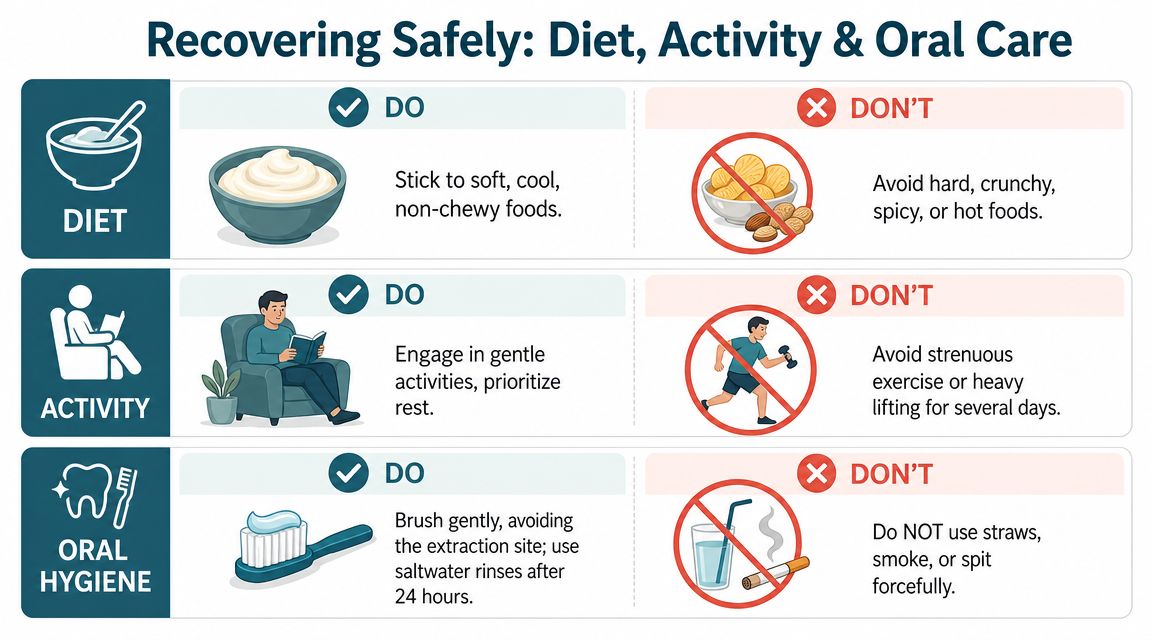
Choose foods that protect the site
A soft diet isn't just about comfort. It reduces the chances of irritating the socket, packing food into the area, or forcing strong chewing before the tissues are ready. Foods like yogurt, applesauce, mashed potatoes, soup that isn't too hot, and scrambled eggs are usually easier than chips, toast, nuts, or anything spicy and sharp.
The strongest food rule early on is to avoid creating suction. A technically sound aftercare protocol is to avoid rinsing, spitting, brushing over the socket, using straws, or smoking for the first 24 hours. After that, gentle warm salt-water rinses can begin, typically using 1 teaspoon of salt in 1 glass of warm water, repeated about 4 times daily for a week or after meals as summarized in this aftercare review.
Activity can restart gradually
Patients often judge readiness by pain alone. That's a mistake. Someone can feel decent enough to run, lift, or do yard work and still trigger fresh bleeding because the socket isn't ready for that pressure change.
Heavy exercise is usually the wrong call early in recovery. Even when patients are eager to get back to normal, taking it easy for a short period is often the difference between uncomplicated healing and an avoidable problem.
A simple comparison helps:
| Area | Better choice | Usually a poor choice |
|---|---|---|
| Meals | Soft, cool, easy chewing | Crunchy, spicy, very hot foods |
| Drinks | Sip from a glass | Drink through a straw |
| Daily routine | Light activity and rest | Heavy lifting or strenuous exercise |
| Site care | Gentle cleaning around the area | Aggressive brushing over the socket |
Clean the mouth without irritating the socket
Instructions often get fuzzy. Patients want to clean the mouth, but they don't want to disturb the site. That balance matters.
Gentle cleaning means the rest of the mouth should not be ignored, but the socket should not be scrubbed. Brushing can continue away from the extraction site, while the area itself should be treated carefully. Some offices also give product-specific directions, which always take priority over generic advice. Patients who want more day-to-day guidance on rinse timing and routine can review this article on mouthwash before or after brushing.
Amanda Family Dental also provides a tooth extraction guide for patients who need office-specific instructions after care. Used properly, guidance like that helps patients separate three different tasks that often get lumped together: cleaning the rest of the teeth, cleaning near the surgical area, and rinsing gently without force.
When to Call Us Recognizing Signs of Complications
Most extraction sites heal without drama. A little discomfort, slight swelling, some jaw stiffness, and minor oozing can all fit within a normal recovery pattern. The key is whether things are gradually settling down or starting to move in the wrong direction.
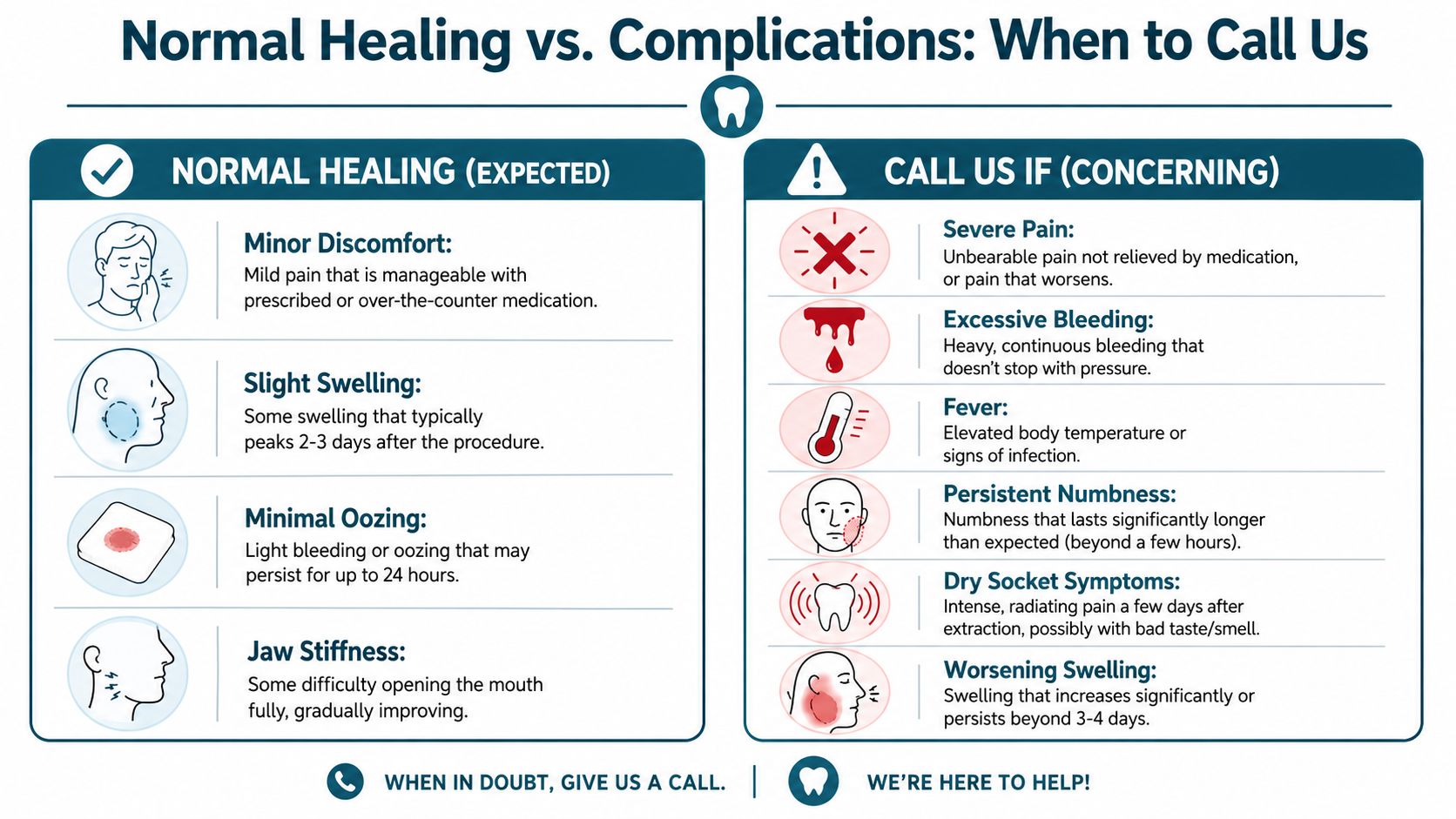
What is usually normal
A healing site often feels tender rather than dramatic. The discomfort should generally feel manageable with the plan the office gave. Some swelling can happen, and eating may feel awkward for a bit.
Patients also shouldn't panic over every change in appearance. Extraction sites don't look polished while they heal. A normal socket can still look unusual to someone seeing it up close for the first time.
Mild symptoms that slowly improve are usually less concerning than symptoms that intensify after an initial calm period.
What deserves a call
The complication most patients hear about is dry socket. Harvard's post-procedure guidance notes that smoking triples the risk, which is one reason tobacco avoidance matters so much during recovery in these post-procedure dental care instructions. The same guidance also supports avoiding heavy exercise for 48–72 hours.
Dry socket usually feels different from routine soreness. Patients often describe stronger, throbbing pain that seems to radiate rather than stay local. A bad taste or unpleasant odor can also raise concern. Worsening swelling, fever, heavy bleeding that doesn't respond to pressure, or pain that becomes more intense instead of less intense are all reasons to contact the office.
For patients who aren't sure whether the problem is healing pain or something more serious, this discussion of an abscessed tooth headache can help clarify how dental pain sometimes signals infection-related trouble rather than ordinary soreness.
Dental offices also need to be reachable when patients call with urgent questions. For practices thinking about preventing missed new patient calls, especially during emergency extraction requests, phone access matters because patients often call at exactly the moment symptoms become worrying.
If pain becomes severe, bleeding is persistent, or swelling is getting worse rather than better, calling promptly is the right move.
Your Partners in Health at Amanda Family Dental
An extraction is often the end of one problem, but not always the end of treatment. Sometimes the next step is healing and routine care. In other cases, the missing tooth should be restored so chewing stays balanced and nearby teeth don't start shifting.

Extraction is often one step in a larger plan
Patients searching for a dentist near me after an extraction are often dealing with more than healing alone. They may also need a long-term answer for function, appearance, or comfort. That can include restorative dentistry, help with an emergency problem, or guidance about whether tooth replacement makes sense.
For some patients, replacement options become part of the conversation after the area heals. This overview of tooth replacement after extraction gives a practical starting point for understanding what may come next.
The broader point is simple. Good dental care doesn't stop at removing a painful tooth. It continues through follow-up, prevention, and planning for the healthiest next step.
What patients can expect next
A community practice should make that process feel straightforward. Patients in Amanda, Lancaster, Circleville, and Carroll, Ohio often want one office that can handle routine dental care, cleaning and exams, dental X-rays, new patient exams, restorative treatment, and cosmetic options such as teeth whitening or cosmetic dentistry when the time is right.
That continuity matters after an extraction. If healing questions come up, patients need answers. If the area heals well but function needs to be restored, they need a plan. If the extraction happened during an emergency visit, they may still need complete care afterward, from preventive visits to discussions about dental implants near me.
Amanda Family Dental serves that role for local families who want care that stays clear, comfortable, and practical.
If recovery questions come up after a tooth extraction, or if it's time to schedule follow-up care, a replacement consultation, or a new patient visit, contact Amanda Family Dental. Patients in Amanda, Lancaster, Circleville, and Carroll, Ohio can reach out for guidance, emergency dental concerns, and ongoing care that supports comfort, healing, and a healthy smile.