

A pounding headache with tooth pain can feel strangely hard to read. The pain may start in the back of the mouth, then creep into the temple, cheek, ear, or forehead. Many people assume they have a migraine, sinus pressure, or stress headache when an infected tooth is the underlying issue.
An abscessed tooth headache is a dental emergency because the pain usually means infection, pressure, and inflammation are building where they shouldn’t. That can leave someone exhausted, nauseated, unable to chew, and unsure whether to call a doctor or a dentist. For families searching for a dentist near me, an emergency dentist, or a dentist in Amanda, OH, the key is to identify the source quickly and treat the infection, not just the pain.
Patients from Amanda, Lancaster, Circleville, and Carroll, Ohio often want the same answer. Can a bad tooth really cause this much head pain? Yes, it can. The good news is that once the dental cause is found, treatment usually becomes much clearer.
Table of Contents
- That Throbbing Pain Might Be More Than Just a Headache
- The Connection Between Your Tooth and Your Headache
- Red Flags an Abscessed Tooth is Causing Your Headache
- How Amanda Family Dental Treats an Abscessed Tooth
- Restoring Your Health and Peace of Mind
- Expect Gentle Emergency Dental Care Near Lancaster OH
That Throbbing Pain Might Be More Than Just a Headache
A common pattern looks like this. Someone wakes up with a dull ache in one tooth, tries to work through the day, then notices the pain has climbed into one side of the face. By evening, the jaw is sore, the head is pounding, and chewing feels impossible.
That combination matters. A headache tied to an infected tooth often has a different feel than an ordinary tension headache. It tends to be deep, throbbing, persistent, and connected to pressure in the mouth or jaw.
Practical rule: If the headache seems to pulse along with a sore tooth, gets worse when chewing, or comes with swelling or fever, dental evaluation shouldn't wait.
An abscess is a pocket of infection. When pressure builds inside the tooth or near the root, the body doesn't keep that pain neatly contained in one small spot. It often spreads across nearby nerve pathways, which is why a person may think the problem is in the head first and the tooth second.
People searching for a dentist in Lancaster, OH, dentist in Circleville, OH, or tooth extraction help often arrive after trying to sleep it off, hoping the pain will break on its own. That usually doesn't work. Infection may temporarily quiet down, then flare again harder.
A persistent abscessed tooth headache isn't something to monitor for days. It needs a diagnosis, because the treatment that works is the one that removes the infection source.
The Connection Between Your Tooth and Your Headache
The link between a tooth and a headache comes down to infection, pressure, and nerve pathways. An abscess forms when bacteria get deep enough into a tooth or surrounding gum tissue to create a pocket of pus. That infection irritates nearby structures and sends pain signals far beyond the tooth itself.
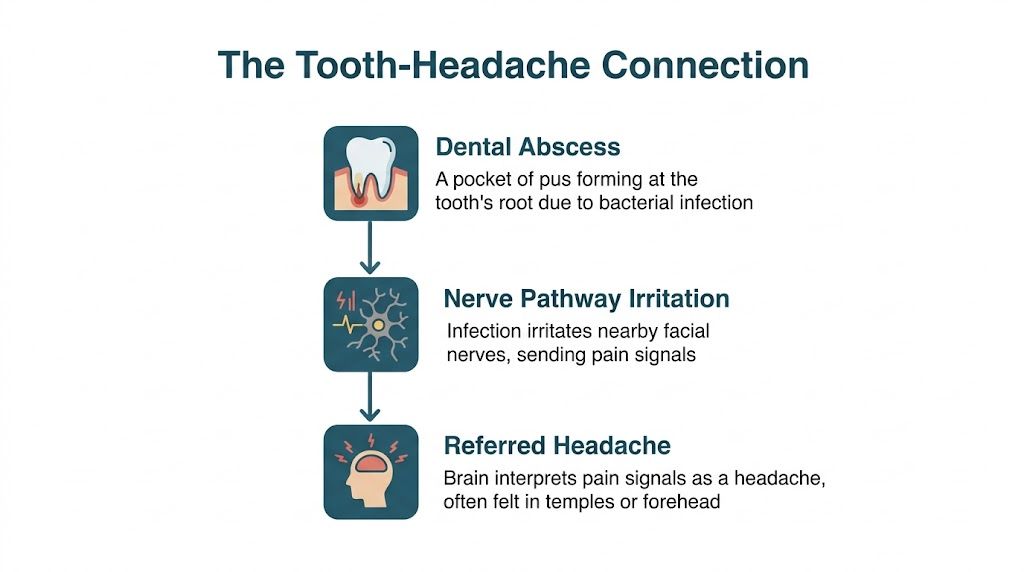
What an abscess actually is
An abscessed tooth isn't just a sore tooth. It's an active infection. As bacteria multiply, pressure builds near the tooth root or gum tissue, and that pressure can become intense.
The pain often feels worse when biting, chewing, or lying down. It may also come with sensitivity to hot and cold, bad taste in the mouth, or facial tenderness. Those details help separate a dental problem from a routine headache.
For patients interested in the bigger picture, oral health and overall wellness are closely connected. An untreated infection in the mouth doesn't stay trivial just because it started in one tooth.
Why the pain shows up in the head
An abscessed tooth triggers headaches primarily through irritation along the trigeminal nerve, the largest cranial nerve responsible for facial sensation. Pain from the infected tooth can radiate as referred pain, which may mimic sinus headaches or migraines, as explained in this clinical overview of sinus headache or tooth infection.
A useful way to think about it is this. The trigeminal nerve is like a major communication route for the face. If one branch is inflamed near an infected tooth, the brain may register pain in the cheek, temple, forehead, or around the eye instead of neatly labeling it as “tooth only.”
That’s why upper teeth can feel like sinus pressure, and why pain from the back teeth may seem to travel into the ear or side of the head. The location can be misleading. The source often isn't.
When a headache and tooth pain rise and fall together, the tooth deserves close attention first.
This is also why home remedies often disappoint people. Ice may dull the pain. Over the counter medication may take the edge off. But neither removes the infected tissue or drains the pressure. Until the source is treated, the headache often returns.
Red Flags an Abscessed Tooth is Causing Your Headache
A mild stress headache usually doesn't make a tooth hurt when chewing. An abscessed tooth headache often leaves a more specific trail of clues.

Symptoms that point to a dental source
Watch for a cluster of symptoms, not just one. The stronger the pattern, the more likely the headache is tied to a dental infection.
- Throbbing tooth pain: Pain is severe, persistent, and may radiate into the jaw, ear, or neck.
- Chewing makes it worse: Biting down often increases the pain because pressure hits inflamed tissue.
- Hot or cold sensitivity: Drinks or food can trigger sharp or lingering discomfort.
- Swelling: The cheek, gum, face, or jaw may look puffy or feel tight.
- Systemic symptoms: Fever, feeling unwell, or tender lymph nodes under the jaw can point to infection.
- A bad taste or sudden drainage: If foul-tasting fluid suddenly appears and pressure decreases, the abscess may have ruptured.
A plain headache usually doesn't create that mix. A dental abscess often does.
Here is a quick way to compare what patients notice:
| Symptom pattern | More consistent with routine headache | More consistent with dental abscess |
|---|---|---|
| Pain worsens when chewing | Rare | Common |
| Tooth sensitivity | Rare | Common |
| Facial swelling | Rare | Common |
| Foul taste in mouth | Rare | Possible |
| Fever with tooth pain | Uncommon | Concerning |
For a visual explanation of common warning signs, this short video helps frame what patients often notice before treatment:
When it becomes urgent right away
Some symptoms move this out of the “schedule soon” category and into “get help now.” Trouble swallowing, trouble breathing, fast-spreading swelling, or major changes in alertness need immediate emergency care.
An untreated dental infection can, in rare but serious cases, lead to a brain abscess. The overall incidence is about 1 in 100,000 people, and odontogenic sources account for up to 10% of those cases, according to this review of odontogenic brain abscesses.
Facial swelling with severe headache, fever, or increasing illness is not something to wait out overnight.
Even when the situation isn't at that level, a spreading infection can become harder to control if treatment is delayed. The earlier the source is treated, the simpler the next step usually is.
How Amanda Family Dental Treats an Abscessed Tooth
Treatment starts with one goal. Remove the infection source and relieve pressure. Pain medicine alone doesn't do that, and antibiotics alone don't always solve the underlying tooth problem.
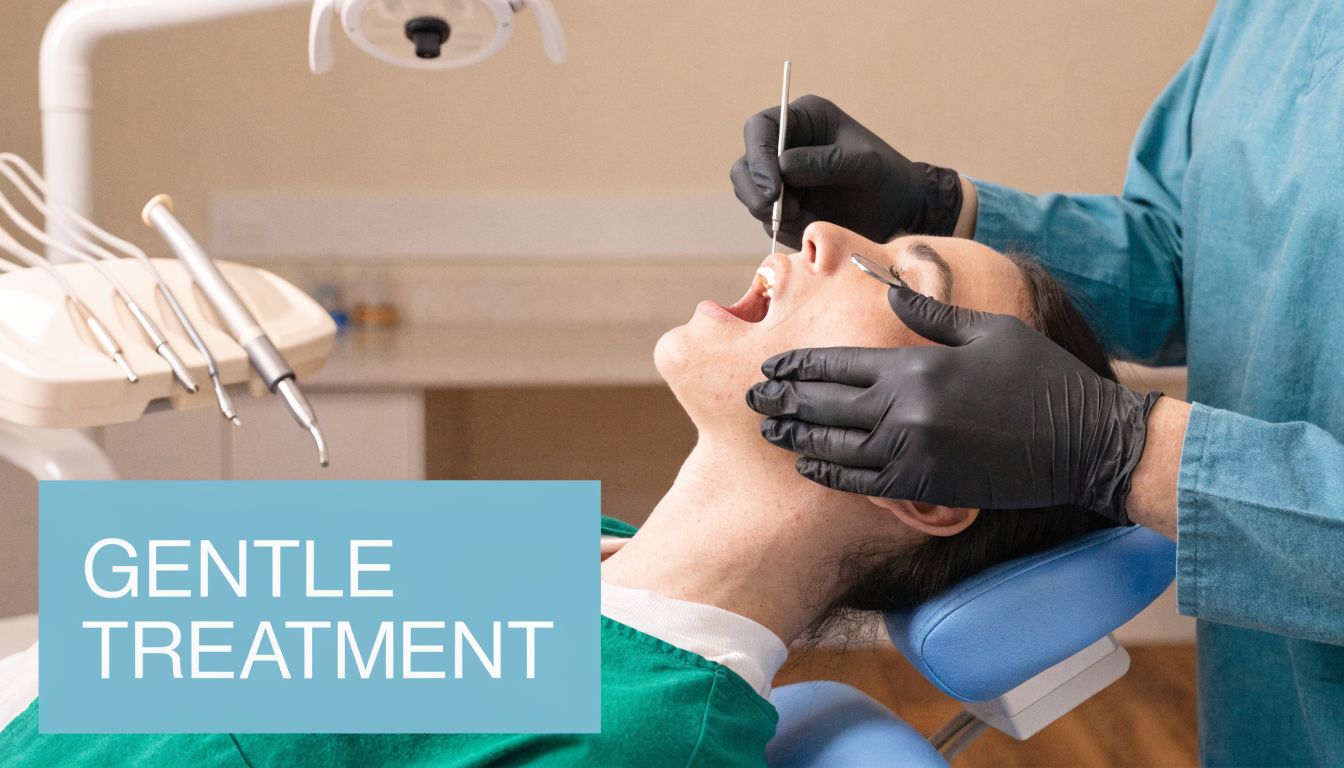
Finding the source before choosing the treatment
A careful exam matters because not every painful tooth needs the same solution. The dentist checks the tooth, surrounding gum tissue, bite pressure, and signs of swelling or drainage. Digital X-rays help reveal infection below the surface, around the root, or in nearby bone.
At Amanda Family Dental, emergency evaluations may include digital imaging and a discussion of whether the tooth can be saved with root canal treatment or whether removal is the safer choice.
Practical trade-offs come into play. Saving a natural tooth is often preferred when the structure is restorable and the infection can be thoroughly cleaned out. Extraction may make more sense when the tooth is badly broken, too decayed, or no longer predictable to restore.
What treatment may involve
Several treatments may be used alone or together, depending on how severe the infection is.
- Drainage of the abscess: This reduces built-up pressure and often brings quick relief.
- Antibiotics: These help control bacterial spread, especially when swelling or systemic symptoms are present.
- Root canal treatment: This removes infected pulp, cleans the inside of the tooth, and seals it so the tooth can stay in place.
- Tooth extraction: This removes the infected source when the tooth can't be predictably saved.
For severe abscesses, draining the infection and starting antibiotics can provide over 90% symptom relief within the first 24 hours, according to this overview of jaw to head pain from dental infection.
The treatment that works is the one that stops the infection, not the one that only numbs it for a few hours.
What doesn't work well is delay. So does bouncing between home remedies while the swelling increases. Rinses, compresses, and over the counter medication can help someone cope for a short window, but they don't disinfect an infected root canal space or remove an abscessed tooth.
Restoring Your Health and Peace of Mind
Pain relief is usually the first thing people want, and reasonably so. But treating an abscess does more than stop throbbing in the jaw or temple. It removes an active infection that can interfere with sleep, eating, concentration, and day-to-day function.
Why treating the infection matters beyond pain relief
Once the source is treated, many patients notice simple things return quickly. Chewing feels normal again. Sleep improves. The constant feeling of pressure in the face begins to settle. That change isn't cosmetic. It's a return to normal daily life.
There’s also peace of mind in knowing the problem has been identified instead of guessed at. A person no longer has to wonder whether the headache is sinus-related, whether the tooth will flare during the night, or whether swelling will worsen over the weekend.
If the tooth can't be saved and tooth extraction is necessary, the conversation doesn't end there. Restorative options such as dental implants near me, crowns, or other tooth replacement choices can help rebuild function and appearance after the infection is controlled.
For many adults, this part matters more than they expected. They come in focused on pain and leave thinking about comfort, health, chewing, appearance, and confidence together.
Expect Gentle Emergency Dental Care Near Lancaster OH
Dental emergencies make people anxious for two reasons. The pain is intense, and the unknown feels worse than the diagnosis. A calm visit changes both.

What patients can expect at the visit
An emergency dental appointment should feel straightforward. Patients need to know what hurts, what caused it, what needs to happen now, and what can wait. Clear explanations reduce fear because they replace uncertainty with a plan.
For anxious patients, comfort options matter. Sleep dentistry options may be part of that conversation when appropriate, especially for people who have delayed care because dental treatment feels overwhelming.
A typical emergency visit may include:
- A focused exam: The painful area is checked first so the source can be identified quickly.
- Dental X-rays: Digital imaging helps show infection, root damage, or bone involvement that can't be seen by eye.
- Pain relief planning: The immediate goal is to reduce pressure and control infection.
- A personalized treatment plan: Some teeth need a root canal, others need extraction, and some need short-term infection control before the final procedure.
Care close to Amanda, Lancaster, Circleville, and Carroll
For patients searching for a dentist in Amanda, OH, dentist in Carroll, OH, or emergency dentist near Lancaster or Circleville, local access matters when pain is active. Long drives and delayed scheduling don't help when chewing hurts and the headache won't quit.
Gentle, patient-focused care also matters for families coming in with fear, not just pain. Parents need clear guidance. Adults with dental anxiety need options that feel manageable. New patients need to know they won't be judged for waiting too long.
The right next step is simple. If a headache seems tied to one tooth, the gum is swollen, or facial pain is building on one side, it's time to call.
If you're dealing with an abscessed tooth headache and need prompt, clear answers, contact Amanda Family Dental to request an emergency appointment. Patients in Amanda, Lancaster, Circleville, and Carroll, Ohio can get compassionate evaluation, digital X-rays, and treatment planning focused on fast relief and lasting care.