

A cold sip of water. A spoonful of ice cream. Even a breath of winter air in Ohio. Then comes that fast, sharp jolt from one tooth. For many people, tooth sensitivity starts exactly that way. The pain is sudden, easy to dismiss at first, and frustrating because it seems to come and go without warning.
That kind of discomfort can make simple routines feel stressful. Drinking coffee, brushing near the gumline, or eating something sweet may stop feeling normal. The good news is that sensitive teeth usually can be treated, and relief often follows a step-by-step plan instead of guesswork.
People in Amanda, Lancaster, Circleville, and Carroll, Ohio often want the same practical answer. What can help right away, and what can a local dentist do if toothpaste hasn't solved it? A 2022 review discussed in RDH Magazine's summary of treatment options for dentin hypersensitivity notes that over-the-counter sensitivity toothpaste can work but may take time, while options such as professional bonding agents and prescription-strength fluoride toothpaste at 5,000–12,500 ppm fluoride may help when faster or stronger care is needed.
Table of Contents
- Find Relief from Tooth Sensitivity in Amanda, Ohio
- Understanding What Causes Sensitive Teeth
- Your Stepwise Path to Tooth Sensitivity Treatment
- How to Prevent Tooth Sensitivity from Returning
- Your Comfort-Focused Experience at Amanda Family Dental
- When to See Your Dentist in Amanda, OH for Tooth Sensitivity
Find Relief from Tooth Sensitivity in Amanda, Ohio
A common story sounds like this. Someone in Amanda opens the refrigerator, takes a drink of cold water, and gets a quick electric sting in one side of the mouth. The next day it happens again with hot coffee. A few days later, brushing around the same tooth becomes uncomfortable too.
That pattern can feel confusing, but it usually points to a fixable dental problem rather than something mysterious. Sensitive teeth don't always mean the same thing for every patient. Sometimes the issue is exposed root surface. Sometimes it's worn enamel, a cracked filling, clenching, or a cavity starting in a spot that's easy to miss.
Practical rule: Fast pain matters, but the pattern matters just as much. Sensitivity to cold for a few days is different from pain that keeps returning at the same tooth.
People searching for a dentist near me, an emergency dentist, or a dentist in Amanda, OH often aren't looking for a long lecture. They want a clear path. Start with what may calm the tooth at home. If that's not enough, move to the next step with professional care.
That approach is especially helpful for families in Lancaster, Circleville, and Carroll, Ohio who want to know how quickly tooth sensitivity treatment may help. Some options are gradual. Others can protect exposed areas more directly. The key is matching the treatment to the reason the tooth hurts.
Understanding What Causes Sensitive Teeth
Sensitive teeth usually happen when the tooth loses some of its natural protection. The outer enamel is the hard shield on the crown of the tooth. On the root surface, gum tissue normally covers the area that would otherwise be more vulnerable.
What's happening inside the tooth
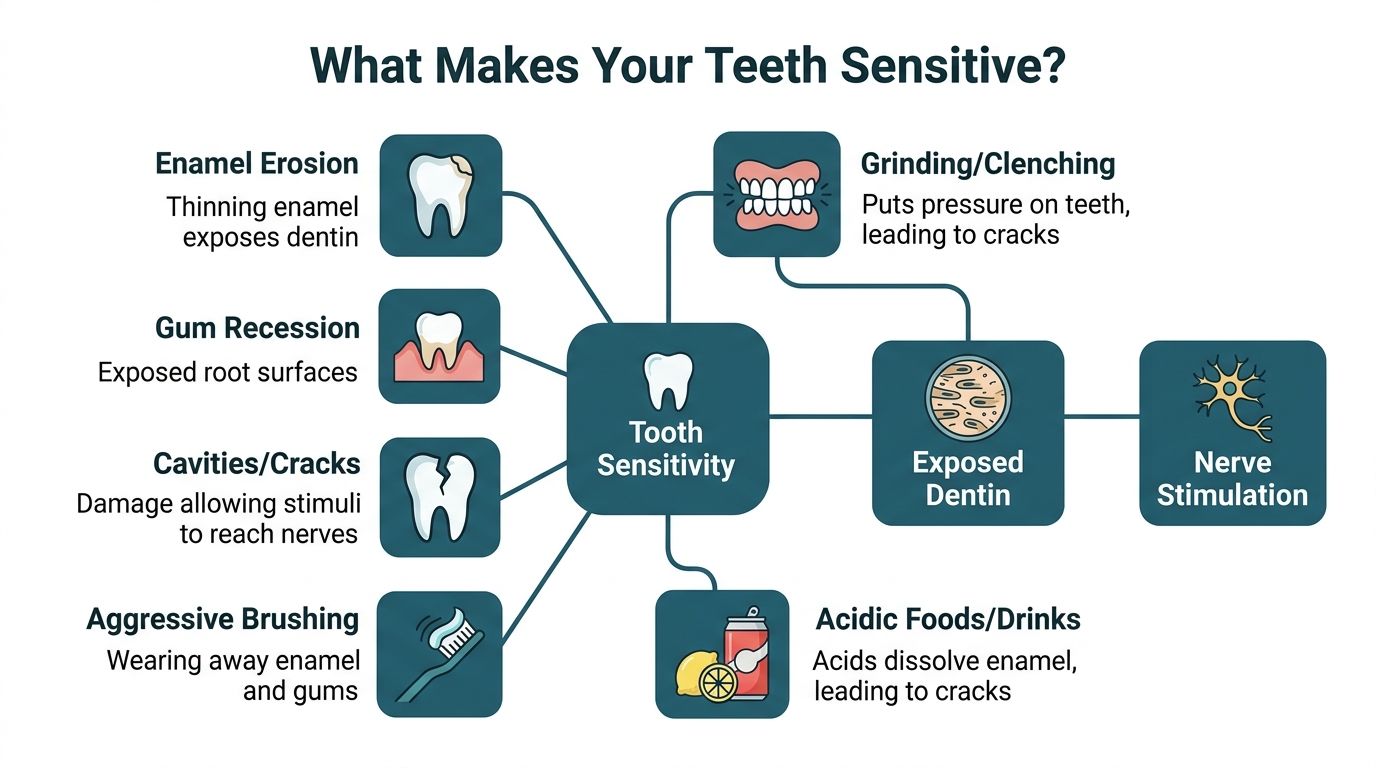
Under that outer layer is dentin, which contains tiny pathways leading toward the nerve. A simple way to think about it is damaged insulation around a wire. When the protective cover thins or pulls back, cold, heat, sweets, or even touch can reach a part of the tooth that reacts more easily.
Research published in the Journal of Conservative Dentistry notes that dentin hypersensitivity is extremely common. Adult prevalence at a given time is often estimated at 10–30%, and some reports suggest lifetime prevalence may be near 100% because many people experience it at some point over time, as described in this review on dentin hypersensitivity prevalence.
Common causes people notice at home
Several everyday problems can expose dentin or irritate an already sensitive tooth:
- Gum recession can uncover root surfaces that were never meant to handle cold drinks or aggressive brushing.
- Enamel erosion may develop from frequent acidic foods or drinks.
- Grinding or clenching can put repeated stress on teeth and contribute to wear or small cracks.
- Cavities, cracked teeth, or worn fillings may open a direct pathway for sensitivity.
- Brushing too hard can wear at the gumline over time.
A short comparison helps clear up a common point of confusion:
| Trigger | What it may suggest |
|---|---|
| Cold causes a quick zing | Exposed dentin or early enamel loss |
| Sweets trigger pain | Decay or exposed root surfaces |
| Biting hurts | Crack, filling problem, or structural issue |
| Air feels sharp at the gumline | Recession or root exposure |
Some people assume sensitivity is “just normal.” It's common, but it still has a cause, and causes can be treated.
Your Stepwise Path to Tooth Sensitivity Treatment
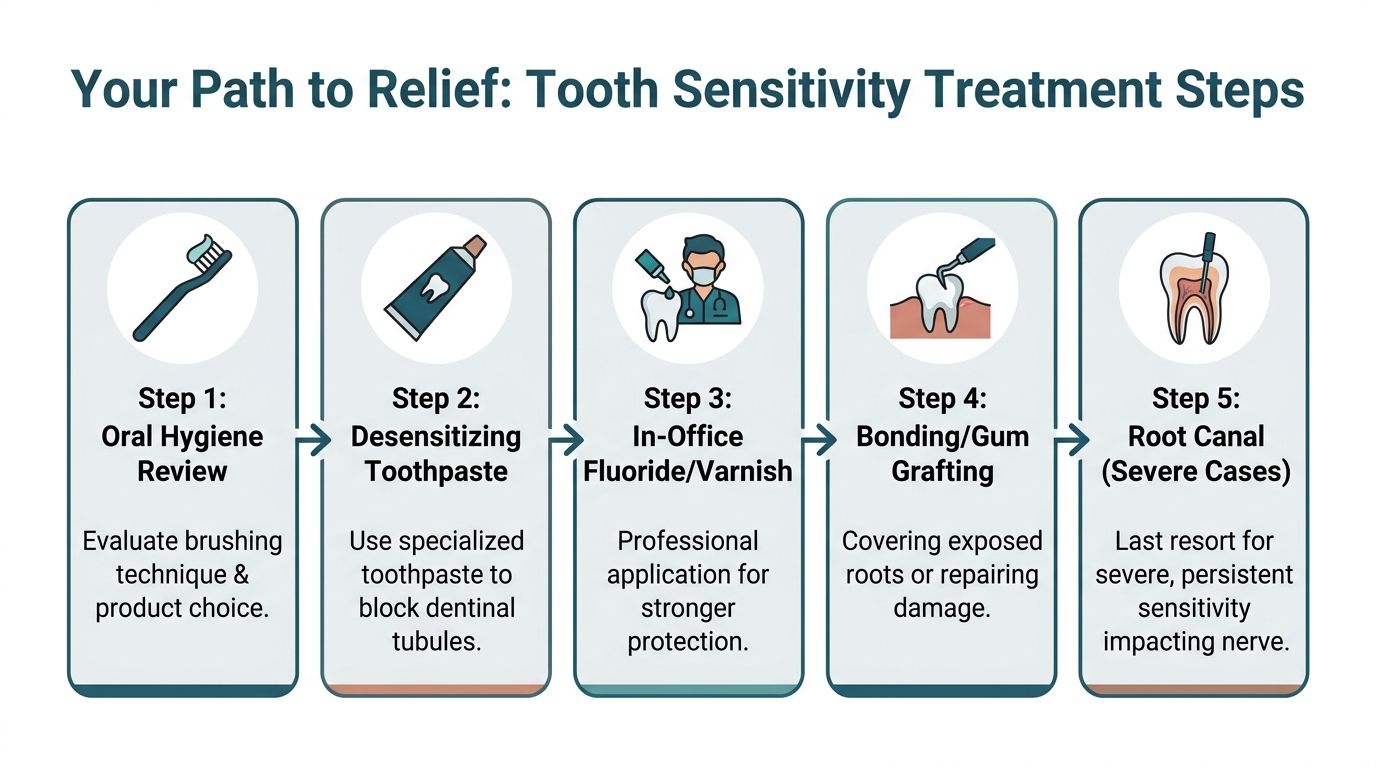
Tooth sensitivity treatment works best when it moves from conservative care to more targeted procedures. That doesn't mean every patient starts at the same place. It means the dentist looks at the likely cause first and chooses the smallest treatment that can solve the problem.
Step one starts with the cause
The American Dental Association explains that treatment for sensitive teeth is cause-directed, not one-size-fits-all. It may involve decay, fractured teeth, worn fillings, gum disease, enamel loss, or exposed roots. The ADA also notes that desensitizing toothpaste works by blocking sensation over time, while in-office fluoride gel, bonding, crowns, gum grafts, or root canal treatment may be used depending on the underlying issue, as outlined by ADA guidance on sensitive teeth treatment.
That point matters because two patients can describe the same “cold pain” and still need different care. One may need a toothpaste change and gentler brushing. Another may need restorative dentistry because a cracked filling is leaving part of the tooth exposed.
Home care that often comes first
For many people, the first step is a daily desensitizing toothpaste. These products are designed to reduce how strongly the tooth responds, but they usually need consistent use rather than a single brushing.
Delta Dental notes that desensitizing toothpaste may take two or more weeks of regular use before relief is noticeable, according to its patient guidance on tooth sensitivity. That waiting period surprises a lot of patients who expect immediate results.
A few practical home-care moves often help during that period:
- Use a soft-bristled brush so the gumline isn't scrubbed harder than necessary.
- Avoid whitening toothpaste if the teeth already feel reactive.
- Brush gently at the gumline instead of using a back-and-forth scrubbing motion.
- Stay aware of acidic triggers like soda, citrus, or sports drinks if symptoms flare after them.
For patients already dealing with gumline pain or visible wear, a routine visit may also reveal whether a dental cleaning and exam includes more than just polishing and scraping. A cleaning can uncover plaque buildup, recession, worn areas, or old restorations that are contributing to symptoms.
A short video can also help patients understand the range of treatment choices before an appointment.
When in-office treatment makes sense
If the pain is stronger, lasts longer, or keeps returning to the same spot, home care may not be enough. Dentists often move to in-office solutions when the goal is faster relief or when there's a structural problem to fix.
A staged overview looks like this:
Fluoride application
Professional fluoride can strengthen vulnerable tooth surfaces and reduce sensitivity in exposed areas.Prescription-strength fluoride toothpaste
In more stubborn cases, higher-fluoride products may be recommended. A peer-reviewed review on non-surgical management of dentin hypersensitivity reports prescription fluoride toothpastes at about 5,000–12,500 ppm fluoride, higher than standard over-the-counter formulas, and notes these products can support remineralization while relieving sensitivity, according to this review of non-surgical hypersensitivity management.Bonding or cervical restorations
If part of the root or tooth surface is exposed, a bonding material can cover the area and reduce the direct trigger. This may also appeal to patients searching for a cosmetic dentist near me, because the material is tooth-colored and blends with the smile.Crowns or other restorative treatment
When a tooth has a larger structural problem, such as a damaged filling or significant wear, a crown may protect the tooth more completely.Root canal treatment for severe cases
If the pain is persistent and tied to the nerve inside the tooth, root canal therapy may be the step that fully removes the source of pain.
Amanda Family Dental provides services such as crowns and root canal treatment for teeth that need more than conservative sensitivity care.
Relief often comes fastest when the exposed or damaged area is physically protected, not just soothed.
How to Prevent Tooth Sensitivity from Returning
Once a tooth settles down, prevention becomes the actual long game. Sensitive teeth often improve, then flare again if the same wear pattern keeps happening at home.
Daily habits that protect enamel and roots
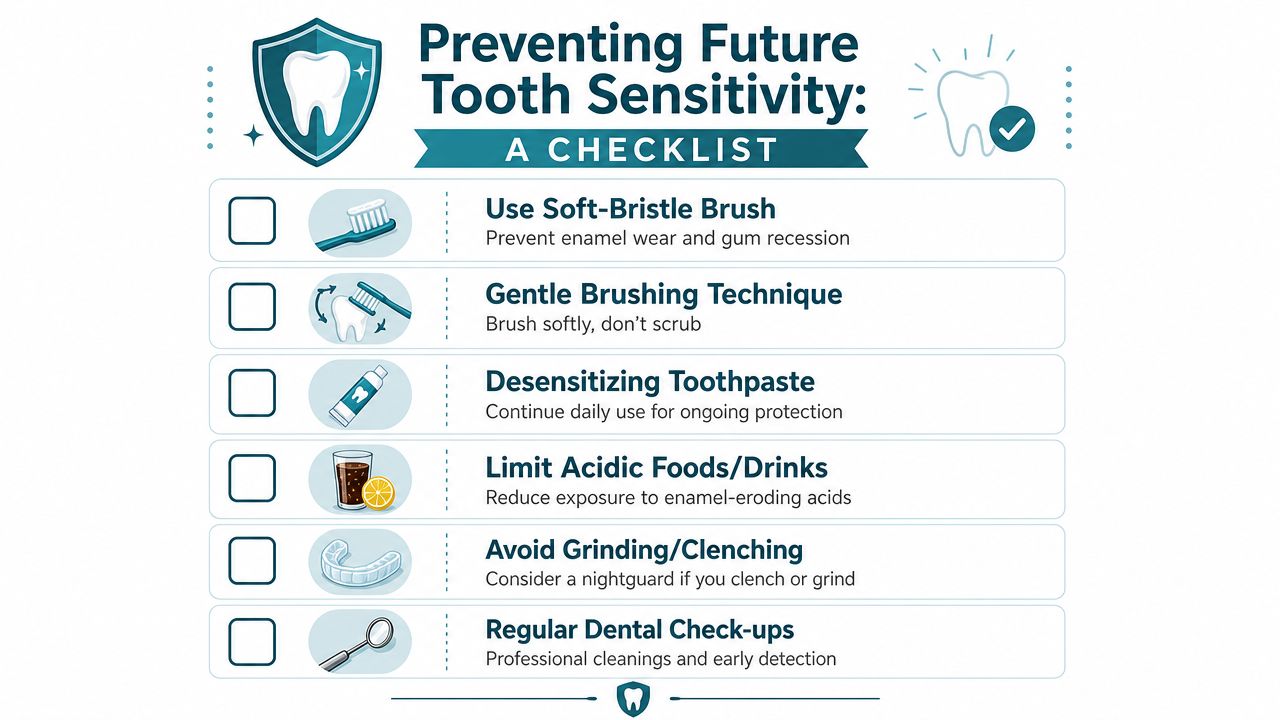
A simple checklist works better than trying to overhaul everything at once:
- Choose a soft brush: A gentler brush helps protect the gumline and reduces added wear on already sensitive areas.
- Lighten brushing pressure: Scrubbing harder doesn't clean better. It often just irritates exposed root surfaces.
- Keep using sensitivity toothpaste if recommended: Some people stop as soon as the pain settles, then wonder why it returns.
- Watch acidic foods and drinks: Frequent acid exposure can make vulnerable areas easier to trigger.
- Address clenching or grinding: If teeth feel sore in the morning or the biting edges look worn, a nightguard may be worth discussing.
Routine dental care matters more than most people think
Sensitivity often returns when the underlying reason hasn't fully been controlled. A patient may switch toothpaste, feel better for a while, and still have an old filling margin or recession area that needs attention.
Regular checkups help catch those patterns earlier. Professional visits also create a good time to review preventive products at home, including whether a fluoride mouthwash for cavities and enamel support fits into a broader prevention plan.
Worth remembering: Prevention isn't only about avoiding pain. It's about protecting enamel, roots, restorations, and bite function before a small sensitivity problem turns into a larger repair.
For families in Amanda, Lancaster, Circleville, and Carroll, that kind of follow-up often matters as much as the first treatment.
Your Comfort-Focused Experience at Amanda Family Dental
When people put off treatment, the reason usually isn't confusion alone. It's also worry. They may worry the exam will hurt, that the answer will be complicated, or that they'll feel rushed once they sit in the chair.
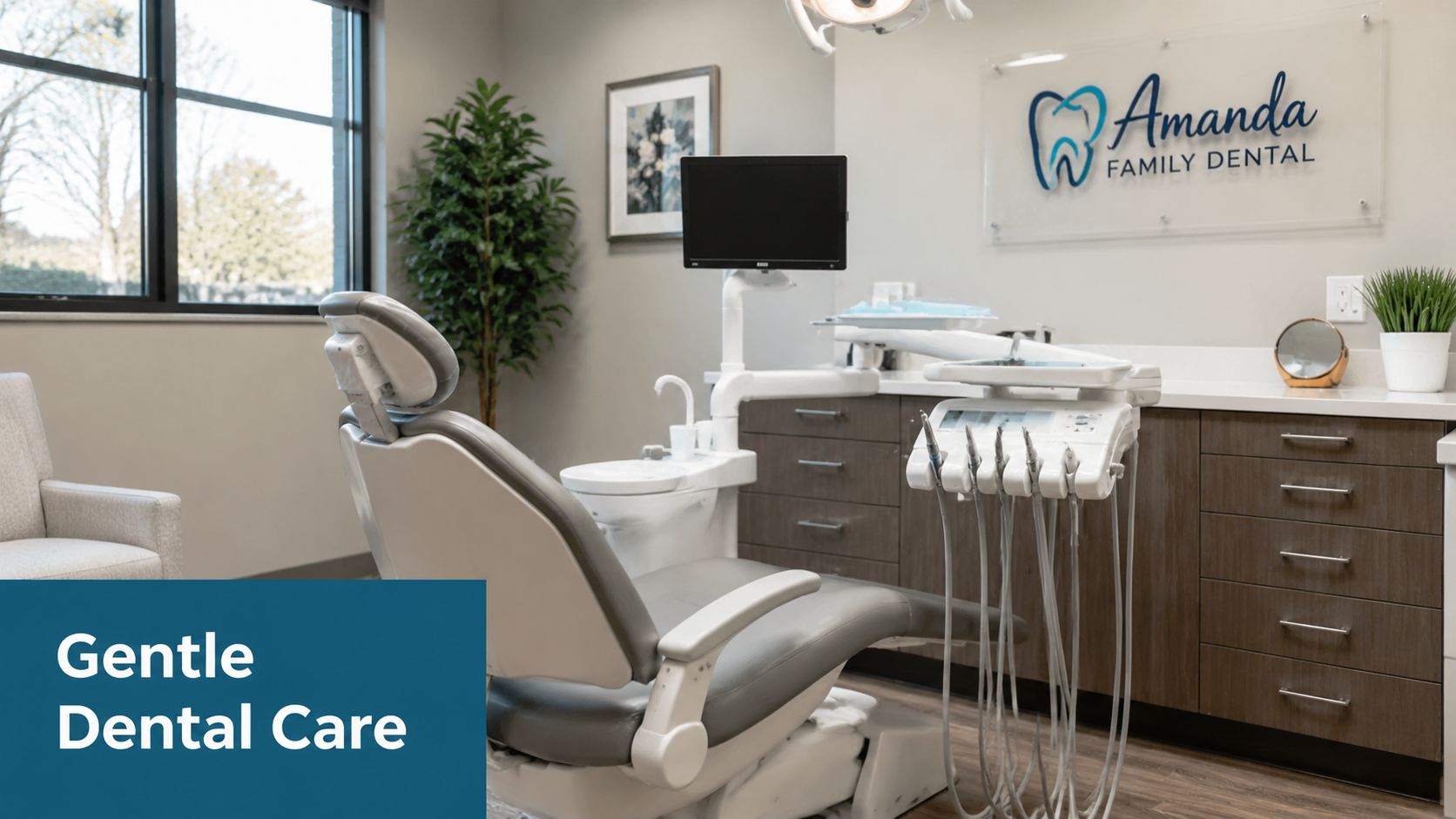
What a visit feels like
A comfort-focused visit starts with listening to the pattern of the pain. Is it only with cold? Does it linger? Is it one tooth or several? That history helps narrow the cause before treatment is chosen.
From there, patients can expect a new patient exam, digital x-rays when needed, and a personalized plan based on the tooth's specific condition. That kind of approach matters because sensitive teeth can come from more than one source, and the right plan depends on the details.
Care choices built around real people
Some patients want conventional fluoride-based treatment. Others ask about mercury-free fillings or fluoride-free choices when appropriate. Some need a conversation about teeth grinding, restorative dentistry, or whether sleep dentistry may help them get through care more comfortably.
People also increasingly value easy communication before they visit. For dental teams thinking about ways to answer common questions outside office hours, this overview of Hyperleap AI for dental clinics is a useful example of how practices can help patients get quicker responses about scheduling, symptoms, and next steps.
A calmer dental visit usually starts before the appointment. Clear explanations lower anxiety almost as much as gentle treatment does.
That matters for nearby communities too. Someone looking for a dentist in Lancaster, OH, dentist in Circleville, OH, or dentist in Carroll, OH often wants the same thing. A local office that explains what's happening, offers options, and doesn't make a stressful symptom feel harder than it already is.
When to See Your Dentist in Amanda, OH for Tooth Sensitivity
Some sensitivity can be monitored briefly at home. Some should be checked much sooner. The hard part for most patients is knowing where that line is.
Signs it's time to stop waiting
A dental visit makes sense when any of these are happening:
- The pain is getting stronger: Sensitivity that feels sharper or starts lasting longer may signal a deeper issue.
- Chewing is uncomfortable: That can point to a crack, damaged filling, or another structural problem.
- Only one tooth keeps reacting: A single problem tooth usually deserves a closer look.
- Home care hasn't helped enough: If desensitizing toothpaste has been used consistently and the tooth still reacts, a dentist should evaluate the cause.
- The area looks different: Gum recession, a chipped edge, or a dark spot near the gumline shouldn't be ignored.
If a crown feels loose or the bite around it has become sensitive, patients may also want to review concerns related to cement for a tooth crown and why a dental exam matters when a crown doesn't feel secure.
A simple next step for local patients
Delta Dental notes that desensitizing toothpaste can take two or more weeks of steady use to become effective. If symptoms persist or feel severe, professional diagnosis becomes important, as already noted earlier in this guide.
For patients in Amanda, OH and nearby Lancaster, Circleville, and Carroll, sensitivity that interferes with eating, drinking, or brushing is reason enough to schedule care. If the tooth is painful now, searching for an emergency dentist is reasonable. If the symptom is milder but recurring, a standard dental appointment can still prevent a bigger problem later.
Amanda Family Dental serves patients in Amanda, Lancaster, Circleville, and Carroll, Ohio with exams, digital x-rays, restorative care, and comfort-focused treatment planning for sensitive teeth. To request a visit, ask about treatment options, insurance, flexible payment choices, or the Power Plan Membership, patients can contact Amanda Family Dental and schedule the next step toward relief.