

A dentist in Amanda, OH who wants to help children well usually runs into the same wall as a dentist in Lancaster, OH, Circleville, OH, or Carroll, OH. The training is there, the goodwill is there, but the right pediatric mentor can still be hard to pin down because Ohio's specialist pool is small, unevenly spread, and shaped by who accepts the children families bring through the door. For a younger clinician trying to build confidence with behavior guidance, early childhood prevention, or medically complex kids, that gap feels personal. It usually isn't. It's structural.
The better move is to search with intent, not optimism. A good pediatric dentist mentor in Ohio is not just someone with a strong résumé, it's someone whose clinical style, communication, and access to children's care line up with the kind of dentist a practice wants to become. For a community practice like Amanda Family Dental, that matters because families want clear guidance, quick answers, and a plan that works when a child is anxious, in pain, or overdue for care. The same practical mindset that helps a parent choose a dentist near me also helps a clinician choose the right mentor, a real person who can sharpen judgment instead of just adding another name to a contact list.
Table of Contents
- Why Finding a Pediatric Mentor in Ohio Feels Harder Than It Should
- Understanding the Ohio Pediatric Dentistry Context
- Where to Look for Pediatric Mentors Across Ohio
- Preparing Your Outreach and Defining What You Need
- Structuring the Mentorship for Real Results
- Virtual and Hybrid Mentoring Options
- Your First 30 Days and Lasting Success
Why Finding a Pediatric Mentor in Ohio Feels Harder Than It Should
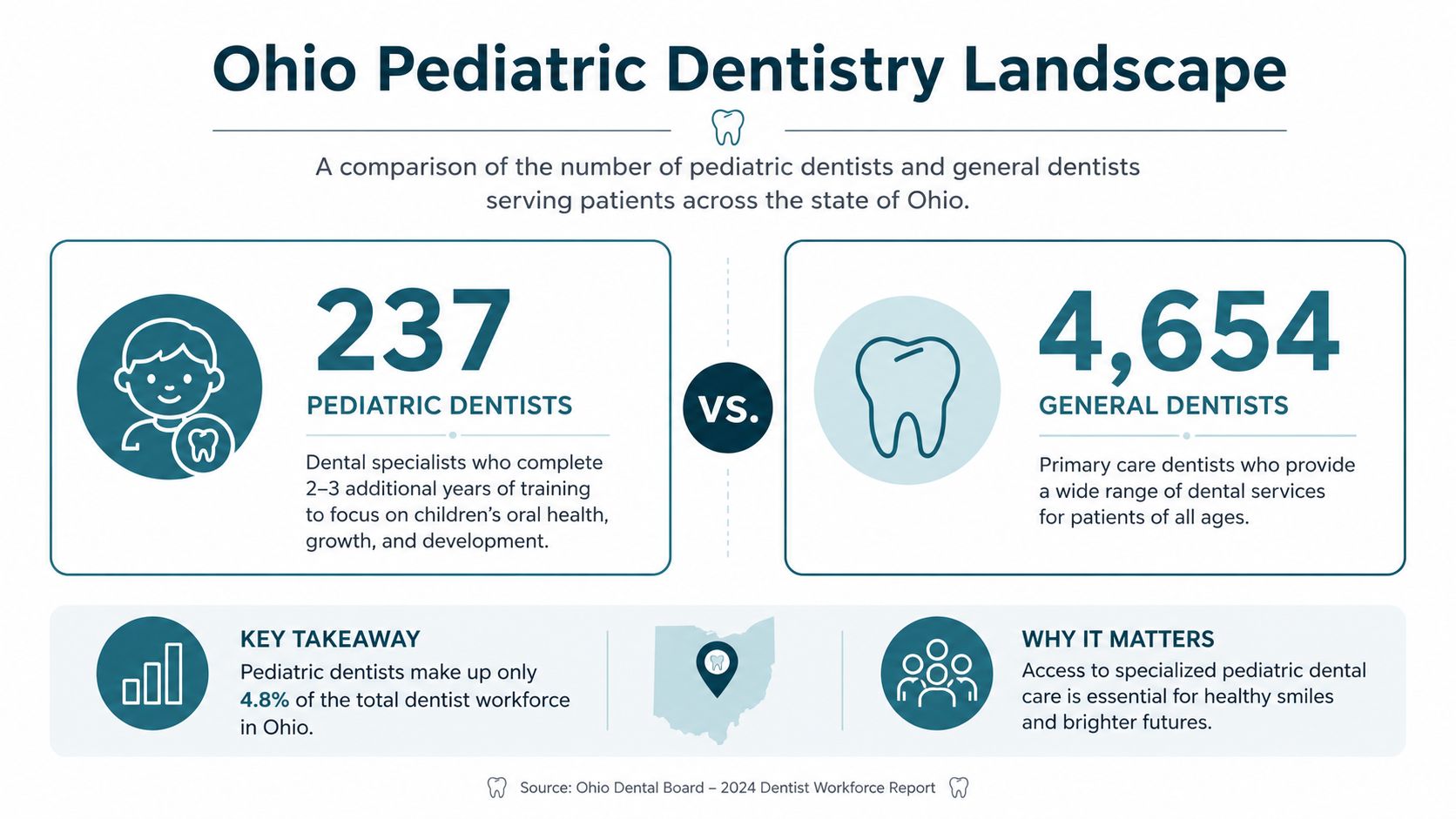
A new dentist lands in Ohio, joins a study club, sends a few polite emails, and waits. One mentor replies quickly, another never writes back, and a third seems helpful but only wants to talk in broad theory. That frustration is common, and it has a real reason behind it. Ohio has 237 pediatric dentists compared with 4,654 general dentists, so the specialty is a small slice of the overall workforce, not a broad mentoring pool that is everywhere at once (KFF state workforce data).
The shortage is not just about numbers
The difficulty also shows up in where pediatric dentists practice and which families they can serve. National workforce research found about 9 pediatric dentists per 100,000 children in the United States in 2016, with the Northeast and West averaging 12 per 100,000 versus 7 to 8 per 100,000 in the South and Midwest, which helps explain why midwestern states often feel thin on mentors and referrals (KFF state workforce data). In Ohio, historical data also found only 7% of general dentists and 29% of pediatric dentists accepted Medicaid without limitations, so the mentors who do see children are often the same clinicians carrying the heaviest access burden.
That creates a common trap. Younger dentists assume the problem is their outreach skill, when the actual issue is that some of the most visible pediatric dentists are already overloaded and the ones with room to teach may not be the ones families see first. The right response is not to wait for a warm introduction to happen by luck. It's to search like a clinician who understands how access works, then build a relationship with a mentor whose practice pattern fits the community needs around Amanda and the surrounding counties.
Practical rule: The best mentor is usually not the busiest name in the room. It's the one who still has time to answer a case question on a Tuesday afternoon.
A useful place to start is deciding whether the need is specialty guidance or a broader decision about when a child needs specialist care, which is why a practical comparison like pediatric dentist vs general dentist can help frame the search.
Understanding the Ohio Pediatric Dentistry Context
Ohio is a state where pediatric dentistry matters, but access is uneven. That matters for mentorship because the people worth learning from are usually clustered where the specialty is already established, where academic activity keeps cases coming in, or where access programs create steady contact with children who need more than routine cleanings. If you want a pediatric dentist mentor in Ohio, start by accepting that the state is not evenly covered, and the smartest search follows that reality instead of pretending otherwise.
Why the workforce mix matters
The most important fact is simple. Ohio has 237 pediatric dentists and 4,654 general dentists, so the specialty is small compared with the general workforce (KFF state workforce data). That means mentorship opportunities are not spread evenly across the state, and they are rarely accidental. A dentist looking for guidance in Amanda, Lancaster, Circleville, or Carroll should expect the closest useful expert to be in another part of Ohio, or attached to a university, access program, or referral network.
The access history matters too. Earlier Ohio data found that only 7% of general dentists and 29% of pediatric dentists accepted Medicaid without limitations. That is more than a payer issue. It shapes which dentists get comfortable with younger children, higher-need children, behavior guidance, preventive planning, and early childhood treatment patterns. It also shapes who can serve as a practical mentor, not just a credentialed one.
The straightforward conclusion is that a mentor search in Ohio works better when it follows the flow of actual pediatric care, not title prestige. Look where children are already being served, where referrals cluster, and where the dentist is likely to have enough real-world cases to discuss. A strong mentor here often understands access constraints as well as technique.
What this means for your search
A good search list usually includes academic programs, organized dentistry, residency networks, and access-focused practices. It also means being realistic about geography. Some regions have enough pediatric activity to create informal mentor circles. Others require more deliberate outreach because the nearest meaningful contact may not be in the same county.
For a local practice that also sees families seeking dental care, cleaning and exams, and the occasional emergency dentist visit, that context matters. If you are trying to ground that search in a real local example, a practice page such as pediatric dentistry in Belleville, Ohio can help you see how pediatric care is presented to families in a community setting. Pediatric mentorship in Ohio is not about polish. It is about learning how to keep children on a path toward treatment when access is uneven.
Where to Look for Pediatric Mentors Across Ohio
A lot of dentists waste time by starting with the wrong channel. They send messages to random names, hope for a reply, and then conclude that mentorship is scarce. The better move is to start where pediatric dentists already gather, teach, or supervise. That shortens the distance between a cold introduction and an actual working relationship.

The highest-yield channels
Start with organized dentistry. The Ohio chapter of the American Academy of Pediatric Dentistry, the Ohio Dental Association, and local component societies are obvious places to look because they already connect clinicians who work with children. The key is not to ask, “Do you mentor?” That sounds vague and gets vague answers. Ask whether they know someone who enjoys case discussion, behavior guidance, or early childhood care and can spare regular time for review.
University-based programs are often more responsive than private offices because teaching is already part of the culture. Ohio State and Case Western both sit in ecosystems where residents, faculty, and affiliated clinicians may be used to discussing treatment planning and child management. Alumni networks from residency programs can also be useful because people are more likely to answer when there's a shared training background. Study clubs and continuing education events can be better than email directories because they let a younger dentist see how someone speaks to peers before asking for time.
A quick filter helps separate true mentors from names on a list.
- Ask about routine case review: Real mentors usually welcome a structured follow-up, not just a one-time coffee.
- Listen for clinical examples: If the person only gives general encouragement, that's not enough for a working relationship.
- Watch how they handle questions: Direct answers usually mean direct mentorship later.
- Check whether they already teach or supervise: That often signals they're comfortable with repetition and feedback.
If the first interaction feels rushed, the mentorship probably will too.
The most efficient outreach also comes from people already close to child-focused care. A practical clinic that serves families and discusses pediatric care internally, such as Amanda Family Dental, is one example of the kind of local practice where pediatric questions tend to come up in real time.
Preparing Your Outreach and Defining What You Need
Cold outreach falls flat when the ask is vague. “I'd love to learn from you” sounds courteous, but it does not tell a busy pediatric dentist what kind of help you need. Say what you want before you write the first note. Do you need clinical skill development, early-career decision-making, practice management, or guidance with nervous children and behavior? Those are different requests, and each one calls for a different mentor.
Build a short, useful package
A mentor is more likely to respond when the request is specific and easy to review. Send a short résumé, a one-page summary of the clinical areas that matter most, and two or three case questions that show you have already thought through the problem. The point is to show seriousness without handing over a pile of work. A mentor who sees that kind of preparation is more likely to keep the conversation going.
Keep the first message human and brief. Name why you chose that person, say what kind of guidance you want, and state how much time you are asking for. Leave out the long origin story and the dramatic career confession. Busy pediatric dentists respond to notes that get straight to the issue, explain why their perspective matters, and make the time request clear.
Useful rule: If the first email would take more than two minutes to read, it's too long.
Separate mentorship from case consultation
This distinction matters. Some clinicians need a long-term mentor who can talk through growth, judgment, and practice style. Others only need a specialist consultant for specific cases, such as a child with strong anxiety, a young patient needing behavior guidance, or a family struggling with follow-through. Those are different relationships, and treating them like the same thing sets up disappointment on both sides.
Before outreach, decide what success looks like. It may be regular case review, occasional phone calls, shadowing, or a few direct conversations each quarter. The more concrete the expectation, the easier it is for a mentor to say yes or no.
For dentists who want practical support with children who are nervous, a related resource like a guide on managing dental anxiety in pediatric patients can help shape the kinds of questions worth bringing to a mentor.
Structuring the Mentorship for Real Results
A mentor relationship without structure usually fades after the first few good conversations. That's not because people stop caring. It's because no one defined how the relationship should work. The cleanest fix is to set the terms early and keep them simple enough that both people can follow them without resentment.
In person or virtual
In-person mentoring works best when the goal is hands-on observation, behavior management in the room, or watching how a clinician speaks to children and parents. Virtual mentoring is better for case review, treatment planning, and decision-making that doesn't require chairside presence. If the main issue is how to think through a case, virtual time is often enough. If the issue is how to guide a fearful child through the visit, being physically present matters more.
The meeting structure should be spelled out from the start. Frequency, preferred communication channel, confidentiality, and duration all need to be clear. If compensation is involved, say so directly. Some mentors charge, some trade time through study clubs, and some keep it informal. The awkwardness goes away once the terms are named.
A useful one-page agreement can cover:
- How often contact happens
- Whether questions go by email, phone, or video
- What types of cases are appropriate
- Whether notes or images will be shared and how confidentiality is handled
- How long the first arrangement lasts before review
Why structure protects the relationship
A common failure mode is the quiet drift. The first three meetings go well, then months pass and nobody follows up. The remedy is not more enthusiasm. It's a calendar. A mentor and mentee who agree to a monthly check-in or a defined case-review rhythm are much less likely to lose momentum.
A structured arrangement also reduces confusion about autonomy. A mentor should advise, not take over. The mentee still owns the patient decision, but the mentor can challenge assumptions, sharpen judgment, and keep the discussion grounded in child-centered care. That balance is what makes mentoring useful instead of performative.
Virtual and Hybrid Mentoring Options
Geography used to make mentorship feel local or impossible. That's no longer true. A pediatric dentist mentor in Ohio can be across town, across the state, or in a different practice model entirely, and still be valuable if the relationship is built around case review and direct feedback. For dentists in rural Ohio, or for those juggling family practice schedules in Amanda, Lancaster, Circleville, or Carroll, virtual mentoring is often the most realistic starting point.
Where virtual works well
Virtual mentoring is strongest when the question is clinical judgment. A screen can handle treatment planning, sequencing, referral timing, follow-up strategy, and parent communication. It also works for debriefs after challenging appointments, especially when the mentee wants to compare what happened with how a seasoned pediatric dentist would have handled it. Shared chart review and recorded discussion can be enough to turn a one-off problem into a better system.
It is weaker when the goal is physical technique. A video call can't replace live observation for hands-on behavior management, instrumentation, or the subtle timing of chairside communication. That's why hybrid arrangements usually work best. A few virtual check-ins can handle the planning, then an in-person observation can handle the tactile side.
Fit matters more than credentials
Two pediatric dentists can have identical training and still mentor in completely incompatible ways. One may favor a direct, efficient style. Another may be more diplomatic and gradual. One may push independence, while another wants to stay tightly involved. Neither is wrong, but one may fit the mentee's practice philosophy far better than the other. That's the part many younger dentists miss when they chase prestige instead of compatibility.
A good filter is simple:
- Behavior guidance style: Does the mentor's approach match how children are managed in the practice?
- Communication tone: Is the feedback direct, calm, or heavily nuanced?
- Autonomy: Does the mentor support independent judgment, or do they over-direct?
- Conflict style: When opinions differ, do they explain their reasoning or insist?
A mentor who respects autonomy can be especially useful for dentists balancing pediatric care with general and cosmetic services. That balance matters in real practices, where a child's needs may sit alongside family dental care, restorative work, and the day-to-day pressure of keeping appointments moving.
Avoid the wrong kind of convenience
Some dentists pick the nearest expert and then stay stuck in a poor fit because the location is convenient. That's a mistake. A nearby mentor who clashes with the mentee's philosophy will slow growth. A farther mentor who thinks the same way, gives better feedback, and communicates clearly will usually be the better investment. Convenience matters, but compatibility wins.
Your First 30 Days and Lasting Success
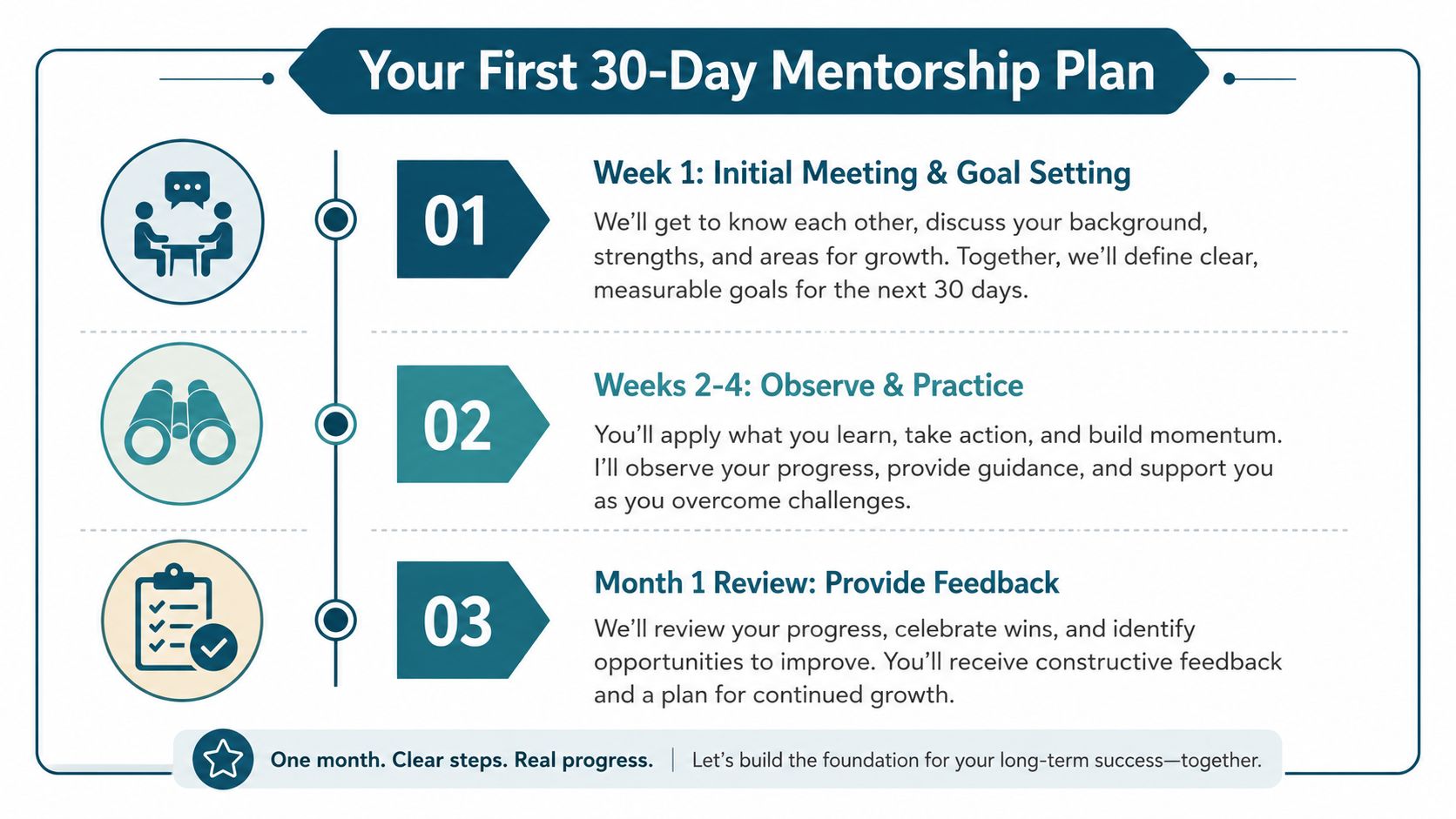
The first month after identifying a potential mentor should feel purposeful, not improvised. In week one, make the introduction, state the goal, and ask for a concrete first step. In weeks two through four, bring real questions, follow up on advice, and show that the relationship is being used, not just admired from a distance. By the end of the month, there should be enough interaction to decide whether the fit is real.
What keeps a mentor engaged
Mentees who bring cases, questions, and thoughtful follow-through tend to stay on a mentor's radar. That's not flattering language, it's just how professional relationships work. A mentor is more likely to stay invested when the mentee is prepared, responsive, and willing to act on feedback. Reciprocity matters too. If the relationship becomes one-sided, it usually fades.
The best sign that a mentorship is working is not constant contact. It's better judgment. The mentee starts making cleaner calls, asking sharper questions, and recognizing when a child needs specialist input versus routine care. That's the payoff.
A good mentor makes the mentee faster at seeing the right next step.
When to keep going and when to move on
A mentorship has likely run its course when the conversations become repetitive, the feedback no longer changes behavior, or the mentor can no longer give the kind of guidance needed. That's not failure. It just means the relationship reached its natural end. The right move is to close it respectfully and keep the door open for future questions.
The most important lesson is simple. Don't wait for a perfect introduction or a perfect mentor. Pick someone whose clinical philosophy and communication style match the kind of pediatric dentist the practice wants to become, then do the work to make the relationship useful. That approach will beat a flashy résumé every time.
Amanda Family Dental offers family and pediatric dental care for children, along with preventive cleanings, exams, and other treatment options that help local families stay ahead of pain and avoid bigger problems later. If a child needs gentle care close to home in Amanda, OH, or nearby Lancaster, Circleville, and Carroll, visit Amanda Family Dental to schedule an appointment and see how the team can help.