


You're sitting in the car outside the office, hand on the steering wheel, telling yourself to walk in, and your body still won't move. That moment is familiar to a lot of people who need care but feel stuck by fear, embarrassment, or bad memories. Dental anxiety management exists for exactly that reason, because comfortable care should feel possible, not out of reach, for patients in Amanda, OH, Lancaster, OH, Circleville, OH, and Carroll, OH.
Amanda Family Dental works with patients who need a calmer pace, clearer explanations, and care that fits real life. Whether the concern is a routine cleaning and exam, a tooth extraction, dental implants near me, a cosmetic dentist near me, or an emergency dentist, the first step is often the same, finding a team that takes fear seriously and responds with practical support.
Table of Contents
- Why Dental Visits Feel Overwhelming
- Understanding the Causes and Signs of Dental Anxiety
- Step-by-Step Preparation for a Calmer Visit
- In-Office Comfort Options and Sedation Choices
- Helping Children Overcome Dental Fear
- When Anxiety Becomes a Barrier to Access
- Your Path to Comfortable Dental Care in Ohio
Why Dental Visits Feel Overwhelming
The hardest part is often the drive into the parking lot. Someone can sit there for ten minutes, looking at the front door, replaying an old appointment, worrying about pain, or imagining embarrassment if a tooth looks worse than expected. That reaction doesn't mean the person is difficult or dramatic, it means the brain is treating the visit like a threat.
Dental fear and anxiety are widespread. A 2021 systematic review and meta-analysis pooled 31 studies and estimated worldwide prevalence at 15.3% in adults, with 12.4% classified as high fear and anxiety and 3.3% as severe, while a later review of 19 studies with 9,267 participants found a pooled prevalence of 18% for high dental anxiety (PubMed). Those numbers matter because they show this isn't a niche problem, it's a common barrier to routine care.
Anxiety sits on a spectrum
Some people feel tense but still make the appointment. Others avoid care until pain forces a visit. The difference matters, because dental anxiety management should match the level of fear, not treat every nervous patient the same way. A British Dental Journal review recommends starting with an assessment and then using proportionate support, from simple practice changes for milder fear to structured psychological or pharmacological help for moderate or severe fear (British Dental Journal review).
Practical rule: the more a patient avoids care, the more important it becomes to pair reassurance with a clear plan.
That's why comfort-focused dentistry has changed. Practices now build visits around communication, pacing, and choice, not just treatment. Amanda Family Dental in Amanda, Ohio, is part of that shift, serving patients who want a local office that understands fear can be part of the reason someone has put off care for too long. When that happens, the problem rarely gets smaller on its own, and the next visit often feels even bigger than the last.

Understanding the Causes and Signs of Dental Anxiety
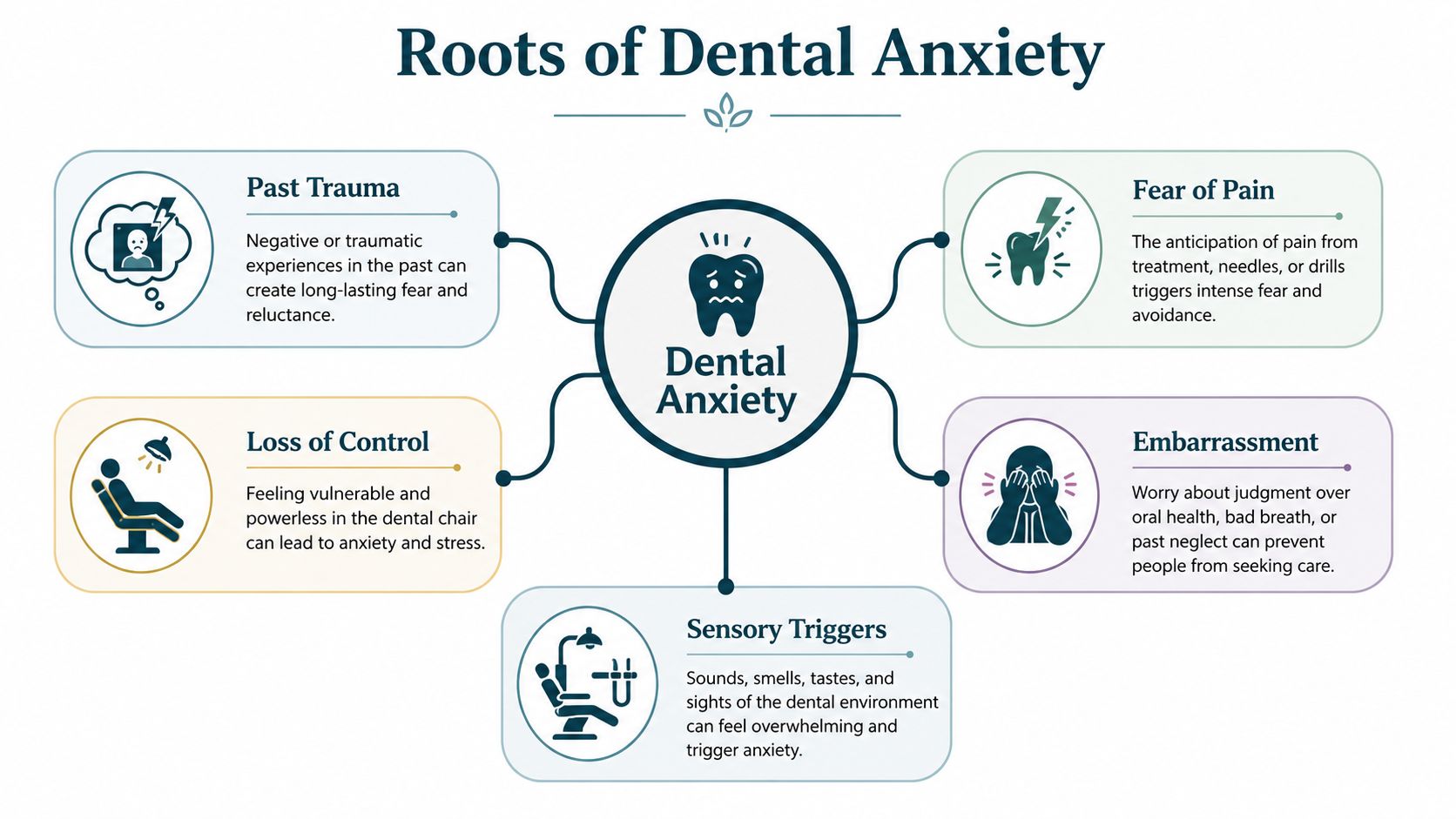
Fear at the dentist usually has a reason. A patient may remember a painful procedure, feel embarrassed about the condition of the teeth, dread the sound of a drill, or dislike lying back in a chair where speaking feels harder. The 2024 review of oral surgery anxiety found that hypnosis had a small but statistically significant effect on state anxiety and that benzodiazepines showed a low-certainty benefit, while evidence for several distraction-style approaches was inconclusive in that setting (2024 systematic review). That pattern fits what many patients already know, immediate fear often responds best when the plan is specific, not vague.
Common triggers show up in ordinary moments
A person might feel embarrassed before even entering the office because they haven't been in for years. Another patient might be fine with conversation but tense up the second an instrument is mentioned. The trigger isn't always the treatment itself, it can be the waiting, the smell, the sound, or the sense of being watched.
A useful outside resource for patients who want a broader overview of fear triggers is Florida Special Care Dentistry's fear guide. It can help readers compare their own reactions with common patterns of avoidance and worry.
The body gives the fear away
Dental anxiety often shows up physically. Patients may notice a faster heartbeat, sweating, stomach upset, muscle tension, trouble sleeping the night before, or a sudden urge to cancel. The 2024 Saudi cross-sectional study found that 10.9% of respondents had high anxiety and 59.2% had moderate anxiety, while 78.9% said pre-treatment explanations reduced anxiety and 79.4% preferred a conducive clinic environment (PLOS One study).
That study lines up with a simple truth. People often do better when the office feels calm and the team explains what's happening before it starts. If fear keeps building over time, avoidance can turn a small issue into a harder one, and that's when a routine cleaning starts to feel like a crisis.
Step-by-Step Preparation for a Calmer Visit
A calmer dental visit usually starts before the patient leaves home. Choosing an appointment time that leaves less room for worry, eating enough so low blood sugar does not add to the jitters, and deciding what level of support feels manageable all help the day feel less overwhelming. Dental anxiety works best as a tiered system, because a person with mild uneasiness may only need simple preparation, while someone with stronger fear may need a fuller comfort plan.
A British Dental Journal review supports that kind of matched approach. Basic comfort changes can help many patients, and people with stronger fear may need more structured support.
Before the visit
A patient who prepares ahead usually feels less cornered by the appointment. The most useful first step is often to tell the office what part of the visit feels hardest, because the team can only adjust what it knows about. For some people, the fear is pain. For others, it is loss of control, the waiting, or the sound of the instruments.
A few practical moves can make the day feel more manageable:
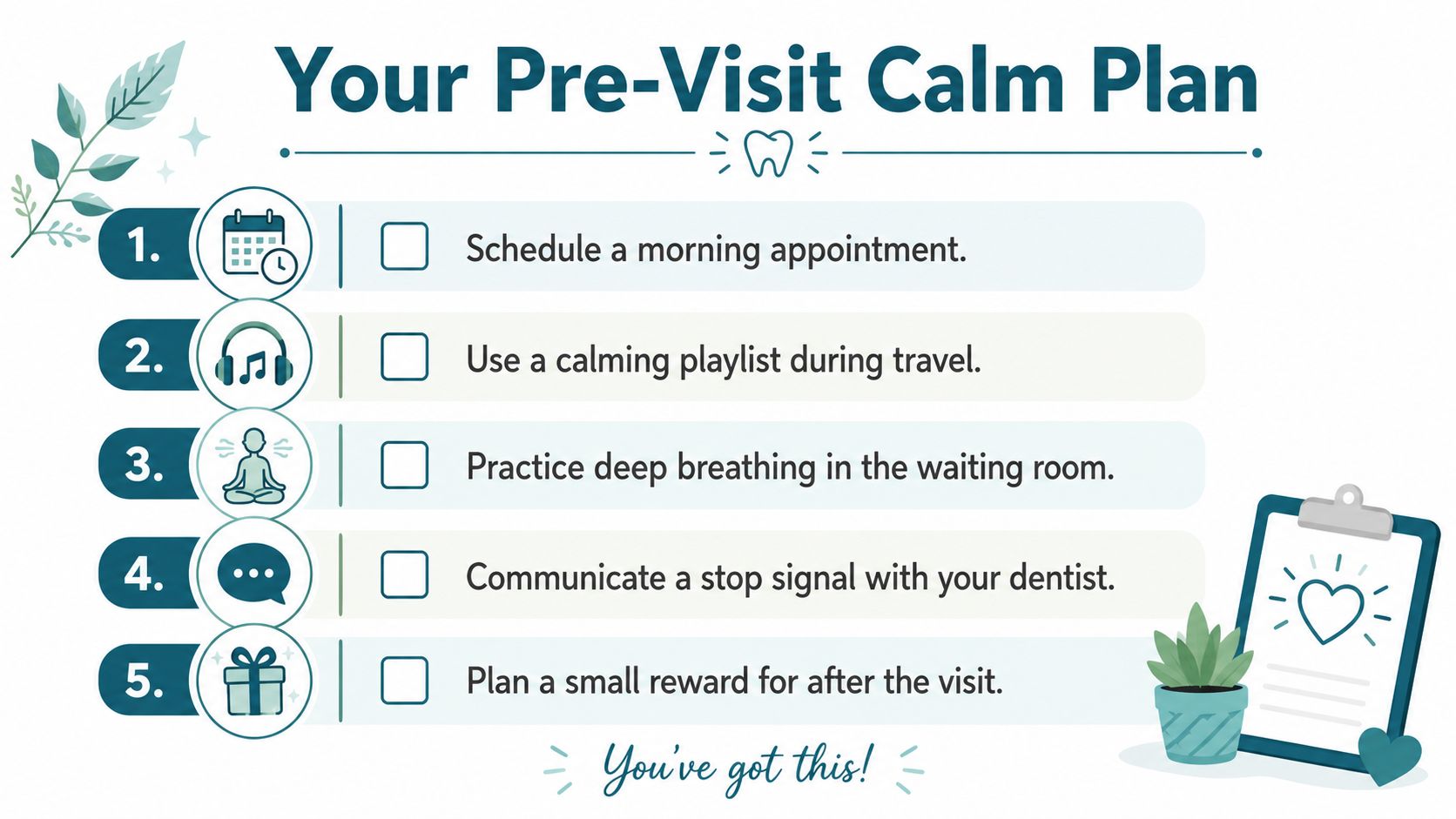
- Schedule early when possible. Fewer hours of anticipation often mean fewer chances for fear to build.
- Bring a support person if that feels comforting. A trusted friend or family member can help with the drive, the waiting room, or the first few minutes.
- Write down questions in advance. A list can keep the visit focused when nerves make it hard to think clearly.
- Ask for a stop signal. A hand raise or similar cue gives the patient a clear way to pause.
For readers who want a broader set of relaxation ideas, Aroma Warehouse's guide to anxiety relief offers general calming approaches to consider before a visit.
During the visit
Breathing should stay simple. Slow, steady breaths with a longer exhale than inhale can help the body settle down. Grounding helps too, such as focusing on the feeling of the chair, listening to music, or counting objects in the room. If the team explains each step as it goes, the appointment can feel more predictable and less mysterious.
Keep the first goal small. Getting through the waiting room calmly is still progress.
Patients often do better when they do not try to be fearless. The goal is to get through the appointment with enough support to complete care safely, and that support can look different from one person to another. A good dental office adjusts the visit to the patient instead of forcing the same approach on everyone.
The office experience matters too. Amanda Family Dental discusses comfort options in advance for nervous patients, and that kind of clear conversation can turn a stressful appointment into something more predictable. A helpful overview of routine care is also available at what a dental cleaning includes, which can make the first visit feel less uncertain.
In-Office Comfort Options and Sedation Choices
Some patients need a quieter room and a slower explanation. Others need medication support, especially if the fear is strong or the procedure is longer. The right answer depends on the person, the treatment, and the medical history, which is why sedation dentistry works best as part of a broader comfort plan, not as a last-minute fix.
Comfort measures and sedation side by side
A calming office can help before any medication is needed. Softer lighting, a less crowded waiting area, headphones, video distraction, and a dentist who pauses to explain each step all reduce the sense of being trapped. For patients who want a more hands-on treatment conversation, Amanda Family Dental also offers patient-centered choices such as mercury-free fillings and fluoride-free choices, which some patients prefer when they're thinking carefully about materials.
The internal overview of sleep dentistry is useful for patients who want a clear explanation of the broader sedation approach before making a decision.
Sedation options comparison
| Sedation Type | How It Works | Best For | Recovery Time |
|---|---|---|---|
| Nitrous oxide | Inhaled through a mask to help the patient feel more relaxed during treatment. | Mild to moderate anxiety and shorter procedures. | Usually wears off quickly after the mask is removed. |
| Oral sedatives | A prescribed pill taken before the visit to create deeper relaxation. | Patients who need stronger help with fear or longer appointments. | Recovery can last longer, so a driver is usually needed. |
| IV sedation | Medication is given through a vein and adjusted during treatment. | More severe anxiety or more involved procedures. | Recovery is longer and requires careful post-visit planning. |
Choosing the right level
Professional guidance also notes that sedation drugs can bring side effects such as nausea, dizziness, drowsiness, delayed onset, and prolonged sedative effects (sedation review). That's why the decision shouldn't be rushed. A patient with a routine cleaning may need only basic reassurance, while someone facing a tooth extraction or restorative work may need more support.
Amanda Family Dental also discusses sleep dentistry for patients who have delayed care because of fear, a strong gag reflex, or difficulty getting through treatment comfortably. That kind of planning helps match the visit to the patient instead of asking the patient to “just get through it.”
Helping Children Overcome Dental Fear
Children notice more than adults think. If a parent sounds tense, the child may decide something scary is about to happen before the appointment even starts. That's why pediatric dental fear often begins with communication at home, not in the operatory.

Language shapes the child's reaction
Words matter. Saying “it won't hurt” can accidentally make the child focus on hurt, and using threats about cavities can make the office feel like punishment. A calmer approach is better, simple phrases such as “the dentist will count your teeth” or “the team will help keep your smile healthy” are easier for children to understand.
The internal guide to sedation dentistry for children can help parents think through comfort options if a child needs extra support for treatment.
Good habits start with small visits
A first appointment doesn't have to be big or dramatic. A brief introduction, a chair ride, or a simple exam can help a child learn that the office is a normal place, not a punishment zone. Positive reinforcement works better than pressure, especially when the goal is to build trust over time.
Parents also help by staying calm in the waiting room. A child who sees an adult act relaxed is more likely to copy that mood. That is one reason a welcoming, family-centered practice matters for communities in Amanda, Lancaster, Circleville, and Carroll, Ohio, because the child's memory of the visit can shape how future care feels.
Children usually remember the emotional tone of the visit longer than the technical details.
The best outcome is not a perfectly brave child. It's a child who leaves the office thinking dental care is safe, understandable, and something the family can handle together.
When Anxiety Becomes a Barrier to Access
Not every obstacle is purely emotional. Some people are anxious because they've also got to manage cost, transportation, time off work, childcare, or a long gap since their last appointment. That's why dental fear can't always be solved with calming music and a few deep breaths, the practical barriers have to be addressed too.
Access problems can intensify fear
A patient who worries about paying for treatment may keep delaying even when a tooth hurts. Another patient may need a later appointment because a long drive and work schedule make daytime care hard to fit in. If the office feels hard to reach, fear grows stronger because every visit starts with stress before the exam even begins.
Research now frames dental anxiety as a systems and access issue, not only an individual fear issue, and it calls for multi-level support, including provider cooperation and broader care coordination (access-focused review). That matters for underserved patients, because a caring explanation is helpful, but it doesn't solve transportation, cost, or the need to coordinate care with broader health needs.
A practice can remove some of that pressure
Transparent planning helps. So do flexible visits, clear communication about treatment sequencing, and payment options that make care easier to start. Amanda Family Dental's Power Plan Membership and flexible payment approach can help reduce the financial friction that often keeps people from booking the first visit.
The point is simple. When the office acknowledges that life is complicated, patients don't have to carry the whole burden alone. Better access makes it easier to ask for a cleaning, get a tooth checked, or move ahead with restorative care before the situation gets more painful.
If a patient has been searching for a dentist near me who can handle both fear and logistics, that combination of comfort and planning can matter as much as the treatment itself. A nervous patient in Amanda, OH may need the same thing as a busy parent in Lancaster, OH or a worker coming from Circleville or Carroll, Ohio, a practice that understands real-world barriers and responds with a workable plan.
Your Path to Comfortable Dental Care in Ohio
The most useful approach to dental anxiety management is a tiered one. Mild worry may respond to better explanations, a quieter environment, and a hand signal for breaks. Stronger fear may call for longer appointments, behavioral support, or sedation. The right plan starts with identifying what makes the visit hard and then matching the response to that level of fear.
Amanda Family Dental, led by Dr. Alyssa Jenkins, offers that kind of patient-centered approach for families in Amanda, Lancaster, Circleville, and Carroll, Ohio. The practice combines preventive care, restorative dentistry, cosmetic dentistry, and comfort-focused services, including sleep dentistry, digital x-rays, and personalized treatment planning, so the first visit can feel structured instead of rushed. For readers who want a practical example of how new dental tools support patient comfort, AI training for dental practices is an interesting background resource on how modern offices can improve communication and patient support.
What a first visit often includes
A new patient visit usually starts with a conversation about concerns, health history, and treatment goals. From there, the team can use digital x-rays, review findings, and outline next steps in plain language. That matters for anxious patients because clear information reduces guesswork, and guesswork often feeds fear.
The office is also a place for service planning, not just diagnosis. Patients looking for cleaning and exams, dental x-rays, tooth extraction, cosmetic dentistry, restorative dentistry, or dental implants can usually benefit from the same comfort-first approach, even if the treatment needs are very different.
Why the right local office matters
People don't just need treatment, they need a place that makes treatment feel possible. A dentist in Amanda, OH who communicates clearly and works at the patient's pace can make care easier to begin and easier to continue. That same standard matters for anyone coming from Lancaster, Circleville, or Carroll who wants a local office that treats anxiety as part of the appointment, not an inconvenience.
If dental fear has kept care on hold, the next step is simple. Schedule a visit, ask about comfort options, and get a plan that matches the level of anxiety instead of trying to push through it alone.
Amanda Family Dental helps patients in Amanda, OH and the surrounding communities with comfort-focused dentistry, sedation options, and clear treatment planning for anxious visits. If fear has delayed a cleaning, extraction, implant consult, or emergency dental care, visit Amanda Family Dental to request an appointment and take the first step toward calmer care.