

A parent is often sitting at the kitchen table when the search begins. A toddler has a new tooth coming in. A grade-school child mentions sensitivity when drinking something cold. A teenager has a chipped tooth after sports practice. The browser fills with options, and one phrase keeps coming up: Pediatric Dentist Belleville.
For families in Amanda, OH, Lancaster, OH, Circleville, OH, and Carroll, OH, the question usually isn't just who can clean small teeth. It's who can help a child feel safe, understood, and comfortable from the first visit forward. Parents want a dentist near me who can handle routine care, answer questions without rushing, and step in quickly when pain or an emergency shows up.
That concern is justified. Children's oral health affects daily life in ways families notice quickly, from eating and sleeping to focus at school and self-confidence around friends. Parents who want practical at-home support often appreciate essential advice for children's dental hygiene, especially when they're trying to build better brushing and snack habits between appointments. For families comparing local options, it also helps to see what family-friendly dental services can look like when care is designed around both children and parents.
Table of Contents
- A Warm Welcome to Children's Dentistry in Amanda OH
- Why Choose a Dentist with Pediatric Experience
- Your Child's First Visit What to Expect
- Common Pediatric Dental Services and Treatments
- A Gentle Approach for Every Child
- Schedule Your Child's Visit in Amanda OH
A Warm Welcome to Children's Dentistry in Amanda OH
A child rarely says, "Something feels off with my bite." More often, a parent notices the signs first. A little one chews on one side. Brushing turns into a struggle around the back molars. A child who used to smile freely suddenly covers their mouth in photos.
Why parents start looking
Those moments often push families to search for a dentist in Amanda, OH or a dentist in Lancaster, OH who understands children. They may start with routine needs like cleaning and exams, or with a specific worry such as a cavity, dental x-rays, a tooth extraction, or an emergency dentist appointment after a fall.
Parents in Circleville, OH and Carroll, OH often want the same things:
- Clear answers about whether a problem is minor or needs treatment soon
- A calm visit that doesn't make future appointments harder
- A practical plan for home care, follow-up, and prevention
- One trusted office that can support the whole family over time
Practical rule: The best first pediatric dental visit is usually the one that happens before pain becomes the reason for the appointment.
That matters because children respond to patterns quickly. If the first experience is gentle and predictable, the next visit is usually easier. If the first experience happens during pain, swelling, or a rushed emergency, it can take longer to rebuild trust.
What a dental home should feel like
A good pediatric dental experience doesn't feel like adult dentistry made smaller. It feels paced for a child. The team uses simple words. The exam matches the child's age and attention span. Parents leave knowing what was found, what can wait, and what needs attention now.
Families searching "Pediatric Dentist Belleville" are often really searching for reassurance. They want a place where a child's questions are answered, where preventive care is taken seriously, and where cosmetic concerns, restorative dentistry needs, or even emergency dental services can be explained without pressure.
That same local search behavior shows up in Amanda and nearby communities. Whether the concern is early cavity prevention, a broken baby tooth, or planning ahead for future needs like a cosmetic dentist near me or even dental implants near me later in life for other family members, trust starts with how a practice treats the youngest patient in the room.
Why Choose a Dentist with Pediatric Experience
Children aren't just small adults in a dental chair. Their teeth are changing, their jaws are developing, and their comfort level can shift from minute to minute. That's why pediatric experience matters.
Children need a different approach
According to the American Academy of Pediatric Dentistry, pediatric dentistry is an age-defined specialty providing preventive and therapeutic oral health care for infants through adolescence, including children with special health care needs, encompassing behavior guidance, caries prevention, sedation, and supervision of orofacial growth and development (AAPD overview of pediatric dentistry).
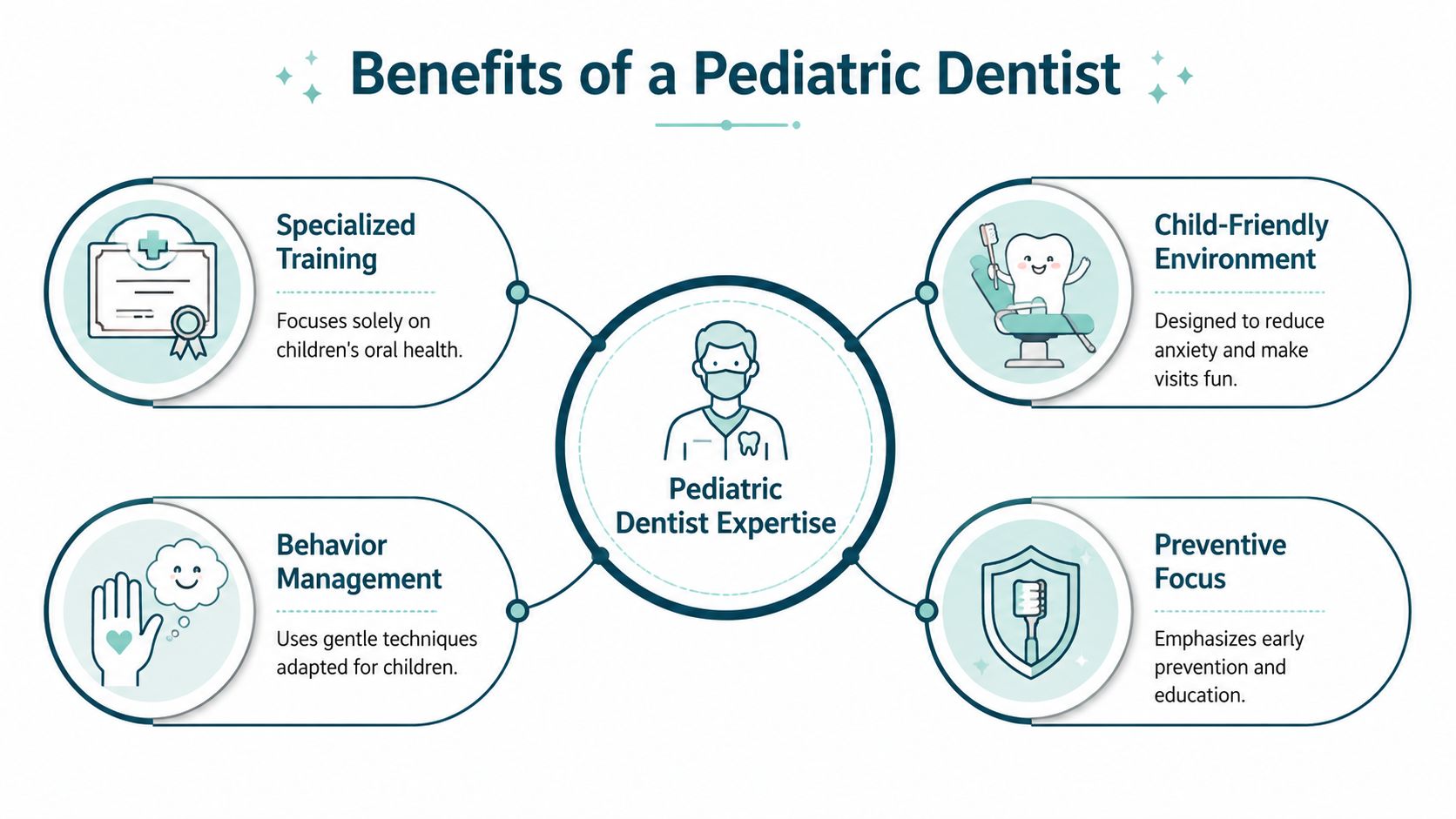
That definition is useful because it shows how broad children's dental care really is. It isn't limited to counting teeth and polishing them. Pediatric-focused care includes watching how the mouth develops, helping children cooperate without fear, and adjusting treatment to age, maturity, and medical needs.
A dentist with pediatric experience usually looks at several things at once:
| Focus area | Why it matters for kids |
|---|---|
| Growth and development | Baby teeth guide spacing and eruption patterns |
| Behavior guidance | A cooperative visit often matters as much as the procedure itself |
| Prevention | Early habits can lower the chance of bigger treatment later |
| Special needs support | Some children need a modified pace, language, or environment |
What experienced pediatric care includes
Parents often assume the main difference is personality. Personality helps, but technique matters more. Children need short explanations, steady pacing, and exams that don't overwhelm them. A rushed approach rarely works well.
Good pediatric dental care pays attention to the child's emotional response, not just the tooth that needs treatment.
For a toddler, that may mean a very simple first appointment centered on comfort and observation. For a school-age child, it may mean visual explanations and praise for each completed step. For a teen, it may mean straightforward conversations about hygiene, sports injuries, appearance, and long-term oral health.
Families searching for a dentist in Circleville, OH or a dentist in Carroll, OH for children often benefit from asking practical questions instead of broad ones. How does the team introduce dental x-rays? What happens if a child won't open? How are nervous patients supported during a filling or tooth extraction? Those answers reveal far more than a generic promise to be "kid-friendly."
Your Child's First Visit What to Expect
The first visit usually goes best when everyone knows what will happen before the appointment starts. Uncertainty is often what makes children uneasy.
From the front desk to the dental chair
A smooth first visit often begins with a simple greeting and a slower pace than many parents expect. The team may spend a few minutes helping the child settle in, noticing whether they're curious, quiet, energetic, or cautious. That first read matters. It shapes how the exam is introduced.
Many pediatric visits follow a basic tell-show-do rhythm. A child hears what will happen in plain language. Then the child sees the mirror, toothbrush, or counting tool. Only then does the exam start. That sequence works better than surprising a child with unfamiliar sensations.
A first appointment may include:
- A visual exam to look at teeth, gums, and how the mouth is developing
- A gentle cleaning if the child is ready for it
- Digital x-rays when they are needed and age-appropriate
- A conversation with parents about habits, diet, brushing, thumb-sucking, or concerns about spacing and eruption
Families who want a fuller look at timing often find guidance on the age for a first dentist appointment helpful before they schedule.
How parents can help before the appointment
Preparation doesn't need to be elaborate. In fact, overexplaining can sometimes make a child more suspicious. Short, calm language usually works best. "The dentist will count your teeth and make sure they look healthy" is often enough.
What tends to help:
- Choose the right time so the child isn't hungry, overtired, or close to nap time
- Keep the description simple instead of listing every possible tool
- Avoid using fear words like shot, drill, pain, or hurt unless a specific treatment discussion is necessary
- Bring comfort items if the child relies on a small toy or blanket
A first visit doesn't need to be perfect to be successful. If a child leaves calmer than they arrived, that's a strong start.
Parents also benefit from knowing that cooperation can vary by age, temperament, and past medical experiences. A shy child isn't being difficult. An active child isn't misbehaving. Good pediatric care adapts to the child in front of the team, rather than forcing every child into the same script.
Common Pediatric Dental Services and Treatments
Most children's dentistry revolves around prevention first, then conservative treatment when a problem appears. That's the approach that protects comfort, preserves tooth structure, and helps families avoid rushed decisions.
Preventive care that does the heavy lifting
Routine pediatric dental care includes cleanings every 6 months, fluoride treatments to strengthen enamel, sealants to protect chewing surfaces, and composite resin fillings for tooth decay, which remains the most common dental problem among children (Cleveland Clinic overview of pediatric dental care).
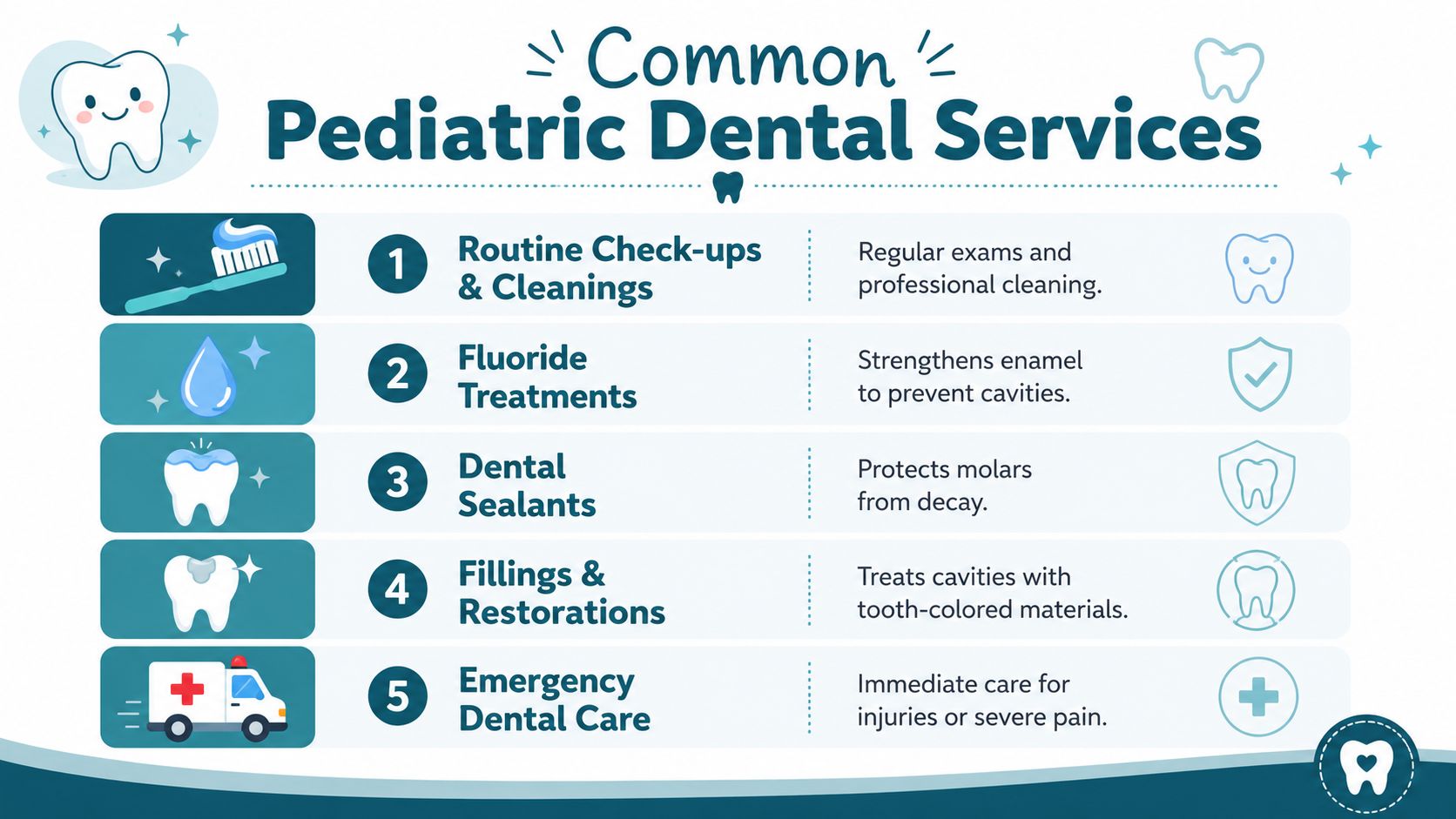
For many families, the most valuable services are the least dramatic ones. Regular cleaning and exams help catch trouble early. Fluoride can strengthen enamel. Sealants can protect the deep grooves on molars where toothbrush bristles often miss.
Parents comparing treatment options often want to know what each service does.
| Service | Main benefit |
|---|---|
| Cleaning and exams | Removes buildup and checks for early problems |
| Fluoride treatment | Helps enamel stay stronger against decay |
| Sealants | Adds protection to chewing surfaces |
| Dental x-rays | Shows what can't be seen during a visual exam |
Families looking for more prevention-focused information can review children's dental health guidance for common concerns and home care basics.
When a child needs more than prevention
If a cavity forms, the best treatment depends on its size, location, and the child's age and comfort. Small issues are usually easier to manage than deep ones. That's why waiting to "see if it gets better" rarely works with tooth decay.
Common next-step treatments may include:
- Tooth-colored fillings when decay has created a small to moderate damaged area
- Protective restorations when a tooth needs more support
- Emergency dental services for broken teeth, swelling, or sudden pain
- Tooth extraction when a tooth can't be preserved or is affecting the teeth around it
Not every child needs the same care plan. Some benefit from minimally invasive options when a problem is caught early. Others need more traditional restorative dentistry to stop pain and protect function. What works is a treatment plan that fits the actual condition, not a one-size-fits-all template.
A Gentle Approach for Every Child
Technical skill matters, but parents usually remember something else first. They remember whether their child felt safe.
Comfort matters as much as technique
A child who feels cornered in the dental chair often resists even simple care. A child who feels listened to is much more likely to cooperate. That difference affects everything, from cleanings and exams to emergency care.
Children and teens in the United States lose an estimated 51 million school hours annually due to dental problems (pediatric dentistry and school absence overview). That number shows why consistent care matters, but it also points to a practical truth for parents. If children avoid dental visits because they associate them with fear, preventable problems are more likely to disrupt school, sleep, and family routines.
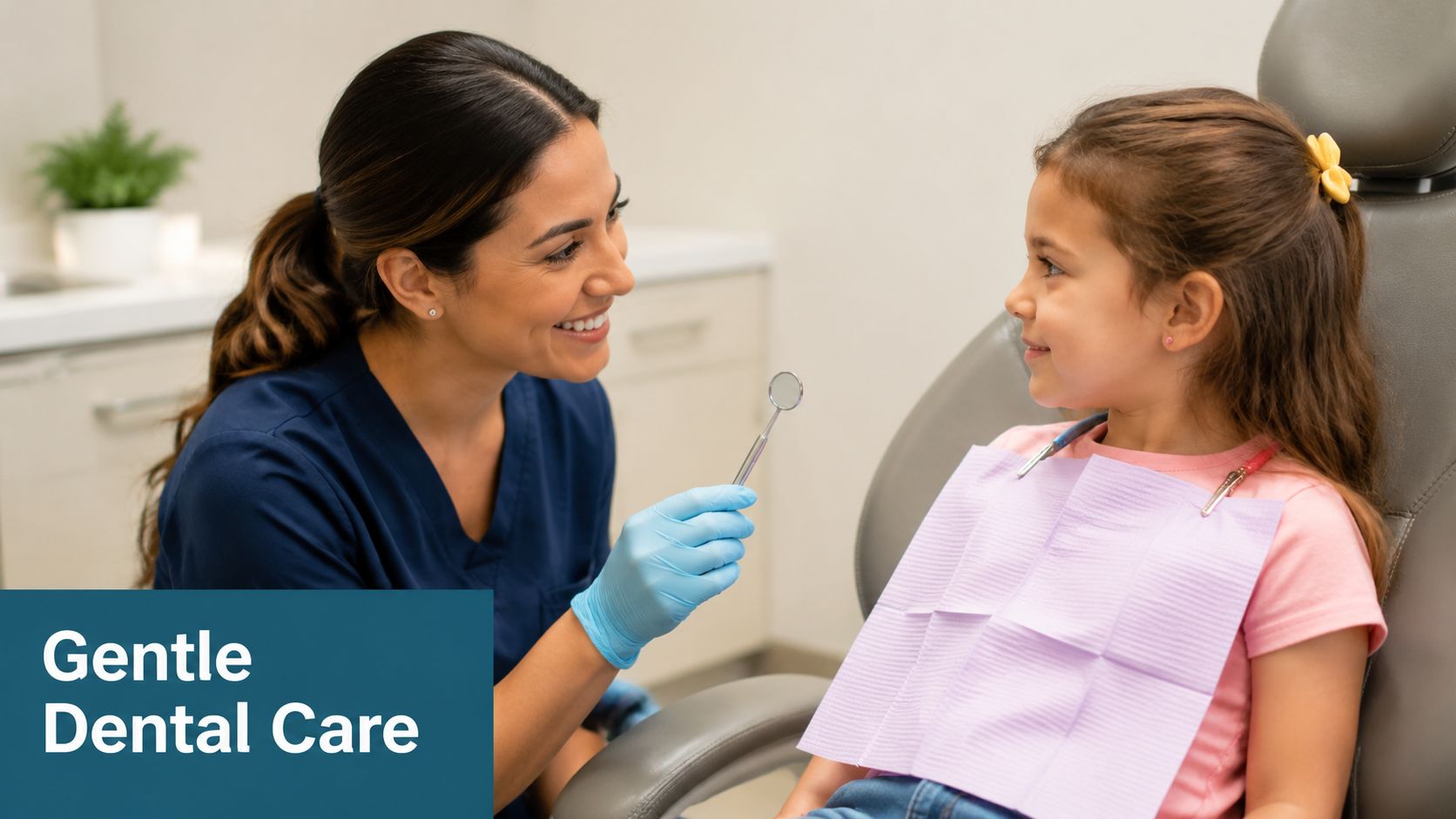
A gentle pediatric approach often includes small details that make a big difference:
- Slower introductions for cautious children
- Simple choices such as whether a child wants to hold the mirror first
- Comfort-focused communication that avoids overwhelming explanations
- Wellness-focused options when families want to discuss fluoride-free choices or minimally invasive care
Support for anxious children and special needs care
Children don't all show anxiety the same way. Some become quiet. Some talk nonstop. Some refuse to sit back or close their lips around suction. Good care doesn't interpret those reactions as defiance. It treats them as signals.
Some children need less noise, fewer surprises, and more time. That's not an obstacle. It's part of the care plan.
For children with sensory sensitivity, developmental differences, or difficult medical histories, the method matters as much as the procedure. A calmer room, stepwise explanations, and a team that watches body language can change the entire visit. Parents often notice that these children do best when visits are structured, predictable, and free of unnecessary pressure.
That same philosophy helps children who are nervous. Fear-free dentistry isn't about pretending treatment is fun. It's about making it understandable, paced, and manageable. That's what builds confidence over time.
Schedule Your Child's Visit in Amanda OH
Parents often wait because they're hoping the concern will pass on its own. Sometimes that delay seems harmless. Sometimes it's the reason a simple issue turns into pain, missed school, or a rushed emergency visit.
Why acting early helps
About 57.09% of children screened in general pediatrics departments have dental disease (NIH PMC study on pediatric dental disease prevalence). That finding is a strong reminder that dental problems in children are common, even when they aren't obvious to a parent at first glance.
A child may still be eating, smiling, and playing while a cavity is developing. Another child may complain only at bedtime, when daily distractions fade and discomfort is easier to notice. Early visits help catch those problems before they become harder to treat.
Parents who are helping children manage worry before an appointment sometimes find it useful to practice coping skills at home. Resources like Pinwheel Crafts' guide to kids' coping can support routines around breathing, transitions, and emotional regulation, especially for children who get nervous before new experiences.
What families can do next
Families in Amanda, Lancaster, Circleville, and Carroll usually need clear next steps, not vague encouragement. Start with the current concern. Is the child due for a cleaning and exams? Is there tooth pain? Did a filling fall out, or did an injury happen during sports or play? Is there a cosmetic concern about crowding, discoloration, or a chipped front tooth?
The right next step may be:
- A new patient exam for a child who hasn't established regular care
- A prompt emergency dentist visit for pain, swelling, trauma, or a broken tooth
- Routine preventive care with cleaning, exams, and dental x-rays as needed
- A consultation if parents want to discuss restorative dentistry, gentle cavity treatment, or long-term planning
The local search terms vary. Some parents type dentist near me. Others search for dentist in Amanda, OH, dentist in Lancaster, OH, dentist in Circleville, OH, or dentist in Carroll, OH. Some are looking for emergency dental services. Others are thinking ahead about care for the whole family, including cosmetic dentistry, teeth whitening, dental implants near me, or a future tooth extraction. For children, though, the decision usually comes down to one question: who will provide careful treatment while helping a child feel calm enough to come back comfortably next time?
Families looking for a compassionate, local dental home can schedule a visit with Amanda Family Dental. The office serves Amanda, Lancaster, Circleville, and Carroll, Ohio with patient-focused exams, digital x-rays, personalized treatment plans, and flexible options including the Power Plan Membership. Whether a child needs a first checkup, preventive care, or prompt attention for discomfort, contacting the team is a simple next step toward a healthier, more confident smile.