

A parent in Amanda might be trying to line up a toddler’s first visit, a teenager’s cleaning, and a spouse’s cracked filling, all while searching for a dependable dentist near me who can handle more than one kind of appointment. That kind of juggling gets old fast. Families in Amanda, Lancaster, Circleville, and Carroll usually aren’t looking for a complicated dental plan. They’re looking for one office that makes care simpler.
That’s where family-friendly dental services matter. A true family practice doesn’t just offer cleanings for children and exams for adults. It creates a steady place for preventive care, urgent visits, cosmetic concerns, and long-term restorative needs, whether that means a child’s first checkup or a grandparent’s implant consultation. For many households, the biggest benefit is knowing where to go before pain, scheduling stress, or fear turn into bigger problems.
Table of Contents
- Your Trusted Family Dentist in Amanda, OH
- Comprehensive Dental Services for Every Generation
- The Benefits of a Single Dentist for Your Entire Family
- A Modern and Holistic Approach to Dental Health
- Your Comfort Is Our Priority What to Expect at Your Visit
- Making Dental Care Accessible and Affordable
- Frequently Asked Questions About Family Dentistry
Your Trusted Family Dentist in Amanda, OH
Families often start by searching for a dentist in Amanda, OH because something specific needs attention. A child is due for a checkup. A teen has crowding concerns. A parent wants teeth whitening. A grandparent is tired of dealing with missing teeth and wants to ask about dentures or dental implants near me.
The harder part isn’t identifying the need. It’s finding one office that can care for everyone without sending the family in four different directions.

One office instead of four calendars
A family in Lancaster or Circleville might spend weeks trying to coordinate school schedules, work hours, sports, and transportation. Then dentistry adds another layer. Pediatric care in one place. A cosmetic dentist near me somewhere else. Maybe an office for tooth replacement in another town.
A family-centered dental home removes much of that friction. It lets one team learn the household’s history, understand each person’s comfort level, and keep care moving without repeating the same conversations every few months.
Practical rule: The easier it is to schedule routine care, the more likely families are to keep up with it before pain forces an emergency visit.
Why consistency matters for children
Consistency matters most when children are young. Between 2019 and 2020, the percentage of children in the U.S. who had a dental exam in the past year dropped from 83.8% to 80.9%, with the steepest decline among toddlers, according to the CDC data brief on children’s dental visits. That decline is a reminder that children benefit from a dental office that feels familiar, accessible, and easy for parents to return to.
For families in Amanda, Carroll, and nearby communities, trust usually starts with simple things. A front desk that’s kind. An exam that isn’t rushed. Clear answers when a parent asks whether a child needs sealants, whether a sore tooth can wait, or whether a teen’s smile concerns are cosmetic or functional.
A good family dentist doesn’t make every visit feel like a sales conversation. The office should help people understand what needs prompt treatment, what can be monitored, and what options make sense at different life stages. That kind of straightforward care is what many seek when they search for a dentist in Lancaster, OH or a dentist in Circleville, OH.
Comprehensive Dental Services for Every Generation
Family dentistry works best when care is broad enough to keep people from being referred out for every change in life. A toddler needs gentle introductions. A busy adult needs dependable cleanings and fillings. An older patient may need crowns, dentures, or implant planning. The goal is practical continuity.

Children’s dentistry and prevention
Children need more than “quick checkups.” They need visits that build confidence and teach habits early.
For younger patients, useful family-friendly dental services often include:
- First visits and growth monitoring: Early appointments help children get comfortable with the dental setting and help parents ask questions before small concerns become bigger ones.
- Cleanings and exams: These visits track oral development, hygiene habits, and areas that may be hard for kids to brush well.
- Sealants for cavity prevention: Preventive programs such as dental sealants can reduce caries incidence by 30 to 50%, with sealant retention rates exceeding 80% over 3 to 5 years, as noted in this systematic review of oral health promotion programs.
- Parent guidance: Home care, snack choices, thumb-sucking concerns, and timing for orthodontic evaluation all matter.
Families looking for more detail on children’s care can review pediatric dentistry services for young patients.
General and restorative care for adults
Adults usually need dentistry that balances prevention with repair. Some visits are routine. Others start with a problem such as a broken filling, tooth sensitivity, or a tooth that hurts when chewing.
A well-rounded family office should be ready for:
| Need | What it may involve | Why it matters |
|---|---|---|
| Routine maintenance | Cleaning and exams, dental x-rays, gum evaluation | Finds issues early and keeps small problems small |
| Basic repair | Composite fillings, crowns, root canals | Restores strength and comfort |
| Tooth loss solutions | Dentures and dental implants | Improves chewing, speech, and smile stability |
| Urgent care | Evaluation for swelling, pain, trauma, or tooth extraction | Helps prevent delay when something can’t wait |
The trade-off is simple. Waiting can seem easier in the short term, but untreated cracks, decay, and infection rarely stay the same. Early treatment is usually more conservative than delayed treatment.
A family office should be able to say, “This is urgent,” “This can wait,” or “Let’s monitor it,” in plain language.
Cosmetic options when appearance matters too
Cosmetic concerns aren’t superficial when they affect confidence. Many adults searching for a cosmetic dentist near me are reacting to something specific. Staining in photos. Worn edges. Spacing. A smile that no longer matches how they want to present themselves.
Cosmetic care may include:
- Professional teeth whitening: For people who want a brighter smile without guessing through store-bought products.
- Veneers: Useful when shape, color, and small alignment issues need a more complete cosmetic change.
- Invisalign clear aligners: A practical option for adults and teens who want straighter teeth without traditional braces.
The best cosmetic plans are grounded in health first. Whitening a smile with untreated decay, or placing cosmetic work on unstable teeth, usually leads to frustration. Strong family dentistry keeps the foundation healthy before improving appearance.
The Benefits of a Single Dentist for Your Entire Family
Using one dental office for the whole household doesn’t just save trips. It changes the quality of care in ways families notice over time. The biggest advantages are continuity, convenience, and trust.
The value of continuity
A single family dentist sees patterns. A child may have deep grooves in the molars like a parent. A teen’s crowding may be developing in a way that calls for close monitoring instead of immediate treatment. An adult who breaks fillings repeatedly may need bite evaluation, not just another repair.
That long view matters because oral health isn’t a one-visit issue. Teeth change with age, habits, medications, grinding, diet, and past dental work. When one team follows those changes over the years, recommendations tend to be more personal and less generic.
A family in Carroll may also find that continuity helps with decision-making. When the office already knows the household’s schedule, history, and priorities, it’s easier to plan treatment in the right order. A child’s cleaning can happen with a parent’s exam. A teen’s preventive visit can be coordinated with follow-up for an older adult.
Trust grows over time
Trust is practical, not abstract. Children do better when they recognize the voices in the room. Nervous adults are more likely to return when the staff remembers what made the last visit easier. Seniors often appreciate not having to retell their medical history every time they sit down.
That familiarity can be especially important when life changes. One year a patient needs only routine care. The next year they may need emergency dental services, a crown, dentures, or help deciding whether an implant is worth it.
A single office also cuts down on mixed messages. Families don’t have to compare conflicting advice from different providers on everyday questions like these:
- Timing: Does this need treatment now, or can it wait?
- Priority: Should the cracked tooth come before whitening?
- Planning: Is it smarter to restore a tooth or remove it?
- Comfort: What helps this specific patient get through treatment calmly?
The right dental home doesn’t just treat teeth. It learns how each person in the family makes health decisions.
For busy households in Amanda, Lancaster, Circleville, and Carroll, that kind of relationship often becomes the reason appointments stop feeling like a chore and start feeling manageable.
A Modern and Holistic Approach to Dental Health
Some families want very traditional dentistry. Others ask more detailed questions. They want to know what materials are being used, whether there are fluoride-free choices, how digital imaging works, and how oral health connects to overall wellness. A modern practice should be comfortable having those conversations.

Modern tools with clear benefits
Technology matters when it improves diagnosis, comfort, or communication. Digital X-rays are a good example because they support efficient imaging and clearer case discussions. Patients can often understand their treatment plan better when they can see the area of concern rather than just hear it described.
Modern care also tends to be more patient-specific. Instead of treating every mouth the same way, a thoughtful office looks at risk factors, habits, symptoms, and preferences. That creates better conversations about preventive care, cosmetic goals, and restorative choices.
Amanda Family Dental offers services such as digital X-rays, mercury-free fillings, fluoride-free choices, and total health screening, alongside routine family and cosmetic care. Those tools and options help patients choose an approach that fits both their clinical needs and their comfort level.
Options for families who want a lighter-touch approach
A patient-centered approach to dentistry doesn’t have to mean rejecting conventional care. For many families, it means wanting transparency and options. Some parents want to ask about fluoride-free preventive approaches. Some adults want mercury-free filling materials. Others want to understand the least invasive way to address a problem before agreeing to larger treatment.
That interest is real. Thirty-five percent of millennial parents prefer fluoride-free options, and this market is described as growing 15% annually in major U.S. regions, according to the Give Kids A Smile background reference included in the verified data.
A practical approach acknowledges trade-offs. Not every patient wants the same preventive plan. Not every cosmetic material suits every bite. Not every small issue needs aggressive treatment. Good modern dentistry explains the options clearly, recommends what’s clinically sound, and respects informed choices.
Your Comfort Is Our Priority What to Expect at Your Visit
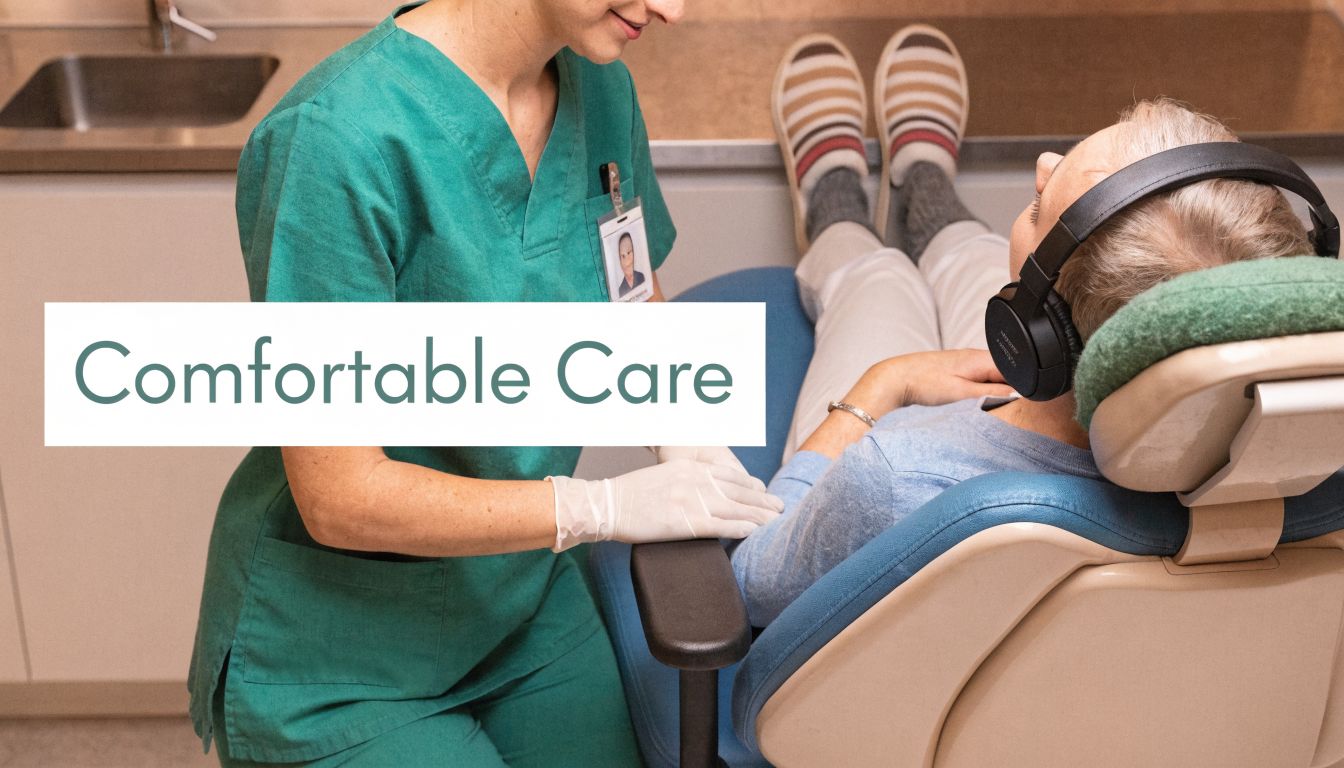
A large number of people don’t avoid the dentist because they don’t care. They avoid it because they expect discomfort, embarrassment, or bad memories. A family practice has to deal with that reality directly.
A calmer first step
A good first visit should feel organized and unrushed. Most patients want a few basic things right away. They want to know what’s wrong, what isn’t wrong, what needs attention first, and what the plan will cost or involve.
That’s why a comfortable visit usually starts with the basics:
- Listening first: Patients need time to explain pain, fear, schedule concerns, or past dental experiences.
- Clear diagnostics: New patient exams and dental x-rays help identify decay, cracks, gum issues, infection, or wear.
- Straightforward planning: A useful treatment plan separates urgent needs from optional or future care.
- No-pressure communication: Patients are more likely to follow through when they don’t feel pushed.
For readers who feel tense before appointments, this guide on how to overcome fear of the dentist covers practical ways to prepare.
Support for dental anxiety and growing kids
Comfort isn’t only about being nice. It includes having real options for patients who struggle in the chair. Twenty percent of U.S. adults avoid dentistry due to phobia, and the adoption of sleep dentistry in family practices has risen 25%, reducing no-show rates by 40%, according to the verified reference on dentistry for anxious patients.
That matters for adults with long-delayed care, but it also matters for children. Some kids need extra time and reassurance. Others benefit from a visit structure that avoids sensory overload and builds familiarity gradually.
Some patients don’t need tougher advice. They need a setting where care finally feels possible.
This overview helps explain how comfort-focused care can look in practice:
Family-focused visits may also include myofunctional therapy for children who show signs related to oral habits, airway concerns, or muscle patterns that affect development. That type of proactive care can be valuable because it looks beyond the immediate cleaning or filling and pays attention to how the mouth is functioning over time.
For patients searching for an emergency dentist, comfort still matters. Fast scheduling is important, but so is being treated by a team that explains what’s happening, manages pain carefully, and helps the patient feel in control.
Making Dental Care Accessible and Affordable
Cost worries keep many families from making appointments they already know they need. Clear financial information helps people act sooner, especially when they’re balancing school expenses, household budgets, and healthcare for several family members at once.
Using insurance well
Insurance can make care more manageable, but only if patients understand how it applies to preventive, restorative, and emergency services. The most helpful dental offices verify benefits, explain likely out-of-pocket costs in plain terms, and help patients avoid surprises before treatment begins.
That kind of access matters at the community level. From 2000 to 2010, the number of Medicaid-enrolled children receiving preventive dental services grew by 170%, according to this Medicaid dental utilization study. The takeaway is straightforward. When families can reach and use care, preventive visits rise.
For households in Amanda, Circleville, and Carroll, the practical questions are usually the same:
- Coverage: Which preventive and restorative services are likely included?
- Timing: Is it better to complete treatment this benefit year or next?
- Priority: Which needs should be handled first if budget is limited?
A practical option without insurance
Not every family has dental insurance. That doesn’t mean care should be put off until there’s pain or a broken tooth. Membership plans can be a simpler route for patients who want predictable preventive care and savings on additional treatment.
A straightforward example is a practice membership that includes routine preventive visits and offers reduced fees on other services. That kind of setup often works well for self-employed adults, retirees, and parents covering multiple children.
Patients comparing options can review the Power Plan Membership details. Plans like this can make it easier to keep up with cleanings and exams instead of waiting until a filling becomes a crown or a cracked tooth turns into an urgent problem.
The best financial approach is transparency. Families deserve to know what’s necessary, what can wait, and what payment paths are available before they commit to treatment.
Frequently Asked Questions About Family Dentistry
When should a child first see the dentist
A child should come in early enough for the dental office to become a normal place, not a scary one. Early visits are usually simple. They focus on comfort, home care guidance, and checking how the teeth and mouth are developing.
What counts as a dental emergency
A dental emergency usually involves pain, swelling, trauma, a broken tooth, a knocked-out tooth, or signs of infection. A cracked tooth that suddenly hurts when biting can also need prompt attention. In some cases, treatment may involve a filling or crown. In others, tooth extraction may be the safest option.
How often should families come in
Most families do best with regular cleaning and exam visits on a schedule recommended by the dental team. Some patients need closer monitoring because of gum concerns, cavity risk, or a history of frequent dental problems. Others can stay on a more routine preventive track.
If a family only visits when something hurts, dentistry usually becomes more expensive, less convenient, and less comfortable.
How do you choose the right family dentist
Look for an office that can care for multiple age groups, explain treatment clearly, and make scheduling practical for real family life. It also helps to choose a dentist who offers a range of services, from preventive care and restorations to cosmetic dentistry and urgent treatment.
For local families, the right fit often comes down to a few questions:
- Does the office treat both children and adults?
- Can it handle routine care, cosmetic concerns, and emergencies?
- Are treatment recommendations explained in plain language?
- Does the team offer comfort options for anxious patients?
- Are payment and scheduling realistic for a busy household?
Families searching for a dentist in Carroll, OH, a dentist in Lancaster, OH, or a dentist in Amanda, OH usually aren’t just choosing a location. They’re choosing whether care will feel convenient enough, clear enough, and comfortable enough to keep up with for years.
If your family is looking for practical, local dental care that can support every stage of life, from a child’s first visit to adult restorative and cosmetic needs, Amanda Family Dental is available to help. Schedule an appointment to discuss cleanings and exams, pediatric visits, emergency dental services, tooth replacement, or a personalized treatment plan for your household.