

TL;DR: The AAPD and AAP recommend a child’s first dental visit by the first birthday or within 6 months of the first tooth erupting. For most babies, that first tooth appears around 6 to 7 months, so the right age for first dentist appointment is usually much earlier than many parents expect.
A lot of parents in Amanda, Lancaster, Circleville, and Carroll notice that first tiny tooth and immediately wonder what comes next. Brushing feels new, teething can be confusing, and the dentist may seem like something for later.
It usually isn’t. Early dental care works best when it starts before there’s pain, a cavity, or an urgent problem. That first visit is meant to feel simple, calm, and doable for families who want a healthy routine from the start.
Table of Contents
- Your Baby's First Tooth and Your First Questions
- Why the First Birthday Is the First Visit
- What Happens at a First Dental Appointment
- How to Prepare for a Stress-Free First Visit
- Signs Your Child May Need to See a Dentist Earlier
- Your Partner in Pediatric Dental Care in Amanda OH
Your Baby's First Tooth and Your First Questions
That first tooth changes the conversation at home. Until then, oral care can feel abstract. Once a tooth breaks through, parents usually start asking practical questions right away.
Is brushing enough right now? Is a dental visit really needed this early? What if the baby cries the whole time?
Those questions are normal. The age for first dentist appointment feels surprisingly early to many families because most adults connect the dentist with cleanings, X-rays, or fixing problems. A baby’s first visit is different. It’s more about guidance than treatment.
The questions usually start before the first birthday
A baby with one or two teeth doesn’t look like a typical dental patient. That’s exactly why the first visit can be so helpful. Parents get clear advice while habits are still easy to shape.
Some families are mostly worried about brushing technique. Others want help with teething, night feeding, pacifier use, or whether a spot on a tooth is normal. Early visits create space for those questions before they turn into stress.
Practical rule: The best first dental visit happens while everything still seems small and manageable.
Why local families often put it off
Life with a baby is busy. Between pediatric appointments, sleep schedules, daycare planning, and work, a dental appointment can slide down the list. Parents also hear conflicting advice from friends and online searches.
That delay is common, especially when a child doesn’t seem uncomfortable. But oral health starts long before a child can explain that something hurts. A preventive visit gives parents a starting point and helps make future care feel familiar instead of intimidating.
For families searching for a dentist near me, dentist in Amanda, OH, or a family-friendly office close to Lancaster, Circleville, or Carroll, the goal isn’t just to find someone who sees children. It’s to find a team that treats the first visit like the beginning of a long, positive relationship with dental care.
Why the First Birthday Is the First Visit
A common scene in our office goes like this. A parent holds a baby with two new front teeth and says, "I almost waited because these are baby teeth anyway." That hesitation makes sense. The first birthday visit sounds early until you understand what it is designed to do.
What the guideline means for real families
Dental groups recommend a first visit by age 1, or within 6 months of the first tooth coming in. The first tooth often shows up around 6 to 7 months, according to CareQuest’s summary of first oral health exam timing and treatment needs.
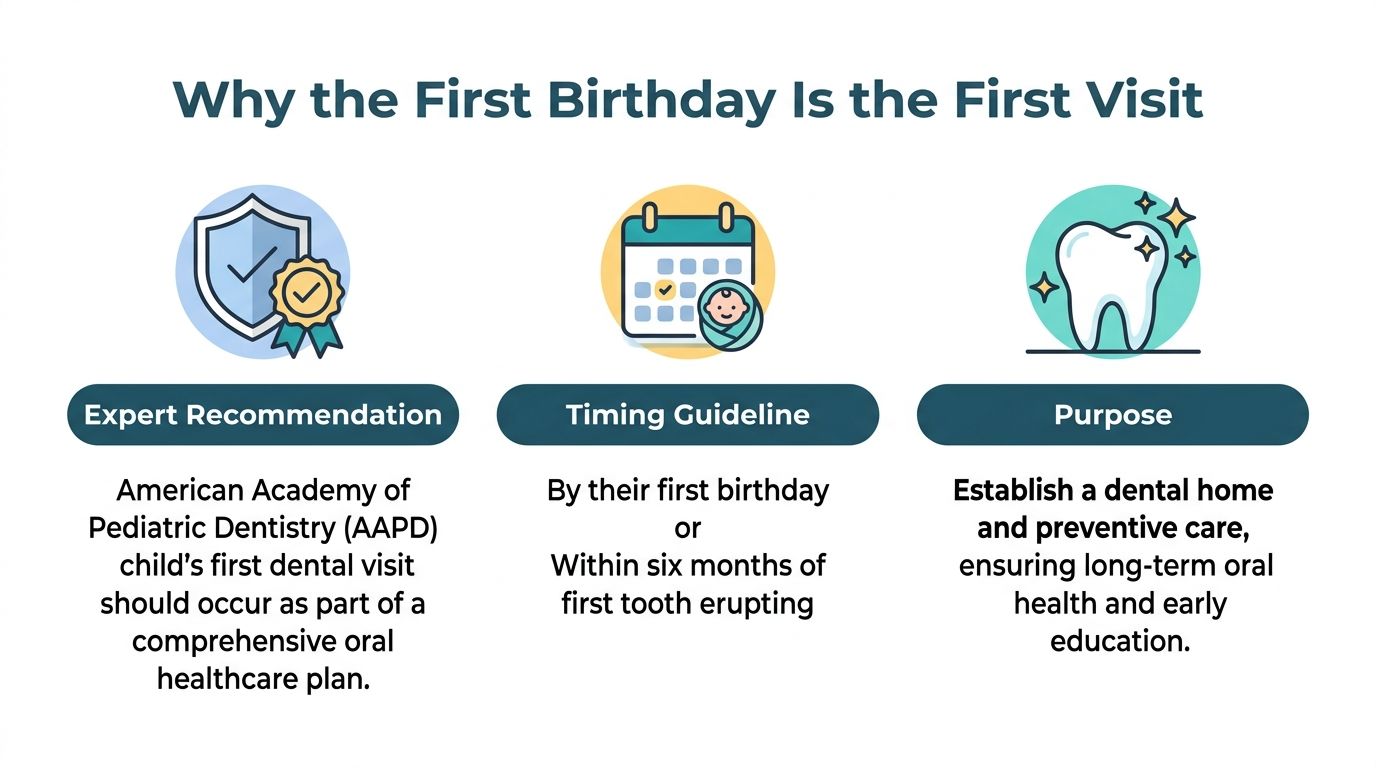
For a one-year-old, that visit is usually preventive and parent-focused. We look at how the mouth is developing, check the teeth and gums, talk through brushing, feeding habits, fluoride, and cavity risk, and answer the questions that tend to pile up during the first year. If you have ever wondered what routine dental care includes as children get older, our guide to what a dental cleaning includes can help put that first visit in context.
That early appointment also gives a child a chance to meet the dental office before anything hurts. That matters more than many parents realize.
Why waiting can turn a simple visit into a harder one
In the Ohio Medicaid group reviewed by CareQuest, very few children had a dental visit by age 1, and the average first visit happened much later. Analysts also found lower lifetime dental costs for children who started care at age 1 compared with age 3. Early prevention is usually easier on the child, easier on the parent, and easier on the budget.
Another study found a similar pattern. Many children first saw a dentist between ages 3 and 6, and pain and cavities were far more common reasons for that first appointment than a routine checkup, according to PubMed’s review of first dental visit timing and treatment patterns.
That matches what family dentists see every day. A child who comes in early often needs reassurance, coaching, and a quick exam. A child who comes in later because of pain may need treatment before trust has had a chance to build.
For families in Amanda, OH, the barrier is not always doubt about the recommendation. Sometimes it is practical. Parents worry about cost, whether the visit will be upsetting, or whether a one-year-old can even cooperate. Those are fair concerns. A gentle age-one visit is usually short and simple, and for families without insurance, the Power Plan Membership can help make preventive care more manageable.
What Happens at a First Dental Appointment
The first appointment is usually much calmer than parents expect.
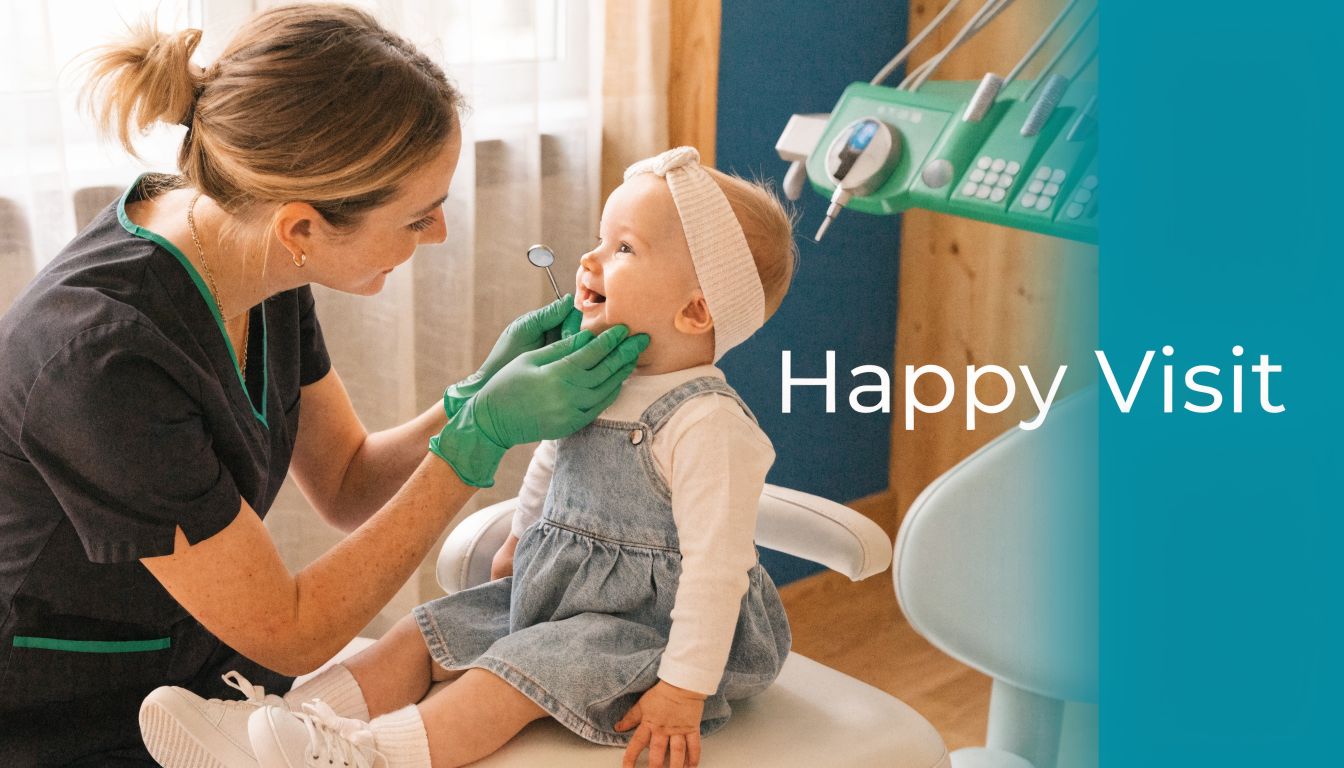
A baby’s first dentist appointment typically lasts 30 to 45 minutes and focuses on a comfortable introduction, with an oral health risk assessment, a gentle check of the gums and jaw, demonstrations of oral hygiene for parents, and diet guidance, according to the ASTDD guidance on the first dental visit by age one.
What the visit usually looks like
For many infants, the visit feels more like coaching for parents than treatment for the child. The dentist checks how the mouth is developing and looks for anything unusual, but the pace is gentle.
Common parts of a first visit include:
- A quick visual exam that looks at teeth, gums, jaw development, and any obvious concerns.
- A risk conversation about feeding habits, home care, and whether the child may be more cavity-prone.
- Hands-on parent education so caregivers leave knowing how to clean the mouth and what products to use.
- A prevention plan that fits the child’s age and routine.
For parents who want a broader sense of routine preventive care as children grow, it helps to review what a dental cleaning includes, since the first visit is the earliest step in that process.
What parents can ask about
This is a good appointment for practical questions, not just clinical ones. Parents can ask about bedtime brushing, bottles, sippy cups, teething discomfort, thumb-sucking, or what a normal eruption pattern looks like.
It also helps to know what the first visit usually is not. It’s usually not painful. It’s usually not a long procedure. And it’s not meant to overwhelm a child with unfamiliar instruments.
A short video can make that feel more real before the appointment:
A baby who fusses during the visit hasn’t “failed” the appointment. The goal is a safe, supportive start, not perfect cooperation.
That’s why many pediatric first visits are described as “happy visits.” Success means the child gets introduced to the space, the parents get answers, and everyone leaves with a clearer plan.
How to Prepare for a Stress-Free First Visit
Preparation matters, but not in a complicated way. The biggest difference usually comes from keeping the day simple and the parent’s expectations realistic.
Low compliance with age-one dental visits is often tied to practical barriers and parental awareness. In many countries, fewer than 10% of children have a dental visit by age one, and many delay until ages 3 to 6 because of access, cost, and anxiety, as discussed in this overview of when children should have their first dental appointment.
Simple ways to make the day easier
Children read adult energy quickly. If a parent treats the appointment like a threat or a test, the child often feels that tension. A calm tone works better than a big buildup.
A few practical habits help:
- Choose a good time of day. Schedule when the child is usually rested and fed, not near nap time if that tends to be hard.
- Keep the language light. Simple phrases like “the dentist will count your teeth” usually work better than long explanations.
- Bring one comfort item. A favorite blanket, stuffed animal, or pacifier can make a new setting feel more familiar.
- Skip scary promises. Telling a child “nothing will happen” or “it won’t hurt” can accidentally signal that something scary is coming.
- Model calm. The child doesn’t need a performance. Steady, matter-of-fact reassurance is enough.
Parents who feel nervous themselves may also find it helpful to read practical guidance on how to overcome fear of the dentist, because children often mirror that emotional tone.
First Visit Preparation Checklist
| Action Item | Why It Helps |
|---|---|
| Schedule around naps and meals | A rested child is usually easier to soothe and engage |
| Bring a comfort item | Familiar objects can reduce stress in a new environment |
| Talk about the visit positively | Calm language lowers anticipation and confusion |
| Write down questions in advance | Parents are less likely to forget concerns during the appointment |
| Brush as usual before the visit | A clean mouth makes the exam easier and starts the day with a normal routine |
Some preparation advice doesn’t work well. Overexplaining tends to backfire. So does treating the visit like a reward-or-punishment moment. Most babies and toddlers do best when the appointment is handled as a normal part of health care.
Signs Your Child May Need to See a Dentist Earlier
A first visit around age one works well for many children. Some babies should come in sooner.

When earlier than age one makes sense
In practice, I recommend an earlier exam any time a parent sees a change they cannot explain, or a child seems uncomfortable in a way that involves the mouth. Early evaluation does not mean anyone is expecting a major problem. It gives you answers while the issue is still small, and it often gives parents peace of mind.
Schedule sooner if you notice:
- White, brown, or dark spots on a tooth
- A mouth injury after a fall, bump, or hit to the face
- Swelling, bleeding, or a gum bump
- Teething symptoms that seem intense, one-sided, or prolonged
- Feeding concerns that seem related to the mouth, tongue, or jaw
- Tooth eruption that looks unusual or a tooth that seems damaged as it comes in
- Oral habits such as thumb sucking or pacifier use that you want help judging
What deserves prompt attention
Baby teeth do matter. They help children eat comfortably, learn speech patterns, and hold space for the adult teeth that come later.
The practical trade-off is simple. Waiting can turn a small spot, minor injury, or feeding concern into a harder visit and more treatment than a child may have needed with earlier care. That is one reason early prevention is recommended, as noted earlier in this article.
If you are unsure whether something can wait, call. A quick conversation is often enough to decide whether your child should be seen soon, monitored at home, or scheduled for a routine follow-up. For families comparing options for pediatric dental care in Amanda, that kind of guidance should feel calm, clear, and manageable.
For parents in Amanda and nearby communities, the right time is often earlier than expected. A spot, bump, or injury is reason enough to ask.
Your Partner in Pediatric Dental Care in Amanda OH
The best first dental visit feels practical, not dramatic. Parents need clear guidance, a calm environment, and a plan that fits real life.
What thoughtful preventive care looks like
The age-one exam can include a caries risk assessment using tools like CAT and may also include screening for myofunctional issues such as tongue thrust. Children who have their first visit by age 1 have 40% lower dental treatment costs over five years, according to Stanford Children’s fact sheet on a child’s first dental visit.
That’s an important trade-off for parents to understand. Prevention asks for attention early, but it often reduces the need for more involved care later. It also gives families a chance to discuss options that fit their preferences, including preventive strategies, home-care routines, and supportive follow-up as the child grows.
For readers exploring local care, pediatric dentistry services can help answer what ongoing support looks like after that first visit.
Making early care feel achievable
Cost and anxiety are two of the biggest reasons families delay. Those concerns are real. The solution usually isn’t more pressure. It’s making the first step feel manageable.
Parents often do better when they choose a practice that offers:
- Clear expectations about what happens at the first visit
- A gentle approach for infants, toddlers, and anxious children
- Flexible payment conversations so care feels possible, not uncertain
- A long-term relationship that covers prevention, routine exams, and urgent concerns if they come up
For families searching online for a dentist in Amanda, OH, dentist in Lancaster, OH, dentist in Circleville, OH, or dentist in Carroll, OH, the right office should feel equipped for both routine prevention and moments when a child needs urgent help. That includes everything from new patient exams and digital X-rays to emergency dental services, restorative dentistry, and comfort-focused care when needed.
The age for first dentist appointment isn’t just a guideline on paper. It’s a practical chance to make oral health simpler from the very beginning.
Parents in Amanda, Lancaster, Circleville, and Carroll who are ready to schedule a child’s first visit can contact Amanda Family Dental. The team provides gentle family and pediatric dental care, clear new patient guidance, and supportive options such as the Power Plan Membership to help make early preventive care feel comfortable and accessible.