

Invisalign treatment commonly costs $3,000 to $8,000 in the United States, and many patients pay $4,500 to $6,000 for full care. If that range feels wide, that's because the final price depends on the kind of tooth movement needed, how long treatment lasts, what's included in the quote, and how much insurance helps.
For many people in Amanda, Lancaster, Circleville, and Carroll, the hardest part isn't deciding whether they want a straighter smile. It's figuring out whether the cost will make sense for their budget. Online pricing often feels vague, and two offices can describe treatment in completely different ways.
That's why this guide focuses on practical clarity. It explains the national benchmarks, how local pricing can differ from large-city fees, what usually drives the final quote, and how insurance and payment plans can make treatment more manageable for families in this area.
Table of Contents
- Your Guide to Invisalign Costs in Amanda Ohio
- The Average Invisalign Cost National vs Local Prices
- Key Factors That Determine Your Final Invisalign Price
- What Your Invisalign Quote Includes and What It Might Not
- Making Invisalign Affordable with Insurance and Payment Plans
- Your Invisalign Journey at Amanda Family Dental
- Frequently Asked Questions About Invisalign Treatment
Your Guide to Invisalign Costs in Amanda Ohio
A straighter smile can improve confidence, make teeth easier to clean, and help many patients feel more comfortable in photos and everyday conversation. Cost is often the reason people delay treatment. Not because they aren't interested, but because they don't want surprises after the first consultation.
That hesitation makes sense. Invisalign isn't a one-size-fits-all purchase. It's a customized orthodontic treatment, and the price reflects the work required to move teeth safely and predictably. A minor cosmetic adjustment doesn't carry the same level of planning as a case that involves bite correction, longer treatment, or multiple refinements.
For patients in Amanda, OH and nearby communities such as Lancaster, Circleville, and Carroll, local context matters. National averages are useful, but they don't always reflect what community-based dental care feels like in day-to-day budgeting. A quote in a major city may include higher overhead, different fee structures, or extra charges that aren't obvious at first glance.
Practical rule: The best way to judge Invisalign treatment cost isn't by the lowest advertised number. It's by the total expected cost, what the fee includes, and how realistic the payment path feels month to month.
Patients who are also searching for a dentist near me, a cosmetic dentist near me, or broader dental care often compare Invisalign with other smile options such as teeth whitening, veneers, or restorative work. That comparison is healthy. Clear aligners are a strong fit for many adults and teens, but they work best when the financial side is explained with the same care as the clinical side.
A clear estimate should answer three questions right away:
What kind of case is this
Mild movement, moderate alignment, or a more extensive bite and spacing correction.What is included in the fee
Scans, aligners, review visits, refinements, and retainers don't always appear the same way in every quote.What will the patient pay
Insurance, financing, and membership savings can change the answer substantially.
The Average Invisalign Cost National vs Local Prices
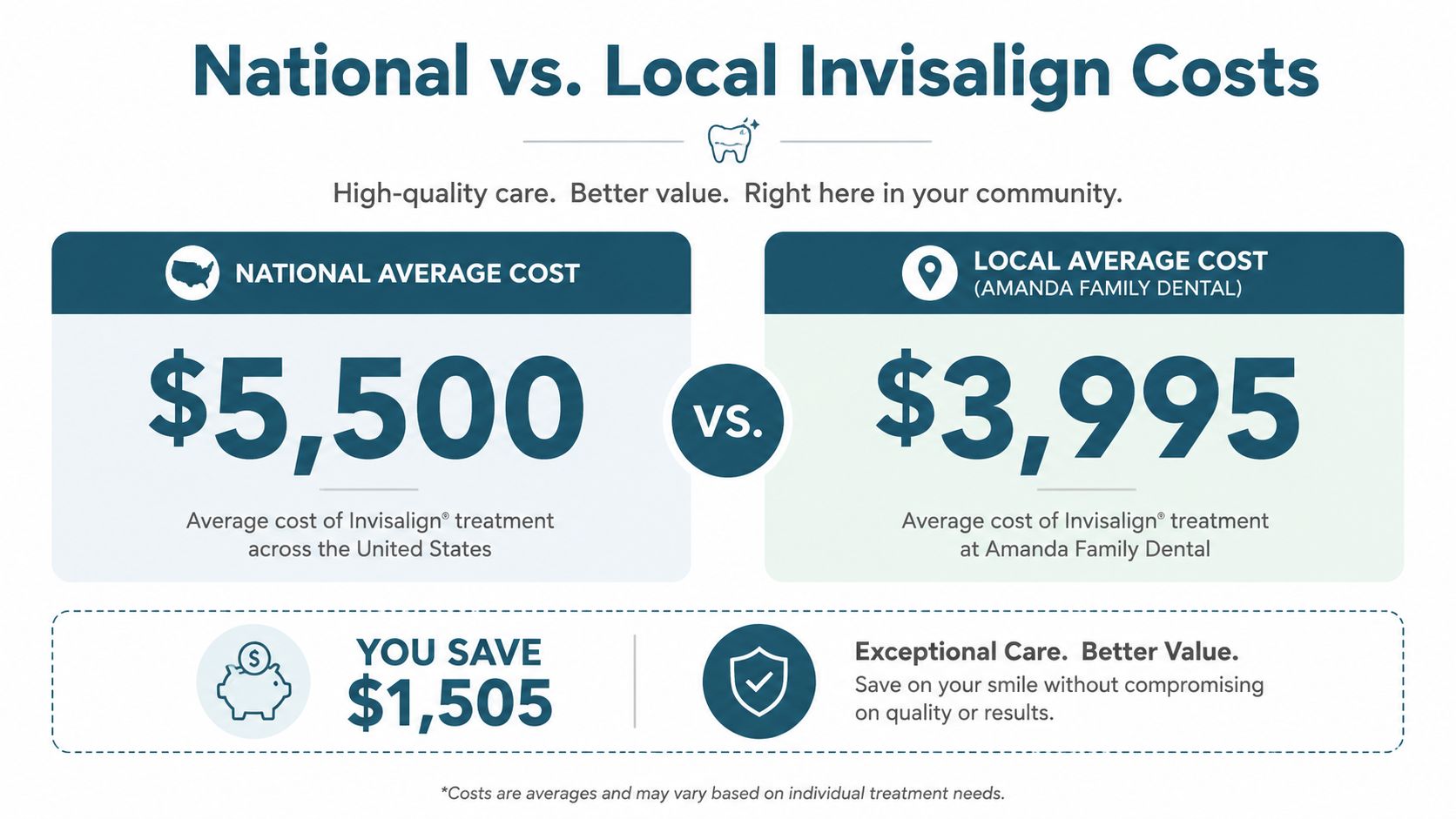
National pricing gives patients a useful benchmark before they schedule a consultation. In the United States, Invisalign treatment commonly costs $3,000 to $8,000, with many patients paying $4,500 to $6,000 for a full course of treatment, and urban centers may charge 20% to 30% more than suburban or rural practices, according to this national Invisalign cost overview.
That last point matters for patients around Amanda and surrounding communities. A large-city quote can look very different from a quote in a smaller community practice, even when both offices are treating similar alignment concerns. Geography affects overhead, staffing patterns, and what practices build into their overall fee structure.
Why local pricing can feel more manageable
In practical terms, patients in Amanda, Lancaster, Circleville, and Carroll often benefit from comparing local care to broader metro pricing rather than assuming every quote should match a national ad. Community-based treatment can be easier to manage because the office is nearby, follow-up visits are simpler to keep, and treatment discussions tend to be more personal and less rushed.
That doesn't mean local care is automatically “cheap.” It means the value can be clearer. Patients aren't just paying for a set of trays. They're paying for diagnosis, planning, monitoring, and corrections when the teeth don't move exactly as expected.
A useful next step is reviewing the best teeth straightening options for adults so the Invisalign fee is compared against realistic alternatives, not just against another online ad.
What patients should compare instead of headline price
A lower sticker price can be helpful, but it doesn't answer enough on its own. Before comparing one office to another, patients should look at the actual structure of the quote.
| Comparison point | Why it matters |
|---|---|
| Case type | A simple cosmetic case won't be priced like a comprehensive bite correction. |
| Included visits | Some quotes bundle review appointments. Others separate parts of care. |
| Refinement policy | Mid-course corrections can affect total value. |
| Retainers after treatment | The end of active movement isn't the end of the process. |
The smartest comparison is local, complete, and specific. A broad online number can't tell a patient what their own mouth needs.
Key Factors That Determine Your Final Invisalign Price
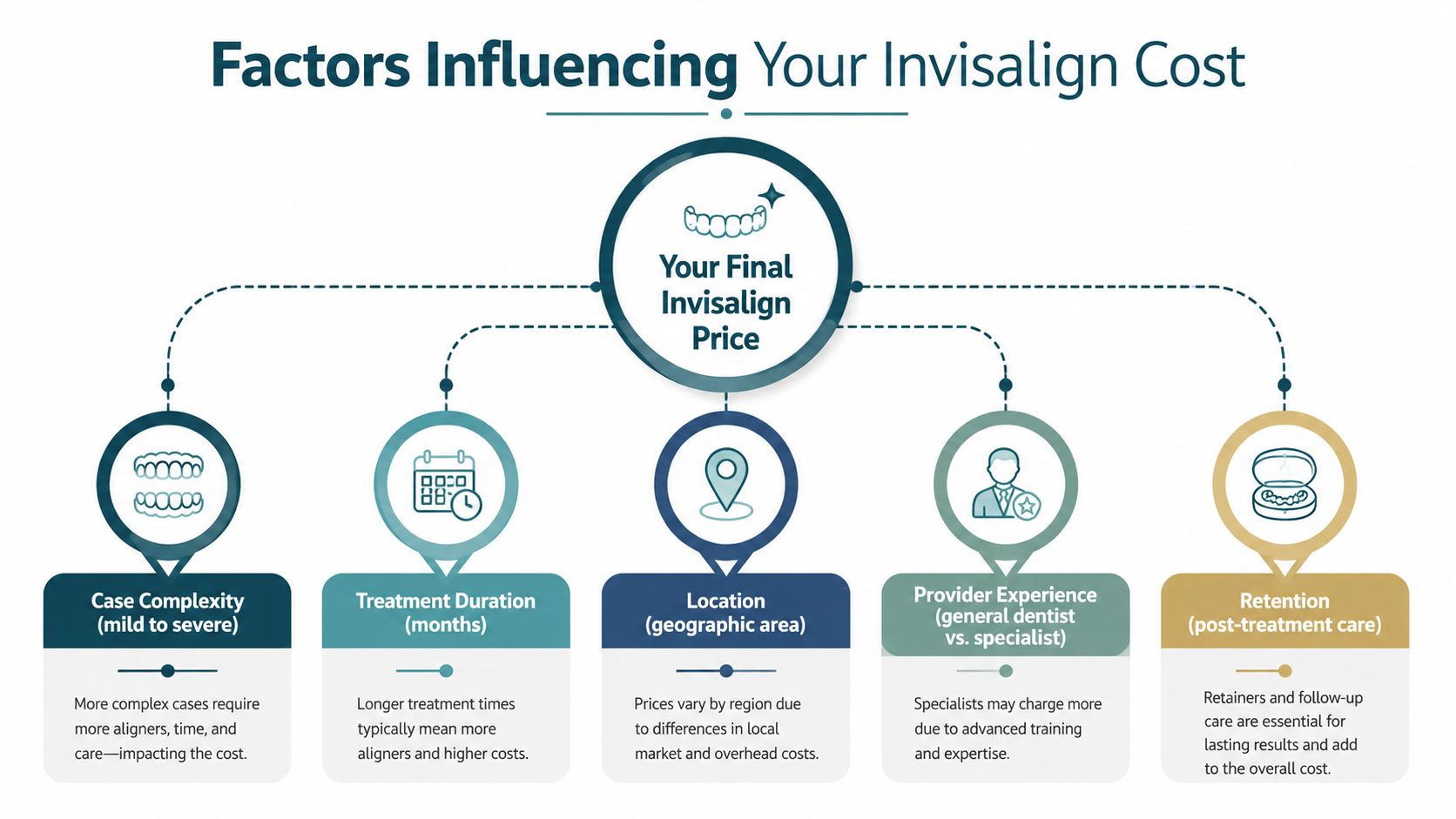
The final fee comes from the work required to move teeth well. It doesn't come from the trays alone. The biggest pricing differences usually trace back to case difficulty, treatment length, and how much support the case will need from start to finish.
Independent cost guides report that mild cosmetic cases are around $1,200 to $4,500, moderate cases are around $3,000 to $6,500, and complex cases are around $6,600 to $10,000+, based on this breakdown of Invisalign case tiers.
Case complexity matters most
A patient with slight crowding in the front teeth usually needs a different level of treatment than someone with spacing, bite imbalance, tooth rotations, or broader arch alignment issues. That's why online estimates often feel unsatisfying. They don't know which category a real patient falls into.
A mild case may focus on appearance. A moderate case may involve multiple areas of movement. A complex case often requires more advanced planning and closer supervision because teeth don't just need to look straight. They also need to fit together correctly.
Treatment length and aligner count change the fee
Longer treatment generally means more aligners, more review visits, and more chances that the plan will need a refinement. Some patients move through treatment smoothly. Others need small adjustments along the way to keep the final result on track.
That's also why two patients with “crooked front teeth” may receive different quotes. One may need a short cosmetic alignment. The other may have hidden bite issues that affect the timeline and complexity.
A practical way to think about it is this:
- Shorter plans often involve fewer movements and a narrower goal.
- Broader plans usually address appearance plus function.
- Refinements can add value when they're built into the treatment approach rather than treated as an afterthought.
Location, provider approach, and retention also matter
Even within the same region, treatment philosophy can differ. One office may design a more conservative cosmetic plan. Another may recommend a fuller correction if the bite or long-term stability calls for it. Neither approach is automatically right for every patient. The right answer depends on what the teeth, gums, bite, and goals show during the exam.
Post-treatment retention matters too. When active tooth movement ends, retainers protect the result. A quote that looks lower at the beginning may become less appealing if retention is handled as a separate add-on later.
A personalized Invisalign quote should feel explainable. Patients should be able to understand what's being corrected, why it takes the proposed time, and what part of the fee supports that result.
For patients who are also evaluating broader dental needs such as cleaning and exams, dental X-rays, new patient exams, cosmetic dentistry, or restorative dentistry, the treatment plan should put priorities in the right order. If someone needs fillings, crowns, tooth extraction, or emergency dental care first, those issues may need attention before aligner therapy begins.
What Your Invisalign Quote Includes and What It Might Not
One of the most common problems with Invisalign pricing is that many articles and ads give a range without explaining what the fee covers. That concern is valid. A consumer-focused review notes that a commonly missed question is what the quoted Invisalign price includes, especially around refinements, retainers, monitoring visits, and add-on fees, in this discussion of what Invisalign pricing may or may not include.
A complete quote should feel readable, not mysterious. If a patient can't tell what happens after the first set of aligners is delivered, the estimate isn't complete enough yet.
What many patients assume is included
Patients often expect the fee to cover the whole active phase of treatment. That may include the consultation, digital records, treatment planning, the aligners themselves, and progress visits. In some offices, it also includes refinements if the teeth need additional movement before finishing.
What causes confusion is that not every office structures fees the same way. One office may package more into a single figure. Another may itemize more aggressively and leave parts of the process outside the original quote.
A good quote usually addresses these categories in plain language:
Initial records
Exam, photos, scans, and planning.Active treatment
The aligner series and regular monitoring.Course corrections
Whether refinements are included or billed separately.End-of-treatment retention
What kind of retainer is recommended and whether it is part of the quoted fee.
Questions worth asking before saying yes
Patients don't need dental jargon to ask smart questions. A straightforward conversation can prevent frustration later.
“What happens if the teeth need more movement than expected?” is often one of the most useful questions a patient can ask before starting.
Other helpful questions include whether review visits are bundled, whether retainers are included at the end, and what kinds of changes would create a new charge. Those answers often reveal more about the true Invisalign treatment cost than the headline number itself.
That same mindset helps with other dental decisions too. Whether someone is considering cosmetic dentistry, restorative dentistry, or even comparing Invisalign with whitening or veneers, transparent treatment planning usually leads to better choices and less financial stress.
Making Invisalign Affordable with Insurance and Payment Plans
The full fee matters, but the out-of-pocket number is what shapes real decisions. For many patients, affordability improves once insurance benefits and structured monthly payments are applied.
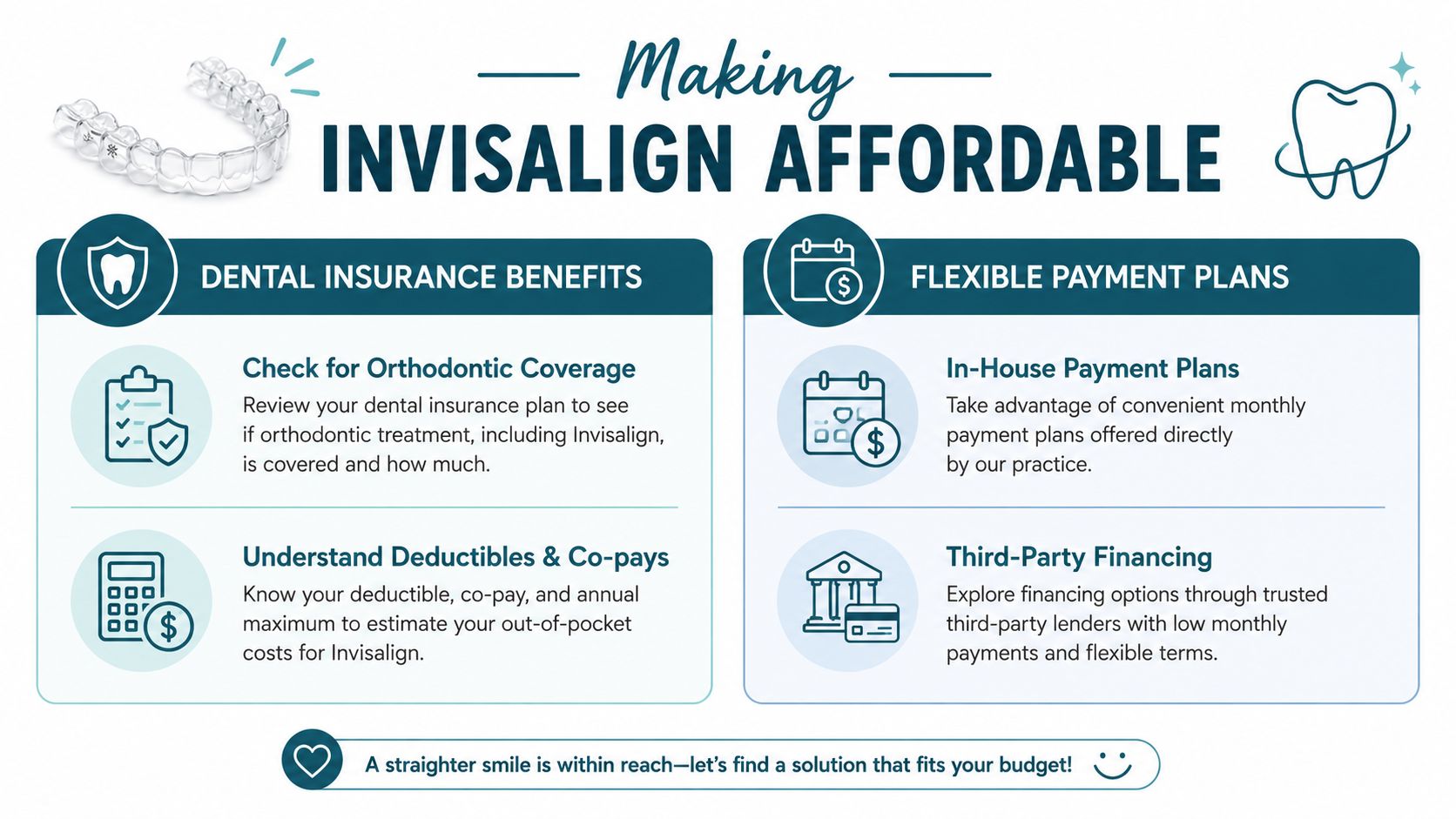
One national estimate reports average orthodontic coverage of $1,772, with 92% of qualifying plans covering up to $3,000 and 77% covering up to $2,000 for orthodontic treatment, according to this Invisalign insurance and cost resource.
How insurance changes the real out-of-pocket cost
Dental plans vary, so patients should check whether their policy includes orthodontic benefits, whether age limits apply, and whether there's a lifetime maximum for this kind of treatment. The presence of orthodontic coverage can change the conversation quickly, especially for families trying to plan care for more than one person.
For households still comparing plans, this guide to dental and vision insurance for families can help clarify what kinds of bundled coverage options may be worth reviewing before starting treatment.
A practical insurance review should answer:
Is orthodontic treatment covered
Not every dental plan includes it.How much benefit is available
The maximum matters more than the marketing language.Are there restrictions
Waiting periods, age rules, and network rules can affect timing and cost.
A short explainer can also help patients understand how financing fits into the decision.
Why monthly payment options matter
Many patients don't need the lowest total fee. They need a monthly structure that fits ordinary life. That's where financing becomes more important than the raw quote.
Flexible monthly arrangements can make Invisalign more approachable for adults balancing family expenses, insurance deductibles, or other planned dental care such as cleanings, fillings, crowns, implants, or emergency treatment. A patient who wouldn't choose treatment as a single payment may feel comfortable moving forward when the cost is spread out responsibly.
Patients comparing financing options can review the available Amanda Family Dental financing information to see how a structured payment path may support treatment planning.
Budgeting insight: The best payment plan is the one a patient can maintain comfortably while still keeping up with routine dental care and any other necessary treatment.
Membership programs can also help some patients, especially those without traditional dental insurance or those looking for predictable savings on ongoing care. When an office offers an in-house membership such as a Power Plan Membership, the key question is simple. Does it reduce overall dental spending in a way that makes aligner treatment easier to start and easier to maintain?
Your Invisalign Journey at Amanda Family Dental
Most patients feel more confident about the fee once they understand the process. Invisalign becomes less abstract when the steps are clear and the appointments feel manageable.
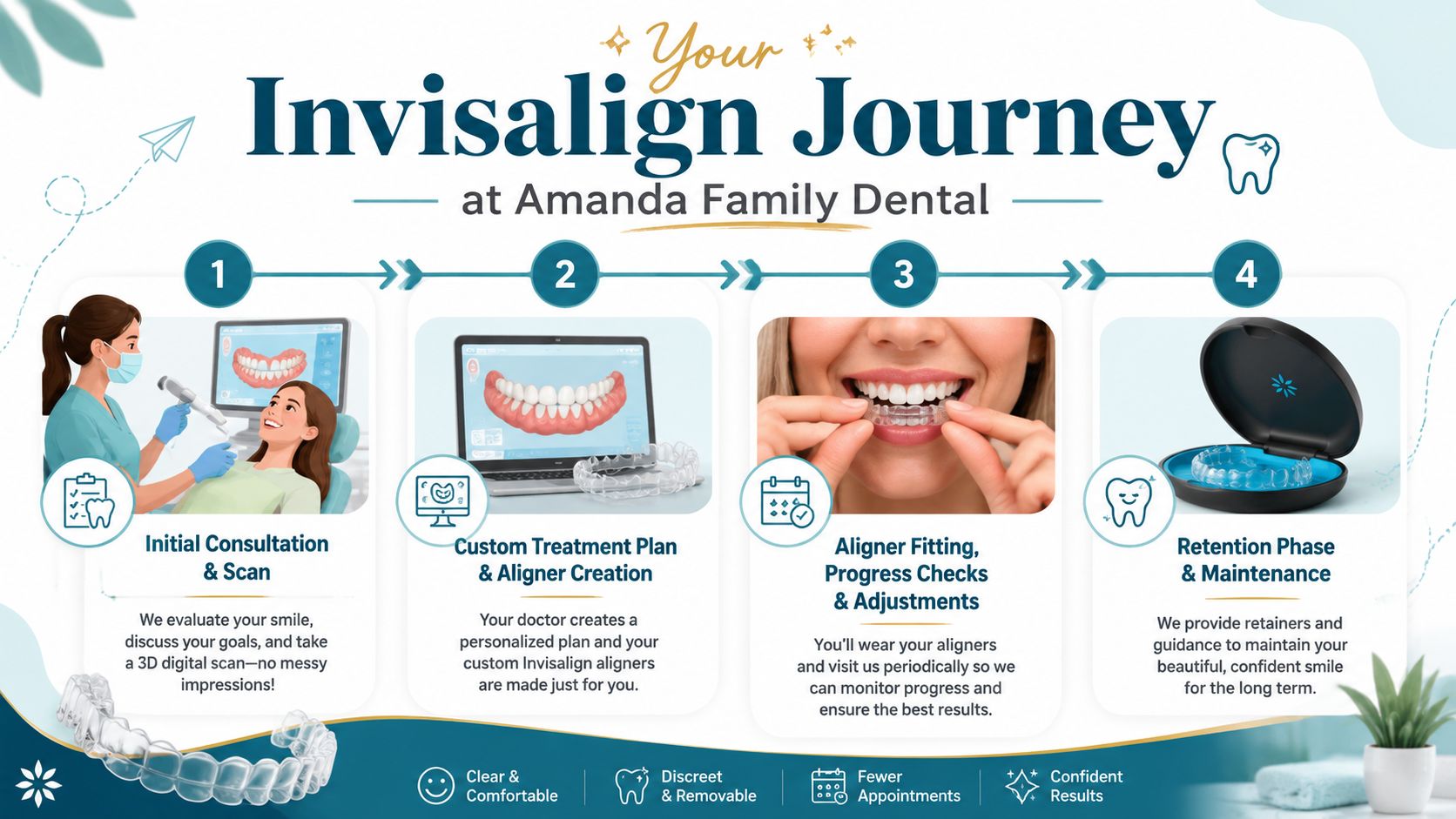
The journey typically starts with an exam, digital records, and a conversation about goals. Some patients care most about crowding in the front teeth. Others want a broader bite correction because they've noticed wear, shifting, or difficulty cleaning overlapping areas.
Step one starts with records and planning
Digital scans replace the old idea of messy impressions in many modern offices. Those scans support treatment planning and help show how the teeth are expected to move over time. Patients often find that visual planning makes the cost discussion easier, because they can see what the treatment is designed to fix.
A stronger consultation also checks whether anything should be addressed first. If someone needs a new patient exam, dental X-rays, restorative dentistry, or treatment for a painful tooth, it's better to know that before aligners begin.
For patients who want more background on the mechanics, this page on how Invisalign works gives a helpful overview of the treatment process itself.
The middle of treatment is usually simple
Once the aligners are delivered, treatment settles into a rhythm. Patients wear each set as directed, remove them for meals and cleaning, and return for progress checks. Those visits help confirm that the teeth are tracking as planned and that the result is moving toward the agreed goal.
Most of the day-to-day success comes from consistency. Aligners only work when they're worn as directed. That sounds obvious, but it's often the difference between a smoother plan and one that takes longer than expected.
Common features of a well-run Invisalign process include:
Clear instructions
Patients should know when to switch aligners and what to do if one feels off.Regular monitoring
Short follow-up visits help catch small issues before they become bigger ones.Retention after treatment
Once teeth are straight, retainers help keep them there.
The final phase is retention and maintenance. That part isn't a technical footnote. It protects the investment patients have already made in their smile.
Frequently Asked Questions About Invisalign Treatment
Is Invisalign treatment painful
Most patients describe Invisalign as pressure rather than pain, especially when they start a new set of aligners. That pressure is a sign that the trays are working. If discomfort feels sharp or unusual, the office should check the fit.
Can patients eat normally during treatment
Yes. Aligners are removed for meals, so patients can still eat foods they enjoy. The habit that matters most is putting the aligners back in after eating and cleaning the teeth before reinserting them when possible.
How are aligners cleaned
Aligners should be cleaned gently and consistently. Patients usually do best when they rinse them after removal and clean them with products approved for aligner care or with a gentle routine recommended by the dental team. Hot water should be avoided because it can distort the plastic.
Is Invisalign different for teens and adults
Yes, the cost picture and treatment design can differ by age. GoodRx notes that teen treatment averages around $3,000 and can range from $2,000 to $5,000, while full adult Invisalign treatment averages about $5,700 and may run $3,500 to $9,500, with an average duration of 12 to 18 months, according to this GoodRx review of teen and adult Invisalign costs.
That doesn't mean every teen case is simpler or every adult case is harder. It means age, growth stage, treatment goals, and case scope can change both planning and price.
Is Invisalign only for cosmetic concerns
No. Many patients begin treatment because they want straighter teeth, but alignment can also affect bite function, cleaning access, and long-term maintenance. A cosmetic concern may be the starting point, yet the treatment plan often considers more than appearance alone.
If a straighter smile has been on the to-do list, the next step is getting a personalized estimate from Amanda Family Dental. Patients in Amanda, OH, Lancaster, OH, Circleville, OH, and Carroll, OH can schedule a consultation to review goals, examine treatment options, and get clear answers about Invisalign treatment cost, payment choices, and what care will include.