

Dental crowns typically last 5 to 15 years, and some last much longer with the right material choice and good care. In well-maintained cases, a crown can sometimes last upwards of 30 years, which is why patients at Amanda Family Dental often want to know not just the average, but what affects that timeline.
That question usually comes up at a very normal moment. A patient hears that a cracked tooth, a large filling, or a tooth after a root canal needs a crown, and the next thought is simple: “How long is this going to last?” That's a smart question because a crown is both a health decision and a long-term investment in comfort, chewing, and appearance.
Families in Amanda, Lancaster, Circleville, and Carroll, Ohio often want a straight answer without a lot of technical language. They want to know whether a crown is dependable, what can shorten its life, and what they can do to avoid needing another one too soon. They also want to know whether different materials really matter.
A crown isn't meant to be a temporary patch. It's a restoration that covers and protects a weakened tooth so that the tooth can function normally again. The details matter, though. The material, the bite, the health of the tooth under the crown, and daily habits all shape how long that result lasts.
For anyone who's also wondering what the placement process looks like, this overview of the dental crown procedure steps can help connect the treatment itself with the long-term outcome.
Table of Contents
- Your Guide to Long-Lasting Dental Crowns in the Amanda Area
- Understanding Dental Crown Lifespans by Material
- Key Factors That Influence Your Crown's Longevity
- Protecting Your Investment With Proper Crown Care
- When Is It Time for a Replacement Signs to Watch For
- Get Expert Crown Care at Amanda Family Dental
Your Guide to Long-Lasting Dental Crowns in the Amanda Area
Hearing “you need a crown” can sound bigger than it really is. Most of the time, it means the tooth can still be saved and protected instead of moving on to a more involved treatment later. That's good news, but people still want to know whether a crown is built to last through normal life, meals, and years of everyday use.
For many patients, the answer is reassuring. A crown is a durable restoration that can serve a tooth for many years when the material fits the job, the underlying tooth is stable, and home care stays consistent. That applies whether the crown is protecting a tooth that cracked, covering a tooth with a large filling, or restoring a tooth after root canal treatment.
Why this question matters so much
Crowns sit at the intersection of function and appearance. A back tooth crown needs to handle heavy chewing. A front tooth crown has to blend with the smile. Some patients care most about strength. Others care most about matching nearby teeth. Most want both.
That's why “How long do dental crowns last?” doesn't have one universal answer.
A crown's lifespan is usually less about luck and more about the combination of material choice, bite forces, hygiene, and the condition of the tooth underneath.
Patients around Amanda, OH also tend to ask a second question right away. They want to know what they can do to help a crown last longer. That's where the conversation gets practical. Good brushing, flossing around the margins, avoiding hard chewing habits, and keeping regular exams all matter. So does choosing the right crown for the right tooth.
What patients in the Amanda area should expect
Someone searching for a dentist near me, a dentist in Amanda, OH, or a dentist in Lancaster, OH usually isn't looking for theory alone. They want a plan. They want to know whether a tooth can be restored comfortably, whether the crown will feel natural, and how to avoid a repeat problem.
That same concern comes up for patients from Circleville and Carroll who are comparing restorative care, cosmetic dentistry, and emergency dental options. A strong crown can restore comfort when chewing, support a healthier bite, and improve the appearance of a tooth that has been damaged or discolored.
Understanding Dental Crown Lifespans by Material
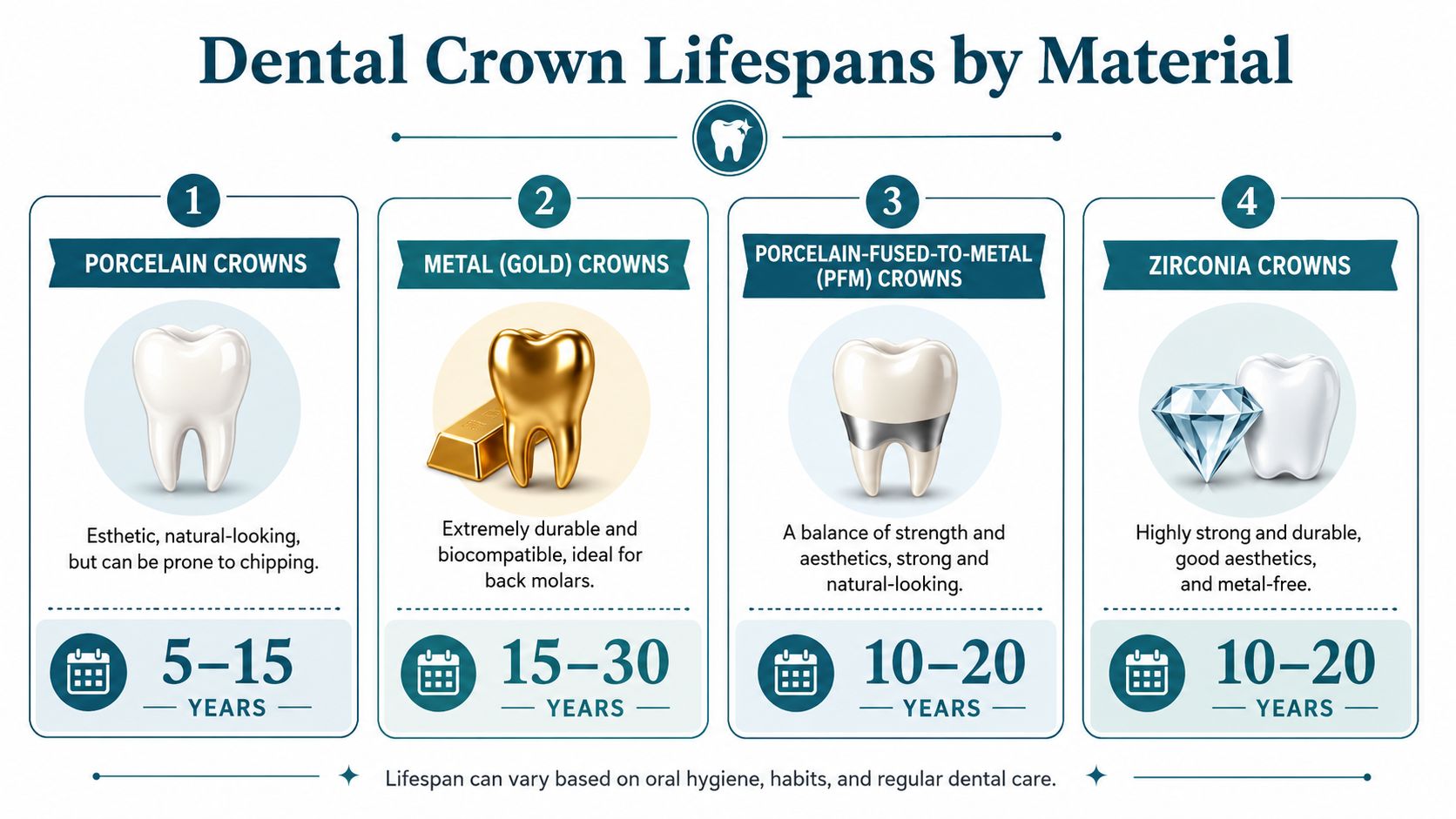
Some crown conversations get oversimplified into “crowns last about a decade.” That's only part of the story. Clinical references commonly place the average lifespan at 5 to 15 years, while also noting that material matters: porcelain and ceramic crowns are commonly reported at 5 to 15 years, porcelain-fused-to-metal crowns at 10 to 15 years, and metal crowns at over 20 years in some cases. With proper care, some crowns can last upwards of 30 years according to Cleveland Clinic's dental crown overview.
What a crown is designed to do
A crown covers a damaged or weakened tooth to restore shape, strength, and function. It's often recommended when a tooth has lost too much structure for a standard filling to hold up well. That might happen after deep decay, a fracture, or a root canal.
The crown protects what remains of the tooth, but it also has to live in a demanding environment. Chewing pressure, temperature changes, grinding, and plaque around the gumline all test the restoration over time.
How material changes the trade-offs
Different materials solve different problems. The right choice depends on where the tooth is located, how visible it is, and how much force it handles.
| Crown material | Common lifespan range | Main advantage | Typical use case |
|---|---|---|---|
| Porcelain or ceramic | 5 to 15 years | Natural appearance | Front teeth and visible areas |
| Porcelain-fused-to-metal | 10 to 15 years | Balance of strength and appearance | Teeth that need both durability and esthetics |
| Metal | Over 20 years in some cases | High durability | Back molars and heavy chewing areas |
| Zirconia | No precise lifespan cited in the verified data | Strength with a tooth-colored look | Often considered when durability and metal-free design both matter |
Porcelain and ceramic crowns are popular because they blend well with natural teeth. That makes them a common choice for teeth that show when smiling or speaking. The trade-off is that appearance doesn't always mean maximum durability under heavy bite pressure.
Porcelain-fused-to-metal crowns offer a middle ground. They combine a tooth-colored outer surface with a metal substructure, which is why they're often discussed when both looks and strength matter.
Metal crowns are less common in visible parts of the smile, but they've long been valued for durability. For patients who do a lot of heavy chewing on back teeth, this can be a very practical option.
Decision point: The “best” crown material isn't universal. The best one is the material that matches the tooth's job.
Key Factors That Influence Your Crown's Longevity
Material matters, but it's only one piece of the outcome. A crown can be made from a strong material and still fail early if the tooth underneath weakens, the margins collect plaque, or the bite puts too much pressure on one spot.
Long-term research helps put that in perspective. In a practice-based study, the mean observation time was 7 years, and crowns showed reported annual failure rates of 2.1% for success and 0.7% for survival at 11 years. The same research found a higher failure risk when the crowned tooth had undergone endodontic treatment, with hazard ratios of 1.31 for success failure and 1.89 for survival failure. A related clinical summary also reports that about 90% of crowns are still in good condition at 5 years and about 80% to 85% remain at 10 years, based on the PubMed-indexed crown longevity research.
The part patients control every day
Most crown problems don't start with the visible top of the crown. They start where the crown meets the tooth.
A few habits make a real difference:
- Brush the gumline carefully: Plaque tends to collect at the margin where crown and tooth meet. If that area stays inflamed or unclean, the tooth under the crown becomes more vulnerable.
- Floss without snapping: Sliding floss gently around the crown helps clean the edge without irritating the gum tissue.
- Stop chewing hard non-food items: Ice, pens, and hard candy put concentrated force on one spot.
- Take grinding seriously: Nighttime clenching can overload even a well-made crown.
Patients who grind often ask whether a nightguard is worth it. For many, it is. This guide to cement for tooth crown also helps explain why the seal around a crown matters so much over time.
The part the tooth itself controls
A crown is only as dependable as the tooth supporting it. Teeth that already have extensive damage, large old fillings, or root canal treatment may still do very well, but they need careful monitoring.
That's one reason a crown may look intact while the situation underneath changes.
Why technique still matters
The fit of the crown, the shape of the preparation, the bite adjustment, and the way the crown is cemented all influence longevity. If the bite is uneven, one area can take too much force. If the margins aren't clean and precise, plaque control gets harder.
That's why crown dentistry isn't just about selecting a material. It's about matching the restoration to the tooth, the bite, and the patient's habits.
A long-lasting crown needs two things at the same time. A durable restoration and a healthy environment around it.
Protecting Your Investment With Proper Crown Care
Once a crown is placed, daily care becomes the deciding factor patients see every morning and every night. Crowns don't get cavities themselves, but the natural tooth around and under them still can. The goal is to protect that junction where the crown ends and the tooth begins.
Daily habits that help crowns last
A simple routine usually works better than an elaborate one people won't keep up with.
- Use a soft-bristled toothbrush: It cleans well without being unnecessarily rough on the gumline.
- Choose a non-abrasive toothpaste: Harsh polishing pastes can be rough on restorations over time.
- Clean between teeth every day: Floss or another interdental cleaner helps remove buildup where a toothbrush can't reach.
- Avoid using teeth as tools: Opening packaging or biting fingernails stresses both crowns and natural teeth.
Patients dealing with clenching or nighttime grinding should also look into teeth grinding solutions, especially if they've already chipped enamel or worn down other teeth.
Professional care catches what home care can't
Even careful brushers can miss early trouble around a crown. Regular cleanings and exams help identify changes in the gumline, bite, and supporting tooth before they turn into pain or a broken restoration.
For patients searching for a dentist in Circleville, OH, dentist in Carroll, OH, or restorative dental care close to Amanda and Lancaster, the practical goal is simple. Keep the crown clean, keep the bite monitored, and address small changes before they become expensive ones.
Crowns usually last longer when patients treat follow-up care as part of the treatment, not as an optional extra.
When Is It Time for a Replacement Signs to Watch For
Some crowns fail in obvious ways. Others don't. That's what makes replacement timing tricky for patients trying to judge a crown by appearance alone.
A common patient question is why a crown would need replacement if it isn't broken. The answer is often the tooth underneath. Decay can develop at the margins where the crown meets the tooth, or the supporting tooth structure can weaken even when the crown still appears intact, as explained in Healthline's summary of crown replacement reasons.
Signs you may notice at home
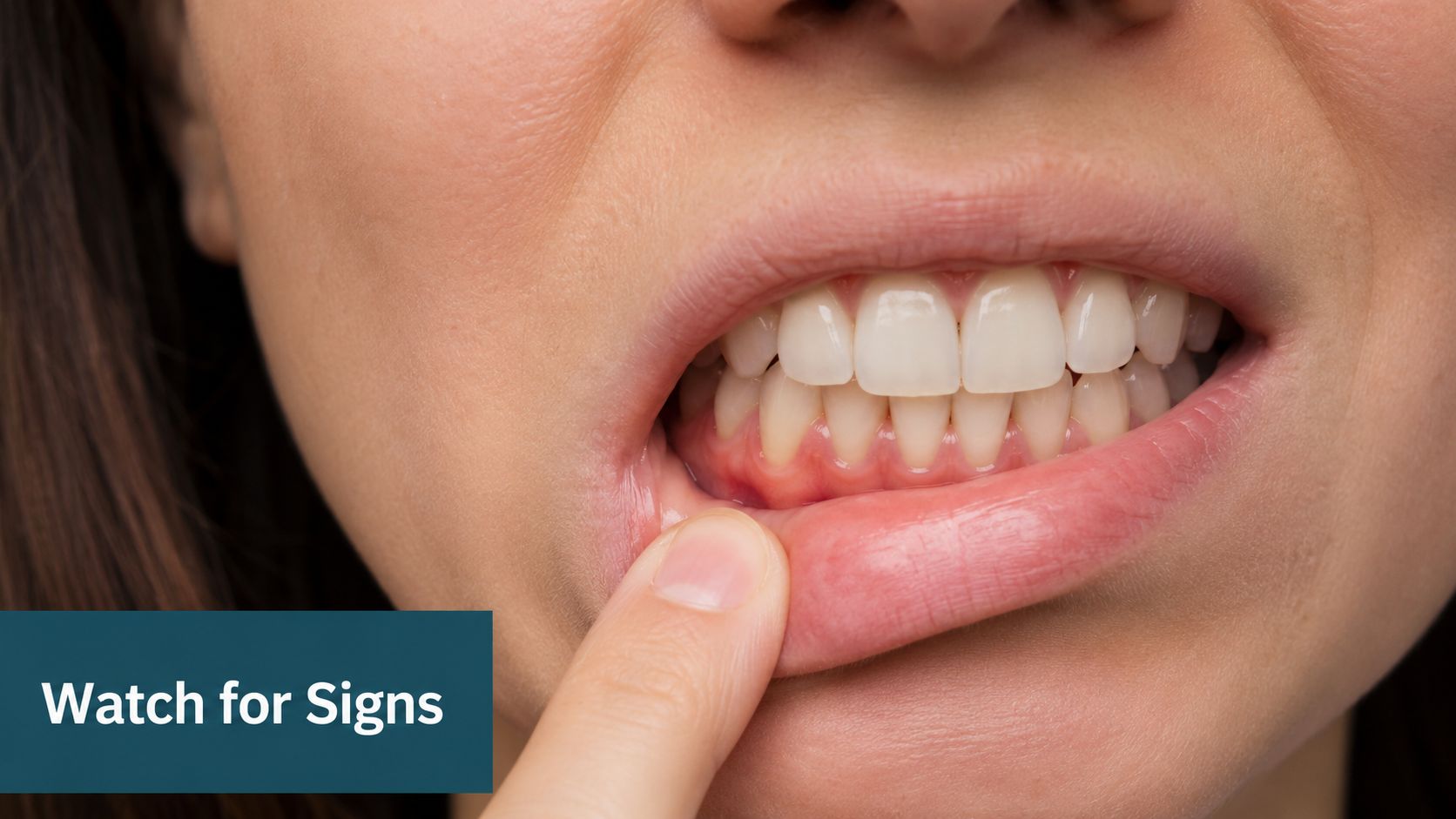
A crown may need attention if any of these show up:
- New sensitivity: Especially if hot, cold, or pressure starts feeling different.
- Pain when chewing: That can point to bite issues, cracks, or trouble underneath.
- A loose feeling: A crown shouldn't wobble, shift, or feel taller than it used to.
- Visible chips or edge changes: Small defects can become bigger under chewing pressure.
Problems patients usually can't see
The harder issue is hidden breakdown. A crown can look fine in the mirror while the margin traps plaque, the underlying tooth softens from decay, or the gum tissue starts pulling away.
That's why self-monitoring has limits. A person can notice discomfort, but they usually can't confirm whether the crown still fits tightly or whether the tooth beneath it is sound. Exams and dental X-rays matter because they show what the eye can't.
If a crown suddenly feels different, don't wait for it to break. Small changes often show up before bigger damage does.
Patients looking for an emergency dentist, help with tooth extraction, or restorative treatment after pain starts often wish they had come in sooner. A simple evaluation can sometimes preserve the tooth and make treatment more straightforward.
Get Expert Crown Care at Amanda Family Dental
A crown lasts longest when the entire process is handled carefully from diagnosis through follow-up. That includes identifying whether the tooth is a good candidate, choosing a material that matches the job, checking the bite precisely, and monitoring the tooth over time.
For local families comparing options for restorative dentistry, cosmetic dentistry, dental implants near me searches, or new patient exams, that level of detail matters. It affects comfort, appearance, and how predictable the restoration feels in everyday life.
Amanda Family Dental provides crowns as part of broader restorative care that also includes cleanings and exams, digital X-rays, fillings, root canals, emergency dental services, and treatment planning for damaged or weakened teeth. That kind of full-picture approach is useful because crown success often depends on more than the crown alone.

Patients from Amanda, Lancaster, Circleville, and Carroll, Ohio usually want the same thing. They want a clear explanation, a restoration that feels natural, and a plan for keeping that tooth healthy for years. That starts with a careful exam and a recommendation that fits the actual tooth, not a one-size-fits-all answer.
If a crown feels loose, a tooth has cracked, or it's time to check an older restoration, the next step is a professional evaluation.
If you're looking for clear answers and practical crown care close to home, contact Amanda Family Dental to schedule an exam or restorative consultation for your smile.