

A patient in Amanda, Lancaster, Circleville, or Carroll, Ohio, may be searching “dentist near me” after noticing bleeding during brushing, stubborn tartar, tooth sensitivity, or a smile that no longer feels fresh. Others may need cleaning and exams before considering teeth whitening, cosmetic dentistry, dental implants, a tooth extraction, or emergency dental services. At Amanda Family Dental, understanding the dental cleaning steps can make the appointment feel more predictable and less stressful.
A professional cleaning isn't a quick polish. It combines a health review, examination, gum assessment, deposit removal, preventive guidance, and a plan for follow-up. The findings determine whether a patient needs routine preventive care, a deeper periodontal procedure, or another service such as restorative dentistry or dental implants near me.
Table of Contents
- What Happens the Moment You Sit Down
- The Exam Before Any Tools Touch Your Teeth
- Scaling and Calculus Removal
- Polishing, Flossing, and the Final Rinse
- What Your Hygienist Wants You to Do at Home
- Adapting the Cleaning for Children, Braces, and Special Needs
- When to Call the Dentist Between Visits
What Happens the Moment You Sit Down
The visit often begins with a warm greeting and a few practical questions before anyone picks up an instrument. A patient may be asked whether anything has changed since the last appointment, including new medications, recent surgery, pregnancy, medical diagnoses, or a new concern with a tooth.
The conversation may sound simple, but it helps the dental team choose safe, appropriate techniques. Someone with sensitive teeth may need gentler settings or pauses. A patient taking medication that affects saliva or bleeding may need a different preventive approach. Pain, bleeding gums, swelling, and sensitivity also help determine which areas deserve closer attention.
Practical rule: An updated medication list is part of good dental preparation, not paperwork that can be skipped.
The team may ask about brushing, interdental cleaning, jaw discomfort, or a bad taste. A patient who says a back tooth bleeds every time it's flossed is giving the hygienist a useful starting point. A patient who reports no discomfort still receives an examination, because cavities, gum disease, and oral-health changes may not cause obvious symptoms early.
Routine dental visits support oral-health education, early detection, and treatment of cavities, gum disease, and oral cancer. Yet only 63.9% of U.S. adults reported a dental visit in 2022, according to the CDC measure definition for preventive dental visits. That makes the opening conversation especially valuable for patients who have postponed care.
Patients researching digital growth for dental offices may notice that clear education is part of a modern patient experience. In the operatory, that clarity begins with answering questions before treatment starts. Patients can also tell the team if they feel anxious, need a pause, or want an explanation before a tool is used.
The Exam Before Any Tools Touch Your Teeth
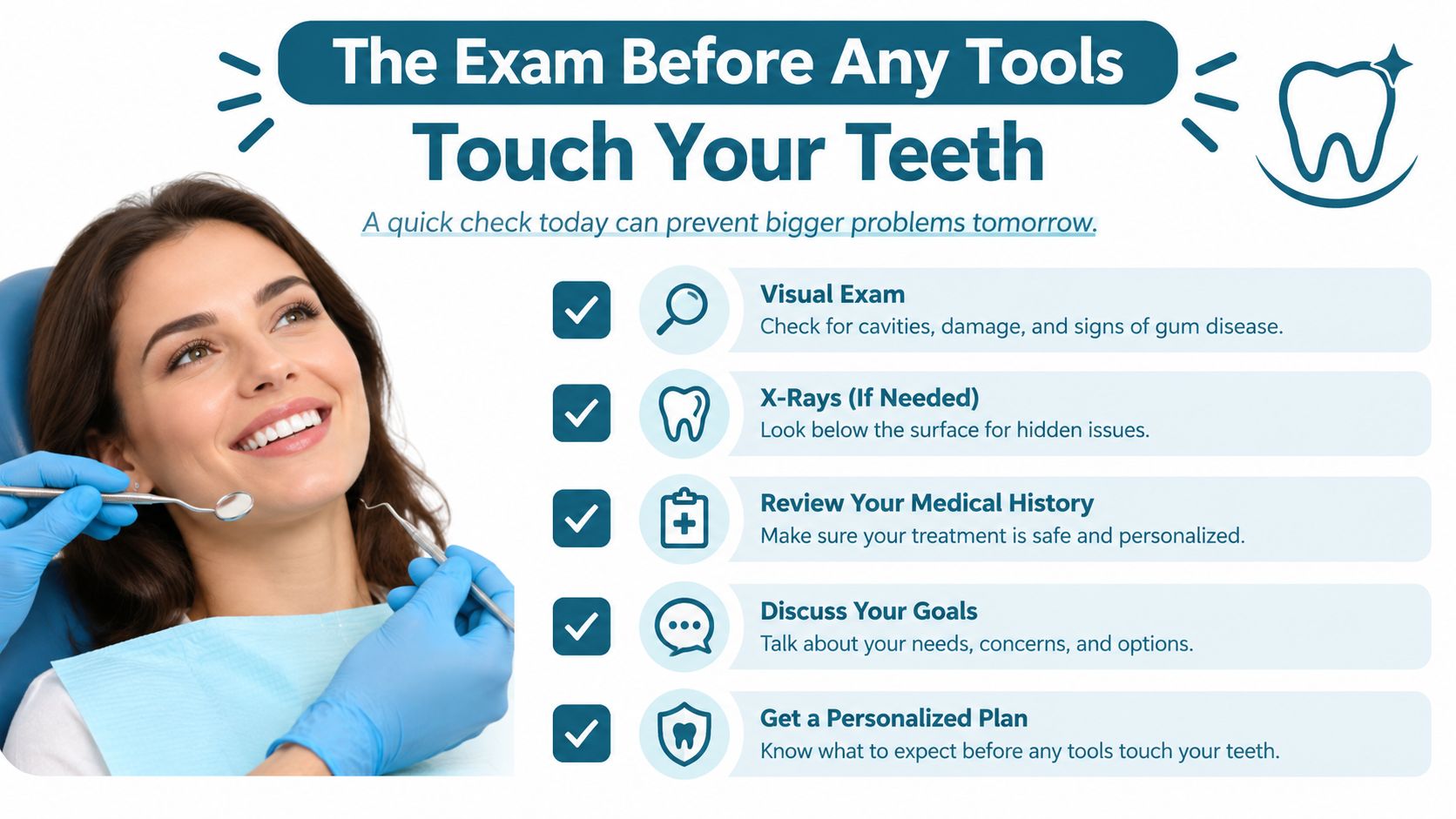
The examination determines what kind of appointment is appropriate. Before scaling begins, the dentist or hygienist looks at the teeth, gums, tongue, cheeks, palate, existing fillings, crowns, dentures, and other restorations. The clinician is checking not only for visible buildup, but also for changes that may affect comfort, safety, and treatment planning.
Small gum measurements may be recorded in a periodontal chart. These measurements help identify areas where the gum has pulled away from the tooth or where deeper spaces may hold bacteria. Bleeding, swelling, recession, loose teeth, furcation involvement, or heavy deposits can change the plan from routine prophylaxis to a more detailed periodontal evaluation.
How findings change the visit
A clean-looking tooth may still need closer evaluation if the gum bleeds, the patient reports lingering sensitivity, or an older restoration has changed. A rough spot, crack, cavity concern, or painful area may call for diagnostic follow-up rather than more polishing.
Dental X-rays are recommended when the images can help answer a clinical question. Digital X-rays may help the dentist evaluate areas between teeth, bone levels, roots, or problems that aren't visible during a visual examination. The point isn't to take images automatically. It's to use diagnostic information when it can change a decision.
This is also when the team distinguishes a routine cleaning from periodontal treatment. Deep pockets, bone loss, or substantial tartar below the gumline may mean a standard appointment isn't the right service. Patients can ask, “Were gum-pocket measurements taken?” and “Which finding determines the recommended return interval?”
Scaling and Calculus Removal
Scaling is the hands-on portion that removes calculus, commonly called tartar. Plaque is a soft bacterial film that daily brushing and interdental cleaning can disrupt. If plaque remains, it can harden into calculus, and a toothbrush can't safely brush it away.
The hygienist works methodically around each tooth, including areas just above and below the gumline. Hand instruments help provide precise access, while an ultrasonic scaler may use vibration and water to loosen deposits. The hygienist adjusts technique based on sensitivity, the location of the calculus, the condition of the gums, and the type of restoration nearby.
Why some cleanings take longer
Tartar buildup varies from patient to patient. Saliva chemistry, tooth position, home-care habits, smoking, dry mouth, crowded teeth, braces, and time since the last professional cleaning can all affect what the clinician finds. A longer appointment isn't a judgment. It usually means the team is responding to the actual condition of the mouth.
A routine cleaning may become scaling and root planing, often called a deep cleaning, when gum disease is present. Scaling removes tartar above and below the gumline, while root planing smooths rough areas on tooth roots where bacteria collect, as explained in the NIDCR periodontal disease guide.
Patients who want additional background on the benefits of deep cleaning teeth can review how periodontal treatment differs from preventive polishing. The important distinction is that deep cleaning responds to gum and bone findings. It isn't just a longer version of the same routine service.
For patients in Amanda, Lancaster, Circleville, or Carroll, Ohio, the scaling and root planing procedure can be discussed when the examination shows deposits or gum changes that require treatment below the gumline. Bone loss visible on imaging, deep pockets, or heavy subgingival tartar may all influence that decision.
Polishing, Flossing, and the Final Rinse
After scaling has removed calculus, the hygienist may polish selected tooth surfaces. A slow-speed handpiece and polishing paste can reduce extrinsic stain and leave enamel feeling smooth. The paste may feel gritty, but the pressure should remain light and controlled.
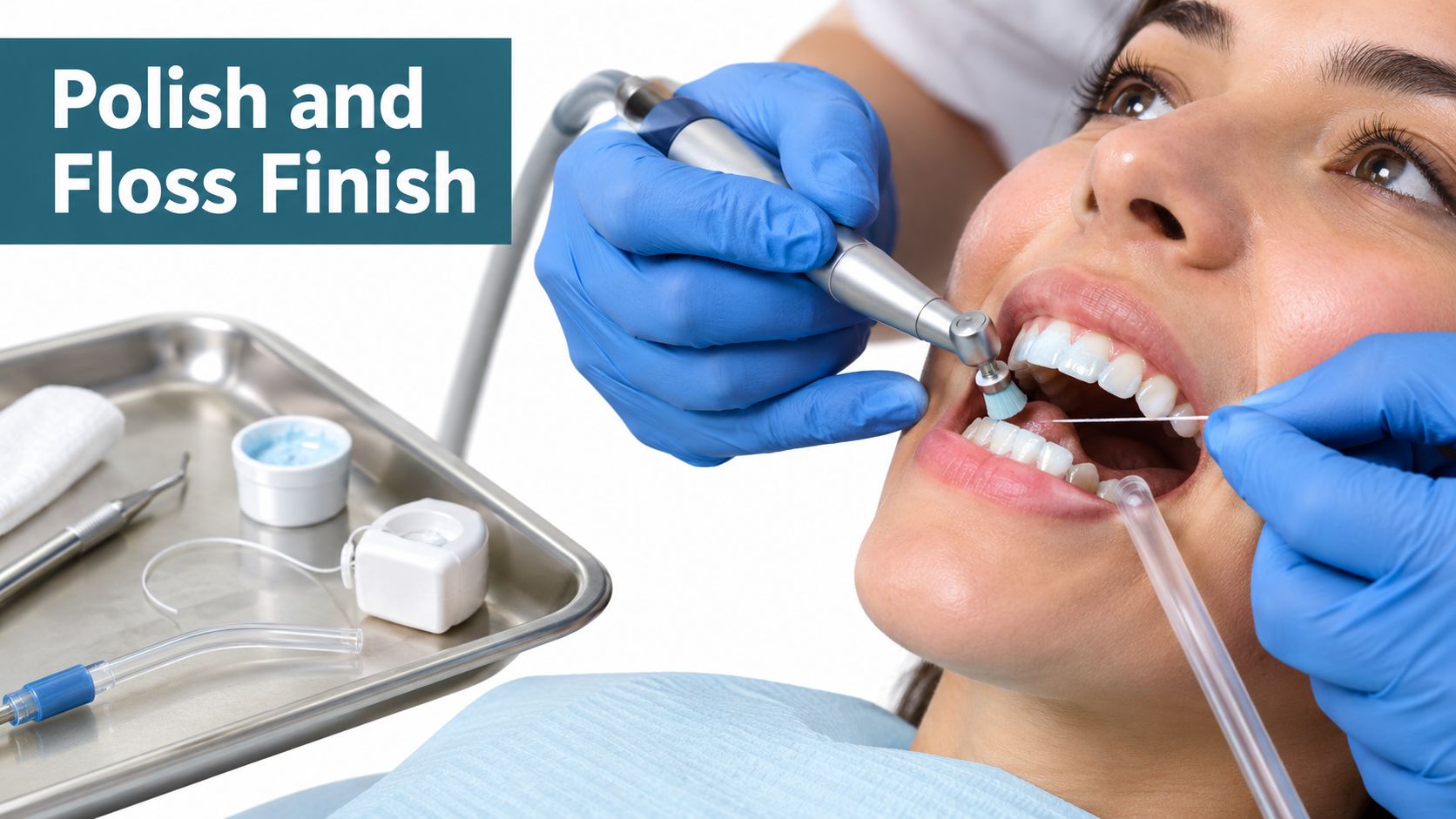
Polishing isn't a replacement for scaling. It addresses surface stain and smoothness, while scaling removes hardened deposits. A hygienist may polish only the areas that need it, especially when a patient has sensitive teeth, restorations, or little visible stain.
Interdental cleaning follows. Floss or another suitable device removes residue left between teeth and gives the hygienist another opportunity to notice bleeding, tight contacts, or areas that are difficult to reach. Patients with braces, bridges, implants, or limited dexterity may need a different method than standard string floss.
The evidence also supports a less rigid approach to polishing frequency. A Cochrane review of routine scaling and polishing found little or no difference in gingivitis or probing depth over 2–3 years among adults without severe periodontitis who received routine scaling and polishing every six months, every twelve months, or without a fixed schedule. That supports recall intervals based on risk and findings rather than an automatic six-month polishing promise.
A final rinse clears paste and loosened debris. Fluoride may be applied afterward when cavity risk warrants added protection. Patients can learn more about fluoride treatment benefits and ask whether fluoride varnish, foam, or another option fits their needs.
What Your Hygienist Wants You to Do at Home
Professional cleaning removes deposits that home care can't reliably eliminate, but daily habits control what returns between visits. The American Dental Association recommends brushing twice daily with fluoride toothpaste for two minutes and cleaning between teeth every day, as described in its home-care guidance.
Technique matters more than aggressive pressure. NIDCR guidance places the bristles toward the gumline, uses gentle small circular motions, and covers every tooth surface. Harsh back-and-forth scrubbing can irritate the gums and doesn't make cleaning more effective.
Flossing should also be controlled rather than forceful. The floss is eased to the gumline, curved into a C shape around the tooth, and moved up and down under the gum edge. Snapping floss into the gums can cause unnecessary soreness, especially when the tissue is already inflamed.
Choosing an interdental method
Not every patient needs to use the same device. A hygienist may recommend:
- Interdental brushes: Useful where spaces between teeth allow the brush to fit comfortably.
- Floss holders: Helpful when reaching back teeth or handling string floss is difficult.
- Water flossers: An option for some patients with braces, bridges, or dexterity limitations.
- Traditional floss: Effective when it fits and is used gently around each tooth.
Patients looking to find oral care essentials can still benefit from professional guidance about fit and technique. The most expensive or popular device isn't automatically the right one. A tool works when it reaches the areas that need cleaning without causing injury.
Recall timing should reflect the examination. The CDC recommends at least a yearly dental check-up and professional cleaning, with additional visits when a healthcare provider advises them. People with dentures or no natural teeth should still receive an annual dental visit, because the dentist can check for oral cancers, cavities, and other problems.
Someone with recurring cavities, gum disease, dry mouth, heavy tartar, diabetes, smoking exposure, or ineffective home care may need a different interval. The hygienist uses gum findings, decay history, medical factors, medications, and home-care effectiveness to create a schedule rather than applying the same calendar to every patient.
Adapting the Cleaning for Children, Braces, and Special Needs
A child, an adult with braces, and a patient with dry mouth shouldn't receive identical coaching. The examination may be similar in purpose, but the instruments, pace, preventive products, and home-care recommendations can change.
Children's preventive dental visits should begin early. CDC-published guidance notes that pediatric recommendations call for routine visits starting by age 1 and may include fluoride varnish from that age. A calm first experience can help a child learn that the dental chair is a place for simple, supported care rather than something to fear.
Common adaptations in the operatory
Braces create extra edges around brackets and wires where plaque can remain. An orthodontic patient may need a careful inspection around each bracket, an interdental brush recommendation, and more specific instruction for cleaning under wires.
Implants and crowns also require thoughtful instrumentation. The clinician may select tools that clean around restorations while protecting surrounding surfaces. Denture wearers need advice about cleaning the appliance and the tissues beneath it, along with regular examinations.
Dry mouth deserves special attention because reduced saliva can raise cavity risk and make the mouth feel uncomfortable. Medications, medical conditions, and dehydration may contribute. Fluoride, saliva-supporting habits, product selection, and recall timing can be discussed according to the patient's risk.
The World Health Organization reported that oral diseases affected about 45% of the world's population, roughly 3.5 billion people, in its 2022 global assessment, while untreated caries in permanent teeth affected an estimated 2.5 billion people. The WHO oral-health assessment reinforces why prevention must include families and patients with different needs.
Anxiety should be addressed before treatment begins. Patients can request a pause signal, topical anesthetic, shorter visits, or staged care. Some patients may ask whether sleep dentistry is appropriate. Families can also review children's dental health resources when planning preventive care for younger patients.
When to Call the Dentist Between Visits
A cleaning is preventive care, not a substitute for evaluation of an active dental problem. Patients should contact the office when symptoms persist, worsen, or appear suddenly instead of waiting for the next scheduled appointment.
A call is appropriate for:
- Bleeding gums: Persistent bleeding deserves an examination, especially when gentle home care hasn't improved it.
- Swelling or a bad taste: These can signal an infection or another problem that needs timely attention.
- Lingering sensitivity: Hot or cold pain that continues after the temperature is gone should be assessed.
- Damage to a tooth or restoration: A cracked tooth, chipped tooth, or lost crown may require prompt treatment.
- Unhealed mouth sores: A sore that doesn't heal should be evaluated.
- Jaw pain or treatment changes: New pain after dental work should be reported rather than ignored.
Early contact can help the team identify whether the problem involves a cavity, gum disease, a damaged restoration, infection, or another condition. A patient may need a filling, crown, root canal, tooth extraction, dental implants, or emergency dental services rather than a routine polish. Patients searching for a cosmetic dentist near me may also benefit from completing the health assessment before scheduling teeth whitening, veneers, or Invisalign.
Amanda Family Dental serves patients seeking a dentist in Amanda, OH, a dentist in Lancaster, OH, a dentist in Circleville, OH, or a dentist in Carroll, OH. Pediatric care, Invisalign, sleep dentistry, and the Power Plan Membership can make it easier for families and anxious adults to move from postponing care to scheduling it.
The CDC recommends at least a yearly check-up and professional cleaning, with additional visits when advised, including annual examinations for people who wear dentures or have lost some or all natural teeth. Patients can contact Amanda Family Dental when symptoms arise or when it's time to establish a personalized preventive plan.
Amanda Family Dental provides preventive cleanings, examinations, digital X-rays, periodontal care, fluoride options, and personalized treatment planning for patients in Amanda, Lancaster, Circleville, and Carroll, Ohio. Visit Amanda Family Dental to schedule an appointment or request a consultation for comfortable dental care.