

A routine dental cleaning appointment with an exam usually takes about 45 to 60 minutes, moving from check-in and any due X-rays to an exam, scaling, polishing, flossing, and a home-care review. That's the order most patients can plan around, whether the visit is a regular six-month check or a first appointment after a longer gap.
Many readers are picturing the same moment right now. The reminder card is on the fridge, a back tooth feels a little sensitive to cold, or a child is due before school starts, and the search begins for a dentist near me in Amanda, Lancaster, Circleville, or Carroll, Ohio. Knowing what happens, in what order, and where choices exist makes that call easier. A cleaning isn't just polishing for looks. It's a timed check on teeth, gums, and soft tissue, with time set aside to spot small problems while they're still simple to treat.
Table of Contents
- What Happens During a Dental Cleaning Appointment
- Why Regular Cleanings Matter Beyond Clean Teeth
- How Often You Should Schedule a Cleaning
- How to Prepare for Your Cleaning Visit
- Caring for Your Teeth Between Cleanings
- What to Expect for a Child's Cleaning
- Managing Anxiety During Your Cleaning
- Cleaning Costs and Insurance Questions in Amanda, OH
- Book Your Cleaning Close to Home in Amanda, OH
What Happens During a Dental Cleaning Appointment
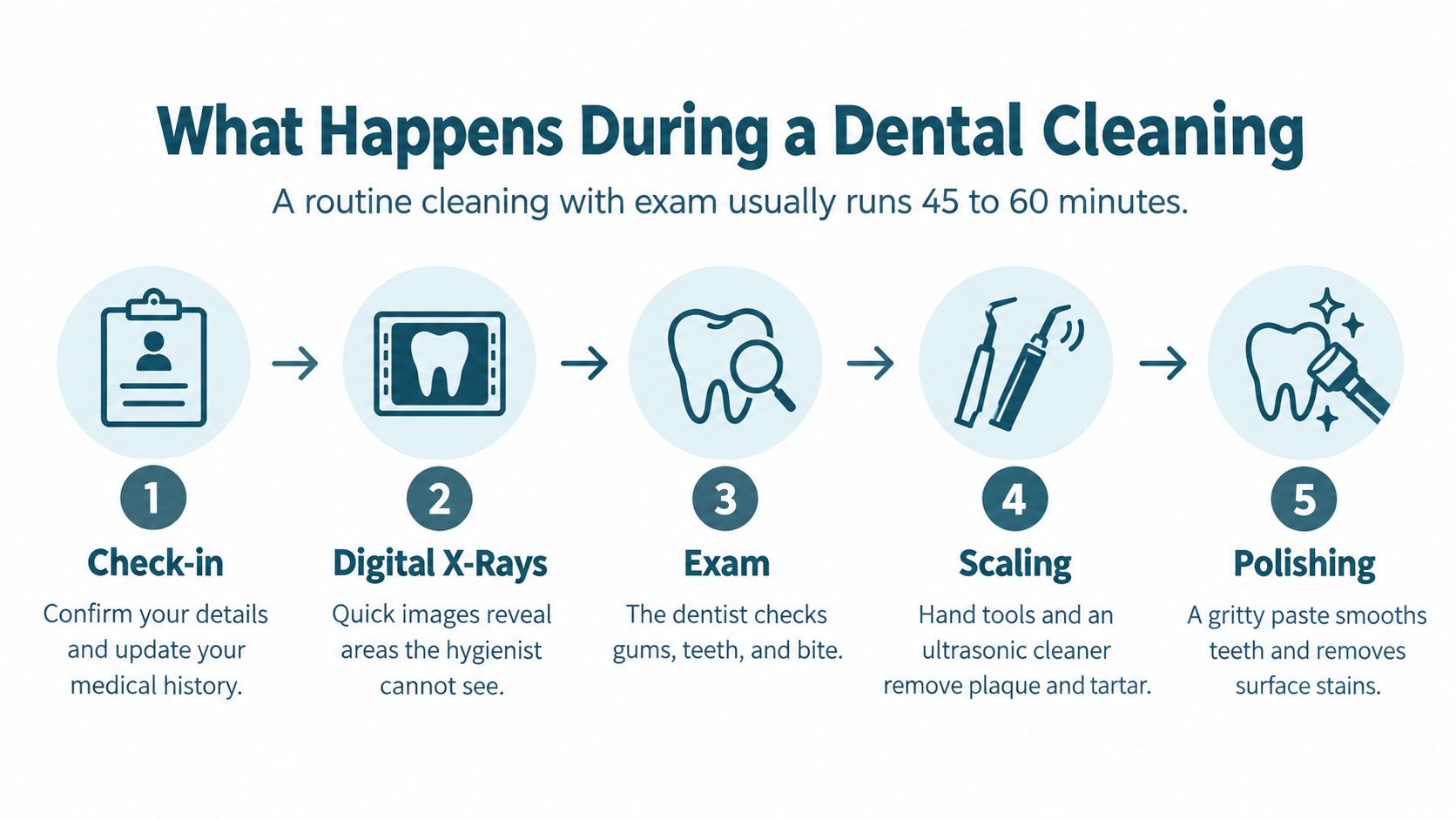
A routine cleaning with an exam usually runs 45 to 60 minutes, and most of that time is spent on scaling and polishing, not paperwork. Patients who haven't visited in several years, or who need X-rays that day, should expect the visit to sit at the longer end of that window. Each stage has a clear job, so it's easy to follow where the time goes.
Check-In, X-Rays, and Exam
Check-in and health history come first. The team confirms medications, allergies, and health changes since the last visit, because new prescriptions, pregnancy, or conditions such as diabetes can change how gums respond and what treatment is safe.
Digital X-rays follow when they're due for a patient's risk level, not automatically at every visit. They show decay between teeth, bone levels, and areas under fillings that a mirror can't reach. Then the oral exam begins. The dentist checks teeth, gums, bite, and soft tissue, looking for early decay, failing fillings, inflammation, and unusual spots on the tongue, cheeks, or roof of the mouth.
Scaling, Polishing, and Fluoride
Scaling is the core of the cleaning. The hygienist uses hand instruments and often an ultrasonic scaler, which vibrates and sprays water, to remove plaque and tartar. Plaque is the soft bacterial film that forms daily. Tartar, also called calculus, is plaque that has hardened, and brushing can't clear it once it sets. Scaling works along and just below the gumline, where buildup does the most harm.
Polishing comes next, using a gritty paste and a rotating cup to smooth tooth surfaces and lift surface stains from coffee, tea, or tobacco. Smoother surfaces give plaque less to cling to. The hygienist then flosses between every tooth, which clears leftover debris and shows where gums bleed easily. Fluoride may be applied at the end if recommended, to strengthen enamel in spots where decay risk is higher.
A deep cleaning for gum disease is a different, longer procedure. It's often done in sections over more than one visit, because it cleans deeper below the gumline.
The visit closes with a home-care review and checkout. Two questions are worth asking there. When is the recall date, and why was that interval chosen? The answer tells a patient whether the schedule reflects healthy gums, early inflammation, or a risk factor that needs closer watching. For anyone looking for cleaning and exams from a dentist in Amanda, OH, that final conversation is where the next step becomes clear.
Why Regular Cleanings Matter Beyond Clean Teeth
A cleaning works like a scheduled check-up on a car. A small fault caught during a routine service costs far less than a breakdown on the road, and teeth follow the same pattern. Plaque begins hardening into tartar within a few days, and once that happens, only professional tools can remove it.
Early gum inflammation, called gingivitis, is reversible with cleaning and better home care. Left alone, the same inflammation can progress to gum disease with attachment and bone loss, which can't be undone, only managed. The scale of the risk is laid out in the CDC facts on cavities, which notes that decay may cause pain and infections that interfere with eating, speaking, playing, and learning, and that an untreated cavity can develop into an abscess. That connection between mouth and body is explored further in this guide to oral health and overall wellness.
The cost difference is concrete. A small cavity found at an exam may need one filling. The same cavity left for a year may reach the nerve and need a root canal, a crown, or a tooth extraction followed by replacement. Waiting also turns a planned visit into a call to an emergency dentist.
A cleaning and exam can catch problems early, including:
- Cavities between teeth: Decay that hides from view but shows on X-rays.
- Cracked or failing fillings: Worn edges that leak bacteria underneath.
- Early gum inflammation: Bleeding or swelling before bone is affected.
- Signs of oral cancer: Sores, lumps, or patches that don't heal.
For families in Amanda, Lancaster, Circleville, and Carroll, that early catch keeps treatment smaller, calmer, and easier to plan around work and school.
How Often You Should Schedule a Cleaning
Every six months is the common default, but the right interval is set by risk, not the calendar. The CDC overview of oral health recommends at least annual dental check-ups and professional cleanings, with additional visits determined by the clinician's assessment. Six months is a starting point that the exam then adjusts.
What Shortens the Interval
Certain findings pull the next visit closer. Persistent gum bleeding, deep periodontal pockets, heavy tartar, diabetes, tobacco exposure, dry mouth, orthodontic appliances, and a history of recurrent cavities all raise the chance of damage between visits. Professional removal of plaque and calculus reduces deposits that brushing cannot reliably eliminate, and the accompanying exam can identify early caries and periodontal inflammation before symptoms develop.
Two examples show the range. A 35-year-old with no cavities, healthy gums, and little tartar may do well on a longer interval. A smoker with bleeding gums and deeper pockets may need maintenance every three to four months, because bacteria rebuild in those pockets quickly and unchecked inflammation can move from reversible gingivitis to bone loss.
| Patient Profile | Typical Interval | Why It Matters |
|---|---|---|
| Healthy adult, no cavities or gum problems | Every 6 to 12 months | Dentist sets the interval after the exam |
| Typical adult with fillings or mild gum inflammation | Every 6 months | Allows new decay to be caught early |
| Gum disease under maintenance care | Every 3 to 4 months | Keeps bacteria in gum pockets under control |
| Children with high cavity risk or sealants | Every 3 to 6 months | Monitors new decay and sealant wear |
| Smokers, people with diabetes or dry mouth | Every 3 to 6 months | Higher risk of gum disease and decay |
The interval can change after each exam, so it makes sense to ask at checkout why the next date was chosen. A patient returning after several years may also need a longer first visit, because heavy buildup takes more time to clear safely. Routine visits are associated with fewer oral disease treatments and lower dental-care costs, which makes the right schedule a health decision and a budget decision at the same time.
How to Prepare for Your Cleaning Visit
Good preparation is short and practical, and each step removes a small friction point on the day. None of it requires special products or changes to a normal routine.
Seven Steps Before the Appointment
- Brush and floss as usual the day before. The hygienist assesses normal plaque patterns, so an unusually hard scrub right before the visit can irritate gums and hide where buildup usually collects.
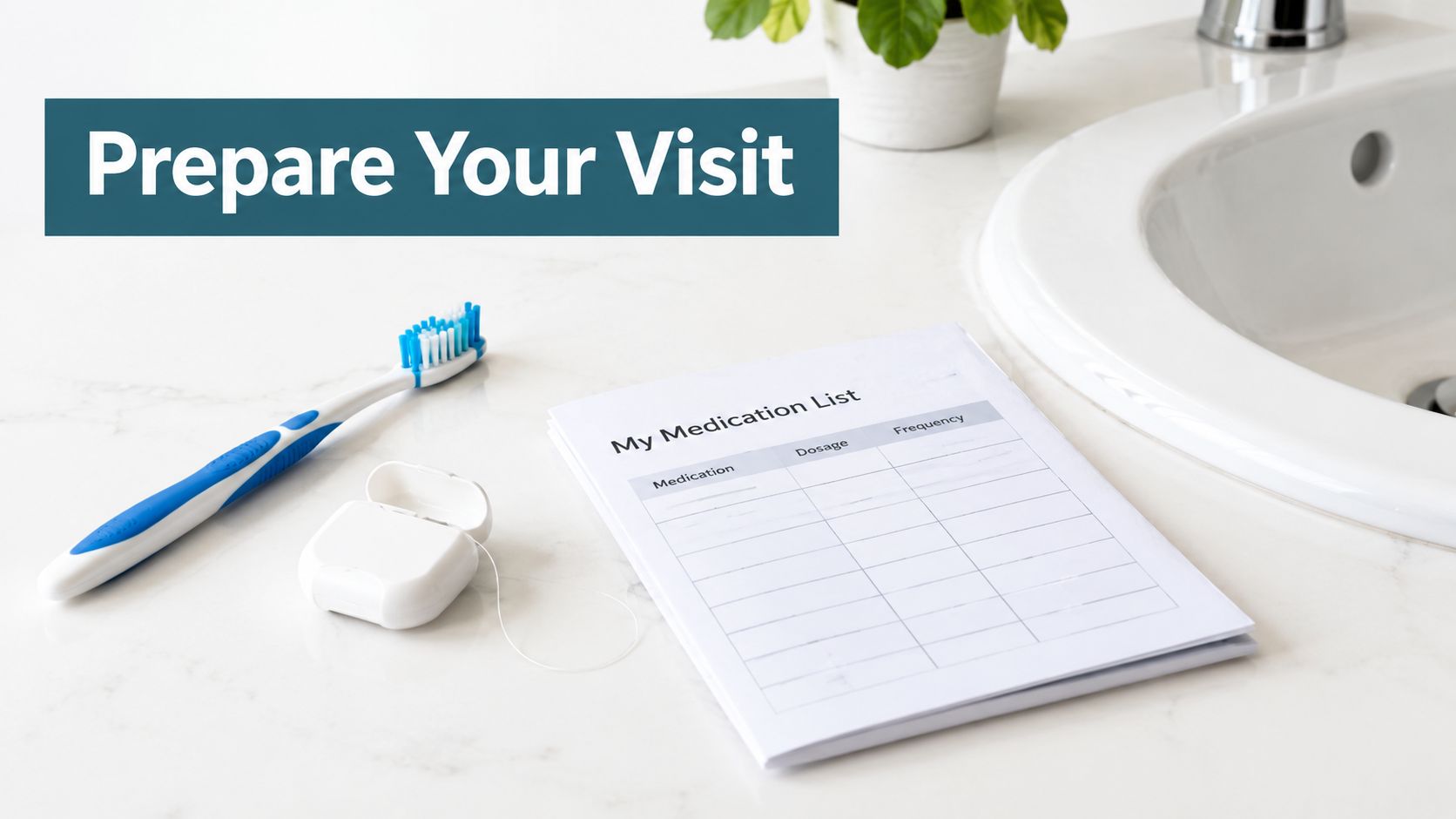
- Gather records. Bring a current medication list, an insurance card, and notes on health changes such as new medications, allergies, pregnancy, or recent illness, since each can affect treatment choices.
- Write down concerns. Sensitivity to cold, bleeding when flossing, a bad taste, jaw soreness, or a sore spot are all worth naming, because small details often point the exam to the right place.
- Arrive 10 to 15 minutes early. New patient exams involve forms and history questions, and arriving early keeps that time from eating into the cleaning itself.
- Flag comfort needs upfront. A sensitive gag reflex, strong fear of dental work, or a need for breaks should be mentioned before the visit starts, when the team can still adjust pace and positioning.
- Ask about billing at booking. Confirm whether the exam and dental X-rays are billed with the cleaning, and whether a membership option such as the Power Plan Membership at Amanda Family Dental applies.
- Eat and take usual medications unless told otherwise, so blood sugar and blood pressure stay on their normal footing.
Family scheduling note: Booking several family members back to back, when possible, cuts repeat trips and makes records and insurance questions easier to handle in one visit.
That short list covers most surprises. Patients searching for a dentist in Lancaster, OH or a dentist in Circleville, OH who arrive with records and questions ready tend to leave with a clearer plan as well.
Caring for Your Teeth Between Cleanings
A cleaning removes buildup, but home care decides how fast it returns. Tartar rebuilds wherever plaque sits undisturbed, especially between teeth, so the daily routine matters more than any single product. The Cochrane review on flossing and interdental cleaning found low-certainty evidence that adding flossing to toothbrushing reduced gingivitis at one, three, and six months compared with brushing alone, while no single instruction method has been proven superior. That is why the hygienist tailors tools to each mouth rather than giving everyone the same advice.
A practical daily routine looks like this:
- Brush twice a day for two minutes: Use a soft brush and fluoride toothpaste, with gentle pressure.
- Clean between teeth daily: Use floss where contacts are tight, or an interdental brush where gaps allow one to pass.
- Consider a powered brush: Helpful when dexterity or technique is limited, since the brush does the motion.
- Limit frequent sugary drinks and snacks: Repeated sugar exposure feeds decay-causing bacteria through the day.
- Replace the toothbrush every three to four months: Worn bristles clean less effectively.
After a cleaning, mild tenderness, light bleeding, or temporary sensitivity to cold can last a day or two, especially if buildup was heavy. That usually settles on its own. Bleeding that continues beyond a week, swelling, a persistent bad taste, or sharp pain are signs to call the office. Asking the hygienist which interdental tool fits each gap, before buying new products, saves money and guesswork.
What to Expect for a Child's Cleaning
A child's first dental visit is recommended around the first birthday, and regular visits after that build comfort while teeth are still coming in. The appointment feels different from an adult cleaning by design. It's shorter, slower, and built around trust.
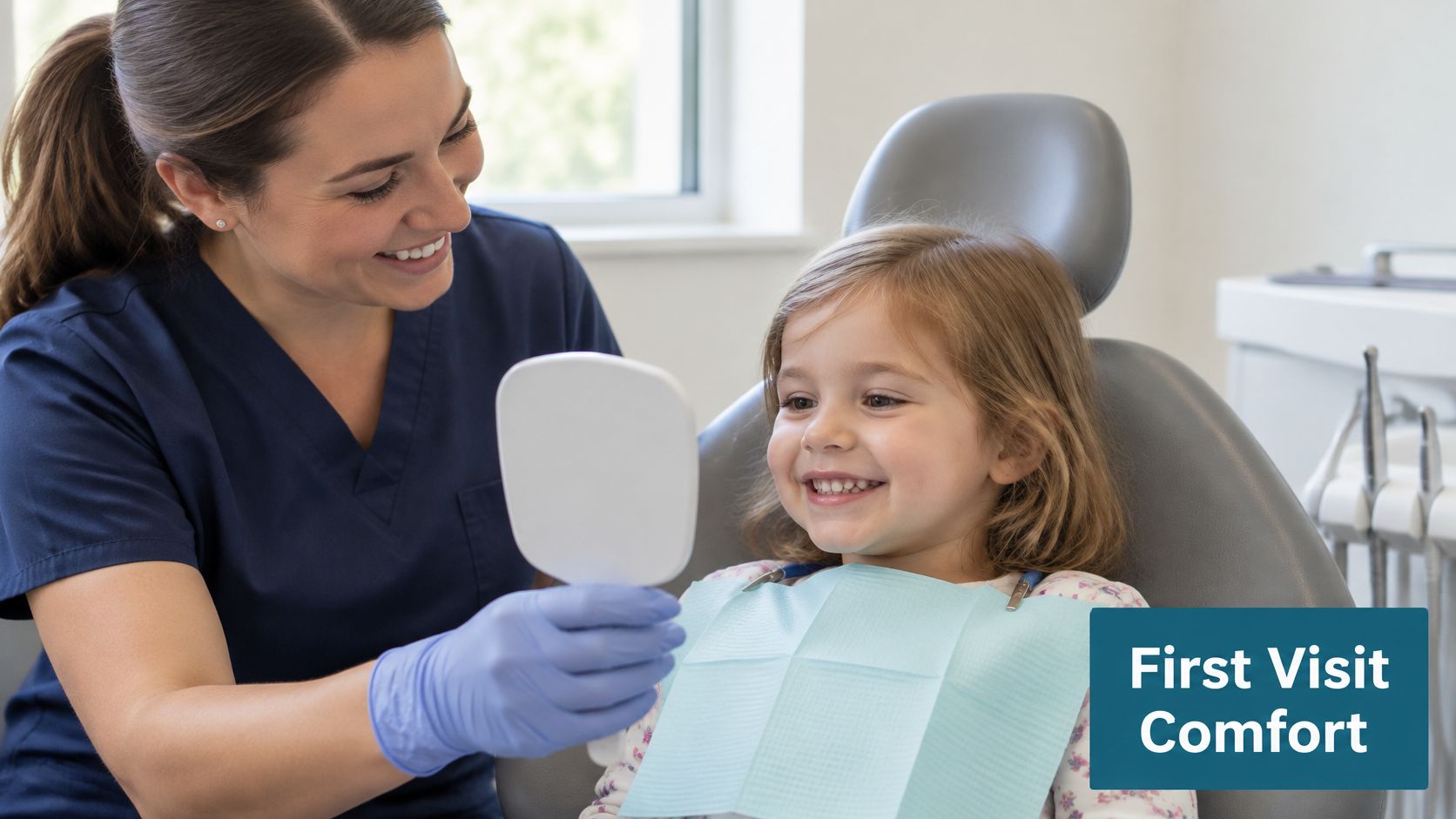
Picture a typical visit for a four-year-old. The hygienist first shows the mirror and the polishing cup, sometimes letting the child hold them, so nothing appears without warning. Teeth get counted out loud. Then comes gentle polishing with a kid-friendly flavored paste, flossing where teeth touch, and a quick look at how brushing is going at home. For young children, the whole visit often runs around 30 to 45 minutes, and parents usually stay close by.
Fluoride, Sealants, and Cavity Risk
Prevention does heavy lifting at this age. The CDC oral health facts and statistics identify optimally fluoridated water and dental sealants as proven interventions that reduce cavities, particularly among people at higher risk. A visit may include a fluoride varnish, painted on in seconds, and a check on whether sealants suit the back molars. Those molars typically come in around age 6 and again around age 12, and their deep grooves trap food easily.
The short video below shows how a calm, step-by-step introduction helps children settle into the chair.
Three habits help parents prepare a child well:
- Describe the visit positively: Avoid words like pain or hurt, and talk about counting and polishing teeth instead.
- Practice at home: Counting teeth or brushing together makes the chair feel familiar.
- Bring a comfort item: A favorite stuffed animal or blanket gives small hands something to hold.
Amanda Family Dental provides pediatric dentistry for families in Amanda and nearby communities, so children and parents can be seen in the same familiar office.
Managing Anxiety During Your Cleaning
The buzz of a scaler, the scrape along the gumline, the suction tube pulling at the corner of the mouth: for an anxious patient, the whole visit shrinks down to a handful of moments like these. That is useful news. A fear attached to specific steps can be planned around, step by step, the same way the cleaning itself runs in sequence.
Survey reporting covered by U.S. News on dental fear found that about 73% of adults experience some level of dental fear, including roughly 46% with moderate anxiety and 27% with severe fear, and many adults end up delaying care because of it. Anticipated pain and cost rank among the leading concerns.
A Choice-Based Plan That Helps
Each step below hands one piece of the visit back to the patient.
- Call before booking and say plainly that dental visits cause anxiety, so the team can allow extra time.
- Ask for an exam-only first visit if a full cleaning feels like too much, then schedule the cleaning once the office feels familiar.
- Agree on a stop signal, such as raising a hand, that pauses treatment at any time without explanation.
- Ask about numbing options, including whether a topical gel before scaling or a local anesthetic is appropriate.
- Manage sound and light with headphones, music, or sunglasses, since sensory triggers drive much of the stress.
- Ask the team to name each tool before it is used, so nothing arrives as a surprise.
The stop signal deserves a word of its own. Raising a hand gives the patient control of the clock, and patients who set one up often never use it, because knowing the pause exists lowers the tension on its own. This overview of dental anxiety management covers comfort approaches in more depth, and sleep dentistry is an option to raise with the team when the standard measures feel thin. Acting early matters: delayed care often starts only when pain appears, and by then treatment tends to be more complex than the cleaning that was postponed.
Cleaning Costs and Insurance Questions in Amanda, OH
The cost of a cleaning depends on what's included and what a plan covers, and asking early prevents surprises at checkout. A cleaning, an exam, and X-rays are separate line items, so a quoted price only makes sense once a patient knows which of them it covers. Background on typical coverage is covered in this explainer on whether dental insurance covers cleanings, and readers comparing standalone options can review personal dental coverage from Duncan & Associates to see how individual plans are structured.
Five questions at booking clear up most uncertainty:
- Is the exam and X-ray billed with the cleaning, or priced separately?
- How many cleanings does the plan cover each year, and at what interval?
- Does the remaining insurance maximum leave room for treatment if decay is found?
- Does the Power Plan Membership apply, and what does it include per visit?
- What payment options exist if treatment beyond the cleaning is needed?
Asking for a cost estimate before work begins helps families in Amanda, Lancaster, Circleville, and Carroll, Ohio compare options and time visits around a budget. Catching decay early also tends to mean a smaller, less costly treatment, which is one more reason the cleaning pays for itself.
Book Your Cleaning Close to Home in Amanda, OH
Requesting a cleaning and exam starts with a call to the office or an online booking request. That one step puts a date on the calendar and turns a good intention into a real appointment. Readers comparing how practices present booking and service information online can find a dental website specialist to see what clear, patient-friendly scheduling looks like.

A first visit follows a clear sequence: a full exam, digital X-rays when due, and a personalized treatment plan explained in plain language. Nothing moves ahead until the plan, the order of steps, and the cost are clear, which keeps every decision in the patient's hands. If care beyond prevention comes up later, whether fillings, crowns, dental implants, or whitening, the records and the relationship are already in place.
Families booking several people should ask about back-to-back appointments to save trips, and anyone calling with a sudden problem can ask about same-day care when available. The team welcomes patients from Amanda and nearby communities, and Dr. Alyssa Jenkins and the team welcome questions before the visit. For a patient who feels nervous, calling first is a reasonable starting point: it is a chance to describe the concern and hear what the appointment involves before committing to a chair.
The next step is simple. Schedule the next cleaning or ask the office what a first visit would look like. Amanda Family Dental is a locally owned practice serving Amanda and nearby communities, and one call or online request puts the appointment on the calendar. Visit Amanda Family Dental to request an appointment or ask a question before booking.