

A bite into something hard leaves a rough edge where a tooth used to feel smooth. There may be sensitivity, a noticeable gap, or the worry that another piece could break. For someone searching for a dentist near me in Amanda, OH, the immediate question is whether the tooth needs a small repair or something more protective.
A dental crown for chipped tooth treatment can restore substantial damage, but a crown isn't the right answer for every chip. Patients in Amanda, Lancaster, Circleville, and Carroll, Ohio, benefit from an evaluation that considers comfort, appearance, and how much healthy tooth can be preserved.
Table of Contents
- When a Chip Happens and What Comes Next
- What Counts as a Chipped Tooth
- Why a Dentist May Recommend a Crown
- Crown vs Bonding Veneer and Onlay
- The Crown Procedure Step by Step
- Crown Materials and How Long They Last
- Bite Forces Grinding and Repairability
- What to Expect at Amanda Family Dental
When a Chip Happens and What Comes Next
The first reaction to a chip is often to keep checking it with the tongue. A missing corner can feel much larger than it looks, and a rough edge can make an otherwise comfortable tooth seem alarming. Appearance alone, however, doesn't establish how far the tooth has fractured.
Gentle rinsing and saving any recovered fragment are sensible temporary measures while arranging dental advice. Avoiding chewing on the affected tooth can help limit further loading until it has been evaluated. These steps aren't a substitute for treatment, and a fragment shouldn't be glued back with household adhesive.
Deciding how promptly to call
Pain, bleeding, new sensitivity, or a large missing piece should be described when contacting the dental office. A patient seeking an emergency dentist should explain whether the injury followed an accident, whether the tooth feels loose, and whether biting causes discomfort. The office can use those details to help determine appointment urgency.
- Describe the change: Identify the affected tooth and whether the missing area is a corner, chewing point, or larger portion.
- Explain the symptoms: Mention persistent pain, sensitivity, bleeding, or difficulty bringing the teeth together.
- Ask about interim care: Request guidance appropriate to the injury rather than relying on a home repair.
The practice's guide to temporary care for a broken tooth provides additional context while an appointment is being arranged.
Practical rule: A temporary fix should protect the situation until an examination, not conceal a problem and postpone care.
For families traveling from Lancaster, Circleville, or Carroll, the useful next step is a conversation about the injury, not a commitment to a crown before the tooth has been examined.
What Counts as a Chipped Tooth
A chipped tooth has lost part of its natural structure. That description can cover very different problems, from a small surface nick to a fracture that leaves the tooth unable to support normal chewing. The amount visible in a mirror doesn't necessarily reveal the amount of damage underneath.
The outer layer is enamel, the hard surface of the tooth. Beneath it lies dentin, which supports that surface, while the pulp contains the tooth's nerves and blood supply. Treatment depends partly on which structures are involved and how much sound enamel and dentin remain.
Similar appearances, different treatment needs
An enamel-dominant nick on a front tooth may be suitable for a conservative repair. A broken cusp, the raised chewing point of a back tooth, raises a different question: whether the remaining walls can withstand the bite. A crack extending toward the pulp or below the gumline requires assessment beyond cosmetic appearance.
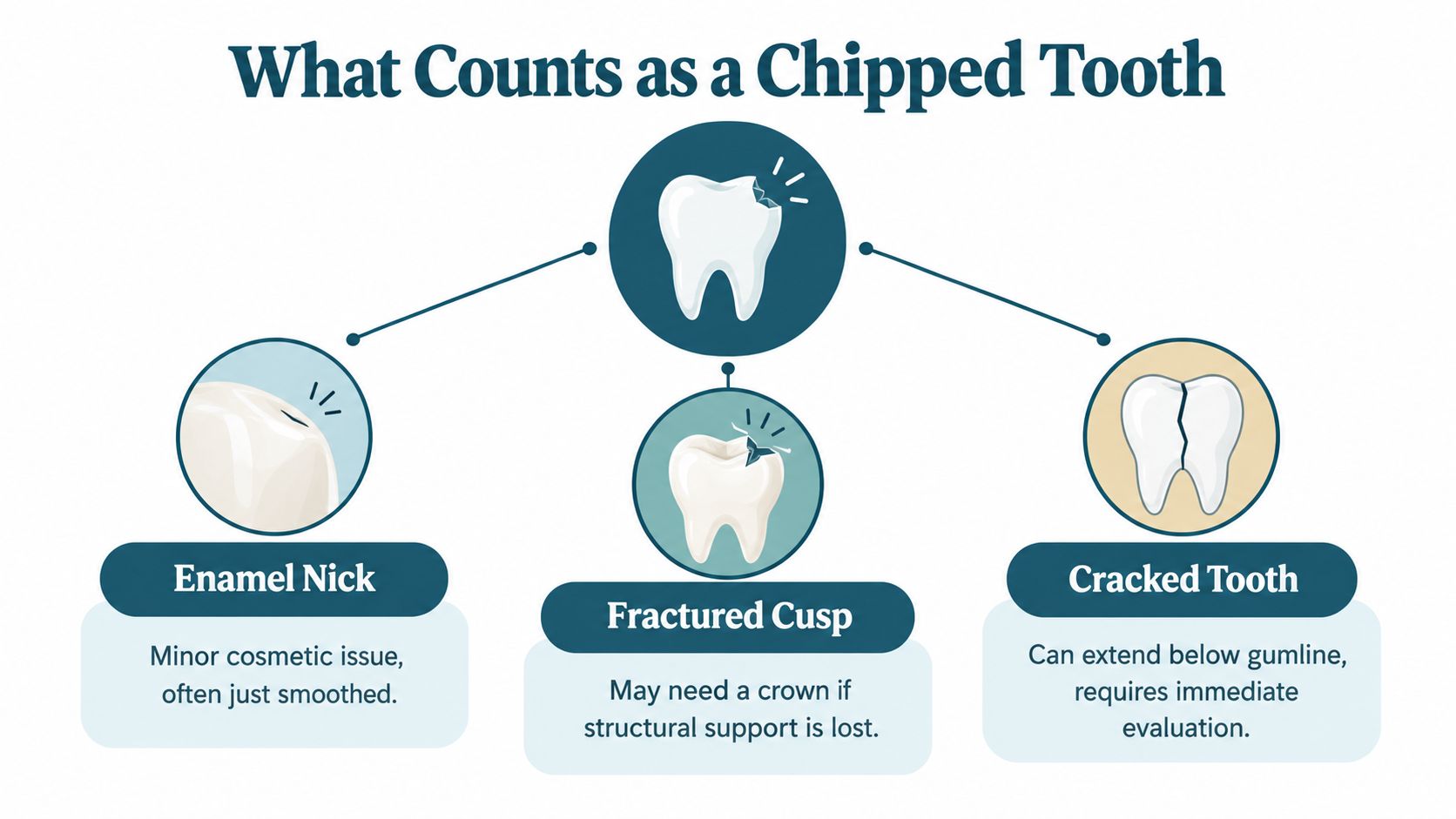
The NHS explanation of dental treatments identifies fillings as a treatment for less extensive damage and crowns as caps that completely cover damaged natural teeth. That distinction explains why similar-looking chips can receive different recommendations.
Details that help during an examination
Patients don't need to diagnose the injury before booking. They can describe whether cold drinks trigger sensitivity, whether chewing or releasing a bite hurts, and whether a line appears to continue toward the gum.
The dentist then evaluates the tooth rather than assuming the visible missing piece is the entire problem. Dental x-rays, an examination, and assessment of the pulp help establish whether the tooth is restorable and which treatment can address the damage.
Why a Dentist May Recommend a Crown
A crown recommendation should begin with a structural explanation. The central question isn't whether the tooth looks broken. It's whether the remaining tooth can reliably support a smaller restoration under everyday biting forces.
A full-coverage restoration becomes more defensible when the fracture involves multiple surfaces, undermines cusps, or removes substantial supporting structure. Previous root-canal treatment may also influence the recommendation, but it doesn't replace an assessment of what remains.
The healthy tooth beneath the crown
A crown needs a sound foundation. Dentists may discuss a ferrule, a band of healthy tooth structure above the planned crown margin that the restoration can brace.
Reviews associate approximately 1.5–2 mm of ferrule height with improved fracture resistance, while warning that removing additional healthy structure to create that band can weaken the tooth, as discussed in this review of the ferrule effect and tooth preservation. The practical issue is whether enough useful supporting tooth exists, not whether the dentist can force a particular preparation onto every fracture.
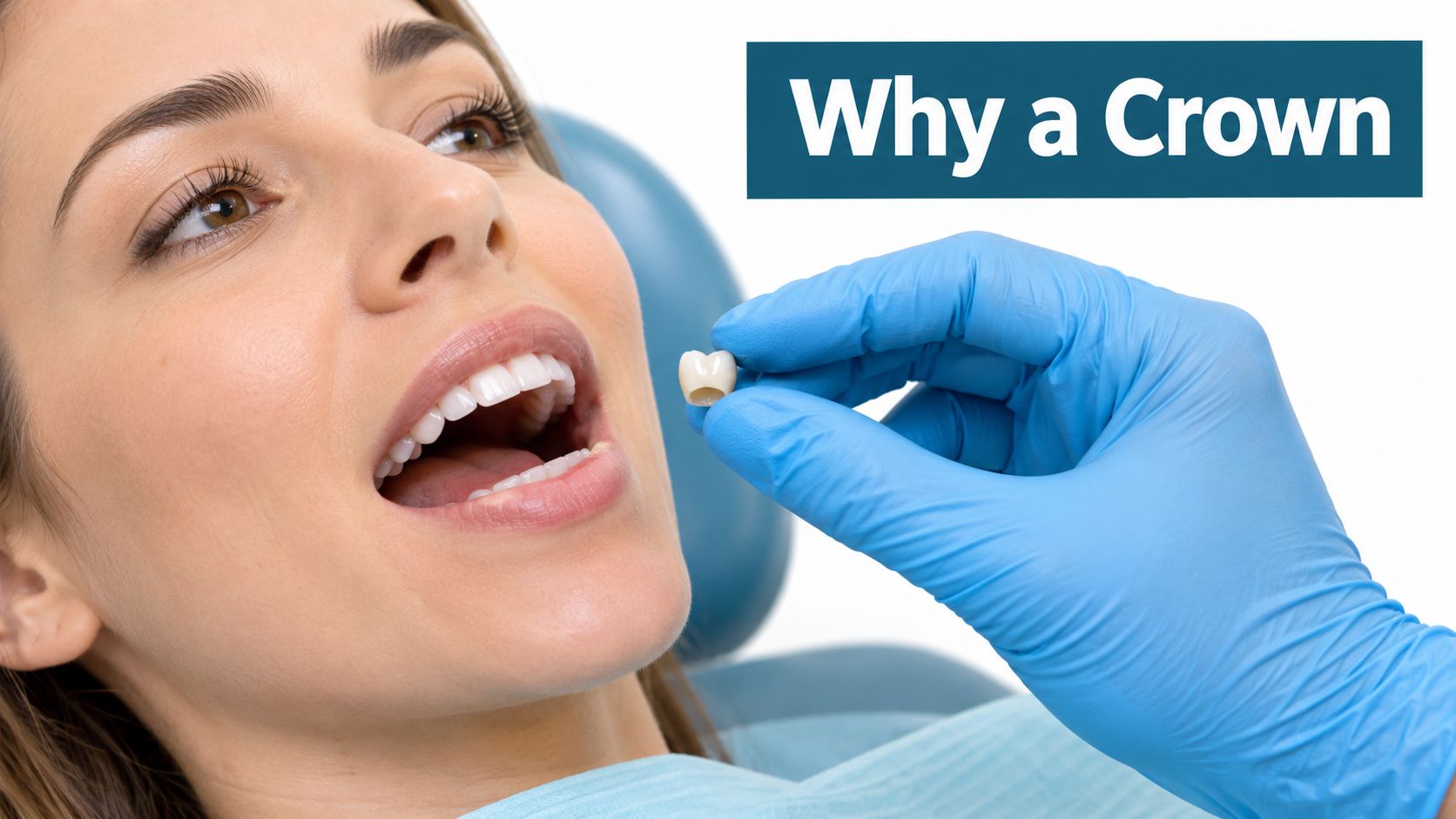
The image illustrates the restoration being considered, although suitability depends on the individual examination.
What durability evidence can establish
A systematic review of single crowns estimated five-year survival of 93.3% for all-ceramic crowns and 95.6% for metal-ceramic crowns, with comparable results between those broad categories for front teeth. These population estimates support crowns as durable restorations when appropriately selected, not as guaranteed outcomes for an individual tooth.
A crown should solve a structural problem that a smaller repair can't adequately address.
For a small chip, additional coverage may mean unnecessary tooth reduction. For a heavily damaged tooth, the same coverage may provide needed protection. A clear recommendation explains why that particular tooth belongs in one category rather than the other.
Crown vs Bonding Veneer and Onlay
The meaningful comparison isn't just which restoration looks nicest. It's how much tooth each option preserves, what damage it addresses, and what future treatment might involve. A patient choosing cosmetic dentistry should understand those differences before approving irreversible preparation.
Composite bonding repairs a localized defect rather than covering the entire tooth. A veneer principally addresses the visible front surface. An onlay provides partial coverage of a chewing surface, while a crown surrounds the prepared tooth.
Crown vs Bonding Veneer and Onlay for a Chipped Tooth
| Restoration | Tooth Reduction | Typical 5-Year Survival | Best For | Approximate Cost Band |
|---|---|---|---|---|
| Composite bonding | Can preserve substantially more tissue for a small chip | No comparable estimate established here | Small, enamel-dominant defects | Case-specific estimate needed |
| Veneer | Focused on the front surface; preparation varies | No comparable estimate established here | Front-tooth appearance with suitable supporting structure | Case-specific estimate needed |
| Onlay | Partial coverage; extent depends on damage | No comparable estimate established here | Localized chewing-surface damage when partial coverage is suitable | Case-specific estimate needed |
| Crown | Full-coverage preparation removes natural tooth structure | Depends on material, tooth condition, and clinical setting | Substantial structural loss requiring broader protection | Case-specific estimate needed |
A numerical price range would be misleading without a treatment estimate. The proposed restoration, any necessary supporting treatment, and payment arrangements should be explained before a patient decides.
Preservation deserves a place in the discussion
The overview of the dental bonding procedure helps patients understand the conservative repair option. Bonding deserves consideration before full coverage when the damage is limited.
Long-term crown outcomes also warrant realistic expectations: a review discussing crown longevity and clinical factors reports an England-and-Wales dataset in which 77% of crowns survived five years, 63% survived 10 years, and 53% survived 15 years. Those results describe a different clinical population from the earlier crown studies, so they shouldn't be treated as interchangeable predictions.
The practical starting point is small enamel chip, consider bonding; suitable front-tooth cosmetic concern, consider a veneer; localized back-tooth damage, evaluate partial coverage; extensive structural loss, consider a crown. For younger patients especially, preserving sound tooth matters because today's preparation shapes future restorative choices.
The Crown Procedure Step by Step
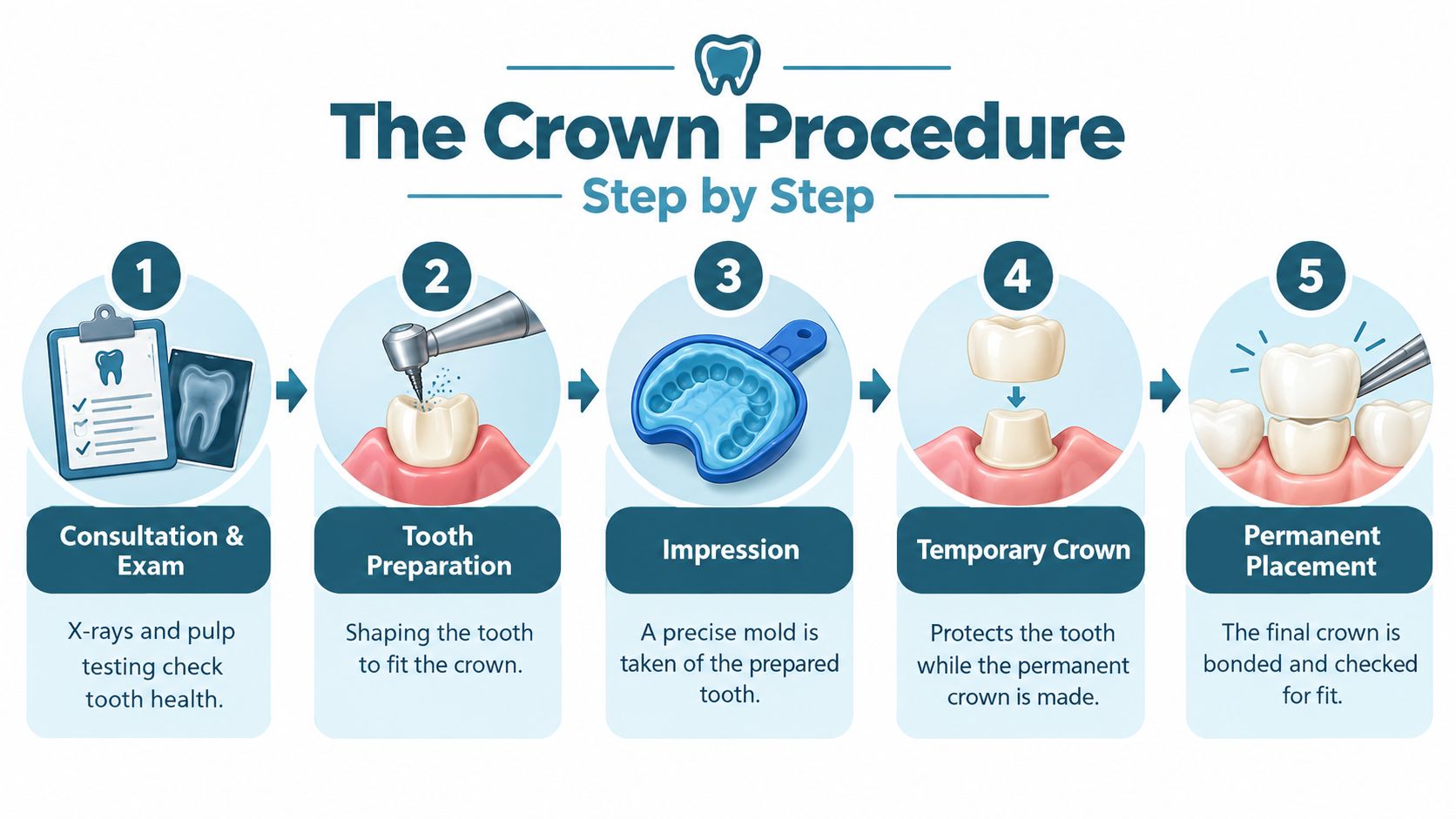
The crown process begins with diagnosis, not tooth shaping. At the consultation, the dentist examines the fracture, reviews symptoms, and determines whether pulp testing or other assessment is needed. A chipped tooth may require treatment of an underlying problem before the final restoration can proceed.
The process illustration provides a useful overview of the conventional appointment sequence.
Preparing a stable foundation
Once a crown is appropriate, the dentist shapes the remaining tooth to make space for the restoration. Thin or weakened areas may need a buildup using filling material. This is why a crown isn't slipped over an untouched chipped tooth.
A physical impression or digital scan records the prepared shape so the restoration can be made to fit. With a conventional laboratory-made crown, a temporary restoration covers the prepared tooth during fabrication.
Cleveland Clinic's description of dental crown treatment outlines preparation, impressions, temporary coverage, and final cementation, with laboratory fabrication commonly taking about two to three weeks, although it can take longer. The office should explain the actual schedule for the selected treatment rather than treating that interval as a promise.
Checking the permanent restoration
At placement, the dentist checks the crown's shape, color, and fit before securing it with dental cement. For a chipped tooth, the result needs to address both the missing structure and how the restored tooth meets its opposing tooth.
- During temporary coverage: Patients should follow the office's eating and cleaning guidance and report loosening or breakage.
- At the fitting appointment: Any contact that feels uneven should be mentioned before the visit ends.
- After placement: Persistent discomfort or a change in the bite warrants follow-up rather than silent accommodation.
The accompanying video provides another visual reference for discussing crown treatment.
Patients considering a same-day option should ask how that pathway differs from laboratory fabrication. Appointment speed doesn't remove the need for diagnosis, careful preparation, or a satisfactory final fit.
Crown Materials and How Long They Last
Material selection should reflect where the tooth sits, how heavily it is loaded, and how visible the restoration will be. A front tooth and a back tooth don't necessarily need the same balance of optical appearance and strength.
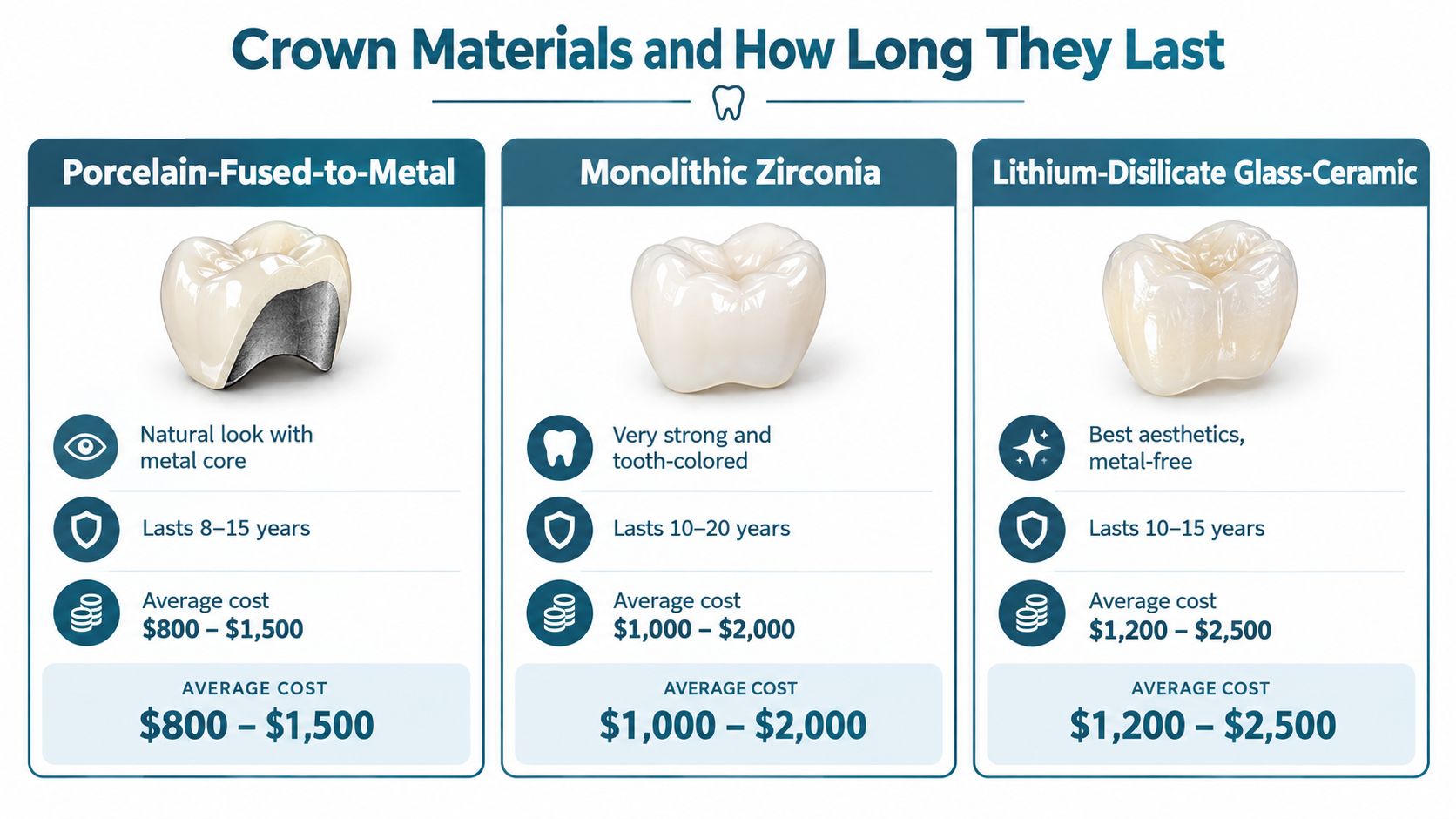
Porcelain-fused-to-metal, also called metal-ceramic, combines a metal foundation with ceramic coverage. Monolithic zirconia uses a solid ceramic design rather than an added veneer layer. Lithium-disilicate glass-ceramic is another option when the appearance and bonding requirements suit the tooth.
Reading survival figures carefully
A systematic review comparing single-crown materials reported estimated five-year survival of 98.5% for monolithic lithium disilicate, 97.3% for veneered densely sintered zirconia, 97.1% for metal-ceramic, and 96.8% for monolithic densely sintered zirconia. These estimates describe studied restorations, not a countdown to replacement.
A review of contemporary restorative materials explains that monolithic zirconia generally reduces veneer-chipping concerns associated with layered designs, while glass ceramics may offer better optical integration in visible teeth. Zirconia still requires appropriate bite adjustment and polishing.
The comparison graphic introduces the material categories; any lifespan or price ranges shown should be treated as illustrations, not individualized predictions or office quotations.
Matching material to the tooth
A heavily loaded back tooth may favor a stronger ceramic design. A visible front tooth with suitable remaining structure may benefit from a more translucent bonded restoration. Margin visibility, available space, and repair options belong in that conversation too.
Consultation question: What makes this material suitable for this tooth's position, remaining structure, and bite?
The practical decision isn't a contest between material names. Diagnosis, tooth preservation, fit, and the condition of the supporting tooth remain essential to a useful recommendation.
Bite Forces Grinding and Repairability
A restoration can look excellent while still being repeatedly overloaded. Two teeth with similar chips may have different prospects because their owners have different chewing contacts, clenching habits, or histories of grinding. The original cause of the fracture deserves attention alongside the missing piece.
Bruxism, or tooth grinding, and clenching are examples of parafunction, forces generated outside ordinary chewing. Hard-food habits and sports injuries also belong in the history. Replacing the damaged surface without considering those circumstances may leave an important part of the problem unresolved.
Repair isn't automatically a stopgap
A chipped crown doesn't always require complete replacement, but repair isn't automatically permanent either. The location of the defect, the restoration's condition, and the available repair material influence the decision.
A study of crown-margin repairs reported that 32.8% required additional intervention, with median survival of 5.1 years, and found that repair material significantly affected survival. Those findings concern crown-margin repairs specifically, not every type of ceramic chip.
The useful question is whether the problem involves a repairable local defect, a compromised crown, or repeated loading that also needs attention. The practice's information about teeth grinding solutions offers context for that discussion.
A decision checklist for the consultation
- Pulp status: Does the tooth need treatment beyond restoration of the broken surface?
- Crack direction: Is the fracture limited, or does it compromise deeper supporting structure?
- Remaining enamel: Is enough sound tissue available for the proposed repair?
- Opposing contact: Where does the other tooth press against the planned restoration?
- Grinding history: Are a night guard or bite adjustments warranted?
- Future repair: What would happen if the restoration chipped again?
A preventive plan should be specific to the patient's findings. A guard or adjustment shouldn't be presented as a universal requirement or a guarantee against future fracture.
What to Expect at Amanda Family Dental
Patients looking for a dentist in Amanda, OH, often want the same things as those searching for a dentist in Lancaster, OH, a dentist in Circleville, OH, or a dentist in Carroll, OH: a clear explanation, manageable next steps, and care close to home. A chipped-tooth consultation should address those priorities before treatment begins.
Dr. Alyssa Jenkins's team provides new patient exams, digital x-rays, and personalized treatment planning. The discussion should connect the examination findings to the recommendation and give the patient room to ask why a particular restoration is appropriate.
Comfort and practical arrangements
For anxious patients, the practice offers sleep dentistry and a comfort-focused approach. Suitability should be discussed during scheduling and treatment planning. Same-day care is available when scheduling allows, and patients can ask whether a same-day CEREC crown is appropriate for their situation.
Transparent pricing means discussing the proposed treatment and any supporting care before proceeding. Flexible payment plans and the Power Plan Membership provide additional topics for that conversation. Patients should request an explanation of membership terms and how payment arrangements apply to the recommended treatment.
- Bring the history: Describe when the chip happened, current symptoms, and previous treatment on the tooth.
- Discuss priorities: Explain concerns about discomfort, appearance, appointment timing, or cost.
- Request alternatives: Ask which options preserve the most healthy tooth and why an alternative might not fit.
Care beyond the immediate chip
Preventive cleaning and exams, restorative dentistry, and emergency dental services support continued care after the immediate problem is addressed. Cosmetic services include veneers, teeth whitening, and Invisalign, while dental implants provide a tooth-replacement option when appropriate.
A search for a cosmetic dentist near me may begin with appearance, but deeper damage needs diagnosis first. Likewise, tooth extraction and dental implants near me aren't the starting assumptions for a chipped tooth. They become relevant only if the examination establishes that preserving the natural tooth isn't a suitable option.
Amanda Family Dental offers chipped-tooth evaluations, conservative repairs, and custom crowns when full coverage is clinically appropriate. Patients in Amanda, Lancaster, Circleville, and Carroll can visit Amanda Family Dental to contact the office, request a consultation, or schedule an appointment to discuss the right repair for their tooth.