

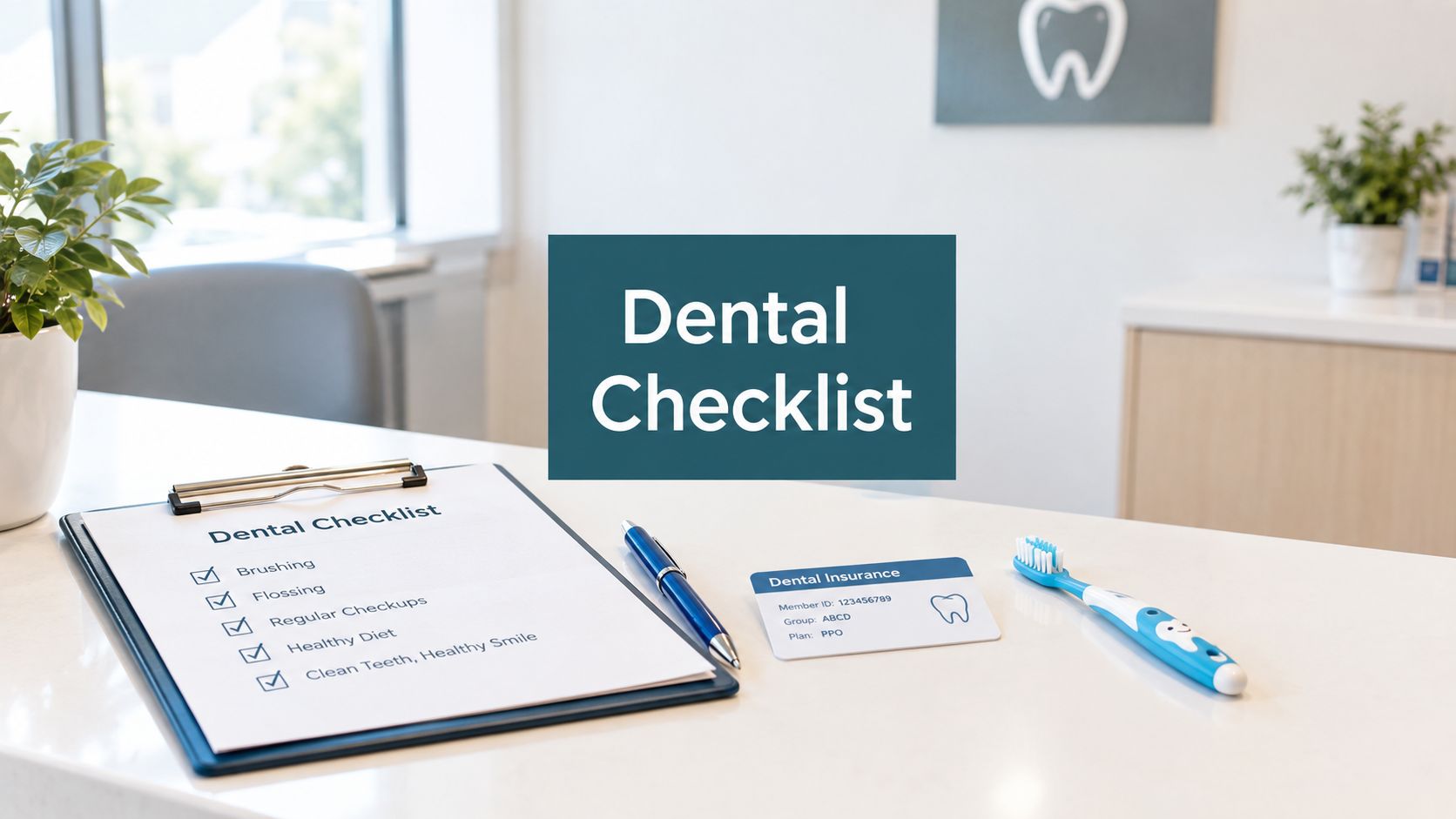
Identification, insurance and payment information, medical and dental records, a medication and allergy list, written concerns, and any comfort or accessibility details should come to every first dental appointment. For a child's first visit, the appointment should be scheduled by age 1 or within 6 months of the first tooth erupting.
A new patient may arrive with tooth pain, questions about insurance, concerns about a missing tooth, or anxiety about sitting in the dental chair. It's normal to wonder what belongs in the appointment folder and what can stay at home. A little preparation helps the team complete a new patient exam, review dental X-rays, discuss preventive care, and explain possible next steps without unnecessary delays.
Amanda Family Dental welcomes patients from Amanda, Lancaster, Circleville, and Carroll, Ohio, with care that can address routine cleanings and exams, restorative dentistry, cosmetic concerns, dental implants, tooth extraction, and emergency dental services. The seven-part guide below helps families arrive ready for a comfortable, informed conversation. Patients who already know what to pack for Pilates can use the same basic idea here, prepare the essentials before leaving home.
Table of Contents
- 1. Insurance Information and ID Cards
- 2. Medical History Forms and Medication List
- 3. List of Current Symptoms, Concerns, and Treatment Goals
- 4. Previous Dental Records and X-rays
- 5. Payment Method and Verification of Coverage Benefits
- 6. Comfortable Clothing and Arrival Time Planning
- 7. Emergency Contact Information and Accessibility Needs
- First Dental Appointment: 7-Item Comparison
- Bring Your Questions and Take the Next Step
1. Insurance Information and ID Cards
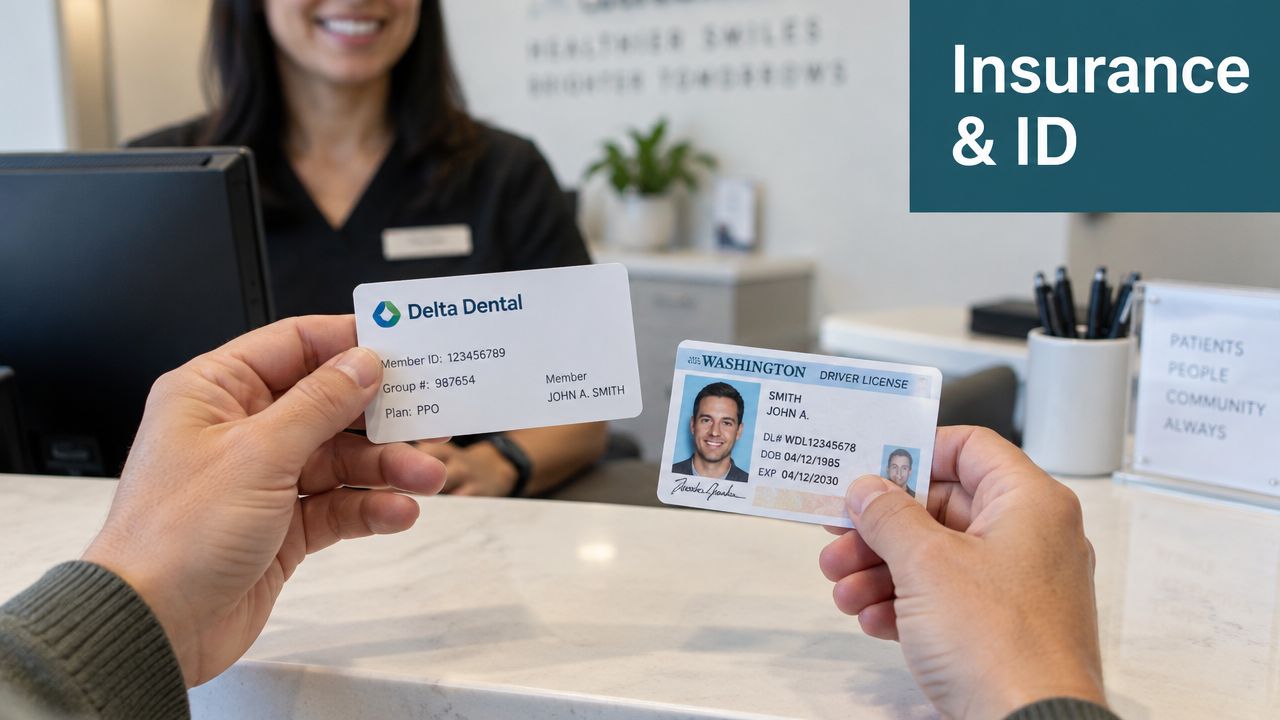
A current dental insurance card and government-issued photo ID should be at the top of the first-visit folder. The insurance details help Amanda Family Dental verify coverage and explain the expected billing process. The photo ID confirms the patient's identity and supports accurate, secure record creation.
Patients should also bring health insurance information when it may relate to medical coordination, along with any referral paperwork or authorization documents already provided. A new patient exam often begins with administrative details, so having the cards ready can keep check-in focused and efficient.
Make the information easy to use
A quick preparation routine can prevent a last-minute search through a wallet or kitchen drawer:
- Check the cards: Confirm that the insurance card is current and that the name matches the patient's registration information.
- Save copies: Keep copies of the front and back of the insurance card and photo ID in a secure personal file.
- Confirm participation: Call Amanda Family Dental a few days before the appointment to ask whether the office accepts the current plan.
- Report changes: Tell the office if coverage, employment, address, or family status has changed since the last visit.
- Ask about alternatives: Patients without insurance can ask about the Power Plan Membership and flexible payment options when scheduling.
Insurance verification can clarify whether a cleaning, exam, dental X-rays, or another service may be covered, but benefits can vary by plan. Cosmetic dentistry, including certain appearance-focused services, may have different coverage rules. A patient who's considering veneers, whitening, Invisalign, dental implants, or restorative treatment should ask the office what information is needed before treatment planning begins.
Practical rule: Keep the insurance card in the appointment folder or phone wallet, not in a drawer where it may be forgotten.
2. Medical History Forms and Medication List
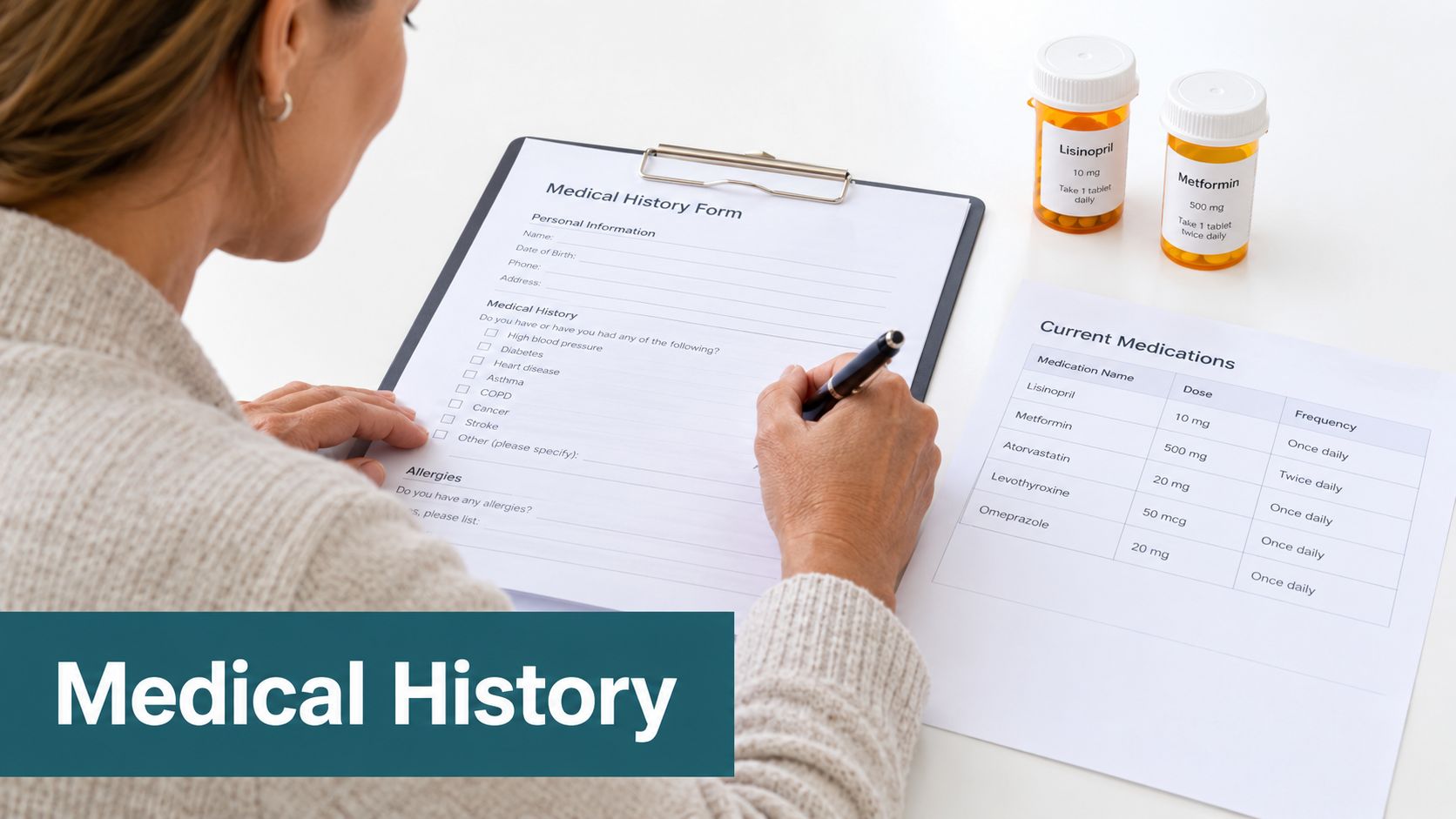
A medication list is more than front-desk paperwork. It gives the dental team information needed to plan examination, anesthesia, prevention, and treatment safely. Write down prescription medicines, over-the-counter products, vitamins, and herbal or dietary supplements, including each item's dosage, frequency, and reason for use when available. These are common requests on new-patient forms, including the dental intake medication requirements.
Allergies and past reactions need the same care. Record responses to medicines, dental anesthetics, latex, or dental materials. Note whether a physician has ever recommended antibiotics before dental treatment. A new-patient allergy and pre-medication form shows the kind of information offices may ask patients to provide.
Use exact details where possible. “Blood pressure medicine” gives limited guidance, while the medication's name, strength, and schedule create a clearer clinical picture. Online forms do not replace a current list, since prescriptions and supplements may change between submission and the appointment.
Amanda Family Dental's overview of what a dental exam includes helps explain how medical history connects with the visit. The first appointment may include a medical and dental history review, an oral examination, and an age-appropriate brushing demonstration. Depending on the findings, the team may also provide prophylaxis or fluoride varnish.
A short paper backup can prevent avoidable gaps:
- List every product: Include prescriptions, nonprescription medicines, vitamins, and supplements.
- Describe each reaction: Write what caused the allergy or adverse response and what happened.
- Mention anxiety early: Fear, panic, claustrophobia, or difficult past visits can shape comfort planning.
- Record relevant conditions: Include conditions that may affect positioning, bleeding, healing, anesthesia, or stress levels.
Dental anxiety is a health detail, not an embarrassment. Amanda Family Dental offers sleep dentistry options and can discuss comfort planning before treatment, supporting patients from Amanda, Lancaster, Circleville, and Carroll as they prepare for care.
For a child, a parent or guardian should bring medical details, current medicines, allergy information, and notes about feeding, pacifier use, thumb-sucking, or past mouth injuries. Pediatric guidance indicates that a first visit may include a medical and dental history review, an oral examination, and brushing instruction, so accurate information helps shape preventive advice. Stanford Children's Health explains the first dental visit.
3. List of Current Symptoms, Concerns, and Treatment Goals
A symptom note can make a first visit more useful. Before leaving home, write down what feels wrong, what you want to improve, and any questions you may forget in the dental chair. “Sharp pain on the left when chewing cold foods” gives the dentist clearer direction than “my tooth feels strange.”
Start with the timeline. For each concern, note when it began, whether it is changing, and what triggers or eases it. Swelling, sensitivity, bleeding, a loose tooth, a broken filling, jaw discomfort, or difficulty chewing can affect which problem receives attention first. Report severe or sudden symptoms while scheduling, since they may call for an urgent assessment from an emergency dentist.
A useful way to organise the note is by what the problem affects:
- Symptoms: Pain, swelling, sensitivity, bleeding, bad taste, or difficulty opening the mouth.
- Function: Trouble chewing, speaking, sleeping, or keeping a denture in place.
- Appearance: Goals involving veneers, professional teeth whitening, Invisalign, or other cosmetic dentistry.
- Treatment history: Dental work that feels uncomfortable, looks unsatisfactory, or needs review.
- Comfort needs: Fear of needles, distress from earlier visits, or a request for explanations before each step.
Amanda Family Dental offers restorative and cosmetic options that may include veneers, whitening, Botox, and Juvéderm. Bring these up as goals rather than expected solutions. After examining the teeth and gums and reviewing relevant dental X-rays, the dentist can explain which choices suit your oral health, history, and priorities. This helps patients from Amanda, Lancaster, Circleville, and Carroll make decisions based on their needs.
If several concerns compete for attention, mark your top three concerns. You might ask whether tooth pain needs immediate treatment, whether an extraction could be avoided, whether a dental implant may suit a missing tooth, or whether cosmetic work can be planned with restorative care.
Write anxiety plainly, too. A note such as “please explain each step and allow breaks” gives the team a clear comfort plan. It turns a private worry into practical information the dental team can use.
4. Previous Dental Records and X-rays
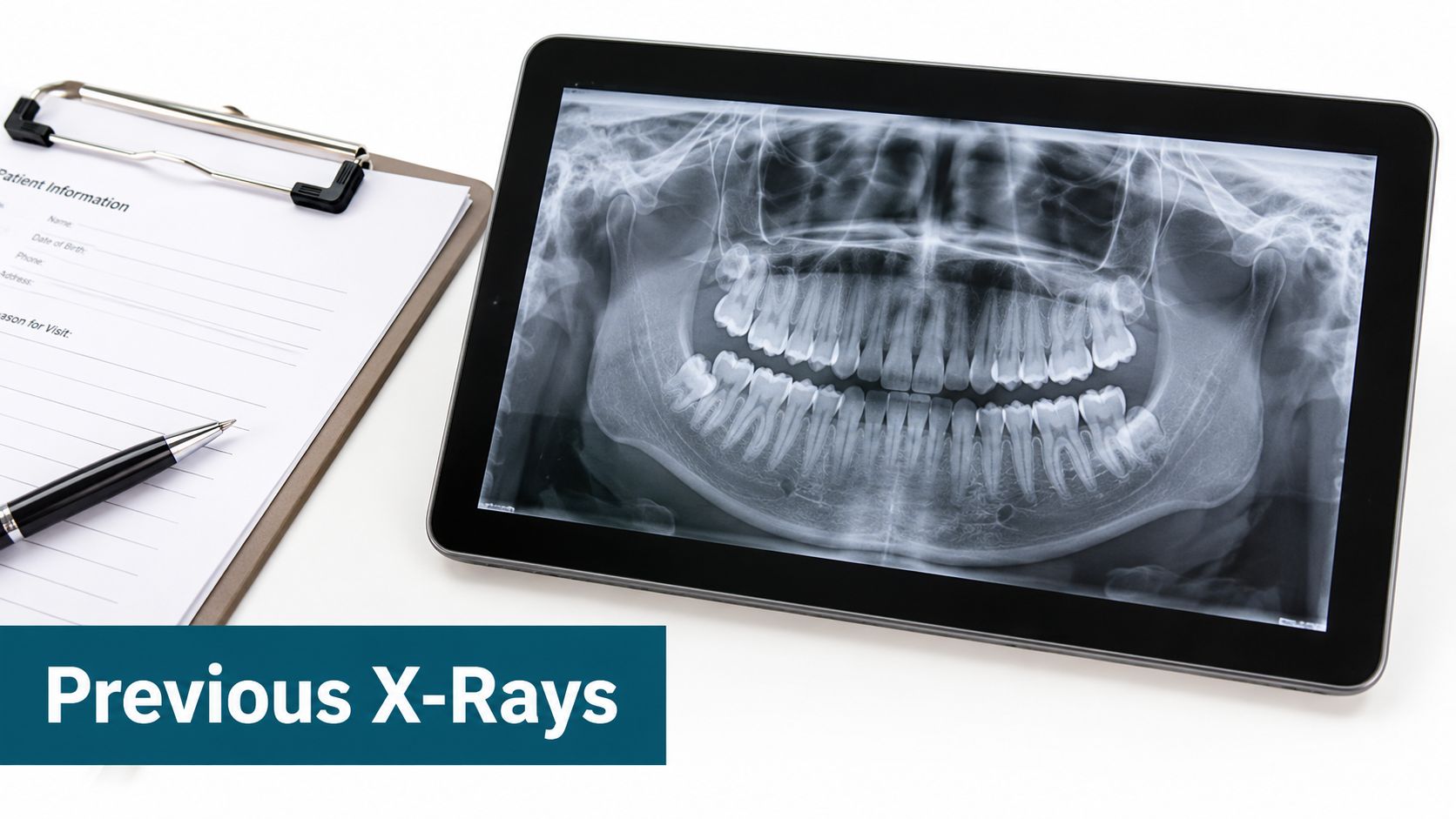
Previous records provide a clinical starting point. They can show earlier fillings, crowns, root canals, extractions, periodontal concerns, orthodontic treatment, and changes that may not be obvious from memory. Recent X-rays can also help the team decide whether new images are needed.
Patients transferring care should request records from every dental office involved in recent treatment. Ask for X-rays, clinical notes, treatment summaries, and relevant procedure information. A patient who has moved from another community may find the previous office name on insurance paperwork, receipts, email confirmations, or an old treatment plan.
Request transfers before the appointment
Dental records are typically released or transferred within one to two weeks after a request, according to a dental recordkeeping benchmark. Patients who want the first appointment to proceed with the fullest possible history should request the documents well before the scheduled date rather than expecting same-day delivery.
Records may be sent electronically or by mail, and the previous office may explain whether a fee applies. If the transfer is delayed, the patient should still attend the appointment and bring whatever documentation is available. A treatment estimate, medication-related dental note, or printed X-ray report can offer useful context.
Amanda Family Dental uses digital imaging, and the advantages of digital dental X-rays include easier review and integration into the patient record. Prior images won't always replace current imaging, especially if the dentist needs a different view or the existing images are outdated, but they can help establish a baseline.
A patient moving from Lancaster, Circleville, or Carroll to Amanda may have records spread across more than one office. Gathering them early can make discussions about crowns, root canals, tooth extraction, dentures, or dental implants more informed.
A paper checklist can help track each request. A family preparing a child's first visit may also find it useful to keep dental documents with other child-care records, alongside practical items such as Jack N Jill toddler toothpaste.
The following video can help patients understand why earlier records and imaging may matter during a new-patient discussion.
5. Payment Method and Verification of Coverage Benefits
Keep a payment method with your first-visit documents, even if you have active dental insurance. A credit card, debit card, or check may cover a copay, deductible, or self-pay balance identified at check-in. Bringing payment information helps the visit proceed smoothly and gives you a way to address charges that insurance does not cover.
Before the appointment, call Amanda Family Dental to clarify the financial details. Ask whether the office has verified your benefits, whether you still have a deductible, whether a pre-authorization may be needed, and whether payment arrangements are available for planned treatment.
Insurance works like a set of guidelines, not a treatment decision. Your dentist recommends care based on your oral health, while the plan determines how covered services are handled. Preventive, restorative, and cosmetic services may follow different rules. If you are considering whitening, veneers, Invisalign, crowns, root canals, or dental implants, ask whether the office can provide an estimate or whether approval is required.
Amanda Family Dental's information for patients seeking a dentist near me with UnitedHealthcare coverage offers a starting point for coverage questions. Confirm the details with both the office and your insurer, since benefits depend on your individual policy.
For a larger treatment plan, request a written estimate before scheduling care. Check these points:
- Treatment order: Which concern needs prompt attention, and which care can wait?
- Expected payment: What are the estimated copay, deductible, patient portion, and payment date?
- Approval requirements: Do crowns, implants, root canals, or other services require pre-authorization?
- Payment choices: Are flexible payment plans available? Ask about the Power Plan Membership if insurance is limited or unavailable.
- Helpful records: Bring a recent explanation of benefits if you have one.
Clear cost discussions support informed decisions. They help you compare care based on health, function, appearance, timing, and affordability while preparing for treatment at Amanda Family Dental, serving patients in Amanda, Lancaster, Circleville, and Carroll.
6. Comfortable Clothing and Arrival Time Planning
A first dental visit feels easier when your clothing and schedule leave room for adjustment. Choose clothes that remain comfortable while sitting back for an examination or dental X-rays. A sweater or light jacket can help if you get cold in clinical settings. Skip strong fragrances because dental care takes place at close range, and scents may bother patients or staff.
Plan to arrive 10 to 15 minutes early for paperwork and check-in, following guidance from St. Jude's dental health resource. Those extra minutes act like a buffer between travel and treatment. They give you time to settle, mention anxiety, or ask the team to explain what will happen before the examination begins.
Your route matters too. Patients coming from Amanda may know the area, while those traveling from Lancaster, Circleville, or Carroll may want to check directions, parking, and possible delays before leaving. Reaching the office without a last-minute rush can make the opening conversation more comfortable.
Use this simple plan:
- Dress for the chair: Avoid restrictive waistbands or clothing that feels tight when reclined.
- Bring a layer: Pack a sweater or jacket if temperature changes bother you.
- Check the route: Review parking and allow extra travel time for delays.
- Protect the appointment's pace: Keep a demanding commitment off your schedule immediately afterward. A first visit may include an exam, X-rays, and treatment discussion.
- Share concerns early: Tell the team if you feel nervous or need a short orientation.
You do not need to hide dental anxiety. Amanda Family Dental can discuss comfort options, including sleep dentistry for appropriate patients, when you raise concerns during scheduling.
7. Emergency Contact Information and Accessibility Needs
Before the appointment, give Amanda Family Dental a current emergency contact and a clear description of any accessibility needs. This information helps the team reach the right person and prepare the visit around the patient's safety, communication, and comfort. A simple checklist approach, similar to these school emergency contact tips, can help families verify names, phone numbers, and consent details before the visit.
The emergency contact should understand why the office might call and know about relevant medical information the patient has chosen to share. Keep the contact's name, relationship, phone number, and any needed consent paperwork with the other appointment documents. Update these details when circumstances change.
Accessibility planning works best during scheduling. A wheelchair user may need confirmation about parking, entrances, and room access. A patient with neck or back pain, limited mobility, sensory sensitivities, claustrophobia, a service animal, or communication needs may need adjustments to the chair, room, imaging process, or appointment timing.
Share practical preferences in advance:
- Mobility: Describe transfer limits, wheelchair requirements, or positioning restrictions.
- Sensory comfort: Mention concerns about lighting, sound, touch, or strong sensations.
- Communication: Request an interpreter or explain language preferences.
- Breaks: Ask for pauses during a longer examination or discussion.
- Imaging: Explain claustrophobia or difficulty holding a position for X-rays.
- Service animals: Tell the office ahead of time so the team can prepare.
- Anxiety: Ask about comfort measures, adjusted procedures, or sedation dentistry when appropriate.
Specific details are more useful than a general warning. For example, “my neck hurts after reclining past this position” gives the team a workable guide for adjusting the chair and treatment approach before discomfort interrupts the examination.
For a child, a parent or guardian should bring custody orders, guardianship documents, or other consent paperwork that could affect treatment authorization. The office may also request a birth certificate, comfort item, or relevant health details. Organized preparation leaves more time for prevention, reassurance, and trust, whether the family comes from Amanda, Lancaster, Circleville, or Carroll.
First Dental Appointment: 7-Item Comparison
| Item | Implementation complexity | Resource requirements | Expected outcomes | Ideal use cases | Key advantages |
|---|---|---|---|---|---|
| Insurance Information and ID Cards | Low, bring cards and photo ID; simple verification | Dental insurance card(s), photo ID, insurer contact info | Verified coverage, faster check-in, accurate cost estimates | New insured patients; those needing pre-authorizations | Reduces billing delays; enables upfront pricing; speeds check-in |
| Medical History Forms and Medication List | Moderate, detailed, accurate completion needed | Completed history form, current medication list, allergy info | Safer treatment selection, reduced complication risk, tailored care | Patients on medications, with chronic conditions, or anesthesia needs | Identifies drug interactions/contraindications; informs anesthetic choices |
| List of Current Symptoms, Concerns, and Treatment Goals | Low–Moderate, prepare a concise written list | Written symptom descriptions, cosmetic/functional goals, timelines | Prioritized treatment plan and focused consultation | Patients with pain, cosmetic requests, or multiple concerns | Clarifies priorities; saves appointment time; guides planning |
| Previous Dental Records and X-rays | Moderate, request transfers in advance; possible format conversion | Prior X-rays, treatment summaries, clinical notes | Continuity of care, avoids duplicate imaging, better diagnosis | Transfer patients, implant or cosmetic planning, complex restorations | Reduces radiation and redundant procedures; provides baseline data |
| Payment Method and Verification of Coverage Benefits | Low, bring payment and verify benefits ahead of visit | Credit/debit card or check, EOBs, pre-authorization docs | Transparent out-of-pocket costs, smoother billing, immediate copays | Patients unsure of coverage or facing major procedures | Prevents financial surprises; enables payment plans or memberships |
| Comfortable Clothing and Arrival Time Planning | Low, plan attire and arrival timing | Loose comfortable clothing, layers, allow extra travel/parking time | Reduced anxiety, smoother paperwork completion, physical comfort | First-time visitors, anxious patients, lengthy appointments | Improves patient comfort; supports timely check-in and calm visits |
| Emergency Contact Information and Accessibility Needs | Low–Moderate, provide details and notify office ahead | Emergency contact name/phone, accessibility notes, interpreter needs | Prepared accommodations, safety measures, and reliable communication | Patients with mobility, sensory, communication, or medical limitations | Ensures inclusive care; enables safety and tailored accommodations |
Bring Your Questions and Take the Next Step
The best first appointment folder contains more than cards and forms. It also contains questions about dental X-rays, examination findings, treatment choices, expected timing, comfort options, and costs. Patients don't need to understand every dental term before arriving. The dental team can explain what the exam shows and outline reasonable next steps in plain language.
For adults, the seven essentials are straightforward: identification and insurance information, a payment method, medical history, a complete medication and allergy list, previous records and X-rays, written symptoms and goals, and any emergency or accessibility details. These items help the practice verify the patient's information, understand health risks, establish a clinical baseline, and create a treatment plan that reflects the patient's needs.
Parents should add a child's medical and dental forms, medication and allergy details, relevant custody or consent documents, and a familiar comfort item. For a child's first dental appointment, authoritative guidance recommends scheduling by age 1 or within 6 months of the first tooth erupting. Parents can also ask about brushing, fluoride, feeding habits, pacifiers, thumb-sucking, mouth injuries, and what preventive care may be appropriate.
Patients with dental anxiety should mention it before the appointment, not apologize for it afterward. A trusted companion or note-taker may provide extra support, and a written request for pauses, explanations, or a gradual approach gives the team clear direction. Delta Dental's 2026 white paper reports that 54% of U.S. adults, about 139 million people, experience some degree of dental anxiety, with anxiety peaking in the minutes before treatment begins, making comfort planning a practical part of preparation. Read the Delta Dental 2026 dental anxiety white paper.
Amanda Family Dental serves patients seeking preventive cleanings and exams, pediatric dentistry, restorative treatment, cosmetic dentistry, dental implants, tooth extraction, and urgent evaluation for dental concerns. Patients in Amanda, Lancaster, Circleville, and Carroll can bring the checklist, ask direct questions, and request a personalized plan that supports oral health, comfort, function, and confidence.
Amanda Family Dental offers new patient exams, digital X-rays, preventive and restorative care, cosmetic dentistry, dental implants, and comfort-focused options for families in Amanda, Lancaster, Circleville, and Carroll. Patients can visit Amanda Family Dental to schedule an appointment, request a consultation, or contact the office about preparing for a first visit.