


Most families can get started within days with payment plans for dental care, from same-day in-house arrangements to interest-free third-party financing for larger treatment. The bigger issue isn't whether care is possible, it's which plan keeps treatment manageable without turning a short-term problem into a long-term bill.
For a patient in Amanda, Lancaster, Circleville, or Carroll who's been putting off a crown, extraction, implant consult, or emergency visit, the numbers matter because dental care is financed very differently from most other healthcare. More than 50 years of U.S. dental spending has been paid mostly out of pocket or through private coverage, and that's exactly why payment options have become such an important part of modern dentistry, especially for families trying to protect both their teeth and their budget National Academies report.
Table of Contents
- Why Dental Payment Plans Matter for Local Families
- Understanding Dental Payment Plan Options
- Comparing In-House Plans, Third-Party Financing, and Membership Programs
- How to Choose the Right Dental Payment Plan
- Real-World Cost Examples for Common Dental Treatments
- Amanda Family Dental's Approach to Affordable Care
- Frequently Asked Questions About Dental Payment Plans
- Taking the Next Step Toward Affordable Dental Care
Why Dental Payment Plans Matter for Local Families
A broken tooth does not usually arrive with a budget alert. A parent in Amanda may notice a child avoiding cold drinks, a worker in Lancaster may start chewing on one side, or someone in Circleville may put off an implant consult because the estimate feels too large to handle at once. That delay is common, and it is often driven by uncertainty as much as by the bill itself.
The financial pressure is real. The National Academies reported that for more than 50 years, over 90% of all dental expenditures in the United States were financed by out-of-pocket payments and private coverage, and that in 2009 public subsidies or direct payments for dental services totaled only $7.4 billion, or less than 1% of national dental spending National Academies report. That same report found that in 2007 the average annual dental expense for people who had any dental spending was $643, while uninsured people paid 74.7% of their annual dental expenses out of pocket, compared with 44.3% for privately insured people and 28.5% for publicly insured people.
The bigger issue is which plan keeps treatment manageable without turning a short-term problem into a long-term bill.
Why predictability matters
When care is spread over time, families can plan around it instead of deferring it. That is the main value of installment-style payment plans, membership plans, and financing options. They turn a stressful lump sum into something easier to fit into normal household cash flow.
Practical rule: if the cost makes a family delay treatment, the better plan is usually the one that gets the work done safely and predictably, not the one with the lowest-looking monthly number.
The comparison is total cost, not just the payment amount on paper. A plan with a lower monthly payment can still cost more if it adds interest, fees, or a longer repayment period. A plan with a slightly higher monthly payment may save money if it avoids financing charges or reduces the risk of postponing care until the problem becomes harder to treat.
A useful local comparison is simple. Preventive visits, cleaning and exams, and dental x-rays are much easier to keep on schedule when a practice offers flexible payment paths, while larger restorative cases like crowns, root canals, dentures, and dental implants often need a plan that fits the timeline of care. For readers comparing affordability options, Amanda Family Dental's affordable family dental care overview provides a helpful starting point for thinking through those choices in a local setting. The same question applies when families look at Intelligent Contacts payment plans, because the monthly payment only matters if the full arrangement still fits the household budget and the treatment stays on track.
Understanding Dental Payment Plan Options
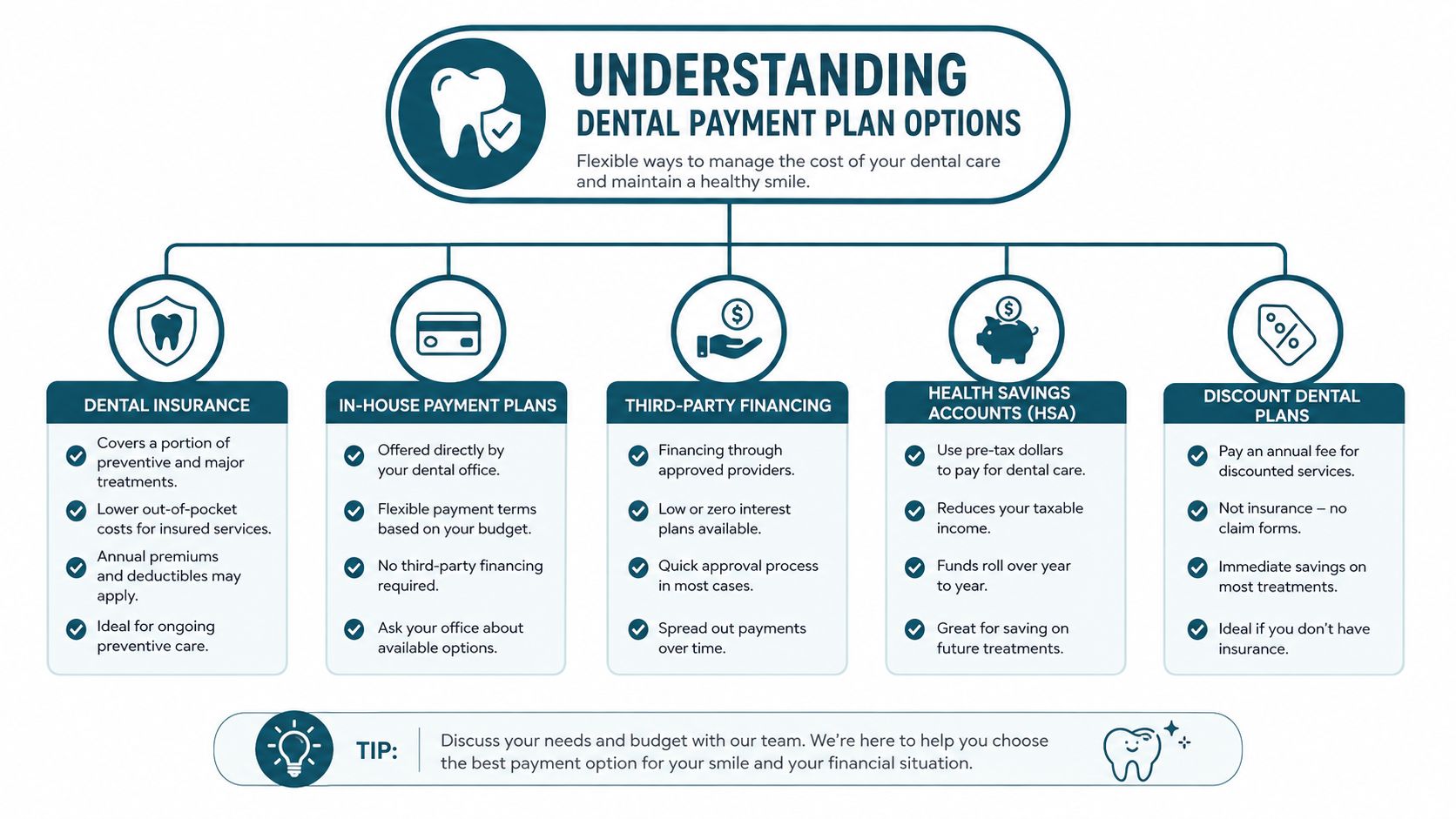
A dental bill can be handled in a few different ways, and the details matter once repayment starts. Some patients pay the practice over time, some use a lender that pays the office first, some join a membership-style savings program, and some rely on traditional insurance if they already have it.
The main types in plain language
An in-house credit plan stays on the practice's books. The patient makes payments directly to the dental office, which gives the practice more control and can make approval simpler in some cases. A third-party financing plan works through a separate lender, the lender pays the practice first, then collects monthly payments from the patient later ADA financing guide.
A membership or savings plan is different again. It is not insurance, and it usually means paying a membership fee to receive reduced rates on dental work, without deductibles, waiting periods, or annual caps Discover dental finance options. Traditional dental insurance still matters for many families, but it often has annual limits, which means patients may still owe out of pocket after the plan maximum is reached.
A simple way to picture the difference
In-house financing means paying the dental office in installments. Third-party financing uses a separate lender that settles the practice's bill first, then bills the patient later. That difference matters because the lender model can offer longer repayment periods, but it can also come with fees or interest terms that need a careful read.
For readers who want another practical breakdown of how offices frame these choices, Intelligent Contacts payment plans offers a useful perspective on billing and patient communication workflows. For procedures that require a more structured payment discussion, Amanda Family Dental's financing information shows what a practice-based approach can look like.
Who tends to use each option
- In-house plans: often fit patients who need a short runway and prefer working directly with the dental office.
- Third-party financing: often fits larger restorative or cosmetic treatment when longer repayment helps make care possible.
- Membership plans: often fit families who want reduced rates and regular preventive care without traditional insurance.
- Insurance plus financing: often works when a plan covers part of the visit, but the remaining balance still needs to be spread out.
The right plan is the one that matches the treatment, the timeline, and the household budget, not the one that sounds easiest at first glance.
Comparing In-House Plans, Third-Party Financing, and Membership Programs
A payment offer can look affordable at first glance and still cost more by the end. The differences show up in how long you pay, whether interest applies, and whether the plan is tied to one office or a separate lender.
What matters most when comparing offers
In-house plans stay close to the treatment itself and are usually discussed directly with the dental office. A dental-financing guide notes that many practices ask for about 20% to 30% down, then collect the balance in monthly installments, and that in-house arrangements often offer interest-free periods of 3 to 12 months and may not require a credit check in-house plan guide. Third-party options usually give more room to spread payments out, with common repayment windows of 12 to 60 months, and some promotional offers may show 0% APR for qualifying borrowers dental payment plan guidance.
That longer timeline can help a family get care sooner. It can also raise the final bill if the plan includes deferred interest, origination fees, penalty APRs, or missed-payment charges. A lower monthly payment is only useful if the full agreement still fits the household budget.
Dental Payment Plan Comparison
| Plan Type | Credit Check | Interest Rate | Typical Term | Best For |
|---|---|---|---|---|
| In-house plan | Sometimes not required in-house plan guide | Often interest-free for a short period in-house plan guide | Often short-term in-house plan guide | Smaller balances and direct office arrangements |
| Third-party financing | Often required | May include promotional or standard interest terms dental payment plan guidance | Can run longer dental payment plan guidance | Larger treatment plans, implants, and multi-step restorative care |
| Membership program | Usually not a credit product | Not interest, but reduced fees | Ongoing membership | Preventive care and discounted routine treatment |
| Insurance plus financing | Depends on the insurer | Depends on the financing used for the balance | Depends on the plan | Families with coverage who still owe a remaining balance |
Membership programs work differently from financing. They usually lower routine treatment costs through discounts and included preventive care, which can reduce the amount a family has to finance in the first place. For patients who want to review that structure in more detail, Amanda Family Dental's membership plan information explains how a practice-based membership can support ongoing care.
A note on payment structures that feel similar but aren't
Membership plans and insurance can both bring down what a family pays at the front desk, but they do it in different ways. Membership programs usually simplify routine care by lowering fees directly, while insurance may leave families with a remaining balance after the annual maximum is reached. That difference matters for crowns, extractions, and cosmetic dentistry that may not fit neatly into a standard insurance model.
The best comparison starts with the full cost, not just the monthly amount. A plan with a small payment can still be the more expensive choice if fees, interest, or a longer term add up.
How to Choose the Right Dental Payment Plan
The right plan starts with the treatment itself, not the monthly headline. A small filling does not need the same repayment window as a full implant case, and a short emergency repair should not be measured the same way as a larger cosmetic or restorative treatment.
Start with the treatment, not the monthly amount
For smaller balances, short-term plans are usually easier to manage. In-house plans often work well for procedures under about $2,000, especially when the office asks for a down payment and splits the rest into a few scheduled payments. Larger procedures may need a longer repayment period, and third-party financing can make that monthly number easier to handle.
The other questions matter just as much:
- Do you already have dental insurance? If yes, the remaining balance may be small enough for an in-house plan.
- Is the treatment urgent? Emergency dental services may require the fastest approval and the simplest terms.
- How much monthly debt feels comfortable? A longer term can lower the bill each month, but it may cost more overall.
- Are you paying for one procedure or several? A multi-step case may need a plan that follows treatment phases rather than one fixed invoice.
Match the plan to the patient's reality
A patient with a root canal, crown, or tooth extraction may need something quick and direct. A patient exploring dental implants near me or cosmetic dentistry may benefit from a longer term that keeps treatment moving without forcing delays between steps. The office conversation matters more than the label on the financing product.
What to remember: if the plan only looks affordable because the monthly payment is tiny, but the total cost is hard to explain, it is probably not the right fit.
Families in Amanda, Lancaster, Circleville, and Carroll should also ask how the plan handles timing. If care can start the same day, the financial conversation needs to happen before treatment becomes urgent. That matters even more for patients searching for an emergency dentist or tooth extraction when pain is already affecting work, sleep, or eating.
Real-World Cost Examples for Common Dental Treatments
A family hears the estimate, looks at the monthly payment, and wants to know the same thing every time, what will this cost in the end? That answer matters more than the size of the monthly bill, because a plan that feels easier today can still leave the patient paying more overall.
The total cost matters more than the monthly number
A patient who pays in full may receive a practice discount, and some offices offer upfront savings for that choice. That means financing can feel easier month to month, but it may cost more overall if fees or interest are involved. A monthly plan can still be the right move when it helps a patient keep treatment on track, but it should be measured against the savings tied to paying at once.
For routine care like cleanings and exams, financing often adds little value unless it is part of a broader membership arrangement. For mid-range restorative work like fillings, crowns, or a root canal, a short in-house plan can keep the total manageable without stretching debt too long. For major work such as dental implants, longer third-party financing may be the more realistic option when treatment cannot wait.
A practical way to think about procedures
- Preventive care: often fits membership plans or direct payment.
- Restorative care: often fits short-term in-house plans.
- Larger treatment cases: often fit third-party financing when the repayment period needs to be longer.
- Cosmetic dentistry: may benefit from financing when the patient values treatment timing more than the lowest total cost.
The trade-off is straightforward. Short plans may cost less overall, but they ask for more cash sooner. Longer plans may feel easier month to month, but they can increase the amount paid by the end if fees or interest are involved. Patients deciding between cosmetic dentist near me searches, implant consults, or emergency repair should ask the office to show the total cost before and after financing, not just the monthly figure.
That total-cost check matters even more for families dealing with pain. When treatment gets delayed, the original estimate can turn into a larger one because a small issue may become a more involved restorative case. Payment plans help by making it easier to start care before the problem becomes more expensive.
A simple planning method is to compare three numbers, the upfront price, the monthly payment, and the final total. If the final total is higher than expected, the lower monthly payment may still be worth it for access. If the office discount for paying in full is large enough, the upfront route may be the smarter choice.
The same approach applies when families compare patient experience and efficiency in the office. Practices that use tools well, including systems that support scheduling and communication, can reduce delays and help keep the overall treatment path clearer. That kind of organization can matter as much as the payment structure, and it is part of the reason some offices see real ROI from AI chat agents.
Amanda Family Dental's Approach to Affordable Care
A family in Amanda may need a cleaning and exams visit, while a patient from Lancaster or Carroll may need a tooth extraction, a crown, or a consult for dental implants near me. The financial conversation should feel as straightforward as the clinical one, because patients make better decisions when they know what care will cost and how they can handle it.
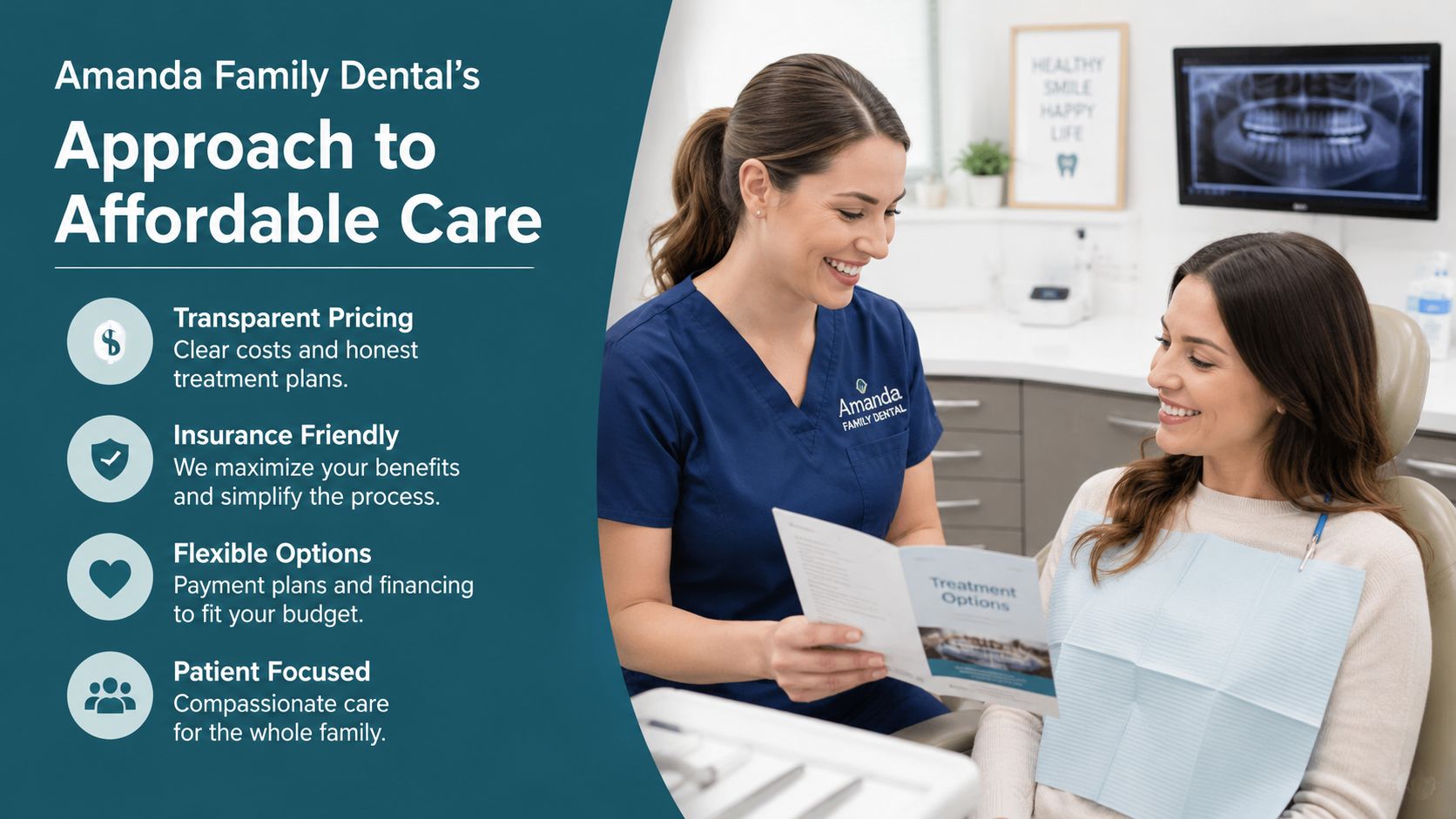
Amanda Family Dental offers a Power Plan Membership alongside other flexible payment options, which gives local patients a way to reduce the friction around routine and restorative care Amanda Family Dental Power Plan. That kind of approach helps people compare the membership model against traditional insurance, especially when they want predictable preventive care without waiting for a separate reimbursement process.
What local patients can expect
The practice serves Amanda, Ohio, Lancaster, Ohio, Circleville, Ohio, and Carroll, Ohio with a patient-first philosophy that keeps the discussion practical. New patient exams, digital x-rays, and personalized treatment plans help the team map out needs before care starts, and same-day care is available when possible. For many people, that combination matters more than a complicated financing pitch.
Patients who are already weighing a consultation for cosmetic dentistry, restorative dentistry, dental implants, or emergency dental services can also benefit from having one office explain both treatment and payment in plain language. That makes it easier to decide whether to move ahead now or stage care over time. It also matters for families who prefer a local office that handles everything from preventive visits to complex cases close to home.
For practices trying to connect faster with people searching online, real ROI from AI chat agents is a useful reminder that prompt, clear communication can lower friction for patients who need answers before they commit. That same principle applies in dentistry, where a fast response and a clear financial explanation can be the difference between delaying treatment and booking it.
Amanda Family Dental's approach fits the common pattern many local patients need. They want warm care, clear pricing, and a payment path that doesn't make treatment feel out of reach. That's especially helpful for people who are trying to choose between immediate pain relief and a bigger restorative plan that may take a little more structure.
Frequently Asked Questions About Dental Payment Plans
Does credit score matter?
Sometimes it does, especially with third-party financing. In-house arrangements are often simpler and may not require a credit check, while lender-based plans usually have their own approval process. The more practical question is which option fits the office's rules and your budget, so ask before you assume approval will be the hurdle.
What happens if a payment is missed?
That depends on the agreement. Some plans include late fees, penalty APRs, or other added charges, and those costs can make a plan more expensive than it first appears. A financing offer that looks manageable at the start can become harder to carry if the payment schedule is tight or the terms are not clear.
Can financing be used for emergencies?
Yes, and that is often where it helps most. A patient with a sudden toothache, cracked tooth, or urgent extraction may need the fastest plan available so treatment does not get delayed while the pain gets worse.
Can dental insurance and a payment plan be used together?
Often, yes. Insurance may cover part of the visit, and a payment plan can help handle the remaining balance. That is common for patients whose annual maximum does not cover a crown, implant, or other larger procedure, and it is where the full cost comparison matters most. If you are sorting through questions before booking, 24/7 FAQ automation for SMBs is a useful reminder that quick answers reduce delays. In dental care, people are more likely to move ahead when the payment details are clear right away.
Before you decide: compare any upfront discount with the total financing cost, including fees and interest, before choosing the monthly option.
Taking the Next Step Toward Affordable Dental Care
Cost is one of the most common reasons families delay care, but it doesn't have to be the reason treatment stops. A good payment plan can make a cleaning, extraction, implant consult, or cosmetic visit feel realistic instead of overwhelming.
Amanda Family Dental serves Amanda, Lancaster, Circleville, and Carroll with flexible options, clear treatment planning, and a warm approach to care. Patients can ask about the Power Plan Membership, discuss financing, and schedule a consultation that fits both their oral health needs and their budget.
Amanda Family Dental offers compassionate, community-based care with flexible payment options for families who want treatment without added financial stress. If you're ready to talk through affordable care in Amanda, OH, visit Amanda Family Dental and schedule a visit that works for your needs.