


You know the feeling. A child needs a cleaning, a crown feels chipped, somebody keeps putting off whitening, and an emergency visit can't wait until next month. That's when dental care stops being a buzzword and starts being the practical answer for families in Amanda, OH, Lancaster, OH, Circleville, OH, and Carroll, OH who want one trusted place for the whole mouth, not a different office for every problem.
The case for broad, coordinated care is simple. Oral disease is widespread worldwide, affecting 3.5 billion people according to the World Health Organization (WHO oral health fact sheet), and the need shows up early and keeps showing up through adulthood. In the United States, untreated or restored dental caries affected 46.0% of children ages 2 to 19 during 2017 to March 2020, while caries prevalence reached 89.9% among adults ages 20 to 64 and 96.2% among adults 65 and older (dental care statistics). That's why a serious dental home has to cover prevention, repair, replacement, and maintenance, not just one procedure at a time.
Table of Contents
- What Comprehensive Dental Care Really Means
- The Core Services That Make Up Full-Service Care
- What Happens at a Full Dental Visit
- Building a Long-Term Treatment Plan
- Why a Local Practice Matters for Full-Spectrum Care
- Understanding Membership Plans and Payment Options
- Questions Worth Asking Your Dentist
- Taking the Next Step Toward Full-Spectrum Care
What Comprehensive Dental Care Really Means
A family in small-town Ohio usually doesn't need “a dentist.” They need one practice that can handle a child's first cleaning, a broken filling for a spouse, and a long-delayed smile repair for another member of the household without turning life into a scheduling mess. That is value of all-inclusive dental care. It gives a family one coordinated dental home instead of a patchwork of one-off visits.
A dental home, not a one-procedure stop
Full-spectrum care means the practice looks at the whole mouth, the full history, and the long-range plan. It brings prevention, restoration, cosmetic treatment, and follow-up care together so problems are found early and handled in the right order. A proper exam is not a quick glance. It includes updated medical history, charting, periodontal evaluation, diagnostic testing, and occlusal review, because the teeth, gums, bite, and supporting structures all affect one another (comprehensive dental care workflow).
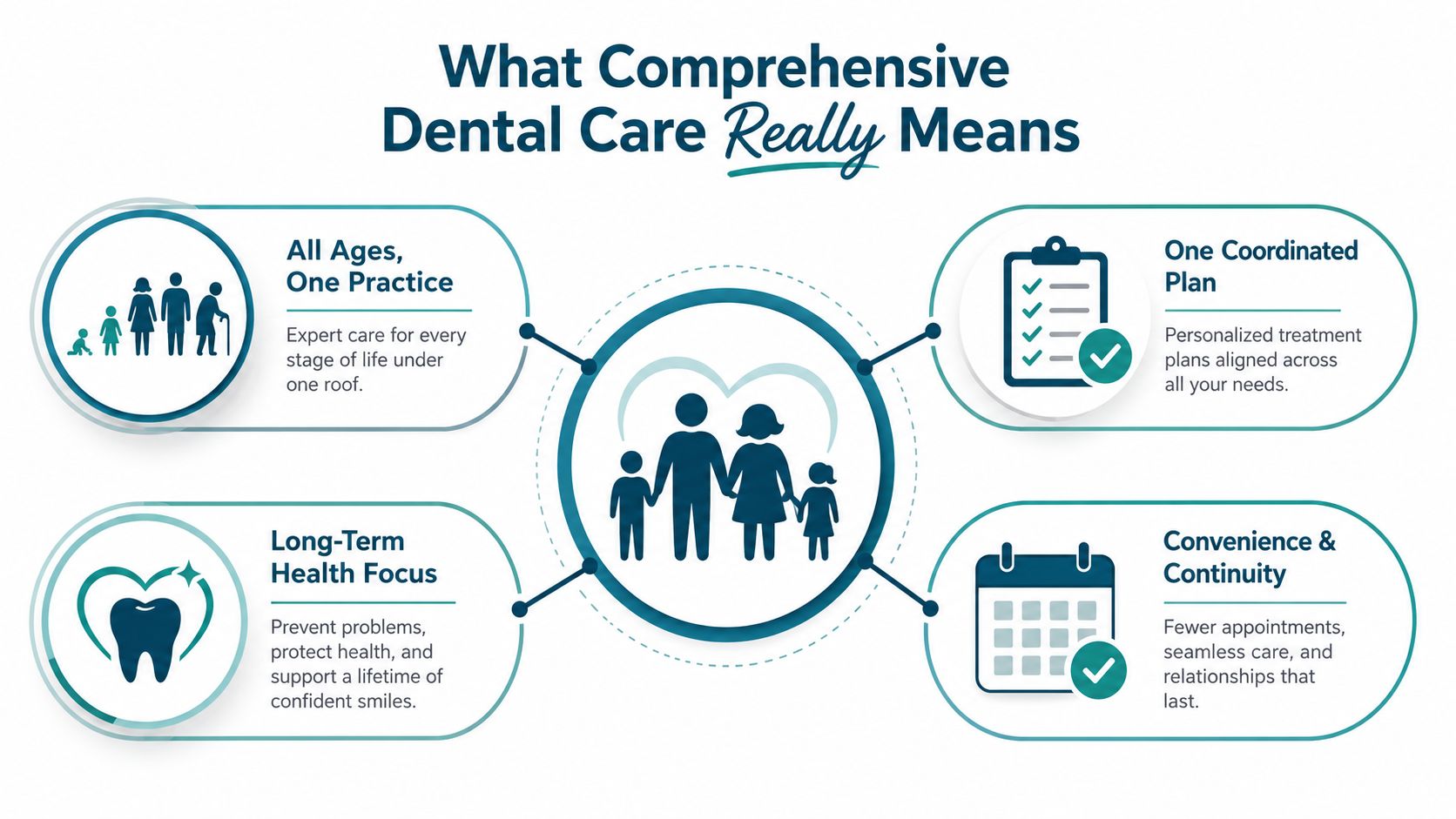
That is why this approach to dentistry is not just for people in pain. It fits the parent trying to keep everyone on track, the adult who wants a better-looking smile, and the older patient who needs maintenance that protects chewing and comfort. A practice built around this model keeps the conversation focused on long-term stability, not just the urgent tooth of the week. For families who want to understand why professional cleaning matters, the bigger picture starts to make sense here.
Practical rule: If the office only talks about the tooth that hurts today and never discusses the rest of the mouth, that is not full-spectrum care.
A good local practice watches for decay, gum disease, bite problems, wear, missing teeth, and appearance concerns, then connects those issues into one plan. That is the standard families in Amanda, Lancaster, Circleville, and Carroll should expect when they are looking for a real dentist near me.
The Core Services That Make Up Full-Service Care
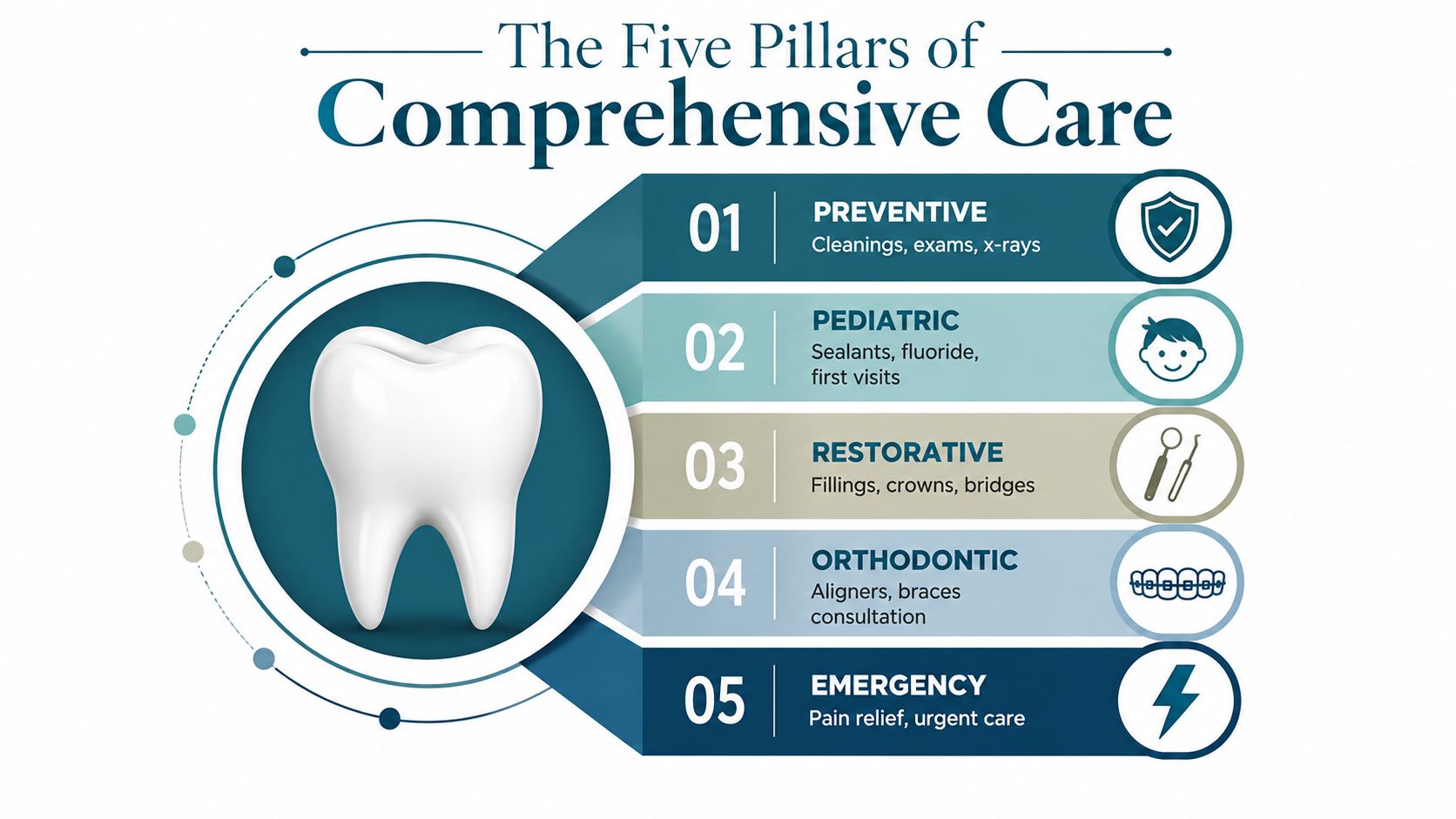
The strongest family practices do not split “basic” dentistry from “advanced” dentistry as if they belong to different worlds. They work from one system. Prevention, repair, replacement, and aesthetics support one another, and a patient's needs often move through more than one category over time.
Prevention and the first line of defense
Preventive care starts with cleanings and exams, because plaque and tartar do not wait for a convenient time. A reliable resource on why professional cleaning matters makes that point plain, and it deserves attention. Home care matters too, but professional care finds what a mirror cannot. The ADA recommends brushing twice a day with fluoride toothpaste for two minutes and seeing a dentist regularly for prevention and treatment of oral disease (ADA home care guidance). If you want to know what a cleaning visit usually includes, this breakdown of dental cleaning services lays out the basics clearly.
A parent may bring a child in for sealants and fluoride, then learn that the same appointment also caught early decay on another tooth. That is preventive care doing real work.
Restoration, replacement, and appearance
Restorative work covers fillings, crowns, bridges, and root canals, the tools that keep damaged teeth working instead of letting small problems turn into bigger ones. Cosmetic dentistry belongs in the same office, not in a separate category. Whitening, veneers, and clear aligner treatment can improve appearance, and they fit better when the teeth and gums are stable first.
For adults who want a smoother smile, the cosmetic conversation should start with oral health, not just looks. For patients who are missing teeth, replacement options like dentures and implants help restore function and confidence together. That is how a local dentist should approach treatment in families from Amanda, Lancaster, Circleville, and Carroll, one step at a time, with the whole mouth in view.
The broader family picture
Not every practice handles every service in the same way, but a true full-service office should be able to guide patients through the right sequence. That may mean a teenager gets hygiene coaching alongside aligner treatment, while an older adult discusses a missing-tooth plan after the mouth is ready for it. It can also mean sleep dentistry, myofunctional therapy, or mercury-free restorative options when those services match the patient's needs. The point is coordination, not a long menu.
What Happens at a Full Dental Visit
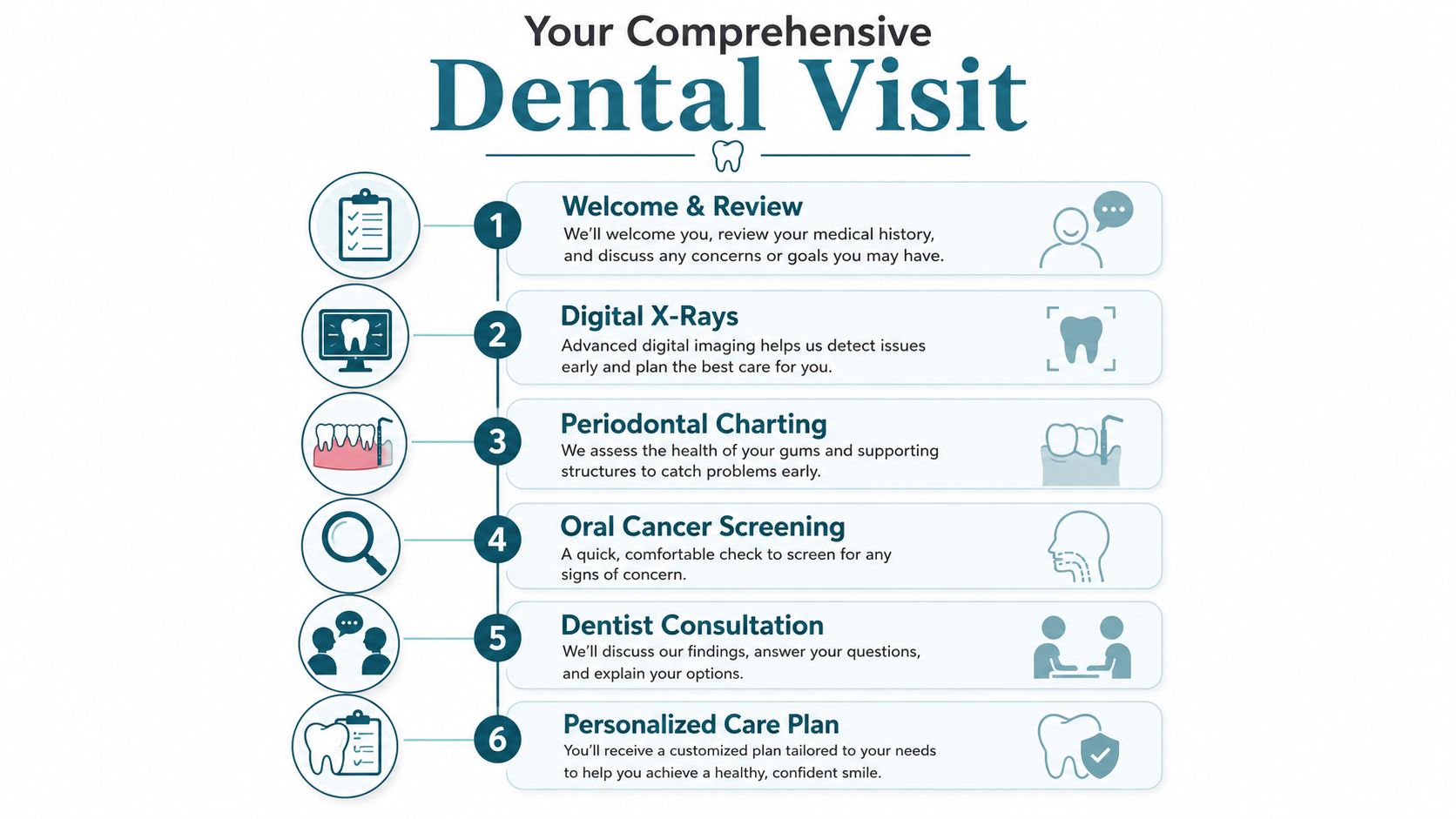
A good first visit should feel organized, not rushed. The office gathers the information needed to make smart decisions, then the dentist explains what's going on in plain language. Patients who've put off care for years usually relax once they realize nothing is happening by surprise.
The visit usually starts with information, not instruments
The appointment begins with a new patient exam and a review of medical history, symptoms, and concerns. From there, the team may take digital x-rays, chart the gums, and look at areas that can't be seen during a quick look in the mirror. Those steps matter because effective dentistry depends on information, not guesses.
A routine dental visit is where small issues get caught before they become painful, expensive problems, and that is one reason adults and children benefit from staying on schedule with care, as noted in the ADA national dental use trends report.
The dentist should explain the why, not just the what
A thorough exam includes periodontal charting, screening, and a review of bite and tooth wear patterns. Then the dentist lays out a plan in order of priority. That means pain or infection gets handled first, then the office maps the longer path for preservation, repair, or cosmetic work.
The right visit leaves the patient with three things, a clear diagnosis, a realistic plan, and a sense that the office is working with them instead of talking at them.
A calm, consistent workflow matters for anxious patients too. Comfort options can be part of the conversation from the start, especially when more than one procedure is on the table. A patient should leave the visit knowing what comes next, what can wait, and why.
If a family wants to see a practical example of the hygiene side of that process, the office can point them to what does a dental cleaning include. That kind of clarity helps turn a nervous first appointment into a routine habit.
Building a Long-Term Treatment Plan
Good treatment planning is not a sprint. It's a sequence. The dentist has to decide what threatens health today, what restores function next, and what improves the smile after the foundation is stable. That order protects both the mouth and the budget.
Start with the urgent issue, then build outward
If a patient has infection, severe decay, or a painful tooth, that problem comes first. No responsible dentist buries pain relief behind cosmetic talk. Once the mouth is stable, the plan can move to fillings, crowns, root canals, and replacement options such as implants or dentures when a tooth can't be saved.
A patient with a missing tooth may not be ready for an implant on day one. The gum, bone, bite, and adjacent teeth have to be evaluated first. That's not delay for the sake of delay. It's sequencing that protects the final result.
Cosmetic work belongs after the basics are settled
Cosmetic upgrades usually land better after alignment, repair, and hygiene are under control. Veneers look better when surrounding teeth are healthy. Whitening works better when the patient's staining patterns and restorations are understood. Invisalign or other aligner treatment can also change the timing of cosmetic decisions, because tooth position affects the final appearance.
| Typical Phases of a Comprehensive Treatment Plan | ||
|---|---|---|
| Phase | Focus | Example Services |
| 1 | Stabilize pain and infection | Emergency care, tooth extraction, root canal |
| 2 | Rebuild function | Fillings, crowns, bridges, denture planning |
| 3 | Refine appearance | Teeth whitening, veneers, aligner treatment |
| 4 | Maintain results | Cleanings, exams, periodic x-rays, recall visits |
Practical insight: A strong plan usually solves the worst problem first, then protects the work with maintenance that keeps the same problem from returning.
The patient should also ask how the office handles changes over time. A long-term plan should be flexible enough to handle a cracked crown, a new cavity, or a better cosmetic option without starting from zero. That's the difference between a one-time fix and actual dental care.
Why a Local Practice Matters for Full-Spectrum Care
A family practice only works when getting there is easy. In Amanda, that means patients from Lancaster, Circleville, and Carroll can come in without turning every visit into a day-long project. If people can keep appointments, treatment gets finished. That is how good care holds together.
Continuity beats starting over
The same team seeing the same family year after year catches details faster. A hygienist notices early gum changes. The dentist remembers which crown was placed, which tooth stayed sensitive, and how the bite shifted after treatment. That continuity makes follow-up simpler after an extraction, implant work, or a restorative visit.
It also makes family scheduling easier. Parents can line up children's visits with their own, and older adults can return for maintenance without a long drive or a complicated handoff to a new provider.
Reputable local care carries real accountability
In a small community, reputation has weight every day. Patients talk, families compare notes, and trust is built over years of showing up and doing the work right. That matters, because the dentist's name stays attached to the outcome long after the appointment ends.
For families looking for a dentist in Amanda, OH or a practical emergency dentist close to home, local access matters just as much as clinical skill. The right office should make it easier to come back, not harder.
A helpful resource for the business side of local visibility is visibility solutions for dental practices, especially when patients are deciding where to call first. The true test is still whether the office delivers steady care when people walk through the door.
If a practice wants to see how a local page presents that hometown focus, it can look at Amanda Family Dental's dentist in Amanda page.
Understanding Membership Plans and Payment Options
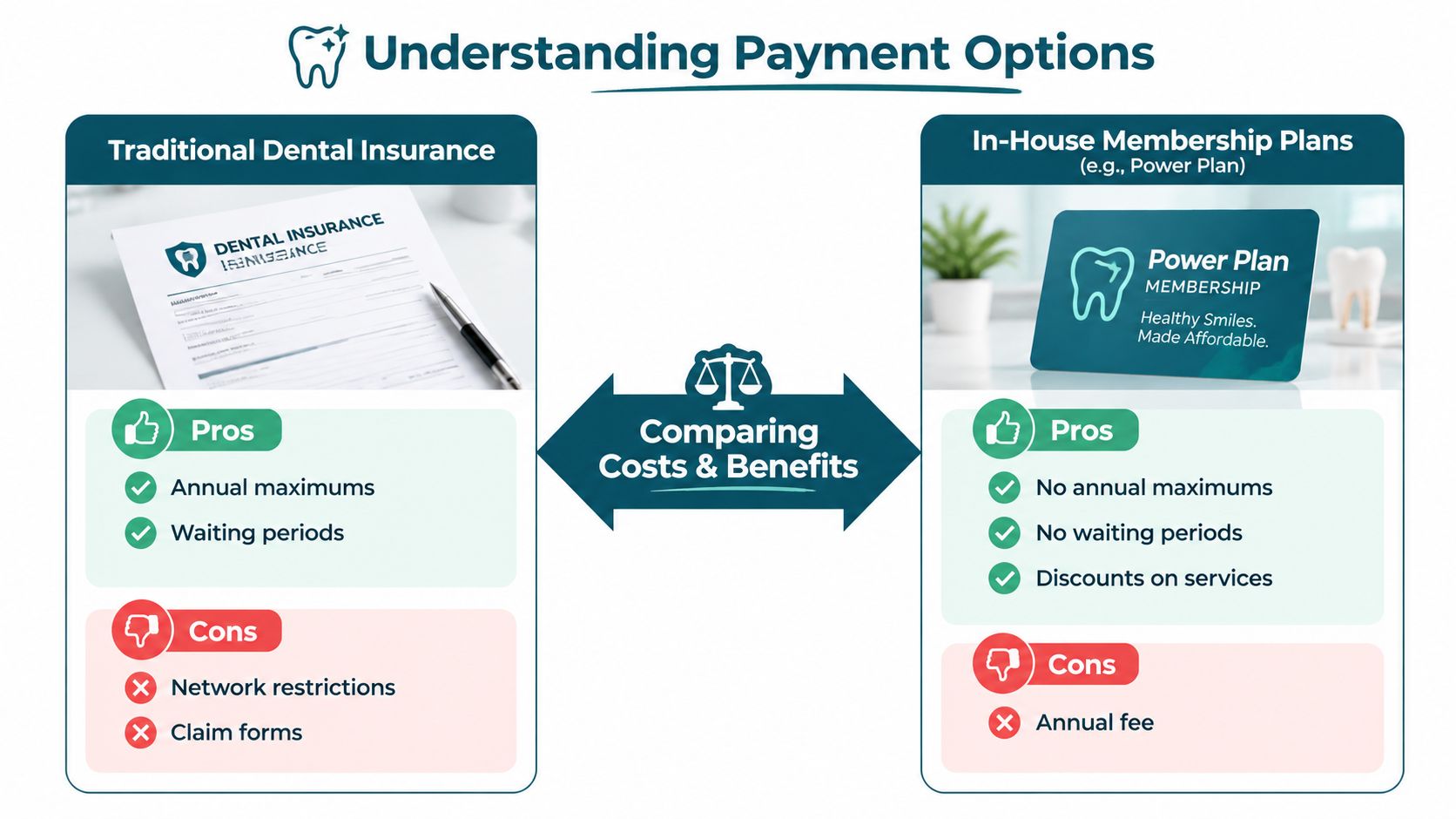
Families put off care when they can't predict the cost. That creates bigger problems later, because a small filling can turn into a crown, an extraction, or a more involved repair if the tooth is ignored. A clear financing conversation belongs in all-inclusive dentistry, not as an awkward side topic.
Insurance and membership plans work differently
Traditional dental insurance can help with routine care, but it often comes with restrictions and paperwork. In-house membership plans, like the Power Plan Membership offered by Amanda Family Dental, are built around predictability instead. They are meant for patients who want preventive care and straightforward savings without relying on a traditional insurance structure.
The right option depends on how the family uses care
Insurance can make sense for some households, especially when the plan is already in place through work. Membership plans can make more sense for families who want a simple annual structure and don't want to worry as much about claim processing. The question is not which model sounds better on paper. It is which one gets the family into the chair for cleanings, exams, and the treatment they need.
For a clear breakdown of treatment financing, families can review financing dental procedures. That kind of transparency helps patients compare options before they delay a crown, extraction, or cosmetic treatment.
A payment plan should reduce friction, not create another reason to wait.
A good office will explain what preventive care is included, what savings apply to restorative or cosmetic work, and how same-day care or flexible scheduling may affect the total picture. Families do better when they can plan ahead instead of guessing at the cost every time a tooth hurts.
Questions Worth Asking Your Dentist
A first consultation should feel like an interview in both directions. The office is evaluating the mouth. The patient is evaluating the office. Clear questions tell a family whether the practice thinks in terms of long-term care or just one appointment at a time.
Ask about prevention and sequencing
- How do you approach prevention for children and adults? This shows whether the office treats cleanings and exams as the base of care or just a routine chore.
- What happens if you find more than one problem? A good answer should explain how urgent issues get prioritized before elective work.
- How do you decide between saving a tooth and replacing it? That question reveals whether the dentist thinks in terms of function, prognosis, and long-term value.
Ask about comfort, family care, and cosmetic work
- What comfort options do you offer for anxious patients? Fear should never be the reason a patient skips needed care.
- Do you work with children, teens, and older adults in the same office? A family-friendly answer should show that the practice can handle the whole household.
- How much cosmetic experience does the office have? Patients considering whitening, veneers, or aligners need honest guidance, not a sales pitch.
Ask about money before treatment starts
- What does the estimate include? The answer should be clear enough to avoid surprises.
- Do you offer membership or other payment options? That question matters for families comparing insurance with simpler in-house plans.
- How do you handle follow-up if treatment changes? Care should include a plan for revisions, maintenance, and future needs.
The best dentists answer these questions without getting defensive. They should welcome them, because a confident treatment plan stands up well under scrutiny. That's how a family finds out whether the office is a true long-term partner.
Taking the Next Step Toward Full-Spectrum Care
Dentistry is a lifetime strategy, not a one-time fix. A child's first visit, an adult's restorative work, and an older patient's replacement needs all belong in the same conversation when the goal is lasting health, comfort, and confidence. Families in Amanda, Lancaster, Circleville, and Carroll deserve a practice that can handle those needs without sending them all over town.
A local full-service office also makes it easier to stay on track. It is simpler to return for recall visits, finish treatment in stages, and keep one team informed about the whole picture. That matters whether the immediate concern is a tooth extraction, a cosmetic consultation, or the search for dental implants near me.
Amanda Family Dental provides preventive care, restorative dentistry, cosmetic options, and family-focused treatment in one local office. If you need a clear plan for cleanings, x-rays, tooth replacement, or an emergency dentist visit, schedule a consultation with Amanda Family Dental and start with a team that keeps care simple, local, and personal.