

When someone searches for a dentist in Amanda, it usually isn’t random. There’s often a reason behind it. A tooth started hurting over the weekend. A child is due for a cleaning. A crown feels loose. A smile has started to affect confidence in photos, at work, or when meeting people.
For families in Amanda, OH, and nearby communities like Lancaster, Circleville, and Carroll, convenience matters, but trust matters more. People want a dental office close to home that can handle routine care, urgent problems, and long-term smile goals without making every visit feel rushed or impersonal. They also want clear answers, practical treatment options, and a team that understands that comfort is part of good care.
Table of Contents
- Your Trusted Local Dentist in Amanda, OH
- Comprehensive Dental Care for Your Entire Family
- A Modern Approach to Patient Comfort and Safety
- What to Expect on Your First Visit
- Affordable Dental Care and Flexible Payment Options
- Proudly Serving Amanda, Lancaster, Circleville, and Carroll
- Frequently Asked Questions About Our Dental Services
Your Trusted Local Dentist in Amanda, OH
A local dental office does more than fill appointment slots. It becomes part of how a community stays healthy. Parents need a place they can call when a child chips a tooth. Adults need someone nearby for cleanings, crowns, extractions, implants, and emergency care without adding a long drive to an already stressful day.
That local access matters because dentist availability isn’t evenly distributed across the country. The American Dental Association notes that some areas have significantly fewer dentists per capita, which makes a nearby full-service office especially valuable for communities like Amanda, Ohio. Families often benefit most when they can rely on one practice close to home for consistent care and timely treatment through the ADA dentist workforce overview.
For patients who are comparing offices, credentials and philosophy both matter. Learning about the doctor’s background can help people understand how care is approached before they ever schedule, which is why many new patients start by reviewing the practice’s doctor profile and care philosophy.
Practical rule: The right dentist near me isn’t just the closest address. It’s the office patients feel comfortable calling for both routine care and unexpected problems.
Good dental care also depends on reliable scheduling and smooth office operations. For readers who are curious how healthcare teams organize appointments and staffing behind the scenes, it can be useful to discover top healthcare scheduling solutions that support better patient access and shorter delays.
In a small-town setting, trust is built in ordinary moments. A clear explanation. A calm response to anxiety. A treatment plan that respects budget, time, and comfort. That’s often what people are really looking for when they search for a dentist in Amanda, OH.
Comprehensive Dental Care for Your Entire Family
A parent may bring in a child for a checkup and mention their own tooth sensitivity before leaving. A grandparent may want a denture adjustment while a teenager asks about straightening crowded teeth. In a small town practice, that mix is normal. Families often prefer one office that can care for children, adults, and seniors under one roof, with clear explanations about what needs attention now and what can wait.
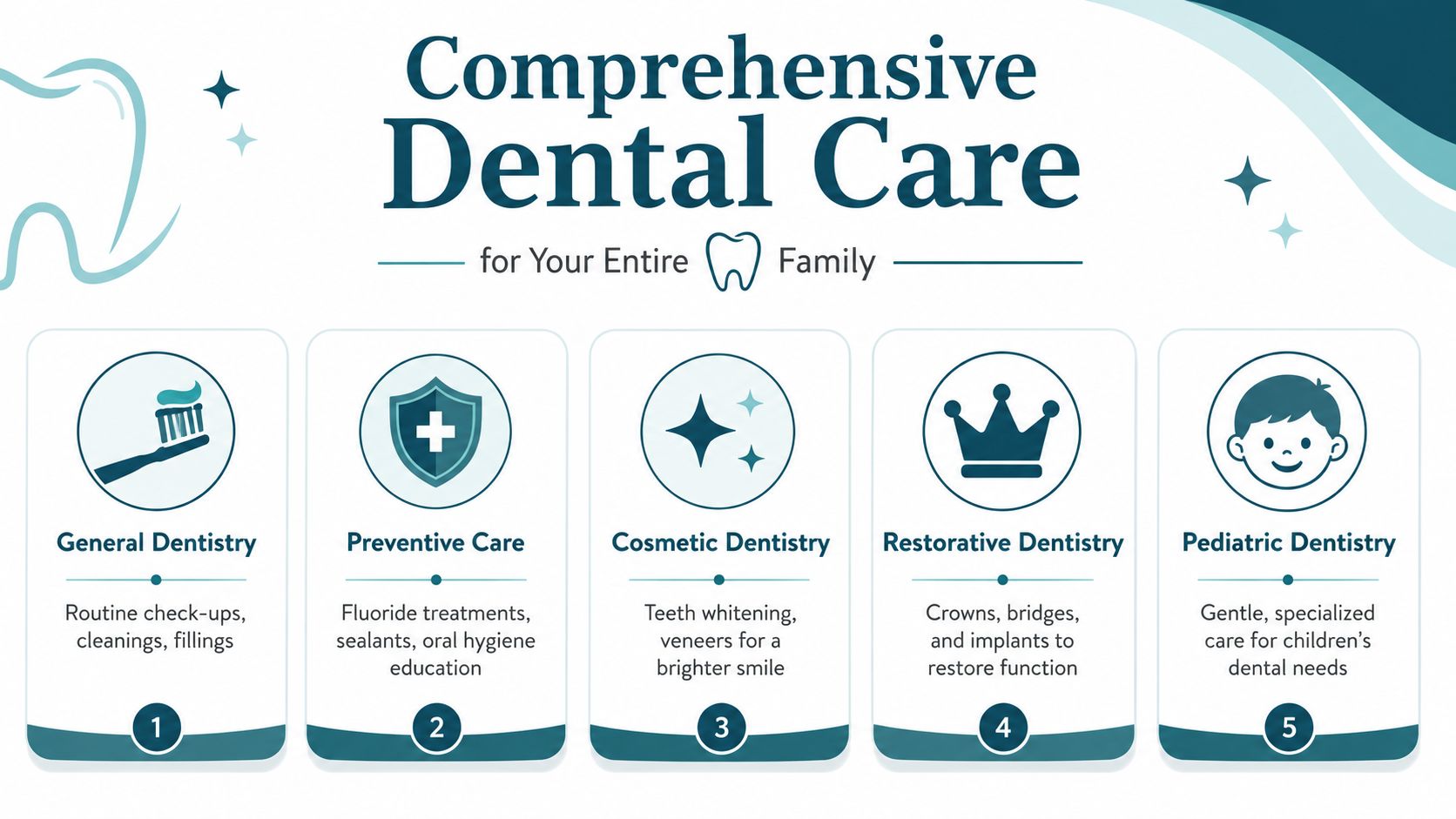
Patients who want a clearer picture of treatment options can review our family-friendly dental services to see how preventive, restorative, cosmetic, and pediatric care work together in one local practice.
Care for routine needs and early treatment
Regular preventive care keeps many dental problems smaller, simpler, and less expensive to treat. It also helps patients avoid the cycle of waiting until something hurts.
Common general and preventive services include:
- Cleanings and exams to monitor oral health and catch changes early
- New patient exams to establish a starting point and identify current concerns
- Dental X-rays to evaluate areas that cannot be checked fully by sight alone
- Pediatric dentistry for children who need a calm, age-appropriate approach
- Composite fillings to repair cavities with a natural-looking material
- Fluoride-free choices for patients who want that option explained and discussed clearly
Repairing damage and replacing missing teeth
Teeth do not all fail in the same way, so treatment should not be one-size-fits-all. A tooth with a small crack may do well with a crown. A severely infected tooth may need root canal treatment. A tooth that cannot be saved may need to be removed, then replaced in a way that fits the patient’s health, budget, and goals.
Restorative services may include:
- Crowns to rebuild and protect teeth weakened by decay or fracture
- Root canals to treat infection inside the tooth and preserve structure
- Tooth extraction when saving the tooth is no longer predictable
- Dentures for patients missing several or all teeth
- Implant consultations for patients considering a fixed replacement option
A sound treatment plan starts with diagnosis, not with the most expensive procedure. Patients deserve to understand the likely benefits, limits, and maintenance involved with each option.
Cosmetic care and wellness-focused options
Cosmetic treatment should support comfort, function, and long-term oral health. Whitening may be enough for one patient. Another may need to address worn edges, uneven spacing, older dental work, or bite issues before making cosmetic changes.
Available options can include:
- Teeth whitening for stains and discoloration
- Veneers for shape, symmetry, and visible imperfections
- Invisalign clear aligners for patients seeking a less noticeable orthodontic option
- Mercury-free fillings for patients who prefer tooth-colored restorative materials
- Myofunctional therapy as part of a broader wellness-focused care plan
- Botox and Juvéderm for patients interested in facial aesthetic services alongside smile care
Interest in material choices and wellness-centered treatment discussions has grown, but what matters most in day-to-day practice is straightforward communication. Patients want to know what a material does, how long it may last, what it costs, and whether there is a reasonable alternative. That kind of honest conversation is part of what makes a local, full-service office valuable to families in Amanda and nearby communities.
A Modern Approach to Patient Comfort and Safety
Many people delay dental care for one reason. They’re nervous about it. Sometimes that anxiety comes from a painful past experience. Sometimes it comes from embarrassment, fear of needles, a sensitive gag reflex, or not knowing what treatment will feel like.
Approximately 36% of the population experiences dental anxiety, and patients in smaller communities often have fewer local options for sedation-focused care, as noted in the cited discussion on dental anxiety and local access. That gap matters because avoiding the dentist rarely makes treatment easier. Small cavities turn into bigger repairs. Mild discomfort can become an emergency visit.
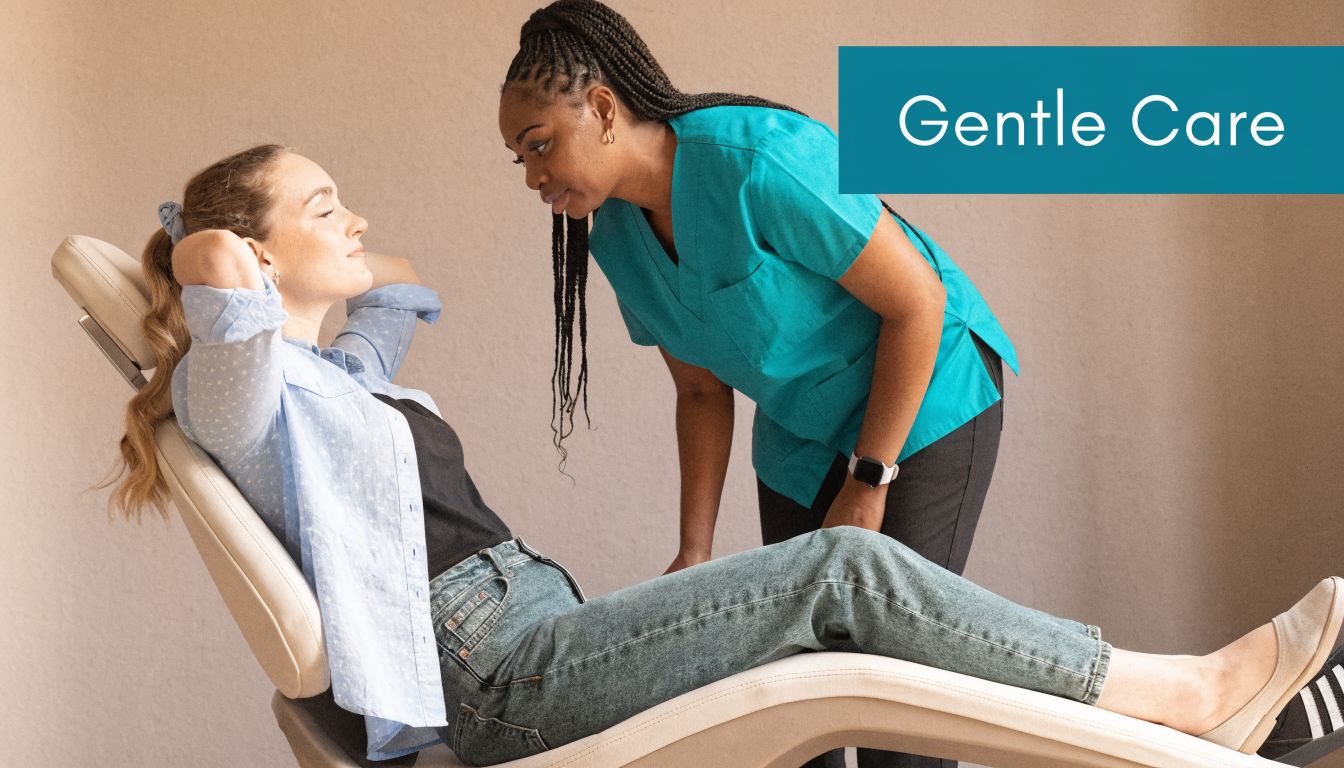
Comfort matters before treatment starts
Patient comfort begins before any procedure. It starts with pace, communication, and permission to ask questions. An anxious patient doesn’t need pressure. That patient needs a plan.
For many adults and children, these details make the visit easier:
- Clear explanations before instruments are used
- Short pauses during treatment when someone needs a break
- Sleep dentistry discussions for patients who’ve avoided care because of fear
- A quieter, more predictable visit instead of a rushed one
Patients who want to understand sedation-related options can review sleep dentistry information before scheduling. That’s often helpful for people looking for an emergency dentist, adults who haven’t been in years, and parents trying to prepare a nervous child.
Technology that supports gentler care
Comfort and safety also depend on the tools being used. Digital systems make a real difference when they help the dentist diagnose earlier, show patients what’s happening, and move efficiently without repeating steps.
Modern digital radiography, as used at Amanda Family Dental, can reduce radiation exposure by up to 90% compared to traditional film X-rays, while allowing immediate chairside review and more accurate diagnosis, according to this overview of digital radiography benefits. In practical terms, that means less waiting, better visual explanation, and a more informed treatment conversation.
Patients usually feel calmer when they know what the dentist sees and why a recommendation is being made.
What doesn’t work is pretending anxiety isn’t real. What does work is combining modern technology with a slower, kinder approach to care.
What to Expect on Your First Visit
A first dental visit often starts with a simple concern. A tooth that has been sensitive for weeks. A child who is due for a checkup. A parent who wants one office that can care for everyone without driving between Amanda, Lancaster, Circleville, and Carroll. The appointment should bring clarity from the start.

A simple start for new patients
The first visit usually begins with listening. Patients share their health history, current concerns, past dental experiences, and anything that has made care difficult before. Some are coming in for a routine cleaning. Others need help with tooth pain, a chipped tooth, bleeding gums, worn dental work, or questions about improving their smile.
A typical first visit may include:
- A conversation about current concerns such as pain, sensitivity, missing teeth, or appearance
- Digital X-rays when needed to check for decay, infection, bone changes, or other problems that are not visible during a visual exam
- A full exam of the teeth, gums, bite, and existing dental work
- A discussion of priorities so urgent problems are handled first and longer-term care is planned realistically
Patients often feel more at ease when they can see the process before they arrive.
A treatment plan built around real priorities
A good treatment plan should fit real life. Families have work schedules, school schedules, insurance limits, and different levels of urgency. A cracked tooth that hurts while chewing is not in the same category as a cosmetic concern, and the plan should reflect that.
That conversation usually centers on three areas:
| Visit Focus | What It Means for the Patient |
|---|---|
| Immediate concerns | Pain, infection, broken teeth, or urgent restorative needs are addressed first |
| Preventive needs | Cleanings, exams, and follow-up care help prevent repeat problems |
| Long-term goals | Cosmetic dentistry, implants, Invisalign, or smile improvements can be planned thoughtfully |
At Amanda Family Dental, that first visit is also a chance to decide what pace makes sense. Some patients want to address everything quickly. Others need to phase treatment over time. Both approaches can be appropriate when the patient understands the trade-offs, the timing, and the reason each recommendation is being made.
A good first visit leaves patients with answers, not more uncertainty.
For many people choosing a local office, predictability matters as much as convenience. They want to know who will treat them, what the next step is, and whether the practice can continue caring for the whole family close to home. That combination of modern care and a familiar small-town setting is often what makes it easier to keep up with dental visits once the first appointment is behind them.
Affordable Dental Care and Flexible Payment Options
Cost is one of the most common reasons people postpone treatment. That hesitation makes sense. Dental work can feel harder to schedule when someone isn’t sure what insurance will cover, what payment timing looks like, or whether the recommended care can be phased over time.
Clarity first
The most helpful financial conversations are direct. Patients want to know what the office accepts, how benefits may apply, and whether there’s room to prioritize the most important treatment first. They don’t want vague promises. They want practical options.
That usually includes:
- Insurance coordination so patients understand how available benefits may apply
- Transparent estimates before major treatment begins
- Phased care planning when multiple issues need attention
- Discussion of alternatives when two approaches could both be reasonable
For many households, affordability isn’t only about the total fee. It’s about structure. A manageable sequence often works better than trying to solve every issue at once.
A practical option for patients without insurance
Patients without dental insurance often assume they have only two choices. Pay fully out of pocket or delay care. In reality, an in-house membership approach can offer a more workable middle ground for preventive services and discounts on additional treatment.
Amanda Family Dental offers a Power Plan Membership as one option for patients who want a simpler, non-insurance path to ongoing care. Plans like this can be especially helpful for self-employed adults, retirees, and families who want routine cleanings, exams, and reduced surprises during the year.
A few things tend to help patients most:
- Preventive care built into the plan, which encourages people to keep up with routine visits
- Straightforward enrollment, without the complexity many patients associate with insurance paperwork
- Better planning for future treatment, because the patient has a clearer sense of ongoing care costs
Patients usually do best financially when they ask one simple question early. What needs to be done now, and what can be scheduled in stages?
Affordable care doesn’t always mean the cheapest treatment in the room. It usually means the treatment that solves the actual problem, lasts appropriately for the situation, and fits the patient’s budget without confusion.
Proudly Serving Amanda, Lancaster, Circleville, and Carroll
People often begin their search with broad terms like dentist near me, but their decision usually comes down to whether the office feels accessible, familiar, and worth returning to. That’s especially true for families trying to coordinate school schedules, workdays, sports, and unexpected dental problems.

Local care should feel local
A community-based dental office should understand how people live. Parents may need pediatric appointments and their own cleanings around the same season. A patient from Lancaster may want one trusted office for exams, cosmetic concerns, and emergency dental services. Someone from Circleville or Carroll may want consistent care close enough to make follow-up realistic.
Backed by hundreds of positive patient testimonials, the practice has built a reputation for clear communication, comfort-focused care, and dependable treatment planning. Those themes matter because they reflect the things local families tend to remember most after a visit.
What patients usually value most
Common feedback in community-centered practices tends to sound like this:
“The visit felt calm, and everything was explained clearly.”
“It was easier to schedule care for the whole family in one place.”
For business owners and local organizations, there’s also a broader lesson here. Community visibility matters. Readers interested in how service businesses improve local search results can see how clear location signals help patients find nearby care when they need it.
For residents of Amanda, OH, Lancaster, OH, Circleville, and Carroll, OH, the value of local dentistry isn’t just convenience. It’s continuity. The same office can handle preventive visits, cosmetic goals, restorations, and urgent problems without sending patients in several directions.
Frequently Asked Questions About Our Dental Services
A lot of patients call with the same concern. They have a sore tooth, a child due for a checkup, or years since their last visit, and they want clear answers before they choose a local office.
That makes sense. Families in Amanda and nearby towns often want one practice that can treat everyday needs with current technology, while still feeling personal and familiar when they walk through the door.
Common patient questions
| Question | Answer |
|---|---|
| Do you see both children and adults? | Yes. We provide family dental care for children, teens, adults, and older patients. That means one office can handle exams, cleanings, pediatric visits, fillings, crowns, and cosmetic concerns, which makes records and scheduling easier for busy households. |
| Can you help if I have a toothache or dental emergency? | Yes. Tooth pain, swelling, a broken tooth, or a lost crown should be checked as soon as possible. The first step is finding the cause, then reducing pain and protecting the tooth or surrounding tissue. Depending on what we find, treatment may involve a filling, crown, root canal, or extraction. |
| What if I’m nervous about the dentist? | Dental anxiety is common, and it should be taken seriously. Patients usually do better when the visit is paced carefully, communication is clear, and comfort options are discussed in advance. Sleep dentistry can help some patients who have delayed care because of fear, a strong gag reflex, or difficulty getting through treatment comfortably. |
| Do you offer cosmetic treatments, or only general dentistry? | We offer both. Cosmetic care may include whitening, veneers, and Invisalign clear aligners, but appearance is only one part of the decision. Before changing a smile, the dentist needs to check gum health, bite function, and the condition of existing dental work so the result looks good and holds up well. |
| Are dental implants a good option for missing teeth? | Dental implants are a strong option for many adults, but not every case points in that direction. Bone support, gum condition, overall health, cost, and treatment time all matter. Some patients are better candidates for a bridge or denture, especially if they want a different timeline or budget. |
| What happens during a child’s first visit? | A child’s first dental visit should feel calm and age-appropriate. In many cases, the appointment focuses on getting comfortable, checking development, and looking for early concerns. Parents can expect clear explanations, preventive advice, and specific recommendations for home care and future visits. |
| Do you accept insurance? | Insurance depends on the details of the individual plan. The front desk can review benefits, explain what information is needed, and help estimate out-of-pocket costs before treatment begins. That conversation often gives families a clearer picture of what is covered and what needs prior planning. |
| What if I haven’t been to the dentist in a long time? | That situation is very common. Restarting care is what matters. A first visit after a long gap may uncover problems that need attention, but it also gives the office a chance to set priorities and build a realistic treatment plan without overwhelming the patient. |
What usually makes scheduling easier
A few details can save time when you call:
- Insurance information, if you plan to use benefits
- A short list of concerns, such as pain, broken teeth, missing teeth, or cosmetic goals
- Current medications and medical updates, since they can affect treatment decisions
- Preferred days and times, especially if more than one family member needs an appointment
When it’s worth calling sooner
Some dental problems should not wait for the next opening. Call promptly if you have:
- Tooth pain that keeps coming back or gets worse
- Swelling in the gums, jaw, or face
- A broken tooth with rough edges or temperature sensitivity
- A lost filling or crown that leaves the tooth exposed
- Pain or pressure when chewing
Early treatment often means a smaller repair, lower cost, and more options for saving the tooth.
People searching for a cosmetic dentist, an emergency dentist, or help with implants are often trying to solve today’s problem and choose a long-term dental office at the same time. That is one reason a local, full-service practice matters. Patients can get advanced care close to home without losing the small-town relationship that helps them feel known, heard, and comfortable coming back.
If you're looking for a caring, full-service Amanda Family Dental office near Amanda, Lancaster, Circleville, or Carroll, the next step is clear. Schedule an appointment, request a consultation, or contact the office to talk through your concerns. Whether the need is a routine cleaning, tooth extraction, cosmetic dentistry, dental implants, or emergency dental care, local treatment with clear guidance can make the process easier.