

Waking up with a sticky mouth, reaching for water through the day, and feeling like food just doesn't taste right can wear a person down fast. Dry mouth can seem minor at first, but when it keeps happening, it starts affecting comfort, sleep, eating, and confidence. It can also leave teeth and gums with less of the protection saliva normally provides.
Many people searching for a dentist near me, a dentist in Amanda, OH, or a dentist in Lancaster, OH aren't just looking for a name on a map. They want answers they can use. Patients in Amanda, Lancaster, Circleville, and Carroll, Ohio often need more than a list of possible causes. They need a clear dental action plan that connects symptoms with practical next steps.
Table of Contents
- Feeling Parched? Understanding Dry Mouth in Amanda OH
- Why Is My Mouth So Dry? Uncovering the Causes
- Finding Relief at Home Behavioral and Lifestyle Changes
- When Home Remedies Arent Enough Professional Treatments
- Your Local Partner in Oral Health Amanda Family Dental
- Take the Next Step Schedule Your Consultation Today
Feeling Parched? Understanding Dry Mouth in Amanda OH
A typical dry mouth day often starts before breakfast. The mouth feels tacky, the tongue feels rough, and swallowing feels harder than it should. Coffee may seem to help for a moment, but the dryness returns. By afternoon, there may be a constant urge to sip water, trouble speaking comfortably, or irritation around the cheeks and lips.
That pattern matters because dry mouth, also called xerostomia, is more than an annoyance. Saliva helps keep the mouth comfortable, supports speech, helps with chewing and swallowing, and protects teeth and soft tissues. When saliva is reduced, everyday tasks become less pleasant and oral health becomes harder to maintain.
Dry mouth often shows up as a comfort problem first, but it can turn into a dental problem if it sticks around.
People across Amanda, OH, Lancaster, OH, Circleville, OH, and Carroll, OH often assume dry mouth is something they just have to live with. That's rarely the best approach. A dentist can often spot patterns a patient may miss, including irritation, early decay, or signs that a medication or habit is contributing to the problem.
Dry mouth also fits into the bigger picture of wellness. The connection between oral symptoms and overall health is one reason resources on oral health and overall wellness are so useful for patients trying to understand why one symptom can affect so many parts of daily life.
Whether you need a dentist in Circleville, OH, a dentist in Carroll, OH, or a reliable emergency dentist when symptoms suddenly get worse, the key is simple. Don't treat persistent dryness as background noise. Treat it as a clue.
Why Is My Mouth So Dry? Uncovering the Causes
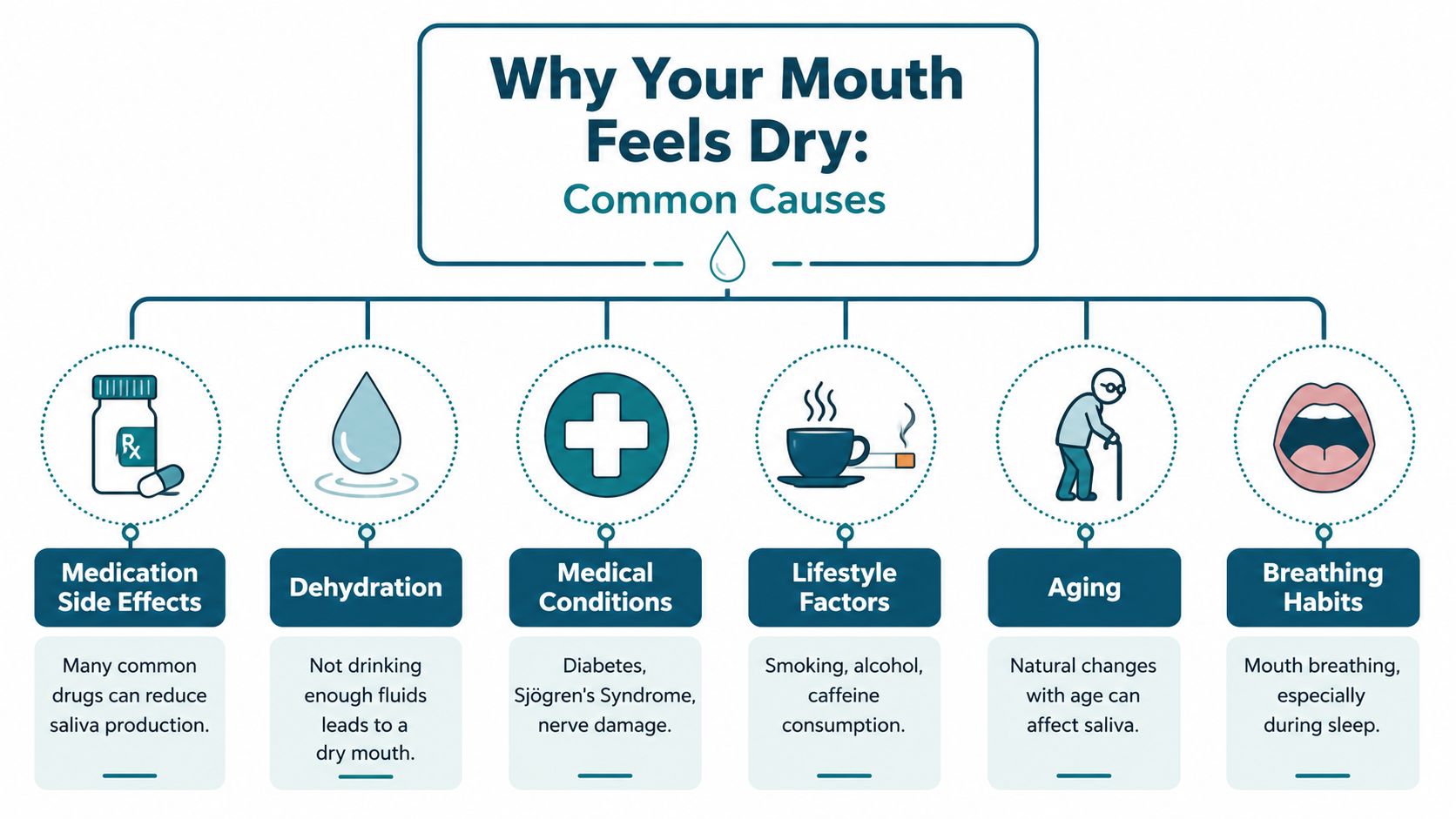
Some causes of dry mouth are temporary. Others need a closer look. The important part is understanding that saliva production can drop for different reasons, and the right treatment depends on identifying which one applies.
What saliva normally does
Saliva keeps oral tissues moist, helps clear food debris, and supports a healthier environment for teeth and gums. The Cleveland Clinic notes that anticholinergic drugs can reduce salivary flow by blocking parasympathetic stimulation of the salivary glands, leading to hypofunction when saliva volume drops below 0.3–0.4 mL/min for normal hydration, which raises risks of mucosal erosion, dental caries, and oral candidiasis in susceptible patients, as outlined in its guidance on dry mouth and xerostomia.
Medication side effects are the leading cause
The most common cause of dry mouth in the general and older adult populations is medication use, especially from anticholinergic side effects, according to the Cleveland Clinic guidance cited above.
Patients should pay close attention if dryness started after a new prescription or after taking several medications together. Polypharmacy can intensify the problem. Common high-risk examples include:
- Antihistamines that reduce secretions and often leave the mouth feeling dry
- Diuretics that can contribute to dehydration and worsen oral dryness
- Tricyclic antidepressants that are known for strong anticholinergic effects
- Muscle relaxers that may reduce salivary output
- Decongestants that can dry the nose and mouth at the same time
Practical rule: If symptoms are worst at night or first thing in the morning, medication timing is worth reviewing with a physician or dentist.
Other common triggers
Not every case starts with a prescription bottle. Daily habits can also push the mouth toward dryness.
| Cause | How it contributes |
|---|---|
| Dehydration | Less fluid available to support normal moisture |
| Smoking | Irritates oral tissues and can worsen dryness |
| Mouth breathing | Exposes tissues to airflow and dries them out |
| Alcohol or caffeine | Can aggravate dryness in some patients |
Mouth breathing deserves special attention because it often shows up during sleep. Patients who wake up with a dry mouth every morning may benefit from learning more about how breathing impacts sleep and health, especially if snoring, congestion, or restless sleep are part of the picture.
Smoking also affects the mouth in several ways beyond dryness. Patients who use cigarettes or other tobacco products can benefit from a straightforward review of smoking effects on teeth, since tissue irritation and reduced oral comfort often overlap.
Medical conditions can also play a role. Diabetes, Sjögren's syndrome, and nerve damage are commonly discussed in clinical settings when dryness is persistent or severe. Those cases need a coordinated approach, because treating the symptom without looking at the underlying cause often leads to frustration.
Finding Relief at Home Behavioral and Lifestyle Changes
Home care won't fix every case, but it can make a real difference in day-to-day comfort. The best approach is simple, consistent, and easy to stick with.

Hydration that actually helps
Many people respond to dry mouth by taking tiny sips of water all day. That seems logical, but it isn't always the most effective method. WebMD advises that while frequent water intake is helpful, slow, constant sipping can wash away existing protective saliva, and taking larger sips at intervals is often a better way to maintain moisture, as described in its guidance on dry mouth hydration habits.
That's one of the more surprising points in dry mouth causes treatment. More water isn't the whole story. The pattern matters.
A few practical adjustments can help at home:
- Use intervals instead of constant sipping so the mouth keeps more of its natural protective coating
- Run a humidifier at night if morning dryness is the worst part of the day
- Choose bland, moist foods when spicy, salty, or very dry foods trigger discomfort
- Limit alcohol and caffeine if they seem to make symptoms flare up
A simple non-drug technique
One overlooked option is salivary gland massage. HealthPartners specifically describes a manual technique that can help increase saliva flow naturally by using gentle pressure from the lower front of the ear, sliding along the cheek and under the jawbone. It's a sensible option for patients who want a drug-free step before moving to more involved treatment.
Gentle massage can be useful when the mouth feels dry but the glands aren't blocked or acutely painful.
For patients who like visual instruction, this short video is a helpful companion to at-home care:
Daily habits worth adjusting
Some habits help. Others only seem helpful.
Chewing sugar-free gum can support saliva flow for some patients. Alcohol-based rinses, frequent candies with sugar, and relying on mints all day usually don't help in the long run. Product selection matters. Patients comparing home products may want to shop oral care solutions and focus on gentle, moisture-supporting options rather than harsh formulations that leave the mouth feeling cleaner but drier.
The biggest limitation of home care is that it doesn't answer the “why.” If the dryness keeps returning, if new sensitivity develops, or if cavities seem to appear faster than expected, home relief should be paired with a professional evaluation.
When Home Remedies Arent Enough Professional Treatments
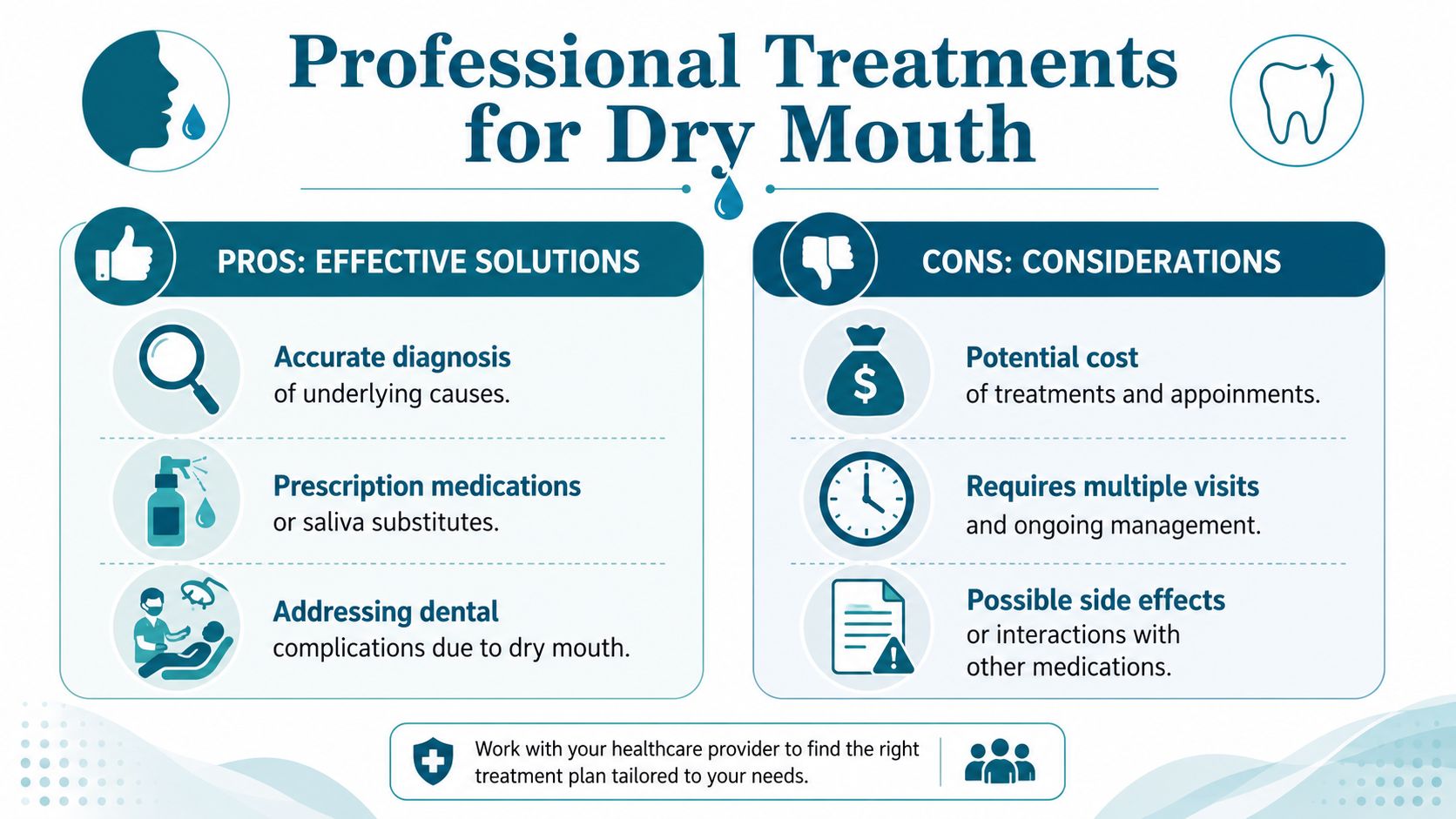
At some point, self-care stops being enough. That's when treatment needs to become more targeted. Good dry mouth care usually works in layers, starting with easy options and moving toward more individualized support when symptoms persist.
Over-the-counter options that have a real role
Harvard Health notes that artificial saliva substitutes are available without a prescription, including products such as Salivart, Saliva Substitute, and Salix, and that Biotene products and Xyli-Melt lozenges can help increase salivary flow through xylitol-based support, as explained in its review of what causes dry mouth and what treats it.
That gives patients two broad categories to consider:
| Option | Best use |
|---|---|
| Saliva substitutes | Short-term lubrication when tissues feel dry or irritated |
| Xylitol-based products | Supporting the body's own saliva response when some gland function remains |
Patients looking at specific retail products may also compare options like buy Dentaid Xeros when searching for moisturizing rinses designed for persistent dryness.
The trade-offs patients should know
No single product works for everyone. Sprays and gels can feel helpful right away, but some patients dislike the texture or find the relief short-lived. Lozenges may stimulate saliva, but they work best when the glands can still respond.
Prescription changes can also matter. The Cleveland Clinic notes that dose adjustment, changing timing, or using a non-anticholinergic alternative may be the primary intervention when medically feasible. That often requires communication between medical and dental providers. It's one reason severe dry mouth can't be solved by mouthwash alone.
Some products treat the feeling of dryness. Others help with saliva flow. Those aren't the same job.
Patients with mouth breathing, tongue posture problems, or related airway issues may also benefit from learning about myofunctional therapy for sleep apnea, since muscle habits and nighttime breathing patterns can affect oral comfort.
How dental care protects the mouth
Even when the root cause is medical, the dental risks still need active management. Reduced saliva can leave patients more vulnerable to tooth decay, soft tissue irritation, and oral infections. That means professional care often focuses on protection as much as symptom relief.
A dental office may recommend:
- More frequent monitoring to catch decay early
- Targeted preventive care when the mouth is at higher risk
- Product guidance based on whether the goal is lubrication, stimulation, or cavity prevention
- Restorative treatment if dryness has already led to damage that needs repair
For patients already dealing with broken teeth, sensitivity, or worsening decay, the conversation may overlap with services such as restorative dentistry, tooth extraction, or even replacement options for missing teeth. A patient searching dental implants near me or cosmetic dentist near me may not realize that untreated dry mouth can complicate both comfort and long-term treatment planning.
Your Local Partner in Oral Health Amanda Family Dental
Persistent dry mouth deserves a close look because the symptom often sits at the intersection of medicine, habits, and oral health. A proper dental visit should connect those pieces instead of treating dryness as a one-line complaint.

What a dry mouth visit should include
A strong evaluation usually begins with a full review of symptoms, medical history, and current medications. Timing matters. Dryness that appears mostly overnight points in one direction. Dryness that started after a prescription change points in another.
A thorough exam should also check for signs that the mouth is already under stress. That can include tissue irritation, increased plaque retention, new decay, changes around existing dental work, or areas that stay inflamed because the mouth isn't staying adequately moist. In many cases, new patient exams, cleaning and exams, and digital x-rays help create the bigger picture.
The goal isn't just to confirm dry mouth. The goal is to identify what kind of dry mouth problem is happening and what damage, if any, it has started to cause.
Why local follow-up matters
Dry mouth rarely improves from one isolated recommendation. Patients often do better with a plan that can be adjusted over time. One person may need prevention and product guidance. Another may need restorative care if decay is already advancing. Another may need coordination with a physician because medication side effects are central to the problem.
That local follow-up matters for families in Amanda, OH, Lancaster, OH, Circleville, OH, and Carroll, OH who want practical care close to home. A nearby office can monitor changes, update a treatment plan, and help patients move from short-term coping to longer-term control.
That same patient-centered process also matters for broader dental needs. People who come in for dry mouth concerns may also need help with emergency dental services, cosmetic dentistry, teeth whitening, or restorative care if dryness has made older issues worse. The key is having one trusted dental home that can connect the symptom with the right next step.
Take the Next Step Schedule Your Consultation Today
Dry mouth is uncomfortable, but that isn't the only reason to take it seriously. Saliva protects the mouth every day. When it's reduced for too long, teeth, gums, and soft tissues have to work without one of their main defenses.
Certain signs mean it's time to stop guessing and get checked:
- Persistent bad breath that doesn't improve with routine brushing
- Difficulty swallowing or speaking because the mouth feels sticky or rough
- Burning or irritation of the tongue, cheeks, or lips
- New cavities or sensitivity that seem to appear quickly
- Dryness that keeps returning even after changing hydration habits
Patients searching for a dentist near me, a dentist in Amanda, OH, a dentist in Lancaster, OH, a dentist in Circleville, OH, or a dentist in Carroll, OH are often looking for relief they can act on now. That's especially true when dry mouth starts affecting sleep, meals, work conversations, or the comfort of everyday life.
The good news is that dry mouth causes treatment doesn't have to be confusing. Once the cause is narrowed down and the mouth is evaluated properly, the next steps usually become much clearer. Some patients need simple adjustments. Others need preventive care or restorative treatment before bigger problems develop.
If dry mouth is making daily life harder, Amanda Family Dental can help patients in Amanda, Lancaster, Circleville, and Carroll, Ohio take the next step. Schedule an appointment, request a consultation, or contact the office to get clear answers, a personalized treatment plan, and comfortable dental care close to home.