

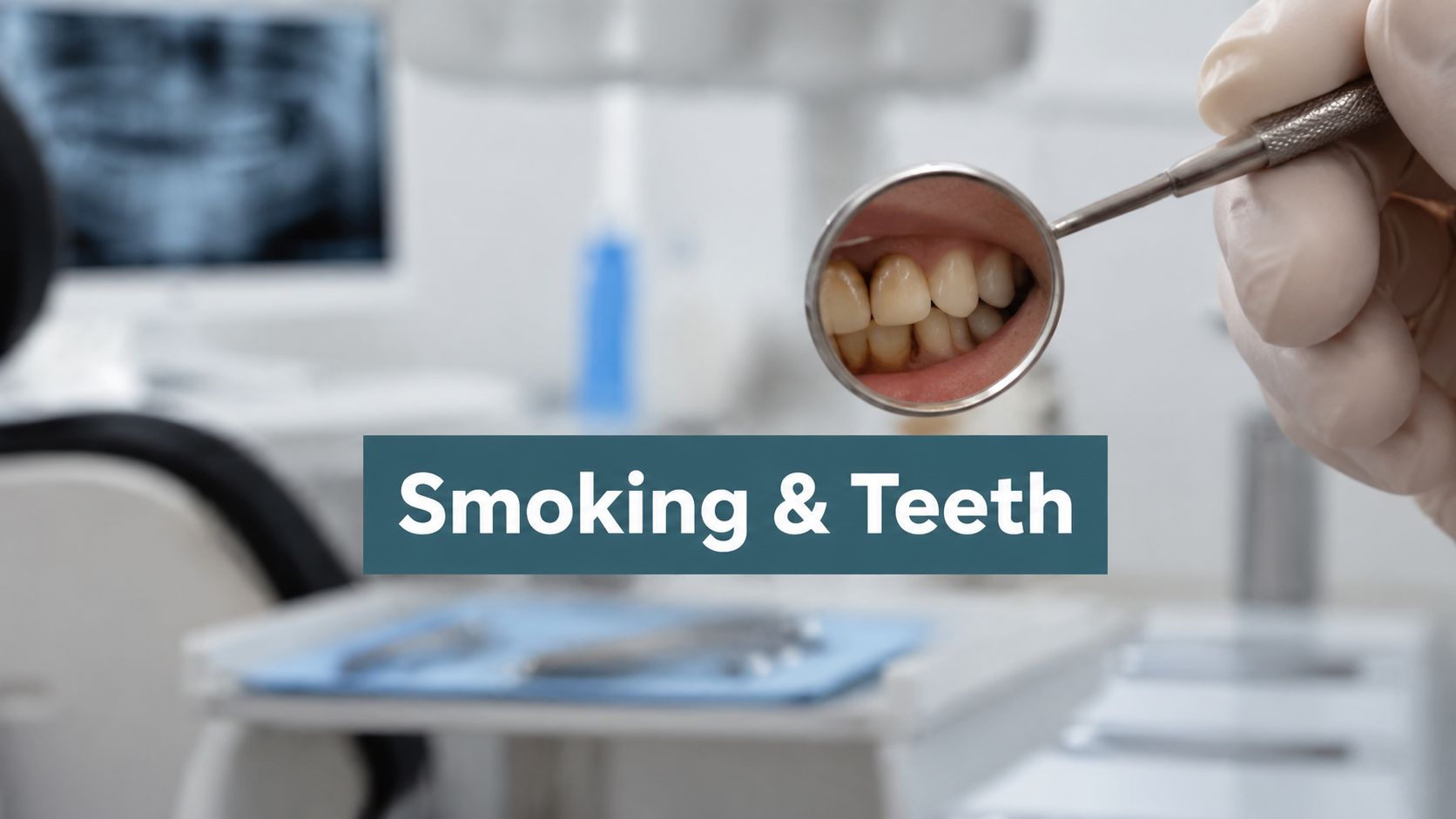
A lot of people searching for a dentist near me in Amanda, OH are dealing with the same quiet worry. The teeth look darker than they used to. The gums seem tender, or they bleed once in a while. There's also the bigger question in the back of the mind. Is this only surface staining, or is smoking doing real damage underneath?
That concern is understandable, and it deserves a clear answer without guilt or lectures. Smoking effects on teeth often start with things people can see in the mirror, but the more important changes usually happen below the gumline, where infection, bone loss, and delayed healing can affect long-term oral health. The good news is that damage can be identified early, managed thoughtfully, and often improved with the right dental care.
For families and adults looking for a dentist in Amanda, OH, dentist in Lancaster, OH, dentist in Circleville, OH, or dentist in Carroll, OH, it helps to have a practical guide. This article covers what smoking does to teeth and gums, what signs matter most, what tends to work, and what usually doesn't. It also looks at options ranging from cleanings and exams to cosmetic dentistry, restorative dentistry, tooth extraction planning, and dental implants near me for patients who need to rebuild a healthier smile.
Table of Contents
- Your Guide to a Healthier Smile from a Dentist Near You
- The Hidden Ways Smoking Harms Your Teeth and Gums
- What to Watch For Visible Signs and Long-Term Risks
- How We Help Restore Your Smile at Amanda Family Dental
- Your Action Plan for Prevention and At-Home Care
- Partner with Your Amanda Dentist for a Healthy Future
Your Guide to a Healthier Smile from a Dentist Near You
A common patient story sounds familiar. Someone notices yellow or brown staining that keeps coming back even after brushing harder. Maybe there's bad breath that doesn't fully go away, or a tooth that suddenly feels more sensitive near the gumline. Many people assume the problem is cosmetic first and only later learn that the gums have been under stress for a long time.
That's where a calm, local approach matters. Patients in Amanda, Lancaster, Circleville, and Carroll often want straightforward help, not a lecture about habits they already know aren't helping them. They want to know whether their smile can be cleaned up, whether loose or damaged teeth can be saved, and whether options like cosmetic dentistry or restorative dental care are still realistic.
What patients are usually asking
Some concerns are immediate. Stained front teeth, persistent breath odor, and tenderness during brushing can make everyday life uncomfortable.
Other questions are bigger:
- Can the damage be reversed: Sometimes yes, especially when problems are caught early.
- Will whitening work: Often, but the result depends on the amount of staining and whether smoking continues.
- Are implants or crowns still possible: In many cases yes, though treatment planning has to account for gum health and healing.
- Do vaping and smokeless tobacco matter too: Yes. They still create oral-health concerns that need to be taken seriously.
Smoking-related dental problems are rarely one single issue. Staining, dry mouth, decay, gum recession, loose teeth, and tooth loss often show up together.
What a practical dental approach looks like
The best care starts by separating symptoms into categories. Some problems are mostly cosmetic. Others involve active infection, tissue breakdown, or missing teeth. Once that's clear, the path forward becomes much easier to understand.
A helpful plan usually includes several pieces working together:
| Concern | What often helps |
|---|---|
| Surface stains | Professional cleaning, whitening, or cosmetic planning |
| Gum irritation | Periodontal evaluation and targeted gum treatment |
| Cavities or weak teeth | Fillings, crowns, or other restorative care |
| Missing teeth | Replacement options such as bridges, dentures, or implants |
| Pain or swelling | Prompt emergency dental services |
People looking for an emergency dentist, a cosmetic dentist near me, or help with tooth extraction and replacement usually benefit most from care that addresses the full picture, not just the most obvious symptom.
The Hidden Ways Smoking Harms Your Teeth and Gums
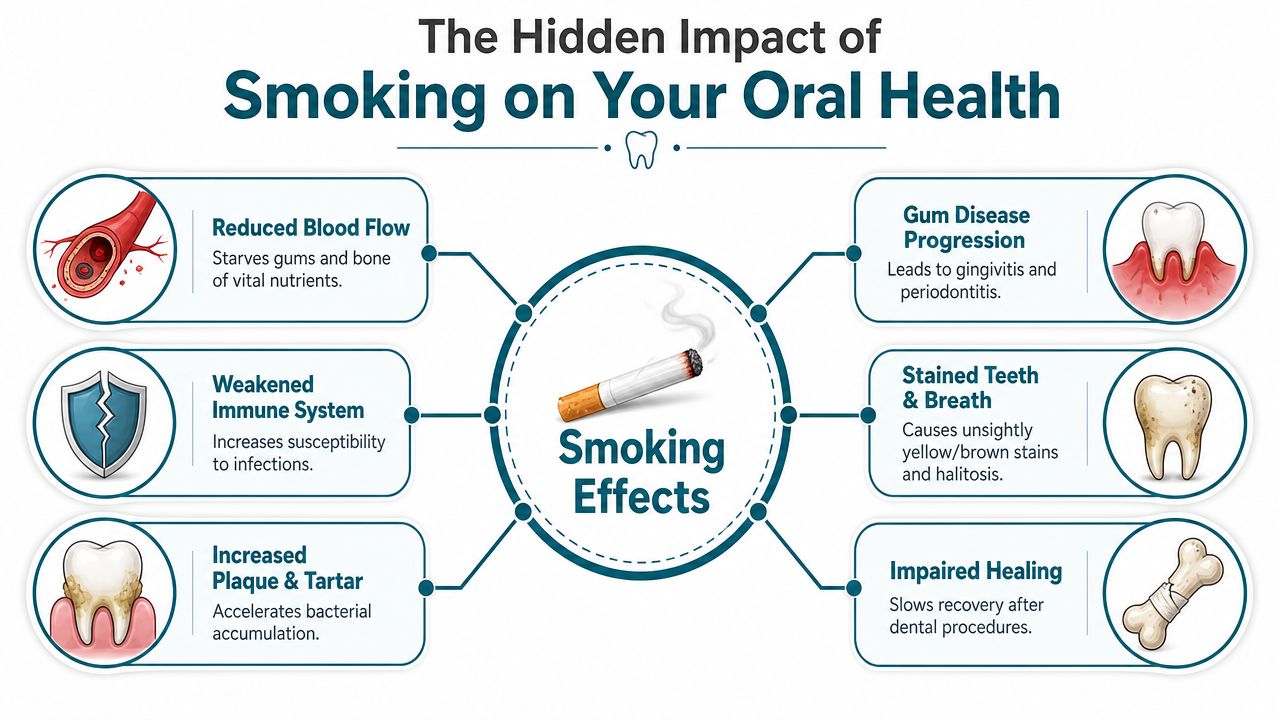
Smoking doesn't just leave color on the outside of teeth. It changes the entire environment of the mouth. The enamel, the saliva, the gums, and the tissues that support the teeth all get affected at the same time.
Why the stains get stubborn
Tobacco tar and nicotine can cling to enamel. Over time, that staining tends to shift from light yellow to deeper yellow-brown shades, and it becomes harder to remove with ordinary toothpaste alone. The result is a smile that can look older or less healthy even when the person is brushing every day.
That's one reason smoking effects on teeth often feel frustrating. Brushing harder doesn't solve a problem that has bonded onto the tooth surface and settled into rough areas around plaque and tartar.
Why the mouth gets riskier for cavities and gum problems
Smoking also contributes to dry mouth. When saliva drops, the mouth loses part of its natural defense system. Saliva helps rinse away food particles, dilute acids, and buffer the environment after meals and drinks. When there's less of it, plaque sticks around longer and acids have more time to affect teeth.
According to Penn Dental Medicine's overview of smoking and dental health, tobacco tar and nicotine readily adsorb to enamel and produce yellow-to-brown staining, while smoke-related dry mouth reduces saliva's buffering and cleansing effects. The same guidance notes that smoking can contribute to tooth decay and periodontitis.
Practical rule: If a patient smokes and also struggles with dry mouth, cavity risk usually rises faster than expected.
Why gum disease can progress quietly
Healthy gums need a steady blood supply and a normal healing response. Smoking interferes with both. A simple way to picture it is to think of a plant getting less water and nutrients. The leaves might not collapse on day one, but the plant becomes weaker and less able to recover.
In the mouth, that means irritated gum tissue may not heal normally. Plaque and bacteria then have a better chance to trigger deeper infection around the teeth. The frustrating part is that the warning signs can be muted. Some smokers don't notice as much bleeding early on, even when disease is active.
A few problems often build together:
- More plaque retention: Buildup stays in place longer and hardens into tartar.
- Slower healing: Gums don't bounce back as quickly after irritation or treatment.
- Greater restorative stress: Fillings, whitening, and other dental work can be harder to maintain when the mouth stays dry and inflamed.
What to Watch For Visible Signs and Long-Term Risks
Some smoking effects on teeth are obvious in the mirror. Others only become clear once teeth loosen, gums recede, or chewing starts to change. It helps to separate the signs people can notice now from the consequences that tend to develop later.

Visible signs people often notice first
Discoloration usually gets attention first. Teeth can look dull, yellow, or brown, especially near grooves, edges, and the gumline. Breath changes are also common, and many patients report that mouthwash only covers the odor for a short time.
Other early clues are more important than they seem:
- Bleeding when brushing or flossing: That can be a sign of gum inflammation, not just “brushing too hard.”
- Gums pulling back: Teeth start to look longer, and roots may become more sensitive.
- Rough buildup near the gumline: Plaque and tartar often collect faster in smokers.
- Taste changes or chronic dryness: The mouth may feel sticky, irritated, or harder to keep clean.
When a patient also notices a persistent sore, thickened area, or unusual bump on the lip or inside the mouth, it's smart to get it checked promptly. For readers trying to sort out what a lip lesion might mean, a clear guide to lip bumps can help explain common possibilities before a dental evaluation.
The long-term risks matter more than the stains
The biggest concern isn't appearance. It's the health of the tissues and bone that hold teeth in place. The CDC says smokers have twice the risk of gum disease compared with nonsmokers, and its summary of a systematic review reports that tobacco smoking increases periodontitis by 85% and raises tooth-loss risk to 2.6 times that of nonsmokers, as explained in the CDC's guidance on smoking and periodontal disease.
That matters because periodontitis isn't just sore gums. It's a destructive disease of the supporting tissues and bone. Once enough support is lost, teeth can shift, loosen, and eventually need extraction.
Many smokers focus on whitening first. The more urgent question is whether the foundation under the teeth is still healthy.
Smoking isn't the only nicotine habit affecting oral health
A lot of people who search for a dentist in Lancaster, OH or a dentist in Circleville, OH have switched from cigarettes to vaping or smokeless tobacco and assume their dental risk has dropped to near zero. That assumption can lead to delayed care.
Visible staining may differ, but oral-health problems can still continue. Gum irritation, dry mouth, decay, and healing complications can remain part of the picture. Patients who are mainly worried about appearance can also review professional whitening options for stained teeth once the underlying gum and cavity issues are under control.
How We Help Restore Your Smile at Amanda Family Dental
Treatment works best when it follows the reality of the mouth, not just the chief complaint. A patient may ask for whitening, but if there's active gum disease or a cracked tooth, that isn't the first step. Another patient may come in for a painful tooth extraction and discover that several other teeth could still be stabilized with the right restorative plan.

It starts with a complete exam, not a guess
The first visit usually needs more than a quick look. New patient exams and digital x-rays help identify what's surface staining, what's active decay, what's gum-related, and what may be failing structurally. That distinction matters because smokers often have several issues layered together.
A useful treatment plan usually answers four questions:
| Question | Why it matters |
|---|---|
| Is there active infection | Infection changes the order of treatment |
| Are the gums stable enough for cosmetic work | Whitening and veneers won't fix unhealthy support |
| Which teeth can be restored | Some teeth need fillings or crowns, others may not be savable |
| What replacement option fits if teeth are missing | Bridges, dentures, and implants all have different demands |
Gum treatment often comes before cosmetic treatment
If gums are inflamed, receding, or losing support, periodontal care comes first. That may involve deeper cleaning below the gumline, close monitoring, and home-care changes that reduce bacterial buildup. If gum recession is part of the problem, patients can learn more about treatment options for receding gums.
Real-world expectations matter. Whitening strips won't solve bleeding gums. Cosmetic bonding won't stop a tooth from becoming loose if bone support is shrinking. Treatment works better when the foundation is made healthy before appearance is polished.
A healthier smile usually comes in sequence. Stabilize the gums, treat decay, strengthen damaged teeth, then improve color and shape.
Cosmetic improvements can still be very successful
Once the gums are stable and the teeth are clean, appearance-focused treatment becomes much more predictable. Professional teeth whitening can lift tobacco staining more effectively than over-the-counter products, though maintenance is harder if smoking continues. For deeper discoloration, shape problems, or worn edges, veneers or other cosmetic dentistry options may be a better fit.
Patients are often relieved to hear that cosmetic treatment isn't automatically off the table. It just needs proper timing. A smile can look much brighter and more natural when stain, plaque, and gum inflammation are addressed first.
A closer look at smile planning can help patients understand what modern care can accomplish:
Restorative dentistry and tooth replacement after smoking damage
When smoking has already led to broken teeth, major fillings, or missing teeth, restorative dentistry becomes the focus. Fillings, crowns, root canal treatment, and carefully planned extractions can help remove pain and restore function. For patients searching for dental implants near me, implants may still be an option, but gum condition, bone support, and healing risk need to be evaluated carefully.
That same careful planning matters for people who vape or use smokeless tobacco. Public health guidance now states that people who vape or use smokeless tobacco are at higher risk of gum problems, tooth loss, decay, and complications after tooth removal or oral surgery, and the FDA also says e-cigarettes may negatively affect oral health, as noted by Better Health Victoria's smoking and oral health guidance.
What tends not to work is piecemeal care without a plan. A filling placed into a mouth with uncontrolled gum disease won't protect the long-term result. A beautiful crown on a tooth with worsening support may not last as hoped. The strongest outcomes come from matching treatment to the true stage of disease.
Your Action Plan for Prevention and At-Home Care
Dental treatment matters, but daily habits still decide a lot. The best home routine for smokers is usually simpler and more consistent, not more aggressive. Scrubbing harder doesn't undo tobacco exposure. Gentle, thorough care done every day is what helps.
The steps that make the biggest difference
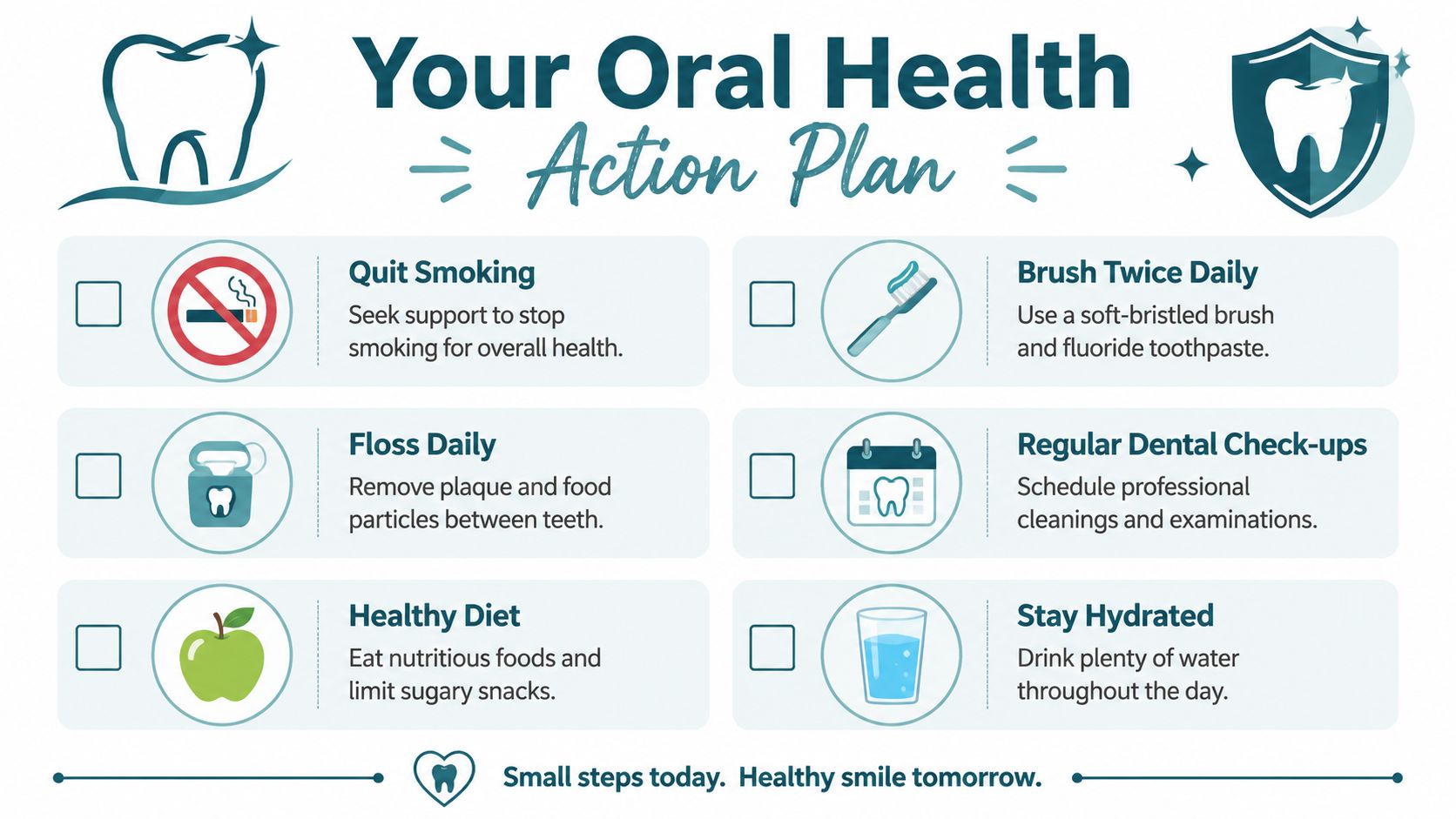
The most powerful step is reducing or stopping tobacco use. That change helps far beyond appearance because it reduces ongoing irritation and gives the mouth a better chance to recover. Even for patients who aren't ready to quit right away, small steps still matter.
A strong at-home plan usually includes:
- Brush twice a day: Use a soft-bristled brush and fluoride toothpaste unless a dentist recommends another approach for sensitivity or preferences.
- Clean between teeth daily: Floss, picks, or interdental brushes help where a toothbrush can't reach.
- Drink more water: This helps with dry mouth and reduces the amount of time debris and acids sit on teeth.
- Limit stain-heavy habits when possible: Coffee, tea, and smoking together often deepen discoloration.
- Replace worn brushes on time: Frayed bristles clean poorly and can irritate already tender gums.
What helps with stains and what doesn't
Many smokers buy whitening toothpaste first. That can help a little with very light surface stain, but it usually won't remove deeper discoloration. It also won't treat gum infection or hidden decay. Readers who want a broader consumer-oriented take on addressing smoker's teeth stains may find it useful as background, but whitening products work best after a professional exam confirms the teeth and gums are healthy enough for them.
Home remedies are where people often waste time. Charcoal pastes, harsh abrasive products, and frequent acid-based DIY whitening approaches can leave teeth more sensitive without solving the underlying problem.
Best next step: If stains appeared along with bleeding, recession, or looseness, schedule an exam before trying another whitening product.
Why regular checkups matter more for smokers
In a peer-reviewed study discussed by the FDA, mean DMFT scores were 16.4 ± 7.4 for former smokers, 15.5 ± 6.5 for passive smokers, 12.9 ± 6.4 for smokers, and 11.6 ± 6.7 for non-smokers, with higher values in severe periodontal stages driven largely by missing teeth, as summarized in the FDA's oral health guidance on tobacco use. The practical lesson is simple. Tobacco-related damage often accumulates over time and shows up as lost teeth, not just stained ones.
That's why regular cleaning and exams, dental x-rays when needed, and earlier follow-up are often worth it for smokers and former smokers. Patients who want more home-care guidance can also review practical gum health tips for preventing disease.
Partner with Your Amanda Dentist for a Healthy Future
Smoking effects on teeth can feel discouraging when the mirror shows stains and the gums don't feel right. Still, the path forward is usually more hopeful than people expect. Teeth can often be cleaned, gum problems can be treated, damaged teeth can be restored, and missing teeth can be replaced with a plan that fits the patient's goals and health.
Patients also don't need to have everything solved in one visit. The most effective care often happens step by step. A new patient exam identifies what needs urgent attention. Digital x-rays and a careful clinical evaluation help separate cosmetic concerns from deeper disease. From there, treatment can move toward healthier gums, stronger teeth, better function, and a more confident smile.
For people searching online for a dentist near me, an emergency dentist, a cosmetic dentist near me, or help with tooth extraction and restorative care in Amanda, Lancaster, Circleville, or Carroll, Ohio, what matters most is finding a team that stays practical, clear, and compassionate. No judgment. Just honest answers, personalized treatment planning, and modern dental care that meets patients where they are.
A healthier smile doesn't require perfection. It requires a starting point, a good evaluation, and consistent follow-through.
If you're ready to take that first step, Amanda Family Dental offers patient-focused care for families and adults in Amanda, OH, Lancaster, OH, Circleville, OH, and Carroll, OH. Whether you need a new patient exam, help with stained teeth, gum treatment, restorative dentistry, dental implants, or emergency dental services, the team can help you build a realistic plan for a healthier, more confident smile.