

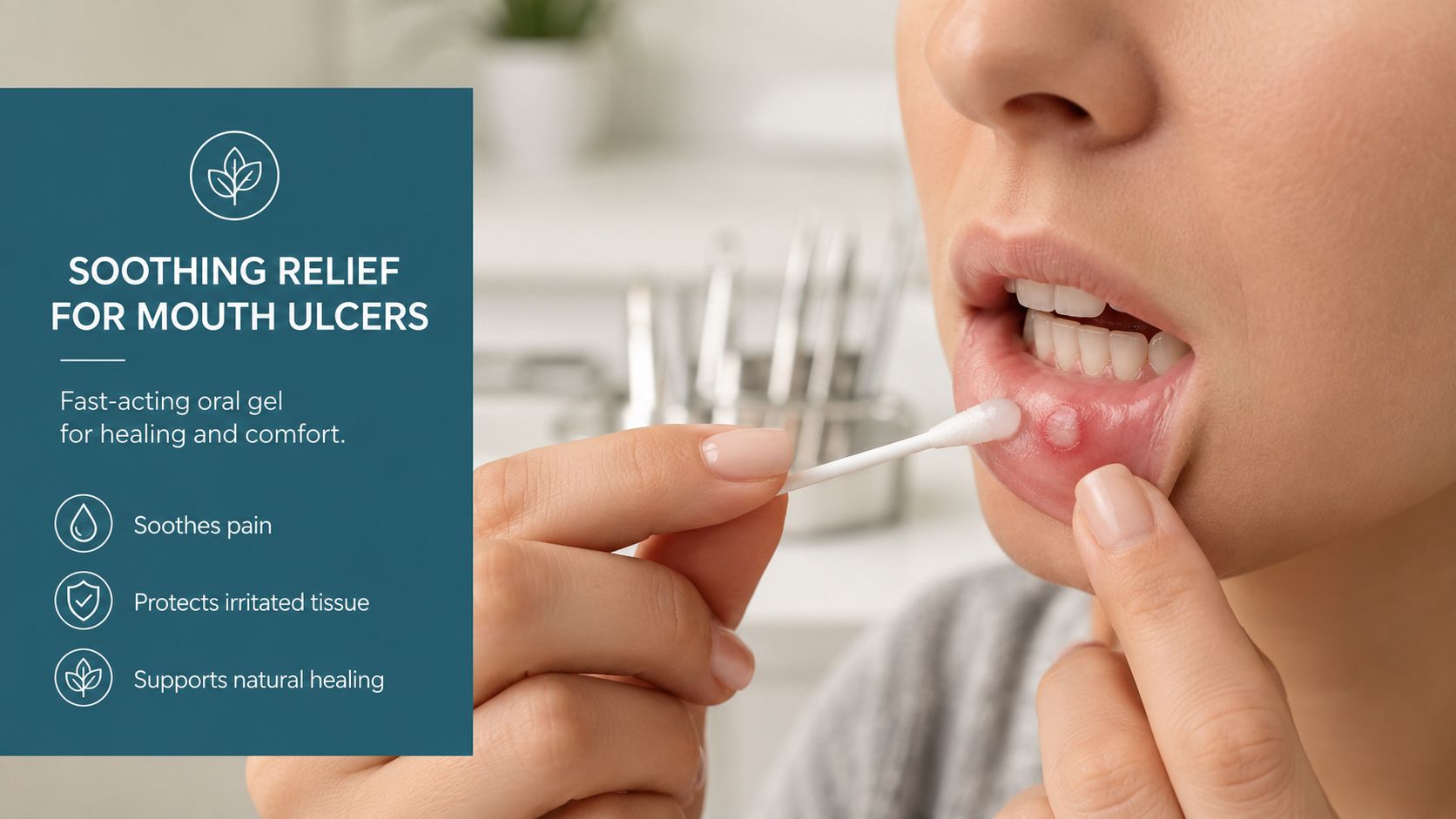
A painful spot inside the mouth can throw off an entire day. Breakfast stings, coffee irritates the sore, and even talking can make the area rub against the teeth. These situations often prompt similar questions right away: How long will this last, what helps it heal, and when does it need a dentist's attention?
That uncertainty is common because the mouth ulcer healing process doesn't always follow one neat pattern. Some sores clear quickly, while others take longer depending on the type of ulcer and what caused it. For families searching for a dentist near me, or for patients looking for a dentist in Amanda, OH, dentist in Lancaster, OH, dentist in Circleville, OH, or dentist in Carroll, OH, it helps to know what's normal and what isn't.
Table of Contents
- Dealing with a Painful Mouth Ulcer in Amanda OH
- Understanding What Causes Mouth Ulcers
- The Typical Mouth Ulcer Healing Timeline and Stages
- Home Care and OTC Options to Promote Healing
- When to See Your Dentist for a Mouth Ulcer
- Your Partner for Comprehensive Dental Care in the Amanda Area
Dealing with a Painful Mouth Ulcer in Amanda OH
A common version of this problem starts the same way. Someone in Amanda, Lancaster, Circleville, or Carroll feels a sore spot with the tongue, checks the mirror, and finds a small white or yellow ulcer with a red edge. It may have shown up after biting the cheek, eating something sharp, or during a stressful week when everything already felt harder than usual.
That's when the guessing starts. Some people assume every ulcer should disappear in a week. Others worry immediately that something serious is wrong. In reality, the healing window isn't identical for everyone. The healing timeline for mouth ulcers is often misunderstood as a uniform 1 to 2 weeks, but evidence shows healing varies significantly by ulcer type, ranging from 1 to 4 weeks, and ulcers lasting longer than 2 to 3 weeks may point to underlying conditions like infection or cancer, as explained in this guide to telling whether a mouth ulcer is healing.
Why this causes so much confusion
Part of the frustration is that mouth ulcers are small but disruptive. A tiny sore can make salty foods burn, brushing feel unpleasant, and sleep harder if the area keeps rubbing against the teeth or lips. Patients often look for fast reassurance, especially when a sore appears before work, school, or a social event.
Practical rule: A sore that's gradually becoming less painful and smaller is usually moving in the right direction. A sore that lingers, worsens, or keeps coming back deserves a closer look.
People also tend to use the term “mouth ulcer” for several different problems. That matters because a canker sore, a trauma-related ulcer, and a sore caused by ongoing irritation won't always heal on the same schedule. Knowing the cause is what makes the timeline make sense.
Understanding What Causes Mouth Ulcers
Most mouth ulcers fall into two everyday categories. The first is the traumatic ulcer. The second is the aphthous ulcer, which many people call a canker sore. They may look similar at a glance, but they don't start the same way.
Traumatic ulcers from irritation
A traumatic ulcer usually begins with something physical. A person may bite the inside of the cheek, scrape the tissue with a tortilla chip, or keep rubbing one area against a rough tooth edge or dental appliance. In those cases, the sore is less mysterious because there's often a clear trigger.
Examples patients often recognize include:
- Cheek or lip biting: A sore appears exactly where the accidental bite happened.
- Sharp edges: A chipped tooth or rough filling keeps irritating one spot.
- Dental appliances: Braces, aligners, or dentures can rub tissue if a spot isn't fitting smoothly.
- Food trauma: Hard, crunchy foods can scratch delicate mouth tissue.
Aphthous ulcers and recurring sores
Aphthous ulcers are different. They often show up without an obvious injury and can be linked to triggers such as stress, certain foods, hormonal changes, or irritation from oral care products. They're common, but that doesn't mean repeated episodes should be ignored.
One area that confuses many patients is recurrence. A one-time sore after biting the cheek is very different from ulcers that return again and again. Nutrient deficiencies such as B12 and iron are cited as possible causes, and vitamin B12 supplementation has shown benefit in reducing recurrent ulcer frequency, which is why a proper diagnosis matters, as noted in this background summary on mouth ulcers.
A single sore after clear trauma is usually straightforward. Repeated ulcers with no clear reason call for a fuller evaluation.
When the cause affects treatment
The cause shapes the solution. If the tissue keeps rubbing against a sharp tooth, the ulcer may not improve until that source of irritation is corrected. If the problem is recurrent aphthous ulcers, the conversation may shift toward triggers, oral habits, overall health, and supportive dental care.
That's one reason patients searching for a dentist in Amanda, OH or a dentist near me often need more than symptom relief. They may need someone to determine whether the sore is from trauma, recurrence, or another issue entirely. In some cases, that same visit also identifies related needs such as cleaning and exams, dental x-rays, or restorative work if a broken tooth edge is part of the problem.
The Typical Mouth Ulcer Healing Timeline and Stages
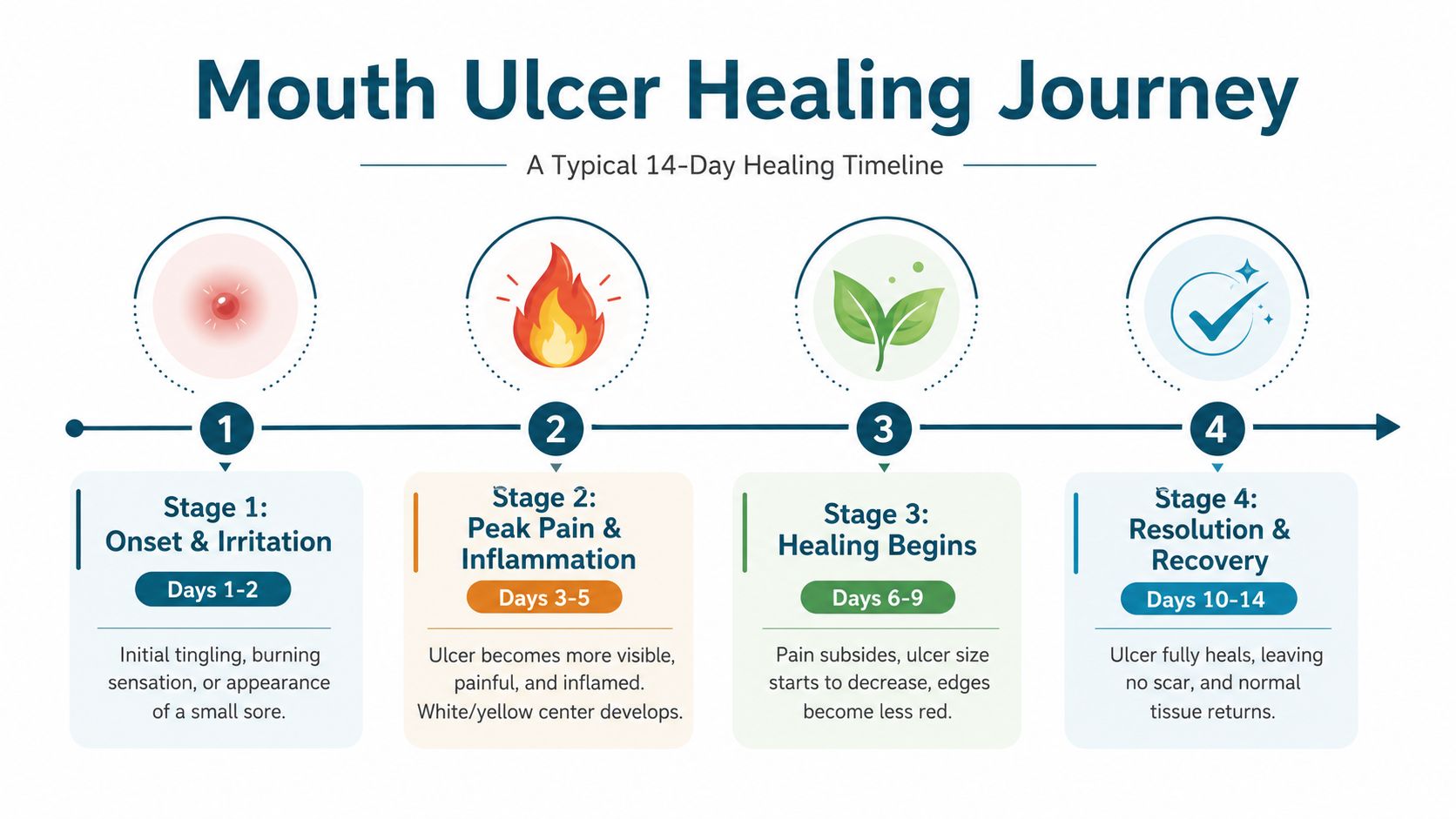
The clearest way to understand the mouth ulcer healing process is to think of it as a series of stages rather than one long stretch of discomfort. Minor aphthous ulcers, the most common type, typically heal completely on their own within 7 to 14 days, and the process follows four stages: hemostasis, inflammation, proliferation, and maturation. Ulcers that persist beyond 3 weeks need medical evaluation, according to this clinical overview of aphthous ulcer healing.
The early stage
Right after the tissue is injured or irritated, the body moves into hemostasis. This is the immediate response that helps protect the area. Soon after that comes inflammation, which is the stage people feel the most.
This is often when the sore burns, throbs, or becomes very tender. The center may look white or yellow, and the surrounding tissue can appear red. Pain often peaks during the first few days, which is why many patients feel worried right at the point when the ulcer is following a normal pattern.
The rebuilding stage
After the painful early period, the body starts the proliferation phase. New tissue begins to form, the ulcer usually starts to shrink, and the red border often looks less angry. Then comes maturation, when the tissue strengthens and the surface returns closer to normal.
A simple way to track progress is to look for these signs:
| Sign | What it usually means |
|---|---|
| Less pain with eating | Inflammation is settling down |
| Smaller sore | New tissue is filling in |
| Red edge fading toward pink | Healing is progressing |
| Smoother surface | Tissue is maturing |
Why traumatic ulcers can feel different
Traumatic ulcers follow a related wound-healing pattern, but the timeline depends heavily on whether the irritation stops. Oral traumatic ulcers move through hemostasis, inflammation, proliferation, and remodeling, with inflammation over 24 to 72 hours, proliferation around 3 to 7 days, and visible healing typically beginning within 10 days once the cause is removed, with complete resolution expected by 14 days if irritation doesn't continue, as described in this review of oral traumatic ulcers.
When a sore gets less painful, less red, and smaller over time, that's the pattern most dentists want to see.
For patients looking for an emergency dentist or a dentist in Lancaster, OH, understanding this timeline helps separate normal healing from a sore that's being delayed by a rough tooth, repeated trauma, or something that needs prompt care.
Home Care and OTC Options to Promote Healing
Most simple mouth ulcers can be managed at home while the tissue repairs itself. The goal is to reduce irritation, keep the area clean, and make eating and speaking more comfortable.
Start with gentle rinsing
One of the simplest home options is a saltwater rinse. The recommended method is to dissolve half a teaspoon of salt in a glass of warm water, rinse the mouth thoroughly, and spit it out rather than swallowing it. This can be repeated a few times daily to help relieve pain and lower the risk of infection, based on NHS mouth ulcer guidance.
That routine works best when it's gentle. Swishing aggressively can make a tender ulcer feel worse.
Reduce friction and food irritation
Everyday choices can either calm the sore or keep aggravating it. Helpful adjustments include:
- Choose softer foods: Yogurt, eggs, oatmeal, soups, and smoothies are usually easier on irritated tissue.
- Skip trigger foods: Spicy, salty, acidic, or crunchy foods often sting and can prolong discomfort.
- Use a soft toothbrush: Rough bristles can hit the ulcer and restart irritation.
- Watch oral rinses: Some mouthwashes burn because of their ingredients. Patients who notice that problem may find it helpful to read why some mouthwash burns.
OTC products and label reading
Over-the-counter products can also help. Topical anesthetics may numb the area briefly, and protective pastes can create a barrier over the sore so food and teeth don't keep rubbing it. The right choice depends on the location of the ulcer and how sensitive the tissue feels.
For readers who also look into supplements when ulcers recur, label language can be confusing. A practical example is distinguishing between lysine forms, which helps explain how ingredient names on supplement labels may look different even when they refer to closely related forms. That kind of careful label reading is useful whenever patients are trying to understand oral health products.
Gentle care usually helps more than aggressive home remedies. If a treatment burns sharply or leaves the tissue angrier, it's probably not the right fit.
A home plan should feel supportive, not harsh. If pain keeps escalating, eating becomes difficult, or the sore isn't improving, home care has reached its limit.
When to See Your Dentist for a Mouth Ulcer
A mouth ulcer becomes more concerning when it stops behaving like a routine sore. The biggest warning sign is persistence after the likely cause has already been removed. Persistent ulcers that fail to heal within 10 days after removing a possible cause such as a sharp tooth warrant urgent investigation for malignancy or systemic disease, and difficult cases may benefit from interventions such as topical doxycycline or vitamin B12 supplementation, according to this review on oral ulcer healing and management.
Red flags that deserve prompt care
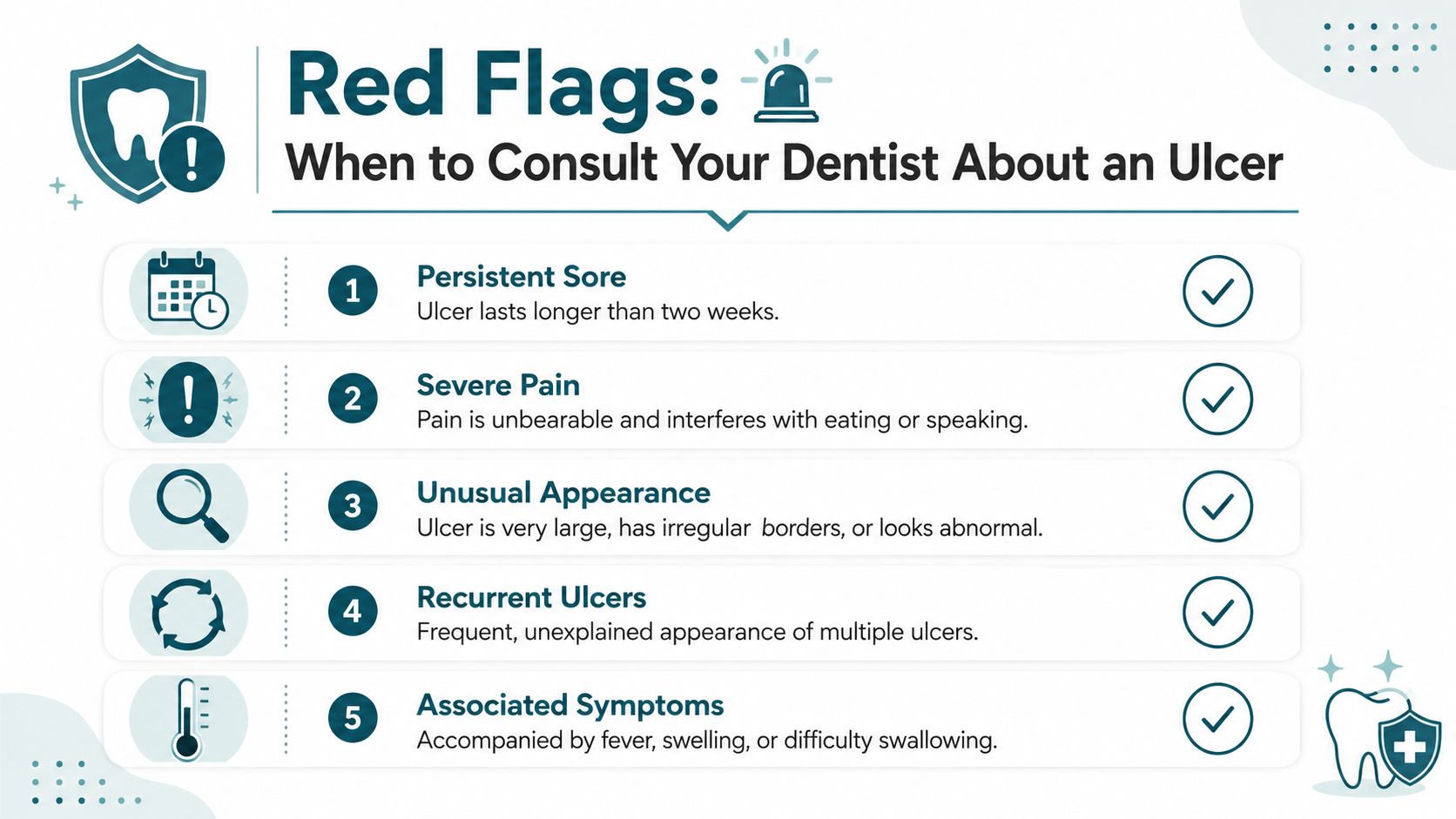
Some sores need a dentist's attention sooner rather than later. That includes situations where the ulcer is interfering with daily life or doesn't look like it's moving toward recovery.
Common reasons to book an exam include:
- Persistent healing delay: The rough tooth, bite trauma, or appliance irritation has been addressed, but the sore still isn't healing.
- Severe pain: Eating, drinking, or speaking has become difficult.
- Repeated ulcers: New sores keep appearing with no clear cause.
- Unusual appearance: The ulcer seems unusually large, irregular, or different from past sores.
- Other symptoms: Fever, swelling, or trouble swallowing show up along with the ulcer.
Why a dental exam matters
Most mouth ulcers are benign. That's reassuring, but it shouldn't lead to guesswork when a sore doesn't heal normally. A dentist can check whether the ulcer is being caused by a broken tooth edge, friction from dental work, recurring irritation, or something outside the usual pattern.
For patients searching online for an emergency dentist, a dentist in Circleville, OH, or a dentist in Carroll, OH, getting the sore evaluated can do more than ease anxiety. It can prevent a delay in treating a problem that needs prompt attention. Patients dealing with pain or a suspicious sore can learn more about local urgent care options through emergency dental care.
Treatment may involve more than the sore itself
If the ulcer is trauma-related, the actual treatment may be smoothing a sharp tooth, adjusting a restoration, or addressing a fit problem with an appliance. In other cases, the exam may point toward broader dental needs such as tooth extraction, restorative treatment, or follow-up care to remove the source of repeated tissue injury.
A non-healing sore isn't something to monitor indefinitely. Once it falls outside a normal pattern, a professional exam is the safer choice.
Your Partner for Comprehensive Dental Care in the Amanda Area
When a patient finally decides to schedule a visit, knowing what happens next usually lowers stress. A dental appointment for a lingering mouth ulcer is typically straightforward and focused. The team reviews symptoms, examines the sore and surrounding tissues, and looks for local causes such as a sharp tooth, broken filling, or irritation from an appliance.

What patients can expect
A thorough visit often includes a few basics that help connect the sore to the bigger picture of oral health.
- New patient exams: A full review of the mouth, teeth, gums, and the area around the ulcer.
- Digital x-rays: Helpful when a hidden tooth issue, rough edge, or other dental problem may be contributing.
- Personalized treatment plans: Recommendations based on whether the issue is irritation, recurrence, infection risk, or another concern.
That same appointment can also identify other care needs that affect comfort and confidence, including cleaning and exams, restorative dentistry, cosmetic dentistry, teeth whitening, or tooth replacement options for patients also searching for dental implants near me or a cosmetic dentist near me.
Community-focused care close to home
Patients in Amanda, Lancaster, Circleville, and Carroll often prefer care that feels local, clear, and practical. A hometown practice can make it easier to ask questions, follow up quickly, and coordinate both urgent visits and long-term dental care in one place.
Operational details also matter to patients, even if they're not the first thing discussed during an ulcer visit. Many practices now use systems designed to improve scheduling and communication, and readers interested in the broader topic can explore Voicedial.ai's dental management solutions as an example of how dental offices organize patient communication and workflow. For those seeking a local office, dentist care in Amanda offers a starting point for learning about available services.
A persistent sore inside the mouth is easy to minimize until it interrupts meals, sleep, or peace of mind. Clear answers and timely care can make that problem feel manageable again.
Patients in Amanda, OH, Lancaster, OH, Circleville, OH, and Carroll, OH who need answers about a painful or non-healing mouth ulcer can contact Amanda Family Dental to schedule an appointment, request a consultation, or get help from a trusted local dental team. Whether the concern involves an urgent sore, routine dental care, restorative treatment, cosmetic dentistry, or a search for a dependable dentist near me, the office provides patient-focused care designed to relieve discomfort and support a healthy smile.