

A search for a dentist in Carroll usually starts with something simple. A tooth has been bothering someone for a few days. A child is due for a checkup. A crown broke at the wrong time. Or a family has just decided it's time to stop driving all over the area for different kinds of dental care.
Many individuals aren't only looking for a dentist near me. They're looking for a place that feels dependable, calm, and capable. They want routine cleanings, help in an emergency, options for cosmetic improvements, and practical answers about comfort and cost. For families around Carroll, Amanda, Lancaster, and Circleville, that mix matters.
Table of Contents
- Finding Your Dental Home in the Carroll, OH Area
- Comprehensive Dental Services for Your Entire Family
- Advanced Solutions for Pain Relief and Smile Restoration
- The Amanda Family Dental Difference Our Commitment to You
- Your First Visit What to Expect as a New Patient
- Affordable Care Insurance Payments and Our Membership
- Schedule Your Visit at Our Amanda, OH Office Today
Finding Your Dental Home in the Carroll, OH Area
Families looking for a dentist in Carroll often want more than a clean office and an appointment slot. They want a practice that can handle the ordinary things well, then stay steady when life gets more complicated. That means preventive visits for kids, thoughtful help for anxious adults, and solutions that don't feel rushed or confusing.
In smaller communities, local access matters. CDC data shows that adults ages 18 to 64 in urban areas had a dental visit in the past 12 months at a rate of 66.7%, compared with 57.6% for adults in rural areas, a gap that affects preventive care and often leads to more involved treatment needs later, according to the CDC data brief on urban-rural dental care differences. That's one reason community-based care stays so important for families around Carroll and Amanda.
A good dental home usually feels consistent in ways patients notice right away. The team remembers a child who was nervous last time. An adult asking about veneers also gets a realistic conversation about gum health and bite balance first. Someone with a broken tooth hears what can be done now, what can wait, and what the trade-offs are.
Practical rule: The best local office isn't the one that promises everything. It's the one that explains what works, what doesn't, and why.
That practical approach matters in Carroll, Lancaster, Circleville, and Amanda because families often need care that spans years, not just one visit. A practice should be able to move from checkups to fillings, from whitening to crowns, and from a sudden toothache to a long-range plan without making patients start over every time.
For readers curious about how strong local practices build trust and stay visible to the communities they serve, this playbook for growing your dental practice offers a useful behind-the-scenes look at what helps patients find care when they need it.
Comprehensive Dental Services for Your Entire Family
People searching for dental care in Carroll, OH, or nearby towns often want one thing above all. They don't want to bounce between offices for every stage of care. A full-service family practice is easier on schedules, easier on communication, and easier on long-term oral health because the dental team sees the whole picture.
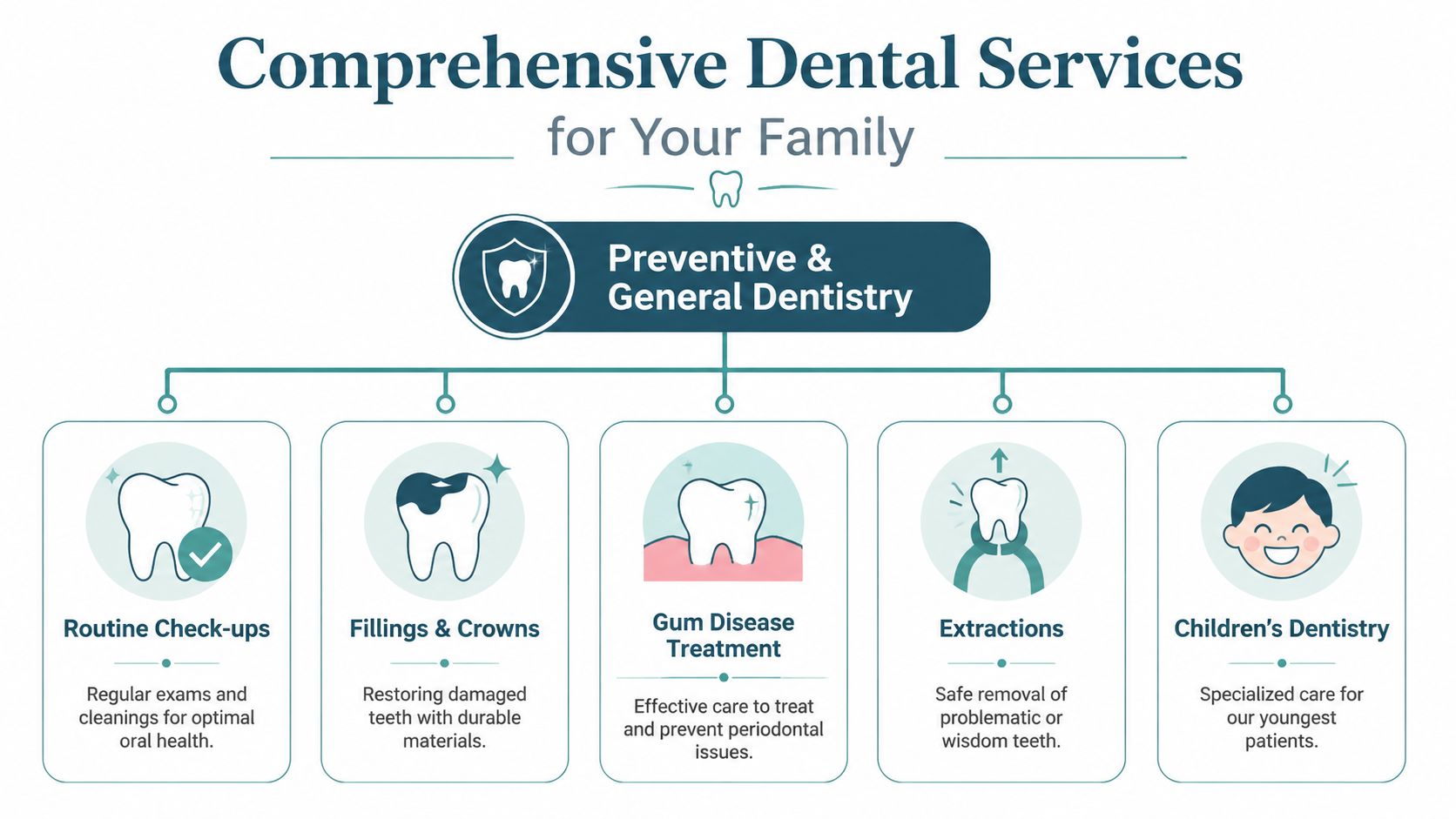
Preventive and general dentistry
Most healthy smiles are built through regular care. Cleanings, exams, and digital X-rays help catch problems before they turn into pain, cracked teeth, or bigger bills. New patient exams also give the dentist a baseline for bite wear, gum health, and areas that may need monitoring.
Typical preventive and general services include:
- Routine cleanings and exams that remove buildup and track changes over time.
- Digital X-rays that support accurate diagnosis with modern imaging.
- Composite fillings that repair decay while blending naturally with the tooth.
- Crowns and root canal treatment when a tooth is damaged but still worth saving.
- Tooth extractions for teeth that can't be predictably restored.
Families who want a fuller overview of what a patient-friendly office can offer can review these family-friendly dental services.
Gentle pediatric dentistry
Children need more than smaller instruments and cheerful décor. They need a team that knows how to pace visits, explain things clearly, and build trust early. That's especially important for parents trying to establish healthy habits without turning the dental office into a source of stress.
A major challenge in many local markets is access to dedicated pediatric support. The service gap is real, and specialized care for children, including those with added needs, remains an important need in rural communities, as discussed by Access Carroll family dental care. For parents in Carroll, Circleville, and Lancaster, that means it's worth looking for a practice that's prepared to make children feel safe, heard, and comfortable.
A child's first few visits shape how that child will feel about dental care for years.
Cosmetic dentistry
A search for a cosmetic dentist near me usually starts with appearance, but good cosmetic treatment always begins with health and function. Whitening works best on clean, stable teeth. Veneers need good planning. Invisalign cases need a bite that can support the final result, not just straighter-looking front teeth.
Cosmetic options often include:
| Service | Best for | Important trade-off |
|---|---|---|
| Professional whitening | Stains and dull color | Works best when enamel and gums are healthy |
| Veneers | Shape, color, spacing concerns | Requires careful case selection |
| Invisalign | Mild to moderate alignment concerns | Success depends on wearing aligners as directed |
| Botox and Juvéderm support | Smile framing and facial esthetics | Should complement, not replace, dental planning |
Restorative dentistry
Restorative care is where comfort, chewing ability, and confidence come back together. Fillings, crowns, bridges, dentures, and implants each solve different problems. The right choice depends on the amount of remaining tooth structure, gum and bone support, budget, and how long the patient wants the solution to last.
Matching the treatment to the actual condition of the mouth usually works best. A simple filling can be ideal for a small cavity. A crown can protect a tooth that's structurally compromised. If a tooth is missing, replacement matters because neighboring teeth can shift and the bite can change over time.
Advanced Solutions for Pain Relief and Smile Restoration
When people search for an emergency dentist or dental implants near me, the problem usually isn't abstract. It's a cracked molar before work, a swelling that won't settle down, or a gap in the smile that keeps affecting eating and confidence. These situations need more than reassurance. They need a clear diagnosis and a treatment plan that respects both urgency and long-term success.
Emergency dental care when waiting is a mistake
Not every toothache is an emergency, but some delays make treatment harder. Swelling, trauma, a broken tooth, a lost restoration, or pain that keeps someone awake should be evaluated quickly. In those cases, the dentist's first job is to determine whether the tooth can be saved, whether infection is present, and whether the patient needs immediate relief or a staged repair.
Common same-day concerns include:
- Severe tooth pain that suggests deep decay, infection, or a cracked tooth
- Dental abscess symptoms such as swelling, pressure, or tenderness
- Broken crowns or fillings that leave a tooth exposed
- Urgent tooth extraction needs when the tooth can't be restored predictably
For patients dealing with tooth pain and pressure that may be linked to infection, this explanation of an abscessed tooth and headache connection can help clarify why prompt evaluation matters.
A common mistake is assuming extraction is always the fastest answer. Sometimes it is. Sometimes saving the tooth with restorative treatment preserves bite stability better and avoids replacement costs later. The best emergency care isn't automatically the most aggressive care. It's the care that solves today's pain without creating tomorrow's problem.
Dental implants and implant-supported dentures
Missing teeth affect more than appearance. They change how a person chews, how speech feels, and how force is distributed across the mouth. Traditional dentures can still help many people, but they have limits in retention and stability. Implant treatment often gives a stronger foundation.
A clinically proven option for larger tooth loss is implant-supported denture treatment. Using 4 to 6 titanium implants per arch can reduce bone resorption by up to 70% compared with traditional dentures and has shown a 98% survival rate at 5 years, according to the clinical overview of implant-supported dentures.
Clinical insight: The best implant plan isn't always the biggest plan. It's the one with enough support, healthy tissue, and a design the patient can maintain.
That matters because implant care isn't one-size-fits-all. Some patients are ideal candidates for single implants. Others benefit more from a denture stabilized by implants. The right recommendation depends on bone support, oral hygiene, bite forces, medical history, and whether the patient wants a removable or fixed solution.
A short visual overview can make these choices easier to understand:
Sleep dentistry and myofunctional support
Some patients avoid treatment because of anxiety. Others struggle with jaw tension, clenching, airway concerns, or habits that affect breathing and oral posture. In those cases, comfort-focused care and myofunctional support can make a major difference.
Sleep dentistry helps patients who need a calmer visit. Myofunctional therapy can support better oral posture and function in the right cases. Neither is a gimmick, and neither replaces good diagnosis. They work best when the office looks beyond a single tooth and considers how the whole mouth is functioning day to day.
The Amanda Family Dental Difference Our Commitment to You
A modern dental office can offer a long list of services and still miss what patients care about most. People notice whether recommendations feel honest. They notice whether anxiety is taken seriously. They notice whether the office respects their preferences instead of pushing everyone into the same care model.

Care that fits real people
For many families in Carroll and nearby communities, the difference comes down to practical details.
- Holistic-minded options help patients who prefer mercury-free fillings or want fluoride-free choices discussed clearly and respectfully.
- Sedation and comfort-focused care help adults and children who've delayed treatment because dental visits feel overwhelming.
- Same-day availability when possible matters when pain shows up before a weekend, a school event, or a work shift.
- Membership options and flexible planning give uninsured patients a path forward without feeling shut out of care.
One issue often overlooked in dental marketing is timing. People rarely search for a new office when life is calm. They search when a tooth hurts, when a child needs an appointment soon, or when a broken front tooth suddenly becomes urgent. In that context, speed matters. Emergency dental visits reportedly surged 15% in Midwest markets, making prompt scheduling and membership-based affordability especially relevant, as noted in this discussion of same-day dental demand and payment flexibility.
A practical philosophy, not a one-size-fits-all model
Some patients want the most conservative treatment possible. Others want the strongest long-term fix. Others need the option that gets them comfortable first and lets them phase care over time. A thoughtful practice doesn't treat those preferences as obstacles. It plans around them.
Patients usually feel most confident when they understand the trade-offs. What lasts longer, what costs less upfront, what's more conservative, and what may need replacement sooner.
That kind of transparency is especially valuable for families comparing a dentist in Carroll, a dentist in Lancaster, OH, or a dentist in Circleville, OH. The office should feel advanced, but not impersonal. It should feel welcoming, but not vague. Good dentistry lives in that balance.
Your First Visit What to Expect as a New Patient
A first appointment should lower stress, not add to it. Patients usually want to know whether they'll be rushed, whether the dentist will listen, and whether they'll leave with a clear idea of what's going on. A strong new patient visit answers those concerns directly.
The first conversation
The visit begins with the basics, but the basics matter. Medical history, dental history, current symptoms, and personal goals all shape what happens next. Someone visiting for a cleaning may also mention jaw tension, old dental anxiety, or interest in whitening. Those details help the team avoid generic recommendations.
A good front desk experience sets the tone. Clear forms, straightforward scheduling, and calm communication reduce friction before treatment even starts. For practices studying how patient experience influences growth, this example of Cherubini Company marketing expertise is a useful reminder that systems matter because people notice when care feels organized.
The exam and digital records
After the initial conversation, the clinical exam fills in the rest of the picture. Digital X-rays help evaluate what can't be seen directly, including areas between teeth, under older restorations, and around roots. The dentist also checks gums, existing dental work, bite patterns, and signs of wear.
Routine preventive visits remain one of the smartest ways to avoid bigger treatment later. Patients who want a clearer picture of the basics can review what's included in a professional dental cleaning visit.
A treatment plan that makes sense
The most reassuring part of a first visit is often the conversation at the end. Patients should hear what needs attention now, what can be monitored, and what options exist if there's more than one reasonable path. That matters because not every cracked tooth needs the same treatment, and not every missing tooth should be replaced the same way.
A practical treatment plan usually covers:
- Immediate concerns such as pain, infection, or a broken tooth
- Preventive priorities including cleanings, gum care, and home habits
- Longer-term goals like implants, cosmetic treatment, or replacing older restorations
Good planning is collaborative. Patients should leave knowing what the dentist recommends and why.
Affordable Care Insurance Payments and Our Membership
Cost keeps many people from booking even when they know they need treatment. The most helpful offices handle that concern directly. They explain insurance clearly, outline payment options, and give patients a way to move forward without confusion.
Ways patients usually pay for care
Most family practices work with many major insurance plans and can help patients understand what preventive care, restorative treatment, and emergency visits may involve financially. For people without dental benefits, payment flexibility matters even more. Spreading care over phases is often better than postponing everything until a small issue becomes more expensive.
Patients who are comparing broader family coverage options in other settings may also find it useful to review resources like this guide to find family health coverage in Florida, which shows how dental benefits are often bundled and evaluated at the household level.
Why membership plans help
An in-house membership can be one of the simplest solutions for uninsured patients. Instead of dealing with the limits and waiting periods that sometimes come with traditional benefit structures, a membership plan can support routine preventive care and offer savings on additional treatment.
That model works well for families who want predictable access. It also helps adults who've delayed care get back on track with exams, cleanings, and treatment planning without feeling that insurance status has to decide whether they can be seen.
Schedule Your Visit at Our Amanda, OH Office Today
For patients searching for a dentist in Carroll, OH, convenience matters almost as much as clinical skill. A nearby office in Amanda can make it easier to stay consistent with cleanings, bring children in for checkups, and get seen quickly when a tooth starts hurting.
Convenient for Carroll and nearby communities
The office serves patients from Amanda, Carroll, Lancaster, and Circleville, Ohio. That makes it a practical choice for families who want one trusted location for preventive visits, cosmetic treatment, restorative dentistry, and urgent care needs.
Patients often choose a local office for reasons that have nothing to do with marketing. They want shorter drives, familiar faces, and an easier path to follow-up care. That's especially helpful for multi-visit treatment such as crowns, implants, Invisalign, or pediatric preventive care.
When it's time to book
If it's been a while since the last exam, if a tooth is bothering someone, or if it's time to improve the look and function of a smile, the next step is simple. Call the office, request a consultation, or ask about available appointment times for new patients.
Office hours, appointment availability, and treatment timing can change, so the fastest way to get current details is to contact the team directly through the practice website or by phone. For many patients, the hardest part is just making the first appointment. After that, the process usually feels much easier than expected.
Amanda Family Dental welcomes patients from Carroll, Amanda, Lancaster, and Circleville who want honest guidance, modern treatment options, and comfortable family-focused care close to home. To schedule a visit, request a consultation, or learn more about preventive, cosmetic, restorative, and emergency services, contact Amanda Family Dental.