

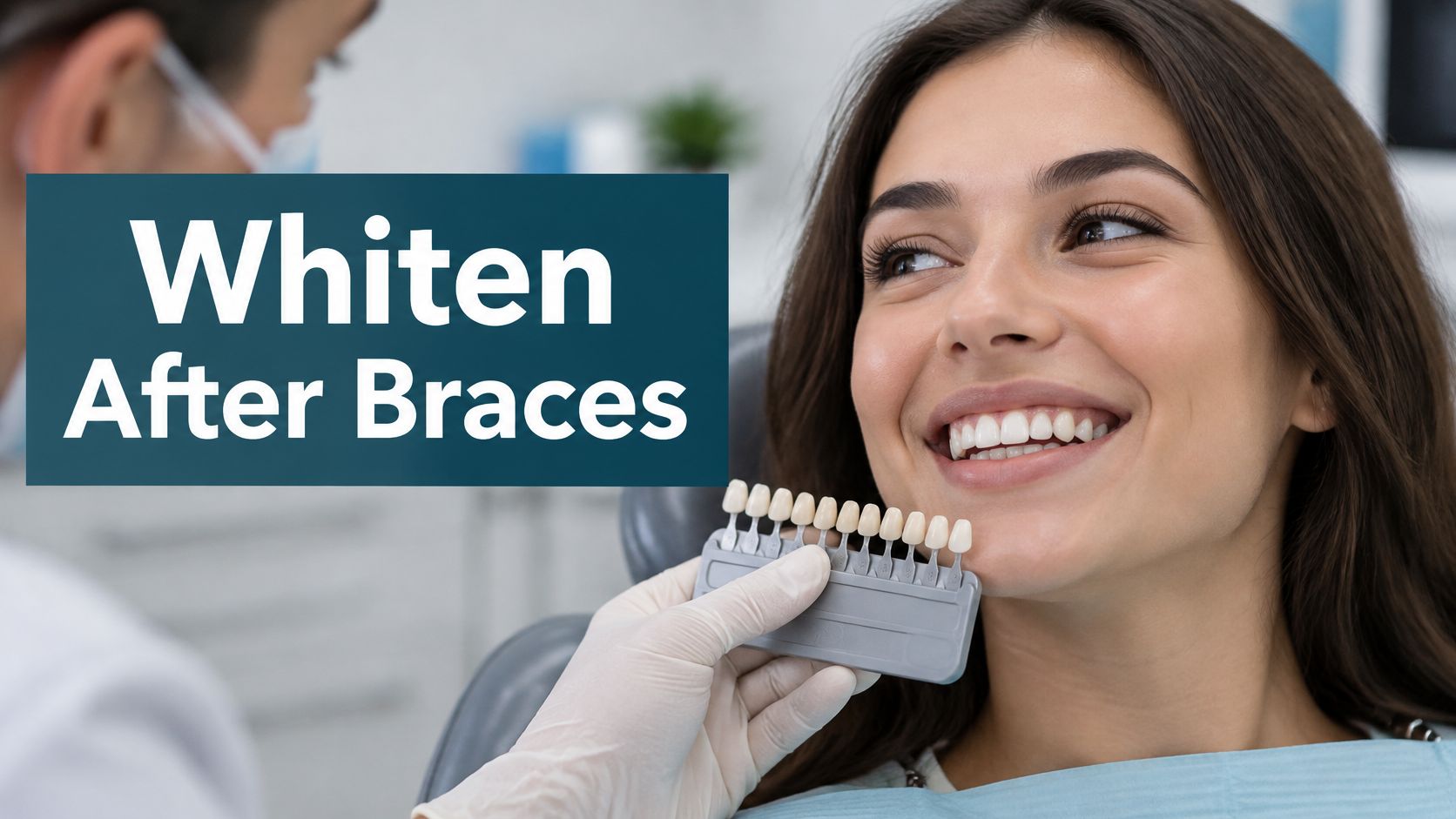
Wait at least 30 days after brackets come off, and most patients start whitening roughly 1 to 3 months later, once a dentist has confirmed the enamel is healthy. The day the braces come off is exciting, and it is also the day the mirror shows coffee stains, chalky patches, and a shade that doesn't match the smile you pictured.
That gap is common after fixed braces. Brackets shield some enamel and leave other spots open to food color and plaque. Families around Amanda, Lancaster, Circleville, and Carroll, Ohio often want a brighter smile before a wedding, a graduation, or school photos. A local dentist near me search usually starts with the same question: when is teeth whitening after braces safe?
The answer depends on two different problems. Even yellowing is a stain sitting on the surface. A white spot is enamel that lost minerals around a bracket. Those need different timing, and sometimes a different treatment than whitening gel.
Table of Contents
- How Long to Wait After Your Braces Come Off
- Check for White Spots and Residual Adhesive First
- In-Office, Take-Home or Over-the-Counter Whitening
- How to Whiten Safely After Braces, Step by Step
- Managing Sensitivity, Gum Irritation and Uneven Color
- When Whitening Is Not Enough and What Works Instead
- Book Your Post-Braces Whitening Consultation
How Long to Wait After Your Braces Come Off
If your teeth look yellow after braces, whitening may help, but the right start date depends on what is causing the color. A 2021 survey of dental professionals found that clinicians preferred waiting 1 to 3 months after bracket removal before whitening. Waiting at least 30 days also gives the dentist time to examine your teeth and record their shade.
A 2025 systematic review examined whitening after conventional braces. Treatments began between 7 and 90 days after bracket removal, with an average of 40.2 days. The review reported color changes, but its evidence was low quality, so those findings do not establish one best timeline for every patient. It supports considering whitening after appliances are removed, rather than during active treatment, with timing guided by an exam.
Whitening with brackets still on is difficult to assess because brackets block gel from reaching some areas. The final color is also hard to judge until they are removed.
A practical month-by-month plan
| Timeframe | What Is Happening | What to Do |
|---|---|---|
| Day of removal | Adhesive is cleaned off and the teeth are exposed | Book an exam and record baseline shade photos |
| Weeks 1-4 | The teeth may need assessment before bleaching | Brush with fluoride toothpaste and wait at least 30 days |
| Months 1-3 | This is the timing clinicians prefer, according to the survey; the review reported an average of 40.2 days | Consider supervised whitening if the dentist finds it appropriate |
| Months 3-6 | Some white spots may continue to remineralize | Have visible spots assessed before whitening the surrounding enamel |
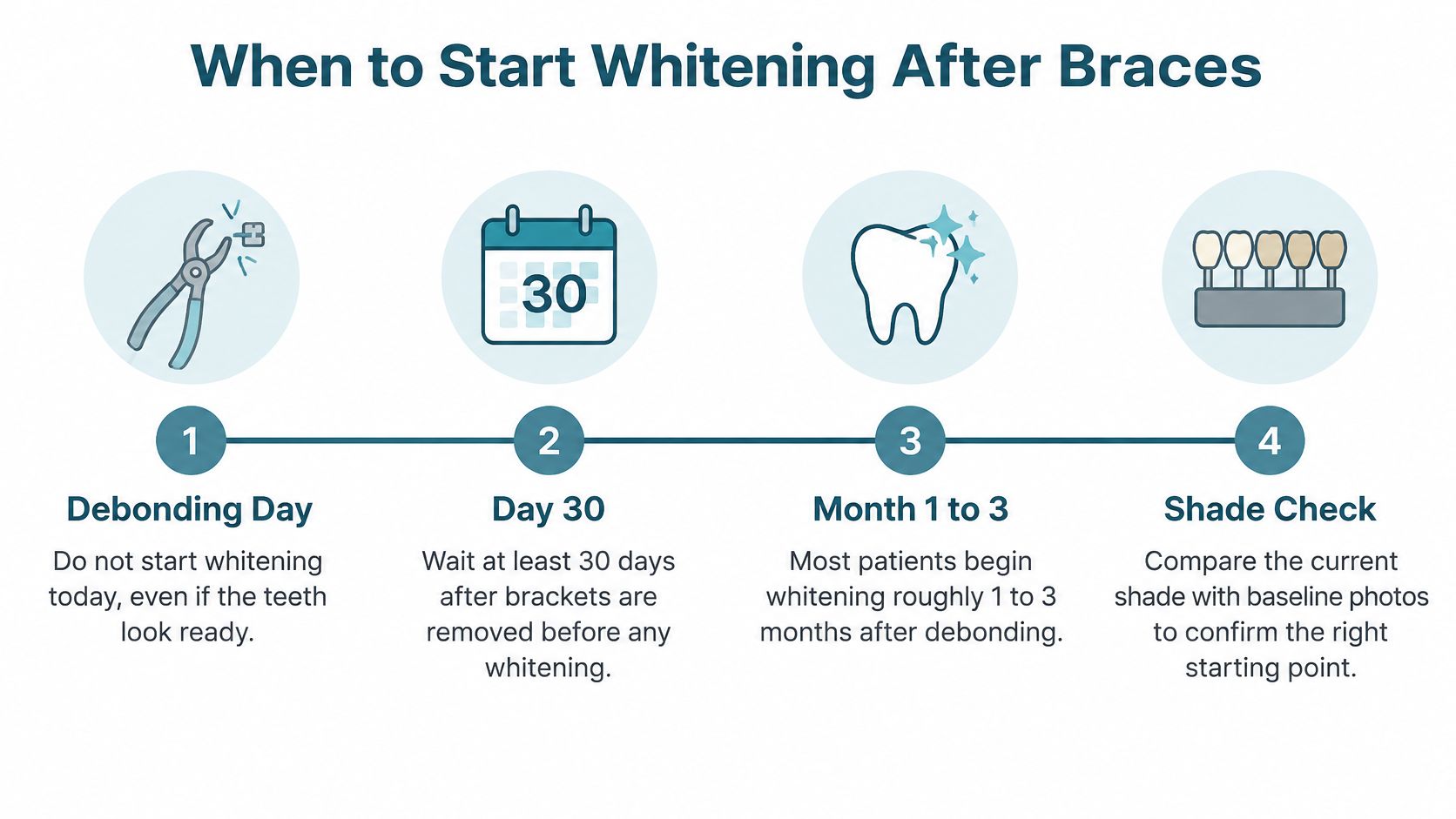
Patients in Amanda, Lancaster, Circleville, and Carroll sometimes have a photo deadline and hope to begin sooner. Book the exam early instead. The dentist can help set a suitable date, but a deadline alone is not a reason to shorten the waiting period.
Practical rule: Plan on a checkup and shade record about one month after bracket removal, then follow your dentist's advice on when to whiten.
Check for White Spots and Residual Adhesive First
Yellowing and white spots are not the same problem, even when they show up on the same tooth.
Generalized yellowing is surface color from coffee, tea, or food that sat around the brackets. Whitening often lifts that kind of stain. A white-spot lesion is a patch where enamel lost minerals. Plaque and acids collect around brackets and pull those minerals out. The spot looks chalky because light scatters inside the weakened enamel, not because a stain is sitting on top.
Bleaching lightens healthy enamel. It doesn't rebuild the weak patch. The surrounding tooth can get lighter while the spot stays chalky, so the contrast gets worse.
White spots are common after fixed braces. A systematic review and meta-analysis covering 57 studies and 9,101 orthodontic patients reported a pooled prevalence of 55.06% and an incidence of 34.2%. Risk rose with longer treatment and was much higher with conventional fixed appliances than with no braces at all. That is why a cosmetic dentist near me visit should check for active decay or demineralization before any whitening is booked.
What the exam looks for
- White spots: Size, chalkiness, and whether the patch is still active.
- Residual adhesive: Leftover bonding glue blocks gel and holds stain.
- Gum recession: Exposed roots get irritated by peroxide more easily than enamel.
- Decay, cracks, and restorations: Active cavities need care first. Crowns, fillings, and bonding will not lighten.
- Sensitivity history: Past zingers change the product and the wear time.
- Digital x-rays: These show decay between teeth that a mirror can't catch.
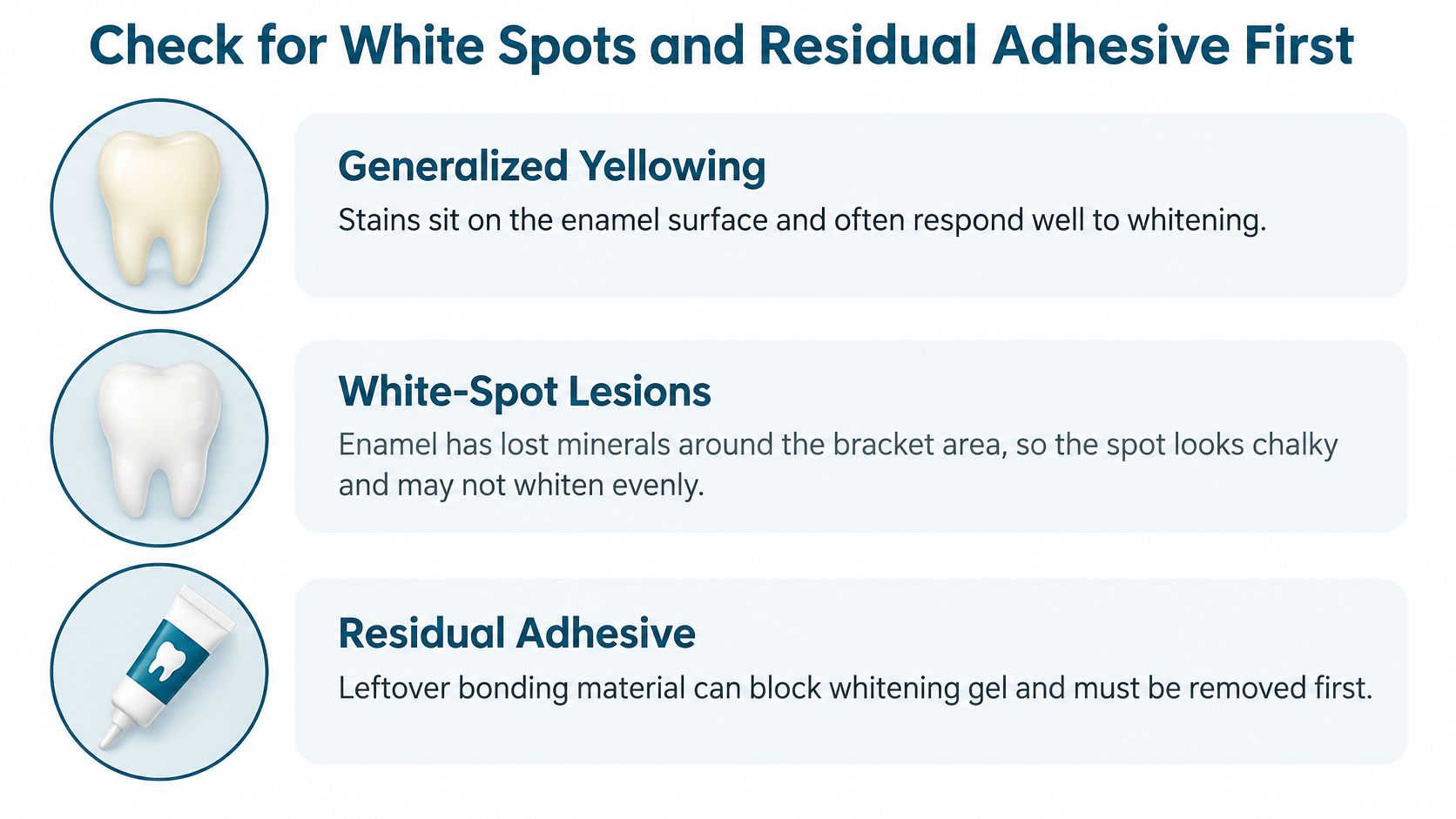
A shade photo from this visit is what makes later results measurable. A few spots usually mean remineralization first. A clean, even surface can often stay on the whitening schedule.
In-Office, Take-Home or Over-the-Counter Whitening
The method follows two things: how strong the gel is, and how much a dentist watches the process.
| Method | Typical Strength | Supervision | Time to Results | Sensitivity Risk |
|---|---|---|---|---|
| In-office professional | High-strength hydrogen peroxide, dentist-selected | Dentist chairside with gums shielded | One visit, about 1 hour | Highest, usually short-term |
| Custom take-home trays | Carbamide peroxide at a dentist-prescribed strength | Dentist-made trays worn at home | 2-4 weeks, daily wear | Moderate, usually manageable |
| Over-the-counter strips and gels | Lower-strength hydrogen peroxide, label strength | None beyond label directions | 2-4 weeks, daily use | Varies; higher with overuse or poor fit |
In-office whitening is the fast option. A higher-strength gel stays on the teeth while the gums are protected. One visit is enough for many even stains. The trade-off is a higher chance of short-term tingling, so it isn't the first pick when roots are exposed or spots are still active.
Custom trays suit most adults with healthy enamel. The dentist sets the strength and the wear time. A snug tray keeps gel on the tooth and off the gums. A loose tray leaks, and leaked gel is a common cause of burned gum tissue.
Store strips and gels have no custom fit and no one checking whether a mark is a stain or a lesion. Fresh bracket outlines and chalky patches are a poor match for a product that can't tell those apart. Loul Dental Studio's whitening comparison walks through how dentist care and home kits differ in strength, fit, and oversight.
Amanda Family Dental offers in-office whitening and custom take-home trays and matches the method to the exam, including stain type, sensitivity, and existing dental work. A clear look at professional teeth whitening options helps before you pick a kit off a shelf.
Custom trays fit most healthy smiles. In-office care fits a short timeline. Over-the-counter products wait until a dentist has cleared the teeth.
How to Whiten Safely After Braces, Step by Step
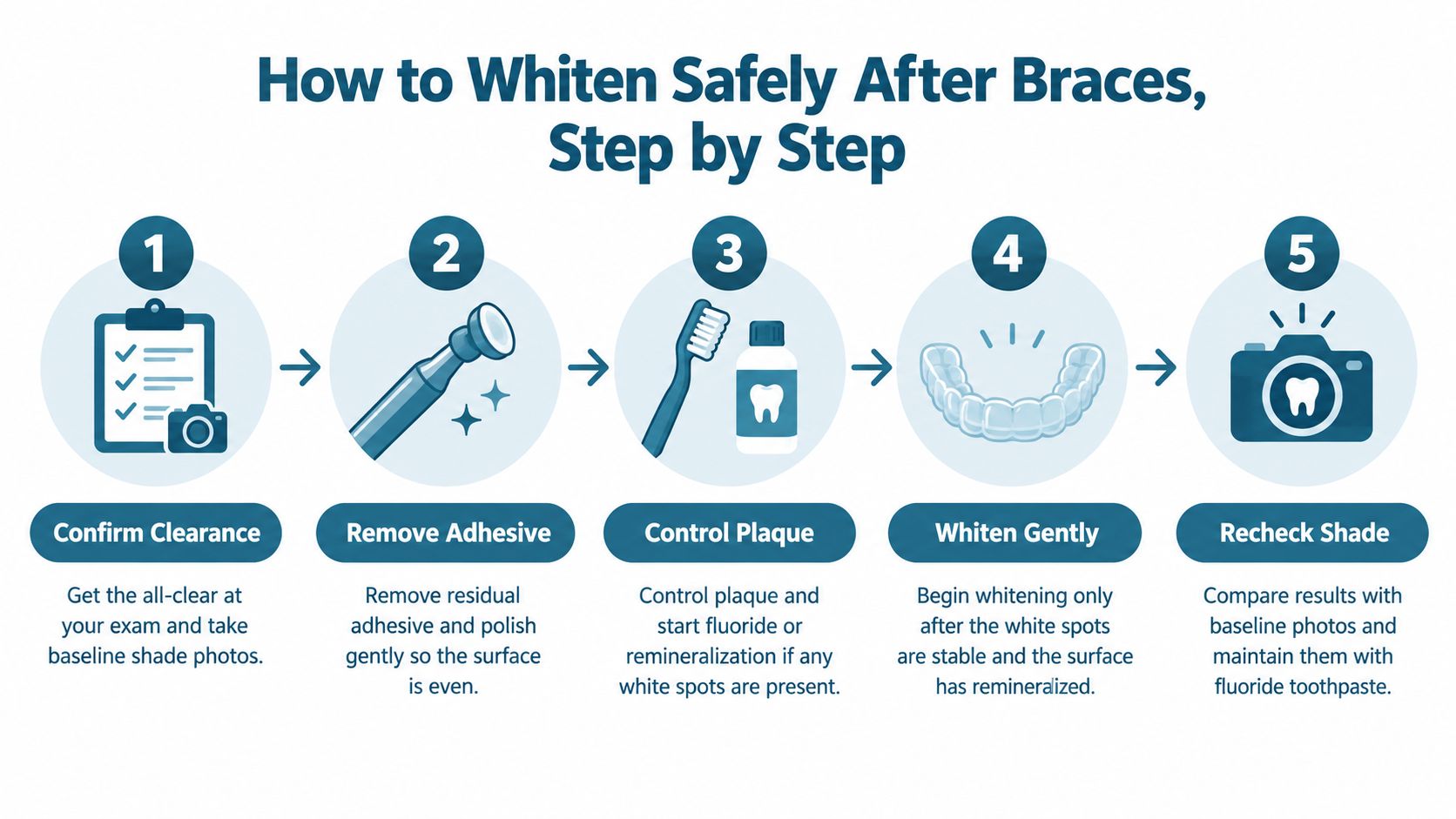
Once the braces come off, yellowing and chalky white spots need different care. Ordinary surface stains may respond to whitening after your dentist checks your teeth. White spots are areas of weakened enamel, so whitening can make the color difference more noticeable. Follow the steps below with your dental team, adjusting the timing to what they find at your visit.
- Get clearance and record your starting shade. Your dentist checks for cavities, cracks, gum recession, white spots, and leftover adhesive. A photo in consistent lighting gives you a fair comparison later.
- Have residual adhesive removed and the teeth polished. Bonding material can interfere with whitening and leave uneven-looking areas. A light polish cleans the surface without removing healthy enamel.
- Clean plaque from the teeth and assess any white spots. Good brushing helps your dentist judge the enamel and lets whitening gel contact clean tooth surfaces. White spots may need attention before a whitening course; they are not merely stains to bleach away. A conservative protocol review says remineralization may take up to 6 months and found no adequate support for bleaching as treatment for the spots themselves. It also reports a small study of eight people: white-spot area decreased with casein-phosphopeptide treatment over 4 weeks and fluoride toothpaste over 8 weeks. These findings concern spot management, not whitening gel results.
- Start the prescribed whitening gel only after your dentist clears you. Use the product and strength selected for your teeth. Follow the recommended start time, particularly if your enamel or gums are still settling after braces.
- Wear the trays for the prescribed time. Use the amount of gel and wear schedule your dentist gives you. Longer sessions do not guarantee a better result and can irritate your gums.
- Return for a check about two weeks into treatment. Your dentist can compare the shade, check how the trays fit, and decide whether to continue or adjust the plan.
- Record the final shade. A final photo helps document the change and guide any future touch-up. Avoid starting another full course without checking with your dentist.
If a white spot remains your main concern after whitening, ask your dentist to assess the lesion rather than increasing the gel strength.
Managing Sensitivity, Gum Irritation and Uneven Color
A little tingling during a session is common and usually fades within a few days. Sharp pain, or pain that stays, is a reason to call.
Two things drive most of the discomfort. Peroxide reaches the inner layer of the tooth. Gel also lands on an exposed root or on gum tissue that is already tender after braces. Why whitening causes sensitivity is worth reading before the first tray night if cold drinks already bother you.
| Symptom | Likely Cause | Fix |
|---|---|---|
| Tingling during or just after a session | Peroxide reaching the inner tooth layer | Use potassium nitrate toothpaste and pause for a few days |
| Sharp pain on cold drinks lasting several days | Exposed root or thin enamel | Stop whitening and call the office for a desensitizing plan |
| Burning gums or white patches on gums | Tray overfilled or gel touching the gums | Trim the tray, use less gel, and rinse with water |
| Blotchy or uneven color | Lesions or areas shielded by brackets | Pause whitening and have the dentist re-check the spots |
| Little change after 4 weeks | Stain type unsuited to whitening or low wear time | Ask about in-office treatment or a cosmetic option |
Habits that keep a course comfortable
- Desensitize early: Use a fluoride or potassium nitrate toothpaste before the course and during it.
- Use a pea-sized amount: Extra gel doesn't whiten more. It spills onto the gums.
- Skip a raw day: If the teeth already ache, that session waits.
- Don't chase blotches with stronger gel: Uneven color after braces usually means a lesion, not a failed whitening job.
Stop and call if pain lasts beyond a few days, if the gums blister, or if a tooth suddenly hurts with biting pressure. Those signs need an exam, not another night in the trays.
When Whitening Is Not Enough and What Works Instead
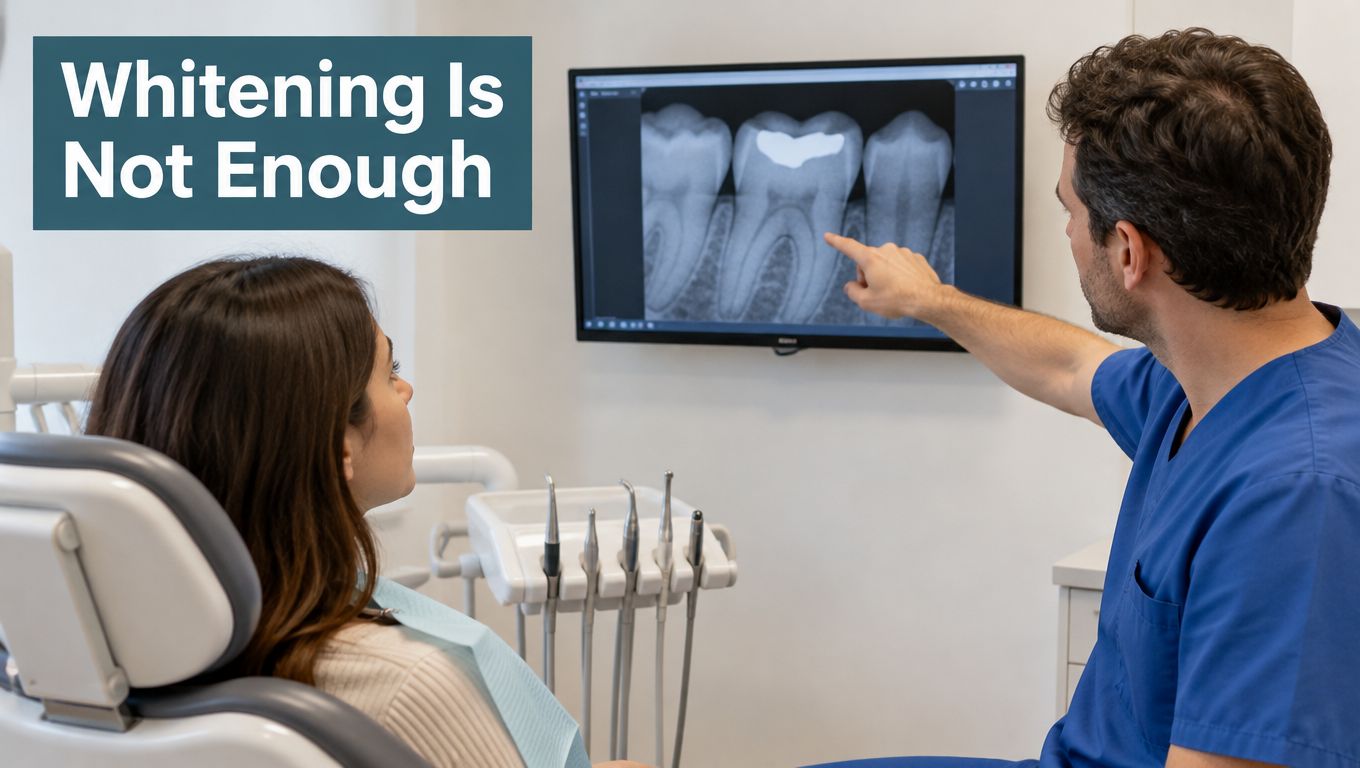
A yellow cast across otherwise even teeth usually responds to whitening. White spots after braces are different. They can reflect mineral changes in the enamel, so the right approach depends on whether the spots are still active, have stabilized, or remain visible after care.
Whitening lightens natural tooth structure, but it cannot reliably remove the cloudy appearance of mineral loss beneath the surface. It also will not change crowns or tooth-colored fillings. The American Dental Association recommends an exam before whitening and notes that exposed roots from gum recession may become irritated. Your dentist can assess whether the color difference is ordinary staining, a white-spot lesion, or a restoration that will not lighten with gel.
Match the option to the tooth
- Fluoride and remineralization: Often considered for an active white spot, with the aim of helping the enamel surface reharden. The dentist can advise whether this is appropriate before cosmetic treatment.
- Enamel microabrasion: A dentist may use this light polishing approach for shallow surface irregularities. One clinical report described a case combining cleaning, remineralization, whitening, and microabrasion. A single case does not establish how often it works.
- Resin infiltration: A dentist may consider this for a stable white spot that remains visible. The ADA-linked source describes resin infiltration as performing better than the other listed options for reducing white-spot area at the reported follow-up. That finding does not determine the right treatment for every patient.
- Bonding or veneers: These may be options for deeper marks or when a natural tooth needs to match a nearby crown. Compare veneers and whitening when whitening alone cannot address the difference.
- Whitening after the surface is even: This may help with overall yellowing once the spots have been assessed and are stable.
The choice depends on the depth and condition of the spot, not only its appearance in a photo. Since crowns and fillings keep their existing shade, dentists generally match them after natural teeth have been whitened.
Book Your Post-Braces Whitening Consultation
Braces are off, and the next step should be clear. A new patient exam with digital x-rays checks for decay under and between teeth. A baseline shade photo gives you something real to compare later, instead of a memory of how the teeth looked in the orthodontist's chair.
You and the dentist then decide the timing together. Whitening may start once the enamel is healthy. Spots may need remineralization first. Some smiles wait for a follow-up before any gel is used. The plan matches the teeth you have that day, including sensitivity, restorations, and whether the goal is stain removal or lesion care.
People in Amanda, Lancaster, Circleville, and Carroll, Ohio can handle those rechecks close to home. Whitening isn't a single visit and a goodbye. Shade, comfort, and any leftover spots need a look after the gel.
Three ways to move:
- Schedule online at the practice website when you already know the month you want.
- Call the office if you need a time that fits school, work, or a photo date.
- Request a consultation if you want to ask about spots, sensitivity, or veneers before you commit.
Book the exam about one month after the braces come off. That puts the first conversation on the right day, with the color and the enamel as they look then, not as they looked on debonding day.
Amanda Family Dental provides exams, digital x-rays, professional whitening, and follow-up care for smiles that just finished braces in Amanda and nearby Ohio communities. If you want a shade check and a plan that separates stains from white spots, visit Amanda Family Dental to schedule an appointment or request a consultation.