

A missing tooth changes small moments first. Meals become awkward. Smiling in photos feels less natural. Then the bigger question follows. How long will a dental implant take to heal, and what will recovery feel like day to day?
For many people searching for a dentist in Amanda, OH, or looking for dental implants near me in Lancaster, Circleville, or Carroll, Ohio, the timeline feels confusing because the mouth can look better long before the implant is ready for full use. That gap between “it seems healed” and “it's fully stable” is where most of the uncertainty lives.
This guide walks through the dental implant healing timeline in clear, practical language. It explains what patients often notice in the first couple of days, what changes during the first two weeks, and why the deeper healing inside the jaw takes much longer. It also shows how a local dental team can support each step, from the first consultation through the final crown.
Table of Contents
- Your Guide to Dental Implant Healing with Amanda Family Dental
- The Implant Journey Begins The First 48 Hours
- The First Two Weeks Navigating Soft Tissue Healing
- Months 2 to 6 The Science of Osseointegration
- Factors That Influence Your Healing Timeline
- Your Final Restoration at Amanda Family Dental
- Frequently Asked Questions About Implant Healing
Your Guide to Dental Implant Healing with Amanda Family Dental
A dental implant journey often starts with a simple thought. A patient has been missing a tooth for a while, or a recent tooth extraction made replacement feel urgent. Then the questions pile up fast. Will it hurt? When will eating feel normal again? How long before the new tooth is finished?
The answer becomes easier once healing is split into two parts. The gums and soft tissue usually heal first, while the jawbone takes longer to lock onto the implant. That's why dental implant healing is commonly described as an initial soft-tissue phase of about 1 to 2 weeks and a longer osseointegration phase of roughly 3 to 6 months, with early symptom improvement not meaning the implant is fully ready for pressure or chewing yet, as noted in this overview of implant healing stages.
That difference matters because many patients feel much better fairly quickly. Swelling may settle. The gums may start to close. Everyday comfort improves. But inside the bone, the implant is still becoming secure.
Why patients often get mixed signals
A helpful way to think about it is a fence post set into the ground. The post may stand upright early on, but the surrounding material still needs time to harden and hold it firmly. A dental implant works in a similar way. The visible part can seem calm before the deeper support system is fully dependable.
Practical rule: Feeling better is a good sign, but it isn't the same as being ready for a final crown.
Patients who want a broader plain-language overview can also review what to expect with dental implants, which gives a helpful general look at the process.
Those comparing options locally can also read about the implant placement procedure to understand how treatment is planned and performed. For families in Amanda, Lancaster, Circleville, and Carroll, Ohio, that kind of clarity often lowers anxiety before treatment even begins.
The Implant Journey Begins The First 48 Hours
The first two days after implant placement are usually the most active part of recovery. This is the stretch when the body responds to surgery, the gums start sealing, and the patient notices the most day-to-day changes. Most of those early symptoms are expected.

What patients usually feel
Mild bleeding or spotting can happen right after surgery. Some swelling and soreness are also common. The area may feel tender, and chewing on that side of the mouth usually won't feel comfortable yet.
Rest helps because the surgical site is fresh. A patient who goes home, keeps pressure on the area as directed, and avoids disturbing the implant site generally gives the body a smoother start.
Simple steps that protect the site
During the first 48 hours, these habits matter most:
- Use gauze as directed. Gentle pressure helps control minor bleeding and protects the area while the first clot forms.
- Apply ice packs on schedule. Cold on the outside of the cheek can help limit swelling and improve comfort.
- Take medications exactly as prescribed. Staying ahead of soreness is usually easier than trying to catch up once discomfort builds.
- Choose soft, non-irritating foods. Cool or lukewarm foods are often easier than anything crunchy, spicy, or very hot.
- Rest more than usual. Heavy activity can increase bleeding and throbbing.
Some patients are given prescription pain medication. Anyone who wants a plain-language overview of safety points and common questions can review this patient guide to acetaminophen and codeine, especially if medication instructions feel unfamiliar.
Keep the goal simple during the first two days. Protect the site, stay comfortable, and avoid anything that adds pressure or irritation.
A practical example helps. If a patient from Circleville goes home and feels good enough by evening to eat chips or chew on the implant side, the mouth may seem ready, but the site is still fragile. In contrast, someone who chooses yogurt, eggs, soup that isn't too hot, and plenty of rest usually makes the first stage of healing easier on the body.
For individuals seeking an emergency dentist or a dentist near me after recent tooth loss, these early steps can make the recovery period feel much less intimidating. The first 48 hours aren't about testing the implant. They're about giving it quiet, stable conditions.
The First Two Weeks Navigating Soft Tissue Healing
By the time the first few days pass, many patients notice that the mouth already looks calmer. The gums begin closing around the area, swelling gradually improves, and eating becomes easier if food choices stay gentle. This stage is less dramatic than the first 48 hours, but it still matters.
What healing usually looks like
The soft tissue phase usually lasts about the first 1 to 2 weeks. During this time, the gums are healing over and around the implant site, even though the deeper bone healing continues much longer. Many people describe this stage as the point when the implant feels less like “fresh surgery” and more like an area that still needs caution.
Daily routines often need small adjustments:
- Brushing carefully matters. Keeping the mouth clean helps reduce irritation, but the surgical area shouldn't be scrubbed aggressively.
- Soft foods still make sense. Eggs, mashed potatoes, pasta, yogurt, applesauce, and other easy-to-chew foods are often more comfortable.
- Saltwater rinses can help. Gentle rinsing supports cleanliness without the force of vigorous swishing.
- Normal activity should return gradually. If movement increases throbbing or discomfort, that's a sign to slow down.
Patients looking for practical maintenance advice can review how to care for dental implants for guidance on keeping the area clean without overdoing it.
Dental Implant Healing Timeline at a Glance
| Healing Phase | Typical Symptoms | Key Care Instructions |
|---|---|---|
| First 24 to 48 hours | Mild bleeding, swelling, soreness, tenderness | Rest, gauze pressure, ice packs, prescribed medication, soft foods |
| Days 3 to 14 | Less swelling, improving comfort, gums starting to close | Gentle brushing, soft diet, careful rinsing, avoid disturbing the site |
| Months 2 to 6 | Little visible change, gradual deeper stability | Follow checkups, avoid unnecessary pressure, maintain oral hygiene |
| Later healing with grafting cases | Slower progress before final tooth placement | Follow the personalized plan and allow extra healing time |
Home care reminder: A cleaner healing site is usually a calmer healing site.
A common point of confusion shows up here. If the area stops hurting much after a week, patients may assume the implant is almost done healing. It isn't. The mouth is entering a quieter phase where visible healing and true structural healing no longer move at the same pace. That distinction is what makes the rest of the dental implant healing timeline so important.
Months 2 to 6 The Science of Osseointegration
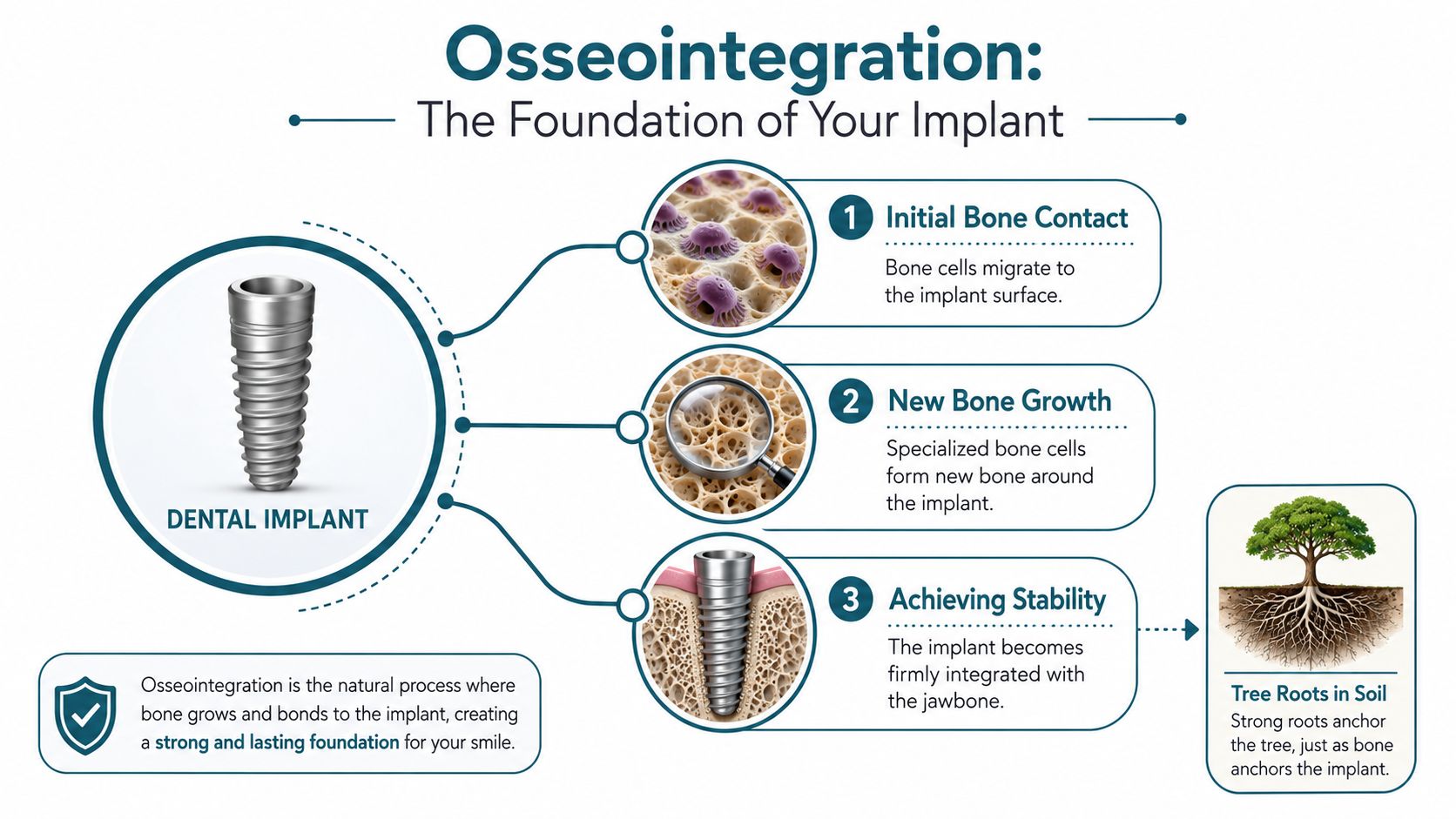
Once the gums have settled, the most important work happens where patients can't see it. This stage is called osseointegration, which means the jawbone is bonding to the implant surface and turning it into a stable anchor.
A useful analogy is a tree taking root. At first, the tree is placed in the soil and supported carefully. Over time, the roots spread and grip the ground. The tree may look upright early, but real strength develops later. A dental implant follows the same basic pattern inside the jaw.
A visual explanation can make that idea easier to picture.
Why the waiting period matters
The osseointegration process typically requires 3 to 6 months, and trying to place a permanent restoration before that minimum threshold can significantly raise the risk of failure because the biological anchor isn't yet secure. In cases that involve bone grafts, healing can extend to 6 to 9 months before the area is ready, according to this clinical overview of the implant healing timeline.
That timing isn't arbitrary. Bone needs time to remodel around the titanium implant and create stable contact. The outside of the mouth may feel normal much earlier, but the inside is still maturing.
What patients usually notice during this stage
Most patients don't feel dramatic changes from week to week in this period. That's normal. This part of the dental implant healing timeline is quiet.
What patients may notice instead is:
- Improved everyday comfort. The tenderness of surgery is usually gone.
- A sense of impatience. The site may feel “fine,” which makes waiting for the final tooth feel longer.
- Periodic follow-up visits. These visits help confirm the implant is stabilizing the way it should.
A broader discussion of outcomes and stability is available in this overview of dental implant success rate, which explains why proper healing time matters before the final tooth is attached.
This short video also helps visualize the process in a simple way.
The hardest part of implant healing is often that nothing seems to be happening. In reality, the body is building the part that makes the implant dependable for the long term.
For patients in Amanda, Lancaster, Circleville, and Carroll who are comparing dental implants near me, this is the stage that separates a quick fix from a durable result. Patience isn't just recommended here. It's part of the treatment.
Factors That Influence Your Healing Timeline
No two mouths heal in exactly the same way. One patient may move through recovery smoothly with very little discomfort, while another needs a slower pace because of bone quality, health conditions, or added procedures. That doesn't mean anything is going wrong. It means healing is personal.
What helps healing move in the right direction
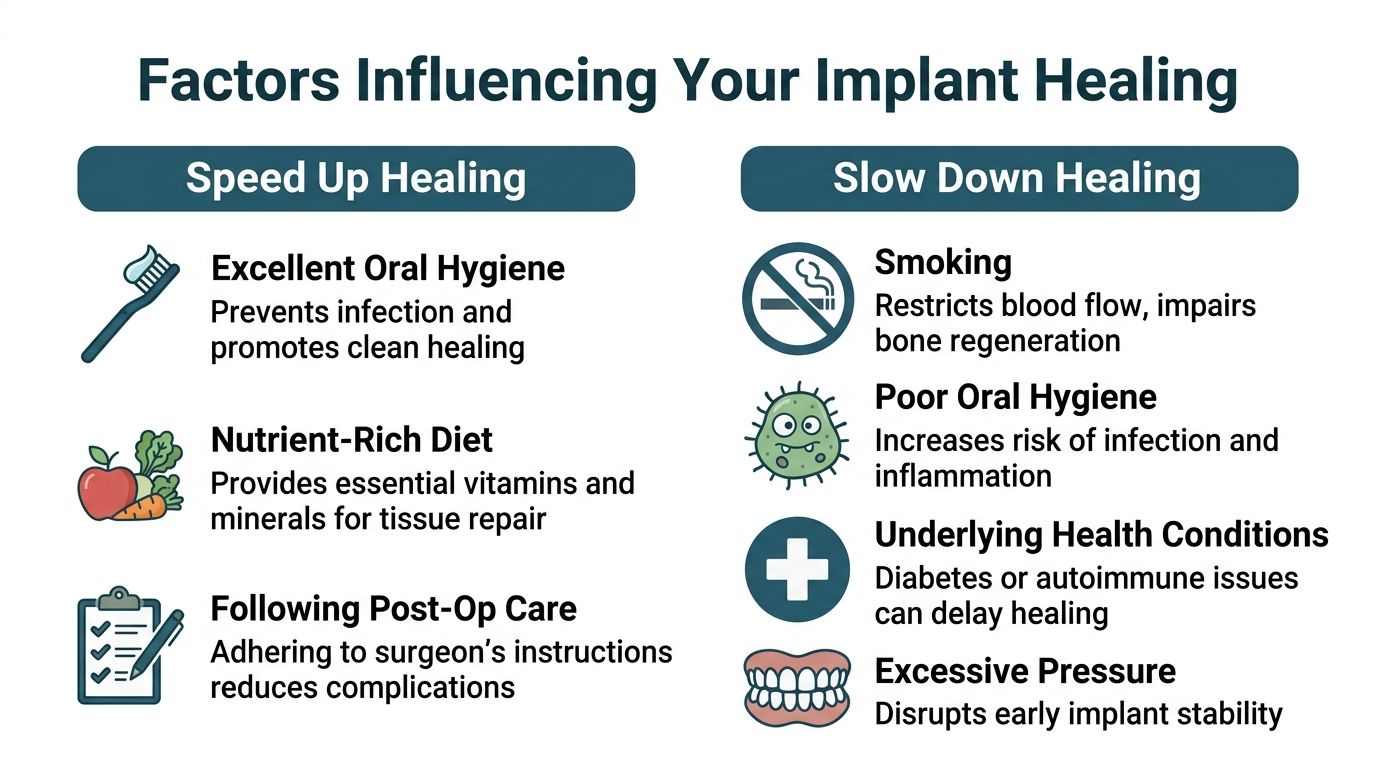
Patients have more influence than they may think. Good daily habits support cleaner healing and better stability.
- Consistent oral hygiene. A clean mouth lowers the chance that inflammation will interfere with recovery.
- Nutritious meals. Regular intake of protein and whole foods supports tissue repair and overall healing.
- Following instructions closely. Food restrictions, cleaning guidance, and follow-up appointments all protect the implant while it stabilizes.
- Keeping pressure off the area. Avoiding unnecessary chewing force helps prevent early disruption.
What can slow things down
Some factors make the process less predictable. Smoking is a major example because it can reduce healthy blood flow and interfere with recovery. Poor nutrition, heavy pressure on the implant, and unmanaged health conditions can also work against healing.
Bone quality and surgical complexity matter too. A straightforward case may progress differently than one that requires grafting or other preparatory treatment.
A good way to think about this is that healing works best when the mouth stays clean, calm, and well-supported. That principle shows up in many forms of dental recovery. Patients who like reading more about infection awareness and aftercare often find this BacteriaFAQ guide to dental recovery useful for general recovery habits.
Healthy routines don't guarantee a perfect timeline, but they give the implant better conditions to succeed.
The long-term outlook is encouraging. Dental implants have an approximate global success rate of 95%, and some studies report success as high as 97.6% with advanced healing protocols. In that same research, healing time before loading was reduced from 6.5 months to 3.2 months in certain cases, according to this PubMed study on implant healing protocols.
For local patients comparing options, Amanda Family Dental provides implant evaluation and treatment planning as part of restorative dental care for communities such as Amanda, Lancaster, Circleville, and Carroll, Ohio. The key point is simple. Success depends on both clinical planning and what happens at home afterward.
Your Final Restoration at Amanda Family Dental
The most satisfying part of the process comes after the implant has healed enough to support the final restoration. This is when the temporary phase gives way to the visible result patients have been waiting for.
What happens at the final stage
Once the implant is ready, the next step is placing the permanent restoration, often a custom crown. That appointment is usually more comfortable and straightforward than the surgical phase. The focus shifts from healing to fit, appearance, and function.
Patients can expect a careful review of how the implant has integrated, followed by the steps needed to create or place the custom tooth. The goal is a restoration that blends naturally with the smile and feels balanced when biting.
For someone who has spent months avoiding one side while chewing, this appointment can feel like a turning point. Speaking often feels more natural. Smiling feels less guarded. The missing space is no longer the first thing noticed in the mirror.
Why this step feels so rewarding
Dental implants do more than fill a gap. They help restore daily confidence and practical function.
Benefits often include:
- Better chewing ability
- A more complete smile
- Improved speech clarity
- A stable, natural-looking replacement tooth
Patients searching for a dentist in Lancaster, OH, dentist in Circleville, OH, or dentist in Carroll, OH often want more than technical treatment. They want a clear process, a comfortable setting, and a team that explains what happens next without rushing. That matters just as much as the restoration itself.
For new patients considering implant treatment, a visit typically starts with an exam, digital x-rays, and a personalized plan based on the condition of the tooth, bone, and surrounding gums. For those also exploring cosmetic goals, treatment planning can include how the final restoration fits with the rest of the smile.
Frequently Asked Questions About Implant Healing
What are signs of an implant complication to watch for
Persistent or worsening pain, swelling that doesn't seem to improve, unusual discharge, or a feeling that the implant site is unstable should prompt a call to the dental office. A recovery site should generally move toward feeling calmer, not more irritated.
When can normal exercise start again
Light activity is often easier to resume before strenuous exercise, but the right timing depends on the procedure and the patient's healing pattern. If movement causes throbbing, bleeding, or discomfort, that usually means the body needs more time.
Is it normal for the implant area to feel strange at first
Yes. The area can feel unfamiliar while the gums heal and the mouth adjusts. That sensation often fades as healing progresses. “Different” doesn't always mean “wrong.”
Why does the mouth feel healed before treatment is finished
Soft tissue can improve sooner than bone stability develops. That's why the site may look and feel much better even though the implant still needs time before it can safely support the final tooth.
What if bone grafting is part of treatment
Healing may take longer because the site needs additional time to become ready and stable. That isn't a setback. It's part of building a stronger foundation for the implant.
Patients looking for a dentist near me in Amanda, Lancaster, Circleville, or Carroll, Ohio can contact Amanda Family Dental to schedule a consultation, request a new patient exam, or discuss whether dental implants are the right next step. The office provides personalized treatment planning, digital x-rays, and patient-focused care designed to make the process clear from start to finish.