


A morning coffee sits on the counter, a second cup rides along to work, and by afternoon the smile in the mirror looks a shade darker than it did a year ago. That's the moment many adults in Amanda, OH, Lancaster, OH, Circleville, OH, and Carroll, OH start searching for a dentist near me who can help. Teeth whitening for coffee stains works best when patients first learn what kind of stain they're dealing with, because surface pigment, deeper discoloration, and stained dental work don't respond the same way. A careful exam, not a stronger store product, is usually the smartest first step.
Table of Contents
- Why Coffee Stains Your Teeth and What That Means for Whitening
- At-Home and Over-the-Counter Whitening Options for Coffee Stains
- Professional Whitening Options Available Close to Home
- Do You Need to Quit Coffee and Can Whitening Fix Dental Work
- Keeping Your Smile Bright Without Giving Up Your Morning Cup
- What to Expect at Amanda Family Dental and How to Get Started
Why Coffee Stains Your Teeth and What That Means for Whitening
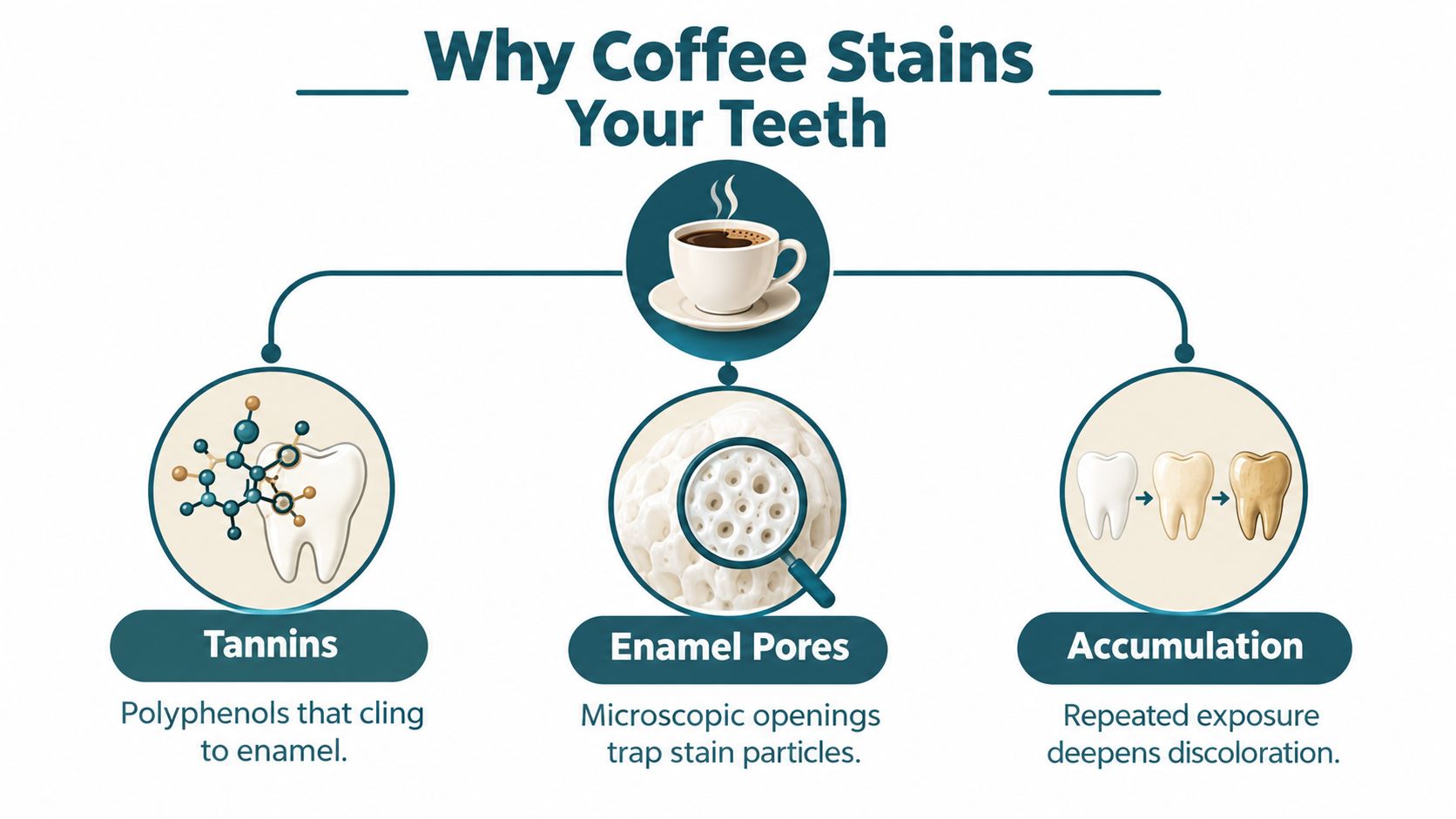
Coffee staining starts as extrinsic discoloration, meaning pigment builds up on the outside of the tooth. Coffee contains tannins and other polyphenols that bind to enamel, and its acidity may soften the surface so color compounds settle into microscopic irregularities, as explained in research on coffee staining and whitening toothpaste performance. Fresh deposits may lift with cleaning, while older buildup becomes harder to shift.
The visual below shows how pigment, surface texture, and repeated exposure combine over time.
Three Causes That Look Alike in the Mirror
Patients often assume every brown or yellow area is coffee stain. A dentist checks whether the color is removable surface deposit, intrinsic discoloration inside the tooth, decay, gum disease, or a restoration that no longer matches. That distinction matters because bleach can brighten natural enamel, but it can't repair decay or change a mismatched crown.
A relatable example helps. A patient who sips coffee slowly all morning may have even, light brown film across the front teeth, which often responds well to professional cleaning and whitening. Another patient may notice one dark tooth beside an old filling, and that pattern points to a different problem that needs diagnosis before any gel is applied.
Practical rule: Treat the cause first, then choose the whitening method. Skipping diagnosis is how patients waste money on products that were never designed for their stain type.
Why Gentle Beats Aggressive at Home
It's tempting to scrub harder or try acidic household tricks when stains persist. People searching for kitchen shortcuts sometimes land on coffee stain vinegar tips meant for cups and counters, but teeth aren't countertops, and acidic DIY approaches can irritate tissues or contribute to surface wear. Enamel doesn't grow back, so restraint protects long term results.
At Amanda Family Dental, the sequence starts with cleaning and exams and, when needed, dental x-rays to separate removable coffee deposits from problems hiding under the surface. Once the cause is clear, patients in Amanda and nearby communities can choose a method with realistic expectations instead of guessing in the drugstore aisle.
At-Home and Over-the-Counter Whitening Options for Coffee Stains
Store shelves offer plenty of choices, but they don't all work the same way. The photo below captures the familiar lineup patients compare at home.
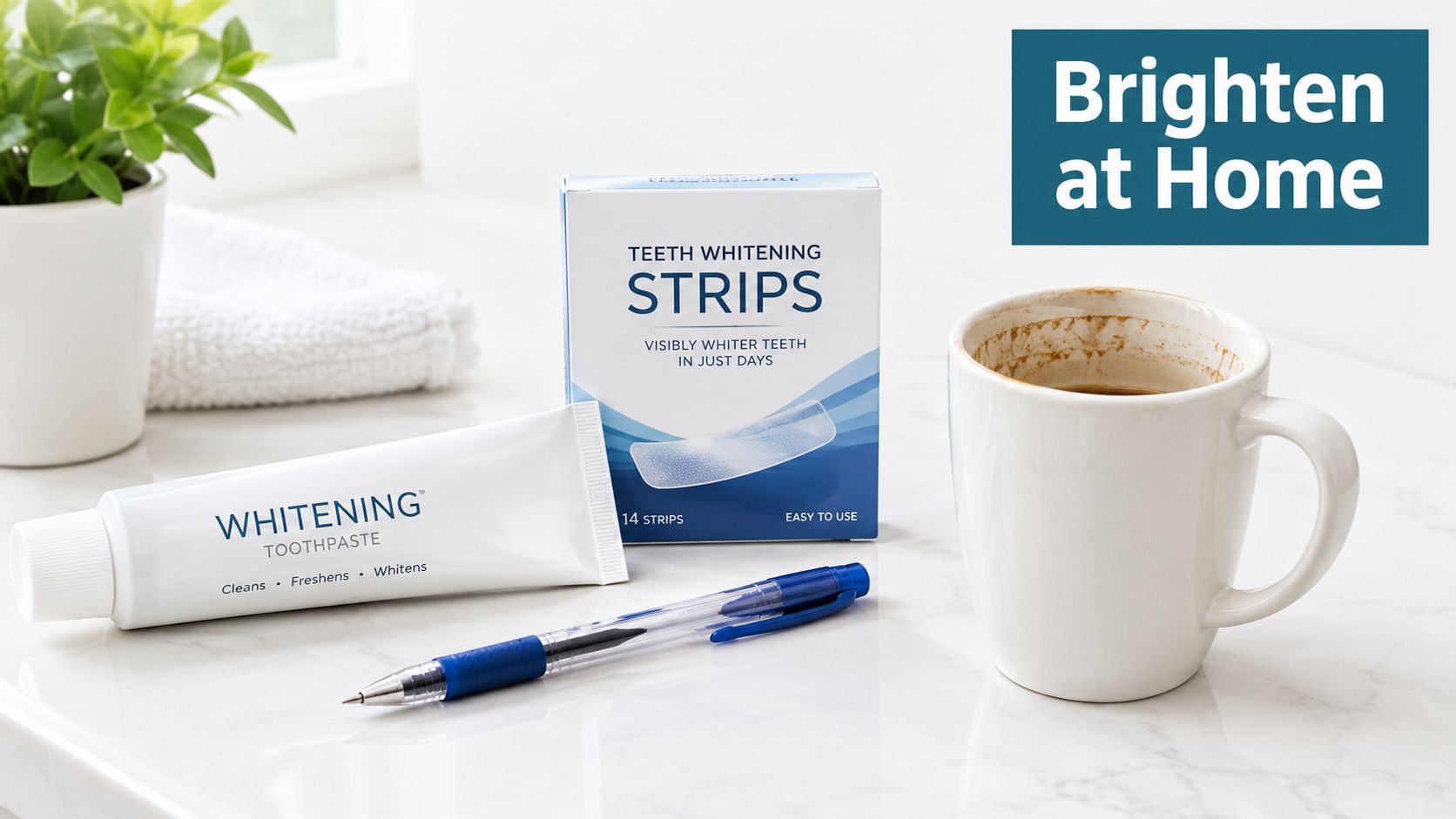
Whitening toothpaste is the gentlest starting point. It helps remove fresh surface deposits through polishing or stain lifting ingredients, but it doesn't change the natural internal color of a tooth. In laboratory testing of coffee stained enamel, whitening toothpastes improved color, although the strongest stain removal result was associated with increased abrasion, a trade-off described in a laboratory study of whitening toothpastes and abrasion.
Matching the Product to the Stain
- Whitening toothpaste: Best for light, recent film and for maintenance after professional treatment, not for deep or years old discoloration.
- Whitening strips: Thin peroxide coated strips can brighten mild, even staining on front teeth, but they may miss curved edges and spaces between teeth.
- Gel pens and rinses: Convenient for touch ups, yet brief contact time usually limits visible change on established coffee pigment.
- Dentist supplied take-home kits: Custom trays hold gel evenly against enamel and reach areas strips often miss, making them the stronger home option.
Patients should notice the pattern. Products that only polish the surface help with fresh extrinsic stain, while peroxide based products go further by breaking down pigment. Neither category fixes a dark filling, a cracked tooth, or discoloration coming from inside the tooth.
Common Home Mistakes That Slow Progress
Overuse is the most frequent problem. Applying extra gel, extending wear time beyond directions, or layering several products at once raises the risk of sensitivity and gum irritation without speeding results in a meaningful way. Excessive baking soda and abrasive powders create a similar problem, since rougher enamel can pick up new pigment more easily.
If a product promises dramatic change in a day or tells patients to ignore burning gums, that's a reason to stop and ask a dentist, not a reason to push through.
For adults searching for a cosmetic dentist near me in Lancaster, OH or Circleville, OH, a short trial of a mild product makes sense when staining is light and teeth are healthy. When color is uneven, longstanding, or tied to older dental work, skipping straight to a professional evaluation usually saves time and money.
Professional Whitening Options Available Close to Home
Professional treatment starts before any gel touches a tooth. The image below shows the controlled setting where gums can be protected and shade can be measured.
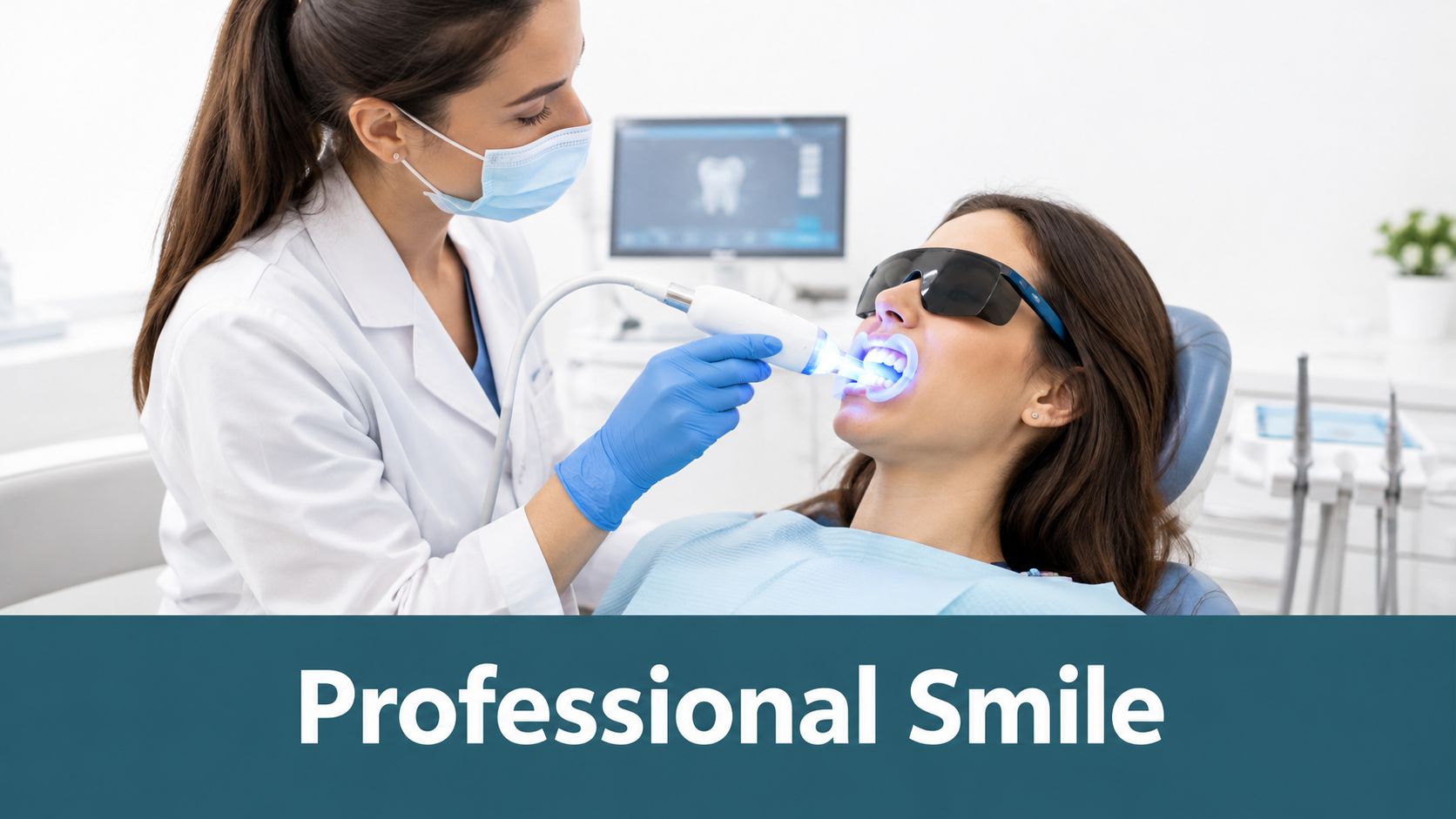
Professional whitening works through oxidation, not scrubbing. Hydrogen peroxide and carbamide peroxide release active oxygen that breaks down pigmented organic molecules called chromogens, and carbamide peroxide releases approximately one-third of its content as hydrogen peroxide, according to American Dental Association guidance on whitening. That chemistry explains why supervised gel can reach pigment that toothpaste leaves behind.
In-Office Whitening for a Faster Result
In-office systems commonly use hydrogen peroxide concentrations ranging from 15% to 43%, and reported sessions may brighten teeth by approximately three to eight shades in 30 to 60 minutes, with results varying by stain and tooth structure, as noted in the ADA guidance cited above. The dental team isolates soft tissue, applies gel in a controlled amount, and monitors sensitivity throughout the visit. Patients who want a noticeable change before a wedding, reunion, or job interview often prefer this route.
Higher concentration doesn't automatically mean better long term value. In a controlled enamel study using 20%, 35%, or 44% carbamide peroxide, higher concentrations didn't produce greater time adjusted whitening, findings detailed in a controlled study of carbamide peroxide concentrations on coffee stained enamel. Careful protocol and follow through matter more than chasing the strongest gel.
The short video below gives patients a clearer sense of what a supervised whitening visit looks like.
Custom Take-Home Trays for Gradual Brightening
A representative research protocol used 10% carbamide peroxide gel for 6 hours daily over 14 days, and coffee produced the lowest post whitening color change values among tested staining beverages, as reported in a study of dentist supervised home bleaching protocols. Lower concentrations can also work with longer exposure, which suits patients with a history of sensitivity. Patients apply only the prescribed amount, wipe away gel that contacts the gums, and contact the practice if irritation becomes significant.
Sensitivity and gingival inflammation are the most common adverse effects of vital whitening, so screening matters. Decay, gum disease, erosion, and existing restorations are checked before treatment begins, and patients can review professional whitening cost considerations while comparing in-office speed with tray based flexibility. For a dentist in Amanda, OH or a dentist in Carroll, OH, the right choice depends on stain severity, timeline, and comfort, not marketing claims.
Do You Need to Quit Coffee and Can Whitening Fix Dental Work
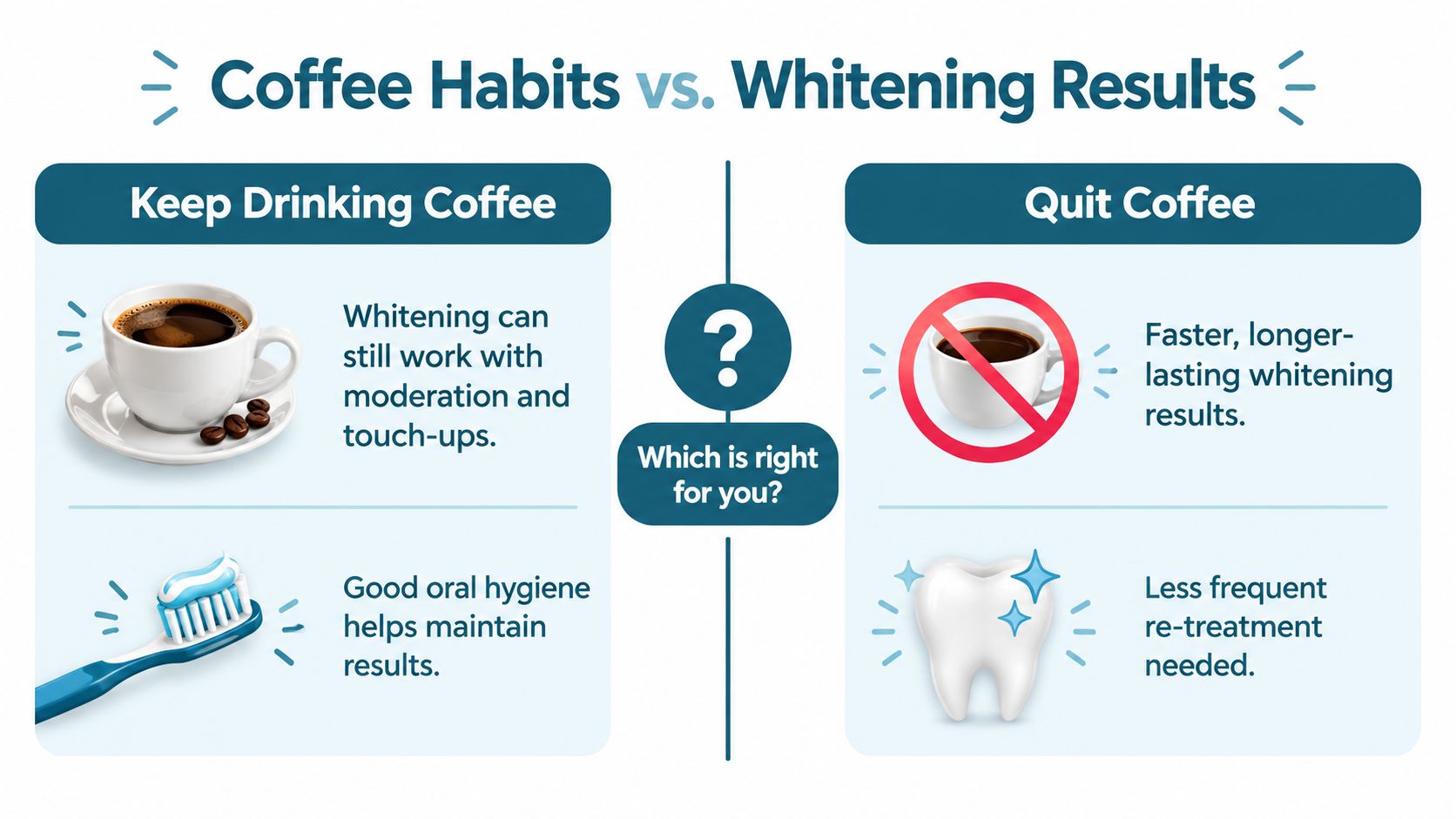
Most coffee drinkers don't want a lecture, and they don't need one. They need honest answers about timing, frequency, and what whitening can and can't change. The comparison below frames the choice in practical terms.
Quitting Coffee Is Not the Only Option
ADA guidance recommends avoiding stain causing drinks such as coffee for several days after whitening and notes that teeth gradually return toward their original shade over time, as summarized in ADA patient guidance on post whitening care. One clinical study found coffee exposure beginning 24 hours after bleaching affected the speed of whitening under study conditions. That doesn't mean one cup instantly undoes treatment for every patient, and a 2024 systematic review and meta-analysis found mixed results on whether coffee compromises bleaching outcomes.
The sensible middle ground is harm reduction. Patients limit coffee during the active course, reduce frequent exposure afterward, and pay closest attention in the first days after treatment. Heavy, all day sipping creates more relapse pressure than a single morning cup enjoyed and finished.
Permanent abstinence isn't required for most patients. Consistency with maintenance protects results far better than a short period of perfection followed by old habits.
Why Fillings Crowns and Veneers Behave Differently
Whitening does not reliably change restoration color. Peroxide brightens natural tooth structure, while crowns, veneers, fillings, and sealants can react differently or stay the same shade. Coffee can also discolor composite material itself, so whitening surrounding enamel may leave older dental work looking darker by contrast.
That's why uneven results surprise so many adults. A patient with several front fillings may finish whitening with brighter natural teeth and a more visible mismatch than before treatment. Polishing sometimes helps surface stain on a restoration, but color embedded in the material may require replacement after the natural teeth reach their final shade.
Patients weighing that decision can compare veneers versus whitening for stained front teeth before committing to repeated bleaching. The decision pathway is simple. Identify what's enamel, identify what's restoration, whiten natural teeth first, then reassess whether any visible dental work needs polishing or replacement for a uniform result.
Keeping Your Smile Bright Without Giving Up Your Morning Cup
Maintenance works when it fits a normal day. Patients don't need a complicated routine, but they do need a few habits repeated consistently after teeth whitening and professional cleaning.
A Simple Coffee Friendly Routine
- Rinse with water afterward: A quick rinse reduces pigment and acid contact before color settles on enamel.
- Finish the cup instead of sipping for hours: Shorter exposure gives stain fewer chances to build through the day.
- Wait before brushing after acidic drinks: Brushing immediately can work against softened enamel, so rinsing first is the gentler move.
- Keep regular professional cleanings: Hygienists remove hardened deposits that trap color and block touch up gel from working evenly.
- Use touch up gel only as directed: Small, planned applications in custom trays beat repeating strong sessions too soon.
Whitening is temporary, so expectations should match that reality. The UK National Health Service states that whitening effects may last around three years when patients follow their dentist's advice, with duration depending on diet, oral hygiene, tobacco use, and the original discoloration, as outlined in NHS guidance on teeth whitening. Coffee drinkers who maintain cleanings and moderate exposure often protect results well without quitting coffee entirely.
Maintenance mindset: Think of whitening like a haircut, not a permanent fix. Planned touch ups at sensible intervals keep color fresh without over treating enamel.
Judging success too early is another common pitfall. Shade should be reassessed after the prescribed schedule is complete, and sensitivity should be reviewed before any additional gel is used. Readers comparing timelines can review how long professional whitening results typically last and then set a touch up interval based on habits rather than guesswork. Patients in Circleville, OH and Lancaster, OH who build these steps into a normal coffee routine usually find the plan realistic enough to keep.
What to Expect at Amanda Family Dental and How to Get Started
A first visit focuses on diagnosis, not a sales pitch. New patient exams include a review of stain history, an oral examination, and digital x-rays when needed to check for decay or problems under existing restorations. Baseline shade is documented so progress can be measured accurately rather than guessed from memory.
From Exam to Personalized Plan
After deposits are removed and the cause of discoloration is clear, the team outlines options in plain language. Some patients need only cleaning and take-home trays, while others benefit from in-office whitening, replacement of a mismatched filling, or broader cosmetic dentistry and restorative dentistry planning. Comfort focused care and clear pacing help patients with dental anxiety move forward without pressure.
Whitening also connects naturally to complete dental care. A patient searching for an emergency dentist for tooth pain, dental implants near me for a missing tooth, or help with tooth extraction can address health needs first, then return to cosmetic goals once the mouth is stable. That order protects both comfort and appearance.
Serving Amanda, Lancaster, Circleville, and Carroll, Ohio, Amanda Family Dental keeps that full picture close to home. Patients don't need to travel to a big city clinic to learn whether coffee stain sits on enamel, inside a restoration, or deeper in the tooth. They need an exam, a straight answer, and a plan that matches their habits.
Coffee lovers in Amanda, Lancaster, Circleville, and Carroll can get a clear diagnosis and a realistic whitening plan that fits real life, not a promise to quit coffee forever. Schedule a consultation for cleaning, exam, and professional whitening guidance by visiting Amanda Family Dental and requesting an appointment today.