

In-office teeth whitening can take as little as one 30 to 60 minute visit for visible change, while measurable strip-based results may appear after about one week and dentist-supervised tray programs commonly take two to six weeks. The right answer depends on whether the priority is appointment length, the complete treatment course, the first visible improvement, or how long the brighter shade remains.
A patient in Amanda, Lancaster, Circleville, or Carroll may be asking after noticing yellowing before wedding photos, a reunion, a vacation, or a job interview. Another may want a more confident smile without guessing whether strips, trays, or professional whitening make the most sense. The phrase “teeth whitening how long does it take” sounds like one question, but it usually contains four separate timelines.
Table of Contents
- What You Really Want to Know About Whitening Timelines
- Comparing the Three Main Whitening Options
- Factors That Change How Long Whitening Takes
- What to Expect During an In-Office Whitening Visit
- Why Faster Whitening Is Not Always Better
- Planning Whitening Around an Upcoming Event
- Keeping Your Smile Bright After Treatment
- Starting Your Whitening Plan at Amanda Family Dental
What You Really Want to Know About Whitening Timelines
A wedding photo, reunion, vacation, or job interview can make one question feel urgent: how long does teeth whitening take? The answer depends on four separate clocks, much like planning a trip by considering the drive, the full itinerary, when you arrive, and how long the experience lasts.
Appointment length is the time spent in the dental office. Professional whitening commonly takes 30 to 60 minutes, and some patients see a cosmetic change during that visit. The American Dental Association's whitening guidance explains why results can appear quickly while varying with stain type and tooth condition.
Total treatment course covers every application needed to reach the intended shade. Dentist-supervised take-home trays may require two to six weeks. Over-the-counter strips can show measurable change sooner, but repeated use is still part of the routine. Sensitivity, deeper discoloration, or missed applications can lengthen the course.
Time to visible results means when you first notice a difference in the mirror. Surface stains from food and tobacco often respond sooner than discoloration inside the tooth. Early improvement may not represent the final shade, so stopping immediately can leave the result incomplete.
Expected maintenance is how long the brighter appearance lasts before a touch-up may help. Whitening is not permanent. Food and tobacco habits, oral hygiene, stain type, restorations, and the selected method all influence how quickly the shade changes again.
Amanda Family Dental sees patients seeking a dentist in Amanda, OH, including families from Lancaster, Circleville, and Carroll. A consultation can match the method to your deadline, comfort, and maintenance expectations.
Practical rule: The shortest appointment may not provide the quickest path to a comfortable result that lasts.
Comparing the Three Main Whitening Options
A patient with a wedding next week needs a different timeline from someone who prefers gradual whitening at home. The three main choices are professional in-office whitening, dentist-supervised take-home trays, and over-the-counter products. Each balances appointment length, treatment course, visible results, and maintenance differently.
Professional in-office whitening usually offers the shortest appointment and the quickest visible change for many surface stains. Dental professionals commonly use hydrogen peroxide concentrations of approximately 15% to 43%, with improvement often possible after one 30 to 60 minute appointment (ADA News). The full visit may be brief, but sensitivity and the final shade still affect what happens afterward.
Dentist-supervised take-home trays spread treatment across more days. The NHS reports that patients typically use whitening trays at home for approximately two to six weeks (NHS teeth whitening guidance). This approach suits patients who want gradual results, flexible scheduling, and professional guidance without spending as much time in the dental chair.
Over-the-counter strips remove the need for a dental appointment, but the product schedule becomes part of the treatment course. In a double-blind clinical trial, 10% hydrogen-peroxide strips used twice daily for 30 minutes produced statistically significant whitening after 3 days, with additional improvement through 7 days (clinical trial in Scientific Reports). Results and comfort vary by product, so follow the label directions.
Whitening Options at a Glance
| Option | Appointment Length | Total Course | Visible Results | Best Fit |
|---|---|---|---|---|
| In-office whitening | About 30 to 60 minutes | Often one visit for early improvement | Often noticeable after the appointment | Patients with a near-term event or preference for supervised care |
| Dentist-supervised take-home trays | Consultation and fitting | About 2 to 6 weeks | Builds gradually during home use | Patients who want flexible timing and professional support |
| Over-the-counter strips | No dental appointment for use | Product schedules vary, with measurable change reported within about 1 week | May begin within several days | Patients seeking a lower-commitment home option |
A 2023 review found that take-home products required approximately 7 to 140 total treatment hours across studied protocols. In some comparisons, that meant 14 to 280 times more total treatment time than in-office systems (Scientific Reports review). More home treatment time does not make the option inferior. It buys flexibility, much like spreading a large task across shorter sessions.
Patients in Amanda, Lancaster, Circleville, and Carroll can review the best teeth whitening options before discussing which method fits their schedule, sensitivity history, and maintenance expectations with Amanda Family Dental.
Factors That Change How Long Whitening Takes
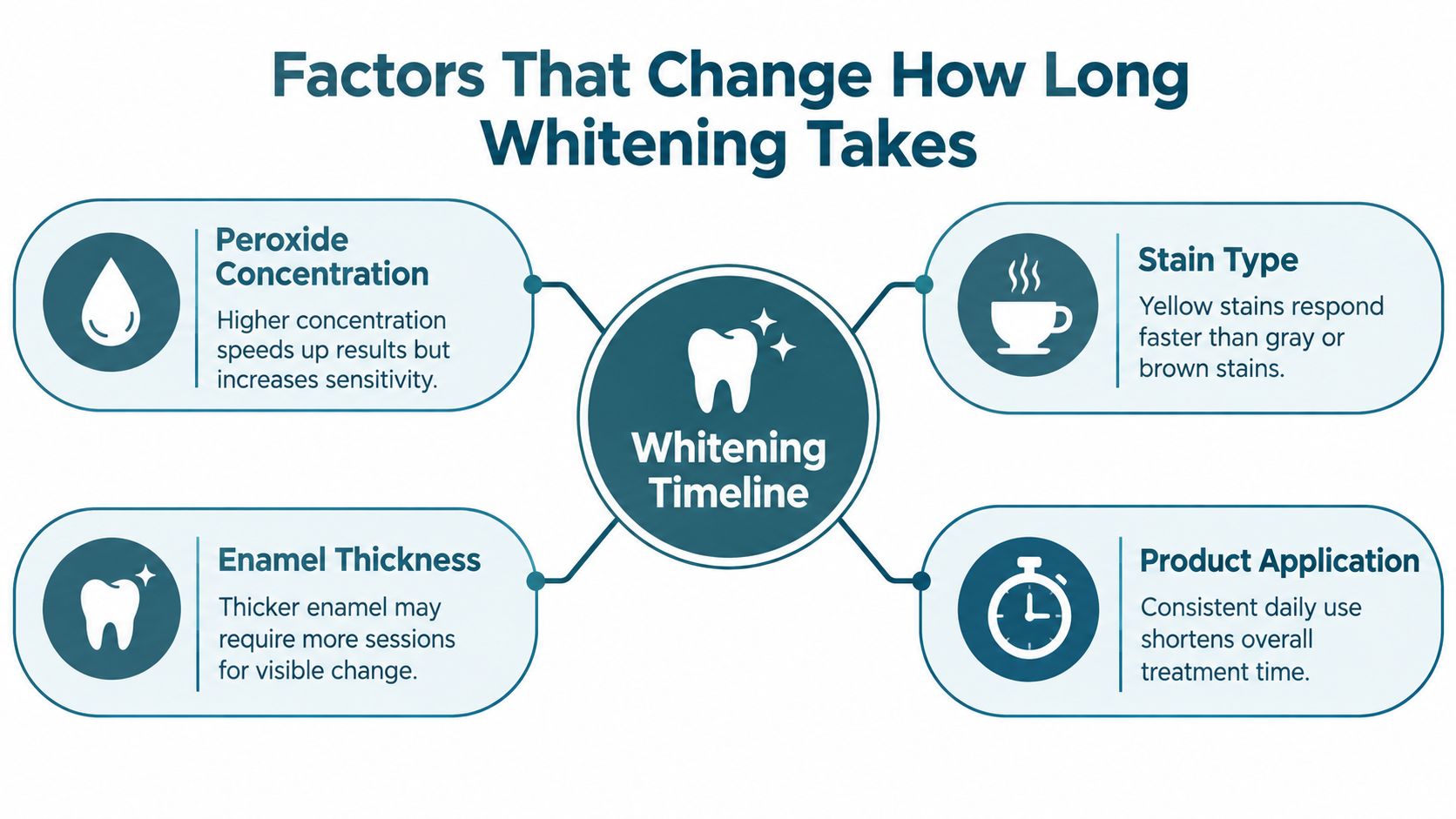
Two patients can follow the same whitening system and see different timelines. Four variables explain much of the difference: peroxide concentration, exposure time, stain type, and starting shade. These factors affect four separate milestones, the length of an appointment, the full treatment course, the time until results become visible, and the maintenance needed afterward.
Peroxide and exposure
A stronger peroxide formula may work faster, but it can also increase sensitivity or gum irritation. Lower-concentration products usually require more applications. Like soaking a stained cup, repeated contact gives the whitening agent more opportunities to reach stain molecules before it breaks down.
The calendar also depends on consistency. A patient who wears trays irregularly may need more weeks than someone who follows the prescribed schedule. Extending wear time without dental guidance is not a safe shortcut.
Stain and starting shade
Coffee, tea, and tobacco commonly leave extrinsic stains on or near the tooth surface. These often respond more predictably than intrinsic discoloration, which develops within the tooth and may relate to medication, development, aging, or enamel characteristics.
Tetracycline-related staining shows why treatment length can vary so widely. Clinical guidance describes an average of approximately 3 to 4 months of nightly treatment to reduce this type of discoloration, though the response depends on the tooth and the treatment plan. A whitening brand or curing light cannot make a deeper stain behave like a surface stain.
Before treatment, a dentist should check for untreated decay, leaking restorations, gum disease, enamel defects, and discoloration that bleaching may not correct. Patients control consistency and stain exposure. A dentist can adjust gel strength, tray fit, and scheduling to match the teeth, sensitivity history, and desired timeline.
What to Expect During an In-Office Whitening Visit
An in-office whitening appointment starts with an assessment, not gel. The dental team discusses your goal, examines your teeth and gums, and records the starting shade. That baseline makes the change easier to judge instead of relying on memory.
The whitening system may use hydrogen peroxide in the approximate 15% to 43% range, depending on the product and clinical plan. Active treatment generally lasts 30 to 60 minutes. As noted earlier, reported improvement can reach approximately three to eight shade tabs after one appointment.
The appointment in practical terms
The team protects your gums before applying whitening gel to the natural teeth. You can relax while the dental professional follows the product instructions and monitors your comfort. The treatment is cosmetic and non-invasive, though temporary sensitivity may occur during or afterward.
Many patients see a noticeable change before leaving the office. The final shade can continue to vary with the original tooth color, the age of the stain, enamel characteristics, and the cause of discoloration. A tooth darkened after trauma or affected by decay needs an examination, rather than whitening alone.
Before treatment, the dentist checks crowns, veneers, fillings, and implants. Whitening changes natural tooth structure, but restorations keep their existing color. If a front crown matches your current shade, whitening first could leave it looking darker than the surrounding teeth and may require a broader cosmetic plan.
Patients near Amanda, Lancaster, Circleville, and Carroll may schedule whitening alongside a cleaning, examination, dental x-rays, or restorative care when appropriate. Combining these steps helps identify problems that could affect comfort and prevents cosmetic treatment from hiding signs of decay or infection.
Why Faster Whitening Is Not Always Better
A one-visit result can suit an important event, but appointment length is only one whitening timeline. The total treatment course, the time until you see a visible change, and the maintenance needed afterward also matter. Over-the-counter products may take longer to show results than supervised tray treatment, while in-office whitening can produce a faster first change.
Speed does not guarantee lasting color. A randomized clinical trial found comparable whitening from at-home treatment and power bleaching, followed by faster color regression after power bleaching, with regression evident by 6 months (clinical trial in Scientific Reports). The quicker option may help before a deadline, while a supervised course may better suit someone who values a gentler pace and easier sensitivity management.
The light activation question
LED or laser activation does not automatically mean stronger whitening. A 2025 randomized trial compared 35% hydrogen peroxide, violet LED, and their combination across three sessions spaced 7 days apart. The peroxide-containing protocols produced greater whitening than violet LED alone, while also bringing greater risk and intensity of sensitivity (PubMed trial).
The practical lesson is simple: light is not a guaranteed shortcut. Research has not consistently shown that activation improves whitening, and it may increase sensitivity. Lower-to-medium peroxide concentrations around 25% to 35% can provide comparable outcomes to higher concentrations with less discomfort.
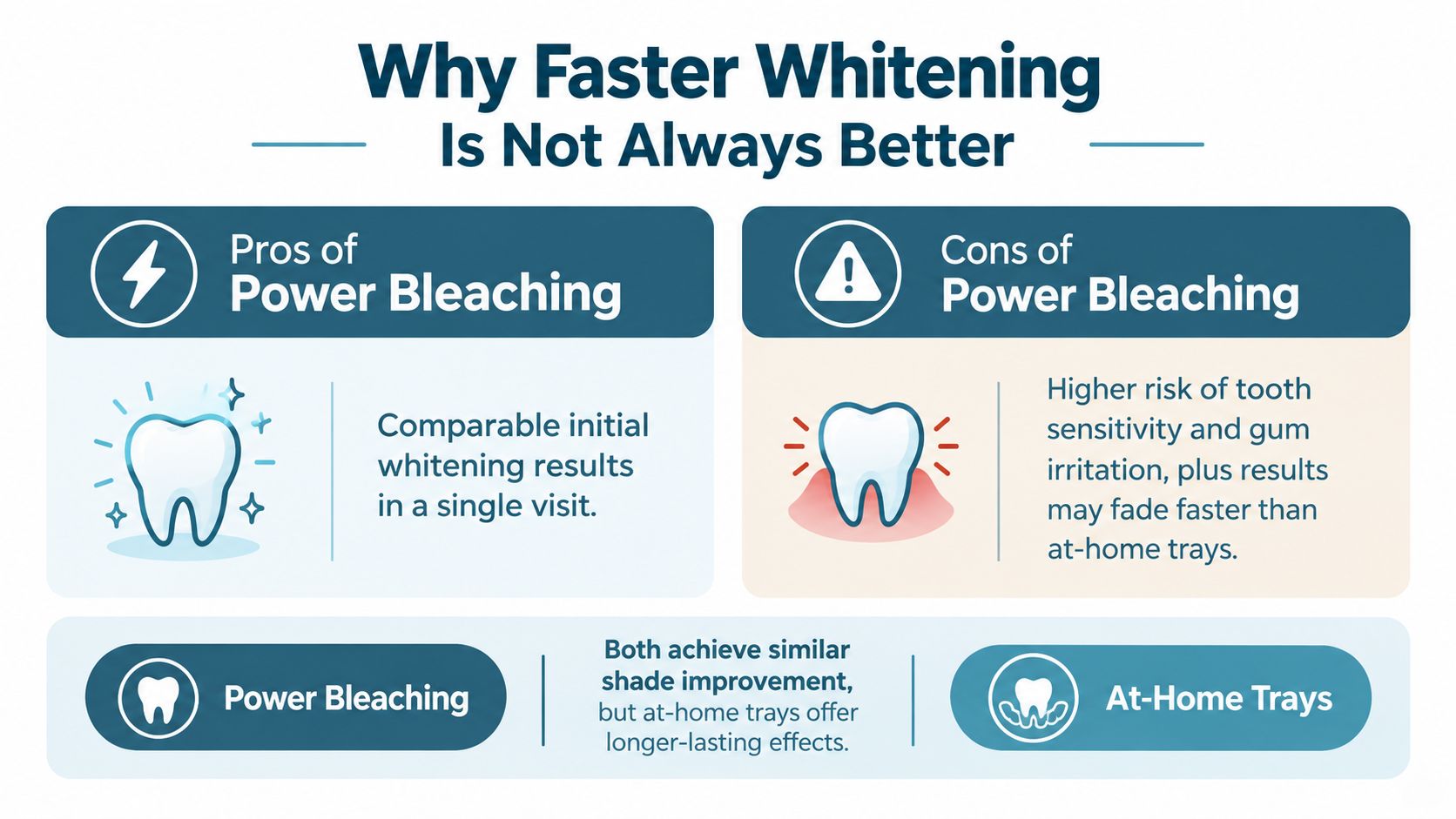
Patients with hot-cold sensitivity may prefer a longer supervised regimen instead of a one-visit push. Pause treatment and contact a dental professional if significant sensitivity or gum irritation develops. See this guide to teeth whitening side effects for related guidance.
Planning Whitening Around an Upcoming Event
A wedding in four weeks calls for a different decision than a reunion several months away. The event date helps determine the appointment length, the full treatment course, when changes may become visible, and how much maintenance time to allow.
With four weeks remaining, in-office whitening can provide a fast start. A dentist-approved tray routine may then support the result when appropriate. This schedule also leaves time to manage sensitivity or treat a dental problem before whitening begins.
With six to eight weeks, a patient has more room for a complete take-home tray course. The two-to-six-week range noted earlier makes this a practical window for gradual treatment, provided the patient follows the recommended wear schedule.
A timeline of three to six months allows more flexibility when discoloration is stubborn or intrinsic. The dentist may first address decay, gum health, or failing restorations, then decide whether home treatment, in-office whitening, or another cosmetic option fits the situation.
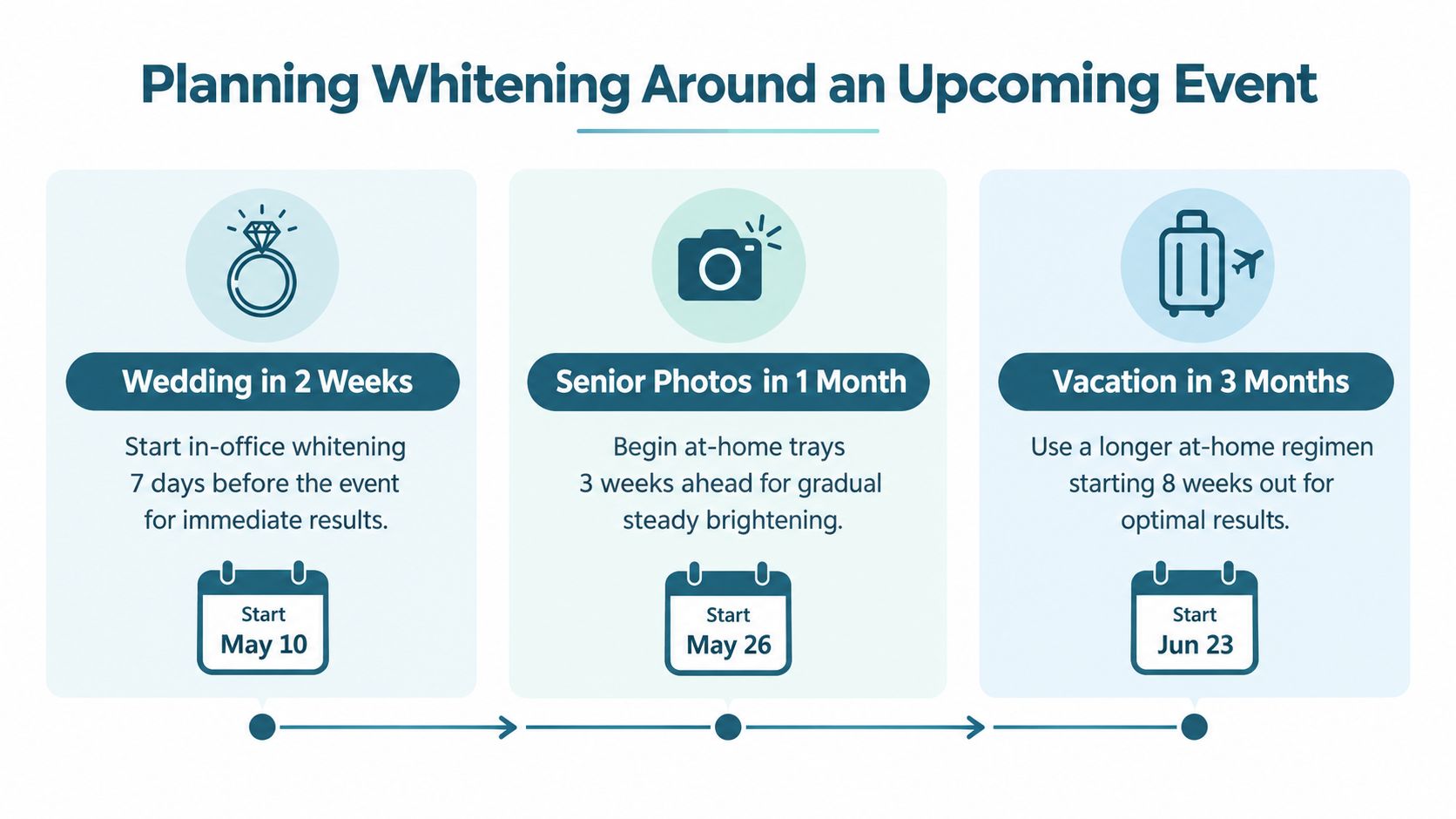
Calendar rule: Book the consultation before the desired whitening start date, not just before the event.
Published ADA comparisons offer another planning anchor: in-office treatment reached a cited whitening level in about 1 day, at-home trays in roughly 7 days, and over-the-counter whitening in about 16 days (ADA whitening guidance). These figures compare typical timing across options, not a guarantee for every smile.
Leave extra room for sensitivity recovery and restorative work. Crowns, veneers, fillings, and implants may remain a different color after natural teeth brighten, so the dental team can explain the likely result before treatment begins. Patients in Amanda, Lancaster, Circleville, and Carroll can use that consultation to match the option and timing to the event.
Keeping Your Smile Bright After Treatment
A bright smile is a starting point, not a permanent finish. Food, drinks, tobacco, natural aging, and everyday habits can gradually bring back discoloration, so maintenance deserves its own timeline.
The NHS teeth whitening guidance explains that whitening is not permanent. With appropriate dental advice, the result may last around three years, although that is an estimate rather than a promise. As the regression trial discussed earlier showed, measurable color fade can appear by 6 months after power bleaching. Initial brightness and long-term stability are separate parts of the process.
Small habits make maintenance easier
Patients do not need a perfect diet to protect a brighter smile. Small, repeatable choices can lower the amount of staining that reaches the teeth:
- Rinse after dark or acidic drinks: Water helps clear residue after coffee, tea, cola, or similar beverages.
- Use a straw when practical: A straw can reduce contact between cold brew or iced tea and the front teeth.
- Keep tobacco away from the smile: Tobacco can cause new staining and harm overall oral health.
- Schedule touch-ups deliberately: A dentist-approved tray routine may make sense before a vacation or photo-heavy occasion, rather than through random extra applications.
Regular cleanings and exams remove surface buildup and help identify changes that whitening cannot correct. If the shade seems to plateau, follow professional instructions instead of extending exposure time or adding applications without guidance.
A touch-up is a normal maintenance step. Teeth continue to encounter staining foods, drinks, and everyday aging. Patients can review how long professional whitening lasts and discuss a schedule with Amanda Family Dental that matches their habits and sensitivity history.
Starting Your Whitening Plan at Amanda Family Dental
A new patient interested in whitening can begin with an exam rather than a product selection. The dental team can use digital x-rays to check for decay or failing restorations, review gum health, discuss the starting shade, and identify whether the discoloration is surface-level or intrinsic.
The resulting plan may include in-office whitening, customized take-home trays, a combination of both, or restorative treatment before cosmetic work. Patients with dental anxiety can ask about sleep dentistry, while mercury-free and fluoride-free choices may be discussed when clinically appropriate. Flexible payment plans, including the Power Plan Membership, can help families consider a broader plan that may involve cleanings, exams, crowns, fillings, dental implants, or cosmetic dentistry.
Patients coordinating a wedding, reunion, or other gathering may also benefit from practical event venue planning steps while setting the smile-treatment calendar. Planning the venue and the dental consultation early leaves more room for a comfortable result.
For patients in Amanda, Lancaster, Circleville, and Carroll, the most useful next step is a whitening consultation that connects the desired shade with the event date, oral health, sensitivity history, and budget.
Amanda Family Dental offers professional teeth whitening, take-home options, exams, digital x-rays, and personalized cosmetic and restorative treatment planning for patients near Amanda, Lancaster, Circleville, and Carroll. Visit Amanda Family Dental to schedule a whitening consultation and receive a plan built around the smile timeline that matters.