

A patient in Amanda, OH, may be searching “what does a dental exam include” after noticing bleeding gums, a sensitive tooth, an old filling, or no symptoms at all. A routine appointment is more than a quick look for cavities. It can combine a health-history review, soft-tissue and oral cancer screening, gum measurements, tooth-by-tooth charting, bite and jaw checks, professional cleaning, and dental x-rays when clinically indicated.
Amanda Family Dental provides complete dental care for patients in Amanda, Lancaster, Circleville, and Carroll, Ohio. Whether someone needs a new patient exam, relief from tooth pain, an emergency dentist, restorative dentistry, cosmetic dentistry, or information about dental implants near me, understanding the exam makes the first visit feel more predictable.
Table of Contents
- Walking Into Your Dental Exam in Amanda, OH
- The Core Steps of a Routine Dental Exam
- Oral Cancer Screening and Soft-Tissue Check
- Gum Health and Tooth-by-Tooth Evaluation
- Bite, Jaw Function, X-Rays, and Specialist Referrals
- What to Expect During Your Visit at Amanda Family Dental
- Common Questions Patients Ask Before the Visit
- Schedule Your Next Dental Exam Near Amanda, OH
Walking Into Your Dental Exam in Amanda, OH
A weekday morning appointment at Amanda Family Dental begins in a calm manner. A patient from Lancaster arrives with an insurance card, checks in at the front desk, and has a moment to settle before a hygienist comes forward with a warm greeting. The handoff is simple and personal, not rushed.
The first conversation usually covers the patient's medical and dental history. The team confirms current medications, allergies, recent medical changes, and anything different since the last appointment. Those details can affect gum tissue, bleeding, healing, sensitivity, and the safest way to plan dental treatment.
The opening part of the visit also gives patients room to mention what brought them in. A patient from Circleville might report bleeding during flossing. Someone from Carroll might mention jaw soreness in the morning, a sharp edge on a tooth, or anxiety about dental instruments. Those concerns help the hygienist and dentist focus the examination.
A useful starting point: Patients don't need to wait for the dentist to notice a concern. Mentioning sensitivity, bleeding, bad breath, tooth movement, or jaw discomfort at check-in gives the team important context.
A blood pressure check may be included, particularly when the office is reviewing general health before treatment. Paperwork and questions aren't a delay. They create a baseline so the clinical team can compare changes over time and make recommendations that fit the patient's health.
The result is a calmer first ten minutes. The patient knows where to place personal belongings, who will guide the visit, and when to ask questions. That small amount of preparation can make a new patient exam feel less like an unknown event and more like a conversation about personal dental care.
The Core Steps of a Routine Dental Exam
A routine dental exam follows a layered process. Each step answers a different question, so a healthy-looking smile still receives a complete review rather than a single glance.
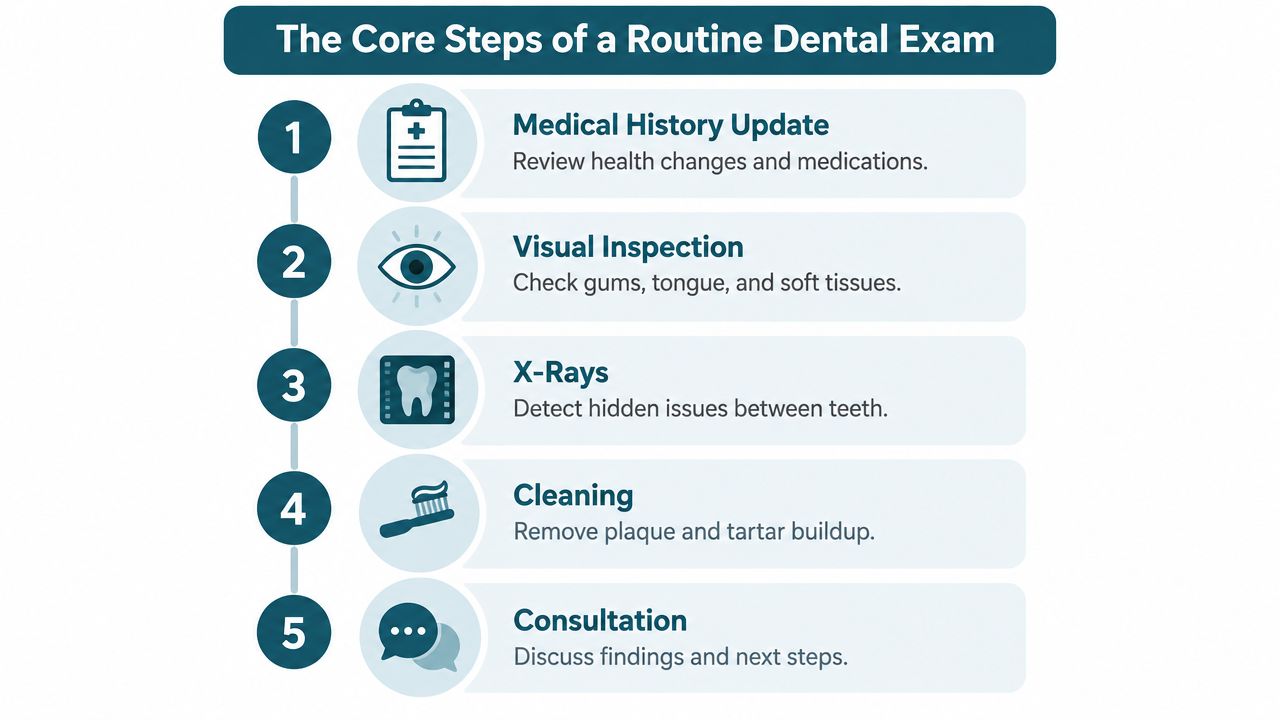
Step 1, update the health history
The visit begins with current medications, allergies, medical conditions, recent procedures, and dental concerns. A change in health can alter treatment planning, anesthesia choices, bleeding risk, or healing expectations.
Step 2, inspect the mouth and soft tissues
Using a mirror, light, and clinical instruments, the dentist reviews the teeth, gums, cheeks, tongue, palate, and floor of the mouth. This inspection looks for decay, cracks, worn areas, inflammation, unusual tissue changes, and problems around existing fillings or crowns.
Step 3, assess the gums and supporting structures
A periodontal probe measures the space between each tooth and the surrounding gum tissue. The dentist or hygienist also notes bleeding, recession, swelling, mobility, and signs that bone support may need closer evaluation.
Step 4, use x-rays when the findings call for them
Dental x-rays can reveal decay between teeth, bone changes, impacted teeth, or concerns beneath restorations that aren't visible during a visual inspection. They aren't automatically needed at every visit. Clinical findings, dental history, and the time since earlier images help determine whether imaging is appropriate. A survey of 40 Boston dental offices found that 95% used x-rays during the initial exam of a new patient, 47.5% routinely included a full-mouth series at the first visit, and 85% used some radiographic procedure during periodic cleaning or checkup visits. These findings are reported in the PubMed record on radiographic practices in dental offices.
Step 5, clean, explain, and plan
The cleaning removes plaque and tartar that can hide tooth and gum surfaces. The dentist then discusses findings, answers questions, and explains whether the next step is preventive care, a filling, a crown, tooth extraction, dental implants, cosmetic dentistry, or a referral.
Patients who want a closer look at the hygiene portion can review what a dental cleaning includes.
The Centers for Disease Control and Prevention examination framework also includes medical history screening, tooth counting, caries assessment, sealant assessment for children ages 3 to 19, fluorosis assessment for ages 6 to 19, and periodontal examination for adults 30 and older, as described in this overview of coding exams and radiographs.
A short visual sequence explains the process, while the actual appointment is adjusted to the patient's age, history, symptoms, and clinical needs.
Oral Cancer Screening and Soft-Tissue Check
Amanda-area patients often expect a dental exam to focus on cavities. The dentist also checks the tissues around the teeth, because changes in the mouth or neck may develop before a person notices them. A routine exam can include a visual and hands-on oral cancer screening, a review of medical and dental history, inspection of the teeth, gums, and soft tissues, and an assessment of jaw function, as outlined in this dental education resource on oral cancer screening.
The dentist looks at the lips, gums, inner cheeks, tongue, underside of the tongue, palate, and visible throat area. They may gently feel beneath the chin, along the jaw, and through the neck for unusual lumps, swelling, or tender lymph nodes. The check is brief and generally painless, giving patients another chance to catch concerns before they cause pain or require more involved care.
Screening participation has remained limited. One U.S. survey found that only 18% of adults had received an oral cancer screening examination by 2008, while Healthy People goals called for 20% annual screening participation. Another national estimate found that 29.4% of adults had ever received an oral cancer examination involving tongue pulling or neck palpation, according to the same dental education resource.
Why the check matters
Tobacco and alcohol exposure can raise concern, and human papillomavirus, commonly called HPV, also relates to oral and pharyngeal health. These factors do not determine a diagnosis. Patients without known risks can still benefit from routine screening, just as a smoke detector protects a home even when no fire is visible.
The soft-tissue check protects more than the smile. It gives the dentist an opportunity to notice changes a patient may not feel or see clearly.
Patients may notice gentle pressure as the dentist moves the tongue or feels the neck. Sharp pain is not expected. If an area looks unusual, the dentist explains the finding and whether monitoring, additional testing, or referral makes sense. The goal is a calm, quick health check that reduces surprises and supports a clearer plan when follow-up is needed.
Gum Health and Tooth-by-Tooth Evaluation
A patient may arrive expecting a quick cavity check and leave with a clearer picture of the whole mouth. After the soft-tissue review, the clinician checks the gums, the spaces around each tooth, and the condition of every tooth individually. This broader screening can reveal problems early, helping Amanda-area patients reduce pain later and avoid unexpected treatment.
A periodontal probe rests gently beside each tooth to measure pocket depth. Periodontal guidance recommends checking six sites per tooth with a 1-millimeter diameter probe, using Williams or North Carolina markings and a standardized force of about 15 N, or 15.30 grams, for consistent results. Normal pocket depths are generally 1 to 3 millimeters, according to this clinical explanation of periodontal examination.
What gum measurements reveal
The measurements form one part of the assessment. The team also records bleeding, swelling, recession, tenderness, and tooth mobility. Deeper pockets or changes since the last visit may point to gingivitis or periodontal disease. Depending on the findings, the plan may include better home care, periodontal maintenance, scaling and root planing, or a specialist evaluation.
Patients can review these tips for maintaining healthy gums to support daily care. Brushing and cleaning between the teeth help, while professional measurements show what is happening below the gumline.
The tooth-by-tooth map
The dentist examines chewing surfaces, side surfaces, contact areas, and the gumline. A mirror, bright light, and explorer help identify decay, cracks, worn enamel, exposed roots, and changes around fillings, crowns, or other restorations.
Existing dental work receives careful attention. Open margins, fractures, recurrent decay, and wear patterns can affect the next treatment decision. Charting each finding creates a useful record, allowing the team to prioritize urgent care and compare small changes at future exams.
If gum measurements or recession raise concern, selected dental images may show bone detail that cannot be judged from the visible tooth surface alone. The dentist uses those findings with the clinical exam to recommend care based on the mouth's actual condition, rather than on appearance alone.
Bite, Jaw Function, X-Rays, and Specialist Referrals
A routine dental exam also checks how your mouth functions. The dentist may ask you to close gently on marking paper. The pattern shows where your upper and lower teeth meet, much like a contact map. Uneven pressure, worn enamel, or signs of grinding can reveal a bite concern before it causes noticeable pain or damage.
Jaw function receives its own check. As you open, close, and move your jaw from side to side, the dentist looks for clicking, tenderness, muscle tension, limited movement, or a change in the path of opening. These observations do not automatically diagnose a temporomandibular disorder. They help connect jaw symptoms with tooth wear, muscle strain, and other examination findings, giving you a clearer plan if discomfort develops.
When imaging adds useful information
A visual check cannot show every surface or what lies beneath a restoration. Dental x-rays can reveal decay between teeth, bone loss, impacted teeth, and changes hidden below fillings or crowns. A dental exam overview explains that an exam may include cleaning, checks for gum disease and tooth decay, and x-rays on selected visits based on tooth condition and the time since the previous exam.
Before ordering an image, the dentist considers clinical findings, earlier images, symptoms, age, and dental history. You can ask what the x-ray is meant to show and how its result might change treatment. That explanation can make the process easier to understand and reduce surprises later.
Patients who want a plain-language explanation can read about the advantages of digital dental x-rays. Knowing the purpose of an image helps connect the technology to a practical benefit, such as finding a hidden problem before it becomes painful.
When a referral is appropriate
Some findings call for focused expertise. Advanced periodontal disease, impacted teeth, complicated root canal concerns, or suspicious soft-tissue changes may lead to an oral surgeon, periodontist, endodontist, or ENT specialist.
A referral from Amanda Family Dental does not mean the routine exam fell short. It gives you a clearer route when diagnosis or treatment requires specialized training, equipment, or a different clinical setting. That coordinated approach can reduce delays and help prevent a small concern from becoming a larger problem.
What to Expect During Your Visit at Amanda Family Dental
A patient arriving for a routine appointment at Amanda Family Dental can expect a predictable rhythm. Check-in is followed by a health-history update, a conversation about concerns, and a handoff to the hygienist. If the dentist has ordered imaging, digital x-rays are taken before the clinical review so the findings can be considered together.
The cleaning typically begins with removal of plaque and tartar above and below the gumline. Ultrasonic and hand instruments may be used, followed by polishing with a mildly gritty paste, flossing between the teeth, and fluoride treatment when appropriate.
A visit built around questions
The dentist performs the broader examination after the hygiene work or at the point that best fits the appointment. Findings may be shown on a chairside monitor, helping patients see a worn filling, gumline concern, visible crack, or area that needs an x-ray.
A patient from Carroll might learn that a sensitive area has exposed root surface rather than a new cavity. Someone from Lancaster might discover that a chipped tooth needs a restorative option, while a patient from Circleville could discuss cosmetic dentistry such as teeth whitening, veneers, or Invisalign after health concerns have been addressed.
Patient-centered care: A treatment plan should explain what was completed, what can wait, what needs attention first, and what questions remain.
Hygiene coaching is adapted to the individual. The team may demonstrate brushing around a crown, suggest floss alternatives for tight contacts, explain water flosser use, discuss food and drink choices that support enamel, or address habits connected with grinding and snoring.
Before leaving, the patient receives a clear summary of findings and recommendations. The team can also discuss expected insurance coverage, an out-of-pocket estimate, payment options, and the timing of follow-up care. If treatment is needed, options may include a filling, crown, root canal, tooth extraction, denture, or dental implant. If pain develops suddenly, the office can also assess whether emergency dental services are appropriate.
Common Questions Patients Ask Before the Visit
Patients in Amanda, Lancaster, Circleville, and Carroll often have the same practical concerns before booking a new patient exam.
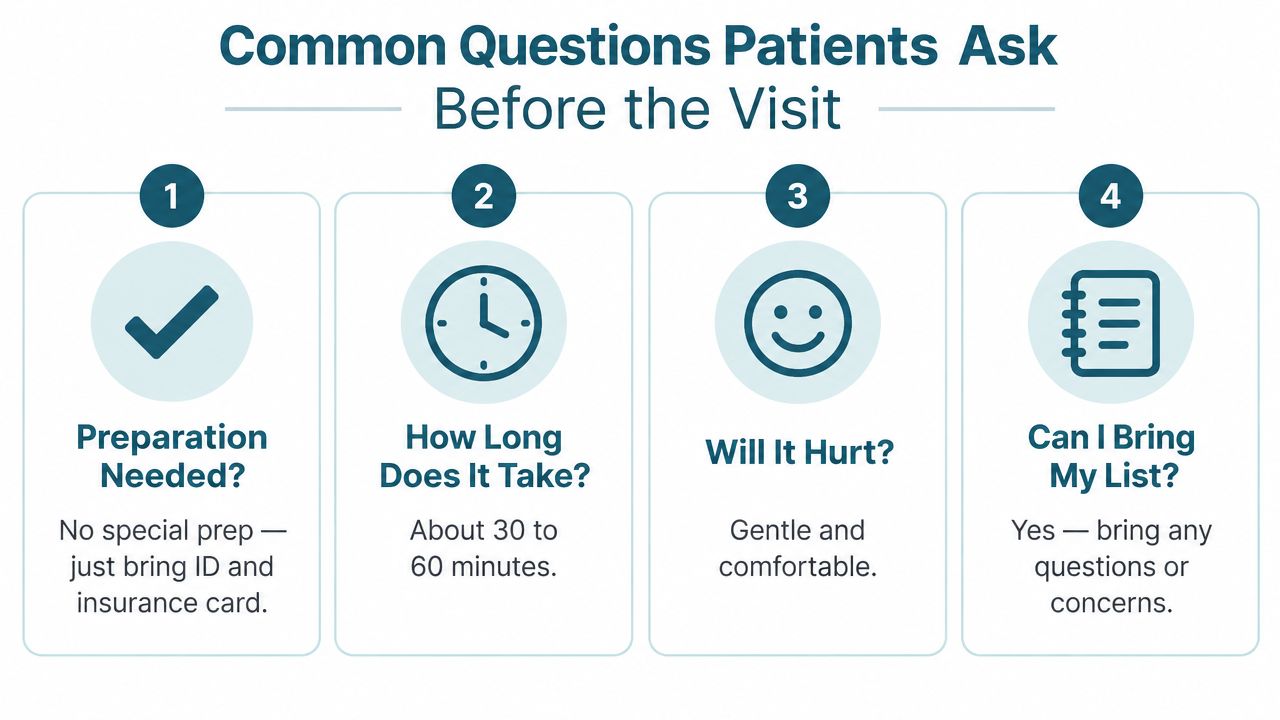
Does a patient need to prepare?
No special preparation is needed. Patients should bring identification, an insurance card if applicable, and a current list of medications. It also helps to write down questions about sensitivity, bleeding, jaw discomfort, previous dental treatment, or a cosmetic concern.
Is the cleaning required?
The cleaning is technically separate from the examination, but having it during the same visit is strongly recommended when appropriate. Removing plaque and tartar gives the dentist cleaner surfaces to inspect and allows the team to update gum observations more accurately.
Is an exam safe during pregnancy?
A regular dental exam is generally safe during pregnancy. X-rays are commonly postponed unless a specific dental problem makes imaging necessary, so pregnant patients should tell the office before the appointment.
Why schedule an exam without pain?
Pain isn't a reliable signal that everything is healthy. Cavities, gum disease, hidden decay, bone loss, and oral cancer can develop gradually, and a no-pain visit may identify a concern while treatment remains simpler.
A thorough examination may also include broader health and developmental context for children. Pediatric guidance connects dental assessment with growth and medical factors such as height, weight, BMI, and vital signs because those factors can affect caries risk, eruption patterns, and treatment planning, as described in the American Academy of Pediatric Dentistry periodicity guidance.
Patients with dental anxiety can tell the front desk before arrival. A slower explanation, planned pauses, and comfort-focused care can make the appointment easier to manage.
Schedule Your Next Dental Exam Near Amanda, OH
You may book a routine exam after noticing sensitivity, bleeding, jaw soreness, or no symptoms at all. That visit works like a health screening for your mouth. The dentist checks teeth, gums, bite, jaw movement, and soft tissues, helping catch changes before they lead to more pain, urgent care, or complex treatment. X-rays are chosen based on your condition and visit history, so the appointment is customized rather than identical for every patient.
You leave with a clearer plan. The team can separate concerns that need attention now from areas that can be watched, then recommend care such as a cleaning, filling, crown, root canal, extraction, cosmetic treatment, dental implant, or emergency visit when appropriate.
Amanda Family Dental sees patients looking for a dentist in Amanda, OH, along with nearby families seeking a dentist in Lancaster, OH, Circleville, OH, or Carroll, OH. Call or book online to arrange an exam, discuss a concern, or request a restorative or cosmetic consultation.
Amanda Family Dental provides exams, professional cleanings, digital x-rays when clinically needed, treatment planning, and patient-focused care. Visit Amanda Family Dental to schedule an exam, request a consultation, or contact the office about a current concern.