

All on 6 Dental Implants: Is This Full-Arch Solution Right for You?
Losing most or all of your teeth can affect far more than the appearance of your smile. It may change what you feel comfortable eating, how clearly you speak, and whether you feel confident laughing or smiling around other people. Traditional dentures can restore missing teeth, but some patients want a solution that feels more stable and does not need to be removed each night.
That is often when people begin researching treatments such as All-on-6 dental implants.
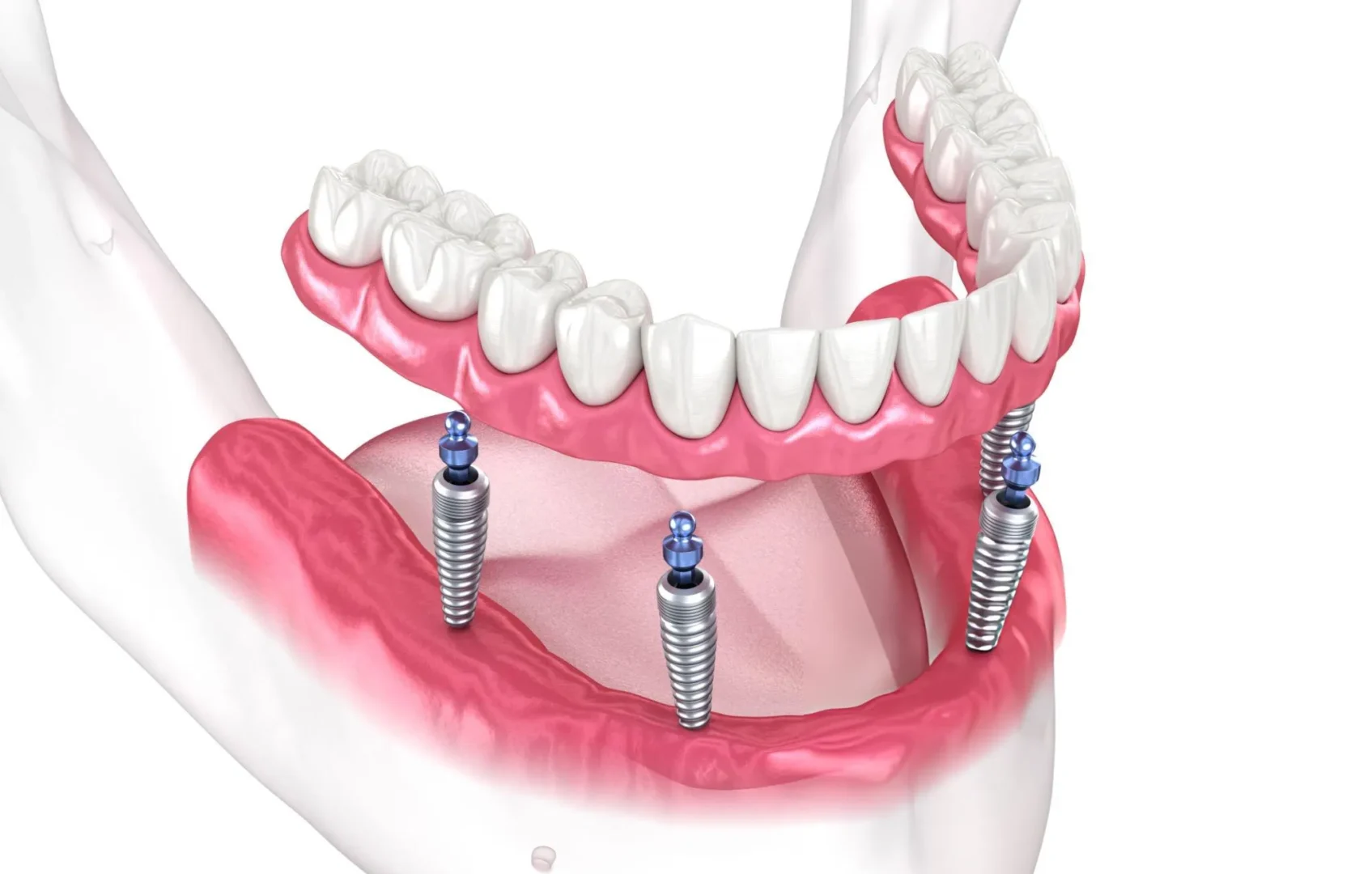
All on 6 is a type of full-arch tooth replacement in which a complete set of replacement teeth is supported by six dental implants. It can be considered for the upper jaw, lower jaw, or both, depending on the patient’s needs. Rather than placing one implant for every missing tooth, the implants are positioned strategically to support a connected full-arch restoration.
It can be an effective option for the right patient, but the word “six” should not be treated as a universal formula. The appropriate number of implants depends on your bone structure, oral health, bite, medical history, restoration design, and long-term treatment goals. Research supports fixed full-arch restorations supported by four to six implants, but the final design should always be based on an individualized clinical evaluation.
At Amanda Family Dental, we help patients in Amanda, Ohio, and surrounding communities understand their tooth replacement options. Our services include dental implants, partial dentures, full dentures, extractions, digital X-rays, restorative dentistry, and personalized treatment planning.
How All-on-6 Dental Implants Work
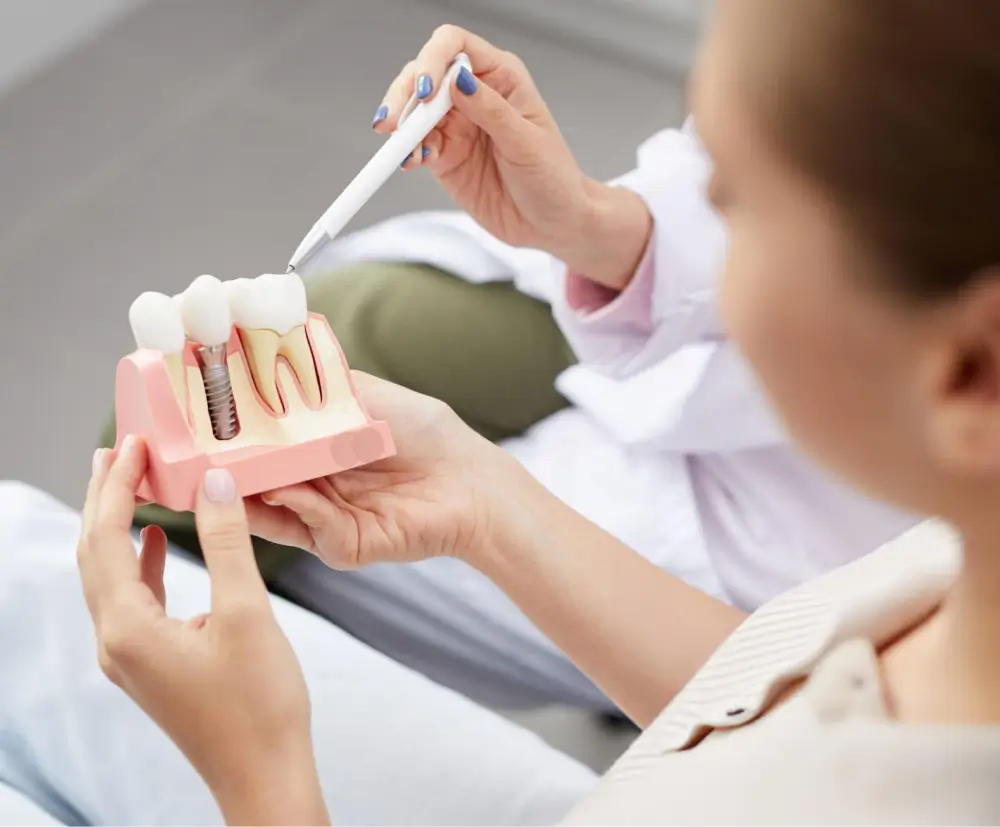
A traditional dental implant generally consists of a small post that is surgically placed in the jawbone. Once the implant becomes stable within the bone, it can support a crown, bridge, or larger dental prosthesis. Dental implants are designed to replace missing teeth without relying entirely on neighboring natural teeth for support.
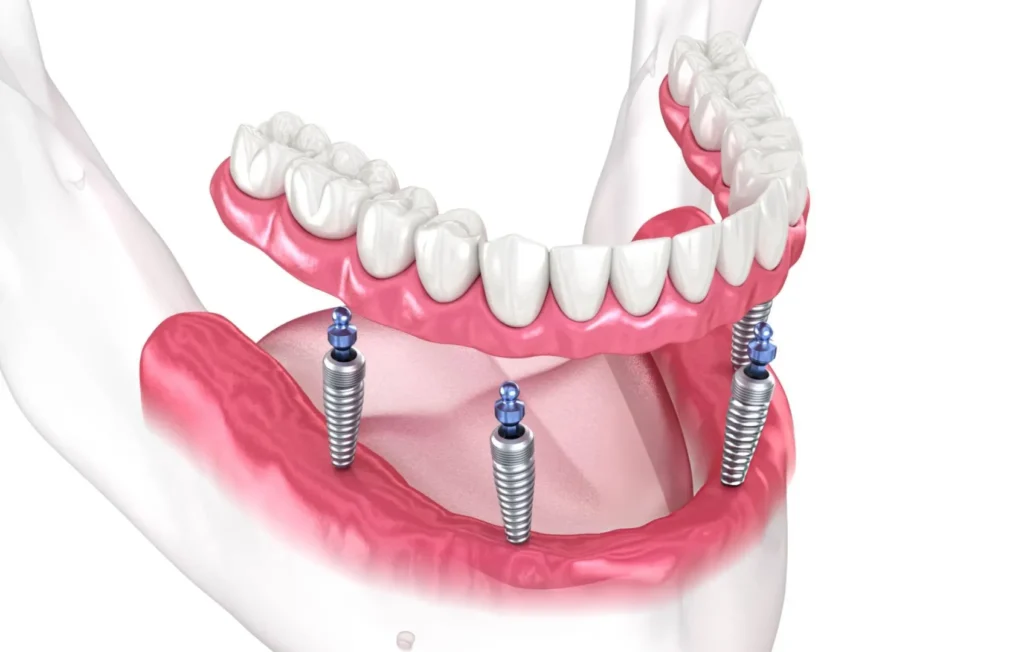
With an All-on-6 restoration, six implants are distributed across the dental arch. The implants support a connected row of replacement teeth rather than six individual dental crowns.
Because the restoration is supported by implants, it is intended to remain more stable than a conventional removable denture. Patients do not typically remove a fixed full-arch restoration for nightly cleaning. However, the teeth and gumline still require careful daily hygiene, professional maintenance, and routine examinations.
The phrase “All-on-6” describes the general concept, but treatment details can vary. The shape of the restoration, implant positions, materials, healing schedule, and whether temporary teeth can be placed early in the process all depend on the individual case.
Who May Be a Candidate for All-on-6?
All-on-6 treatment is generally considered for adults who have lost an entire arch of teeth or whose remaining teeth have a poor long-term prognosis. It may also interest patients who currently wear full dentures but want greater stability.
A possible candidate may have:
- Most or all teeth missing in one arch
- Multiple teeth that cannot predictably be restored
- Difficulty eating with removable dentures
- A denture that shifts, rubs, or feels unstable
- Adequate jawbone to support implants
- Healthy or treatable gum tissue
- A willingness to maintain excellent oral hygiene
- Realistic expectations about treatment and recovery
Having missing teeth does not automatically mean that All-on-6 is the best option. Some natural teeth may still be strong enough to preserve. In other situations, a removable denture or another implant-supported design may better fit the patient’s health, anatomy, budget, or preferences.
At Amanda Family Dental, every tooth extraction and replacement decision begins with an evaluation. The practice emphasizes determining whether a tooth can be saved before discussing extraction and then helping patients compare dental implants, partial dentures, and full dentures when replacement is necessary.
Why Bone Health Matters
Dental implants need sufficient bone for stability. When teeth have been missing for a long time, the jawbone in those areas may shrink. Gum disease, previous infections, injuries, and certain anatomical features can also affect the quantity or quality of available bone.
This does not necessarily rule out implant treatment. Some patients may be candidates for bone grafting, sinus augmentation, a different number or position of implants, or an alternative restoration. For implants in the upper back jaw, for example, the amount of bone beneath the sinus can affect whether additional preparation is necessary.
Digital dental imaging helps the dentist evaluate areas that cannot be seen during a visual examination. Amanda Family Dental uses digital X-rays to identify concerns beneath the teeth and gums and to create treatment plans based on a more complete picture of the patient’s oral health.
Additional three-dimensional imaging or consultation with another dental professional may be recommended when more detailed surgical planning is required.
Potential Benefits of an All-on-6 Restoration
The greatest potential advantage is stability. Because the replacement teeth are supported by implants, the restoration may feel more secure during eating and speaking than a conventional removable denture.
Patients may also appreciate that the restoration is fixed in place. There is no need to remove it at bedtime or apply denture adhesive each morning. A properly planned restoration can also be shaped to create a natural-looking smile and provide support for the lips and facial appearance.
The six implants may allow chewing forces to be distributed across several points in the jaw. However, placing more implants does not automatically make a restoration better. The quality and location of the bone, the way the teeth come together, and the design of the final restoration are equally important.
Research has found that fixed complete-arch restorations can achieve high implant and prosthesis survival, but maintenance needs and biological or mechanical complications can still occur.
All-on-6 Compared With All-on-4
All on 4 and All-on-6 use the same basic idea: a complete arch of replacement teeth is supported by a limited number of strategically placed implants.
The obvious difference is the number of implants. All-on-4 typically uses four, while All-on-6 uses six. A dentist may consider six implants when the patient’s anatomy and treatment design can accommodate them and when the additional support may be beneficial.
That does not mean that All-on-6 is always superior. A long-term clinical comparison found no significant overall difference between four-implant and six-implant immediate full-arch groups, reinforcing the importance of choosing the design according to the individual case rather than the name of the procedure.
For some patients, four implants may provide appropriate support while reducing surgical complexity. Others may benefit from six. The choice should be based on diagnostic findings, prosthetic planning, bone availability, and the dentist’s clinical judgment.
All-on-6 Compared With Traditional Dentures
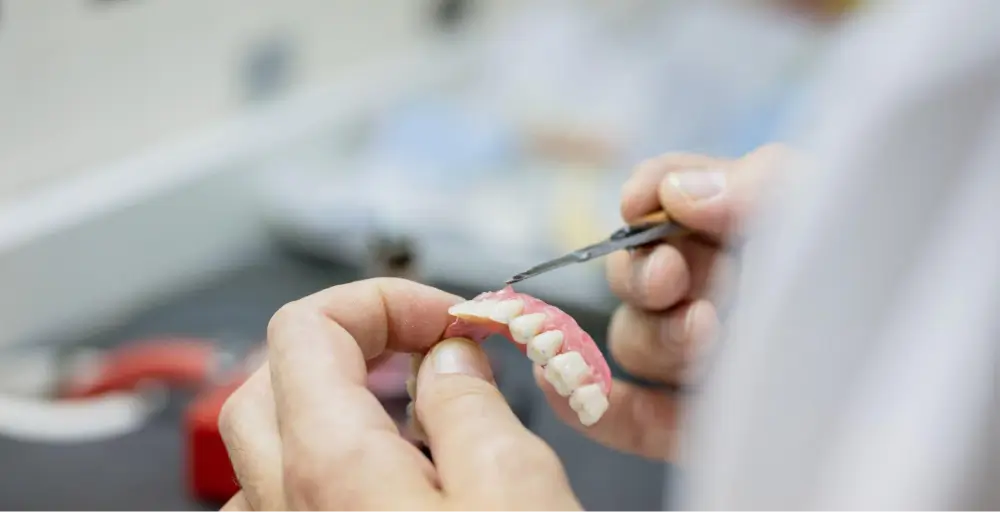
Traditional full dentures remain a practical tooth replacement option for many people. They are removable, generally more economical than a fixed full-arch implant restoration, and do not require the same type of implant surgery.
Amanda Family Dental offers full dentures as a customized option for patients missing an entire arch. The practice also provides partial dentures when some healthy natural teeth remain.
The main tradeoff is that conventional dentures rest on the gums rather than being fixed to implants. Some patients adjust very well, while others experience movement, pressure points, difficulty chewing certain foods, or concerns about the denture slipping.
An implant-supported restoration can offer more stability, but it also involves surgery, healing time, a larger financial commitment, and more complex maintenance. Neither option is right for everyone.
What the Treatment Process May Involve
Full-arch implant treatment usually begins with a comprehensive examination and diagnostic imaging. The dentist reviews the health of any remaining teeth, gums, jawbone, bite, and existing dental work. Medical conditions, medications, tobacco use, and previous dental experiences should also be discussed.
When remaining teeth cannot be saved, extractions may be included in the treatment plan. The implant placement stage follows, although the timing can vary. Some patients receive a temporary restoration relatively early, while others need a longer healing period before the teeth are attached.
Once the implants and surrounding tissues are ready, the final restoration is created and adjusted. Follow-up visits are important because the bite, comfort, hygiene access, and stability of the restoration must be monitored.
The exact sequence should never be assumed based on an online description. Full-arch implant treatment is highly individualized, and some cases require coordination among a general dentist, implant surgeon, dental laboratory, or other dental professional.
Living With All-on-6 Dental Implants
Fixed teeth still need daily care. Food and plaque can collect beneath a full-arch restoration and around the implants. Patients may need floss threaders, interdental brushes, a water flosser, or other tools recommended by their dental team.
Professional cleanings and examinations remain essential. The dentist needs to monitor the gums, supporting bone, implant stability, bite, and condition of the prosthesis. Small issues are generally easier to manage when they are identified early.
Patients should also understand that the implants and the replacement teeth are separate components. Even when implants remain healthy, parts of the restoration may eventually require adjustment, repair, or replacement. Long-term studies show strong survival for full-arch implant restorations, but they also document biological and prosthetic complications that require ongoing care.
Is All-on-6 Right for You?
All-on-6 may be worth exploring when most or all teeth in an arch are missing, conventional dentures are not meeting your needs, and you want a stable, fixed replacement. Still, the right answer cannot be determined from the number of missing teeth alone.
A thoughtful consultation should answer several important questions:
How healthy are the remaining teeth? Is there enough bone for implants? Would four, six, or another number of implants be appropriate? Could some natural teeth be preserved? Would a removable solution be easier to clean or better suited to your budget? Will additional procedures be needed before implant placement?
Amanda Family Dental combines modern dental care with a personal, hometown approach. Led by Dr. Alyssa Jenkins, the team focuses on helping patients feel comfortable, informed, and confident in their treatment decisions.
The practice welcomes patients from Amanda, Lancaster, Circleville, Stoutsville, Ashville, Carroll, Lithopolis, Sugar Grove, Logan Elm Village, and other nearby Ohio communities.
Take the First Step Toward Rebuilding Your Smile
An All-on-6 restoration can provide life-changing stability for an appropriate candidate, but it is only one of several ways to replace a complete arch of teeth. The most successful plan is not necessarily the one with the most implants. It is the one that fits your oral health, anatomy, lifestyle, expectations, and ability to maintain the restoration.
Amanda Family Dental provides evaluations and personalized guidance for patients considering dental implants, partial dentures, full dentures, or other tooth replacement options. The website confirms dental implant and denture services but does not identify All-on-6 as a separately branded in-office procedure, so an examination is the best way to learn what treatment or coordinated care may be appropriate.
To discuss your tooth replacement options, contact Amanda Family Dental at 740-969-1198 or visit the office at 145 W. Main Street in Amanda, Ohio.
Amanda Family Dental
https://maps.app.goo.gl/kDoSWq497FbknuUw6
(740) 969-1198
145 W Main St, Amanda, OH 43102, United States
https://amandafamilydental.com/