

Bleeding gums during brushing. Persistent bad breath that doesn't match the effort going into home care. A cleaning that used to feel routine now comes with the words “deep cleaning” and a little spike of worry. That's a common place to be when gum disease starts moving past the earliest stage.
The good news is that a scaling and root planing procedure is a well-established, nonsurgical treatment used to get gum health back under control. For patients looking for a dentist in Amanda, OH, or nearby communities such as Lancaster, Circleville, and Carroll, Ohio, what matters most isn't just the procedure itself. It's understanding what's happening, knowing what recovery really feels like, and having a dental team that treats gum care as a long-term partnership instead of a one-time fix.
Table of Contents
- Your Trusted Local Dentist for Gum Health
- Why You Might Need a Scaling and Root Planing Procedure
- What Happens During Your Deep Cleaning Appointment
- The Health Benefits of Treating Gum Disease
- Your Recovery and Aftercare Guide
- Costs, Insurance, and Long-Term Care
- Schedule Your Consultation at Amanda Family Dental
Your Trusted Local Dentist for Gum Health
A lot of patients delay gum treatment because they're unsure what bleeding or tenderness means. Some assume they just need to brush harder. Others worry they've waited too long. Neither reaction helps, and neither means they should feel embarrassed.
Gum disease is common, and it often starts subtly. The earlier it's addressed, the simpler the treatment plan usually is. That's why patients searching for a dentist near me, an emergency dentist, or a dentist in Lancaster, OH, Circleville, OH, or Carroll, OH often need more than a basic explanation. They need clear guidance and a calm, comfortable setting.
What anxious patients usually want to know
Patients typically don't begin by asking about root surfaces or pocket measurements. They ask practical questions.
- Will it hurt? Comfort is a central part of treatment planning, and local anesthesia is commonly used for this procedure.
- Is this the same as a regular cleaning? It isn't. A deep cleaning reaches below the gumline where infection-causing buildup collects.
- Will normal life stop for days? Usually not. Most patients return to their usual routine quickly, even if the mouth feels tender for a short time.
Gum treatment works best when patients know what to expect before the appointment, not while they're already in the chair.
Administrative support matters too. Practices that communicate well before and after visits tend to make anxious patients feel more settled. For readers interested in how dental offices improve responsiveness and scheduling communication, this overview of a Virtual receptionist for UK dentists offers a useful look at how practices reduce missed calls and keep patient questions from slipping through the cracks.
Why local care matters
For families in Amanda and nearby Ohio communities, convenience changes follow-through. Deep cleanings may be completed over more than one visit, and follow-up checks matter. Having a local dental office nearby makes it easier to keep those appointments, ask questions, and stay on track with maintenance instead of treating gum disease like a one-time event.
Why You Might Need a Scaling and Root Planing Procedure
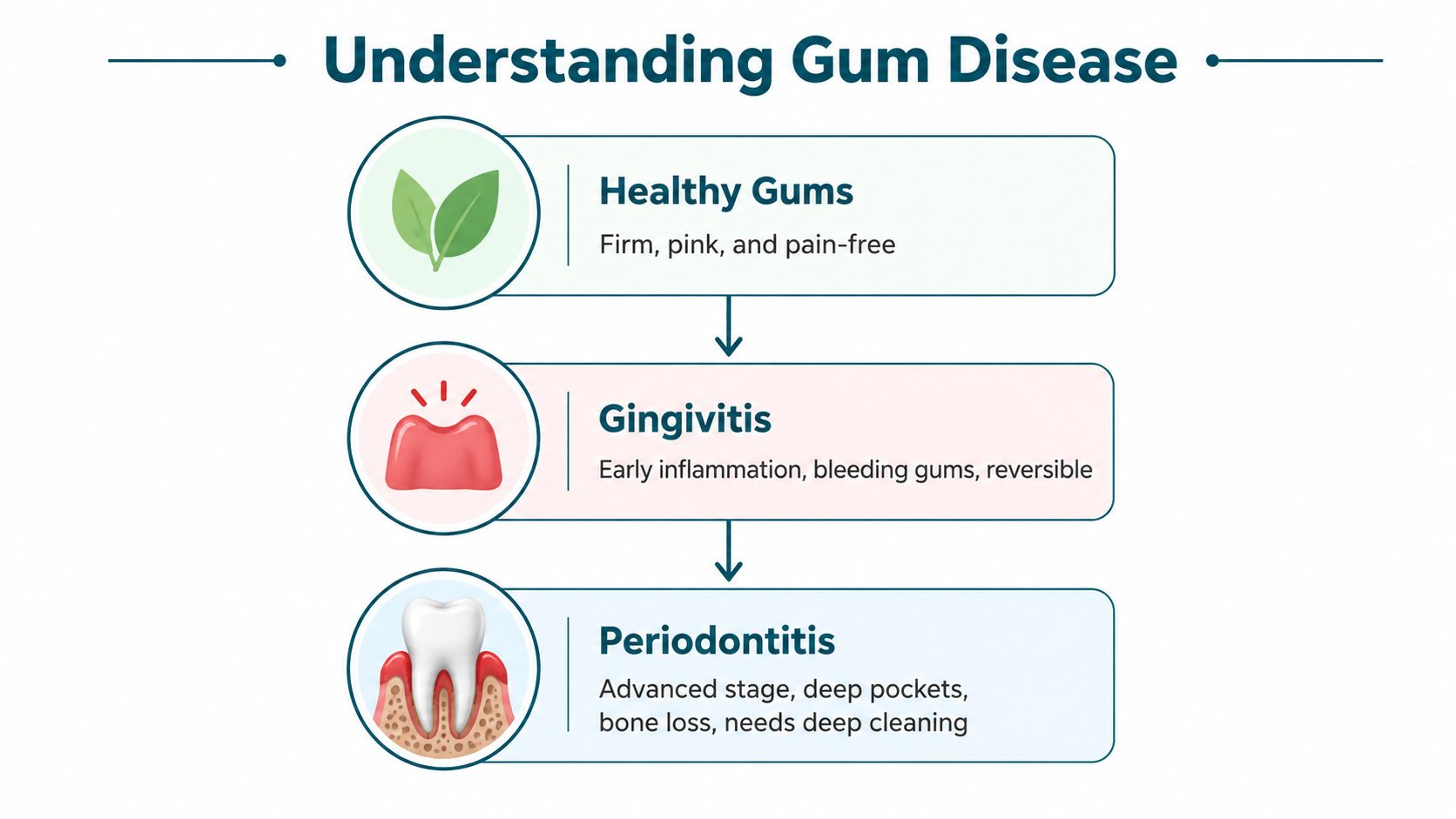
You may notice a little blood in the sink one morning, or gums that look puffy even though you brush every day. That is often how gum disease starts. The early stage is gingivitis, which means the gum tissue is irritated and inflamed, but the deeper support around the teeth has not been damaged in the same way periodontitis can damage it.
Once infection settles below the gumline, the problem changes. The gums can begin to separate from the teeth and create pockets that trap bacteria and hardened buildup. At that point, a routine cleaning is usually not enough to clean the area that is causing the irritation.
Regular cleaning versus deep cleaning
A regular cleaning focuses on plaque and tartar at and above the gumline. A scaling and root planing procedure goes deeper. It removes buildup from below the gums and smooths the root surfaces so the tissue has a better chance to settle down and heal.
That difference matters in real life. If buildup stays under the gums, bleeding and tenderness often continue even when someone is brushing faithfully at home. This is why deep cleaning is commonly recommended as an early, nonsurgical treatment for periodontal disease before the condition causes more bone and gum loss.
Why patients in Amanda often benefit from early treatment
Deep cleaning is not rare, and needing it does not mean you have done something wrong. Gum disease can build slowly, often with very mild symptoms at first. I often see patients who assumed occasional bleeding was normal, only to find that the gums were telling us they needed more attention.
A few signs commonly lead to an exam:
| Sign patients notice | What it can mean |
|---|---|
| Bleeding while brushing or flossing | Gum inflammation may be present |
| Bad breath that keeps returning | Bacteria below the gumline may be contributing |
| Gum tenderness or swelling | The tissues may be reacting to buildup and infection |
| Teeth looking “longer” | Gum recession may be developing |
For patients who have started to notice receding gums along with sensitivity or bleeding, our page on gum recession treatment in Ohio explains how those changes connect to gum health below the surface.
At Amanda Family Dental, we look at this treatment as more than a one-time cleaning. It is often the first step in a longer partnership focused on protecting your teeth, keeping you comfortable, and helping you avoid more involved treatment later.
Practical rule: If your gums bleed regularly, schedule an exam. Bleeding is a sign to check the tissue, not a reason to ignore it.
What Happens During Your Deep Cleaning Appointment
Patients often come in worried that a “deep cleaning” means a long, painful visit. In reality, the appointment is controlled, careful, and built around comfort. Our job is to clean below the gumline thoroughly enough to reduce the bacterial buildup that is irritating the gums, while keeping you informed about what we are doing and what you can expect afterward.

The appointment usually starts with comfort
We begin by making the area numb with local anesthesia so treatment feels manageable. Since this cleaning reaches below the gumline, numbing matters. It lets us work carefully without asking you to push through unnecessary discomfort.
Many deep cleanings are done one section at a time, often by quadrant or by one half of the mouth. That approach gives us better access, helps patients stay more comfortable in the chair, and makes it easier to clean thoroughly instead of rushing. A patient guide from Arizona Smile Design on scaling and root planing describes this staged approach and notes that mild bleeding, swelling, or soreness can happen for a few days afterward.
If you are unsure how this differs from a routine preventive visit, our page on what a dental cleaning includes explains where a standard cleaning ends and periodontal treatment begins.
The two parts of the procedure
Scaling and root planing has two steps, and each one has a clear purpose.
- Scaling removes plaque, tartar, and bacterial buildup from the tooth surface and from below the gumline.
- Root planing smooths the root surfaces so the gums have a cleaner surface to heal against and bacteria have fewer places to collect.
Some patients have everything completed in one visit. Others do better with two shorter appointments. The right choice depends on how much buildup is present, how sensitive the gums are, and how comfortable you want the visit to be. In our office, that decision is a practical one, not a one-size-fits-all rule.
A short visual can make the sequence easier to picture:
What patients usually feel during and after
During treatment, patients usually notice pressure, water, vibration, and scraping. Sharp pain is not the goal, and if something feels too intense, we pause and adjust. Good communication matters during this visit.
Afterward, the gums may feel tender and the teeth may be more sensitive to cold for a short time. That is common, especially when the gums were inflamed before treatment. The tissue has been cleaned thoroughly and now needs time to settle.
Patients commonly notice:
- During the appointment: pressure and movement more than pain
- Later that day: numbness wearing off, with mild tenderness
- Over the next few days: some sensitivity, slight swelling, or light bleeding while the gums calm down
At Amanda Family Dental, we do not treat this as a one-time procedure and send you on your way. We explain what we are seeing, how to care for the area at home, and when we want to recheck healing. For many patients in the Amanda, Ohio area, this appointment is the first real step toward steadier gums and a long-term plan to keep them healthy.
The Health Benefits of Treating Gum Disease
If your gums bleed when you brush, your breath never feels quite fresh, or certain teeth have started to feel a little “off,” gum disease may already be affecting the tissues that hold your teeth in place. Treating it early gives those tissues a chance to calm down and reattach more closely around the teeth before the problem becomes harder to manage.
One of the biggest benefits of scaling and root planing is protecting the support system around your teeth. As inflammation drops, the gums often become firmer, bleeding usually decreases, and those deep spaces where bacteria hide can become easier to keep clean at home. That matters for comfort now and for keeping your natural teeth longer.
Patients usually care about the day-to-day changes first. Those changes are often noticeable.
- Less bleeding during brushing and flossing makes home care feel more manageable.
- Fresher breath often follows once the bacteria under the gums are reduced.
- Less tenderness while chewing can return as swollen tissue settles down.
- A healthier-looking smile line can make patients feel more comfortable speaking and smiling.
There is also a longer-term benefit that patients do not always see right away. Healthier gums create a more stable foundation for fillings, crowns, and other dental work. If we are planning future treatment, gum health comes first because everything works better on a cleaner, less inflamed foundation.
At Amanda Family Dental, we treat this appointment as the start of an ongoing relationship, not a one-time cleanup. We want patients in Amanda, Ohio to understand what improved gum health should feel like, what habits will help maintain it, and how to prevent the same problem from returning. For patients who want practical home-care support, our guide to maintaining healthy gums and preventing gum disease is a helpful next step.
Treating gum disease early usually means fewer problems later. This is the main advantage. More comfort, more confidence, and a better chance of keeping your smile healthy for years.
Your Recovery and Aftercare Guide
You get home, the numbness starts to wear off, and the first question is usually simple: “Is this normal?” That is the right question to ask after scaling and root planing. Mild soreness, light bleeding, and some sensitivity during the first several days are common after treatment. The American Dental Association notes that patients can usually return to normal activities the same day, while tenderness may last a day or two and sensitivity can continue for about a week in its patient guidance on scaling and root planing.
At Amanda Family Dental, we try to make recovery feel predictable, not uncertain. Before you leave, we review what to expect, what will help, and when to call us. That local follow-through matters, especially for patients in the Amanda, Ohio area who want a dental office that stays involved after the procedure instead of sending them home with vague instructions.
What helps in the first several days
The goal is to keep the gums clean while giving them a chance to settle down.
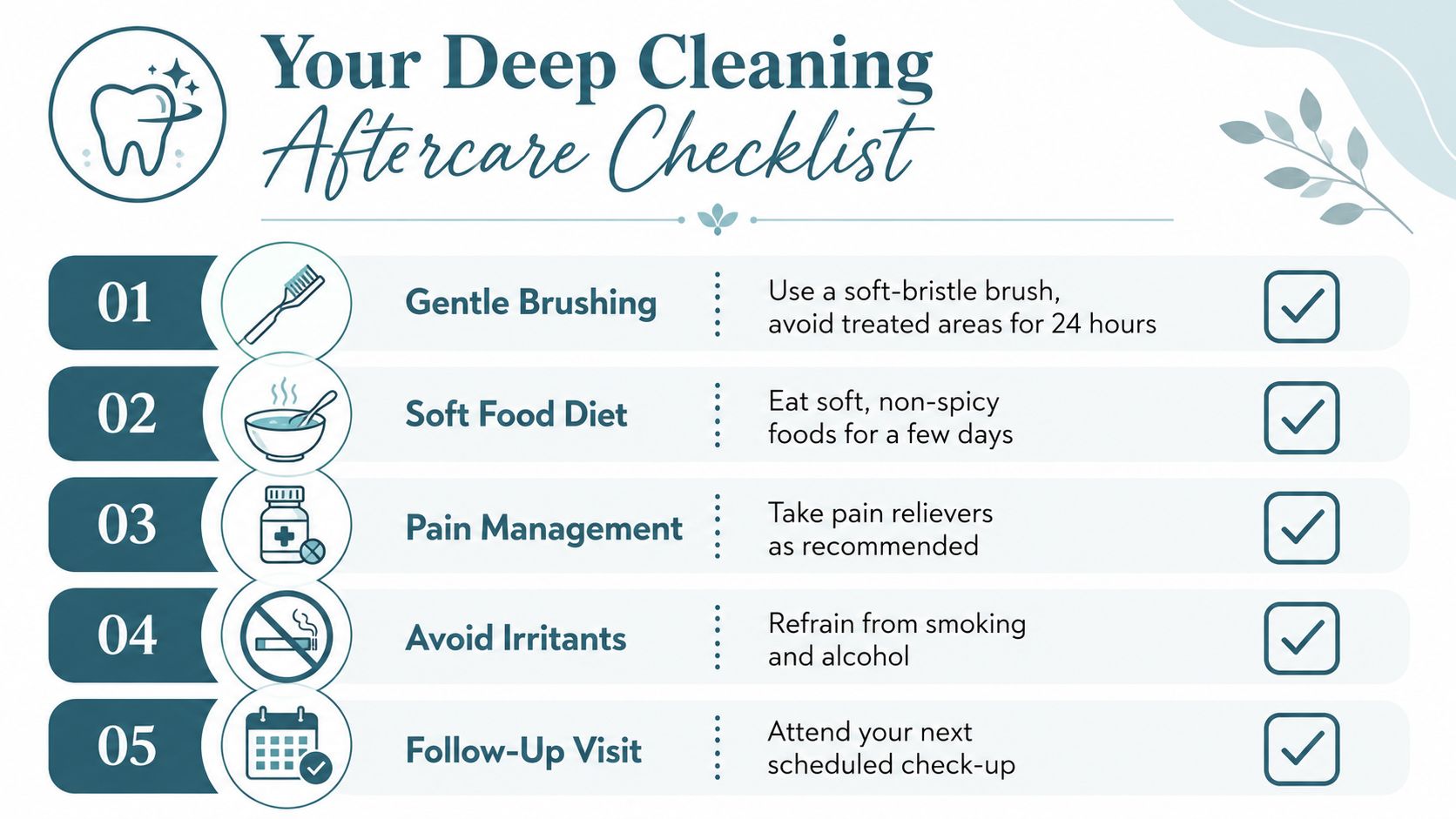
- Use a soft toothbrush and a gentle touch. Clean teeth heal better, but aggressive brushing can make tender areas feel worse.
- Choose foods that are easy to chew. Yogurt, eggs, soup, oatmeal, and softer proteins are often more comfortable for the first day or two.
- Use pain relief only as directed. If we recommend an over-the-counter option, follow the instructions we give you.
- Avoid smoking, alcohol, and spicy foods for a bit. Those can irritate healing tissue and make recovery less comfortable.
- Stay consistent with home care. Skipping brushing because the gums feel tender often slows improvement instead of helping.
If you want extra help between visits, these tips for maintaining healthy gums and preventing gum disease are a good next step.
When to be patient and when to call
Cold sensitivity is one of the most common concerns after a deep cleaning. In many cases, it improves gradually as the gums heal and the teeth adjust. That kind of steady improvement is reassuring.
Call the office if pain is getting worse instead of better, if bleeding seems heavy, or if swelling does not start settling down. A follow-up visit also matters because healing should be checked directly. We want to measure how the gums are responding and decide whether routine maintenance, additional home-care coaching, or further periodontal treatment makes sense.
Some patients also want to know how their health information is handled during treatment and follow-up paperwork. We take privacy seriously and use processes that support ensuring HIPAA compliance for forms.
A simple recovery rhythm
| Time after treatment | What patients often notice |
|---|---|
| Same day | Numbness wears off, gums may feel tender |
| First couple of days | Mild soreness or light bleeding can happen |
| Up to about a week | Temperature sensitivity may continue |
| Follow-up visit | Gums are rechecked to confirm healing progress |
Recovery is usually manageable. Clear instructions, realistic expectations, and an office that knows you personally make it easier. That is part of the long-term partnership we want every patient at Amanda Family Dental to feel from the first periodontal visit onward.
Costs, Insurance, and Long-Term Care
One of the first practical questions I hear is, “What will this cost?” That question matters, because periodontal treatment is often different from a standard cleaning in both scope and billing. Deep cleaning is commonly billed by quadrant, and some patients complete treatment in more than one visit so the mouth stays comfortable.
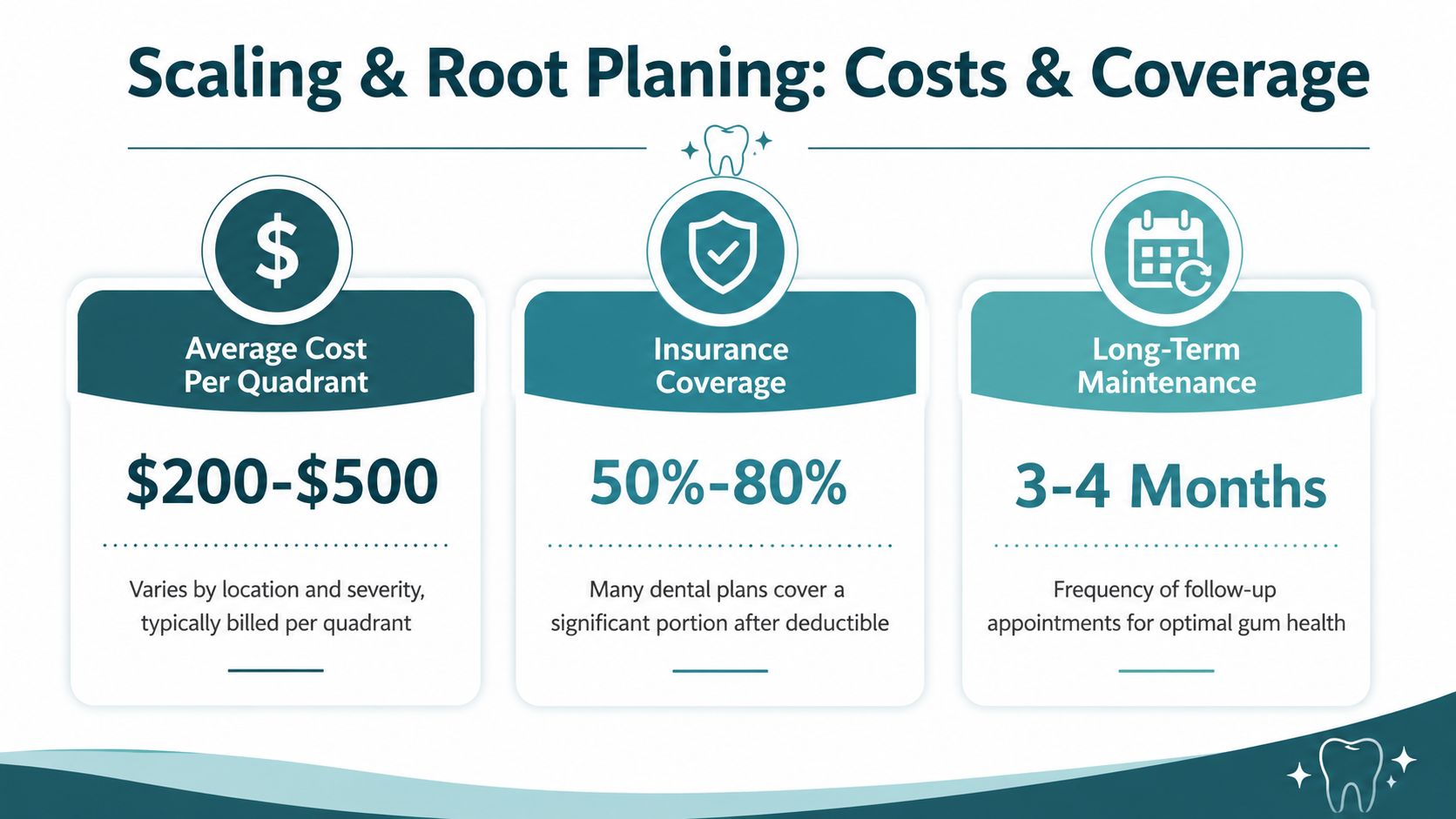
The exact estimate depends on your mouth, not a one-size-fits-all number. A patient with mild to moderate buildup in a few areas will not have the same treatment plan as someone with deeper pockets, heavier tartar below the gums, or a need for closer maintenance afterward.
Why the total cost varies
Here are the factors that usually affect the final fee:
| Factor | Why it affects cost |
|---|---|
| Number of treated areas | Scaling and root planing is often billed by quadrant |
| Severity of gum disease | Deeper pockets and heavier buildup usually take more time |
| Staging of treatment | Some patients are treated in separate visits for comfort and healing |
| Follow-up care | Reevaluation and periodontal maintenance are often part of proper care |
| Insurance rules | Plans may differ on coverage limits, waiting periods, and frequency |
Insurance often helps, but benefits vary quite a bit from plan to plan. Some policies cover part of periodontal therapy, while others place limits on how often treatment or maintenance visits are covered. Before we begin, patients deserve a clear estimate, a chance to ask questions, and honest guidance on what is likely to be covered versus what may be out of pocket.
That clarity matters in a small community. At Amanda Family Dental, we want patients in Amanda and nearby towns to understand the financial side of care before treatment starts, not after the paperwork is signed.
Administrative details matter too. Patients should know how forms, privacy notices, and treatment paperwork are handled before they share health information online. For anyone comparing systems, this guide to ensuring HIPAA compliance for forms gives useful background on privacy expectations in healthcare communication.
Long-term care protects the result
Scaling and root planing is the start of treatment, not the end of gum care. If the gums respond well but regular maintenance is skipped, bacteria can build up again in the same areas and the benefit of treatment can fade.
That is why we talk about a maintenance plan early. Some patients return to a regular preventive schedule. Others need periodontal maintenance at shorter intervals so we can keep inflammation under control, monitor pocket depths, and reinforce home-care habits before problems grow again. Amanda Family Dental offers a Periodontal Plan that includes periodontal cleanings every four months for patients who need that added support.
A good long-term plan should feel manageable. You should know what visits are likely to be needed, what insurance may or may not cover, and what we are watching for at each check-in. That ongoing relationship is a big part of successful periodontal care.
Schedule Your Consultation at Amanda Family Dental
You notice a little blood in the sink again, then catch yourself chewing on one side because the other side feels sore. That is usually the point where patients stop hoping it will settle down on its own and decide they want a clear answer.
At Amanda Family Dental, a gum health consultation is designed to do exactly that. We examine the gums, check for signs of inflammation or recession, take digital X-rays if they will help, and talk through what you have been noticing at home. Some patients need a routine cleaning and better home care coaching. Others need a scaling and root planing procedure, followed by closer maintenance while the gums heal and stabilize.
The visit should feel straightforward, not overwhelming. You should leave knowing what is going on, what treatment we recommend, how we keep you comfortable, and what the next few months are likely to look like.
Why the relationship matters after the procedure
Deep cleaning works best as part of an ongoing plan with a dentist who knows your history and keeps an eye on how your gums respond over time. As noted earlier, long-term results are stronger when treatment is followed by good home care and regular professional maintenance.
That matters for patients in Amanda, Lancaster, Circleville, and Carroll. Convenience helps people keep follow-up visits. Familiarity helps too. When the same local team is tracking pocket depths, bleeding points, sensitivity, and healing, small setbacks are easier to catch and address before they turn into bigger problems.
If bleeding gums, bad breath, gum recession, or tenderness have been hanging around, the next step is simple. Schedule an evaluation, get a clear diagnosis, and start with a plan that fits your mouth, your comfort level, and your long-term health.
If gum symptoms have been getting harder to ignore, it's time to talk with Amanda Family Dental about a personalized evaluation and next steps.