

Cosmetic dental care is usually paid out of pocket, so the cost can range from a few hundred dollars to well over $20,000 depending on the procedure and how many teeth are treated. Professional teeth whitening commonly runs $250 to $800 per session, and porcelain veneers are typically $900 to $2,500 per tooth, which is why a smile makeover with 8 to 10 veneers can land around $7,500 to more than $20,000.
For many people in Amanda, Lancaster, Circleville, and Carroll, Ohio, cost is the first question, not the last one. That's sensible. A brighter, straighter, more even smile can feel exciting, but it's hard to move forward when the numbers seem vague or all over the place online.
A clear consultation matters because cosmetic dentistry isn't one flat fee. The final price depends on the treatment, the material, the number of teeth involved, and whether any other dental work needs to happen first. The good news is that the reasons behind the cost are usually straightforward once they're explained in plain language.
Table of Contents
- Your Smile Is an Investment Let's Understand the Cost
- Typical Cosmetic Dental Costs by Procedure
- Key Factors That Influence Your Final Treatment Cost
- What to Expect During Your Cosmetic Consultation in Amanda OH
- Navigating Insurance and Flexible Payment Options
- Sample Cosmetic Dentistry Cost Scenarios
- Frequently Asked Questions About Cosmetic Dental Costs
Your Smile Is an Investment Let's Understand the Cost
A patient might come in before a wedding, a new job, or a long-overdue family photo session and ask a simple question. What is this smile improvement going to cost? The hard part is that cosmetic dentistry rarely has a one-price answer, because the fee depends on what is being corrected, how many teeth are involved, and how long the result is expected to last.
That uncertainty is what makes people hesitate. Cosmetic treatment is visible, personal, and often paid for out of pocket. Patients usually want more than a price range. They want to understand why one option costs less, why another costs more, and whether the added cost is buying better materials, better durability, or a better overall result.
In practice, the right question is not just “How much?” It is “What am I getting for that fee?”
Why price varies so much
Two treatments can sound similar online and still be very different in the chair. Whitening is different from bonding. Bonding is different from porcelain veneers. Even within the same procedure, the cost can change based on how much planning, shaping, lab work, and follow-up care are needed.
A lower fee can be reasonable for a small cosmetic fix. A higher fee can also be the better value if it means a restoration that fits well, looks natural, and holds up longer under daily use. That is especially true for front teeth, where shade match, symmetry, and material quality make a visible difference. Patients comparing options for veneers often benefit from reviewing the details behind veneer pricing and treatment choices before deciding.
Practical rule: A cosmetic quote is only useful if it spells out the procedure, the material, the number of teeth, and any preparatory care needed first.
Clear communication matters online too. Practices that explain cost in plain language tend to build trust earlier, which is one reason marketers talk about how to attract high-value dental patients by helping people understand value before the first visit.
What a real estimate should include
A useful estimate should answer the questions patients have:
- What treatment is being recommended, and what concern it is meant to fix
- How many teeth are included, since many cosmetic services are priced per tooth
- What material is being used, especially for treatments where composite and porcelain have different lifespans and fees
- Whether other dental work should happen first, such as treating decay, replacing old fillings, or improving gum health
- What payment flexibility is available, including financing or Amanda Family Dental membership options that can make treatment easier to budget
That last point gets overlooked. In our office, the conversation is not limited to the sticker price. We also review whether treatment can be phased, whether financing would spread out the cost, and whether a membership plan helps with related care. For many patients in Amanda, that explanation makes the decision feel less intimidating and far more realistic.
Typical Cosmetic Dental Costs by Procedure
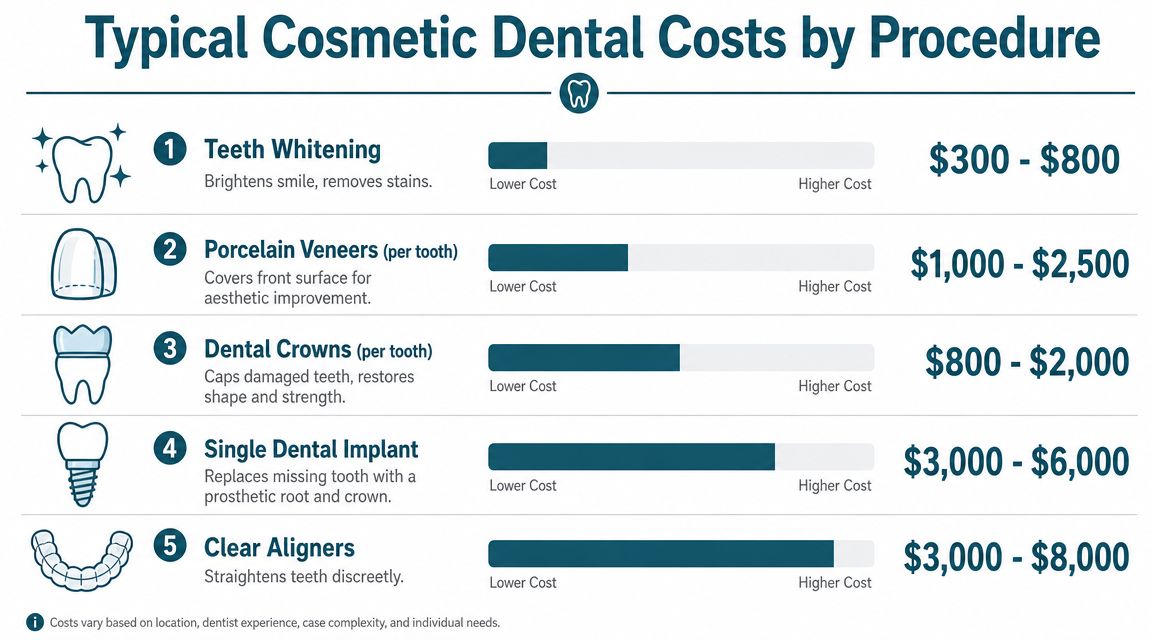
A patient might come in asking, "What does a smile makeover cost?" The honest answer depends on what problem needs to be fixed. Whitening, bonding, veneers, crowns, and implant work can all improve a smile, but they solve different issues and carry different lab, material, and time costs.
Common price ranges patients ask about
Professional teeth whitening
Whitening is usually one of the lower-cost cosmetic options. Fees often vary based on whether treatment is done in the office, provided as custom take-home trays, or combined with follow-up maintenance.Porcelain veneers
Veneers are typically priced per tooth. The final number reflects the material, lab work, shade matching, and how many front teeth need to be included so the result looks balanced rather than patchy.Full veneer smile makeover
Costs rise quickly when several visible teeth are treated together. A case involving 8 to 10 veneers is not just a larger version of one veneer. It also involves more planning, bite review, temporaries in some cases, and closer attention to symmetry across the smile.Dental bonding
Bonding usually costs less than porcelain because it can often be completed in one visit and does not require a custom lab-fabricated restoration. It is a practical option for small chips, uneven edges, and minor shape changes, though it may stain or wear faster over time.Implant-supported treatment
Implant care sits in a different category because it often includes surgery, healing time, parts, and the final restoration. Patients often view it as cosmetic because it improves appearance, but the fee usually reflects both tooth replacement and long-term function.
What these numbers mean in real life
The useful question is not "Which treatment is cheapest?" The better question is "Which treatment fits the problem, the budget, and the expected lifespan?"
I often explain it this way to patients in Amanda. Whitening can freshen a healthy smile at a relatively modest cost. Bonding can reshape a tooth conservatively. Veneers usually cost more because they are more durable, more customized, and often part of a larger plan to improve several teeth at once. Implant treatment costs more for a different reason entirely. It replaces a missing tooth structure, not just the visible surface.
Patients comparing veneer options can get more detail in this guide on how much veneers cost.
At Amanda Family Dental, we also talk through ways to make treatment manageable. That may mean phasing care over time, using financing, or reviewing whether a membership plan helps reduce the cost of related preventive and restorative visits. Clear pricing matters. Clear budgeting matters too.
Even outside dentistry, people want to understand what drives a quoted price instead of seeing a flat number with no explanation. The same principle shows up in Silva Marketing's website design pricing, where scope and customization affect cost just as they do with cosmetic treatment.
Key Factors That Influence Your Final Treatment Cost
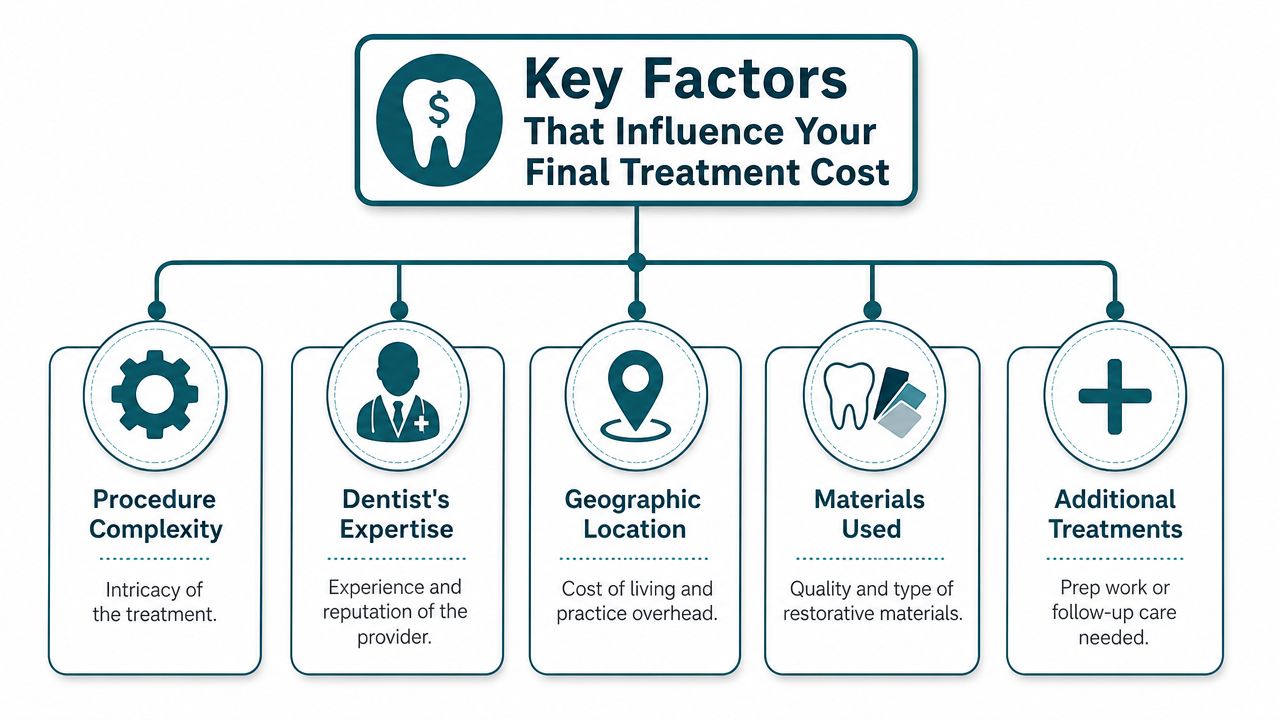
Two patients can ask for the same kind of smile improvement and still receive very different quotes. That usually isn't because anyone is being evasive. It's because cosmetic dentistry is built around individual teeth, materials, and clinical needs.
Number of teeth and per-tooth pricing
Many cosmetic procedures are priced per tooth, which is one of the biggest drivers of total cost. Independent industry sources report porcelain veneers at about $925 to $2,500 per tooth and composite veneers at about $250 to $1,500 per tooth, as outlined in this guide to understanding the cost of cosmetic dental procedures.
That pricing model matters because the total can scale quickly. A patient treating one chipped tooth faces a very different investment than a patient redesigning six or more visible front teeth for better symmetry.
Material choice changes both appearance and budget
Porcelain usually costs more than composite, and there are practical reasons for that. Porcelain often involves lab fabrication, more detailed shade matching, and a different level of finish. Composite can be a strong option for selective repairs, contour changes, and smaller cosmetic updates.
A simple comparison helps:
| Treatment factor | Lower-cost direction | Higher-cost direction |
|---|---|---|
| Material | Composite | Porcelain |
| Scope | One or two teeth | Multiple front teeth |
| Fabrication | Direct in-office shaping | Lab-made restoration |
| Goal | Small correction | Larger smile redesign |
Patients often understand this quickly when cost is compared to other custom work. A useful parallel appears in Silva Marketing's website design pricing, where custom work costs more because complexity, craftsmanship, and revision needs change the final number.
Prep work and treatment complexity
Cosmetic care sometimes starts with health, not appearance. A tooth may need repair before it can be whitened or covered. Bite issues may affect whether veneers, bonding, or aligners make the most sense. When a patient is also replacing a missing tooth, options such as implants add surgical and restorative components that affect the total treatment plan.
For patients exploring replacement options along with smile aesthetics, this complete guide to dental implants gives helpful context on what that process can involve.
Higher cost doesn't automatically mean better treatment. Better treatment means the option that fits the tooth, the bite, the esthetic goal, and the patient's budget.
Expertise and planning matter
The visible nature of cosmetic work changes the standard. Small details matter more on front teeth than they do in many other areas of dentistry. Shade, shape, proportions, and how the smile fits the face all affect satisfaction.
That's why a thoughtful plan often matters more than chasing the lowest sticker price. Cosmetic work that looks natural and functions well usually comes from careful case selection, clear communication, and precise execution.
What to Expect During Your Cosmetic Consultation in Amanda OH
Most patients feel better about cosmetic dentistry once they know what happens at the first visit. The consultation isn't a sales meeting. It's a planning appointment where the dentist looks at the teeth, listens to the patient's concerns, and determines what options fit the smile.
The conversation comes first
The appointment usually starts with the patient's goals. Some people want whiter teeth. Others want to close spaces, fix chips, smooth uneven edges, or replace something old that no longer looks natural. Those details matter because the right solution depends on what's bothering the patient most.
A good consultation also covers expectations. If someone wants a dramatic color change, whitening may not do what veneers can do. If someone wants the most conservative approach possible, bonding may be worth discussing before a larger cosmetic plan.
Exam, digital X-rays, and treatment planning
The clinical portion helps confirm what's possible. That may include an exam, digital X-rays, and a review of tooth condition, gum health, bite alignment, and any existing dental work. Patients searching for a dentist near me or a cosmetic dentist near me often expect a fast quote, but responsible planning comes first.
Short-term and long-term trade-offs should be addressed clearly, including:
- Appearance goals that matter most to the patient
- Health considerations that could affect cosmetic results
- Maintenance needs for the treatment being considered
- Budget priorities if more than one path could work
A cosmetic consultation should leave the patient with more clarity, not more confusion.
What the patient should leave with
By the end of the visit, the patient should understand the recommended treatment path and the main alternatives. That includes a breakdown of what is essential, what is optional, and what can sometimes be phased over time.
For patients in Amanda, Lancaster, Circleville, and Carroll, Ohio, that level of transparency matters. It turns cosmetic dentistry from a vague online search into a practical decision with clear next steps.
Navigating Insurance and Flexible Payment Options
A patient may be ready for veneers or whitening, then pause once the conversation turns to insurance. That reaction is normal. Cosmetic dentistry is often paid for differently than a crown, filling, or other treatment tied more directly to function.
Why insurance may only help in limited ways
Purely cosmetic treatment is commonly an out-of-pocket expense. Insurance plans often exclude procedures done mainly to improve appearance, even when the change matters a great deal to the patient.
The part that confuses people is the gray area. Some cases blend cosmetic and restorative needs. A tooth-colored crown on a damaged front tooth, for example, may have a functional reason and an appearance benefit at the same time. In those situations, coverage depends on the diagnosis, the plan details, and how the claim is reviewed. For readers who want a plain-English explanation of that review process, this overview of claim adjudication for CFOs and CEOs explains how insurers decide what they will pay.
That is why a simple online price comparison can be misleading. A key question is not only what the procedure costs. It is how much of that fee is likely to be the patient's responsibility after benefits, if any, are applied.
Practical ways to make treatment fit the budget
In my experience, patients feel more comfortable once they see that cost does not have to be handled in one rigid way. Several options can make a treatment plan easier to manage:
- Membership savings if the office offers discounts on certain services
- Phased treatment when the clinical plan allows work to be completed over time
- Third-party financing for larger cases that are easier to budget monthly
- Mixing treatment options when a conservative approach on some teeth can lower the total without compromising the main goal
Amanda Family Dental offers a financing information page with payment support details, and the Power Plan Membership includes savings on select cosmetic services such as Invisalign, in-office whitening, and take-home whitening trays.
Patients often make better decisions after a clear, simple explanation from the front desk or treatment coordinator. This video gives a useful overview of how financing can work in a dental office.
Choose a payment plan that stays comfortable
A good financial plan should support the treatment, not create stress around it. Some patients prefer to pay for smaller cosmetic services upfront. Others choose monthly financing for a larger veneer, Invisalign, or implant-related case because it keeps the household budget steadier.
Both approaches can be reasonable.
What matters is clarity. Patients should know the total fee, what insurance is likely to exclude, what savings apply, and whether the work can be phased. That kind of conversation helps people move ahead with confidence instead of guessing.
Sample Cosmetic Dentistry Cost Scenarios
A fee range is helpful, but patients usually decide once they can see how treatment choices affect the total. These examples show the trade-offs I discuss every day in the office, especially the difference between a quick cosmetic improvement, a longer-lasting upgrade, and a case that mixes health needs with appearance goals.

A whitening-focused plan
A patient from Lancaster wants a brighter smile before family photos and wants to keep costs modest. Professional whitening often makes sense here because it improves color without removing tooth structure, and the fee is usually far lower than veneers or crowns.
The main trade-off is maintenance. Whitening can produce a noticeable change, but it does not reshape teeth or fix chips, and the result may need touch-ups over time. If the patient has access to membership savings on whitening, that can make this option easier to budget without committing to a larger cosmetic plan.
A front-tooth repair decision
A patient in Circleville has a small chip on one front tooth and wants it fixed quickly. Bonding is often the conservative first option because it can repair a minor defect in one visit and preserve more natural enamel than a veneer-based approach.
The trade-off is longevity and scope. If the goal is to correct one small flaw, bonding may be the smarter use of money. If the patient also wants to change shape, color, and symmetry across several front teeth, veneers may justify the higher cost because the treatment goal is bigger, not because the office is just charging more.
A replacement and cosmetic upgrade
A patient near Carroll is missing a tooth and also dislikes the uneven look of the surrounding teeth. That estimate is more involved because part of the treatment addresses function, while another part improves appearance. In cases like this, I find it helpful to separate the plan into phases so patients can see what is needed first and what is optional from a cosmetic standpoint.
Billing can also add confusion. Insurance reviews, exclusions, and payment processing happen behind the scenes, and patients rarely see how many steps affect a final statement. Even a technical article like claim adjudication for CFOs and CEOs shows how layered the claims process can be. That is one reason a clear written estimate from the dental office matters so much before treatment begins.
A good scenario discussion should leave the patient with choices, not pressure. Sometimes the right plan is the smaller fix now and the larger cosmetic work later. Sometimes it makes more sense to complete several steps together if that lowers repeat visits and keeps the final result more consistent.
Frequently Asked Questions About Cosmetic Dental Costs
Is cosmetic dentistry always expensive
No. Some treatments, like whitening or bonding, are far less costly than a full veneer or implant case. The right question isn't whether cosmetic dentistry is expensive in general. It's which treatment matches the patient's goal and budget.
Is the more expensive option always the better one
Not always. A higher fee may reflect more durable materials, more extensive planning, or a larger number of teeth. But if a patient only needs a small cosmetic correction, a conservative option may be the smarter choice.
Why can't an office quote the exact fee online
Because cosmetic treatment is highly individualized. The number of teeth, the condition of those teeth, the desired result, and the material choice all affect the final figure. An online range is helpful. A clinical exam is what turns that range into a real estimate.
Is cosmetic treatment only about appearance
No. While many patients begin with esthetic concerns, cosmetic treatment can also improve comfort, bite balance, and confidence in social or professional settings. Some procedures overlap with restorative care, especially when worn, chipped, or missing teeth are involved.
For patients in Amanda, Lancaster, Circleville, and Carroll, Ohio, the clearest next step is a consultation that turns general pricing into a personalized plan. That's the point where questions get answered, trade-offs become clearer, and the financial side of treatment starts to feel manageable.
If you're comparing options and want a clear, personalized estimate, Amanda Family Dental can help you review your cosmetic goals, understand the treatment choices, and discuss payment options in a straightforward way.