

A lot of people looking for a dentist in Circleville are doing it under pressure. Sometimes it's a dull toothache that turned sharp overnight. Sometimes it's a parent trying to make a child's first visit feel easy. Sometimes it's someone who has put off care for years because the thought of sitting in a dental chair brings real stress.
Circleville has a busy dental market, with over 30 general dentists within a 10-mile radius of the city center according to Healthgrades' Circleville directory. Having choices is helpful, but it can also make the decision harder. Most patients aren't just looking for an office that's close. They're looking for clear communication, dependable care, and a team that understands family schedules, dental anxiety, and the need for practical treatment options.
That matters to families in Circleville, and it matters just as much to people in Amanda, Lancaster, and Carroll who want one trusted place for preventive care, restorative treatment, cosmetic dentistry, and emergency help when something suddenly goes wrong.
Table of Contents
- Finding Your Dentist in Circleville A Partner in Your Health
- Comprehensive Dental Services for Every Smile
- Gentle Dentistry for Anxious Patients Near Circleville
- Your First Visit What to Expect at Our Practice
- Affordable Care Insurance and Payment Options
- Directions and Scheduling Your Appointment
Finding Your Dentist in Circleville A Partner in Your Health
A good dental search usually starts with a practical need. A child is due for a cleaning. A crown feels loose. A front tooth has started to chip, and now every smile in the mirror gets noticed. In those moments, people want more than a name on a map. They want a nearby office that feels steady, respectful, and easy to trust.
For families around Circleville, that search often includes practical questions. Is the office welcoming with children. Will the team explain treatment in plain language. Is there help for someone who feels anxious before they even walk through the door. Those details shape whether care happens or keeps getting postponed.
Practical rule: The right dentist isn't simply the closest option. The right fit is the office where patients understand the plan, know the costs, and feel comfortable coming back.
That community mindset matters in smaller Ohio towns. People move between Circleville, Amanda, Lancaster, and Carroll for work, school, sports, errands, and family obligations. Dental care has to fit into normal life, not interrupt it.
Some readers may also be curious about how dental practices communicate and educate patients online. For a broader look at outreach and patient engagement, this guide to Facebook marketing strategies for dental practices offers helpful context on what modern practices do to stay visible and useful in their communities.
Patients comparing options nearby may also want to review a broader dentist near me resource when narrowing down what matters most in a local dental home.
Comprehensive Dental Services for Every Smile
Families around Circleville usually want one dental home that can handle the needs they have now and the problems that show up later. That means routine cleanings, children's visits, repairs, cosmetic options, and fast help when a tooth suddenly starts hurting on a Friday afternoon.
Care that fits real life
Preventive care is the starting point because it gives us the best chance to catch decay, gum irritation, cracked fillings, and bite changes before they turn into bigger treatment. The American Dental Association explains that recall intervals should be based on each patient's risk, not forced into the same schedule for everyone, in its guidance on oral evaluations and periodic dental visits. That matches what we see every day. Some patients do well on a standard six month schedule. Others need closer monitoring because of gum disease, dry mouth, past cavities, medical conditions, or a long gap since their last exam.
Good family dentistry also adapts as patients age. A child may need sealants and brushing coaching. A parent may need a worn crown replaced. A grandparent may be deciding between a bridge, dentures, or implant treatment. Those are different problems, but the goal stays the same. Keep care practical, clear, and realistic for the person sitting in the chair.
Common services patients look for
An all-in-one family practice usually includes:
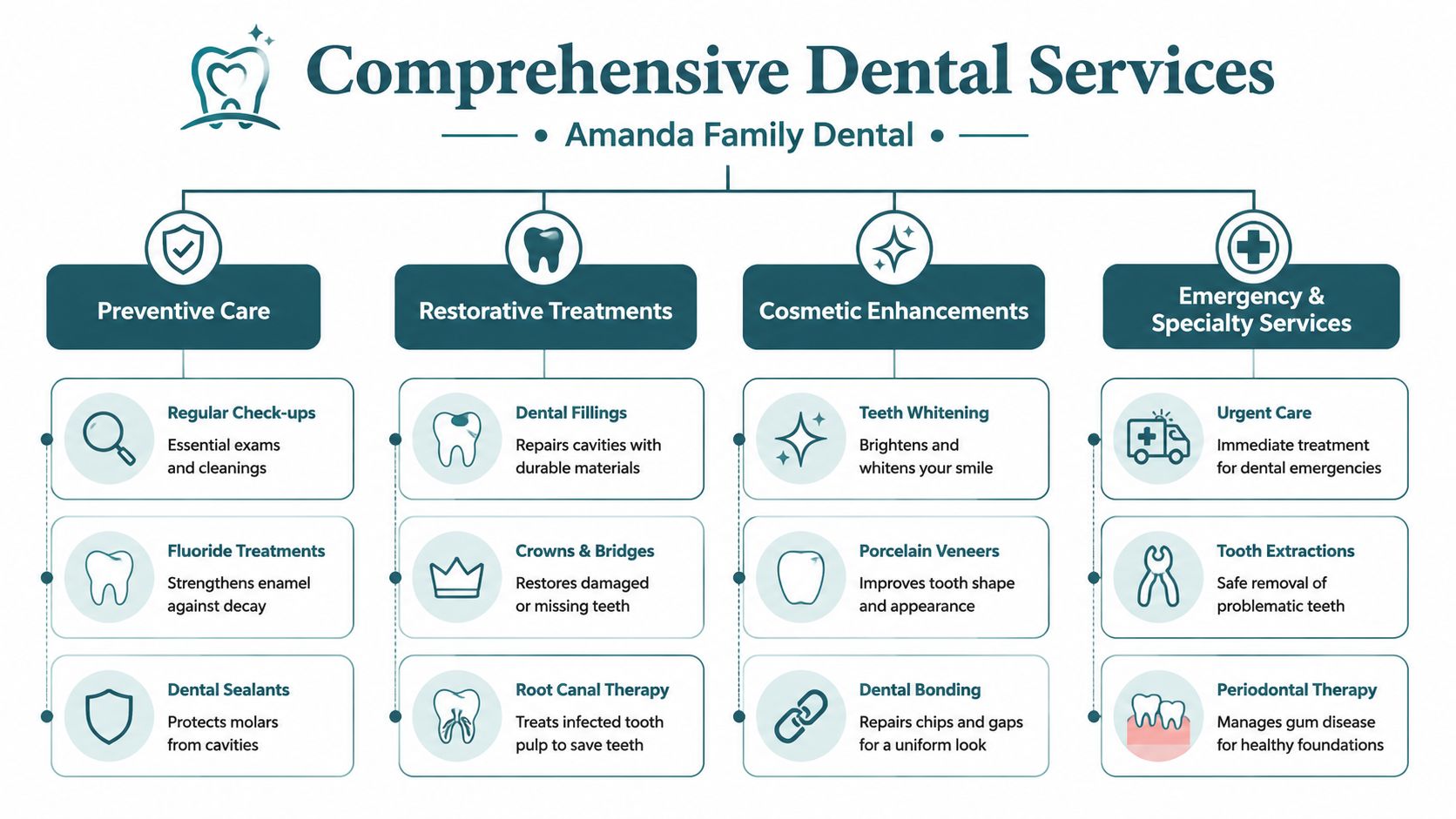
- Preventive care such as exams, cleanings, digital X-rays, fluoride treatments, sealants, and screenings for early signs of trouble.
- Pediatric dentistry for first visits, cavity prevention, growth monitoring, and helping children build trust with dental care from the start.
- Restorative dentistry including fillings, crowns, bridges, dentures, and treatment for teeth that are broken, infected, worn down, or missing.
- Cosmetic options such as whitening, bonding, veneers, and Invisalign clear aligners for patients who want to improve the appearance of their smile.
- Emergency dental care for tooth pain, swelling, broken teeth, lost crowns, and other urgent problems that should not wait.
- Comfort-focused treatment that may include extra time, gentler pacing, and sleep dentistry options for patients who need help getting through care.
The right treatment plan depends on what the tooth, gums, and bite need. A small cavity may do well with a filling. A heavily damaged tooth may last longer with a crown. A missing tooth can sometimes be replaced with an implant, a bridge, or a denture, and each choice has trade-offs in cost, maintenance, healing time, and long-term stability.
Patients deserve a clear explanation of those trade-offs. Families in the Circleville area should be able to understand why a recommendation was made, what can wait, what should be handled soon, and which option makes the most sense for comfort, budget, and durability. At Amanda Family Dental, that conversation matters just as much as the procedure itself, especially for anxious patients who need care to feel manageable before it can feel routine.
Gentle Dentistry for Anxious Patients Near Circleville
Dental anxiety changes how people make decisions. Some cancel cleanings repeatedly. Others wait until they're in pain because they can't face the idea of treatment before it becomes urgent. That pattern is common enough that it deserves direct attention, not a quick reassuring sentence on a website.
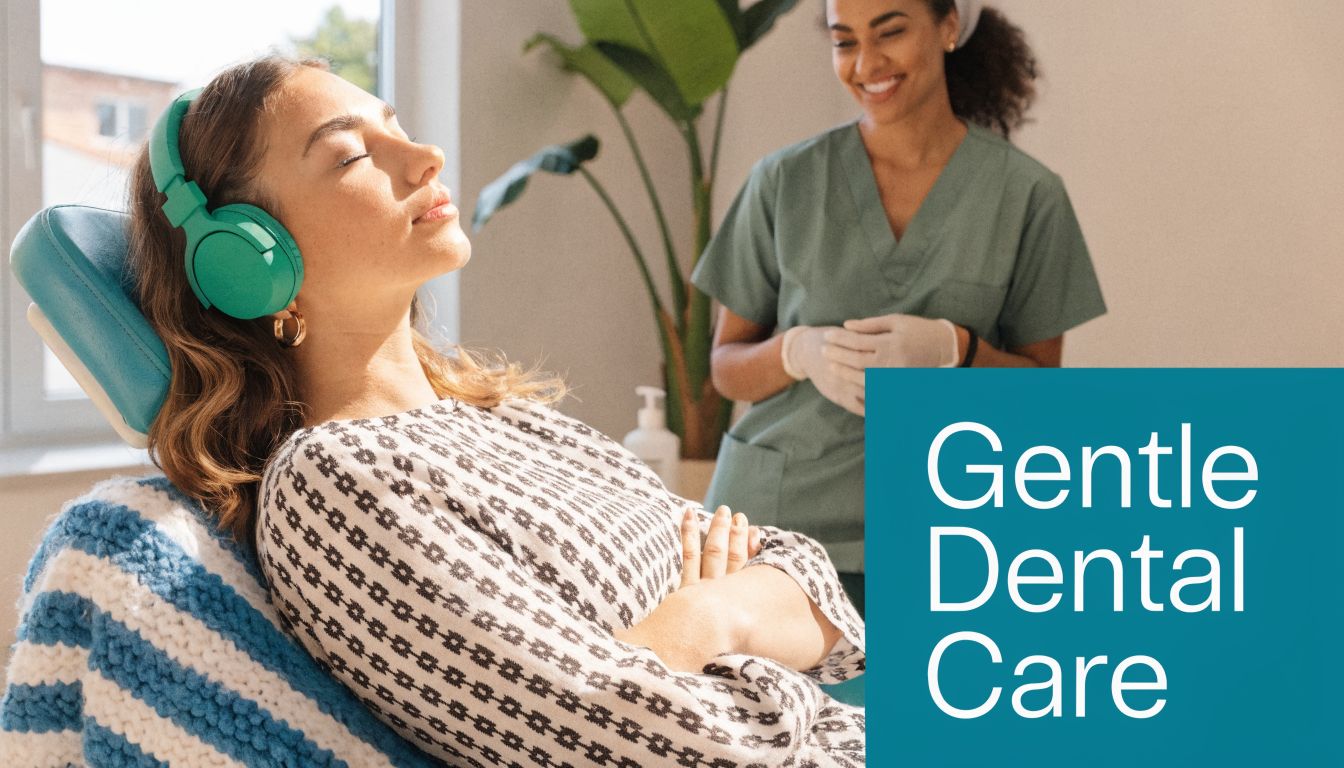
Dental anxiety affects 10 to 15 percent of U.S. adults, and anxious patients are 2 to 3 times more likely to seek and continue care with a team that proactively addresses comfort, as noted in this Circleville dental anxiety resource. That's why gentle care has to be built into the process from the first conversation forward.
What comfort focused care looks like
Comfort-focused dentistry isn't just about being nice. It involves clear pacing, predictable communication, and avoiding surprises during treatment. Patients who are nervous usually do better when the team explains what's happening before it happens, gives them a way to pause, and avoids making them feel rushed or judged.
There's also a practical trade-off here. Putting off treatment because of fear almost always makes care more involved later. A problem that might have been handled with a small restoration can progress into a larger repair, extraction, or urgent visit. Gentle dentistry works best when it makes early care feel possible.
Patients with dental fear usually don't need pressure. They need control, clarity, and a plan they can tolerate one step at a time.
When sleep dentistry makes sense
For some adults, reassurance alone isn't enough. That's where sleep dentistry and other comfort protocols can change the experience. These options can help patients who have a strong gag reflex, difficulty sitting through treatment, previous trauma, or a long history of avoiding care.
Readers who want a clearer overview can review sleep dentistry options to understand when this approach may be appropriate.
For patients who prefer to learn visually before scheduling, this short video gives helpful context on comfort-centered dental care:
The goal isn't to push every nervous patient toward sedation. Sometimes a slower visit, a compassionate team, and a smaller first appointment are enough. What matters is having options and using the one that helps the patient follow through.
Your First Visit What to Expect at Our Practice
For many new patients, the hardest part is the unknown. Once they know what the first visit looks like, the stress often drops. A strong first appointment should feel organized, calm, and easy to follow.
From first contact to exam day
The process usually starts with a phone call or online request. The front office helps with scheduling, paperwork, and the basic questions patients tend to have right away, such as insurance, timing, and whether a problem sounds urgent.

At the appointment, most new patients can expect a review of their health history, digital X-rays when needed, an exam, and time to talk through concerns. Some come in because they're overdue for routine care. Others arrive with one specific problem, like a cracked tooth or sore gums. Both situations matter, and both deserve a clear explanation.
A first visit should also leave room for the patient's own goals. One person wants to chew comfortably again. Another wants to stop hiding a front tooth in photos. Another wants to get through an exam without feeling overwhelmed.
How digital tools improve planning
Modern digital tools make this planning more accurate and more comfortable. Digital workflows, including intraoral scanners for crowns and implants, have been shown to improve the long-term success of restorations. Ceramic crowns made with digital impressions have 10 to 15 percent higher survival rates over 5 to 10 years compared with traditional methods, based on the Circleville Dental Partners LLP 2022 audit reference.
That matters because better planning often means fewer unpleasant surprises later. A scanner can help patients see what the dentist sees. Digital X-rays can make it easier to explain why a tooth needs treatment, why another can be monitored, and when a crown makes more sense than another filling.
Clinical takeaway: The best first visit ends with a diagnosis patients understand and a treatment plan that matches both their dental needs and their comfort level.
Patients who want to know more about routine preventive visits can review what a dental cleaning includes before scheduling.
Affordable Care Insurance and Payment Options
Cost keeps a lot of families from booking care promptly. Not always because treatment is impossible, but because the pricing feels uncertain. When patients don't know what a visit may involve financially, many delay the call.
Why clear costs matter
That's why transparent discussions about insurance, membership plans, and payment options matter just as much as the clinical side. Quality dental care should be accessible, and in-house membership plans plus flexible payment options help address a real community need in an area where nearly 50 percent of patients may lack dental insurance, according to the Ohio Dental Association article on care access.
Patients generally do best when they know three things early:
- What insurance may cover so there's less confusion before treatment starts.
- What alternatives exist if they don't carry dental benefits.
- What the office can stage over time when a treatment plan includes multiple steps.
For people who like to prepare before calling, Ragnar STACK's insurance verification guide offers a practical checklist of what information to gather before confirming benefits.
Questions worth asking before treatment
A useful financial conversation usually includes these questions:
| Question | Why it helps |
|---|---|
| Is this treatment urgent or can it be phased? | Patients can prioritize care without guessing what should happen first. |
| Are there membership options for uninsured patients? | This can make preventive visits and routine care easier to budget. |
| Will the office provide a written estimate? | Clear estimates reduce surprises and help families plan. |
When offices handle finances well, patients are more likely to move forward before a smaller problem turns into a larger one.
Directions and Scheduling Your Appointment
For patients coming from Circleville, getting to a nearby dental office in Amanda is a manageable drive for family dentistry, cosmetic care, restorative treatment, and emergency visits. Many patients also come from Lancaster and Carroll because they want one office that can handle routine care and more complex needs in the same setting.
Scheduling should feel simple. Patients often want to know if they can call, request a visit online, and ask questions before committing to treatment. A patient-friendly office makes that easy and responds clearly.
Before booking, it helps to have a short list ready:
- Preferred days and times so the scheduler can offer practical options.
- Insurance or membership details if financial questions need to be reviewed in advance.
- Main concern such as tooth pain, broken dental work, cosmetic goals, or a child's first visit.
Patients looking for a dentist in Circleville, a dentist near me, help with tooth extraction, emergency dentist care, or guidance on dental implants near me usually feel better once that first appointment is on the calendar. Taking the next step is often the hardest part. After that, the process becomes much easier.
Amanda Family Dental provides compassionate, full-service care for patients in Amanda, Circleville, Lancaster, and Carroll, Ohio. Whether someone needs a routine exam, emergency dental care, cosmetic treatment, or support for dental anxiety, the team focuses on clear guidance and comfortable care. To schedule a visit, request a consultation, or learn more about available services, contact Amanda Family Dental.