


A search for dentist near me usually starts with something concrete. A tooth starts throbbing before work. A child is due for a cleaning. A chipped front tooth suddenly feels impossible to ignore. Sometimes the issue is urgent. Sometimes it’s time to find a dental office that feels easier, calmer, and closer to home.
For families in Amanda, OH, Lancaster, OH, Circleville, OH, and Carroll, OH, the right dental office should do more than offer appointments. It should provide a dependable dental home for preventive care, emergencies, cosmetic concerns, and the kinds of personal preferences that often go unspoken, especially dental anxiety and interest in biocompatible, mercury-free options.
Table of Contents
- Finding the Right Dentist Near You in Amanda Ohio
- Comprehensive Dental Services for Your Entire Family
- A Welcoming Place for Every Patient
- What to Expect During Your First Visit
- Our Insurance and Flexible Payment Options
- Hear From Your Neighbors in Fairfield County
- Frequently Asked Questions About Our Amanda Dental Practice
- Schedule Your Visit at Amanda Family Dental Today
Finding the Right Dentist Near You in Amanda Ohio
Patients rarely search for a new dentist when life feels calm. They search when they need answers quickly. A parent in Lancaster may be looking for a dentist who can see both children and adults. A retiree in Carroll may want help with missing teeth. Someone in Circleville may be typing emergency dentist after a weekend toothache and hoping the next click leads to a real solution.
That’s why local trust matters. A dental office should feel easy to reach, easy to talk to, and clear about what care looks like from the first phone call onward. Patients often judge a practice before they ever step through the door. They notice whether the website answers practical questions, whether services are explained plainly, and whether the office feels connected to the community it serves. For readers who want to understand how local practices show up online, this guide to local SEO for dental clinics gives useful context on what makes a dental office easier to find and evaluate.
What patients usually need from a local dentist
The right fit usually comes down to a few basics:
- Convenient care: Close enough for routine cleanings, rechecks, and unexpected visits.
- Clear communication: Straight answers about treatment choices, timing, and costs.
- Broad services: Help for everything from exams to restorative dentistry and cosmetic work.
- Family continuity: One office that can care for kids, parents, and grandparents.
Patients comparing options can also use this helpful resource on choosing the ideal dentist to think through what matters most before scheduling.
Practical rule: A good local dentist doesn’t just solve today’s problem. The office should make it easier to stay on track with care next month and next year too.
Comprehensive Dental Services for Your Entire Family
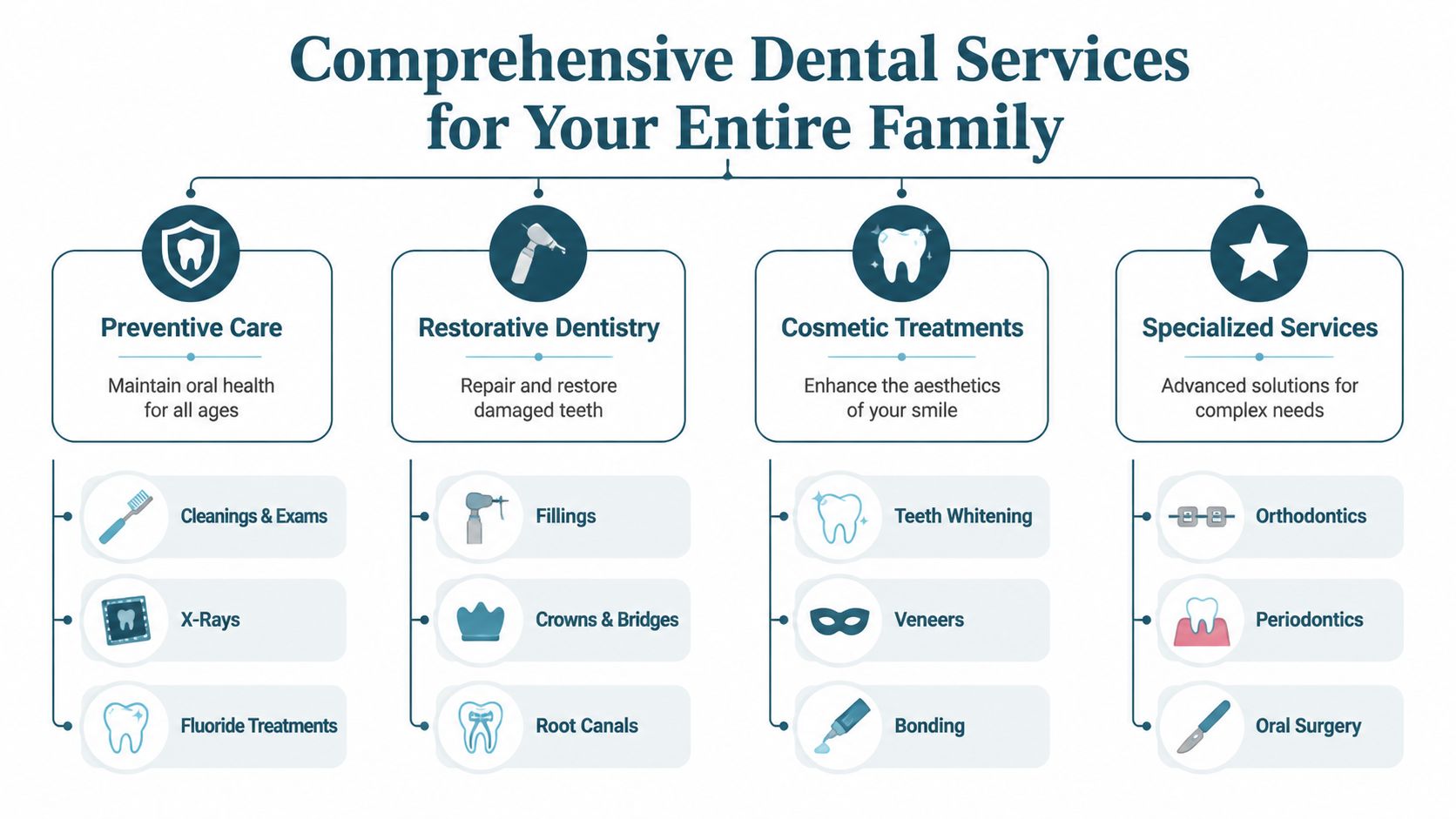
A family’s dental needs change over time. A child may need a first exam and cavity prevention. A parent may need a crown after a cracked tooth. A grandparent may want a more stable way to chew and speak after tooth loss. Good family care means patients can handle those changes in one familiar place, with a team that knows their history and respects their comfort level, including anxiety concerns and requests for biocompatible materials when appropriate.
Preventive and routine care
Routine visits set the foundation for everything else. Cleanings, exams, digital dental x-rays, and new patient exams help catch decay, gum inflammation, bite changes, and worn restorations before they turn into bigger problems.
For children, these visits shape trust early. For adults, they provide a steady record of what is changing and what is staying stable. For anxious patients, shorter preventive appointments are often the best way to rebuild confidence in the dental chair without feeling overwhelmed.
Restorative solutions that rebuild function
Patients searching for tooth extraction, dental implants near me, or help for a broken tooth usually want a clear answer. Save the tooth if it can predictably function and stay healthy. Replace it if the damage is too extensive or the long-term outlook is poor.
Restorative care may include:
- Composite fillings: Tooth-colored repairs for cavities and small fractures.
- Crowns and root canals: Used when a tooth needs protection or treatment inside the root.
- Dentures and implants: Options for replacing one tooth or several teeth.
Each option has trade-offs. Composite fillings blend in well and fit patients who prefer metal-free, biocompatible-minded choices, but they still wear over time and may need future repair or replacement. Crowns can protect a weakened tooth well, though they require more tooth shaping than a filling. Implants feel stable and support chewing, but treatment takes longer and costs more upfront than a removable denture.
Cosmetic and specialized services
Cosmetic treatment works best when health leads the plan. Teeth whitening, veneers, bonding, and Invisalign can improve color, shape, and alignment, but the right starting point is making sure teeth and gums are healthy first.
Families also ask for care that does not always fit neatly into one category. That may include pediatric visits, emergency dentistry, sleep dentistry, or help for clenching and bite problems. Amanda Family Dental offers family-friendly dental services that bring preventive care, tooth repair, smile improvements, and comfort-focused treatment together in one office. That matters for households in Amanda who want a true dental home, not a different referral for every concern.
| Need | Common service path | Main benefit |
|---|---|---|
| Routine maintenance | Cleanings, exams, x-rays | Prevention and early detection |
| Tooth repair | Fillings, crowns, root canals | Pain relief and function |
| Missing teeth | Dentures, implants | Chewing, speech, confidence |
| Smile improvement | Whitening, veneers, Invisalign | Aesthetic enhancement |
A Welcoming Place for Every Patient
A parent arrives with a child due for a cleaning, a spouse who has put off treatment for years, and their own quiet worry about cost, discomfort, or being judged. That kind of visit is common in a small community. A dental office should make it easier to walk in, ask honest questions, and get care at a pace that feels manageable.

Why comfort changes outcomes
Clinical skill matters, but the patient experience shapes whether care happens. Adults with past dental trauma, children who are still learning what to expect, and patients with sensory sensitivities often need more than a quick explanation and a fast appointment slot. They need a team that stays calm, explains each step clearly, and respects when someone needs a pause.
Research has long shown that dental fear is common enough to keep many people away from the dentist, which leads to delayed diagnosis and more involved treatment later. The practical effect is easy to see in everyday practice. A small cavity is usually simpler to treat than a toothache that has been building for months.
A comfort-focused office often includes:
- Clear pacing: Brief explanations before instruments are used or treatment begins.
- Options for relaxation or sedation: Useful for severe anxiety, strong gag reflexes, or longer procedures.
- Predictable visits: Fewer surprises and a clearer sense of what happens first, what can wait, and why.
- Respect for the patient's preferences: Questions are answered directly, and decisions are made together.
Patients who feel safe are more likely to return on time. That is one of the biggest differences between one-time treatment and a true dental home.
Whole-health and biocompatible preferences
Some families have concerns they hesitate to bring up because they expect to be brushed off. They may want mercury-free fillings, lower-radiation digital imaging, fluoride-free home care discussions, or treatment materials chosen with biocompatibility in mind. Those are reasonable questions.
Good care starts with a direct conversation about goals, health history, and trade-offs. A tooth-colored filling may fit a patient's material preference and look natural, but another restoration may hold up better in an area that takes heavy biting force. An integrative, whole-health mindset does not mean promising one answer for everyone. It means choosing materials and treatment plans carefully, with the patient's comfort, values, and long-term function in view.
The office should feel manageable
People usually know early on whether a practice feels approachable. The front desk sets the tone. The handoff to the clinical team matters. The treatment plan should feel realistic, not overwhelming, especially for someone catching up after years away from the dentist.
At Amanda Family Dental, the goal is to provide that kind of steady, family-centered care for Amanda and nearby communities. Children need a place where routine visits feel normal. Adults need straightforward guidance without shame. Patients with anxiety need room to ask for extra explanation, breaks, or comfort measures. Patients comparing payment choices should be able to review financing and payment options for dental care without pressure.
That is what a dental home looks like in practice.
What to Expect During Your First Visit
The first appointment should remove uncertainty, not add to it. A well-run new patient visit gives patients a clear picture of their oral health and a realistic plan for what happens next.

The first steps in the office
Most visits begin with a review of health history, current concerns, and immediate priorities. If a patient comes in because of pain, swelling, or a broken tooth, that concern needs attention first. If the visit is preventive, the exam usually focuses on overall dental condition, gum health, and any signs of wear or developing problems.
Digital x-rays can help the team see what isn’t visible during a standard visual exam. That matters because many dental issues don’t become obvious until they’ve progressed.
How treatment planning stays manageable
A good care plan doesn’t dump everything on the patient at once. Evidence-based restorative protocols use phased treatment sequencing with digital imaging and tooth-by-tooth examination to prioritize urgent needs first, which helps reduce anxiety and supports financial planning, according to this summary of restorative treatment sequencing.
That often means the plan is broken into stages such as:
- Immediate needs first: Pain, infection risk, or damaged teeth.
- Stabilizing care next: Fillings, cleanings, or protective work.
- Longer-term goals later: Crowns, implants, whitening, or Invisalign.
Here’s a quick look at what many patients can expect:
| Visit stage | What happens | Why it matters |
|---|---|---|
| Check-in and history | Review concerns and records | Creates context for safe care |
| Exam and imaging | Visual exam and digital x-rays | Improves diagnosis |
| Discussion | Findings explained in plain language | Builds trust and clarity |
| Plan | Prioritized next steps | Makes treatment feel doable |
A short video can also help new patients feel more prepared before scheduling.
When patients understand what needs attention now and what can wait, they’re more likely to move forward with care instead of avoiding it.
Our Insurance and Flexible Payment Options
Cost is one of the first questions patients think about and one of the last questions they sometimes ask. That delay creates stress that’s easy to avoid when the financial conversation is straightforward from the start.
How payment conversations should work
A patient-focused office should explain insurance clearly, help verify benefits, and point out where coverage may stop. That doesn’t mean every service will be covered the same way. It means the patient should know the likely out-of-pocket portion before treatment begins whenever possible.
Patients without insurance often need a different route. Membership plans and staged treatment can help make care more manageable, especially for families trying to stay consistent with preventive visits while also budgeting for restorative work. Details about available options can be reviewed through Amanda Family Dental’s financing information.
Why stable dentistry matters
Patients are also investing in a profession with long-term stability. The U.S. Bureau of Labor Statistics projects 4% job growth for dentists from 2024 to 2034, and reports a median annual wage of $179,210 in May 2024, which supports dentistry’s ability to attract and retain skilled professionals, according to the BLS dentists occupation outlook.
That doesn’t lower anyone’s bill by itself. What it does signal is that patients are seeking care in a field with durable demand, established training pathways, and continuing need across communities.
Payment options that usually help families most
- Insurance coordination: Helps patients understand benefits before major treatment.
- Membership plans: Useful for patients without traditional dental insurance.
- Phased treatment: Spreads care over time when clinically appropriate.
Hear From Your Neighbors in Fairfield County
Many individuals trust a local dental office after they hear how it treats actual patients. Not polished marketing language. Real comments about whether the team was kind, whether a nervous child calmed down, whether a long-delayed visit felt easier than expected.
In communities like Amanda, Lancaster, Circleville, and Carroll, those themes matter more than slogans. People want to know whether neighbors felt listened to, whether treatment was explained clearly, and whether the office handled both routine care and more stressful visits with patience.
What local feedback often reveals
Patient stories tend to cluster around a few patterns:
- Families appreciate continuity: Parents like having one office for multiple age groups.
- Anxious patients notice tone: Calm explanations and gentle pacing stand out.
- Results matter, but so does process: A successful crown, filling, or cosmetic treatment matters more when the visit felt manageable.
For readers interested in how practices build and maintain trust through patient feedback, this overview of reputation services for dentists offers useful background on why reviews play such a large role in healthcare decisions.
Local trust is earned in small moments. A returned phone call, a clear explanation, and a gentle appointment often matter as much as the procedure itself.
Frequently Asked Questions About Our Amanda Dental Practice
Are new patients from Lancaster, Circleville, and Carroll welcome
Yes. Patients often search dentist in Lancaster, OH, dentist in Circleville, OH, or dentist in Carroll, OH because they want a nearby office that can handle routine and more advanced care in one place. A local family practice can make that process simpler for households that don’t want to split care across several providers.
Do emergency dental visits happen for tooth pain or broken teeth
Emergency care is important for toothaches, swelling, chipped teeth, broken restorations, and other urgent problems. Calling as soon as symptoms start is usually the best move because some issues worsen quickly.
What should a patient bring to the first appointment
It helps to bring identification, insurance information if applicable, a list of medications, and any notes about current symptoms or past dental concerns. If previous x-rays or records are available, those can also be helpful.
How young can a child start dental visits
Families should contact the office to discuss the child’s age, dental development, and any concerns about the first visit. Early visits work best when the appointment feels calm, simple, and age-appropriate.
Why does it matter that dentistry is accessible locally
The national dental workforce remains broad and diverse. There are 59.5 dentists per 100,000 people nationally, and 39.6% of active dentists are female, according to the ADA dentist workforce overview. For patients, that supports the practical reality that family dental care is available close to home and delivered by a profession with a wide range of providers and practice styles.
Schedule Your Visit at Amanda Family Dental Today
It is a weekday morning, someone in the family mentions tooth pain, and the calendar is already full. In that moment, people are not looking for a random office close by. They are looking for a place they can return to with confidence, whether the patient is a young child, a busy parent, an older adult, or someone who has avoided care because past visits felt stressful.
That is what a dental home should provide. Consistent care, familiar faces, clear explanations, and room for honest conversations about anxiety, treatment pace, and material preferences. In Amanda and nearby communities, some families also want to ask about biocompatible or more wellness-oriented options before starting treatment. Those questions deserve a thoughtful answer.
A practical next step
The first step should feel manageable. For many patients, that means an easy way to reach the office, ask a question, and choose a time that fits work, school, and family routines.
Other service businesses see similar behavior. This piece on pet grooming competition insights points to a simple truth: clear communication and easier scheduling reduce hesitation. In dentistry, that matters even more because people often delay care when they feel nervous, uncertain about cost, or unsure whether their concerns will be taken seriously.
For patients ready to book
Amanda Family Dental welcomes questions before an appointment is scheduled. Patients can reach out about a first visit, urgent dental concerns, anxiety-friendly care, treatment options, or how to keep care for the whole family in one familiar office.
If you are ready to set up a visit for your family in Amanda, Lancaster, Circleville, or Carroll, now is a good time to get started.