


A lot of people search how to prepare for a root canal late at night, usually after a day of throbbing tooth pain and too much worrying. The phrase itself can sound intimidating. Most patients picture a long, painful appointment, even though modern treatment is designed to stop pain, not create it.
For families in Amanda, Lancaster, Circleville, and Carroll, Ohio, the biggest source of stress is often the unknown. What should be eaten beforehand? Will numbness last all day? Is it possible to drive home? What happens when the anesthetic wears off? Clear answers make the whole experience feel more manageable.
This guide walks through the full patient journey in plain language, from the days before the appointment to the first night afterward. The goal is simple. Help nervous patients feel informed, steady, and ready.
Table of Contents
- Your Trusted Guide to a Stress-Free Root Canal
- Your Pre-Appointment Checklist for a Smooth Procedure
- What to Expect During Your Root Canal at Amanda Family Dental
- Navigating the First 24 Hours After Your Procedure
- Ensuring Long-Term Success and a Healthy Smile
- Financial Guidance and Your Downloadable Prep Checklist
Your Trusted Guide to a Stress-Free Root Canal
The call comes after another rough night. Your tooth kept throbbing, hot coffee stung, and chewing on one side stopped feeling possible. Then you hear the words “root canal,” and the next thought is often not about the tooth. It is about the appointment, the numbness, the drive home, and whether the whole day is about to feel overwhelming.
At Amanda Family Dental, we see that moment often, especially for patients coming from Amanda, Lancaster, Circleville, and Carroll. The worry is usually not just about treatment. It is about uncertainty. People want to know what the procedure will feel like, how to plan the day, and what that first evening at home will be like once the adrenaline wears off.
A root canal is done to remove infection from inside the tooth and keep your natural tooth in place. A simple comparison helps here. The outside of the tooth is the hard shell you see. Inside is a small chamber with living tissue. When that inner space becomes inflamed or infected, the pressure can create the deep, hard-to-ignore pain patients describe. Root canal treatment cleans out that irritated space, disinfects it, and seals it so healing can begin.
In the chair, the emotional pattern is familiar. A patient sits down tense, gripping the armrest, apologizing for being nervous. After we get the tooth numb and explain each step clearly, the room usually feels different. The procedure becomes more predictable, and predictable care feels safer.
Practical rule: Anxiety usually drops once you know what happens first, what happens next, and what you will need afterward.
That is part of our care philosophy at Amanda Family Dental. We want patients to feel informed, not rushed. If dental anxiety has been part of your story, it may also help to read about sleep dentistry options at Amanda Family Dental before your visit. For some patients, knowing comfort options exist makes it easier to take the next step.
Why preparation matters
Good preparation gives the day some structure. Instead of carrying ten unanswered questions into the appointment, you can handle them one at a time. Who is driving if sedation is involved? What should you eat before you come in? Do you need to shift work, school pickup, or errands so the afternoon stays lighter?
That planning is not a small detail. It shapes how steady you feel before treatment and how comfortable the first several hours afterward will be. A parent in Carroll may need childcare lined up. Someone driving back to Lancaster may want a quieter evening and easier meals ready at home. Those choices support recovery in a very practical way.
Questions we hear in our office
At Amanda Family Dental, nervous patients often ask the same few questions during a root canal consultation:
- Will it hurt during treatment? The goal of local anesthetic is to keep the procedure comfortable. Patients usually feel pressure and movement more than pain.
- How long will I be there? Appointment length depends on the tooth and the level of infection, but we will explain the expected timing before treatment begins.
- Can I eat afterward? You usually can, but chewing while numb is awkward and can lead to biting your cheek or tongue, so timing matters.
- Will I miss the rest of the day? Some patients return to normal activities, while others do better with a lighter schedule, especially if they feel tired or have had sedation.
A root canal is best understood as a relief procedure. The tooth has been asking for help. This appointment is how we answer it.
Your Pre-Appointment Checklist for a Smooth Procedure
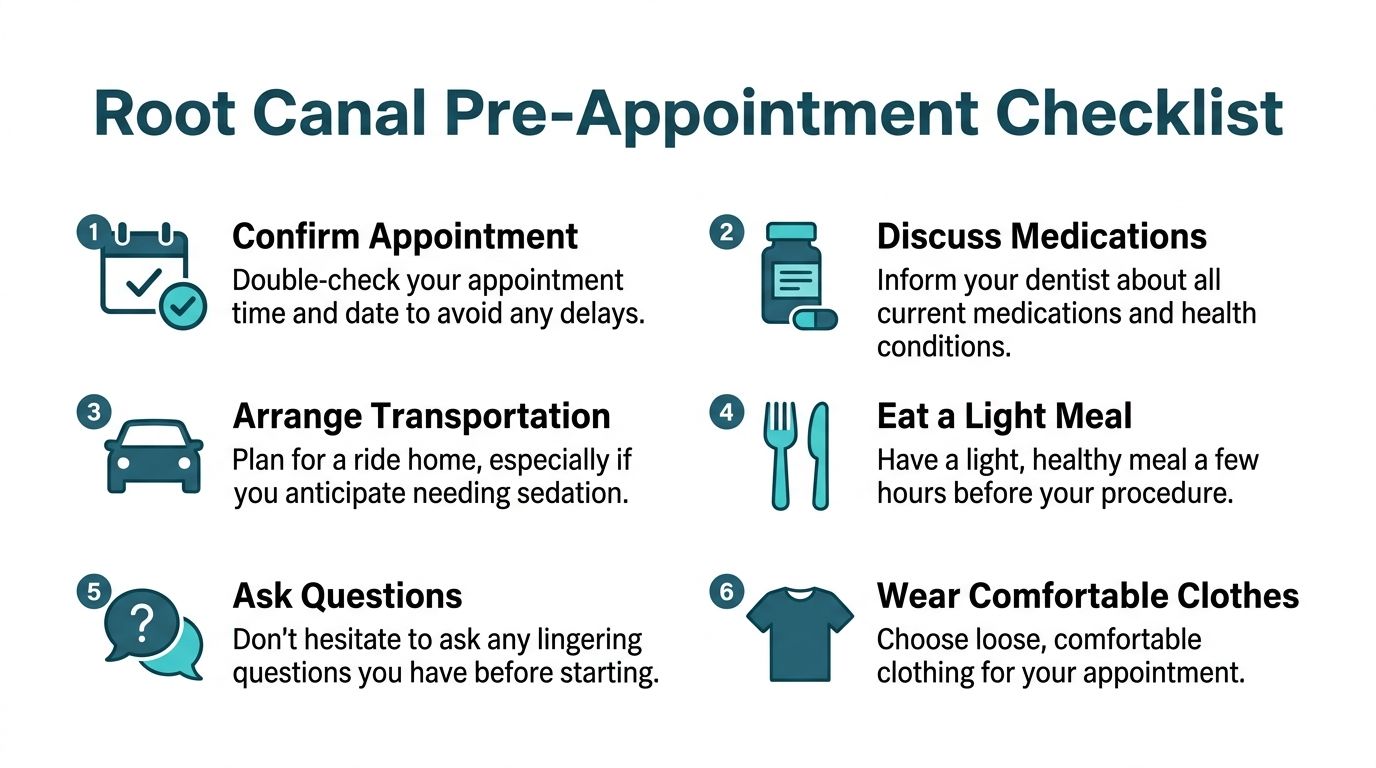
Preparation starts before the day of treatment. Patients usually feel better when they stop trying to remember everything at once and instead handle a few small tasks in order.
Start preparing a few days ahead
A useful timeline begins 3 to 7 days before the procedure, with the most important steps happening in the final 24 to 48 hours, including avoiding alcohol and tobacco, confirming transportation if sedation is planned, and eating a substantial meal 2+ hours before the appointment, according to this pre-procedure root canal preparation guide.
That means this isn’t something to think about only on the drive to the office. A little planning ahead prevents rushed decisions.
A short written list helps. Notes on a phone work fine too. The goal is to collect the information a dental team needs to treat the patient safely and comfortably.
Food, hydration, and what to avoid
Patients often ask whether they should eat first. In most cases, yes. A solid meal a few hours before the appointment is helpful because the mouth may stay numb for a while afterward, and eating can be awkward once treatment is done.
A practical pre-appointment routine looks like this:
- Choose a real meal: Eat something filling but easy on the stomach at least a couple of hours before the visit.
- Drink water normally: Staying hydrated helps patients feel steadier during a dental appointment.
- Skip alcohol and tobacco before treatment: This is part of the important pre-operative window noted above.
- Avoid last-minute guesswork: If sedation is part of the plan, the office should give instructions that take priority over general advice.
Patients with strong dental anxiety sometimes ask if they should explore sedation options before the day of treatment. That conversation is worth having early, especially for anyone considering sleep dentistry options.
A good pre-appointment meal isn’t about comfort alone. It also helps patients avoid being stuck hungry while the mouth is still numb later.
Transportation, paperwork, and practical planning
Root canal preparation isn’t only medical. It’s logistical. If sedation is planned, transportation needs to be arranged in advance. If only local anesthetic is being used, many patients can usually drive, but they should still think through the rest of the day.
A few basics make the appointment easier:
| Task | Why it matters |
|---|---|
| Bring a current medication list | The dental team needs to know what the patient takes regularly |
| List medical conditions | Health history helps guide safe treatment |
| Verify insurance details | It prevents last-minute confusion at check-in |
| Plan a lighter schedule afterward | Recovery feels easier without rushing back into errands |
Some patients also benefit from a small comfort plan. Comfortable clothing, headphones, and a clear pause signal with the dentist can make the visit feel more manageable. Nervous patients often assume they have to “push through” once treatment starts. They don’t. Good communication matters.
Questions worth asking before the appointment
A short call to the office can clear up a lot of uncertainty. Useful questions include:
- Will local anesthetic likely be enough for this case?
- Should any medication questions be reviewed before the appointment?
- Will the patient need someone to drive them home?
- What should the patient expect to eat afterward?
That kind of planning is often what makes the actual appointment feel smooth.
What to Expect During Your Root Canal at Amanda Family Dental
The appointment usually feels calmer than patients expect. Most of the fear comes from imagining dramatic scenes that don’t match a modern dental visit.
How the appointment usually begins
When the patient arrives, the team confirms the plan and reviews any relevant symptoms or changes in health history. If needed, the dentist may take X-rays or perform tests to confirm the condition of the tooth. Cleveland Clinic notes that diagnosis often involves X-rays and sensitivity tests, and that local anesthetics are typically sufficient for pain prevention during treatment. The same overview also notes that most root canal procedures are completed within 60 minutes in this clinical root canal explanation from Cleveland Clinic.
That first part matters because it reassures the patient that treatment is being based on what the tooth is doing now, not just what it felt like three days ago. A sensitive tooth can flare, calm down, and flare again. The team checks before moving forward.
How comfort is managed during treatment
Many nervous patients equate the word “root canal” with pain. The experience is usually the opposite. Once the area is numb, the purpose of the visit is to clean out infected tissue and stop the source of the pain.
For anxious patients, comfort often improves when the process is predictable:
- The dentist numbs the area first
- The patient gets time for the anesthetic to work
- The team checks that the tooth feels ready before starting
- Breaks can be requested if needed
Some patients also want a clearer idea of timing before they commit to treatment. This overview of how long a root canal may take can help patients picture the flow of the appointment.
A short visual explanation can also make the process feel more familiar:
What happens once treatment starts
The simplest way to describe the procedure is this. The dentist creates access to the inside of the tooth, removes the infected or damaged tissue, cleans the internal space, and seals it so the tooth can be restored and protected.
Patients don’t need to memorize the technical steps. What helps most is knowing what they’re likely to notice. Pressure is normal. Vibration is normal. Hearing instruments is normal. Sharp pain shouldn’t be.
If a patient feels more than expected pressure or discomfort, speaking up right away helps the team adjust and keep the visit comfortable.
After treatment, the mouth may remain numb for several hours. That detail often matters more than the procedure itself, because it affects eating, driving comfort, work plans, and the rest of the day.
Navigating the First 24 Hours After Your Procedure
The most overlooked part of root canal preparation happens after the patient leaves the chair. Many people focus on getting through the appointment, but the first few hours at home are where smart planning really pays off.
Plan for the numbness window
One practical issue deserves special attention. There’s often a 2 to 4 hour window after the procedure when local anesthesia wears off, and patients need a plan for when to take over-the-counter or prescribed pain relief so there isn’t a gap in comfort, as highlighted in this post-root canal preparation and recovery discussion.
That doesn’t mean every patient will have significant pain. It means the transition from numbness to sensation shouldn’t catch anyone off guard. Patients should follow the specific instructions their dentist gives them about medications, especially if a prescription is involved.

A simple way to think about the first afternoon is to plan ahead before numbness fades. Have approved pain relief available at home. Know the dentist’s instructions. Don’t wait until discomfort fully arrives and then start looking through a kitchen drawer for medication.
Eating, resting, and getting through the evening
The safest eating plan is usually the gentlest one. While the mouth is numb, chewing can lead to accidental biting of the tongue, cheek, or lip. Even after numbness fades, the treated side may feel tender.
Soft foods are usually the least annoying choice for that first day. Yogurt, soup that isn’t too hot, eggs, mashed potatoes, oatmeal, smoothies eaten carefully, or pasta are common examples. Crunchy foods and chewing directly on the treated side can wait.
Patients also tend to do better when they lower the demands on the rest of the day. That might mean no heavy errands after the appointment. No trying to lead a long meeting if the jaw feels tired. No expecting to jump straight from the dental chair into child pickup, grocery shopping, and dinner prep without a pause.
Rest doesn’t need to mean staying in bed. It means creating a low-pressure evening so the body can settle.
Cleveland Clinic also notes that topical ice application is commonly used after treatment, typically for 15 minutes per application, to help with soreness and inflammation. That detail appears in the earlier clinical source already discussed.
A simple first-day recovery checklist
Patients often like a checklist more than a paragraph at this stage. The first day can be managed with a few straightforward habits:
- Stay ahead of discomfort: Follow the office’s instructions for pain relief timing, especially as numbness begins to wear off.
- Protect the numb areas: Avoid chewing until normal feeling returns.
- Choose soft foods: Keep meals simple and avoid chewing on the treated side.
- Use ice if recommended: Short applications can help calm soreness.
- Take it easy: A quieter afternoon and evening usually make recovery smoother.
A parent in Amanda may need a slightly different plan than a commuter from Circleville, but the principle stays the same. Build a cushion around the appointment. The less rushed the day feels, the better.
What feels normal after treatment
Some soreness around the tooth and jaw is common. The mouth may feel tired from staying open. The area can be tender when biting, especially early on.
That’s different from feeling alarmed by every sensation. Patients recover more comfortably when they expect some temporary tenderness and know they already have a plan for it.
Ensuring Long-Term Success and a Healthy Smile
A root canal is a little like repairing the wiring inside a house. The dangerous problem is removed from within, but the walls still need to be finished and protected so the space can function normally again. That is why long-term success depends not only on the treatment itself, but also on how the tooth is restored and cared for afterward.

Protect the treated tooth until final restoration
After a root canal, the inside of the tooth has been cleaned and sealed. The outer structure may still be weaker than it was before infection or decay set in. If we place a temporary filling or recommend a crown, that recommendation is there to help the tooth handle everyday pressure from chewing and clenching.
Until the final restoration is completed, treat that tooth with a little caution. Avoid biting hard foods on that side, skip sticky foods that can tug on a temporary, and keep your follow-up visit on the calendar. For patients who like to understand how crowns are secured and protected, our guide to cement for a tooth crown explains that step in plain language.
At Amanda Family Dental, we want patients to know why each step matters. A root canal is not just a one-day fix. It is a process with a clear finish line, and we help you get there.
When to call Amanda Family Dental
Some tenderness with chewing can be normal for a short time. A few symptoms deserve a call to the office instead of a wait-and-see approach.
- Pain that is getting stronger instead of easing: Recovery should trend in the right direction.
- New swelling or swelling that increases: That can mean the area needs prompt attention.
- A temporary filling that feels loose or comes out: The tooth may need protection sooner.
- A bite that feels uneven: If the treated tooth hits first, a simple adjustment may help.
- Any symptom that worries you: Peace of mind matters too.
Patients in Amanda, Lancaster, Circleville, and nearby communities should never feel they have to diagnose their own dental problem at home. If something feels off, call us. We would rather answer a simple question early than have you sit with unnecessary worry.
Why saving the natural tooth is often the better path
Keeping your own tooth usually makes daily life simpler. Your bite stays more familiar, chewing tends to feel more natural, and you avoid the extra decisions that come with removing a tooth and replacing it later.
That practical benefit matters, but so does the emotional side.
Once the infection is gone, the tooth is restored, and the area settles down, many patients stop thinking about that tooth at all. In dentistry, that is often the best result. You can eat, talk, smile, and get through the day without that tooth demanding your attention.
That is the goal we keep in mind at Amanda Family Dental. Gentle treatment is only part of good care. Clear guidance, timely follow-up, and making sure you know when to call are what help turn a stressful appointment into a healthy, lasting result.
Financial Guidance and Your Downloadable Prep Checklist
Cost worries often sit in the background, even when pain makes treatment urgent. Patients usually feel more at ease when the financial side is discussed clearly, including insurance benefits, payment timing, and whether a membership plan may help with routine dental care.
A root canal is often the better long-term investment because it preserves the natural tooth. Patients are often glad they chose root canal treatment over extraction, and primary root canals show 86% to 95% success at 10 years, while extraction can lead to bone loss, shifting teeth, and the need for more involved replacement care, according to this review of root canal outcomes compared with extraction concerns.
For patients who like having something tangible in hand, a downloadable prep checklist can be useful. The best version includes a short packing list, meal reminders, transportation notes, and a few common questions about numbness, eating, and returning to work or family responsibilities. It turns scattered advice into one page that’s easy to save or print.
Patients in Amanda, Lancaster, Circleville, and Carroll who need clear answers, gentle care, or fast help for tooth pain can schedule with Amanda Family Dental. The team provides personalized treatment planning, comfort-focused care, and practical guidance before, during, and after root canal treatment so patients can feel prepared at every step.