


Most root canal patients have mild to moderate soreness for 2 to 3 days, broader recovery within 3 to 5 days, and they're usually back to normal daily activities within 24 to 48 hours. The part that often causes confusion is that feeling better is only the first stage. The tooth may still need its final restoration before recovery is complete.
That's the moment many people find themselves in. A dentist says the words “root canal,” and the next thought isn't usually about the procedure itself. It's, “How long is this going to affect work, school, meals, sleep, and everything else this week?”
That question makes sense. Root canal recovery time is often explained too vaguely, which leaves patients trying to guess whether “better” means pain-free, able to chew, or fully done with treatment. Those are not the same thing. A clearer answer separates the process into phases: the numb hours right after treatment, the sore first few days, the return to daily function during the first week, and the final repair that protects the tooth long term.
For families in Amanda, Lancaster, Circleville, and Carroll, Ohio, practical planning matters. Parents need to know whether a child can go to school the next day. Adults want to know if they can work, exercise, or eat normally. Some patients also worry about calling a dental office while in pain and not knowing what happens next. For people comparing local options, this overview of dentist call handling can help explain how dental practices manage patient communication and urgent questions.
A root canal is also more reliable than many anxious patients assume. Independent reviews of long-term dental data report 86% to 93% tooth survival at 8 to 10 years after root canal treatment, according to supporting data on success rates and tooth preservation. That matters because the procedure isn't meant to be a temporary patch. It's meant to save a natural tooth and keep it functioning for years.
Table of Contents
- Introduction
- Your Root Canal Recovery Timeline Day by Day
- Key Factors That Influence Your Healing Speed
- Essential Home-Care for a Smooth Recovery
- Recognizing Normal Healing vs Potential Complications
- The Final Restoration Your Path to Full Recovery
- Frequently Asked Questions About Root Canal Recovery
- Your Trusted Partner for Restorative Dentistry in Amanda OH
Introduction
A root canal usually becomes part of the conversation after a tooth has been throbbing, sensitive, or hard to chew on for days. By that point, many patients aren't just worried about the treatment. They're worried about what happens after they leave the chair. Root canal recovery time sounds like one simple timeline, but in real life it has several parts.
The first part is symptom recovery. That means numbness wears off, tenderness settles down, and daily life starts feeling normal again. The second part is functional recovery. That's when chewing becomes more comfortable and the surrounding tissues calm down. The third part is definitive repair. That's the final restoration that protects the treated tooth.
Recovery after a root canal isn't one finish line. It's pain relief first, comfortable function next, and long-term protection after that.
This distinction matters because many people are told they'll feel better in a few days, which is often true, but they aren't always told that the tooth may still be vulnerable until it's fully restored. That gap in explanation creates anxiety. It can also lead patients to chew too soon on a temporary filling or postpone the next step.
For someone searching for a dentist near me, an emergency dentist, or a dentist in Amanda, OH, this is the kind of clarity that helps. Patients in Lancaster, Circleville, and Carroll, Ohio usually want the same straightforward answers. Can work continue tomorrow? Probably yes. Can a regular diet resume right away? Not always. Is the tooth done just because the pain improved? Usually not.
Modern root canal treatment is designed to remove infected tissue, stop pain, and preserve the natural tooth. The details below make the timeline easier to understand without guesswork.
Your Root Canal Recovery Timeline Day by Day
A helpful way to think about recovery is to separate what the mouth feels like from what the tooth can safely handle. Extended downtime is typically not required. According to guidance on root canal recovery time, most patients return to normal daily activities within 24 to 48 hours, and the most common pattern is mild to moderate soreness for 2 to 3 days.
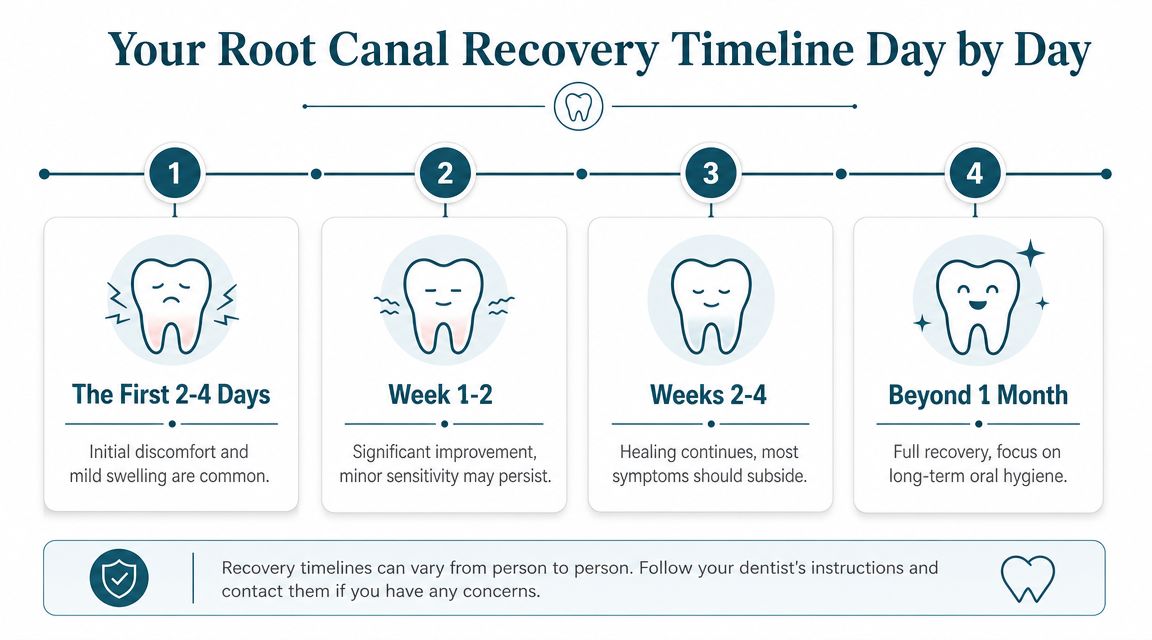
A quick-scan recovery table
| Timeframe | What to Expect | Recommended Actions |
|---|---|---|
| First few hours | Mouth and lips may stay numb. The tooth may feel strange but not yet sore. | Don't chew on that side. Wait until numbness wears off before eating anything that requires biting. |
| First 24 to 48 hours | Soreness often becomes most noticeable as the anesthetic fades and the tissue around the tooth reacts. | Stick with gentle foods, take medications exactly as directed, and avoid strenuous exercise for at least the first day. |
| Days 3 to 5 | Many patients notice steady improvement and less tenderness. | Resume normal tasks as comfort allows, but stay cautious with chewing on the treated side. |
| Days 3 to 7 | Lingering tenderness may still show up with pressure or biting, especially on a more involved case. | Keep the area clean, protect any temporary filling, and follow the plan for the next appointment. |
One question many patients ask is whether the timeline changes depending on how many visits are needed. It can. Harvard Health notes that people can return to regular activities right away after treatment, while the tooth may still need a filling or crown afterward, and some cases require more than one visit, as described in what to expect from a root canal.
What each phase usually feels like
The first stage is mostly about numbness and caution. A person may feel normal enough to eat, but that doesn't mean the area is ready. Biting the cheek, tongue, or treated tooth while still numb is one of the easiest ways to create unnecessary irritation.
The next stage is the one people usually mean when they ask about root canal recovery time. The area around the tooth can feel bruised or tender because the soft tissues are inflamed. That's different from the deep infected pain that led to treatment in the first place. It's usually a healing response, not a sign that the procedure failed.
Practical rule: If the tooth feels a little sore but improves each day, that usually fits a normal pattern. If it feels stronger and more painful each day, the office should hear about it.
This part of the process also affects work and school planning. Most patients can function normally the next day, but hard workouts, heavy lifting, and contact sports should wait until the area settles. A temporary diet adjustment often helps more than people expect.
For readers who want the procedural timeline as well as the healing timeline, Amanda Family Dental also explains how long a root canal takes.
A short visual walkthrough can also help make the phases less abstract.
Key Factors That Influence Your Healing Speed
Not everyone experiences the same root canal recovery time. One person may be comfortable in a few days. Another may still notice tenderness well into the next week. That difference doesn't automatically mean something is wrong.

Tooth anatomy changes the timeline
The biggest built-in factor is the tooth itself. According to guidance on how long recovery takes after a root canal procedure, simple single-root front teeth may feel better in 3 to 5 days, while complex molars can take 7 to 10 days for full comfort to return.
That makes sense mechanically. A front tooth is usually simpler to treat. A molar often has more canals and more complicated shapes. More instrumentation can mean more irritation in the tissues around the root, and that can leave the area tender longer.
Other reasons one person heals faster than another
A second factor is the condition of the tooth before treatment. A tooth that had been painful for a while, had swelling, or was difficult to chew on may need more time for surrounding tissue to settle down afterward. Patients sometimes expect instant silence from the area, but healing tissue rarely works that way.
General health matters too. If a patient heals slowly in other situations, the mouth may follow that same pattern. Clenching or grinding can also keep pressure on the treated tooth and prolong tenderness, especially while a temporary filling is still in place.
The patient's habits in the first few days can make a noticeable difference:
- Chewing choices: Soft foods and chewing on the opposite side reduce repeated pressure on a sore tooth.
- Activity level: Returning to regular errands is often fine, but intense exercise too soon can leave the area feeling more reactive.
- Follow-through: Keeping the next appointment matters because the treated tooth still needs protection.
A patient may feel almost normal before the tooth is ready for full chewing force. Comfort and strength don't always return at the same pace.
This is one reason recovery advice should be individualized. A molar in a patient who clenches at night may need more protection than a front tooth in a patient with light bite forces. That kind of distinction helps patients set realistic expectations instead of comparing themselves to someone else's faster timeline.
Essential Home-Care for a Smooth Recovery
Good aftercare doesn't need to be complicated. It needs to be consistent. Most patients do best when they keep pressure off the treated side, stay gentle with oral hygiene, and watch for changes instead of poking at the tooth to “test” it.
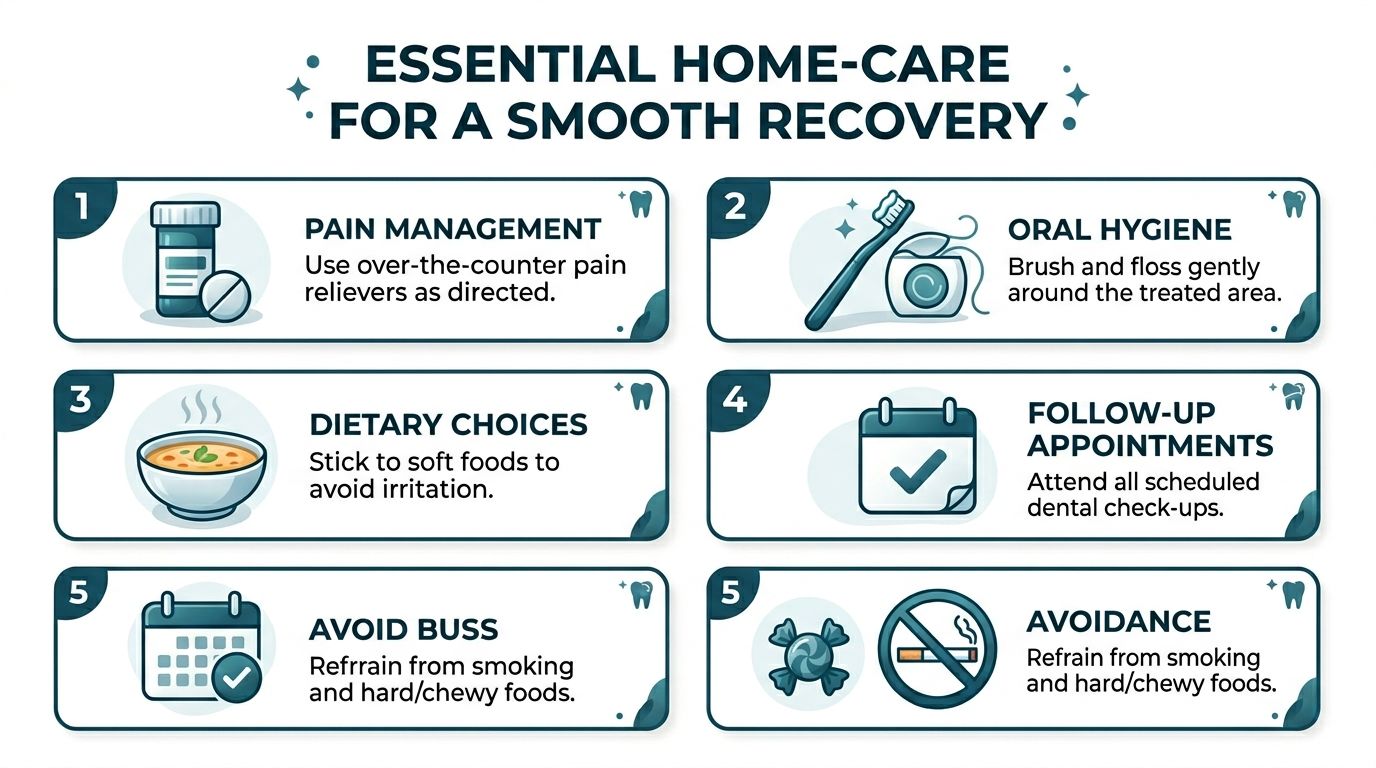
What's normal at home
A comfortable home routine often includes a few simple habits:
- Medication use: Take the pain-relief or anti-inflammatory medication recommended by the dentist exactly as directed. Don't wait until soreness feels intense.
- Food choices: Yogurt, soup, eggs, smoothies, oatmeal, and other soft foods are usually easier on the area than nuts, chips, chewy bread, or sticky candy.
- Cleaning the mouth: Brush and floss carefully. The goal is to keep the mouth clean without scraping or forcing anything around a tender tooth.
- Resting the bite: If a temporary filling is present, avoid using that tooth like normal until the dentist says it's ready.
Patients who want to strengthen daily habits may also find practical ideas in this guide to enhance your oral hygiene.
For people who haven't had treatment yet and want to reduce stress beforehand, Amanda Family Dental also provides a page on how to prepare for a root canal.
When to contact the dental office
A useful way to reduce anxiety is to compare expected healing with warning signs instead of assuming every sensation is a problem.
- Expected: Mild soreness that gradually fades, tenderness with chewing, and temporary caution around hot, cold, or pressure.
- Less reassuring: Pain that feels more intense instead of less intense, a temporary filling that comes loose, or a bite that suddenly feels uneven.
- Call promptly: New swelling, medication reactions, or pain that doesn't seem to be settling.
A patient doesn't need to diagnose the problem before calling. A clear description of what changed, when it changed, and whether it's improving is enough to help the dental team decide what to do next.
Recognizing Normal Healing vs Potential Complications
The hardest part of recovery for many patients isn't the discomfort. It's uncertainty. They wonder whether the symptoms they feel are part of healing or a sign that something needs attention.
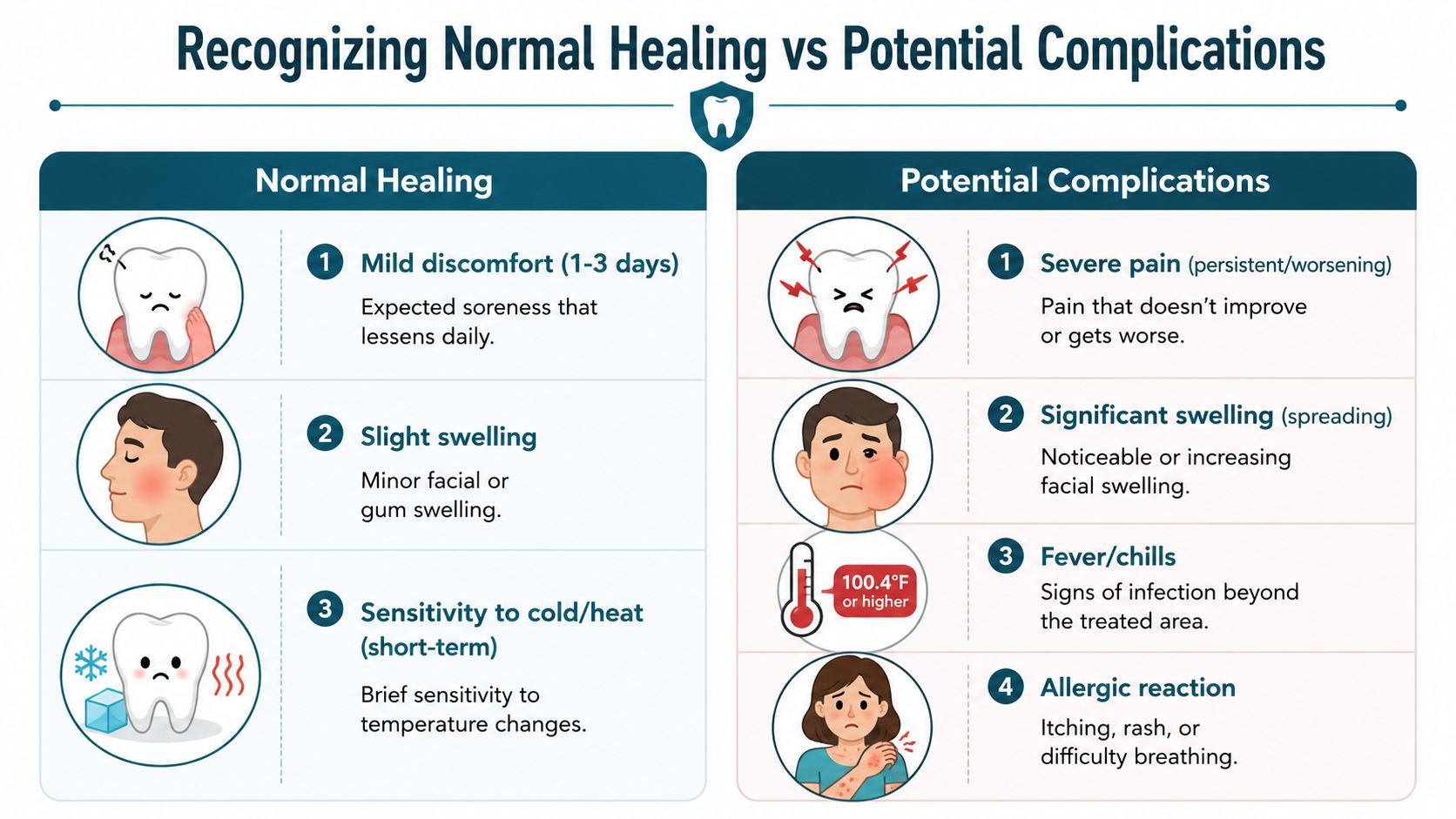
Normal healing signs
Normal healing is usually gradual and calming. The tooth may feel bruised when biting. The gums may feel tender. Mild discomfort may come and go, especially when eating. What matters is the direction. It should trend downward.
Common patterns that usually fit healing include:
- Mild soreness: The area feels tender but manageable.
- Slight swelling: The tissue near the tooth looks a little irritated but not dramatically enlarged.
- Short-term sensitivity: The mouth notices pressure or temperature changes for a while, then settles.
Signs that deserve a call
Potential complications usually have a different pattern. They tend to be persistent, spreading, or worsening. Instead of a slow easing of symptoms, the patient feels stuck or feels that the area is becoming harder to ignore.
A dental office should hear from the patient if any of the following happens:
- Pain gets worse instead of better: Especially if it becomes throbbing or difficult to control.
- Swelling spreads: A larger area of gum, cheek, or face becomes involved.
- Medication reaction appears: Rash, hives, or other signs that the body isn't tolerating a prescribed medicine.
- The temporary filling comes out: The tooth can become more vulnerable.
- The bite feels off: If the tooth feels too high when closing, repeated pressure can keep it sore.
If symptoms are confusing, the safest rule is simple. Improving symptoms usually mean healing. Escalating symptoms deserve a professional check.
This distinction matters because early contact can prevent a small issue from becoming a bigger one. Patients in Amanda, Lancaster, Circleville, and Carroll don't need to wait until discomfort becomes severe to ask for guidance.
The Final Restoration Your Path to Full Recovery
A common misunderstanding about root canal recovery time is that the story ends when the pain fades. It doesn't. A root canal treats the inside of the tooth, but the tooth still needs to be restored on the outside so it can handle daily chewing.
Pain relief is not the finish line
Once the infected pulp has been removed and the canal sealed, the tooth may stop hurting the way it did before treatment. That's important, but it doesn't mean the tooth is finished. A treated tooth is often weaker and more prone to fracture if it's left without proper protection.
That's why many patients are advised not to bite hard foods on that tooth, even if it already feels much better. The temporary stage is a bridge, not the destination.
Why the crown matters so much
Long-term data makes this point very clear. A large U.S. dental network study published in 2022 found a median survival time of 11.1 years for a root canal-treated tooth, but restoration timing mattered greatly. Teeth that received a filling soon after root canal treatment before the crown was placed had a median survival of 20.1 years, compared with 11.4 years for teeth with only a crown, 11.2 years for teeth with only a filling, and 6.5 years when no filling and no crown were placed, according to the study on survival of root canal-treated teeth.
Those numbers help answer a practical question patients often ask: “If the tooth doesn't hurt anymore, do I really need the crown?” In many cases, yes. The crown isn't cosmetic decoration. It's structural protection.
Patients who want to understand that protective step can review how dental crowns restore strength after treatment.
The emotional side of this is real too. People often feel relieved when the procedure is over and tempted to delay the final visit. But delaying the restoration can put the tooth at risk during the very period when it needs support most. Full recovery means the tooth is comfortable, functional, and properly protected.
Frequently Asked Questions About Root Canal Recovery
How can anxiety about recovery be managed
Anxiety usually gets worse when the timeline feels vague. Patients often do better when they know what symptoms are expected, what foods are safer, and what changes should trigger a call. Clear written instructions, a planned follow-up, and the option to ask questions before leaving the office all reduce uncertainty.
It also helps to treat recovery as a schedule problem rather than a mystery. If a patient assumes a quieter evening after treatment, a cautious diet for a few days, and a return to routine soon after, the experience usually feels more manageable.
Is recovery different for a child
Sometimes, yes. A child may not receive the same treatment an adult receives, especially if the tooth is a baby tooth rather than a permanent tooth. The exact procedure depends on the tooth and the problem being treated.
The key point for parents is that children often need simpler explanations and closer monitoring of eating, biting, and numbness. They may recover smoothly, but they also may need more reminders not to chew on a numb lip or poke the area.
When can crunchy or chewy foods return
The safest answer is usually after the dentist says the tooth is fully restored and ready. Even if soreness is nearly gone, a tooth with a temporary filling may not be ready for chips, crusty bread, gum, hard candy, or chewy foods.
A good practical rule is to let comfort guide soft foods and let the dentist guide the return to harder foods. That keeps the healing process from being interrupted by a cracked temporary or a painful bite on a vulnerable tooth.
Your Trusted Partner for Restorative Dentistry in Amanda OH
Patients looking for a dentist in Amanda, OH, a dentist in Lancaster, OH, a dentist in Circleville, OH, or a dentist in Carroll, OH usually want more than a diagnosis. They want a clear path forward. That matters with root canal treatment because the process includes diagnosis, treatment, recovery guidance, and the final restoration that protects the tooth long term.
Amanda Family Dental provides services that fit that full sequence, including exams, digital X-rays, root canals, crowns, restorative dentistry, and emergency dental care. For patients comparing options for a dentist near me, tooth extraction, or even replacement solutions such as dental implants near me, the practical question is often which treatment preserves comfort and function while making the next steps understandable.
New patients often feel most at ease when the visit includes a careful exam, clear images, and a personalized treatment plan instead of rushed explanations. That approach is especially important for anyone dealing with tooth pain, uncertainty about recovery, or concern about whether a tooth can be saved.
Families across Amanda, Lancaster, Circleville, and Carroll, Ohio often need local dental care that's straightforward, compassionate, and realistic about timelines. Root canal recovery time doesn't have to feel confusing when each phase is explained clearly and the final restoration stays on schedule.
If tooth pain has made eating, sleeping, or concentrating harder, Amanda Family Dental can help patients understand their options and plan the next step with less uncertainty. Schedule a visit to discuss root canal treatment, restorative care, emergency dental needs, or a new patient exam in Amanda, Ohio.