

Restoration Dentistry: Rebuilding Your Smile From the Ground Up
A healthy smile depends on more than having straight, white teeth. Every tooth also needs to be strong enough to handle daily biting and chewing, comfortable enough to use without hesitation, and supported by healthy surrounding tissues.
When decay, injury, infection, wear, or tooth loss disrupts that foundation, restoration dentistry can help rebuild it.
More commonly called restorative dentistry, this area of dental care focuses on repairing damaged teeth, preserving natural teeth whenever possible, and replacing teeth that cannot be saved. Depending on your needs, treatment may involve a small tooth-colored filling, a custom crown, root canal therapy, dental implants, or dentures.
At Amanda Family Dental, we provide personalized restorative care for patients in Amanda, Ohio, and surrounding communities. Our goal is not simply to cover visible damage. We look at comfort, function, appearance, bite stability, and long-term oral health to create a plan that makes sense for the whole smile. The practice offers fillings and bonding, dental crowns, root canals, extractions, dental implants, partial dentures, and full dentures in one convenient local office.
What Is Restoration Dentistry?
Restorative dentistry includes treatments used to repair or replace decayed, damaged, infected, or missing teeth. The National Institute of Dental and Craniofacial Research describes restorative dental materials as materials used to restore or replace damaged or missing tooth structures and to manage problems involving the dental pulp.
The right treatment depends on how much damage has occurred.
A small cavity may need a filling. A tooth with a large fracture or weakened structure may need a crown. If infection has reached the soft tissue inside the tooth, root canal therapy may be required. When a tooth cannot be predictably saved, extraction and replacement may become the healthier long-term choice.
Restorative treatment is therefore not one procedure. It is a range of solutions designed to rebuild the smile at the appropriate level.
Why Restorative Care Should Start With a Complete Evaluation
Before repairing a tooth, the dentist needs to understand what caused the problem and how extensively the tooth has been affected. A dark spot or chipped edge may look minor from the outside while deeper decay, an older failing filling, or a crack extends beneath the surface.
Amanda Family Dental uses digital X-rays to examine areas that cannot be fully seen during a visual examination. These images can help identify decay between teeth, evaluate bone levels, locate the source of pain, assess damaged teeth, and support planning for fillings, crowns, extractions, and other restorative care. Because the images appear quickly on a screen, they can also be reviewed with the patient during the visit.
This diagnostic step is important because restorative dentistry should be precise. A tooth should not receive a large restoration when a conservative treatment can adequately repair it. At the same time, placing a small filling in a severely weakened tooth may not provide enough protection.
The goal is to choose the least extensive treatment that can still deliver a predictable, lasting result.
Tooth-Colored Fillings for Cavities and Minor Damage
A filling is generally used when tooth decay has created a cavity but enough healthy tooth structure remains to support a direct repair. The decayed portion is removed, and the resulting space is filled with a dental material. Untreated decay can eventually cause pain, infection, and tooth loss, making timely treatment important.
Amanda Family Dental provides composite fillings made from tooth-colored resin. The material is selected to blend with the surrounding enamel while restoring the strength and shape of the tooth. Composite resin may also be used for bonding to repair small chips, broken edges, minor spaces, and certain cosmetic imperfections.
One benefit of composite treatment is that it can often preserve more natural tooth structure than a more extensive restoration. However, fillings are not appropriate for every damaged tooth. If a large portion of the tooth is missing or the remaining walls are weak, a crown may offer better protection.
Dental Crowns for Weakened Teeth
A dental crown is a custom restoration that covers the visible portion of a tooth. It is often recommended when the tooth requires more support than a filling can provide.
At Amanda Family Dental, crowns may be used for teeth affected by extensive decay, cracks, fractures, large or failing fillings, significant wear, or previous root canal treatment. Each crown is custom-made to fit the tooth and bite while blending with the surrounding smile.
Think of a crown as protective reinforcement. Instead of repairing one small area, it surrounds the weakened tooth and helps distribute pressure more evenly during chewing. This can allow a tooth that might otherwise continue breaking down to remain functional.
A crown can restore appearance as well as strength, but the decision should be based on the health and structure of the tooth rather than appearance alone. A careful evaluation helps determine whether a filling, crown, or another approach is most appropriate.
Root Canal Therapy for an Infected Tooth
Deep decay, cracks, repeated dental work, or an injury can allow bacteria to reach the pulp inside a tooth. When this tissue becomes inflamed or infected, patients may experience persistent pain, lingering temperature sensitivity, tenderness while chewing, swelling, or tooth discoloration.
Root canal therapy is designed to remove the infected tissue, clean the inside of the tooth, and seal the space. Its purpose is to relieve discomfort and preserve the natural tooth rather than remove it.
After root canal treatment, the tooth often needs a crown or another permanent restoration. The infection may be gone, but the remaining tooth structure can still be vulnerable to cracking. Completing the recommended restoration helps protect the tooth so it can continue functioning.
At Amanda Family Dental, root canal treatment and custom crowns are both available, allowing the different stages of restorative care to be planned as part of one coordinated process.
When a Tooth Cannot Be Saved
Preserving natural teeth is usually preferred when they can be restored predictably. Unfortunately, some teeth are too severely damaged to support another filling, crown, or root canal.
Extraction may be recommended when there is extensive decay, a serious infection or abscess, a deep fracture, failed dental work, or too little healthy tooth structure remaining. Amanda Family Dental evaluates whether a tooth can be repaired before recommending removal and then guides patients through replacement options when extraction is necessary.
Removing the tooth resolves only one part of the problem. The empty space can affect chewing, appearance, and the balance of the remaining teeth. For this reason, replacement planning is an important part of comprehensive restorative dentistry.
Replacing Missing Teeth With Implants or Dentures
Amanda Family Dental offers several tooth replacement options based on the number of teeth missing, the health of the jaw and gums, the patient’s preferences, and the desired level of stability.
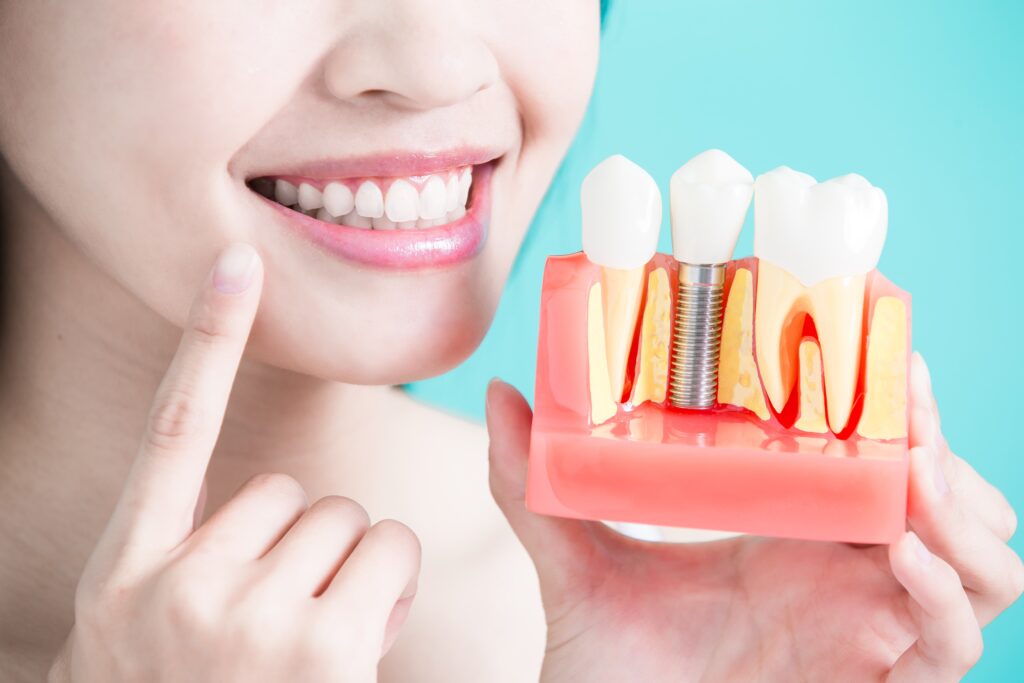
A dental implant uses a post placed in the jawbone to support a replacement tooth. For a single missing tooth, the implant can support a custom crown. Implants may also be used as part of larger tooth replacement plans. They are designed to function independently without requiring healthy neighboring teeth to be reduced for support.
Partial dentures may be considered when several teeth are missing but healthy natural teeth remain. A full denture replaces an entire upper or lower arch. Dentures are removable and can provide a more economical way to restore appearance, speech, and chewing ability.
No single replacement is best for everyone. Implants involve surgery, healing, and a larger initial investment. Dentures may be more affordable but require removal, cleaning, and periodic adjustment. The right option is the one that fits the patient’s health, lifestyle, expectations, and ability to maintain the restoration.
Rebuilding More Than One Tooth
Some patients need only one dental filling or crown. Others arrive with several problems that have developed over many years.
A comprehensive restorative plan may include stabilizing active infection first, treating cavities, saving teeth through root canal therapy, removing teeth that cannot be restored, and replacing missing teeth afterward. Treatment can often be prioritized so the most urgent concerns are addressed before less immediate work begins.
This phased approach can make extensive care feel more manageable. It also allows patients to understand why each procedure is being recommended and how the different stages work together.
Dr. Alyssa Jenkins takes a comprehensive approach that considers function, prevention, airway, whole-body health, and long-term wellness. She graduated from The Ohio State University College of Dentistry and has completed advanced training through The Dawson Academy, a program focused on comprehensive care, function, and lasting oral health.
Restorations Still Need Ongoing Care
A repaired tooth is not immune to future problems. Plaque can collect around fillings, crowns, dentures, and implants, and new decay can develop around the edges of existing restorations. Dental materials also experience years of chewing pressure and may eventually wear, chip, loosen, or require replacement.
Daily brushing, cleaning between the teeth, and regular dental visits help protect both natural teeth and completed dental work. Routine appointments also allow the dentist to identify small changes before they become larger and more expensive problems.
Patients who grind or clench their teeth may need additional protection because repeated pressure can damage teeth and restorations. Your recommended maintenance plan should reflect your individual oral health, bite, and treatment history.
Making Restorative Care More Manageable
The cost of rebuilding a smile depends on the number of teeth involved, the procedures required, the materials selected, and whether treatment can be completed in stages.
Amanda Family Dental offers flexible payment options and a Power Plan Membership for patients without insurance. The published adult plan includes an annual examination, dental cleaning, and X-rays, along with stated savings on general dentistry, extraction, and tooth replacement services. These categories include fillings, crowns, root canals, extractions, dentures, and dental implants, although patients should confirm eligibility and current terms directly with the office.
A written treatment plan can help you understand which procedures are urgent, which can be scheduled later, and what each stage is expected to cost.
Rebuild Your Smile at Amanda Family Dental
Restorative dentistry is about more than fixing individual teeth. It is about rebuilding a stable foundation so you can eat comfortably, speak clearly, protect your remaining teeth, and feel confident about your smile again.
Amanda Family Dental combines digital imaging, personalized treatment planning, and a broad range of restorative services in one welcoming local office. Our team provides composite fillings and bonding, dental crowns, root canals, extractions, dental implants, partial dentures, and full dentures.
We welcome patients from Amanda, Lancaster, Circleville, Stoutsville, Ashville, Carroll, Lithopolis, Sugar Grove, Logan Elm Village, and other surrounding Ohio communities. To schedule a restorative dental evaluation, call Amanda Family Dental at 740-969-1198. Our team can examine your smile, explain your options clearly, and create a step-by-step plan for restoring your comfort, function, and oral health.
Amanda Family Dental
https://maps.app.goo.gl/kDoSWq497FbknuUw6
(740) 969-1198
145 W Main St, Amanda, OH 43102, United States
https://amandafamilydental.com/