

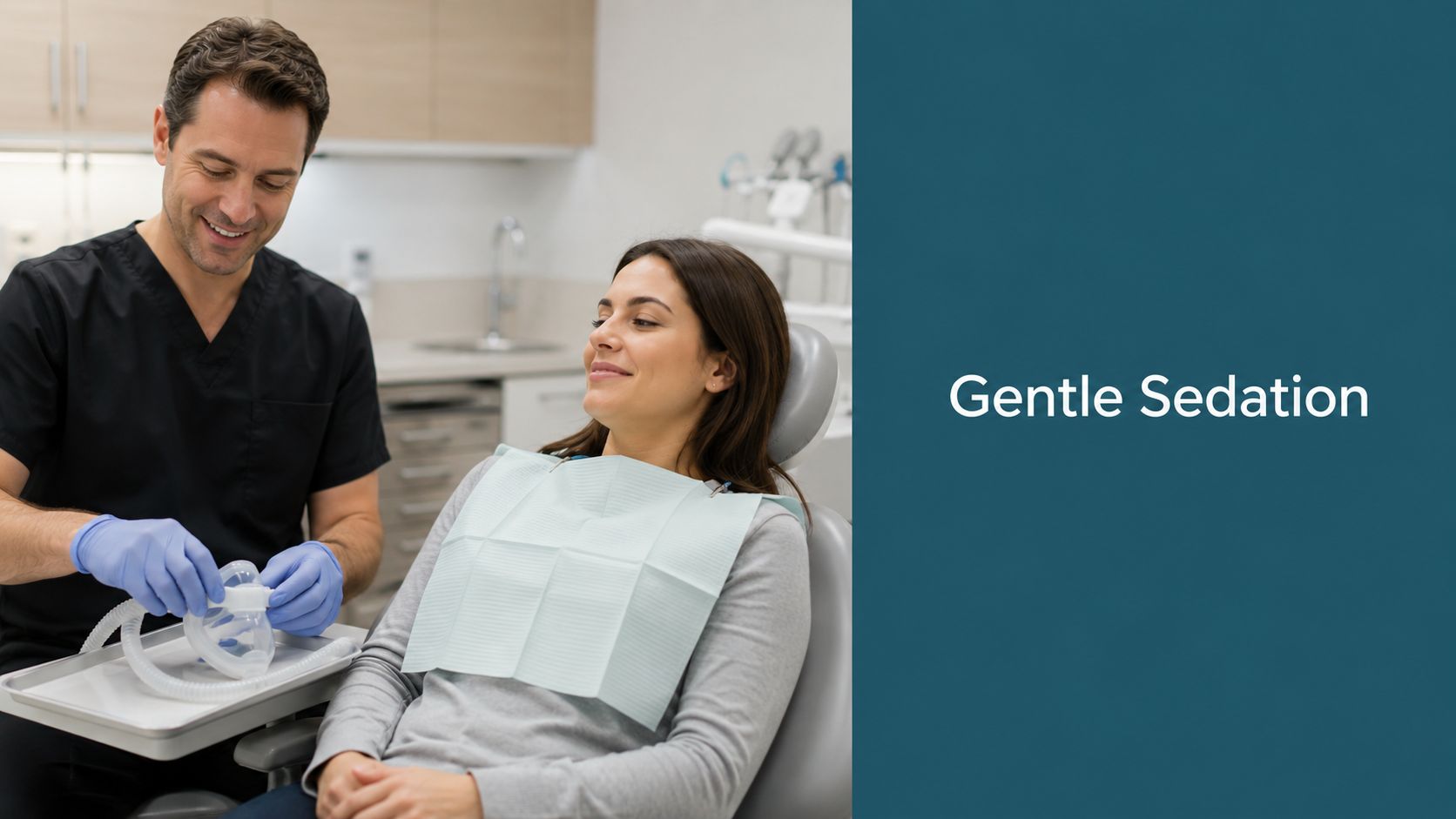
A lot of people searching for a dentist near me aren't only worried about a tooth. They're worried about the sound of the drill, the memory of a rough visit years ago, or the feeling of losing control in the chair. That quiet fear keeps many adults in Amanda, OH, Lancaster, OH, Circleville, OH, and Carroll, OH from booking the cleaning, tooth extraction, dental implant consultation, or emergency dentist visit they already know they need.
Non IV conscious sedation can change that experience. It gives anxious patients a gentler path into dental care by helping the body relax while keeping the patient awake, responsive, and able to breathe independently. For families looking for a dentist in Amanda, OH or nearby communities, that can make the difference between delaying care and finally getting relief.
Table of Contents
- Your Trusted Dentist for Gentle Care in Amanda OH
- What Is Non-IV Conscious Sedation
- Your Gentle Sedation Options
- Benefits of Choosing Non-IV Sedation
- What to Expect During Your Sedation Visit
- Your Questions About Sedation Dentistry Answered
Your Trusted Dentist for Gentle Care in Amanda OH
Someone in Lancaster might put off a cracked tooth because even a routine exam feels overwhelming. A parent in Carroll may postpone treatment after a bad childhood memory. A patient in Circleville may keep searching for a cosmetic dentist near me or an emergency dentist but never press call because fear shows up first.
That pattern is more common than many people realize. Conscious sedation is already part of everyday dental care, not a rare extra. A 2023 survey found that over 75% of dentists regularly use conscious sedation, and many use it five or more times per week (survey details). That matters because it shows sedation is a standard, trusted option for helping nervous patients accept treatment.
Fear is real, and gentle care should be too
Dental anxiety doesn't always look dramatic. Sometimes it looks like canceling twice. Sometimes it looks like asking for “just the quickest fix” instead of addressing the underlying problem. Sometimes it turns a simple cleaning and exams visit into weeks of stress.
Some patients don't need more bravery. They need a calmer way to receive care.
That's why non IV conscious sedation matters. It supports patients who need fillings, crowns, root canals, tooth extraction treatment, restorative dentistry, or even longer visits tied to dental implants near me searches. It can also help patients who want cosmetic dentistry, teeth whitening, or new patient exams but have trouble sitting through care comfortably.
A community-minded way to think about trust
People often look for a dentist in Amanda, OH the same way they look for any healthcare partner. They want skill, but they also want patience, clear answers, and a practice that won't dismiss fear. Even guidance written for another healthcare system can be useful here. This practical article on how to choose a UK dentist is a good reminder to ask about communication style, comfort options, and how the team handles anxious patients.
For many families in Amanda and nearby Ohio communities, the right office doesn't just fix teeth. It helps people feel safe enough to come back.
What Is Non-IV Conscious Sedation
You sit in the dental chair, your shoulders are tight, and your first question is simple. “Will I still be awake?” For many anxious patients in Amanda, that question matters as much as the treatment itself.
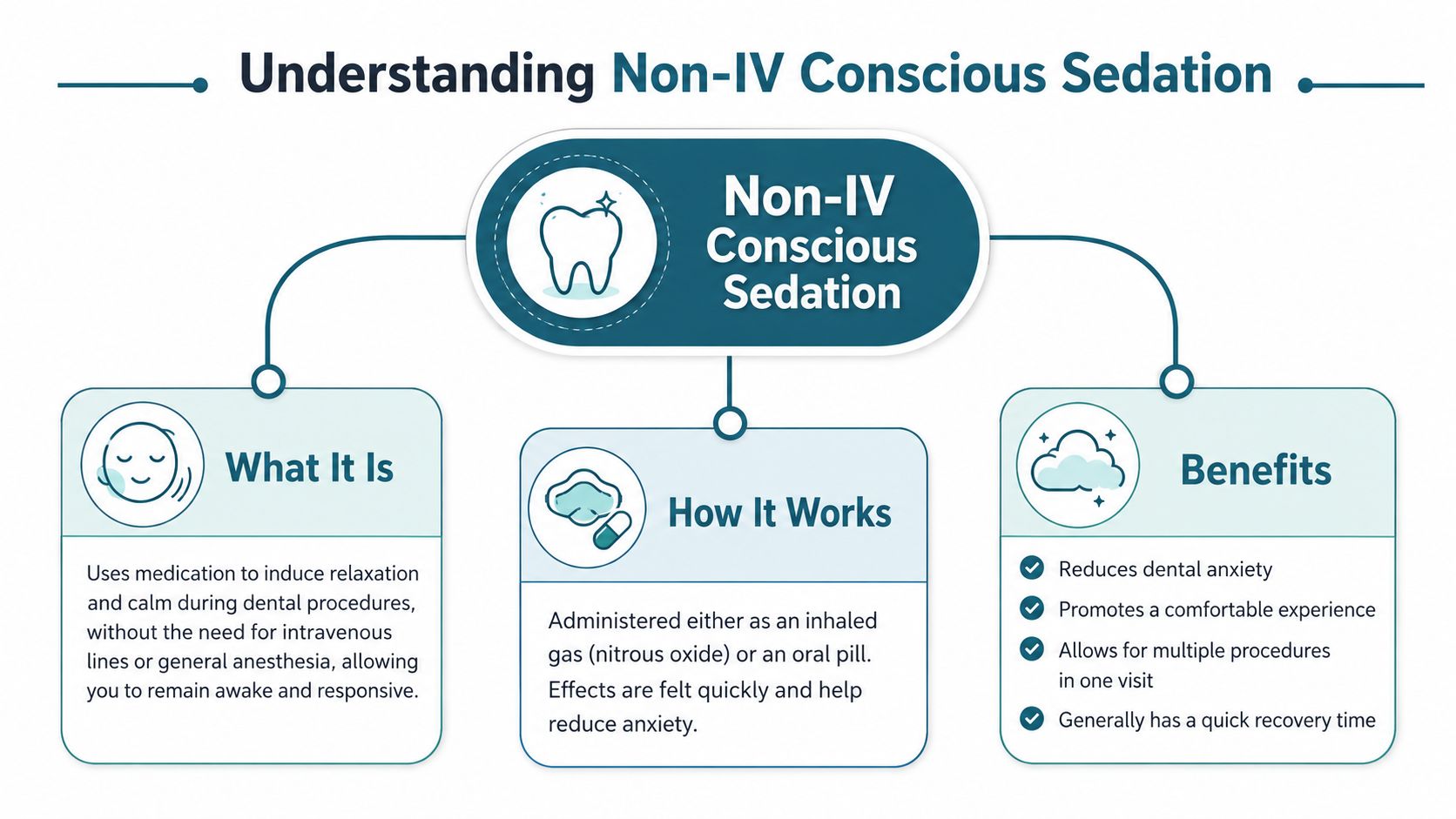
Non IV conscious sedation helps you relax during dental care without using an IV. You stay awake, you keep breathing on your own, and you can still respond when your dentist speaks to you. The goal is not to knock you out. The goal is to make the visit feel manageable.
The American Dental Association describes conscious sedation as a minimally depressed level of consciousness that lets patients maintain an open airway independently and respond appropriately to physical stimulation or verbal command (ADA sedation and anesthesia overview). That matters because many people who avoid treatment are not asking to be unconscious. They want fear turned down enough to get care comfortably and safely.
A calmer visit with you still in control
A helpful way to understand it is this. Non IV conscious sedation lowers the volume on the body's stress response. You are still present. You are still able to cooperate. Many patients feel less tense, less focused on noises and sensations, and less trapped by the experience.
That sense of control is a big reason this option matters in a community practice. Amanda Family Dental is not only helping people complete a procedure. We are helping neighbors who have put off care finally feel safe enough to come in, ask questions, and have a better experience than they expected.
If you want a broader explanation of comfort-focused treatment, this page on sleep dentistry and dental sedation options gives useful background.
How it differs from being fully asleep
Patients often mix up conscious sedation and general anesthesia, which is understandable. They sound similar, but the experience is very different.
| Experience | Non IV conscious sedation | General anesthesia |
|---|---|---|
| Awake during treatment | Yes | No |
| Able to respond | Yes | No |
| Breathing independently | Yes | No |
| Goal | Relaxation and cooperation | Full unconsciousness |
For a side-by-side explanation of methods, patients can compare oral and IV dental sedation. That comparison can make the choices feel clearer before you decide what fits your comfort level.
A simple way to remember it is this. Non IV conscious sedation is meant to help you get through treatment with less fear, not erase your awareness completely. For many patients, that balance is what makes dental care finally feel possible.
Your Gentle Sedation Options
For many families in Amanda and the nearby communities, the biggest question is not, "What is the strongest sedation?" It is, "What will help me feel safe enough to come in and finally get this done?"
That is why non IV conscious sedation usually comes down to two gentle choices. One is light and adjustable. The other offers a deeper sense of calm. Both are designed to help anxious patients receive care without feeling overwhelmed.
Nitrous oxide for flexible, fast relaxation
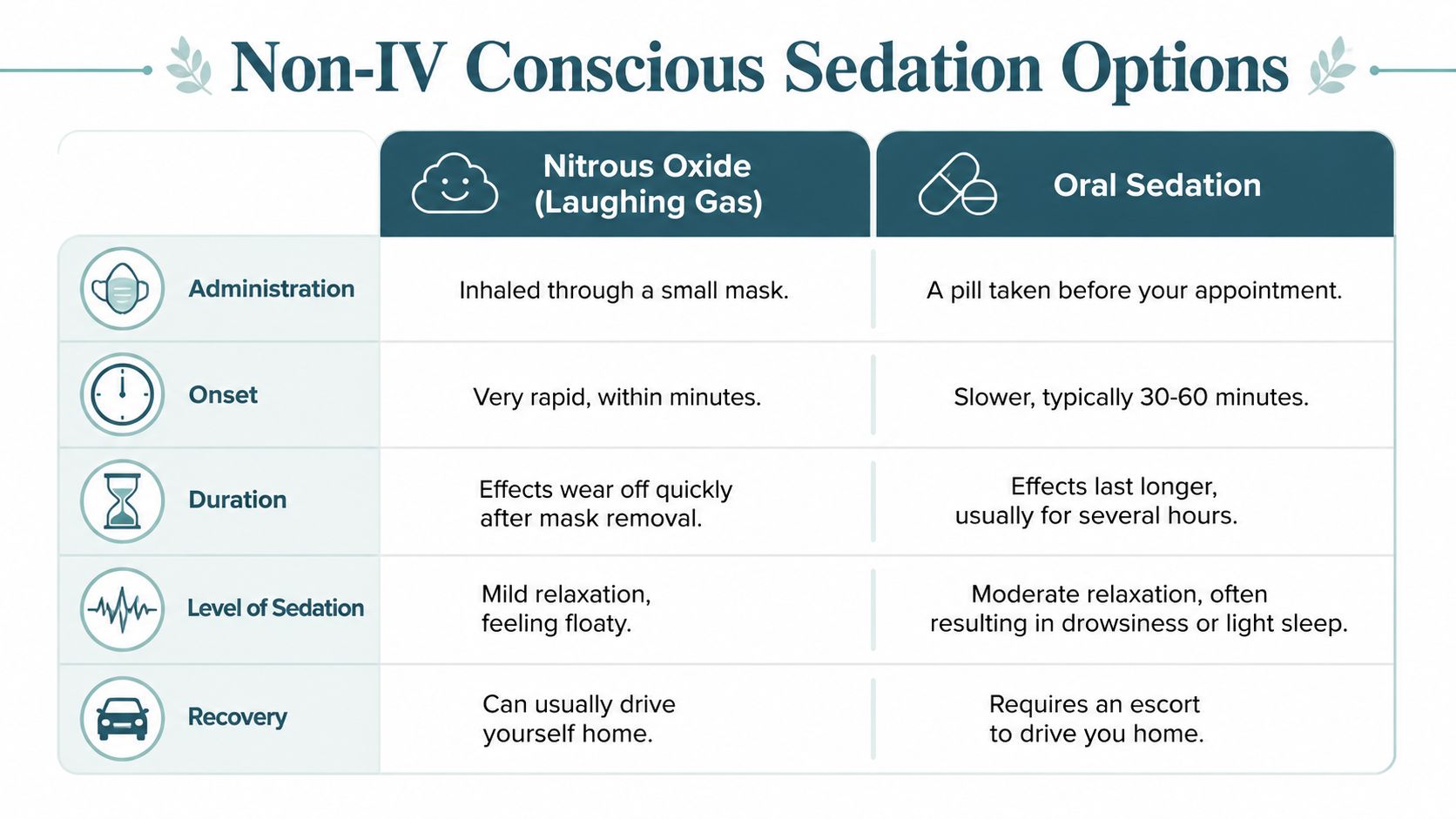
Nitrous oxide, often called laughing gas, is breathed in through a small mask during treatment. It works like a dimmer switch rather than an on and off button. Your dentist can adjust it during the visit so you stay comfortable while still feeling aware of what is happening.
This option often fits patients who feel nervous about cleanings, x-rays, exams, fillings, or other routine care but do not want a long recovery afterward. The National Institute of Dental and Craniofacial Research explains that nitrous oxide helps patients relax and generally wears off quickly after the mask is removed (sedation and anesthesia in dental care).
Patients often describe the feeling as lighter, calmer, and less tense. Time may seem to pass more easily too.
Oral sedation for deeper calm
Oral sedation involves taking prescribed medication before the appointment. The goal is not to make you unconscious. The goal is to soften the fear response so the visit feels more manageable from the start.
This choice is often better for patients with stronger dental anxiety, a sensitive gag reflex, difficulty sitting through longer procedures, or memories of past dental experiences that still make appointments feel hard. Because the effects last longer, patients need someone to drive them to and from the office.
If you are comparing lighter sedation with other comfort options, Amanda Family Dental explains that difference on its page about nitrous oxide dentistry.
Some patients like a simple rule of thumb. Nitrous oxide is often the easier fit for lighter anxiety and quicker recovery. Oral sedation is often the better fit when fear itself is the main barrier to getting care.
A broader patient-friendly read, a guide to calm dental visits, can also help families think through what level of support feels right.
A simple side-by-side view
- Nitrous oxide: Best for patients who want relaxation that can be adjusted during the visit and wears off quickly.
- Oral sedation: Best for patients who need a stronger sense of calm before they even sit in the chair.
- Nitrous oxide: Usually allows a faster return to normal activities.
- Oral sedation: Usually requires more planning for the rest of the day, including a driver.
- Nitrous oxide: Often suits shorter or more routine appointments.
- Oral sedation: Often suits longer visits or patients whose anxiety has kept them away for years.
For a neighbor who has been putting off treatment out of fear, this choice matters. The right option can turn a stressful appointment into one that feels manageable, respectful, and finally possible.
Benefits of Choosing Non-IV Sedation
The strongest benefit of non IV conscious sedation isn't technical. It's emotional. It helps patients stop bracing against the appointment and start receiving care.
Why anxious patients often prefer it
- Less fear before treatment: Patients who tense up the night before a visit often feel more willing to schedule when they know a calming option is available.
- More comfort in the chair: Sedation can reduce the sense of being overwhelmed by sounds, movement, and time.
- A greater sense of control: Because the patient remains conscious, there's still awareness and the ability to respond.
- An easier first step back into care: For people who haven't seen a dentist in years, it can lower the barrier to reentry.
For many anxious adults, the hardest part of dental care isn't the procedure. It's getting through the front door.
How it supports real dental treatment
Non IV conscious sedation isn't only about feeling better. It also supports practical care goals.
- Completing needed work: Patients may tolerate longer visits better, which can help with restorative dentistry or treatment after dental emergencies.
- Protecting oral health sooner: Anxiety often causes delays. Calmer visits can lead to earlier care for pain, broken teeth, or infection concerns.
- Supporting function and confidence: Treatment becomes more approachable for issues that affect chewing, speaking, and smile appearance.
- Recovery that matches the method: As noted by Cleveland Clinic, nitrous oxide recovery takes 15 to 30 minutes and allows driving, while oral sedation needs about 24 hours of recovery and transportation arranged (recovery details).
This matters for families balancing work, school, childcare, and travel from Amanda, Lancaster, Circleville, or Carroll, Ohio. A comfort option only helps if it also fits real life.
What to Expect During Your Sedation Visit
The hardest part for many anxious patients is not the cleaning, filling, or extraction. It is walking in while your mind is racing and not knowing what will happen next. A sedation visit helps fill in those blank spaces, so the day feels more predictable and more manageable.
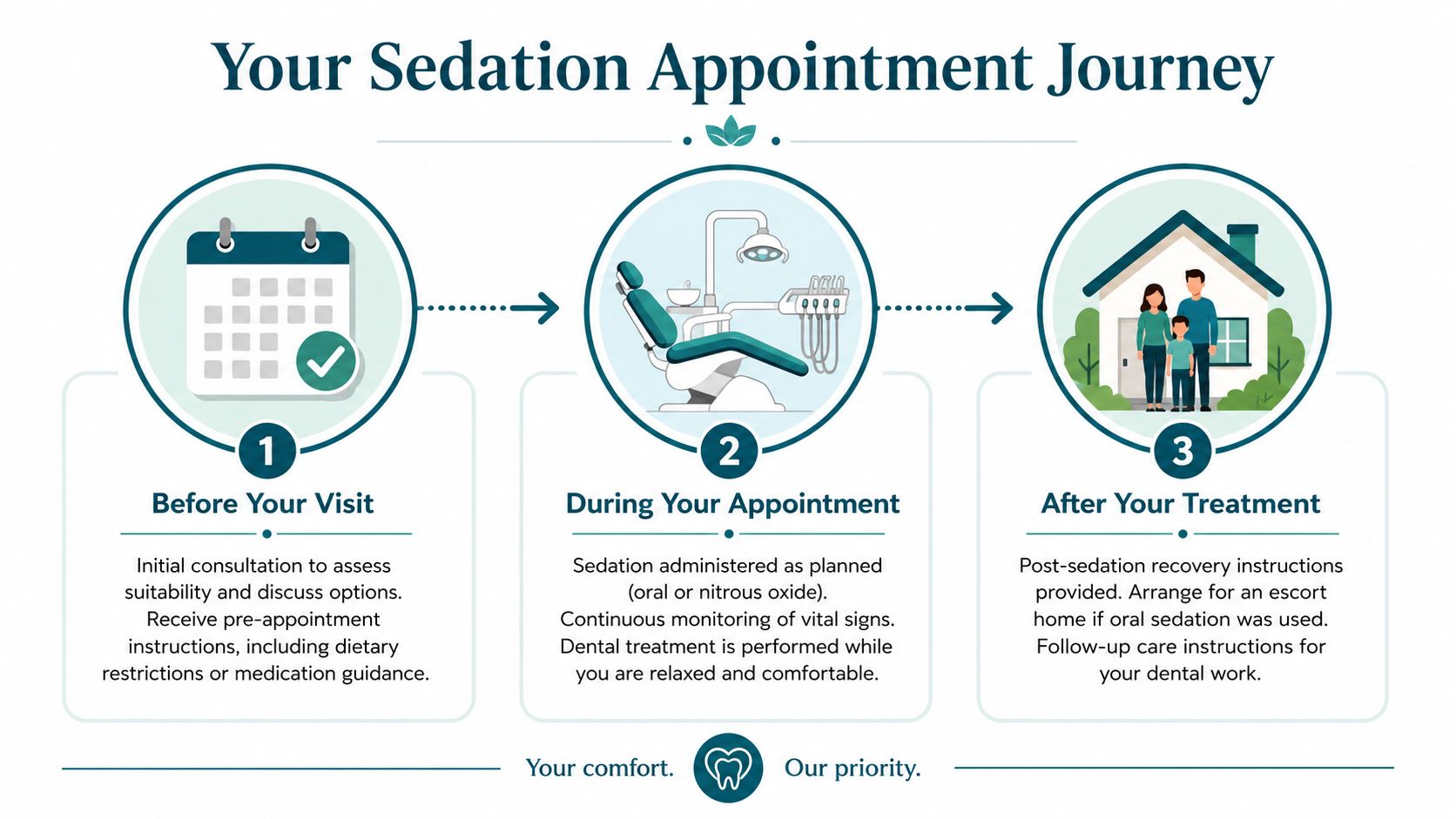
Before the appointment
Your visit starts with a conversation. At Amanda Family Dental, that matters because sedation is not treated like a one size fits all service. It is a comfort plan built around the person in the chair, their health history, their medications, their anxiety level, and the kind of dental care they need.
That discussion may include preventive care, a tooth extraction, emergency treatment, or restorative work. If oral sedation is a good fit, the team will give clear instructions before the appointment, including eating and drinking guidance, when to take the medication if prescribed, and whether you will need someone to drive you home.
Patients often worry they will be rushed. A good sedation visit feels more like being guided step by step, with each part explained before it happens. If you want more background on safety before scheduling, you can read about whether sleep dentistry is safe.
During treatment
Once you are settled, the sedation method is used as planned. Nitrous oxide is given through a small nose mask and adjusted during the visit. Oral sedation is taken ahead of time based on the dentist's instructions, so the calming effect is already beginning as treatment starts.
The goal is simple. Help you stay relaxed while still able to respond.
That point can be confusing, especially for patients who hear the word sedation and picture being completely asleep. Non IV conscious sedation works more like turning down the volume on fear. You remain aware, you can answer questions, and the dental team keeps checking on your comfort throughout the appointment.
Your breathing, responsiveness, and overall status are observed during care, and the team follows a structured process for patient monitoring and recovery. That steady attention is part of what helps many people feel safe enough to return, even if they have avoided the dentist for years.
If dental fear has kept you away, ask how the team will help you stay calm, how they monitor you during the visit, and what support you will have before you head home.
Going home and recovering
Recovery depends on the type of sedation used. After nitrous oxide, many patients feel clear headed again fairly soon. After oral sedation, the day should stay light and quiet, and a trusted adult should drive you home and stay with you as directed.
The office will review written instructions before you leave. That way, you are not trying to remember details through a fog of relief and fatigue.
For many Amanda area families, the best part of a sedation visit is how ordinary it can feel. You arrive tense, get through the appointment with support, and leave realizing the experience was gentler than you expected. That is often how dental care starts to feel possible again.
Your Questions About Sedation Dentistry Answered
Is it safe
For appropriate candidates, non IV conscious sedation is designed to keep the patient responsive and breathing independently, as covered earlier. Safety also depends on case selection, monitoring, clear instructions, and the training of the treating team. Families who want more background can review this page on whether sleep dentistry is safe before scheduling a consultation.
How much does it cost
Cost depends on the method used. Conscious sedation can cost as little as $25 for nitrous oxide, while oral sedation typically ranges from $150 to $500 (cost overview). That range is one reason many patients see it as an accessible way to get needed dental care without the stress that has delayed treatment.
Who might be a good fit
It may help adults with dental fear, people who struggle with gagging, patients facing a longer appointment, or those returning after years away from the dentist. It can also be useful when anxiety makes routine care, cosmetic dentistry, or restorative treatment feel harder than it should.
What should patients ask before booking
A short checklist can help:
- Ask about the sedation type: Nitrous oxide and oral sedation feel different and have different recovery needs.
- Ask about transportation: Oral sedation requires planning for a ride home.
- Ask about medical history review: Existing conditions and current medications matter.
- Ask about comfort planning: Good offices explain how they handle both anxiety and the dental work itself.
For many people searching for a dentist in Lancaster, OH or a dentist near me, these questions are what turn uncertainty into action.
Patients in Amanda, OH, Lancaster, OH, Circleville, OH, and Carroll, OH don't have to push through dental fear alone. Amanda Family Dental offers compassionate, community-centered care for patients seeking gentle treatment, from cleanings and exams to restorative dentistry, cosmetic services, tooth extraction care, and comfort-focused sedation options. Schedule an appointment or request a consultation to talk through concerns, review treatment choices, and take the next step toward calmer dental care close to home.