

A broken tooth rarely happens at a convenient time. It happens during dinner, in the middle of a game, after biting something harder than expected, or when an old filling gives way and a sharp edge suddenly starts cutting the tongue. In that moment, urgent questions quickly arise: Is this dangerous, what should be done first, and how quickly does a dentist need to see it?
For patients searching for a dentist near me, an emergency dentist, or a dentist in Amanda, OH, the most important part of care often starts before the office visit. The right first-aid steps can protect the tooth, reduce pain, and sometimes make the difference between a simple repair and a more involved restorative treatment. For families in Amanda, OH, Lancaster, OH, Circleville, OH, and Carroll, OH, knowing what to do in the first hour matters.
Table of Contents
- The Moment a Dental Emergency Strikes in Ohio
- Your First-Aid Action Plan for a Broken Tooth
- Is It a True Dental Emergency? How to Decide
- Contacting Your Emergency Dentist in Amanda, OH
- What to Expect at Your Emergency Dental Appointment
- Aftercare, Prevention, and Your Dental Health Questions
The Moment a Dental Emergency Strikes in Ohio
The first few seconds after a tooth breaks are usually confusion, then pain, then worry. A patient may feel a jagged edge with the tongue, taste blood, or notice a piece of tooth in the hand. Parents often see it happen to a child and immediately wonder whether it can wait until morning. Adults often try to push through it, especially if the break seems small at first.
That reaction is common. Across the United States, approximately 2 million emergency department visits each year are tied to nontraumatic dental problems, including broken teeth and severe dental pain, which shows how often people end up urgently searching for help instead of having a clear dental plan in place (HCUP and CDC summary data).
Why a broken tooth feels so urgent
A tooth can break in different ways. Sometimes only the outer enamel chips. Sometimes the crack reaches deeper and leaves dentin or the nerve area exposed. That's why one person notices only roughness, while another has immediate throbbing pain, sharp sensitivity to air, or swelling in the surrounding gum.
A broken tooth can also affect more than comfort:
- Chewing becomes difficult because pressure on the tooth can trigger pain.
- Speech may feel different if the front edge is missing or rough.
- Soft tissue gets injured when a sharp edge rubs the cheek, lip, or tongue.
- Confidence drops quickly when the damage is visible in the smile.
A dental emergency often feels isolating in the moment, but it's a situation dental teams handle every day.
Why local care matters
Emergency rooms can help with severe medical instability, but they usually aren't the best place for definitive treatment of a broken tooth. Most patients with dental-related emergency visits are treated and discharged rather than admitted, which reflects the gap between urgent pain control and actual tooth repair.
For people searching for a dentist in Lancaster, OH, dentist in Circleville, OH, dentist in Carroll, OH, or dentist in Amanda, OH, the practical need is simple. They need fast dental evaluation, digital imaging, pain relief, and a treatment plan that protects the tooth if possible. That's what community-based emergency dental care is built to do.
Your First-Aid Action Plan for a Broken Tooth
The first hour after a fracture is more critical than typically assumed. The goal isn't to fix the tooth at home. The goal is to keep the area clean, reduce swelling, preserve anything that can be saved, and avoid mistakes that make treatment harder.
What to do in the first few minutes
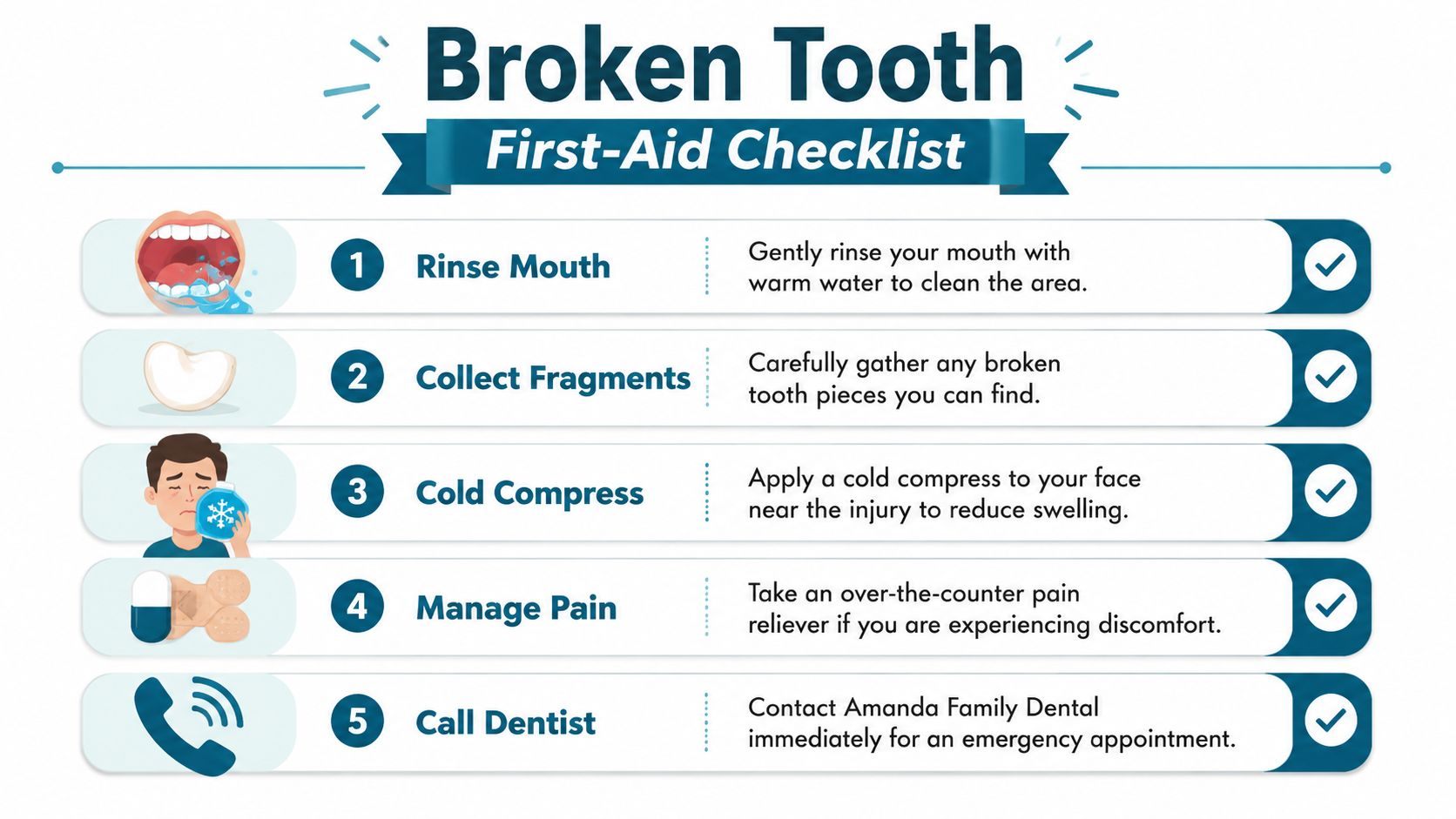
Start with warm water. Gently rinse the mouth to clear blood and debris. Don't scrub the area with a toothbrush and don't keep poking the tooth to see how bad it is.
If there's swelling, place a cold compress on the outside of the face near the injury. If the area is bleeding, use clean gauze or a clean cloth and apply gentle pressure.
A practical checklist helps:
- Rinse gently with warm water to clean the area.
- Find any broken pieces and keep them.
- Use a cold compress on the cheek to limit swelling.
- Take an over-the-counter pain reliever if that's normally safe for you.
- Call a dentist promptly and describe exactly what happened.
Patients who want more guidance on holding things together before the visit can also review this page on a temporary broken tooth fix.
A quick visual guide may help in the moment:
How to protect a fragment or a knocked-out tooth
This is the step many people miss. If a piece of the tooth broke off and can be found, keep it. Tooth fragments cleaned and stored in milk or saline can be bonded back by an emergency dentist with 90% success if presented within 24 hours, which can help avoid more extensive restorative work.
Dry storage is a common mistake. So is dropping the fragment into plain tap water and assuming that any liquid is fine. For a broken piece, milk or saline is the better choice.
If the whole tooth has been knocked out, only touch the crown, not the root. Gently rinse it with saline or milk if it's dirty. Don't scrub it. If it can be repositioned safely, place it back into the socket and bite gently on clean cloth. If that's not possible, store it in milk or Hanks' Balanced Salt Solution. Avoid tap water, because that can quickly destroy the cells needed for reimplantation (clinical guidance on emergency dental treatments).
Practical rule: Save the piece, keep it moist in milk or saline, and bring it to the appointment. Throwing it away may throw away the simplest repair option.
Is It a True Dental Emergency? How to Decide
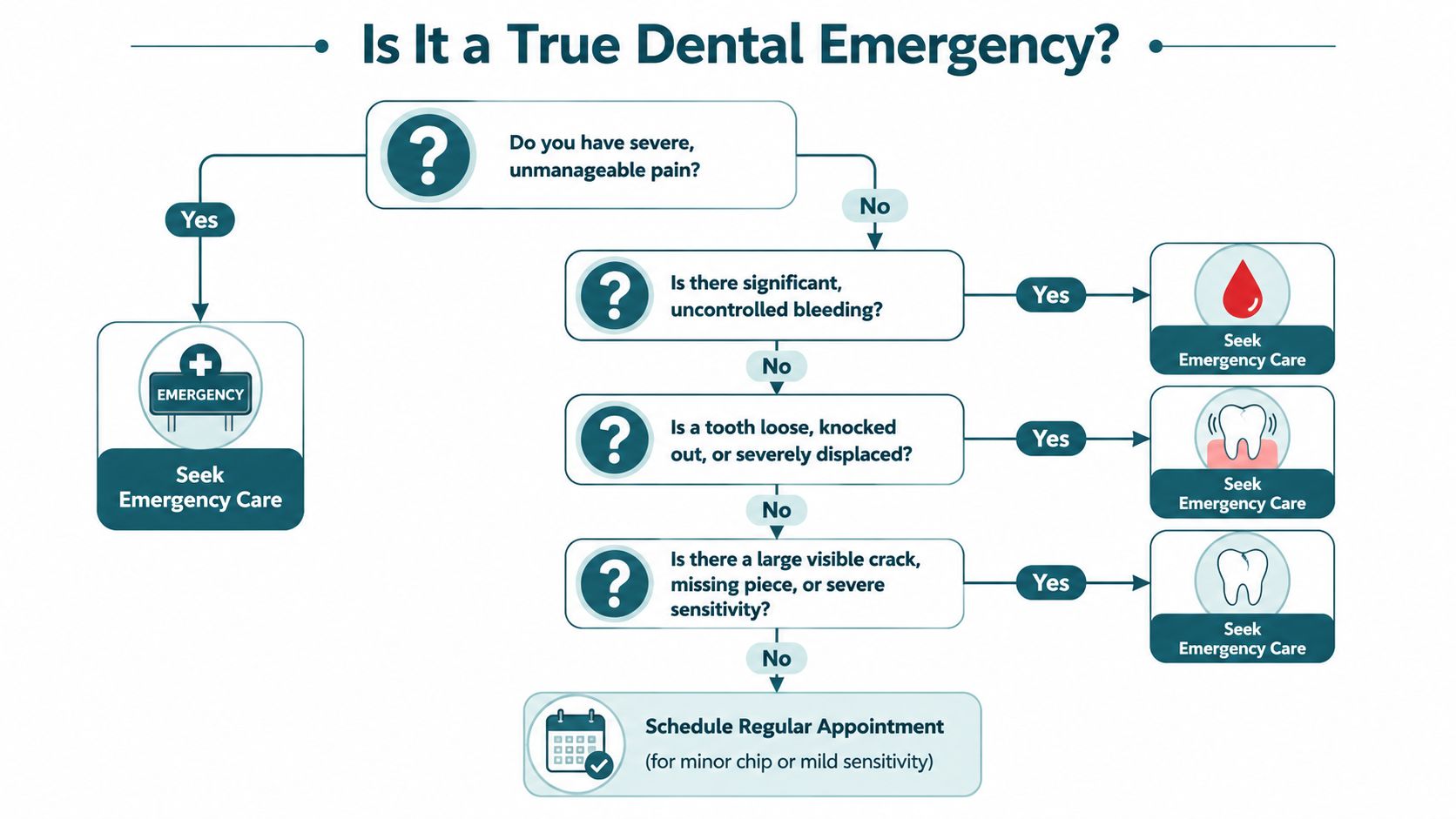
Not every chip needs an after-hours visit. Some do. The fastest way to lower panic is to sort the situation into the right level of urgency.
When the ER makes sense
Go to the emergency room if the dental injury comes with a broader medical issue. Examples include facial trauma that suggests a jaw fracture, heavy bleeding that won't stop, or symptoms that make the situation more than a tooth problem.
A short comparison helps:
| Situation | Best next step |
|---|---|
| Uncontrolled bleeding | ER or emergency medical care |
| Suspected jaw injury or major facial trauma | ER |
| Trouble breathing or swallowing | ER |
| Broken tooth with severe dental pain but no major medical trauma | Emergency dentist |
When to call an emergency dentist right away
A broken tooth becomes a true dental emergency when there is uncontrolled bleeding or severe pain, and a knocked-out tooth needs treatment within 30 to 60 minutes to give reimplantation the best chance of success, according to Cleveland Clinic guidance on dental emergencies.
That means a same-day call is the right move when:
- Pain is sharp or persistent and over-the-counter medicine isn't enough.
- A large piece is missing and the inner tooth appears exposed.
- The tooth is loose, displaced, or fully out of the socket.
- Cold air or water causes intense pain, which may signal deeper injury.
- The broken edge is cutting soft tissue and making normal function difficult.
A fully avulsed tooth is the most time-sensitive version of this problem. The best outcomes happen when action is immediate and the tooth is handled correctly.
Severe pain, exposed inner tooth structure, and a loose or knocked-out tooth shouldn't be watched at home to “see if it settles down.”
When a regular dental visit may be enough
A minor chip with no pain, no bleeding, and no major sensitivity can often wait for a prompt but routine appointment. That doesn't mean it should be ignored. Even a small break can leave a rough edge, weaken the tooth, or create a spot where future damage starts.
Patients searching online for a broken tooth emergency dentist often aren't sure whether their injury is “bad enough.” A simple test is function. If the tooth hurts when biting, reacts strongly to temperature, feels unstable, or shows a large visible fracture, it deserves urgent care. If it's just a tiny cosmetic chip with no symptoms, a regular visit may be reasonable.
Contacting Your Emergency Dentist in Amanda, OH
When a patient decides it's urgent, the phone call should be simple and direct. The front desk can usually move faster when the details are clear. A vague message like “tooth problem” slows things down. A clear message like “front tooth broke, bleeding stopped, fragment saved in milk, pain is getting worse” helps the team judge urgency.
What to say when you call
Have these points ready before dialing:
- What happened. Bite injury, fall, sports impact, old filling broke, or sudden crack while eating.
- What the tooth looks like. Small chip, large fracture, whole tooth out, or tooth feels loose.
- What symptoms are happening. Bleeding, swelling, pain with air, pain with biting, or visible nerve exposure.
- What was saved. Broken fragment, crown, or knocked-out tooth stored properly.
Patients looking for help in the area can use the office's emergency dentist page to contact the practice and request urgent care.
What to bring with you
Bring the tooth fragment or knocked-out tooth if it was preserved. Bring a list of medications, dental insurance information if available, and anything else related to the injury. If the break happened during sports or another impact event, note the timing because that helps frame treatment decisions.
Local patients often search for a dentist near me when the problem is already painful. That's why strong local visibility matters. For readers interested in how practices improve access for urgent-care patients, this piece on boosting new dental patients offers useful context on how people find care when they need it most.
What to Expect at Your Emergency Dental Appointment
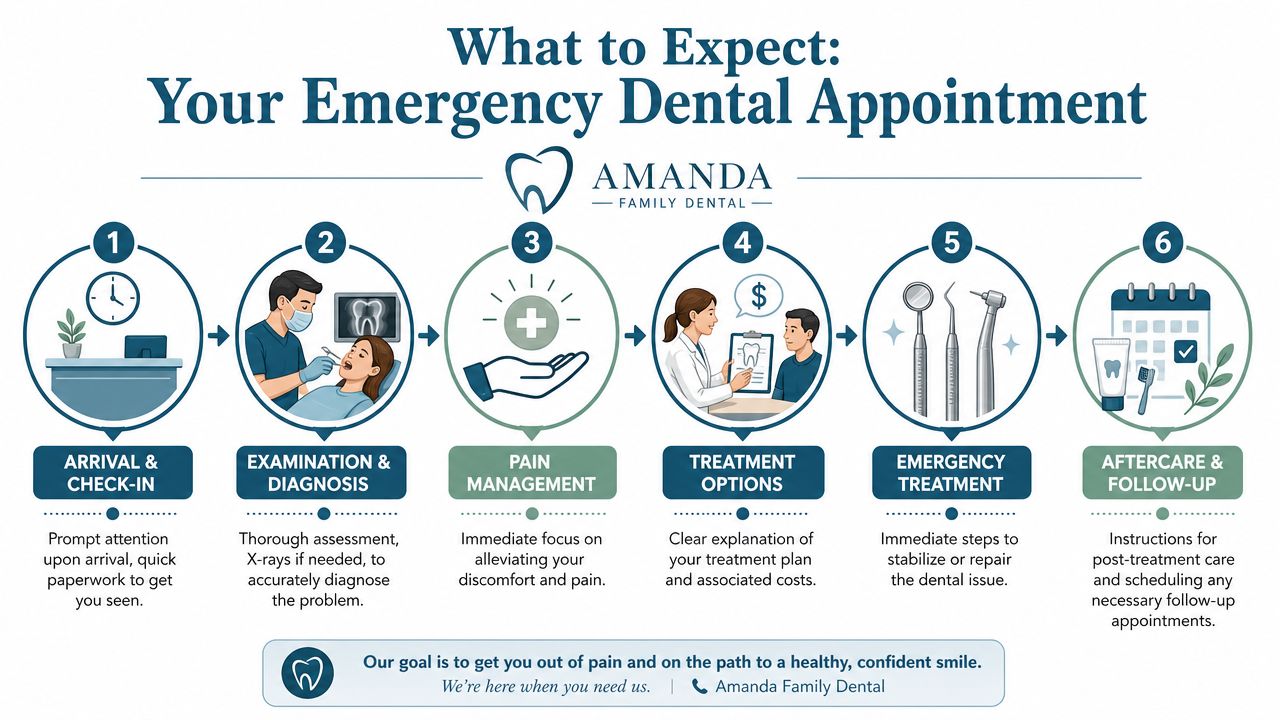
Many people fear the appointment almost as much as the injury. The visit is usually more straightforward than expected. The first priorities are diagnosis, pain control, and deciding whether the tooth can be repaired, protected, or needs a different restorative plan.
The first part of the visit
The appointment typically begins with a focused exam and digital X-rays. A fracture above the gumline may look simple, but imaging often shows whether the crack runs deeper, whether the root is involved, or whether the surrounding bone and ligament are affected.
Patients can usually expect this sequence:
- Check-in and brief history to understand how the injury happened
- Clinical exam to inspect the tooth, gums, bite, and soft tissue
- Dental X-rays to look beneath the surface
- Immediate comfort measures to reduce pain and protect the area
That early part of the visit answers the question that matters most. Can the tooth be saved, and what is the least invasive way to do it?
The best emergency visits don't feel rushed. They feel organized. First the source of pain is identified, then the tooth is stabilized, then the long-term fix is chosen.
Common treatments for a broken tooth
A minor chip may be repaired with bonding, where tooth-colored material restores shape and smoothness. A larger fracture often needs a crown to protect what remains of the tooth and restore strength for chewing.
If the fracture reaches the pulp, a root canal may be necessary to remove damaged or infected tissue before the tooth is sealed and restored. Patients who want to feel more prepared for that possibility can review this guide on how to prepare for a root canal.
Some fracture patterns are less forgiving. If the crack extends too far below the gumline or into the root, the dentist may recommend tooth extraction instead of repair. After that, replacement options such as a bridge, denture, or dental implants near me become part of the restorative conversation.
A simple comparison:
| Type of damage | Possible treatment |
|---|---|
| Small chip | Smoothing or bonding |
| Moderate fracture | Filling, bonding, or crown |
| Deep fracture with nerve involvement | Root canal and crown |
| Non-restorable tooth | Extraction and tooth replacement planning |
For patients also interested in long-term appearance after repair, cosmetic options such as teeth whitening or cosmetic dentistry may be discussed later, once the emergency is fully stabilized.
Aftercare, Prevention, and Your Dental Health Questions
The emergency visit solves the immediate problem, but good healing depends on what happens next. A restored tooth still needs a little protection while tenderness settles down and the bite readjusts.
Caring for the tooth after treatment
Most patients do best when they keep things simple for the first few days. Eat softer foods, chew on the opposite side if advised, and keep the area clean with gentle brushing and rinsing. If a temporary restoration was placed, avoid sticky or very hard foods until the final repair is completed.
Watch for changes that deserve a follow-up call:
- Pain that gets worse instead of better
- Swelling that increases
- A temporary crown or bonded area that comes loose
- New sensitivity when biting
How to lower the chance of another emergency
Prevention isn't glamorous, but it works. Mouthguards matter for sports. Avoiding ice, hard candy, popcorn kernels, and chewing on pens protects enamel and old dental work. Routine cleaning and exams, new patient exams, and dental X-rays also help catch weak restorations or hidden cracks before they turn into urgent problems.
Access matters too. Highly vulnerable areas experience 5.9 times more non-traumatic dental emergency department visits, which is why timely access to local providers plays such an important role in keeping dental problems from becoming bigger and more painful emergencies.
Common questions patients ask
Is a broken tooth really that serious?
It can be. Some chips are minor, but others expose deeper tooth layers, trigger severe pain, or open the door to infection.
Will the tooth always need to be pulled?
No. Many broken teeth can be repaired with bonding, a crown, or root canal treatment, depending on how deep the damage goes.
What will the emergency visit cost?
That depends on the exam, X-rays, and the treatment needed. A small chip and a deep fracture are very different situations. The clearest answer comes after the dentist examines the tooth.
Will insurance help?
Coverage depends on the plan and the procedure. Most offices can help review benefits and explain expected costs before treatment moves forward.
Can a broken front tooth be fixed so it looks natural?
Often, yes. Restorative and cosmetic techniques are designed to rebuild shape, function, and appearance.
Patients in Amanda, Lancaster, Circleville, and Carroll who need prompt, compassionate help for a broken tooth can contact Amanda Family Dental to schedule an appointment, request emergency care, or learn more about treatment options for pain relief, restorative dentistry, tooth extraction, dental implants, and ongoing family dental care.