

Root Canal Therapy Near Me: What the Procedure Involves
A severe toothache can make almost everything more difficult. Eating becomes uncomfortable, sleep is interrupted, and even concentrating at work can feel impossible. When the pain continues or a tooth becomes sensitive to temperature and pressure, many patients begin searching for “root canal therapy near me” to find out whether the tooth can be saved.
Root canal treatment often sounds intimidating, but its purpose is actually to remove the source of pain and infection. Modern root canal therapy is generally performed with local anesthesia and can often be completed in one or two appointments, depending on the tooth and the complexity of the condition.
At Amanda Family Dental, we provide root canal treatment for patients in Amanda, Ohio, and surrounding communities. Our approach focuses on careful diagnosis, patient comfort, clear explanations, and restoring the treated tooth so it can continue functioning as naturally as possible.
What Is Root Canal Therapy?
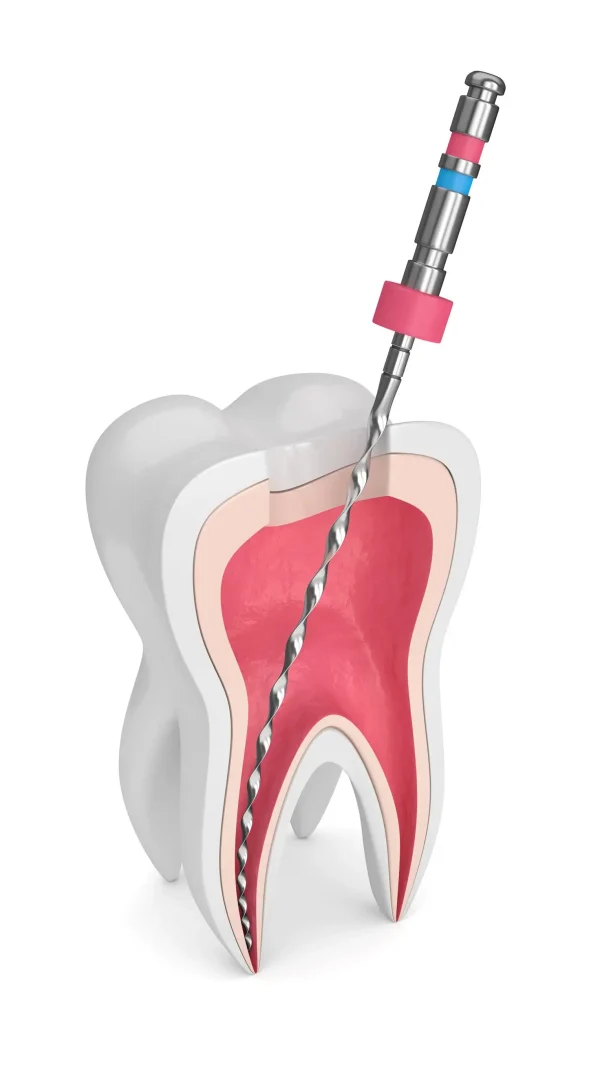
Every tooth has several layers. The outside is covered by enamel, with a harder layer called dentin underneath it. At the center is soft tissue known as the dental pulp. The pulp contains nerves, blood vessels, and connective tissue that help the tooth develop.
When the pulp becomes badly inflamed or infected, it may no longer be able to recover. Root canal therapy removes that damaged tissue, cleans and disinfects the space inside the tooth, and seals it to help prevent bacteria from returning. Once the tooth has been properly restored, it can continue to support normal biting and chewing.
Amanda Family Dental offers root canals as part of its restorative dental services. Treatment is intended to relieve discomfort, stop infection from progressing, and preserve the natural tooth when doing so is clinically appropriate.
Why Would a Tooth Need a Root Canal?
The dental pulp can become damaged for several reasons. A deep cavity may allow bacteria to reach the center of the tooth. A crack or chip may create another pathway for infection. Repeated dental work, a failing restoration, or an injury can also irritate the pulp.
A tooth may need root canal treatment because of:
- Deep dental decay that has reached the pulp
- A cracked, chipped, or fractured tooth
- Repeated treatment on the same tooth
- An injury or impact
- Infection or inflammation inside the tooth
The condition does not always cause immediate or severe pain. In some cases, the nerve gradually loses function, and the problem is first detected during a dental examination or through diagnostic imaging.
Signs That Should Not Be Ignored
A toothache does not automatically mean you need a root canal. Pain may also come from a cavity, cracked filling, gum problem, teeth grinding, or another dental concern. That is why an examination is necessary before treatment is recommended.
Symptoms that may point to a problem inside the tooth include persistent pain, throbbing, lingering sensitivity to hot or cold, tenderness when biting, swelling around the gums, tooth discoloration, or a pimple-like bump near the affected tooth.
Contact a dentist promptly when pain does not go away, swelling develops, or the tooth becomes increasingly difficult to use. Waiting may allow the infection to spread or damage the bone and tissues surrounding the root.
What Happens During the Initial Examination?
When you visit a dentist for possible root canal therapy, the first step is determining where the symptoms are coming from.
The dentist will ask when the pain began, what makes it worse, whether it lingers after exposure to heat or cold, and whether the tooth has been injured or treated before. The tooth and nearby gums will then be examined. The dentist may also test how the tooth responds to temperature, tapping, biting pressure, or other stimuli.
Dental X-rays are an important part of this evaluation because they can show deep decay, previous restorations, the shape of the roots, and changes in the bone surrounding the tooth.
Amanda Family Dental uses digital X-rays to support diagnosis and treatment planning. The images are available quickly and can be reviewed with patients, making it easier to understand what the dental team sees and why a particular treatment is being recommended.
What the Root Canal Procedure Involves
Although the details vary by tooth, root canal therapy generally follows several main stages.
Numbing the Tooth
Local anesthesia is used to numb the tooth and surrounding tissues. The goal is to help you remain comfortable throughout the appointment.
Many people assume that a root canal causes severe pain, but the intense discomfort is often coming from the inflamed or infected pulp before treatment begins. Modern anesthesia allows most patients to remain comfortable while that source of pain is removed.
Isolating the Treatment Area
A small protective sheet called a dental dam is usually placed around the tooth. This keeps the treatment area dry and prevents saliva and bacteria from entering the tooth during the procedure.
You can still breathe normally while the dental dam is in place. It simply isolates the tooth being treated.
Opening the Tooth
The dentist creates a small opening through the top of the tooth to reach the pulp chamber and root canals.
The number and shape of the canals vary. Front teeth often have simpler internal anatomy, while back teeth may contain several narrow or curved canals. This is one reason treatment time and complexity can differ from one tooth to another.
Removing the Damaged Pulp
Very small dental instruments are used to remove the inflamed or infected pulp from the chamber and canals.
The dentist carefully shapes the internal spaces so they can be cleaned and filled. Removing this tissue eliminates the nerve inside the tooth, but a fully developed tooth can continue functioning because it is supported and nourished by the surrounding tissues.
Cleaning and Disinfecting the Canals
Once the damaged tissue has been removed, the inside of the tooth is thoroughly cleaned and disinfected. This stage is essential because the goal is not only to remove the nerve but also to reduce bacteria and remaining debris inside the root system.
The canals are then dried and prepared for sealing.
Filling and Sealing the Tooth
The cleaned canals are filled with a biocompatible, rubber-like material commonly called gutta-percha. Adhesive cement helps seal the internal space and reduce the opportunity for bacteria to reenter.
A temporary or permanent filling may then be placed over the opening, depending on the treatment plan.

Will You Need a Crown After Root Canal Therapy?
Removing the infection treats the inside of the tooth, but the tooth still needs to be protected from future damage.
Teeth that require root canals are often already weakened by large cavities, fractures, older fillings, or the access opening created during treatment. A dental crown covers the visible part of the tooth and helps restore its strength, shape, appearance, and function.
Back teeth, such as premolars and molars, frequently need crowns because they absorb substantial pressure during chewing. The restoration recommended for a front tooth may depend on how much healthy structure remains and how the tooth functions in the bite.
Amanda Family Dental provides custom dental crowns and identifies teeth that have received root canal treatment as one of the situations in which a crown may be recommended. Each crown is made to fit the tooth and bite while blending with the surrounding smile.
Do not delay the final restoration. A temporary filling protects the tooth only for a limited period, and heavily chewing on an unrestored tooth may increase its risk of cracking.
How Long Does the Procedure Take?
Many root canals can be completed in one or two appointments. The timeline depends on which tooth is involved, the number and shape of its canals, the extent of the infection, and whether additional restorative care is needed.
Some straightforward cases can be cleaned, filled, and sealed during one appointment. Others may need medication placed inside the tooth and a temporary filling before treatment is completed at a later visit.
General dentists are trained to perform root canals, while endodontists receive additional training focused on conditions inside teeth. A referral may be appropriate when a tooth has unusually complex anatomy, previous root canal treatment, significant damage, or another complication. A responsible dentist will explain whether the case can be handled in the office or would benefit from specialist care.
What Is Recovery Like?
Your mouth may remain numb for several hours after treatment. Avoid chewing until normal sensation returns so you do not accidentally bite your cheek, tongue, or lip.
Mild tenderness or sensitivity is common for a few days, particularly if the tooth was painful or infected before treatment. Follow the instructions provided by your dentist regarding eating, oral hygiene, and any recommended medication.
Until the tooth has received its final restoration, avoid biting hard foods or placing heavy pressure on it. You can generally continue brushing and flossing, but be gentle around the treated area.
Contact the office when you experience severe pain or pressure lasting more than a few days, visible swelling, an uneven bite, the return of your original symptoms, or a temporary filling or crown that comes out.
Root Canal Therapy or Tooth Extraction?
Patients sometimes wonder whether it would be easier to remove the painful tooth.
Extraction may be necessary when a tooth is severely fractured, lacks enough bone support, cannot be restored, or has another problem that prevents predictable root canal treatment. However, preserving a natural tooth is usually preferred when it has a reasonable chance of remaining functional.
Removing a tooth can create additional decisions. The space may need to be restored with a bridge, implant, partial denture, or another replacement to maintain chewing function and reduce unwanted tooth movement. Root canal therapy treats the infection while allowing the tooth to remain in place.
Understanding the Cost of Root Canal Treatment
The cost of a root canal varies based on the tooth involved and the complexity of treatment. Molars usually cost more to treat because they often have more canals and more complicated internal anatomy. The crown or permanent restoration may be a separate part of the overall treatment estimate.
Dental insurance may provide partial coverage, depending on the individual plan. Patients should request an estimate that explains the root canal, restoration, insurance benefits, and expected out-of-pocket amount.
Amanda Family Dental also offers its Power Plan Membership for patients without insurance. The plan includes preventive care and lists savings on general dentistry services, including root canals and crowns. Current terms and treatment eligibility should be confirmed with the office before enrolling.
Find Root Canal Therapy Near Amanda, Ohio
Searching for “root canal therapy near me” is often motivated by pain, but choosing a dentist should involve more than finding the closest office. Look for a practice that carefully evaluates your symptoms, explains what the images show, prioritizes your comfort, and plans for the long-term protection of the tooth.
Led by Dr. Alyssa Jenkins, Amanda Family Dental provides personalized care with an emphasis on clear communication, patient education, comprehensive treatment, and lasting oral health. Dr. Jenkins graduated from The Ohio State University College of Dentistry and has completed advanced education through The Dawson Academy.
Our Amanda office welcomes patients from Lancaster, Circleville, Stoutsville, Ashville, Carroll, Lithopolis, Sugar Grove, Logan Elm Village, and nearby Ohio communities. If you have persistent tooth pain, swelling, or lingering sensitivity, call Amanda Family Dental at 740-969-1198 to schedule an evaluation.
Amanda Family Dental
https://maps.app.goo.gl/kDoSWq497FbknuUw6
(740) 969-1198
145 W Main St, Amanda, OH 43102, United States
https://amandafamilydental.com/