

Gingivitis is the only reversible form of periodontal disease, and it affects approximately 75% of American adults as the earliest stage of gum disease (gum disease statistics). The reassuring part is that early gum disease can be completely cured with the right care before it damages the bone that supports the teeth.
A lot of people in Amanda, Lancaster, Circleville, and Carroll notice the same thing first. A little pink in the sink after brushing. Tender gums while flossing. Breath that doesn't seem as fresh as it should. Those signs can feel alarming, especially when the question running through someone's mind is simple: which form of periodontal disease is reversible?
The good news is that the answer is clear. Early gum inflammation can usually be turned around with prompt treatment, good home care, and regular cleanings and exams. The key is knowing what stage a person is dealing with, and what to do next before a small problem becomes a bigger one.
Table of Contents
- Noticing Bleeding Gums? A Dentist in Amanda OH Explains
- Gingivitis The Reversible Stage of Gum Disease
- Periodontitis Understanding the Irreversible Stage
- How We Treat and Reverse Gingivitis in Amanda OH
- Preventing Gum Disease for a Lifetime of Healthy Smiles
- Schedule Your Gum Health Check-Up Today
Noticing Bleeding Gums? A Dentist in Amanda OH Explains
You are getting ready for work, brushing a little too fast, and you notice pink in the sink. It does not hurt, so it is tempting to shrug it off and get on with the day. A few mornings later, it happens again.
That pattern deserves attention.
Bleeding gums usually mean the tissue along the gumline is irritated. A helpful way to picture it is skin that gets sore when something keeps rubbing against it. In the mouth, that irritation often starts when plaque stays around the teeth long enough to inflame the gums. Early gum disease often starts without noticeable symptoms, which is why many patients in Amanda, Circleville, and Lancaster are surprised to learn a small amount of bleeding can be the first warning sign.
The good news is that early treatment can make a real difference. The most helpful first step for patients in our area is not guessing from symptoms alone. It is having a dentist check whether the problem is limited to the gums or has already started affecting the support around the teeth.
Practical rule: Blood while brushing is a signal to schedule a gum evaluation.
At Amanda Family Dental, we focus on the next step, not just the label. We look for what is causing the bleeding, measure the health of the gums, and explain what we find in plain language so you know what to do next. If the issue is caught early, treatment is often simpler, more comfortable, and easier to manage at home.
Home care matters too. Patients who want to clean more effectively between visits can review this guide to proper brushing technique. For dental practices trying to make educational information easier for patients to find online, resources like Outrank's dental SEO playbooks also show how clear, local dental education reaches people when they're actively looking for help.
Gingivitis The Reversible Stage of Gum Disease
Gingivitis is the answer to the question which form of periodontal disease is reversible. It is the mildest and earliest stage of gum disease, and it affects the gum tissue without damaging the bone around the teeth.
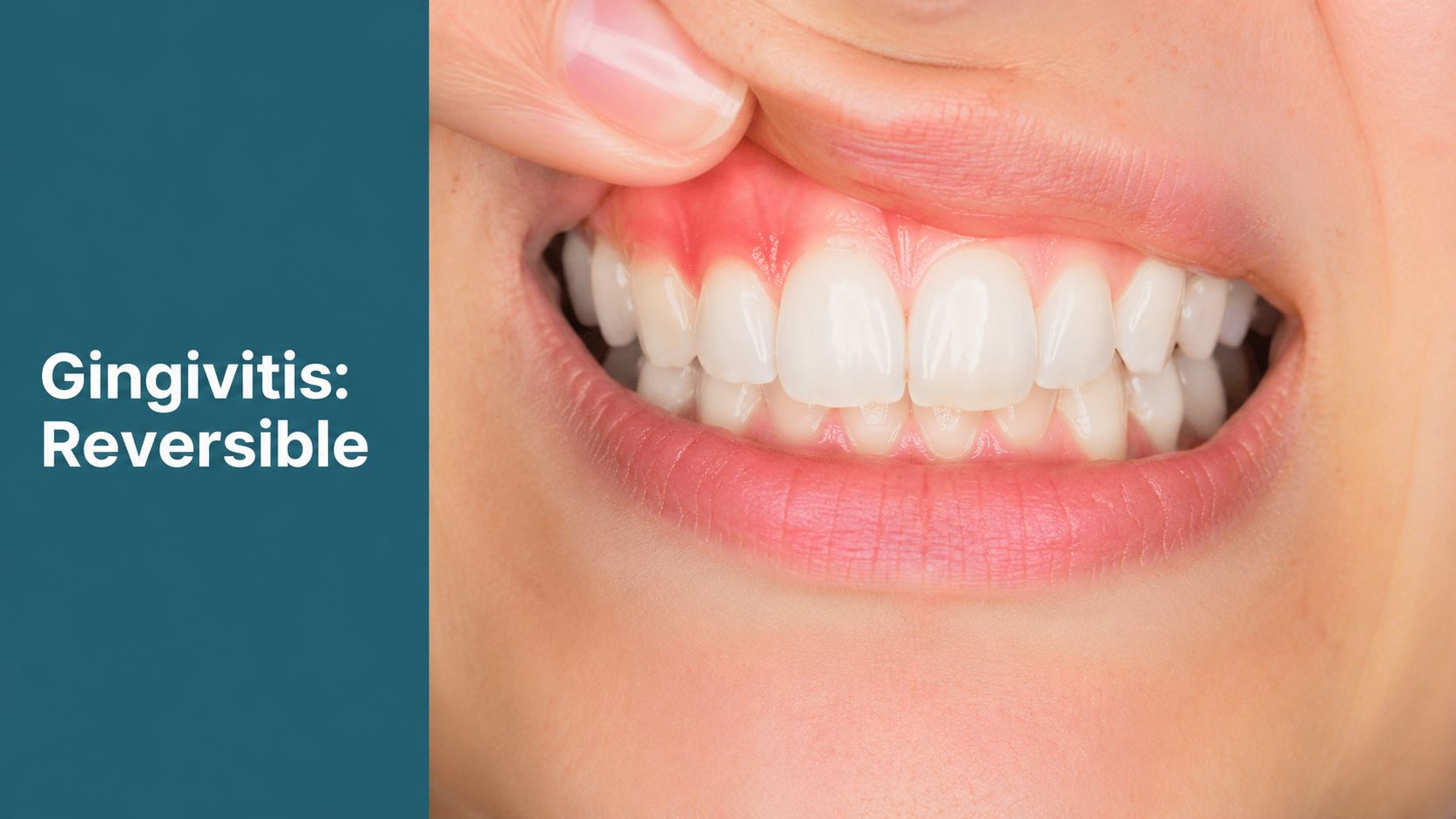
The easiest way to think about gingivitis is as a warning light. The mouth is saying something is off, but the foundation of the teeth is still intact. According to the CDC overview of gum disease, gingivitis is the mildest and earliest form of periodontal disease, it causes red, swollen, and bleeding gums without bone loss, and it can be completely resolved within 2 to 3 weeks through professional dental cleanings and diligent daily oral hygiene including brushing and flossing.
What gingivitis usually looks like
A person may notice:
- Redness near the gumline instead of the usual healthier pink appearance
- Swelling or puffiness that makes the gums look irritated
- Bleeding during brushing or flossing even when there isn't much pain
- Bad breath that lingers because plaque and bacteria remain around the teeth
Some people are surprised by how little discomfort there is. That's one reason gingivitis gets ignored. The absence of major pain doesn't mean the gums are healthy.
Why it can be reversed
Gingivitis is reversible because the inflammation hasn't gone deeper into the structures that hold the teeth in place. The bone, ligament, and root support haven't been damaged yet. Once plaque and tartar are removed, the gum tissue can calm down and return to health.
Healthy gums can often return faster than people expect when the problem is caught early and daily habits improve.
That's why routine dental care matters so much for families in Amanda, Circleville, Lancaster, and Carroll, Ohio. A simple exam and cleaning can identify gingivitis before it turns into a condition that needs more involved restorative dentistry, tooth extraction, or other treatment.
Periodontitis Understanding the Irreversible Stage
Periodontitis is what happens when gum disease moves past the warning stage and starts damaging the support around the teeth. This is the stage people most worry about, and for good reason. It involves lasting structural damage.
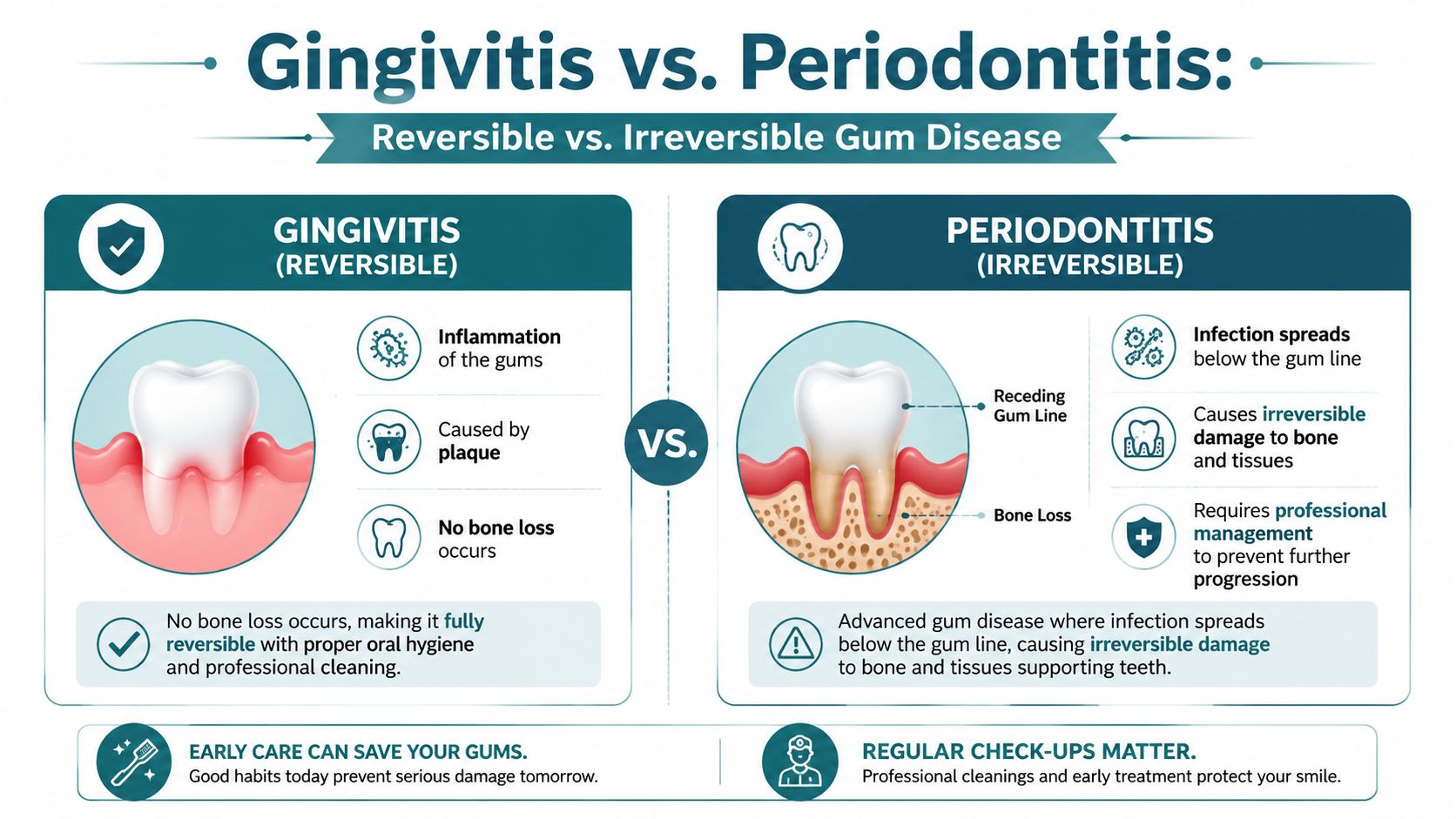
According to this explanation of periodontal disease reversal, periodontitis is irreversible because it causes permanent destruction of supporting structures including alveolar bone, periodontal ligaments, and root cementum, and those structures do not regenerate naturally once lost.
What changes when gingivitis becomes periodontitis
The most important difference is bone loss. With gingivitis, the gums are inflamed but the tooth's support remains intact. With periodontitis, the infection reaches deeper. The gums may begin pulling away from the teeth, pockets can form, and the attachment around the teeth weakens.
People may notice:
- Receding gums that make teeth look longer
- Spaces or looseness that weren't there before
- Pain when chewing or tenderness in certain areas
- A bite that feels different because support has changed
This is often where patients start searching for an emergency dentist, a dentist in Circleville, OH, or a dentist in Carroll, OH because the problem has become harder to ignore.
Gingivitis vs. Periodontitis At a Glance
| Feature | Gingivitis (Reversible) | Periodontitis (Irreversible) |
|---|---|---|
| Main tissue affected | Gum tissue only | Gums plus supporting structures around teeth |
| Bone loss | No | Yes |
| Bleeding gums | Common | Common |
| Gum recession | Usually not a defining feature | Often present |
| Tooth support | Still intact | Damaged |
| Can it be reversed? | Yes | No, but it can be managed and stabilized |
The practical takeaway is simple. Early gum disease is a treatment issue. Advanced gum disease becomes a long-term management issue.
That distinction matters for patients considering future needs such as restorative dentistry, crowns, dentures, or even dental implants near me if teeth are eventually lost. The earlier the diagnosis, the more conservative the care can be.
How We Treat and Reverse Gingivitis in Amanda OH
For most patients, reversing gingivitis doesn't start with anything dramatic. It starts with a clear diagnosis, a careful cleaning, and a home-care plan that fits real life.
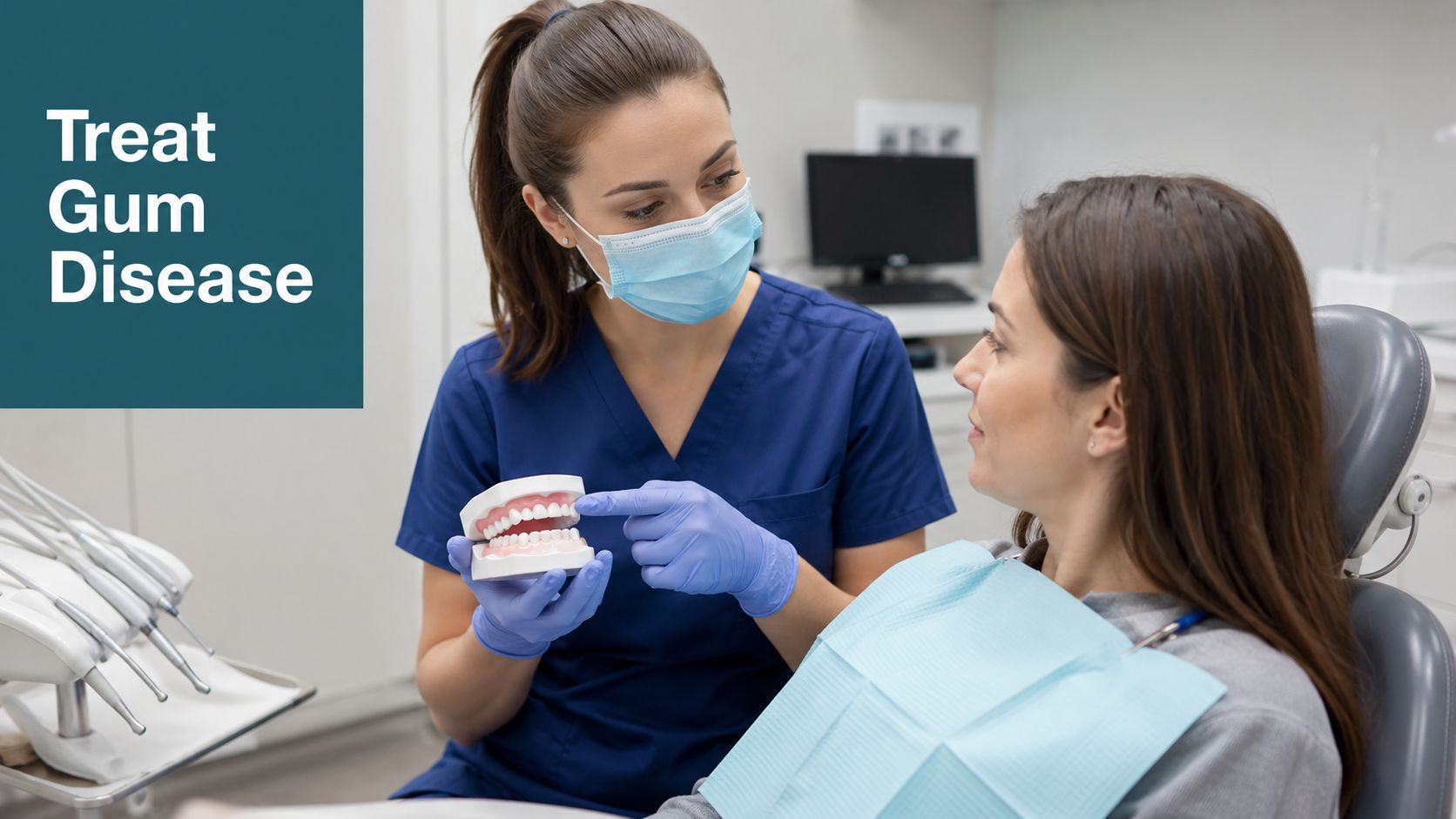
A local patient looking for a dentist in Amanda, OH or a dentist near me usually wants to know three things right away. Is this serious, will treatment hurt, and what happens next? In early gum disease, the path is often straightforward.
What happens at the first visit
A new patient exam typically includes a close look at the gums, measurements around the teeth, and digital X-rays if needed to check whether there has been any bone loss. That distinction matters because treatment depends on the stage.
If the findings point to gingivitis, care usually centers on removing plaque and tartar above and around the gumline. If deeper buildup or more advanced disease is present, a dentist may discuss more involved periodontal treatment such as scaling and root planing.
Patients sometimes also worry about cost, insurance, and what medical or dental benefits may apply when gum treatment becomes more involved. For anyone who wants a clearer overview of that side of care, this resource can help patients explore dental medical billing services.
How treatment usually works
A typical plan for gingivitis often includes:
- Professional cleaning and exams to remove the plaque and tartar that home brushing can't reach
- Personalized brushing and flossing guidance so the same inflammation doesn't return
- Monitoring at follow-up visits to confirm the gums are healing well
This short video gives a helpful overview of periodontal care and what treatment may involve:
Many patients are relieved to learn that early treatment can also protect future options. Healthy gums make it easier to maintain natural teeth and support later care such as cosmetic dentistry, teeth whitening, crowns, or dental implants if those services are ever needed.
Preventing Gum Disease for a Lifetime of Healthy Smiles
Once gingivitis has been reversed, the next step is keeping it from returning. That's where daily habits and regular dental care make the biggest difference.
One of the most important points patients don't always hear is this: even after the gums improve, the tendency toward plaque-related inflammation may still be there. According to this discussion of gum disease recurrence, gingivitis is reversible in the sense that current inflammation can resolve, but the underlying susceptibility often remains, and stopping care can lead to immediate recurrence.
Daily habits that matter most
Prevention doesn't need to be complicated. It needs to be consistent.
- Brush thoroughly twice a day with attention to the gumline, not just the front surfaces of the teeth
- Floss every day because the toothbrush doesn't clean between teeth well enough on its own
- Keep regular cleaning and exam visits so plaque and tartar don't have time to build up unnoticed
- Ask for technique coaching if bleeding continues, because many people are brushing often but not effectively
Patients who want a practical home-care refresher can review these tips for maintaining healthy gums and preventing gum disease.
Why gum problems can come back
A common misunderstanding is that once the bleeding stops, the problem is gone forever. That isn't always true. The gums may look and feel better, but if plaque builds up again, inflammation can return quickly.
Good gum health isn't a one-time fix. It's a routine.
That's why preventive dental care matters for families across Amanda, Lancaster, Circleville, and Carroll, Ohio. Regular cleanings, dental X-rays when needed, and new patient exams for those switching providers all help catch small changes before they turn into more serious periodontal problems.
Schedule Your Gum Health Check-Up Today
People often wait on gum symptoms because they hope the bleeding will stop on its own. Sometimes it seems to improve for a while, then comes back. That's exactly why an exam matters. The sooner a dentist identifies whether the issue is reversible gingivitis or a deeper periodontal problem, the easier it is to choose the right treatment.

For some patients, prevention also means addressing risk factors outside brushing and flossing. This overview of periodontitis progression and risk notes that smoking and poor glycaemic control in diabetes are strong, measurable drivers of periodontitis progression, and that stopping smoking measurably improves the response to periodontal treatment within weeks.
A gum health visit is also a good time to talk through any broader dental needs. Some patients come in for bleeding gums and also need help with tooth pain, a possible tooth extraction, restorative dentistry, cosmetic dentist services, or urgent care from an emergency dentist. One thorough evaluation can connect those dots.
For patients in Amanda, OH, Lancaster, OH, Circleville, OH, and Carroll, OH, the next step is simple. Stop wondering which form of periodontal disease is reversible, and get a clear answer for the mouth that's in front of you.
Amanda Family Dental provides patient-focused dental care for families across Amanda Family Dental. Patients in Amanda, Lancaster, Circleville, and Carroll can schedule an appointment for cleanings and exams, new patient evaluations, digital X-rays, gum disease treatment, emergency dental services, restorative care, cosmetic dentistry, and more. The office makes it easy to take the next step toward healthier gums, less worry, and a stronger smile.