

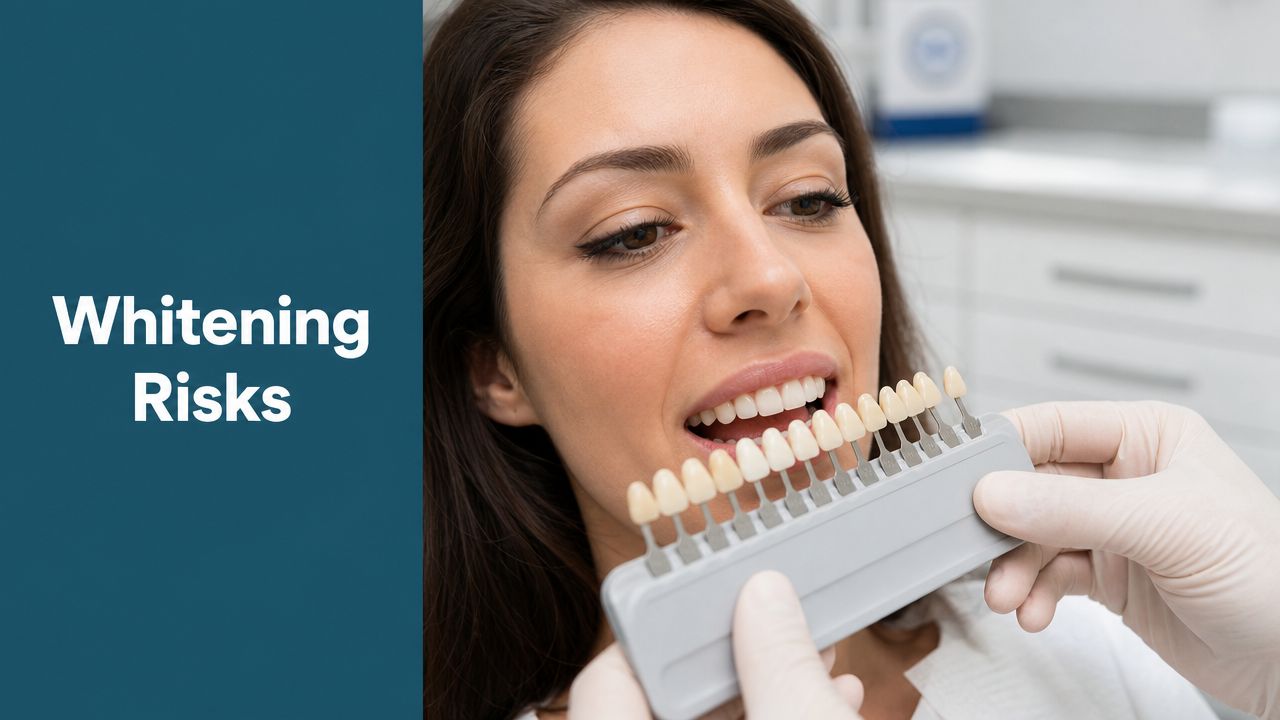
A brighter smile sounds simple until the questions start. Will whitening make teeth hurt? Can strips damage enamel? What happens if there's already a crown or filling in the front of the mouth?
Those concerns are reasonable, especially for adults in Amanda, Lancaster, Circleville, and Carroll who want cosmetic improvement without creating a new dental problem. Teeth whitening can be a safe way to lift stains, but the details matter. Product strength, tray fit, existing dental work, and the condition of the teeth and gums all affect the outcome.
For many people, whitening fits into a broader self-care routine. Anyone thinking about smile aesthetics alongside skin and wellness goals may also enjoy this perspective on a holistic beauty routine. For the dental side of the decision, local patients who want a supervised option can also review professional teeth whitening near Amanda.
Table of Contents
- Considering a Whiter Smile in Amanda, OH?
- Common and Temporary Teeth Whitening Side Effects
- Understanding Less Common but More Serious Risks
- At-Home Kits vs Professional Whitening A Safety Comparison
- Who Is at Higher Risk for Whitening Side Effects?
- How We Ensure Safe Whitening at Amanda Family Dental
- Frequently Asked Questions About Teeth Whitening
Considering a Whiter Smile in Amanda, OH?
A common situation goes like this. Someone has a wedding, job interview, family photos, or just gets tired of seeing coffee or tea stains in the mirror. They want whiter teeth, but they've also heard stories about sharp sensitivity, irritated gums, or whitening that looked uneven.
That hesitation is healthy. Whitening isn't something to fear, but it shouldn't be treated like a random impulse buy either. The safest results usually come when the teeth and gums are checked first, the type of stain is understood, and the method matches the person wearing it.
The real trade-off
The benefit is obvious. Whitening can brighten a smile and improve confidence without changing the shape of the teeth.
The trade-off is that bleaching products can irritate teeth and soft tissue if they're used too aggressively, too often, or on the wrong mouth. A person with healthy enamel and a good-fitting tray has a different risk profile than someone with untreated cavities, gum inflammation, or visible restorations.
Practical rule: Whitening works best when it's treated like dental care, not just a cosmetic product.
What usually works and what usually doesn't
Professional guidance tends to work well because the mouth is screened before treatment starts. That makes it easier to spot issues such as decay, gum irritation, or exposed root surfaces that could make whitening uncomfortable.
DIY whitening often goes off track in a few predictable ways:
- Poor tray fit can push gel onto the gums.
- Repeated use can tempt people to keep going when the teeth are already reacting.
- Shade expectations can become unrealistic when crowns, veneers, or fillings are present.
For patients in Amanda, OH and nearby communities, the main question isn't whether whitening can be done. It's whether it can be done in a way that respects the condition of the teeth first.
Common and Temporary Teeth Whitening Side Effects
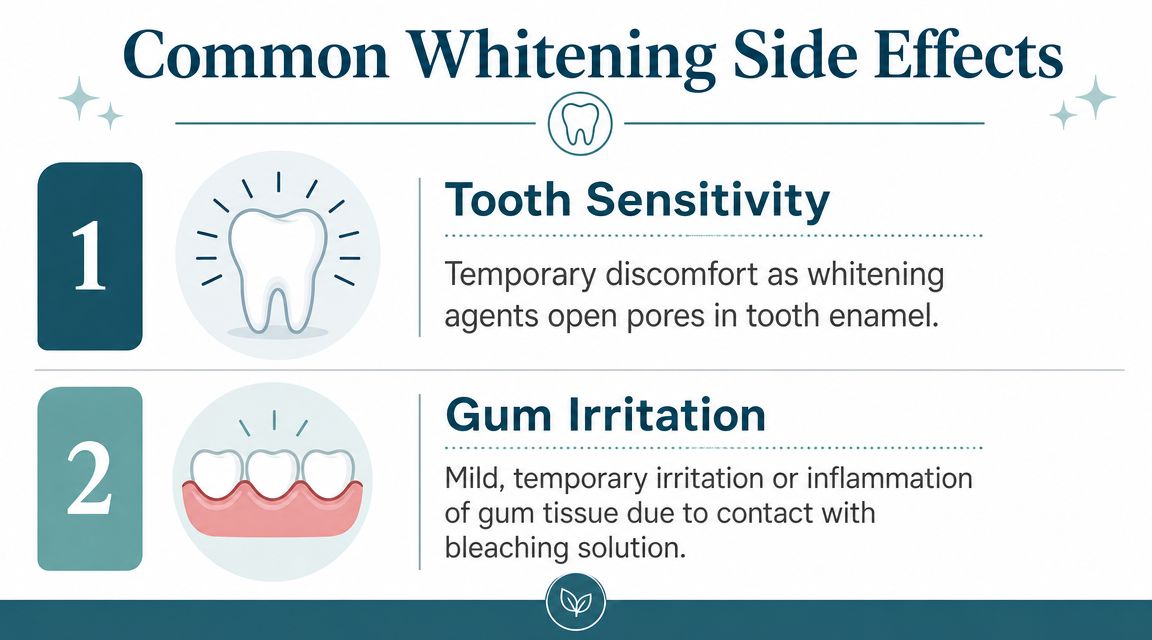
The most common teeth whitening side effects are tooth sensitivity and gum irritation. These reactions are commonly raised concerns, and they're also the ones most likely to be temporary rather than alarming.
What most people notice first
The American Dental Association states that temporary tooth sensitivity and gingival inflammation are the most common adverse effects of vital tooth whitening. It also notes that, in some studies, transient mild to moderate tooth sensitivity can occur in up to two-thirds of users during the early stages of treatment and usually resolves within four days after treatment stops (ADA whitening guidance).
That matters because many patients assume any discomfort means something has gone wrong. In many cases, it means the teeth are reacting in a way that's already well recognized in dental guidance.
Why these reactions happen
Sensitivity often shows up as a quick zing with cold air, cold drinks, or hot foods. Gum irritation usually feels more like soreness or a mildly tender gumline.
These reactions often come down to two practical issues:
- The whitening gel reaches sensitive areas of the tooth for a short period.
- The gel touches gum tissue, especially when strips slide or trays don't fit well.
Mild sensitivity and mild gum irritation are common enough that they should be expected, not treated as proof that whitening is unsafe.
A good plan keeps these effects manageable. That usually means using whitening exactly as directed, avoiding the urge to add extra time, and stopping long enough for the teeth to settle if they start reacting.
What tends to help
Most short-term reactions improve with simple adjustments rather than panic.
- Pause treatment if needed so the teeth and gums can calm down.
- Use products exactly as directed instead of extending wear time.
- Watch tray or strip placement so excess gel doesn't sit on the gums.
If symptoms are intense, don't fade, or feel different from mild sensitivity, it makes sense to have a dentist check for another issue rather than assume whitening is the only cause.
Understanding Less Common but More Serious Risks
Some whitening problems are less common than sensitivity, but they deserve more respect because they can affect the tooth surface or existing dental work.
When whitening goes beyond mild sensitivity
Research reviews report that professionally supervised whitening is safe, but aggressive or improper use can lead to tooth surface roughening, softening, and degradation of dental restorations such as composite fillings and ceramic crowns. The same review also notes that overuse can damage enamel, which is why instructions matter so much (review of whitening safety and risks).
That's the line patients need to understand. The biggest risks are usually tied to misuse, not to the basic idea of whitening itself.
Common examples include leaving whitening agents on too long, whitening too often, or trying multiple products close together because the first round didn't seem fast enough.
Why existing dental work changes the plan
Whitening products act on natural tooth structure. They don't predictably lighten crowns, veneers, fillings, or bonding the same way. That can leave the smile looking patchy even if the natural teeth respond well.
Do-it-yourself care frequently falls short. A product box can't evaluate whether the front filling that looked acceptable before whitening will suddenly stand out afterward. Patients sorting through appearance-based treatments in other areas often run into the same challenge of navigating confusing skin treatments. Teeth whitening has a similar issue. The product is only one part of the decision. Candidacy matters just as much.
The question isn't only “Will it whiten?” The better question is “Will it whiten evenly and safely in this mouth?”
A short video overview can also help patients understand why technique matters:
At-Home Kits vs Professional Whitening A Safety Comparison
The biggest safety difference between over-the-counter whitening and supervised whitening isn't just the gel. It's the level of assessment before treatment starts.
A strip or generic tray can't identify whether dark areas are true stain, whether there's exposed root surface, or whether the front teeth already have restorations that will stay the same shade. That's why one-size-fits-all products create more guesswork.
Whitening options safety and risk profile
| Feature | Over-the-Counter Kits | Professional Whitening (at Amanda Family Dental) |
|---|---|---|
| Tray fit | Generic fit or strip placement can vary | Customized approach based on the patient's teeth |
| Gum exposure | Higher chance of gel contacting gums if placement shifts | Better control of where whitening material goes |
| Pre-treatment exam | Usually none | Dental exam can identify cavities, gum irritation, or visible restorations first |
| Shade planning | Limited guidance | Treatment can be matched to cosmetic goals and existing dental work |
| Monitoring | Patient manages side effects alone | A dentist can adjust the plan if sensitivity develops |
| Risk of uneven results | More likely when restorations or inconsistent application are involved | Lower risk when whitening is planned around the smile as a whole |
There's also a practical convenience issue. DIY options seem easier at first, but they often lead to second-guessing. Is the gel touching the gums? Are the trays seated correctly? Is the sensitivity normal or a sign to stop?
Patients comparing options can review different teeth whitening approaches before deciding which path fits their goals and comfort level.
Who Is at Higher Risk for Whitening Side Effects?
Not every mouth should be whitened right away. Some people need a dental exam first because the chance of irritation, pain, or disappointing cosmetic results is higher.
Signs a pre-whitening exam matters
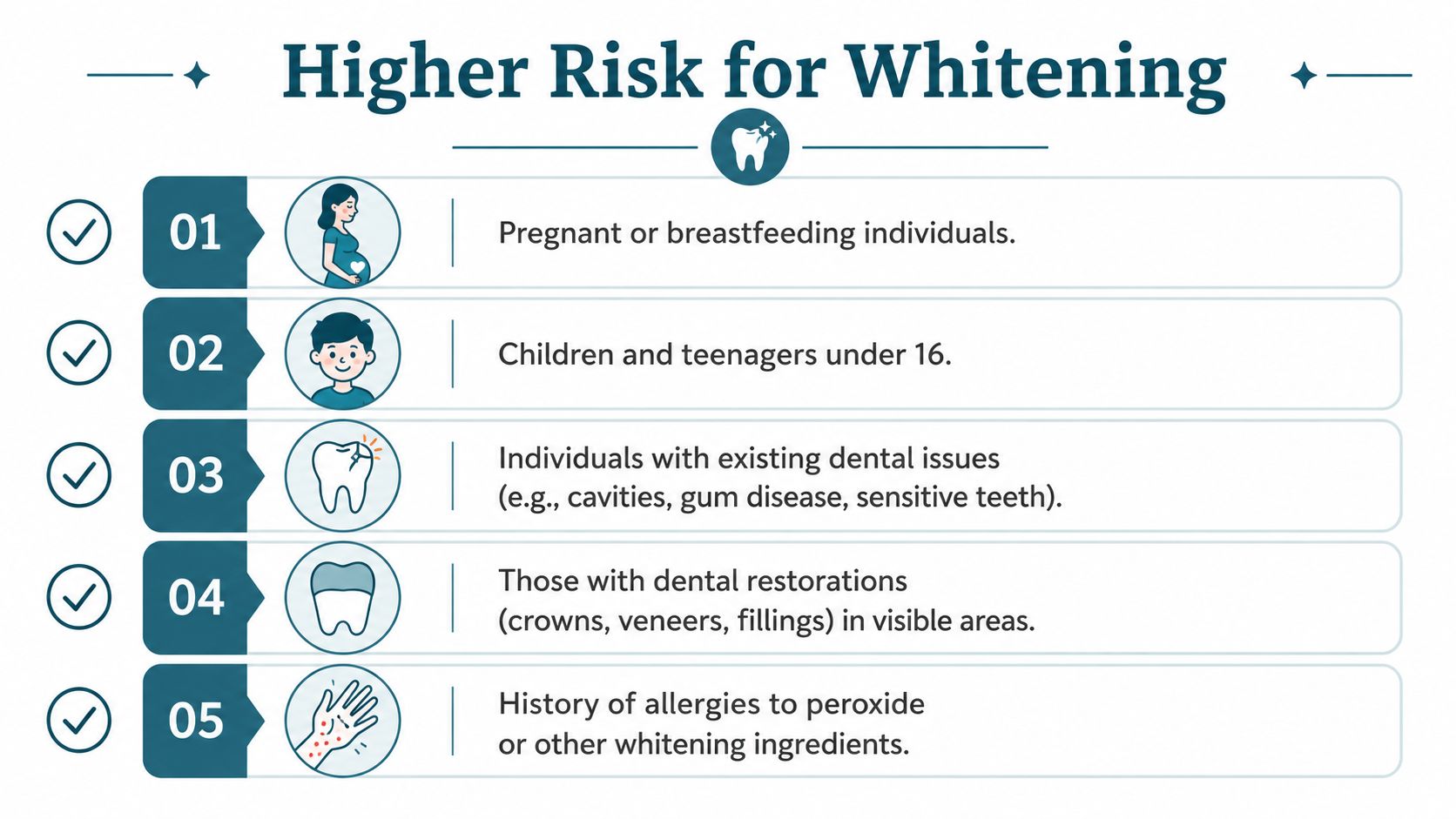
Extra caution makes sense for patients with:
- Existing sensitivity because whitening can make already reactive teeth feel worse.
- Untreated cavities since bleaching agents can aggravate exposed or compromised areas.
- Gingivitis or periodontitis because inflamed gums are more likely to become irritated.
- Exposed roots which often react differently than enamel-covered surfaces.
- A history of ingredient reactions if peroxide-based products have caused problems before.
Children and younger teens also need individualized dental guidance before any whitening is considered. The same careful approach applies to people who are pregnant or nursing, where elective cosmetic treatment is often postponed until a dentist can review the situation.
When shade matching becomes the real issue
Some patients aren't at the highest risk for pain. They're at the highest risk for frustration.
That usually happens when visible crowns, veneers, fillings, or bonding are already part of the smile. Whitening may brighten the natural teeth around them, but the restorations may stay the same color. The result can make older dental work more noticeable than it was before.
A healthy mouth still isn't automatically a good cosmetic match for whitening.
For patients in Lancaster, Circleville, Carroll, and Amanda, this is one of the strongest reasons to get an exam before starting. The question may not be whether whitening is safe. It may be whether whitening is the right first cosmetic step at all.
How We Ensure Safe Whitening at Amanda Family Dental
Safe whitening starts before any gel touches the teeth. The first step is making sure the mouth is ready for cosmetic treatment.
What the appointment process looks like
At Amanda Family Dental, that process typically begins with a dental exam and digital X-rays if they're needed for diagnosis. That helps identify decay, gum concerns, exposed root surfaces, and existing restorations that could affect comfort or color matching.
From there, treatment can be personalized based on the patient's goals, stain pattern, and history of sensitivity. Some people want faster in-office whitening. Others prefer custom take-home trays with more gradual control. Patients exploring that option can learn more about professional whitening treatment.
What helps reduce avoidable problems
A supervised approach lowers risk because the plan can be adjusted before side effects become a larger issue.
That usually includes:
- Checking oral health first so whitening isn't placed over untreated problems.
- Choosing the right format instead of defaulting to whatever kit is easiest to buy.
- Adjusting for sensitivity history when the patient already knows certain teeth are reactive.
- Planning around crowns or fillings so cosmetic expectations stay realistic.
A local dentist becomes a safety partner, not just a service provider. For patients in Amanda, OH and nearby communities, the value isn't only a brighter shade. It's knowing the smile was evaluated, the risks were considered, and the method was chosen for that specific mouth.
Frequently Asked Questions About Teeth Whitening
Can whitening permanently damage enamel
When whitening is done correctly and according to instructions, the safety concern is usually temporary irritation rather than permanent harm. The bigger concern is overuse or aggressive use, which can create avoidable problems. That's why professional screening and following directions matter.
What helps if teeth feel sensitive afterward
The first step is to stop whitening long enough for the teeth to settle. Many cases improve when treatment is paused and hot or cold triggers are limited for a short time. If the discomfort feels sharp, lingers, or seems stronger than ordinary sensitivity, a dental exam is the safer next move.
Why do crowns veneers and fillings stay the same color
Whitening products are designed to change the appearance of natural tooth structure. Restorative materials don't respond the same way, so they may remain unchanged while nearby enamel lightens. That can leave visible shade differences in the smile, especially in front teeth.
For patients searching for a dentist near me, a dentist in Amanda, OH, or a cosmetic dentist serving Lancaster, Circleville, and Carroll, the smartest next step is a consultation before starting any whitening plan. It's the easiest way to find out whether whitening is appropriate, what side effects are most likely, and whether another cosmetic option would create a better result.
If a brighter smile is on the list but safety matters just as much as appearance, schedule a consultation with Amanda Family Dental. Patients in Amanda, Lancaster, Circleville, and Carroll can get a personalized exam, clear guidance on teeth whitening side effects, and a treatment plan that fits their teeth instead of guessing with a DIY kit.